The doctor a child’s whole family calls
A child with kidney disease is never one patient. Behind every creatinine is a growth chart, a school record, a mother who learned peritoneal dialysis (PD) exchanges at the kitchen table, and a father working abroad who calls after every clinic visit. The attending pediatric nephrologist (APN) owns the child’s renal plan: the diagnosis, the treatment goals, the dialysis and transplant decisions, the periodic review, and the decision to change course. The pediatric resident, the physician on duty (POD), the intensivist, the dialysis nurse and the family act at the bedside; the attending decides what happens next and makes sure every decision has an owner.
The track follows children through every setting a pediatric nephrologist works in: the newborn nursery and neonatal intensive care unit (NICU), the clinic, the ward, the pediatric intensive care unit (PICU), the PD home, the hemodialysis (HD) unit, the transplant program, and the handover to adult care. Every module moves in the same order. It starts with a plain-language picture, explains the physiology of a growing kidney, states what the best evidence in children shows and how certain it is, and ends with what the attending does.
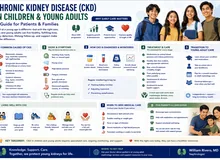
Figure 1 · What this track will help you do
How the role works in Philippine practice. Pediatric nephrologists are few and concentrated in a handful of centers, so one attending may cover several hospitals and receive most calls by phone or Viber from pediatric residents, general pediatricians and adult nephrologists. Many children on hemodialysis are treated in adult units, where the nurses and the physician on duty are skilled with adults but see a child only occasionally. PhilHealth now funds a pediatric PD package that names the attending pediatric nephrologist on its forms. The cases in this track are written from that position: often off site, reached by phone, responsible for the plan, and the person the family trusts most.
Seven modules (16 and 20 to 25) teach dialysis in children in depth: CKRT, PD access and prescription, home PD and its non-infectious complications, PD peritonitis, the HD prescription, vascular access, and HD emergencies in adult units. Every new term is explained when it first appears. Every module has figures, a case, real situations, a skills checklist, linked calculators, and a five-question self-assessment.
What this series is, and is not
It is a training track written independently from published guidelines, trials, laws, and regulations. It is not a license, Pediatric Nephrology Society of the Philippines (PNSP) or board certification, continuing professional development (CPD) credit, hospital privileges, or PhilHealth accreditation. Clinical competence requires observation by a local assessor and facility credentialing.
Placement pre-test
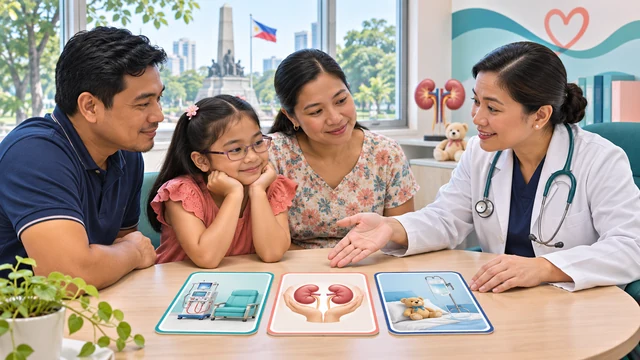
Transferring from another unit, or already experienced in this role? Take the placement pre-test: a short check of up to 5 questions for each module, drawn from that module’s own question bank. Score 80% or better and the module becomes optional reading for you, so you study only what you need. 5 of the 29 modules (unit orientation, emergencies, safeguarding, and the capstone) are required for everyone, whatever their experience.
Results stay on this device. The certificate still needs every module quiz; for a module you placed out of, go straight to its self-assessment.
⚡ Required readiness: PALS. Academy recommendation; confirm your unit’s requirement. Practice it in Emergency Readiness: the quick cards, the Resuscitation Lab and the Megacode Practice Lab.
Who can hold this role
Attending Pediatric Nephrologist: qualifications at a glance
- PRC-licensed physician with pediatrics specialty credentials and pediatric nephrology training and certification through the Pediatric Nephrology Society of the Philippines (PNSP) and the specialty board; adult nephrology status is not a substitute. Verify the current applicant rules with PNSP. Philippine Society of Nephrology (PSN), PNSP
- Hospital appointment with privileges delineated by age and size range, modality (PD, HD, CKRT, transplant) and procedure; valid PhilHealth professional accreditation where the service requires it. The PhilHealth pediatric PD package names the attending pediatric nephrologist on its forms, and the 2025 kidney transplant survey tool lists a PNSP-certified pediatric nephrologist. PhilHealth
- Completing this track is a learning record only; it grants no privilege, certification or CPD credit.
Sources: Department of Health (DOH) Administrative Order No. 2012-0001, Sec. V.B.2.a; Philippine Society of Nephrology (2024), Guidelines for nephrologists in the operation of hemodialysis clinics, Sec. III.A; Republic Act No. 10862. A summary for orientation, not legal advice: check the current issuances, and your unit’s license and PhilHealth accreditation. The full table for every role is on the Academy home.
Fifteen weeks of study, in eight blocks
The 29 modules are grouped into eight blocks, studied at about two modules a week. Each block ends with a work sample that a preceptor reviews.
Figure 2 · The eight blocks
Twenty-nine modules in eight blocks
Study the modules in order. Each one moves from intuition to physiology, then to the evidence, and ends with what the attending does.
Block 1 · The child, the role and the bedside
 Module 1
Taking attending responsibility for children
Own the child's renal plan across hospital, dialysis unit and home, with verified credentials, delineated privileges and a named owner for every night.
 Module 2
The growing kidney and the pediatric renal assessment
Read creatinine against height and age, measure blood pressure correctly, and turn urine, growth and estimated glomerular filtration rate (eGFR) into a problem statement.
 Module 3
Fluids, sodium and acid-base in children
Prescribe maintenance and replacement fluids that do not cause hyponatremia, and correct sodium and acid-base disorders at a safe speed.
 Module 4
Potassium, calcium, phosphate and magnesium emergencies
Stabilize, shift and remove potassium in a child, and recognize the calcium, phosphate and magnesium emergencies of infancy and tumor lysis.
Block 2 · Pressure, structure and infection
 Module 5
Hypertension in children
Diagnose hypertension by percentile and ABPM, find the secondary cause, and lower a hypertensive emergency safely.
 Module 6
congenital anomalies of the kidney and urinary tract (CAKUT), antenatal urinary tract dilation and posterior urethral valves
Plan the first year of a child with congenital anomalies of the kidney and urinary tract, from the antenatal scan to the valve bladder.
 Module 7
Urinary tract infection, reflux and bladder-bowel dysfunction
Diagnose febrile Urinary tract infection (UTI) correctly, decide on imaging and prophylaxis from RIVUR and PREDICT, and treat the bladder and bowel.
 Module 8
Tubulopathies, stones and inherited kidney disease
Localize an inherited transport defect on the nephron, work up a stone-forming child, and order genetic testing that a family can use.
Block 3 · Glomerular and systemic disease
 Module 9
Steroid-sensitive nephrotic syndrome
Treat the first episode to Kidney Disease: Improving Global Outcomes (KDIGO) 2025, prevent the complications that kill, and teach the family to catch relapses early.
 Module 10
Frequent relapses, steroid dependence and steroid resistance
Choose a steroid-sparing agent with the family, and work up steroid resistance with biopsy and genetics.
 Module 11
Hematuria and the nephritic child
Separate glomerular from non-glomerular hematuria and manage post-streptococcal GN, IgA nephropathy, IgA vasculitis and C3 glomerulopathy.
 Module 12
Lupus nephritis and vasculitis in children
Biopsy early, induce and maintain remission to KDIGO 2024, and weigh growth, bone and fertility in every choice.
 Module 13
Hemolytic uremic syndrome and thrombotic microangiopathy
Recognize STEC-HUS and atypical HUS, support the kidney and brain, and start complement blockade when it is indicated.
Block 4 · Acute and critical care
 Module 14
The newborn kidney and neonatal AKI
Stage neonatal AKI against a falling maternal creatinine, steward nephrotoxins, and dialyze the newborn when you must.
 Module 15
AKI in children: sepsis, nephrotoxins and tropical infections
Manage pediatric AKI from dengue, leptospirosis, sepsis and nephrotoxins, and follow the kidney after recovery.
 Module 16
CKRT and acute dialysis in the pediatric intensive care unit
Co-manage continuous kidney replacement therapy with the intensivist, from fluid overload and circuit priming to anticoagulation and dose.
Block 5 · CKD and choosing therapy
 Module 17
Pediatric CKD: progression, growth, nutrition and development
Slow progression with blood pressure and proteinuria control, and protect growth, nutrition and schooling.
 Module 18
CKD complications: anemia, mineral and bone disease, acidosis
Treat anemia, Chronic kidney disease–mineral and bone disorder (CKD-MBD) and acidosis in a growing skeleton, using KDIGO 2026 anemia and the pediatric CKD-MBD evidence.
 Module 19
Choosing kidney replacement therapy with families
Lay out transplant, PD, HD and conservative care with a family, and keep coverage separate from the clinical plan.
Block 6 · Peritoneal dialysis
 Module 20
Pediatric PD: access, membrane and prescription
Place the right catheter, scale the fill to the child, choose continuous ambulatory peritoneal dialysis (CAPD) or automated peritoneal dialysis (APD), and judge adequacy by growth as well as Kt/V.
 Module 21
Home PD: training the family, school, and non-infectious complications
Train and support the caregiver, keep the child in school, and solve outflow failure, leaks, hernias and ultrafiltration failure.
 Module 22
PD peritonitis and exit-site and tunnel infection
Diagnose peritonitis to International Society for Peritoneal Dialysis (ISPD) 2022, start intraperitoneal antibiotics at once, and drive the unit's infection rate down.
Block 7 · Hemodialysis
 Module 23
Pediatric HD prescription: the circuit, the child and adequacy
Match the circuit to the child's blood volume, set ultrafiltration and target weight, and review delivered dialysis and growth.
 Module 24
Vascular access in children
Preserve veins from birth, choose catheter or fistula for the child, and manage catheter infection and dysfunction.
 Module 25
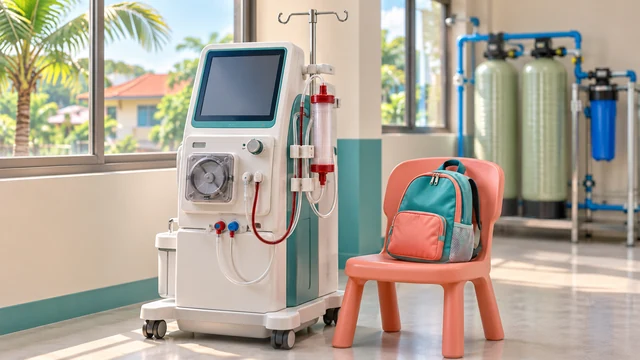
HD emergencies, water safety, and children in adult HD units
Prevent disequilibrium and hypotension in small children, respond to HD emergencies, and make an adult unit safe for a child.
Block 8 · Transplant and professional practice
 Module 26
Preparing a child for kidney transplantation
Make the bladder safe, vaccinate, evaluate donors ethically, and plan for disease recurrence.
 Module 27
Life with a transplant: rejection, infection and adolescent adherence
Work up graft dysfunction, watch for BK and EBV, and treat adolescent nonadherence as a clinical problem.
 Module 28
Medicines, safeguarding, documentation and leading the service
Prescribe safely for a changing kidney, protect the child, document truthfully, transfer adolescents, and improve the service.
 Module 29
Capstone: one child, every setting
Follow one child from a newborn with valves to an adolescent with a transplant, owning every decision and every handoff.
The same seven steps every time
Figure 3 · How to work through a module
- ObjectivesRead what you should be able to do by the end.
- Big pictureA plain-words summary and the key terms, before any detail.
- Opening caseA fictional shift problem. Decide what you would do first.
- LessonShort parts with pictures, tables, and worked examples.
- Case reviewCompare your answer with one sound response.
- Skills checklistPractice with a preceptor on real or training equipment.
- Self-assessmentFive questions drawn from a larger bank, with explanations.
New terms are explained the first time they appear, and every page ends with a glossary. Abbreviations are spelled out at first use. If a sentence still reads like jargon, check the glossary, then ask your preceptor to show you the real object on the unit: most of this work makes sense faster when you can see and touch the equipment.
The series at a glance
Plan about 2 hours per module for study, case discussion, and self-check, plus observed work or simulation logged with a preceptor and a 4-hour capstone, about 60 hours of guided study in all.
| No. | Module | Lessons | Opening case | Skills checklist | Practice |
|---|---|---|---|---|---|
| 1 | Taking attending responsibility for children |
| “Pedia nephro to follow” | Taking attending responsibility for children | 5 questions · 4 real situations |
| 2 | The growing kidney and the pediatric renal assessment |
| The varsity player with a “high” creatinine | The growing kidney and the pediatric renal assessment | 5 questions · 4 real situations |
| 3 | Fluids, sodium and acid-base in children |
| The seizure at 3 a.m. | Fluids, sodium and acid-base in children | 5 questions · 4 real situations |
| 4 | Potassium, calcium, phosphate and magnesium emergencies |
| Day 2 of chemotherapy | Potassium, calcium, phosphate and magnesium emergencies | 5 questions · 4 real situations |
| 5 | Hypertension in children |
| The headache in the emergency room | Hypertension in children | 5 questions · 4 real situations |
| 6 | CAKUT, antenatal urinary tract dilation and posterior urethral valves |
| The full bladder in the provincial nursery | congenital anomalies of the kidney and urinary tract (CAKUT), antenatal urinary tract dilation and posterior urethral valves | 5 questions · 4 real situations |
| 7 | Urinary tract infection, reflux and bladder-bowel dysfunction |
| The second fever | Urinary tract infection, reflux and bladder-bowel dysfunction | 5 questions · 4 real situations |
| 8 | Tubulopathies, stones and inherited kidney disease |
| The toddler who drinks from the faucet | Tubulopathies, stones and inherited kidney disease | 5 questions · 4 real situations |
| 9 | Steroid-sensitive nephrotic syndrome |
| Furosemide ordered | Steroid-sensitive nephrotic syndrome | 5 questions · 4 real situations |
| 10 | Frequent relapses, steroid dependence and steroid resistance |
| The fifth relapse | Frequent relapses, steroid dependence and steroid resistance | 5 questions · 4 real situations |
| 11 | Hematuria and the nephritic child |
| Three weeks after the sores | Hematuria and the nephritic child | 5 questions · 4 real situations |
| 12 | Lupus nephritis and vasculitis in children |
| The creatinine that doubled | Lupus nephritis and vasculitis in children | 5 questions · 4 real situations |
| 13 | Hemolytic uremic syndrome and thrombotic microangiopathy |
| The toddler who stopped wetting his diaper | Hemolytic uremic syndrome and thrombotic microangiopathy | 5 questions · 4 real situations |
| 14 | The newborn kidney and neonatal AKI |
| Day 9 in the NICU | The newborn kidney and neonatal AKI | 5 questions · 3 real situations |
| 15 | AKI in children: sepsis, nephrotoxins and tropical infections |
| Day 5 of dengue, and the urine has stopped | AKI in children: sepsis, nephrotoxins and tropical infections | 5 questions · 3 real situations |
| 16 | CKRT and acute dialysis in the pediatric intensive care unit |
| Postoperative day 3, and 2 kg heavier | CKRT and acute dialysis in the pediatric intensive care unit | 5 questions · 4 real situations |
| 17 | Pediatric CKD: progression, growth, nutrition and development |
| Short for his age, and absent from school | Pediatric CKD: progression, growth, nutrition and development | 5 questions · 3 real situations |
| 18 | CKD complications: anemia, mineral and bone disease, acidosis |
| The girl who limps to the PD clinic | CKD complications: anemia, mineral and bone disease, acidosis | 5 questions · 3 real situations |
| 19 | Choosing kidney replacement therapy with families |
| Four hours from the pediatric center | Choosing kidney replacement therapy with families | 5 questions · 4 real situations |
| 20 | Pediatric PD: access, membrane and prescription |
| The leak on day two | Pediatric PD: access, membrane and prescription | 5 questions · 4 real situations |
| 21 | Home PD: training the family, school, and non-infectious complications |
| Three weeks without sleep | Home PD: training the family, school, and non-infectious complications | 5 questions · 4 real situations |
| 22 | PD peritonitis and exit-site and tunnel infection |
| Cloudy at 10 p.m. | PD peritonitis and exit-site and tunnel infection | 5 questions · 4 real situations |
| 23 | Pediatric HD prescription: the circuit, the child and adequacy |
| Adult lines for an 18 kg boy | Pediatric HD prescription: the circuit, the child and adequacy | 5 questions · 4 real situations |
| 24 | Vascular access in children |
| Rigors at minute twenty | Vascular access in children | 5 questions · 4 real situations |
| 25 | HD emergencies, water safety, and children in adult HD units |
| Vomiting in the first hour | HD emergencies, water safety, and children in adult HD units | 5 questions · 4 real situations |
| 26 | Preparing a child for kidney transplantation |
| An aunt, a bladder, and an offer | Preparing a child for kidney transplantation | 5 questions · 4 real situations |
| 27 | Life with a transplant: rejection, infection and adolescent adherence |
| Levels that swing | Life with a transplant: rejection, infection and adolescent adherence | 5 questions · 4 real situations |
| 28 | Medicines, safeguarding, documentation and leading the service |
| Missed visits, weight loss and bruises | Medicines, safeguarding, documentation and leading the service | 5 questions · 4 real situations |
| 29 | Capstone: one child, every setting |
| Nathan, from the nursery to the adult clinic | Capstone checklist | 5 questions · 3 real situations |
Self-assessment is not sign-off
Each module ends with a self-assessment of 5 questions; the mastery mark is 4 of 5. The end-of-track examination draws 40 questions from all 29 banks. The capstone follows one child through every setting and is scored on five areas, 0 to 2 each; a pass is 8 of 10 with every critical action met.
End-of-course examination. When you have finished every module, take the end-of-course examination. It draws questions at random from all 29 modules, so no two sittings are the same.
Personal study record
Need to show your head nurse or preceptor how far you have gone? Make a one-page study record: the modules you finished, your best quiz score and the date you passed each, the time you spent on each module page, your end-of-course examination result, and the date each checklist was signed off. Each module with a skills or competency checklist has a Preceptor sign-off box at the end of that section; enter the date your preceptor signed it, or enter it in the table below. Print it or save it as a PDF.
It is a record of your own self-study, not a certificate and not CPD units, and it stays on this device. Your signed checklists and the unit’s competency form remain the official record.
What the series is built on
The track is built from published sources: the Kidney Disease: Improving Global Outcomes (KDIGO) guidelines for nephrotic syndrome in children (2025), immunoglobulin A nephropathy and vasculitis (2025), lupus nephritis (2024), chronic kidney disease (2024), anemia (2026) and acute kidney injury; the International Pediatric Nephrology Association (IPNA) recommendations; the American Academy of Pediatrics (AAP) guidelines on blood pressure, urinary tract infection and intravenous fluids; the International Society for Peritoneal Dialysis (ISPD) recommendations; the trials they rest on, including ESCAPE, RIVUR, PREDICT, PREDNOS, AWAKEN and TAKE-IT; and Philippine requirements from the Department of Health (DOH), PhilHealth and the Pediatric Nephrology Society of the Philippines (PNSP). Each module lists its own sources.
Evidence was reviewed on November 27, 2026. The KDIGO 2026 guideline for AKI and acute kidney disease is cited only as a public-review draft. The PhilHealth pediatric automated PD (APD) pilot was extended to July 31, 2026; its status after that date is unresolved in this track and must be confirmed with your PhilHealth liaison. PhilHealth rates and forms must be confirmed on the date of service.
Using the series in a training program
A pediatric nephrology program director or a senior attending can use these modules as the guided-study part of an attending’s orientation or a fellow’s final year. The trainer and preceptor page gathers the proposed hours, completion criteria, and every skills checklist in one printable place. These are proposals for a provider to adapt and validate on its own equipment; they are not requirements of any regulator.