Biopsy early, induce and maintain remission to KDIGO 2024, and weigh growth, bone and fertility in every choice.
PublishedNailathalaGipatikPepalwal:ReferencesMga SanggunianMga TinubdanReng Reperensya:11Audience: Pediatric nephrologists · pediatric nephrology fellows · adult nephrologists, intensivists and neonatologists who share kidney care for children in the clinic, ward, NICU, PICU, dialysis unit and homeRead timeOras ng pagbasaOras sa pagbasaOras ning pamamasa:
Training track for attending pediatric nephrologists
This module is study material for attending pediatric nephrologists and fellows. It explains the reasoning behind common decisions; it is not a protocol and it gives no doses. Doses, fill volumes and thresholds must come from current pediatric guidelines, product labels, your institution’s approved pediatric protocols and a pediatric pharmacist. Benefit rules change: confirm them on the date of service. Every case is fictional.
Learning objectives
After this module you should be able to
Explain why childhood-onset lupus is more often renal, and why the biopsy class, not the creatinine alone, decides lupus nephritis treatment.
Choose induction and maintenance therapy for proliferative lupus nephritis with the family as Kidney Disease: Improving Global Outcomes (KDIGO) 2024 describes, weighing growth, bone and fertility.
Recognize ANCA vasculitis and anti-GBM disease in a child as emergencies, start treatment without waiting for every result, and know when plasma exchange is considered.
Pre-testBefore you read, answer the 5 self-assessment questions and note your score. After the module, select New set of questions and compare. The difference is what you learned; the questions you still miss are what to reread.
Start here
The big picture, in plain words
Your role · the kidney in a systemic diseaseLupus and vasculitis in children are shared with pediatric rheumatology, often by phone, because few Philippine hospitals have both specialists on site. You own the kidney: the biopsy and its timing, the induction plan, the blood pressure, the proteinuria target and the dialysis decision. You also carry the conversation about what the drugs will cost a girl in growth, bone and fertility, in words a teenager and her mother can weigh.
In plain wordsThink of lupus as a fire alarm system that has started to ring at the building itself. The alarm is meant for intruders, but it now sends the fire brigade to every room, and the water does as much damage as any fire.
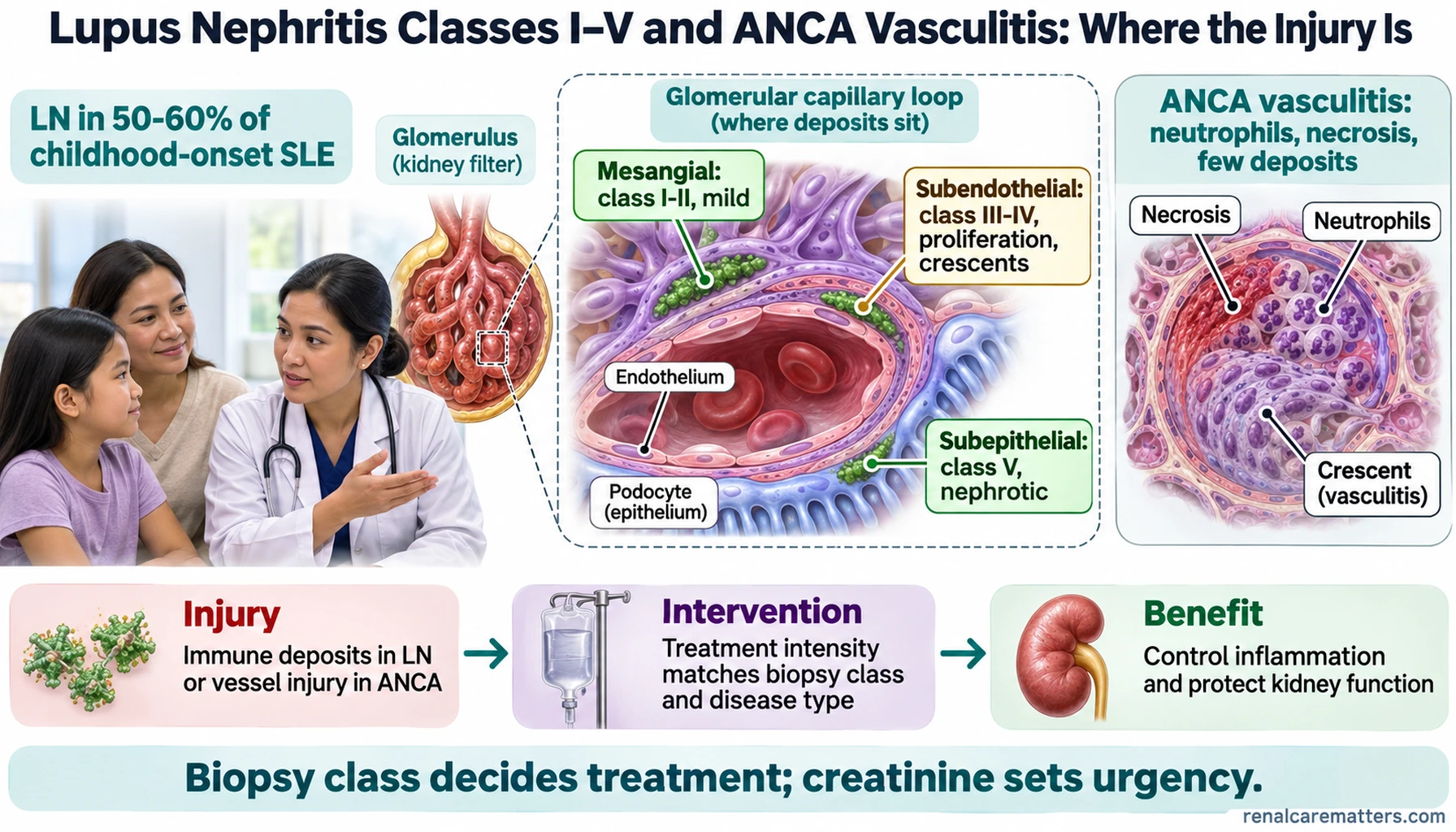
The picture has a limit. In lupus the damage comes from immune complexes, antibodies bound to nuclear antigens, that lodge in glomeruli and activate complement and leukocytes. Where they deposit decides what you see: in the mesangium the injury is mild; beneath the endothelium it provokes proliferation, crescents and falling function; beneath the epithelium it causes membranous nephrotic syndrome. ANCA vasculitis is different again: few immune deposits, but activated neutrophils that necrose small vessels. A biopsy tells you which fire you are fighting.
Figure 1 · Key numbers
Lupus nephritis in childhood-onset SLE (SHARE 2017)50–60% of patients
KDIGO 2024, complete response in childrenProteinuria <0.5 g/1.73 m² per day
KDIGO 2024, proliferative lupus nephritisInitial plus maintenance immunosuppression for at least 36 months in total
BLISS-LN (adults), renal response at 104 weeks43% with belimumab vs 32% with standard therapy alone
AURORA 1 (adults), complete renal response at 52 weeks41% with voclosporin vs 23%
PEXIVAS (adults), death or kidney failure28.4% with plasma exchange vs 31.0% without
Most children with lupus nephritis can reach remission and keep their kidneys if the biopsy is done early and induction is followed by years of maintenance that they actually take. A few lose function within weeks from crescentic lupus, ANCA vasculitis or anti-glomerular basement membrane disease. Your work is to biopsy promptly, start treatment without dangerous delay, choose regimens that a growing child can survive well, and keep an adolescent engaged for the years the disease demands.
Opening case · fictional
Case: The creatinine that doubled
Angelica Reyes is 13 years old and weighs 44 kg. She reached menarche six months ago. She lives with her mother, a public school teacher, in Calamba, Laguna. For three weeks she has had fatigue, painful knees and wrists, mouth ulcers and a rash across her cheeks that worsens in the sun. For a week her urine has been frothy and her ankles swollen.
She is admitted to the pediatric ward of a tertiary government hospital. Blood pressure 140/90. Creatinine 1.3 mg/dL; it was 0.6 mg/dL at a clinic visit one week ago. Urine protein-to-creatinine ratio 3.2 mg/mg, with red cell casts. Hemoglobin 9.2 g/dL, platelets 98,000/µL. C3 and C4 are both low; antinuclear antibody is positive at 1:1280 and anti-double-stranded DNA antibody is high.
The kidney biopsy has been scheduled for ten days from now, because the procedure list is full. The pediatric rheumatologist is available by phone and suggests starting treatment. Angelica’s mother has read that cyclophosphamide causes infertility and asks you, in front of her daughter, whether that is true and whether there is another way.
Before reading on, decide:
Why biopsy, and should treatment wait ten days for it?
Which induction options fit a 13-year-old girl, and how do growth, bone and fertility change the choice?
If the biopsy had shown pauci-immune necrotizing crescents with a positive MPO-ANCA, what would change?
Keep your answers in mind. The lesson gives you what you need, and the case review near the end shows one sound response.
Lesson · part 1
How lupus and vasculitis injure the kidney, and why children fare worse
Lupus nephritis (LN). Antibodies against nuclear antigens such as double-stranded DNA form immune complexes in the circulation or bind antigens planted in the glomerulus. Complement is consumed, which is why C3 and C4 fall, and the complexes recruit neutrophils and macrophages. The site of deposition sets the injury, and the International Society of Nephrology/Renal Pathology Society (ISN/RPS) classification groups biopsies into classes that guide treatment, as the SHARE pediatric recommendations and the KDIGO guideline use.1,2
ISN/RPS class
Where the injury is
What you usually see
Treatment intensity
I and II
Mesangium
Mild hematuria or proteinuria; normal function
Guided by extrarenal disease; low intensity
III (focal) and IV (diffuse)
Subendothelial deposits, proliferation, crescents
Active sediment, hypertension, rising creatinine, often nephrotic proteinuria
Full induction then maintenance
V
Subepithelial deposits (membranous)
Nephrotic syndrome, bland sediment, thrombosis risk
Intermediate; combined with III/IV if present
VI
Global sclerosis
Chronic kidney disease
Prepare for kidney replacement; treat extrarenal lupus
Why childhood-onset lupus is more renal. A meta-analysis of 16 studies comparing 905 children with 5,993 adults with systemic lupus erythematosus (SLE) found that renal involvement, proteinuria and urinary cellular casts, along with malar rash, seizures, cytopenias, fever and lymphadenopathy, were more common in childhood-onset disease, with odds ratios from 1.3 to 3.7 across these features. Study quality was modest, averaging 16 of 32 on the STROBE checklist.3 The SHARE recommendations state that LN occurs in 50% to 60% of patients with childhood-onset SLE (cSLE).1 In a United States Medicaid claims cohort of 2,959 children with SLE, 37% had codes indicating LN, a lower estimate that reflects a billing-based definition.4
ANCA vasculitis. Antineutrophil cytoplasmic antibodies (ANCA) against myeloperoxidase (MPO) or proteinase 3 (PR3) activate primed neutrophils, which damage small-vessel walls. The kidney shows focal necrotizing, crescentic glomerulonephritis with few immune deposits (“pauci-immune”). In the international ARChiVe registry, 231 children were classified as microscopic polyangiitis (MPA, 48) or granulomatosis with polyangiitis (GPA, 183). Children with MPA were younger (median 11 versus 14 years), renal involvement was common in both (75% and 83%) and tended to be more severe in MPA, and 64% of the children were female.5
Anti-GBM disease. Antibodies against type IV collagen in the glomerular and alveolar basement membranes cause rapidly progressive crescentic nephritis, sometimes with pulmonary hemorrhage. It is rare in children, and it destroys kidneys in days.
RememberThe biopsy class decides lupus nephritis treatment. The creatinine tells you how urgent it is.
Figure 2. Where the injury sits. Mesangial, subendothelial and subepithelial deposits define lupus nephritis classes and treatment intensity; ANCA vasculitis injures vessels with few deposits.
Lesson · part 2
Treating lupus nephritis: induction, maintenance and what it costs a child
For everyone. KDIGO 2024 recommends hydroxychloroquine or an equivalent antimalarial for all patients with SLE, including those with LN, unless contraindicated (Recommendation 10.2.1.1, graded 1C).2 Blood pressure control, renin-angiotensin blockade for proteinuria and attention to infection and bone apply throughout.
Proliferative disease (class III or IV, with or without V). KDIGO 2024 recommends glucocorticoids plus any one of four options, each graded 1B: a mycophenolic acid analog (MPAA, such as mycophenolate mofetil); low-dose intravenous cyclophosphamide; belimumab with either an MPAA or low-dose intravenous cyclophosphamide; or an MPAA with a calcineurin inhibitor (CNI) when estimated glomerular filtration rate (eGFR) is at least 45 mL/min/1.73 m² (Recommendation 10.2.3.1.1).2 A practice point advises treating pediatric patients with regimens similar to those used in adults (Practice Point 10.3.3.1), and the guideline notes that in children the cumulative glucocorticoid dose affects peak bone mass and growth. For children younger than 18, it defines complete response as proteinuria below 0.5 g/1.73 m² per day. It advises that initial plus maintenance immunosuppression for proliferative LN last at least 36 months in total.2
The European SHARE initiative, written for children, recommends mycophenolate mofetil (MMF) or intravenous cyclophosphamide with glucocorticoids for class III/IV induction, MMF or azathioprine for at least 3 years of maintenance, complete renal response as the treatment goal, and MMF with low-dose prednisone for pure class V.1
The newer add-on drugs were tested in adults. BLISS-LN randomized 448 adults with active biopsy-proven LN to intravenous belimumab or placebo on top of standard therapy. At 104 weeks the primary efficacy renal response was 43% versus 32%, complete renal response 30% versus 20%, and the risk of a renal-related event or death was lower with belimumab (hazard ratio 0.51).6 AURORA 1 randomized 357 adults with class III, IV or V LN to voclosporin or placebo with MMF and rapidly tapered low-dose steroids; complete renal response at 52 weeks was 41% versus 23%, with similar serious adverse events.7 Both trials used proteinuria-based composite responses, which are surrogates, and neither enrolled children. Using them in adolescents is extrapolation, and cost and availability limit access in the Philippines.
Induction option (KDIGO 2024, 1B)
Evidence base
What weighs more in a child
Glucocorticoids + MPAA
Adult trials; SHARE pediatric recommendation
Twice-daily adherence; gastrointestinal effects; teratogenic, so contraception counseling in adolescents
Glucocorticoids + low-dose IV cyclophosphamide
Adult trials; SHARE pediatric recommendation
Gonadal toxicity related to cumulative dose; supervised infusions help adherence
Belimumab + MPAA or low-dose IV cyclophosphamide
BLISS-LN, adults only
Cost and access; extrapolated to adolescents
MPAA + CNI (eGFR ≥45)
AURORA 1 and other adult trials
Nephrotoxicity, hypertension, drug levels
Glucocorticoid exposure deserves its own line in every plan. A teenager still growing, building peak bone mass and forming a body image will feel the steroids long after the nephritis is quiet. Use the lowest exposure the regimen allows, plot height and weight, and check bone health and blood pressure.
RememberChoose induction by class, then by what the child can tolerate and sustain: adherence, growth, bone and fertility weigh more at 13 than at 43.
Lesson · part 3
ANCA vasculitis and anti-GBM disease in children
Do not wait for the biopsy. KDIGO 2024 states that when the clinical presentation is compatible with small-vessel vasculitis and MPO- or PR3-ANCA is positive, waiting for a kidney biopsy should not delay immunosuppression, especially in patients who are deteriorating rapidly; the biopsy follows as soon as feasible.8
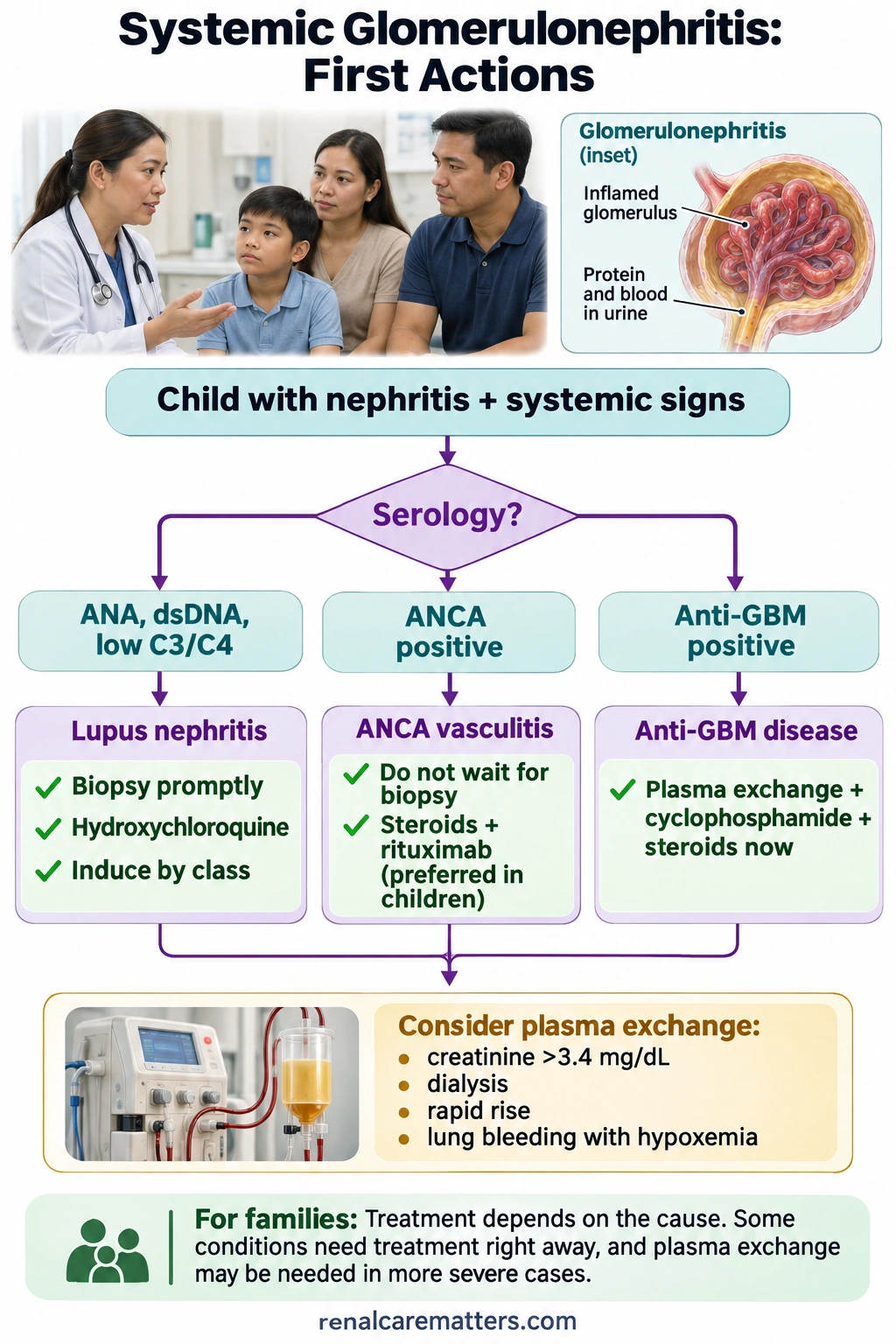
Induction. KDIGO 2024 recommends glucocorticoids with rituximab or cyclophosphamide for initial treatment, and lists children and adolescents, and patients concerned about their fertility, among those in whom rituximab is preferred.8 Its corrected Practice Point 9.3.1.9 advises considering plasma exchange for patients with a serum creatinine above 3.4 mg/dL (300 µmol/L), those requiring dialysis or with a rapidly rising creatinine, and those with diffuse alveolar hemorrhage and hypoxemia.9 The evidence for plasma exchange comes from PEXIVAS, which randomized 704 adults with severe ANCA vasculitis (eGFR below 50 or diffuse pulmonary hemorrhage). Death or end-stage kidney disease (ESKD) occurred in 28.4% with plasma exchange and 31.0% without (hazard ratio 0.86, not significant). A reduced-dose glucocorticoid regimen was noninferior to standard dosing (27.9% vs 25.5%) and caused fewer serious infections in the first year (incidence rate ratio 0.69).10 PEXIVAS enrolled adults; in children, these findings support lower glucocorticoid exposure by extrapolation.
Anti-GBM disease is treated urgently with plasma exchange, cyclophosphamide and glucocorticoids, as the KDIGO 2021 glomerular disease guideline describes; outcomes depend on how early treatment begins.11 In a child with nephritis and hemoptysis, send ANCA and anti-GBM antibodies together and transfer early to a center that can dialyze and perform plasma exchange.
Presentation
Serology
First actions
Nephritis with rash, arthritis, cytopenias
ANA, anti-dsDNA positive; low C3 and C4
Biopsy promptly; start glucocorticoids if crescentic or rapidly progressive; hydroxychloroquine
Rapidly progressive GN, sinus or lung disease
MPO- or PR3-ANCA positive; normal complement
Start glucocorticoids with rituximab or cyclophosphamide; biopsy when feasible; consider plasma exchange by PP 9.3.1.9
Rapidly progressive GN with pulmonary hemorrhage
Anti-GBM positive (sometimes with ANCA)
Plasma exchange, cyclophosphamide and glucocorticoids without delay; transfer
On the ward, the cough with blood · fictional
A 14-year-old boy from Batangas with cola urine coughs bright blood overnight; his oxygen saturation drops to 89%, and his creatinine has risen from 1.0 to 2.8 mg/dL in four days. ANCA and anti-GBM results will take three days from a send-out laboratory.
You start pulse glucocorticoids as the unit protocol directs, call the pediatric intensive care unit, and arrange transfer to a center that can do plasma exchange and dialysis today. You do not wait for the serology.
What this shows. In pulmonary-renal syndrome, delay costs lungs and kidneys. Treatment begins on the clinical picture.
RememberA positive ANCA in a compatible illness is enough to start treatment. The biopsy confirms; it does not license delay.
Figure 3. First actions in systemic glomerulonephritis. Biopsy lupus promptly; in ANCA or anti-GBM disease start treatment on the clinical picture and consider plasma exchange by KDIGO criteria.
Lesson · part 4
The attending’s plan: biopsy, protection and the long road
Biopsy early and safely. Correct the platelet count and blood pressure as far as the protocol requires, and push for the earliest safe slot. Ten days is too long for a girl whose creatinine doubled in a week. If the biopsy must wait, discuss with the rheumatologist starting glucocorticoids now, accepting that the biopsy should follow within days so that the class can still guide the choice of the second agent.
Protect before you suppress. Screen for tuberculosis and hepatitis B before intensive immunosuppression, update inactivated vaccines where time allows, and plan infection prophylaxis as your unit protocol and the regimen require. Start hydroxychloroquine and arrange baseline and periodic eye examinations.
Talk about fertility honestly. Cyclophosphamide’s gonadal toxicity rises with cumulative dose and age; low-dose regimens are designed to limit cumulative exposure, and KDIGO 2024 lists MMF-based options as equal alternatives for lupus nephritis. For an adolescent girl, discuss contraception as well, because MMF is teratogenic and pregnancy during active nephritis is dangerous. Speak to Angelica directly; at 13 she can understand and should assent.
Long-term threat
Why it happens
What you do
Flare
Poor adherence, early withdrawal, disease biology
At least 36 months of total immunosuppression for proliferative LN; regular urine protein and complement
Long treatment, side effects on appearance, transition
Shared goals, private time with the adolescent, a planned handover to adult care
Measure disease activity the same way each time. A systemic activity score such as the SLE Disease Activity Index (SLEDAI), linked below, helps you and the rheumatologist speak the same language, while proteinuria, sediment, creatinine and complement track the kidney.
Figure 4 · Suspected lupus nephritis in a child
Confirm SLEANA, anti-dsDNA, complement, blood counts; joint review with rheumatology.
Grade the kidneyCreatinine trend, UPCR, sediment, blood pressure.
Biopsy promptlyCorrect platelets and pressure; do not let the list delay a rapidly rising creatinine.
ProtectTuberculosis and hepatitis B screening, vaccines, hydroxychloroquine, eye examination.
Induce by classKDIGO 2024 options with the family; counsel on fertility and contraception; doses from the formulary.
MaintainAt least 36 months of total therapy; complete response in children is proteinuria below 0.5 g/1.73 m²/day.
Keep her engagedAdherence, school, body image, transition plan.
Stop and call
Creatinine rising over days, or oliguria
Hemoptysis, falling oxygen saturation or diffuse alveolar hemorrhage
Seizure, severe headache or hypertensive urgency
Fever on intensive immunosuppression
Platelets falling with hemolysis (consider thrombotic microangiopathy, Module 13)
RememberLupus nephritis in a child is a three-year commitment at least. Plan the maintenance, the monitoring and the adolescent’s place in decisions from the first week.
On the floor
Real situations: problems and solutions
These are fictional but typical. For each one, cover the answer, decide what you would do, then compare. Where a step depends on local rules, your unit’s procedure and your supervisor’s direction come first.
The biopsy list ten days away
What you see
A girl with new lupus, a doubling creatinine and red cell casts is scheduled for biopsy in ten days.
What is likely going on
Probable proliferative lupus nephritis with a delay that risks the kidney.
What to do
Escalate for an earlier slot once platelets and blood pressure allow, agree with rheumatology on starting glucocorticoids, and start hydroxychloroquine.
Why it matters
The class guides the second agent; rapid deterioration cannot wait for a routine list.
The missed MMF doses
What you see
A 15-year-old on MMF maintenance has rising proteinuria; pharmacy records show she collected half her prescriptions.
What is likely going on
Non-adherence, common in adolescents on long therapy, rather than treatment failure.
What to do
Talk with her alone, find out why (side effects, cost, school, appearance), simplify the routine, involve social service, and agree on goals before escalating therapy.
Why it matters
Escalating immunosuppression for non-adherence adds toxicity without addressing the cause.
Fever after rituximab
What you see
A boy treated with rituximab for ANCA vasculitis three months ago presents with fever and cough.
What is likely going on
Serious infection on B-cell depletion, possibly with hypogammaglobulinemia.
What to do
Admit, culture and treat promptly; check immunoglobulins; inform the treating team.
Why it matters
Infection is a leading cause of harm during vasculitis treatment; reduced-dose glucocorticoids lowered serious infections in PEXIVAS.
Low platelets and falling hemoglobin in lupus
What you see
A child with lupus nephritis develops falling platelets, fragmented red cells and a rising creatinine.
What is likely going on
Thrombotic microangiopathy (TMA), which may accompany lupus or antiphospholipid antibodies.
What to do
Send a blood film, lactate dehydrogenase (LDH), haptoglobin and antiphospholipid antibodies; discuss urgent management with hematology (Module 13).
Why it matters
TMA changes treatment and can be missed when every abnormality is attributed to lupus activity.
Field notes
Start hydroxychloroquine at diagnosis and book the eye examination the same week.
Write the start date of immunosuppression in large print; the 36-month clock runs from it.
Give adolescents private time at every visit.
Send ANCA and anti-GBM together in any child with nephritis and lung symptoms.
Case review
Back to the case: The creatinine that doubled
Biopsy, and whether to wait. The biopsy class decides the regimen: proliferative class III or IV needs full induction, class V alone is managed differently, and class VI changes the goal. But her creatinine has doubled in a week, and ten days is too long. Push for an earlier slot once platelets and blood pressure are acceptable, and agree with the rheumatologist whether to start glucocorticoids now, with the biopsy following within days. Start hydroxychloroquine, which KDIGO 2024 recommends for everyone with SLE (1C), and screen for tuberculosis and hepatitis B.
Induction for a 13-year-old. If the biopsy shows class III or IV, KDIGO 2024 offers glucocorticoids plus an MPAA, low-dose intravenous cyclophosphamide, belimumab with either, or an MPAA with a CNI (each 1B), and advises treating children with regimens similar to adults. Answer the mother directly: cyclophosphamide’s effect on fertility rises with cumulative dose, low-dose regimens are designed to limit exposure, and MMF-based induction avoids the drug altogether; SHARE accepts either MMF or intravenous cyclophosphamide for children. Because she is growing, keep glucocorticoid exposure as low as the regimen allows and monitor growth and bone. Discuss contraception, since MMF is teratogenic. Plan at least 36 months of total therapy and aim for proteinuria below 0.5 g/1.73 m² per day.
If it were ANCA vasculitis. Pauci-immune necrotizing crescents with MPO-ANCA would make this ANCA-associated GN. Treatment would start on the clinical picture and serology without waiting for the biopsy. KDIGO 2024 lists children and adolescents and patients concerned about fertility among those in whom rituximab is preferred with glucocorticoids, and a reduced-dose glucocorticoid regimen, supported by PEXIVAS in adults, would limit steroid harm. Plasma exchange would be considered if her creatinine exceeded 3.4 mg/dL, if she needed dialysis or her creatinine rose rapidly, or if she developed alveolar hemorrhage with hypoxemia. Hydroxychloroquine would not be part of the plan.
Skills lab · with your preceptor
Skills checklist: Lupus nephritis and vasculitis in children
Complete with a preceptor, in simulation or at your own unit. Sign-off is local. Your preceptor rates each step as satisfactory, needs practice, or not observed. Steps marked Critical must all be satisfactory before sign-off. This checklist supports supervised learning; your unit’s own procedure and competency form are the authority. A printable version of every checklist is on the trainer page.
Interprets an ISN/RPS lupus nephritis biopsy report and links the class to treatment intensity
Presents KDIGO 2024 induction options to an adolescent and her family, including fertility and contraception
Recognizes pulmonary-renal syndrome and starts treatment and transfer without waiting for serology
Writes a maintenance and monitoring plan covering at least 36 months, growth, bone, eyes and infection
Placement activity. Pediatric ward, nephrology or joint rheumatology clinic
Self-assessment
Check your understanding
Each visit draws 5 questions at random from this module’s 5-question bank. Choose the single best answer for each, then select Check answers; an explanation appears under the best answer. Select New set of questions for a different mix. A good target is 4 of 5 on two different sets. Nothing you select is sent anywhere; scoring happens in your browser.
Groot, N., de Graeff, N., Marks, S. D., Brogan, P., Avcin, T., Bader-Meunier, B., Dolezalova, P., Feldman, B. M., Kone-Paut, I., Lahdenne, P., McCann, L., Özen, S., Pilkington, C. A., Ravelli, A., Royen-Kerkhof, A. V., Uziel, Y., Vastert, B. J., Wulffraat, N. M., Beresford, M. W., & Kamphuis, S. (2017). European evidence-based recommendations for the diagnosis and treatment of childhood-onset lupus nephritis: The SHARE initiative. Annals of the Rheumatic Diseases, 76(12), 1965–1973. https://doi.org/10.1136/annrheumdis-2017-211898
Kidney Disease: Improving Global Outcomes (KDIGO) Lupus Nephritis Work Group. (2024). KDIGO 2024 clinical practice guideline for the management of lupus nephritis. Kidney International, 105(1S), S1–S69. https://doi.org/10.1016/j.kint.2023.09.002
Livingston, B., Bonner, A., & Pope, J. (2011). Differences in clinical manifestations between childhood-onset lupus and adult-onset lupus: A meta-analysis. Lupus, 20(13), 1345–1355. https://doi.org/10.1177/0961203311416694
Hiraki, L. T., Feldman, C. H., Liu, J., Alarcón, G. S., Fischer, M. A., Winkelmayer, W. C., & Costenbader, K. H. (2012). Prevalence, incidence, and demographics of systemic lupus erythematosus and lupus nephritis from 2000 to 2004 among children in the US Medicaid beneficiary population. Arthritis and Rheumatism, 64(8), 2669–2676. https://doi.org/10.1002/art.34472
Cabral, D. A., Canter, D. L., Muscal, E., Nanda, K., Wahezi, D. M., Spalding, S. J., Twilt, M., Benseler, S. M., Campillo, S., Charuvanij, S., Dancey, P., Eberhard, B. A., Elder, M. E., Hersh, A., Higgins, G. C., Huber, A. M., Khubchandani, R., Kim, S., Klein-Gitelman, M., . . . ARChiVe Investigators Network within the PedVas Initiative. (2016). Comparing presenting clinical features in 48 children with microscopic polyangiitis to 183 children who have granulomatosis with polyangiitis (Wegener’s): An ARChiVe cohort study. Arthritis & Rheumatology, 68(10), 2514–2526. https://doi.org/10.1002/art.39729
Furie, R., Rovin, B. H., Houssiau, F., Malvar, A., Teng, Y. K. O., Contreras, G., Amoura, Z., Yu, X., Mok, C. C., Santiago, M. B., Saxena, A., Green, Y., Ji, B., Kleoudis, C., Burriss, S. W., Barnett, C., & Roth, D. A. (2020). Two-year, randomized, controlled trial of belimumab in lupus nephritis. New England Journal of Medicine, 383(12), 1117–1128. https://doi.org/10.1056/NEJMoa2001180
Rovin, B. H., Teng, Y. K. O., Ginzler, E. M., Arriens, C., Caster, D. J., Romero-Diaz, J., Gibson, K., Kaplan, J., Lisk, L., Navarra, S., Parikh, S. V., Randhawa, S., Solomons, N., & Huizinga, R. B. (2021). Efficacy and safety of voclosporin versus placebo for lupus nephritis (AURORA 1): A double-blind, randomised, multicentre, placebo-controlled, phase 3 trial. Lancet, 397(10289), 2070–2080. https://doi.org/10.1016/S0140-6736(21)00578-X
Kidney Disease: Improving Global Outcomes (KDIGO) ANCA Vasculitis Work Group. (2024). KDIGO 2024 clinical practice guideline for the management of antineutrophil cytoplasmic antibody (ANCA)–associated vasculitis. Kidney International, 105(3S), S71–S116. https://doi.org/10.1016/j.kint.2023.10.008
Kidney Disease: Improving Global Outcomes (KDIGO) ANCA Vasculitis Work Group. (2024). Corrigendum: KDIGO 2024 clinical practice guideline for the management of ANCA-associated vasculitis (amendments to Figures 6–8 and 13 and Practice Points 9.3.1.9 and 9.3.3.1). https://doi.org/10.1016/j.kint.2024.04.003
Walsh, M., Merkel, P. A., Peh, C. A., Szpirt, W. M., Puéchal, X., Fujimoto, S., Hawley, C. M., Khalidi, N., Floßmann, O., Wald, R., Girard, L. P., Levin, A., Gregorini, G., Harper, L., Clark, W. F., Pagnoux, C., Specks, U., Smyth, L., Tesar, V., . . . PEXIVAS Investigators. (2020). Plasma exchange and glucocorticoids in severe ANCA-associated vasculitis. New England Journal of Medicine, 382(7), 622–631. https://doi.org/10.1056/NEJMoa1803537
Kidney Disease: Improving Global Outcomes (KDIGO) Glomerular Diseases Work Group. (2021). KDIGO 2021 clinical practice guideline for the management of glomerular diseases. Kidney International, 100(4S), S1–S276. https://doi.org/10.1016/j.kint.2021.05.021
Educational material for physicians. Completing it is an Academy learning record only. It does not confer CPD units, PNSP or board certification, privileges, or PhilHealth accreditation, and it does not replace current guidelines, regulations, your institution’s pediatric protocols and formulary, or clinical judgment.