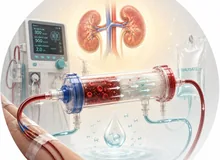
The operation the patient uses three times a week
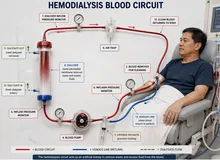
Most operations end when the wound heals. A dialysis access starts working when the wound heals, and it has to keep working, twelve needle punctures a month, for as long as the patient needs hemodialysis (HD). The measure of your work is not a patent anastomosis on the table. It is whether the patient dialyzes reliably, without a catheter, with the fewest procedures, while keeping the next site available.
The Philippine Society of Nephrology (PSN) 2024 hemodialysis guidelines make the attending nephrologist responsible for coordinating vascular access with a vascular surgeon or a trained general surgeon (Section 1.2, b3).1 This track is written for the other end of that call. It follows a patient from referral through planning, creation, first cannulation, failure and rescue, and into the service that holds it together.
Figure 1 · What this track will help you do
How the role works in Philippine practice. The surgeon is usually a consultant to the hemodialysis center (HDC), not its staff. The attending nephrologist owns the dialysis prescription and the kidney plan; the dialysis nurse cannulates within an authorized scope; the physician on duty (POD) manages the shift. Your privileges come from the hospital where you operate, not from the dialysis unit and not from this course. The cases are written from that position: called by a unit you do not run, about a patient you may meet for the first time.
Every new term is explained when it first appears. Every module has a case, figures, a skills checklist, linked calculators, and a five-question self-assessment.
What this series is, and is not
It is a training track written independently from published guidelines, trials, and Philippine regulations. It is not a license, board certification or eligibility, continuing professional development (CPD) credit, hospital privileges, or Philippine Health Insurance Corporation (PhilHealth) accreditation, and it does not teach operative technique. Competence requires observation by a qualified local assessor and your hospital’s credentialing. Clinical review of this track is pending.
Who can hold this role
Vascular Surgeon: qualifications at a glance
- PRC-licensed physician with surgical training; specialty credentials verified by the hospital that appoints the surgeon. No Department of Health (DOH) or Philippine Society of Nephrology (PSN) rule defines a separate vascular surgeon post for a dialysis unit. DOH, PSN
- PSN 2024 §1.2 b3 asks the attending nephrologist to coordinate access with a vascular surgeon or trained general surgeon; it does not credential the surgeon. PSN
- Privileges for each open, catheter and endovascular procedure come from the operating hospital’s credentialing committee; trainees work under documented supervision.
- PATACSI lists accredited TCVS training programs, including a post-residency vascular pathway; confirm board routes with the relevant board. Completing this track grants no privileges or certification.
Sources: DOH Administrative Order No. 2012-0001, Sec. V.B.2.a; Philippine Society of Nephrology (2024), Guidelines for nephrologists in the operation of hemodialysis clinics, Sec. III.A; Republic Act No. 10862. A summary for orientation, not legal advice: check the current issuances, and your unit’s license and PhilHealth accreditation. The full table for every role is on the Academy home.
Ten weeks of study, in four blocks
The 20 modules are grouped into four blocks and studied at two modules a week. The emergency modules (12 to 16) can be opened directly when you need them.
Figure 2 · The four blocks
Twenty modules in four blocks
Study the modules in order. Each one moves from intuition to physiology, then to the evidence, and ends with what the surgeon does.
Block 1 · Responsibility and planning
 Module 1
The surgeon in the kidney care team
Separate surgical responsibility from dialysis governance, triage a referral, and close it with a named owner.
 Module 2
The lifetime access plan
Build an end-stage kidney disease (ESKD) Life-Plan with a present access, a contingency and a successor, chosen with the patient.
 Module 3
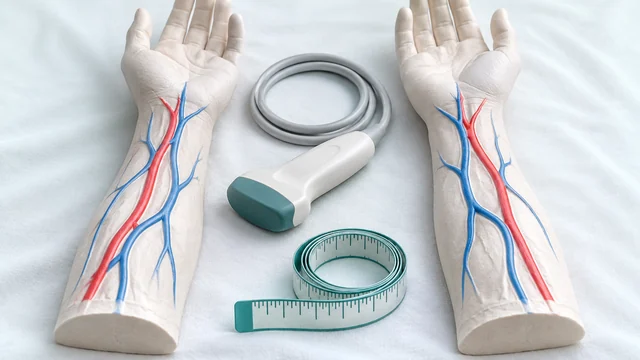
Examine and preserve the vessels
Take a vessel history, examine both arms, and protect the veins the patient will need.
 Module 4
Mapping and choosing an access
Read a vessel map for construction and cannulation, and justify the choice you make.
Block 2 · Creation and safe use
 Module 5
Make the patient ready for surgery
Reconcile dialysis timing, potassium, bleeding risk and anesthesia, and obtain consent that means something.
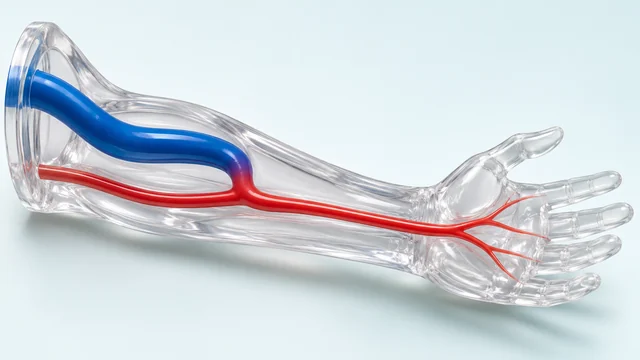 Module 6
Plan and create an autogenous fistula
Plan a fistula as a future cannulation site, follow the consent, and hand off what you found.
 Module 7
Grafts and alternative configurations
Choose a graft for the right reasons and set its first-use conditions from the device and the patient.
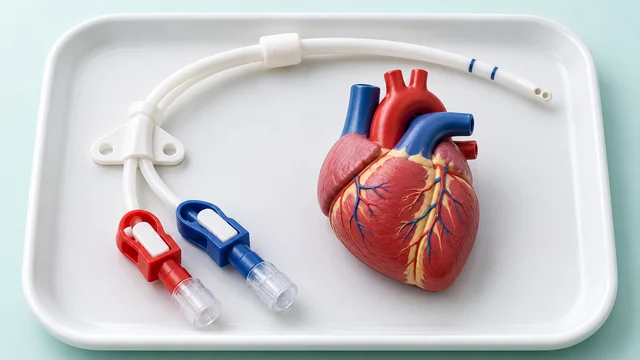 Module 8
Dialysis catheters and central veins
Give every catheter an indication, a site that protects the future, and an exit date.
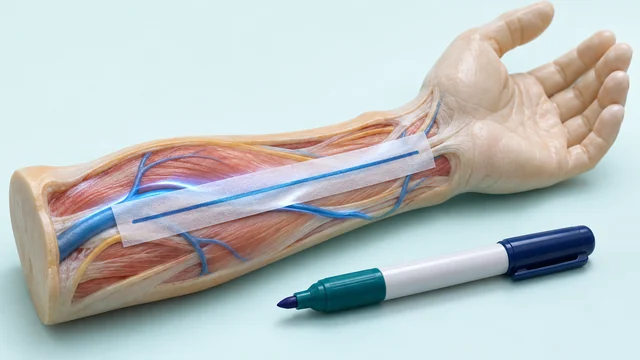 Module 9
Maturation and the first cannulation
Tell a patent access from a usable one and agree a written first-use plan.
Block 3 · Dysfunction and rescue
 Module 10
Recognize a failing access
Link a clinical change to anatomy before imaging decides for you.
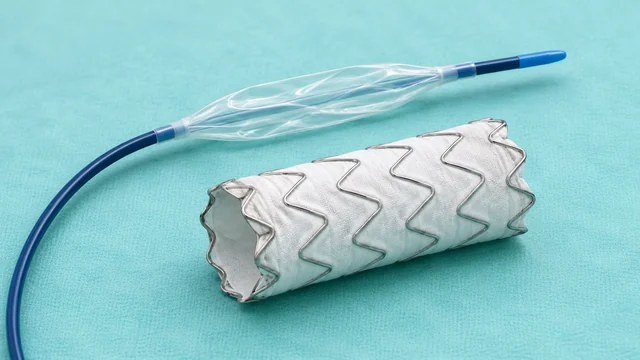 Module 11
Stenosis and endovascular choices
Treat the lesion that causes the problem, with the device that protects the next site.
 Module 12
Thrombosis and urgent dialysis
Run dialysis safety and access salvage in parallel, and treat the cause of the clot.
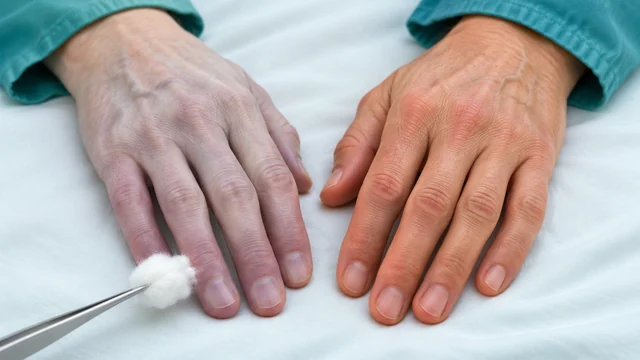 Module 13
Hand ischemia and neurologic injury
Recognize a threatened hand, grade it, and escalate before the thrill reassures anyone.
 Module 14
Aneurysm and life threatening bleeding
Read the skin over an aneurysm and stop a bleed with pressure, help and a plan.
 Module 15
Access infection and sepsis
Treat sepsis first, then decide what source control the access needs.
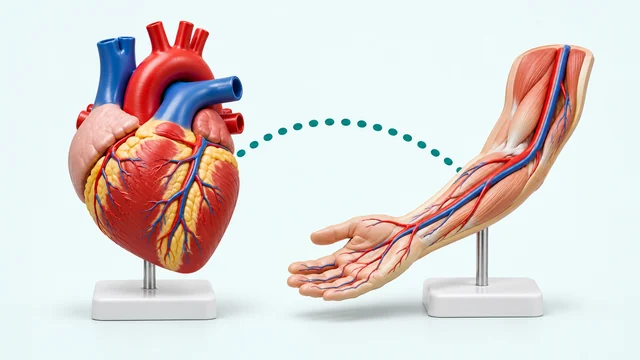 Module 16
High flow and central venous obstruction
Formulate the mechanism of breathlessness or arm swelling before choosing an operation.
Block 4 · Complex care and governance
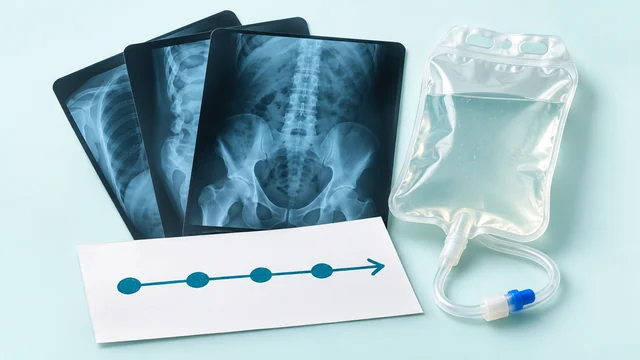 Module 17
The difficult access and changing modality
Reconstruct the history, run a complex access conference, and revisit modality with the patient.
 Module 18
Kidney care beyond the access
Route limb, renal artery and transplant problems to the right service and protect kidney function.
 Module 19
Philippine documentation and quality
Keep the clinical record, the claim and the audit separate, with honest definitions and denominators.
 Module 20
The integrated vascular access service
Defend one patient’s pathway and one service improvement, with every handoff owned.
The same seven steps every time
Figure 3 · How to work through a module
- ObjectivesRead what you should be able to do by the end.
- Big pictureA plain-words summary and the key terms, before any detail.
- Opening caseA fictional shift problem. Decide what you would do first.
- LessonShort parts with pictures, tables, and worked examples.
- Case reviewCompare your answer with one sound response.
- Skills checklistPractice with a preceptor on real or training equipment.
- Self-assessmentFive questions drawn from a larger bank, with explanations.
New terms are explained the first time they appear, and every page ends with a glossary. Abbreviations are spelled out at first use. If a sentence still reads like jargon, check the glossary, then ask your preceptor to show you the real object on the unit: most of this work makes sense faster when you can see and touch the equipment.
The series at a glance
Plan about 90 minutes per module for study, case discussion and self-check (30 hours), plus 16 hours of observed work or simulation and a 4-hour capstone: 50 planned hours. These hours are an Academy design choice, not a national requirement, and they do not qualify anyone for independent surgery.
| No. | Module | Lessons | Opening case | Skills checklist | Practice |
|---|---|---|---|---|---|
| 1 | The surgeon in the kidney care team |
| Friday, 4:40 p.m. | Taking and closing an access referral | 5 questions |
| 2 | The lifetime access plan |
| The referral says “fistula, please” | Building an access Life-Plan | 5 questions |
| 3 | Examine and preserve the vessels |
| The swollen arm with the beautiful vein | Structured access assessment | 5 questions |
| 4 | Mapping and choosing an access |
| Two maps, two answers | Interpreting a map and justifying a choice | 5 questions |
| 5 | Make the patient ready for surgery |
| Second on the list | Pre-operative readiness huddle | 5 questions |
| 6 | Plan and create an autogenous fistula |
| The vein that was not there | Fistula planning, judgment and handoff | 5 questions |
| 7 | Grafts and alternative configurations |
| Three weeks to dialysis | Graft selection and first-use plan | 5 questions |
| 8 | Dialysis catheters and central veins |
| Breathless after the exchange | Catheter indication, safety and exit plan | 5 questions |
| 9 | Maturation and the first cannulation |
| Six weeks and a thrill | Joint readiness assessment and first-use handoff | 5 questions |
| 10 | Recognize a failing access |
| The narrowing on the report | Linking clinical signs to a diagnostic question | 5 questions |
| 11 | Stenosis and endovascular choices |
| The convenient stent | Intervention decision with future-site review | 5 questions |
| 12 | Thrombosis and urgent dialysis |
| The declot list is tomorrow | Parallel salvage and dialysis plan | 5 questions |
| 13 | Hand ischemia and neurologic injury |
| “It’s still buzzing, doctor” | Urgent limb assessment | 5 questions |
| 14 | Aneurysm and life threatening bleeding |
| The shiny bulge | Skin threat recognition and hemorrhage response | 5 questions |
| 15 | Access infection and sepsis |
| The draining graft | Sepsis recognition and source-control handoff | 5 questions |
| 16 | High flow and central venous obstruction |
| Breathless despite dry weight | Multidisciplinary problem formulation | 5 questions |
| 17 | The difficult access and changing modality |
| The ninth procedure | Complex access conference | 5 questions |
| 18 | Kidney care beyond the access |
| The toe at the fistula visit | Scope decision and urgent routing | 5 questions |
| 19 | Philippine documentation and quality |
| The dashboard that counts everything | Documentation bundle and audit design | 5 questions |
| 20 | The integrated vascular access service |
| Three sites, no pathway | Capstone: pathway and service defense | 5 questions |
Self-assessment is not sign-off
Each module ends with a self-assessment of 5 questions; the mastery mark is 4 of 5. The end-of-track examination draws 40 questions from the 100-question bank; the proposed learning target is 32 of 40, and every missed safety item calls for review even when the total passes. Supervised clinical assessment is separate: the observation form, four emergency stations and the capstone are on the trainer page. A browser score is a study record, not a competence decision.
End-of-course examination. When you have finished every module, take the end-of-course examination. It draws questions at random from all 20 modules, so no two sittings are the same.
What the series is built on
The track is built from published sources: the Kidney Disease Outcomes Quality Initiative (KDOQI) 2019 vascular access guideline and its implementation tools, the UK Kidney Association (UKKA) 2025 vascular access guideline, the European Society for Vascular Surgery (ESVS) 2018 guideline, the Society for Vascular Surgery (SVS) guideline and reporting standards, the randomized trials and meta-analyses they rest on, and Philippine requirements from the Department of Health (DOH), PhilHealth, and the PSN. UKKA statements are quoted with UKKA’s own grades; no grade is translated between systems. Each module lists its own sources.
Evidence was reviewed on November 25, 2026. The ESVS has a replacement access guideline in development; none of its unpublished recommendations is used. PhilHealth rules must be confirmed on the date of service. Clinical review by a vascular surgeon, a nephrologist, a dialysis nurse and a Philippine policy reviewer is pending.
Using the series in a training program
A vascular surgery program director, an access service lead or a senior access surgeon can use these modules as the guided-study part of a fellow’s access rotation or a new consultant’s orientation. The trainer and preceptor page gathers the proposed hours, completion criteria, and every skills checklist in one printable place. These are proposals for a provider to adapt and validate on its own equipment; they are not requirements of any regulator.