Kidney failure lands on a household
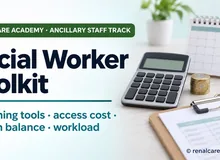
Kidney failure is diagnosed in one body, but it lands on a whole household. Three mornings a week disappear into dialysis. A job paid by the day ends. A daughter in high school becomes the person who knows the medicines. A tricycle fare of a few hundred pesos, multiplied by thirteen visits a month, becomes the reason a session is missed. The nephrologist sees the potassium. The renal social worker is the member of the team whose job is to see everything else.
Your work rests on three habits. Start from what the person wants, not from the form an agency needs. Turn what you learn into a formulation, a plain explanation of why things are happening, and then into a plan with owners and dates. And close every loop on evidence: a referral sent is an action, an outcome that reached the household is a result.
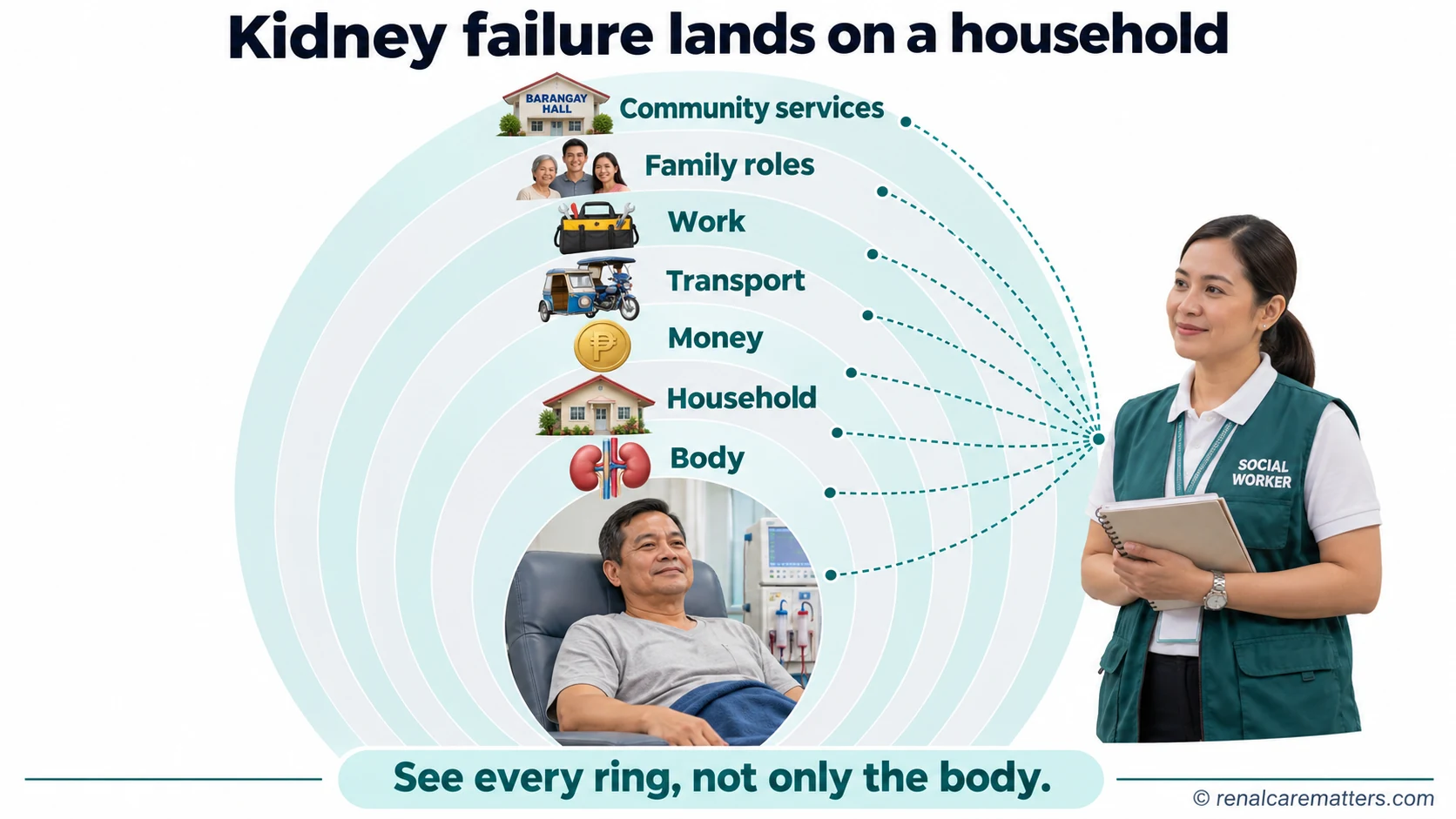
Figure 2 · What this track will help you do
The track has two learner paths. The professional path is for registered social workers, who study all twenty modules and complete the observed stations and supervised practice. The navigation orientation is for navigators, assistants, and administrative partners, who study Modules 1 to 4, 6 to 9, 17, and 18 to learn recognition and handoff; it does not qualify anyone to conduct or sign a professional social work assessment. Each module has a timed case, real situations, a skills checklist for a supervisor, and a self-assessment drawn from a bank of ten questions.
What this series is, and is not
It is a training track written independently from published laws, regulations, guidelines, and research. It is not a Professional Regulation Commission (PRC) license or specialty credential, continuing professional development (CPD) units, legal advice, a benefits ruling, or a psychotherapy qualification. No social worker staffing ratio or specialty certification was identified in the reviewed Department of Health (DOH) dialysis order or the Philippine Society of Nephrology (PSN) 2024 hemodialysis guidelines; that finding is limited to the documents reviewed and does not mean no requirement applies to your facility. Clinical questions always go to the attending nephrologist.
Who can hold this role
Renal Social Worker: qualifications at a glance
- Must be a registered social worker: a recognized social work degree and current PRC registration under Republic Act No. 4373 as amended by Republic Act No. 10847. RA 4373, RA 10847
- No social worker post, staffing ratio, or renal specialty certificate was identified in the reviewed DOH dialysis licensing order or the PSN 2024 hemodialysis guidelines; confirm the current licensing checklist and your employer’s requirements. DOH, PSN
- Navigators and assistants may support navigation under supervision but may not sign professional social work assessments. Completing this track grants no license or credential.
Sources: DOH Administrative Order No. 2012-0001, Sec. V.B.2.a; Philippine Society of Nephrology (2024), Guidelines for nephrologists in the operation of hemodialysis clinics, Sec. III.A; Republic Act No. 10862. A summary for orientation, not legal advice: check the current issuances, and your unit’s license and PhilHealth accreditation. The full table for every role is on the Academy home.
Six weeks of study, in five parts
The twenty modules follow the questions a renal social worker answers for every person: what the role is and how the system works, what is happening in this household and how to reach the help it needs, how the person is coping and whether they are safe, how they move through changes in treatment, and how the work is recorded, measured, and supervised.
Figure 3 · The five parts
Twenty modules in five parts
Study the modules in order. Each one starts from a person’s situation, moves to what the evidence and the rules say, and ends with what you do on your next shift.
Part 1 · Foundations
 Module 1
The Renal Social Worker: Role, Ethics, and Boundaries
Starting from the person’s purpose, regulated practice and its edges, ethics you can see, and who decides what.
 Module 2
Kidney Care Literacy for Social Workers
What the kidneys do, what dialysis can and cannot replace, the treatment options, and when a social fact becomes a clinical fact.
 Module 3
Philippine Requirements and a Defensible Service Model
Who issues which rule, what the reviewed documents say and do not say, a service charter, and coverage and escalation.
 Module 4
Engagement, Language Access, and Cultural Safety
The first five minutes, language and health literacy, family and culture without stereotype, and consent for family participation.
Part 2 · Assessment and access
 Module 5
A Comprehensive Psychosocial Assessment
Domains and sources, strengths before deficits, the formulation, and writing it so the team can use it.
 Module 6
Care Plans, Referrals, and Case Management
Goals that belong to the person, actions with owners and dates, the referral loop, and review and closure.
 Module 7
PhilHealth Navigation and Financial Protection
Reading a rule by version and date, the hemodialysis package, peritoneal dialysis and transplant benefits, and explaining without promising.
 Module 8
Assistance Pathways and Resource Mobilization
Mapping sources before applying, government assistance programs, factual social case studies, and tracking decisions, not submissions.
 Module 9
Transport, Work, Housing, Food, and Disability Access
The access equation, work and income, housing, food and water, and disability benefits.
Part 3 · Psychosocial care
 Module 10
Distress, Depression, Anxiety, and Stepped Support
How common distress is, screening honestly, what helps and how well, and stepped care with referral.
 Module 11
Immediate Safety, Safeguarding, Violence, and Exploitation
Asking directly about suicide, the safety pathway, abuse and exploitation of older adults, and violence in the home.
 Module 12
Motivational Conversations and Treatment Barriers
Describing instead of labeling, the spirit and skills of motivational interviewing, barrier-specific problem solving, and when to stop pushing.
 Module 13
Families, Caregivers, Children, and Changing Life Roles
Who cares and what it costs, caregiver assessment and backup, children in the household, and role loss.
Part 4 · Transitions
 Module 14
Modality Decisions, Home Therapy, and Practical Feasibility
What each modality asks of a household, home peritoneal dialysis feasibility, assisted options, and respecting choices.
 Module 15
Transplant Access, Psychosocial Preparation, and Donor Protection
The psychosocial evaluation and its limits, supporting candidates, the donor’s separate path, and coercion and trafficking.
 Module 16
Supportive Care, Treatment Decisions, Grief, and Bereavement
Conservative kidney management, advance care planning, decisions to stop dialysis, and grief and bereavement follow-up.
 Module 17
Transfers, Disasters, and Continuity of Care
Transfer as a handoff, temporary dialysis away from home, typhoon and flood planning, and arrival confirmation.
Part 5 · Accountability
 Module 18
Documentation, Privacy, Telehealth, and Digital Boundaries
Writing facts, sources, and plans, privacy law for social workers, releasing information, and phones, chats, and remote sessions.
 Module 19
Quality Improvement, Supervision, and Workload
Measures that mean something, numerators and denominators, supervision and reflective practice, and safe workload.
 Module 20
Integrated Case Conference and Readiness for Practice
Running a case conference, the integrated case, readiness and limits, and your development plan.
The same seven steps every time
Figure 4 · How to work through a module
- ObjectivesRead what you should be able to do by the end.
- Big pictureA plain-words summary and the key terms, before any detail.
- Opening caseA fictional shift problem. Decide what you would do first.
- LessonShort parts with pictures, tables, and worked examples.
- Case reviewCompare your answer with one sound response.
- Skills checklistPractice with a preceptor on real or training equipment.
- Self-assessmentFive questions drawn from a larger bank, with explanations.
New terms are explained the first time they appear, and every page ends with a glossary. Abbreviations are spelled out at first use. If a sentence still reads like jargon, check the glossary, then ask your preceptor to show you the real object on the unit: most of this work makes sense faster when you can see and touch the equipment.
The series at a glance
Each module plans one hour of guided study and one hour of case workshop and self-assessment (40 hours), with 16 hours of supervised practice spread across the modules and a four-hour final assessment: 60 hours in all. These are educational planning hours, not a PRC, DOH, or PhilHealth requirement.
| No. | Module | Lessons | Opening case | Skills checklist | Practice | Classroom (h) | Skills lab (h) | Placement (h) |
|---|---|---|---|---|---|---|---|---|
| 1 | The Renal Social Worker: Role, Ethics, and Boundaries |
| The navigator asked to sign | A role map and a first introduction | 10 questions · 3 real situations | 1 | 1 | 1 |
| 2 | Kidney Care Literacy for Social Workers |
| “Can he skip Saturday for his daughter’s graduation?” | Explaining the dialysis week and routing a question | 10 questions · 3 real situations | 1 | 1 | 0 |
| 3 | Philippine Requirements and a Defensible Service Model |
| The new unit with no social worker | A source register and a service charter | 10 questions · 3 real situations | 1 | 1 | 0 |
| 4 | Engagement, Language Access, and Cultural Safety |
| The son who answers every question | A first interview with language support and teach-back | 10 questions · 3 real situations | 1 | 1 | 1 |
| 5 | A Comprehensive Psychosocial Assessment |
| “Noncompliant” on the referral slip | An assessment and a formulation | 10 questions · 3 real situations | 1 | 1 | 1 |
| 6 | Care Plans, Referrals, and Case Management |
| Seven referrals, zero outcomes | A care plan and a referral log | 10 questions · 3 real situations | 1 | 1 | 1 |
| 7 | PhilHealth Navigation and Financial Protection |
| “The 156 sessions are used up in October” | Explaining a benefit by version and date | 10 questions · 3 real situations | 1 | 1 | 1 |
| 8 | Assistance Pathways and Resource Mobilization |
| The guarantee letter that covered half | An assistance map and a factual case study | 10 questions · 3 real situations | 1 | 1 | 1 |
| 9 | Transport, Work, Housing, Food, and Disability Access |
| The tricycle fare and the 5 a.m. shift | An access cost estimate with a family | 10 questions · 3 real situations | 1 | 1 | 1 |
| 10 | Distress, Depression, Anxiety, and Stepped Support |
| Mang Romeo’s Patient Health Questionnaire-9 (PHQ-9) of 16 | A two-step screen with the safety question | 10 questions · 3 real situations | 1 | 1 | 1 |
| 11 | Immediate Safety, Safeguarding, Violence, and Exploitation |
| The bruise and the missing pension | Asking about suicide and responding to a disclosure | 10 questions · 3 real situations | 1 | 1 | 1 |
| 12 | Motivational Conversations and Treatment Barriers |
| The man who leaves at hour two | A motivational conversation about a barrier | 10 questions · 3 real situations | 1 | 1 | 1 |
| 13 | Families, Caregivers, Children, and Changing Life Roles |
| Aling Nena is exhausted | A caregiver conversation and plan | 10 questions · 3 real situations | 1 | 1 | 1 |
| 14 | Modality Decisions, Home Therapy, and Practical Feasibility |
| The peritoneal dialysis bag storage problem | A modality map and a feasibility review | 10 questions · 3 real situations | 1 | 1 | 1 |
| 15 | Transplant Access, Psychosocial Preparation, and Donor Protection |
| The cousin who is “volunteering” | A transplant evaluation and a private donor interview | 10 questions · 3 real situations | 1 | 1 | 1 |
| 16 | Supportive Care, Treatment Decisions, Grief, and Bereavement |
| “I want to stop” | An advance care planning conversation and a family meeting | 10 questions · 3 real situations | 1 | 1 | 1 |
| 17 | Transfers, Disasters, and Continuity of Care |
| Typhoon signal 3 on a Monday | A transfer packet and an emergency plan | 10 questions · 3 real situations | 1 | 1 | 1 |
| 18 | Documentation, Privacy, Telehealth, and Digital Boundaries |
| The screenshot in the family group chat | A note, a release, and an incident | 10 questions · 3 real situations | 1 | 1 | 1 |
| 19 | Quality Improvement, Supervision, and Workload |
| “Our success rate is 100%” | A measure card and a workload report | 10 questions · 3 real situations | 1 | 1 | 0 |
| 20 | Integrated Case Conference and Readiness for Practice |
| The Dizon family, start to finish | A case conference presentation and a development plan | 10 questions · 3 real situations | 1 | 1 | 0 |
| Total | 20 | 20 | 16 |
Self-assessment is not sign-off
Each module ends with a self-assessment of 5 questions drawn at random from a bank of 10; a good target is 4 of 5 on two different sets. Every question explains why the best answer is best and why the others fail. The end-of-course self-study check draws two questions from each of the twenty modules (40 in all); the proposed pass is 32. The observed assessment on the trainer page has six stations, each passed at 8 of 10 with every critical criterion met; a high written score cannot make up for a safety failure.
End-of-course examination. When you have finished every module, take the end-of-course examination. It draws questions at random from all 20 modules, so no two sittings are the same.
What the series is built on
The track is built from published sources. Philippine requirements follow the social work law and its amendment,1,2 the PRC adoption of the social work code of ethics,3 the DOH dialysis licensing order,4 the PSN 2024 hemodialysis guidelines,5 PhilHealth’s hemodialysis, peritoneal dialysis, and kidney transplant circulars,6,7,8 the Department of Social Welfare and Development (DSWD), Philippine Charity Sweepstakes Office (PCSO), and Malasakit Center assistance pathways,9,10,11 and the Data Privacy Act.12 Statements about outcomes rest on peer-reviewed trials, cohorts, and systematic reviews of depression, health literacy, travel and cost barriers, caregivers, transplant, and grief.13,14,15,16,17,18
Where the evidence is observational, the text says “associated with.” Rules from other countries appear only as comparisons. Several Philippine sources could be read only in part (the full DOH licensing checklist, the annexes of DOH Department Memorandum No. 2024-0372, the full PRC code annex, and the peritoneal dialysis circular); the modules say so where it matters. PhilHealth Circular 2026-0019 on kidney transplantation was published on November 21, 2026 and takes effect 15 days after publication; on the research date it was published but not yet effective.8
Using the series in a training program
A medical social work department head, a senior renal social worker, or a dialysis unit head can use these modules as the guided-study part of a new social worker’s orientation. The trainer and preceptor page gathers the proposed hours, completion criteria, and every skills checklist in one printable place. These are proposals for a provider to adapt and validate on its own equipment; they are not requirements of any regulator.