The nurse in the home program
Most Filipinos with kidney failure start dialysis in a hemodialysis center, often after an urgent admission. Peritoneal dialysis (PD) lets many of them dialyze at home instead, with fewer trips, no needles, and more control of the day. It also asks a great deal: a catheter that must stay clean for years, a technique repeated more than a thousand times a year, and a person at home who must recognize trouble early. Internationally, nearly half of people who start PD are no longer on it at two years.1 Peritonitis, technique drift and unplanned transfers explain much of that, and the PD nurse is the program’s main defense against all three.
This track continues Nephrology Nursing Module 10: Peritoneal Dialysis and Home Dialysis Nursing. It takes a registered nurse from the physiology of a single dwell to the quality numbers of a whole program, in twelve modules over six weeks.
Figure 1 · Exit competencies
Prerequisites: a current Philippine nursing license, Nephrology Nursing Module 10 or equivalent, and basic infection prevention and medication safety. Rare emergencies are practiced in simulation, and every simulated event is recorded as simulation.
What this series is, and is not
It is a training track written independently from published guidelines, research and Philippine issuances. It is not a license, Philippine Society of Nephrology (PSN) or National Kidney and Transplant Institute (NKTI) training, a Philippine Health Insurance Corporation (PhilHealth) staffing credential, continuing professional development (CPD) credit, or clinical privileges. It does not replace your unit’s protocols, the device instructions for use, or the nephrologist’s written orders.
Six weeks, sixty planned hours
Each week pairs two modules with about four hours of self-study and case work, two hours of simulation or coached review, and four hours of supervised practice or structured observation (24, 12 and 24 hours in all). These are design estimates; extend supervised practice until the required opportunities and your facility’s criteria are met.
Figure 2 · Suggested sequence
- Week 1 · PD01 and PD02Explain the three-pore model; conduct a readiness interview. Evidence: a shared decision or readiness plan (A).
- Week 2 · PD03 and PD04Grade exit sites from photographs; run a mock exchange with a seeded breach. Evidence: access assessment and observed CAPD (B).
- Week 3 · PD05 and PD06Cross-check a cycler program against the order; time peritoneal equilibration test (PET) samples. Evidence: APD setup and a longitudinal nursing note (B, E).
- Week 4 · PD07 and PD08Timed cloudy-bag call; power-failure drill. Evidence: supervised triage or scenario log (C).
- Week 5 · PD09 and PD10Teach-back lab; ward handoff with an icodextrin alert. Evidence: readiness and retraining records (D, E).
- Week 6 · PD11 and PD12Assisted PD plan; infection-rate calculation and run chart. Evidence: capstone and quality exercise (E, F).
Twelve modules in six weeks
Study the modules in order. Each starts from a plain picture of what is happening, moves to the physiology and the evidence, and ends with what you do at the bedside, on the phone, and in the record.
Week 1 · Foundations
 Module 1
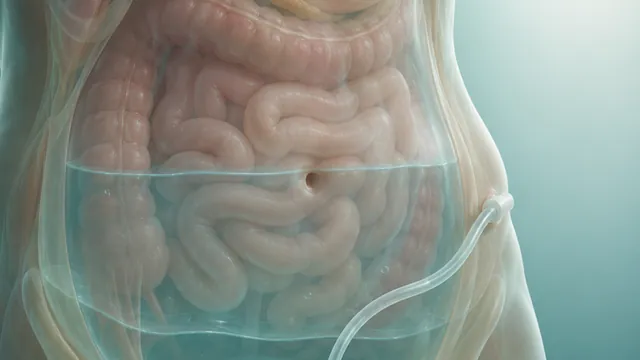
How PD Works, and What the PD Nurse Does
How diffusion, osmosis and fluid reabsorption work across the peritoneum, CAPD and APD, residual kidney function, and where the nurse's role stops.
 Module 2
Modality Counseling, Shared Decisions and Home Readiness
Goal-directed modality conversations, honest evidence on PD versus hemodialysis, six-domain home readiness, and assisted PD.
Week 2 · Access and CAPD
 Module 3
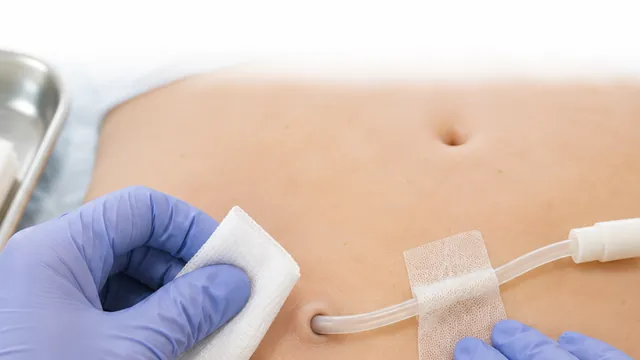
The Catheter, the Tunnel and the Exit Site
Catheter anatomy, how bacteria travel the tunnel, ISPD 2023 exit-site and tunnel infection definitions, and same-day triage.
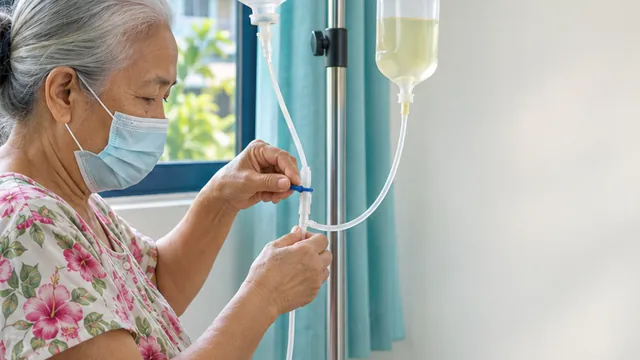 Module 4
The Manual Exchange: Measurement and Contamination
Flush before fill and its trial evidence, supply checks, honest ultrafiltration measurement, and dry versus wet contamination.
Week 3 · APD and monitoring
 Module 5
The Cycler: Setup, Treatment Record and Alarms
What each APD prescription element does, cross-checking the cycler, reading the treatment record, and alarms as clinical signals.
 Module 6
Monitoring, Membrane Testing and Goal-Directed PD
Why more clearance did not prolong life, goal-directed review, the PET and low-ultrafiltration thresholds, and valid samples.
Week 4 · Infection and urgent problems
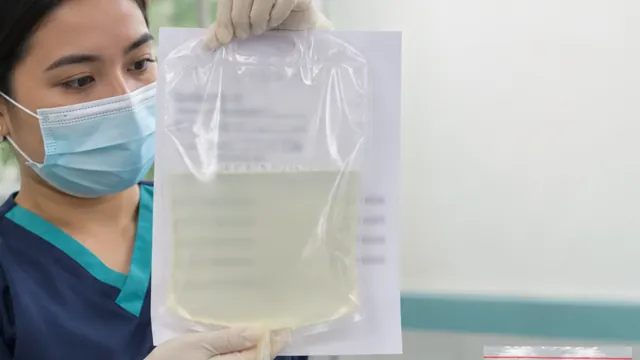 Module 7
Peritonitis: Recognition, Sampling and Prevention
Routes of infection, the ISPD 2022 diagnostic criteria, the first hour after a cloudy bag, outcome definitions, and prevention.
 Module 8
Mechanical, Volume and Urgent Problems
Outflow failure, leaks, hernias, pleural leak, emergencies that override troubleshooting, and typhoon and power-failure plans.
Week 5 · Teaching and transitions
 Module 9
Teach, Validate and Retrain
Adult learning, teach-back, the ISPD 2025 teaching position paper, readiness by return demonstration, and retraining triggers.
 Module 10
Longitudinal Care, Nutrition and Safe Transitions
Routine follow-up, nutrition and potassium, the icodextrin glucose-meter hazard, ward handoffs, and planned exits from PD.
Week 6 · Special populations and quality
 Module 11
Pediatric, Acute and Assisted PD
Orientation to pediatric PD, acute PD for acute kidney injury with ISPD grades, and building an assisted PD plan.
 Module 12
Philippine Practice, Records and Quality
Who governs a Philippine PD program, PhilHealth documentation, infection-rate arithmetic against ISPD targets, and improvement.
The same seven steps every time
Figure 3 · How to work through a module
- ObjectivesRead what you should be able to do by the end.
- Big pictureA plain-words summary and the key terms, before any detail.
- Opening caseA fictional shift problem. Decide what you would do first.
- LessonShort parts with pictures, tables, and worked examples.
- Case reviewCompare your answer with one sound response.
- Skills checklistPractice with a preceptor on real or training equipment.
- Self-assessmentFive questions drawn from a larger bank, with explanations.
New terms are explained the first time they appear, and every page ends with a glossary. Abbreviations are spelled out at first use. If a sentence still reads like jargon, check the glossary, then ask your preceptor to show you the real object on the unit: most of this work makes sense faster when you can see and touch the equipment.
The series at a glance
Each module takes about 2.5 to 3.5 hours to read and work through, plus coached practice. Skills checklists are completed with a preceptor, in simulation first and then in supervised practice.
| No. | Module | Lessons | Opening case | Skills checklist | Practice | Classroom (h) | Skills lab (h) | Placement (h) |
|---|---|---|---|---|---|---|---|---|
| 1 | How PD Works, and What the PD Nurse Does |
| Positive numbers, rising weight | Practice drill | 15 questions | 2 | 1 | 2 |
| 2 | Modality Counseling, Shared Decisions and Home Readiness |
| Mang Ernesto wants to stay home | Practice drill | 15 questions | 2 | 1 | 2 |
| 3 | The Catheter, the Tunnel and the Exit Site |
| Saturday morning discharge | Exit site and low drain (objective structured clinical examination (OSCE) station 4) | 15 questions | 2 | 1 | 2 |
| 4 | The Manual Exchange: Measurement and Contamination |
| A sleeve and a connector | CAPD exchange with a compromised bag (OSCE station 1) | 15 questions | 2 | 1 | 2 |
| 5 | The Cycler: Setup, Treatment Record and Alarms |
| Six alarms by morning | APD setup with a scripted alarm (OSCE station 2) | 15 questions | 2 | 1 | 2 |
| 6 | Monitoring, Membrane Testing and Goal-Directed PD |
| The first PET | Practice drill | 15 questions | 2 | 1 | 2 |
| 7 | Peritonitis: Recognition, Sampling and Prevention |
| Coconut milk at 6:40 AM | Cloudy bag with pain (OSCE station 3) | 15 questions | 2 | 1 | 2 |
| 8 | Mechanical, Volume and Urgent Problems |
| Three pillows at 9 preventive maintenance (PM) | After-hours outage call | 15 questions | 2 | 1 | 2 |
| 9 | Teach, Validate and Retrain |
| Two reminders | Teaching a learner with limited vision (OSCE station 5) | 15 questions | 2 | 1 | 2 |
| 10 | Longitudinal Care, Nutrition and Safe Transitions |
| A normal sugar that was not | Practice drill | 15 questions | 2 | 1 | 2 |
| 11 | Pediatric, Acute and Assisted PD |
| He can explain it, but not do it | Practice drill | 15 questions | 2 | 1 | 2 |
| 12 | Philippine Practice, Records and Quality |
| A year of numbers | Practice drill | 15 questions | 2 | 1 | 2 |
| Total | 24 | 12 | 24 |
Self-assessment is not sign-off
Each module ends with a self-assessment of 5 questions drawn at random from a bank of 15; the mastery mark is 4 of 5 on two different sets. The end-of-track examination draws 40 questions from all twelve banks. A separate 24-point faculty knowledge check (threshold 20 of 24) and five observed skills stations (each at least 4 of 5 with every critical step) are run by the preceptor, and the capstone is scored 0 to 10 with full credit required for the urgent response.
Three separate milestones. Academy training (modules and self-assessments), simulation (skills stations and rare-event drills), and clinical sign-off (observed practice signed by the preceptor and approved by the facility) are recorded separately. Completing the first two never substitutes for the third.
End-of-course examination. When you have finished every module, take the end-of-course examination. It draws questions at random from all 12 modules, so no two sittings are the same.
What the series is built on
Clinical content follows the International Society for Peritoneal Dialysis (ISPD) recommendations on peritonitis (2022), catheter-related infection (2023), goal-directed prescribing (2020), membrane evaluation (2021), access (2019), acute PD (2020), assisted PD (2024), teaching PD (2025), nutrition with the International Society of Renal Nutrition and Metabolism (2026), and tracking loss from PD therapy (2026), together with the trials and cohorts they rest on.2,3,4,5,6,7,8,9,10,1,11
Philippine requirements follow the Philippine Nursing Act, PhilHealth PD Z-benefit contracting, and the PD First self-assessment tool.12,13,14,15 Where Philippine figures are not available from a registry, the text names the source and labels press reports as such.
Requirements reference (reviewed November 24, 2026)
| Authority | Question it answers | Evidence to keep |
|---|---|---|
| Professional Regulation Commission (PRC) and Board of Nursing | Is the nurse lawfully authorized to practice? | Current PRC license; facility privilege record |
| Department of Health and its Health Facilities and Services Regulatory Bureau (HFSRB) | Is the facility licensed for the service it provides? | License to operate or written applicability determination for a PD service |
| PhilHealth PD Z-benefit contracting | Is the facility contracted, the patient eligible, the episode documented? | Current contract, annexes, rosters, training certificates, patient records |
| PhilHealth PD First self-assessment tool | Staffing and training standard | At least one full-time PD nurse; nurse-to-patient ratio stated as 1:20; PRC license; recognized PD training; unit head validation |
| Philippine Society of Nephrology and National Kidney and Transplant Institute (NKTI) | Recognized training pathways | Course title, dates, duration, CPD listing, and acceptance for your setting |
Verify every row against the current issuance with the responsible office before a hiring or compliance decision. Benefit amounts, pediatric benefit status after July 31, 2026, and region-specific text must be confirmed with the PhilHealth Regional Office.
Using the series in a training program
A PD nurse educator or unit head can use these modules as the guided-study part of a new PD nurse’s orientation. The trainer and preceptor page gathers the proposed hours, completion criteria, and every skills checklist in one printable place. These are proposals for a provider to adapt and validate on its own equipment; they are not requirements of any regulator.