The people who keep the machines honest
A hemodialysis (HD) machine mixes a fluid to a precise recipe, warms it to body temperature, pumps blood outside the body, removes an exact volume of water, and watches for air, blood leaks, and wrong pressures, for four hours at a time, several times a day. Each of those functions depends on sensors and pumps that drift, wear, and scale. The biomedical technician finds the drift before it reaches a patient.
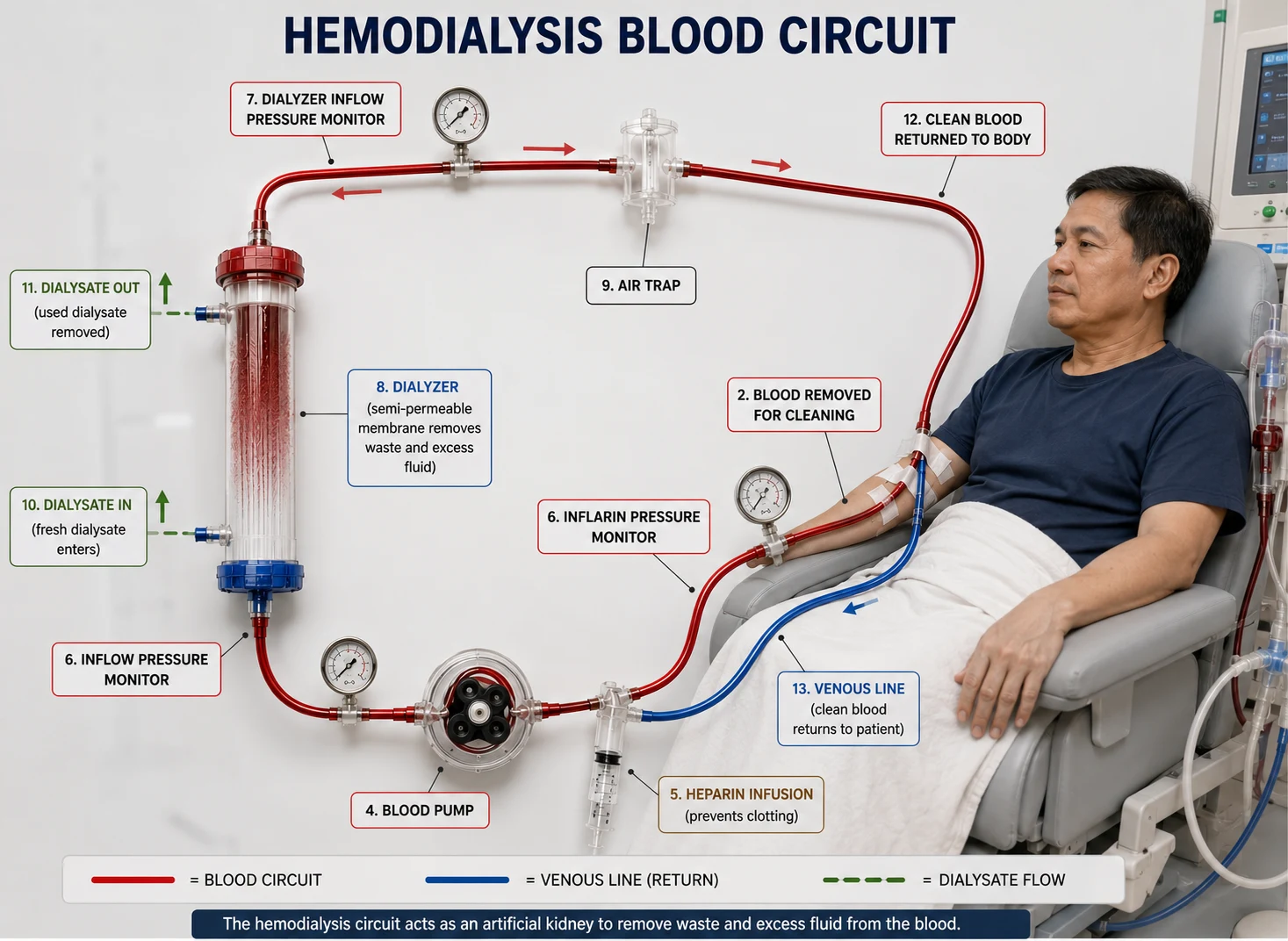
This series has twelve modules, written to the level of a technician who maintains the center’s machines independently. It explains the electrical basics, how the machine works on the fluid side and the blood side, how each protective system is tested, how preventive maintenance and calibration are planned and recorded, how machines are disinfected and tested for electrical safety, and how to troubleshoot a fault and return a machine to service properly. It assumes you have studied the Dialysis Technician series, especially the modules on principles, machines, and water.
Figure 2 · What a dialysis biomedical technician does
What this series is, and is not
It is study material. It is not manufacturer training, a license, or authorization to service any machine. Dialysis machines are medical devices built to international safety standards, and manufacturers train and certify technicians for specific models.1 Facilities are licensed by the Department of Health (DOH), which expects equipment to be maintained and records to be kept.2 Learn each model from its service manual, the manufacturer’s course, and a preceptor.
One foundation, three technical roles
A dialysis unit depends on three kinds of technical staff, grouped here as the Renal Technician Program. Most people start at the chairside as a dialysis technician. From there, two specialist branches open up: the water room and the workshop. The three study series share the same format, so you can move between them.
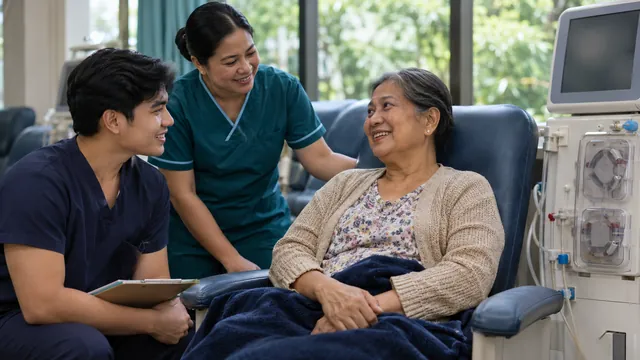 Foundation · chairsideDialysis TechnicianStations, machines, the blood circuit, the treatment session, and safe teamwork with the dialysis nurse.
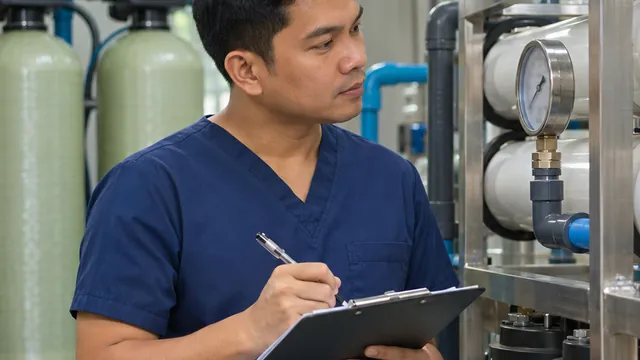 Specialist branch · water roomWater Treatment System TechnicianPretreatment, carbon tanks, reverse osmosis, the distribution loop, daily testing, sampling, and disinfection.
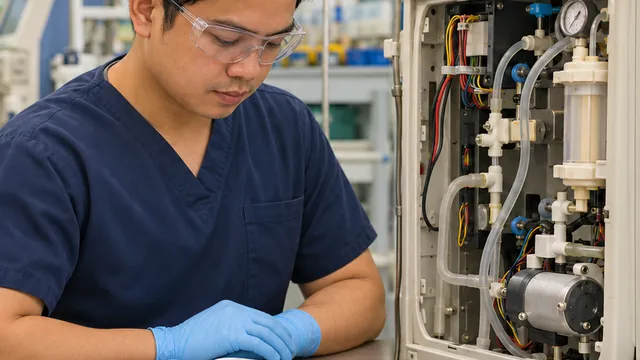 Specialist branch · workshopHemodialysis Center Biomedical TechnicianHow dialysis machines work inside, preventive maintenance, calibration, safety testing, troubleshooting, and return to service.
This branch suits technicians with a background or strong interest in electronics, mechanics, or engineering who like fault-finding and precise measurement.
Twelve modules, in order
Study the modules in order. Modules 1 to 7 explain the machine; Modules 8 to 12 explain how to keep it accurate, clean, safe, and documented.
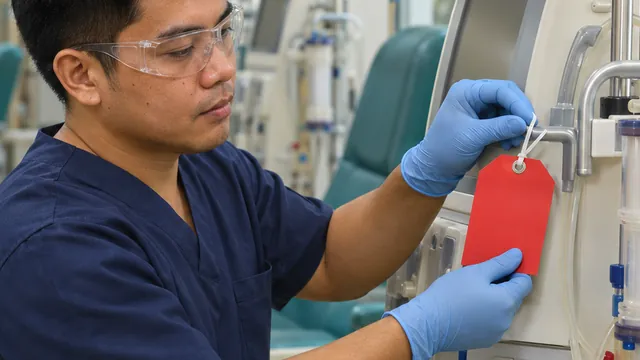 Module 1
The Biomedical Technician’s Role and Safe Working
What the role covers, working safely with contaminated equipment, electricity, and chemicals, decontamination before service, and using the service manual.
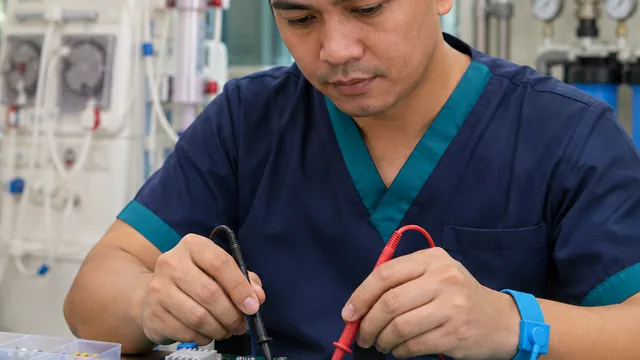 Module 2
Electrical and Electronic Fundamentals
Voltage, current, and resistance in plain terms; power, fuses, and earth; the sensors and actuators in a machine; and safe use of a multimeter.
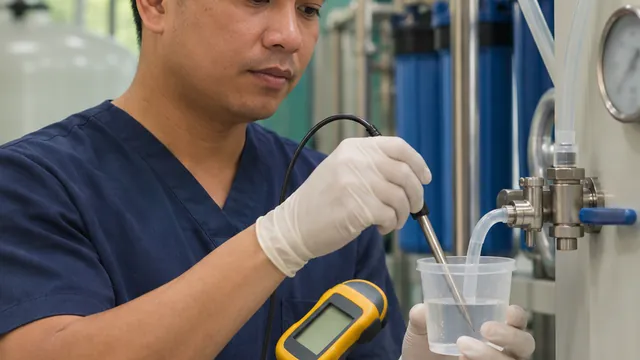 Module 3
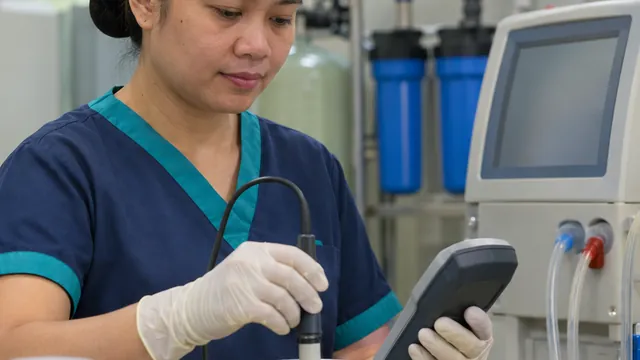
Dialysate Side I: Water Inlet, Heating, and Degassing
How the machine regulates, warms, and degasses incoming water, how temperature is verified, and how to troubleshoot these stages.
 Module 4
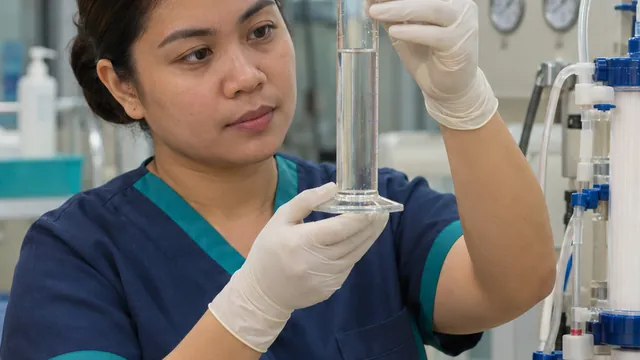
Dialysate Side II: Proportioning, Conductivity, and Bypass
How dialysate is mixed and checked, how conductivity is measured and verified, what bypass does, and how to troubleshoot conductivity alarms.
 Module 5
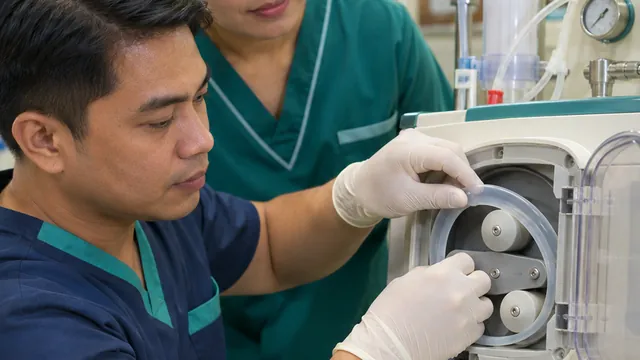
Fluid Balance and Ultrafiltration Control
How balancing systems and the ultrafiltration pump measure fluid removal, what transmembrane pressure tells you, and how accuracy is tested.
 Module 6
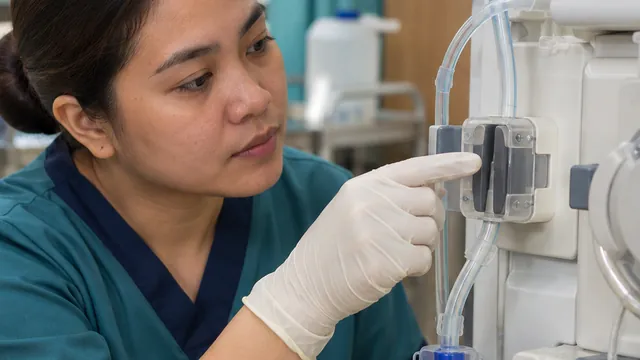
The Blood Side: Pump, Pressures, and Heparin Pump
The roller pump and why displayed flow can be untrue, the pressure sensors, the heparin syringe pump, and their checks.
 Module 7
Protective Systems and Alarm Testing
Single-fault safety, the air detector and clamp, the blood leak detector, how each is tested, and why none is ever bypassed.
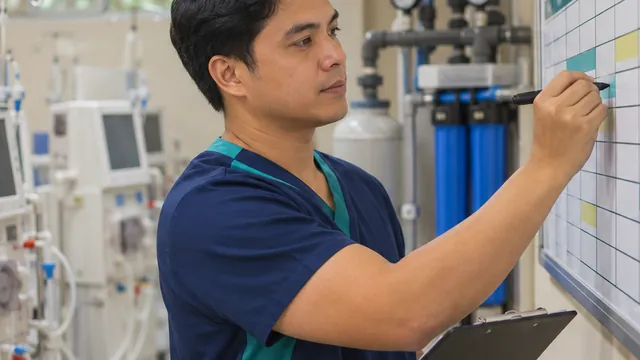 Module 8
The Preventive Maintenance Program
The inventory, the maintenance calendar, a visit step by step, safety notices and software, and spare parts.
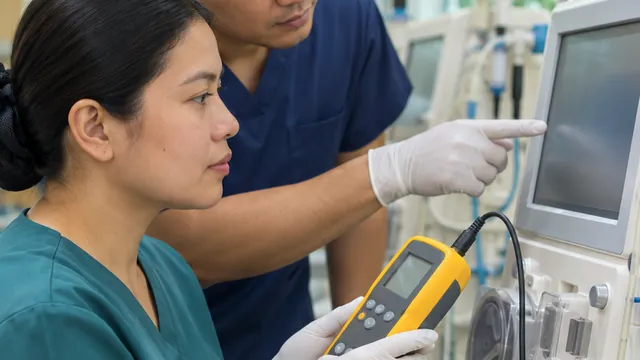 Module 9
Calibration and Test Equipment
Calibration and tolerance, as-found and as-left values, reference instruments and their care, and the instrument register.
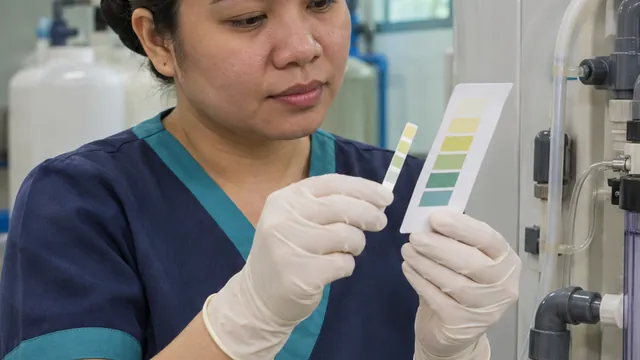 Module 10
Disinfection, Descaling, and Machine Fluid Hygiene
Scale, film, and biofilm; the right program for each; residual testing; hoses and the drain air gap; and dialysis fluid filters.
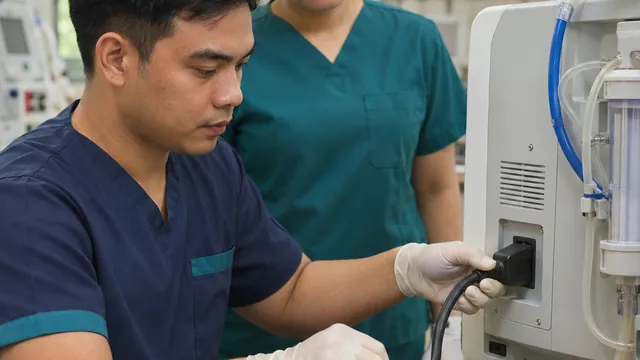 Module 11
Electrical Safety Testing and Facility Utilities
Why patients are vulnerable, inspection and testing, the utilities at each station, and what happens when power fails.
 Module 12
Troubleshooting, Life Cycle, and Capstone
A method for any fault with a worked example, verification after repair, the machine file from acceptance to retirement, and four practical stations.
The same seven steps every time
Figure 3 · How to work through a module
- ObjectivesRead what you should be able to do by the end.
- Big pictureA plain-words summary and the key terms, before any detail.
- Opening caseA fictional shift problem. Decide what you would do first.
- LessonShort parts with pictures, tables, and worked examples.
- Case reviewCompare your answer with one sound response.
- Skills checklistPractice with a preceptor on real or training equipment.
- Self-assessmentFive questions drawn from a larger bank, with explanations.
New terms are explained the first time they appear, and every page ends with a glossary. Abbreviations are spelled out at first use. If a sentence still reads like jargon, check the glossary, then ask your preceptor to show you the real object on the unit: most of this work makes sense faster when you can see and touch the equipment.
The series at a glance
Each module takes about 60 to 90 minutes to read and work through. Workshop practice under supervision, and the manufacturer’s own training, take far longer.
| No. | Module | Lessons | Opening case | Skills checklist | Practice |
|---|---|---|---|---|---|
| 1 | The Biomedical Technician’s Role and Safe Working |
| A quick look between shifts | Safe preparation for service and formal release | 10 questions · 4 real situations |
| 2 | Electrical and Electronic Fundamentals |
| The fuse that keeps blowing | Multimeter basics on a de-energized training board | 8 questions · 3 real situations |
| 3 | Dialysate Side I: Water Inlet, Heating, and Degassing |
| Slow to warm on cold mornings | Temperature verification against a reference thermometer | 8 questions · 3 real situations |
| 4 | Dialysate Side II: Proportioning, Conductivity, and Bypass |
| A machine from the other unit | Conductivity verification and bypass proof | 8 questions · 3 real situations |
| 5 | Fluid Balance and Ultrafiltration Control |
| Patients finishing above their target weight | Ultrafiltration accuracy check with a measuring cylinder | 8 questions · 3 real situations |
| 6 | The Blood Side: Pump, Pressures, and Heparin Pump |
| Adequacy falling on one machine | Pump occlusion and pressure verification | 8 questions · 3 real situations |
| 7 | Protective Systems and Alarm Testing |
| The alarm that did not sound | Functional tests of the air detector, clamp, and blood leak detector | 8 questions · 3 real situations |
| 8 | The Preventive Maintenance Program |
| Inspection month | Building a maintenance calendar and running a visit | 8 questions · 3 real situations |
| 9 | Calibration and Test Equipment |
| The meter nobody checked | A calibration with a traceable record | 8 questions · 3 real situations |
| 10 | Disinfection, Descaling, and Machine Fluid Hygiene |
| Bleach after acid | Disinfection with residual test, hose check, and filter change | 8 questions · 3 real situations |
| 11 | Electrical Safety Testing and Facility Utilities |
| A tingle from the machine case | Electrical safety test with an analyzer | 8 questions · 3 real situations |
| 12 | Troubleshooting, Life Cycle, and Capstone |
| Three machines, one alarm | Fault-finding and return to service | 10 questions · 4 real situations |
Self-assessment is not sign-off
The questions at the end of each module are for practice. Each visit draws five from a larger bank, and every question explains its best answer.
Competence is shown at the bench: completing a preventive maintenance visit by the manual, calibrating against a reference meter, proving that each alarm works, and writing a service record another technician can follow. Each module has a skills checklist for a preceptor or senior technician to complete while watching you work.
End-of-course examination. When you have finished every module, take the end-of-course examination. It draws questions at random from all 12 modules, so no two sittings are the same.
What the series is built on
Machine safety requirements follow the international standards for medical electrical equipment and for hemodialysis equipment in particular, and periodic electrical safety testing follows the standard for recurrent tests.3,1,4 Maintenance program structure follows the World Health Organization (WHO) guidance on medical equipment maintenance.5 Fluid quality requirements that machines must help meet come from International Organization for Standardization (ISO) 23500.6,7 Philippine expectations come from the DOH licensing order for dialysis facilities and the Philippine Society of Nephrology (PSN) guidelines.2,8
For any specific machine, the manufacturer’s service manual and instructions for use are the controlling documents. Where this series describes a typical design, yours may differ.
Using the series in a training program
A head nurse, chief technician, or training provider can use these modules as the guided-study part of a supervised program. The trainer and preceptor page gathers the proposed hours, completion criteria, and every skills checklist in one printable place. These are proposals for a provider to adapt and validate on its own equipment; they are not requirements of any regulator.