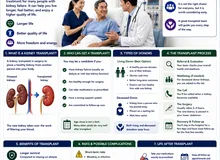
Two people, four systems, one coordinator
A living-donor kidney transplant joins two people for one operation. One of them is sick and hopes to be well. The other is healthy and is offering to take on a risk for someone else’s benefit. Before that operation can happen, both of them must pass through four systems that do not talk to each other on their own: a medical system that decides whether it is safe, a legal system that decides whether the documents are true and the consent valid, an ethical system that decides whether the gift is free, and an insurance system that decides who pays. The renal transplant coordinator is the person who walks both of them through all four.
The coordinator does not decide whether a person is fit, whether a donation is ethical, or whether Philippine Health Insurance Corporation (PhilHealth) will pay. The coordinator makes sure that each of those decisions is made by the right person, on current evidence, on time, and written down; that each person knows what happens next; and that nothing is lost between departments. Good coordination is associated with more people completing the steps toward a transplant.1 It also means a donor can say no safely, and a recipient can be told “not yet” honestly.
Figure 2 · What this track will help you do
The track has two learner paths. Clinical coordinators hold a professional license (Philippine employers usually ask for a registered nurse) and do the clinical tasks their hospital assigns. Coordination-support staff, including Z Benefits coordinators, navigate records, documents, and funding; they learn the clinical content so they can recognize a problem and route it at once, never to assess or decide. Both paths study all twenty modules. Each module has a case, real situations, a skills checklist for a preceptor, and a self-assessment drawn from a bank of ten questions.
What this series is, and is not
It is a training track written independently from published laws, regulations, guidelines, and research. It is not a DOH-recognized training certificate, a PhilHealth requirement, certification, continuing professional development (CPD) units, legal advice, or a benefits ruling. It does not make anyone a donor advocate, a procurement coordinator, or an ethics committee member. No national coordinator credential from the Philippine Society of Nephrology was found, and this track does not imply one. Clinical questions always go to the transplant team.
Ten weeks of study, in five parts
The twenty modules follow the path two people take through a transplant program: how authority works and how they arrive, how they are evaluated and protected, how the operation is paid for and how a kidney is offered, how they leave hospital and stay well, and how the program keeps their data safe and gets better.
Figure 3 · The five parts
Twenty modules in five parts
Study the modules in order. Each one starts from why a coordination step exists, moves to what the rules and the evidence say, and ends with what the coordinator does on the next shift.
Part 1 · Foundations
 Module 1
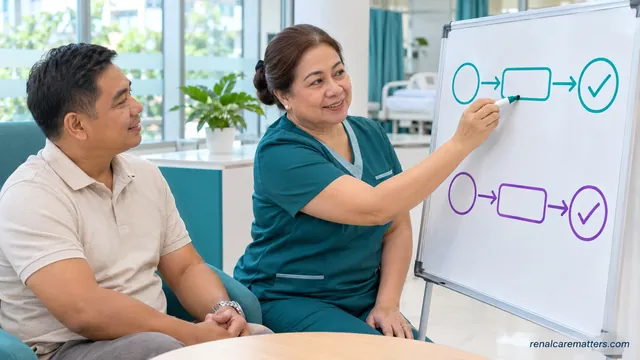
The Coordinator as Navigator for Two People
Two protected journeys, four systems at every gate, the barrier register, and coordinating within authority.
 Module 2
Philippine Regulation and Professional Scope
Who issues which rule, reading every rule by version and effective date, clinical versus support scope, and the local role charter.
 Module 3
Referral, Intake, and Equitable Access
Referring early, a useful first conversation, the barriers that stop people, and closing the referral loop.
Part 2 · Evaluation and protection
 Module 4
Recipient Workup and Multidisciplinary Decisions
Organizing the workup by question, preparing a case conference, test expiry, and explaining deferral honestly.
 Module 5
Compatibility and Safe Specimen Coordination
Blood group, tissue type, antibodies and crossmatch in plain words, sensitizing events, and the specimen chain.
 Module 6
Living Donor Intake and Protection
The private first conversation, Philippine donor safeguards, recognizing pressure and reward, and making withdrawal safe.
 Module 7
Donor Medical Evaluation and Long-Term Risk
What the donor workup asks, honest numbers for short- and long-term risk, and planning care beyond discharge.
 Module 8
Legal Documents and Informed Consent
Building a traceable legal packet, verifying documents through authorized channels, and consent as a process.
 Module 9
Ethics Committee Navigation and Safeguarding
Submitting for a real decision, support versus persuasion, trafficking and inducement, and communicating decisions safely.
Part 3 · Funding and access
 Module 10
PhilHealth and Other Payers
Different approvals, the Z Benefits package by version, pre-authorization timing, and planning affordability across time.
 Module 11
Claims Evidence, Denials, and Financial Protection
The 60-day window, returns versus denials, evidence that follows care, and protecting the donor from cost.
 Module 12
The Waiting List and Deceased Donation
Three different databases, active waiting, sensitizing updates, and the boundary with organ procurement.
 Module 13
Organ Offer Calls and Retrieval Logistics
A structured offer call with read-back, bringing the right people together, and treating a discrepancy as a safety event.
Part 4 · Continuity
 Module 14
Final Readiness and Perioperative Handoff
Readiness as a convergence of gates, holds tracked explicitly, and separate handoffs for each person.
 Module 15
Medicines, Discharge, and Self-Management
Continuity starts before leaving, teaching actions not names, a feasible discharge, and the medicine supply runway.
 Module 16
Symptoms, Graft Dysfunction, and Urgent Escalation
Why delay matters, a disciplined urgent contact, routing within scope, and closing the loop.
 Module 17
Lifelong Follow-Up for Donor and Recipient
Two continuing-care plans, recall with respect, donor yearly checks, and navigating graft failure.
 Module 18
Psychosocial Navigation and Special Situations
Making barriers speakable, money and mental health, overseas workers and foreign nationals, children, and pregnancy.
Part 5 · Accountability
 Module 19
Registries, Privacy, and Quality
Registries and their purposes, the restricted donor record, defining measures, and equity review.
 Module 20
Integrated Capstone and International Practice
A whole case from referral to follow-up, and what to borrow (and not borrow) from the United States, the United Kingdom, and Australia.
The same seven steps every time
Figure 4 · How to work through a module
- ObjectivesRead what you should be able to do by the end.
- Big pictureA plain-words summary and the key terms, before any detail.
- Opening caseA fictional shift problem. Decide what you would do first.
- LessonShort parts with pictures, tables, and worked examples.
- Case reviewCompare your answer with one sound response.
- Skills checklistPractice with a preceptor on real or training equipment.
- Self-assessmentFive questions drawn from a larger bank, with explanations.
New terms are explained the first time they appear, and every page ends with a glossary. Abbreviations are spelled out at first use. If a sentence still reads like jargon, check the glossary, then ask your preceptor to show you the real object on the unit: most of this work makes sense faster when you can see and touch the equipment.
The series at a glance
Each module plans six hours: two of guided study, two of case workshop and assessment, and two of supervised placement. That is 80 hours of modules and workshops plus 40 hours of placement, 120 hours in all. These are educational planning hours, not a verified DOH or PhilHealth minimum.
| No. | Module | Lessons | Opening case | Skills checklist | Practice | Classroom (h) | Skills lab (h) | Placement (h) |
|---|---|---|---|---|---|---|---|---|
| 1 | The Coordinator as Navigator for Two People |
| One family, two journeys, one folder | Two pathway maps and an Situation, Background, Assessment, Recommendation (SBAR) | 10 questions · 3 real situations | 2 | 2 | 2 |
| 2 | Philippine Regulation and Professional Scope |
| The circular in the group chat | Source register and role charter | 10 questions · 3 real situations | 2 | 2 | 2 |
| 3 | Referral, Intake, and Equitable Access |
| The referral that went nowhere | Intake and referral loop | 10 questions · 3 real situations | 2 | 2 | 2 |
| 4 | Recipient Workup and Multidisciplinary Decisions |
| The conference on Tuesday | Workup tracker and conference summary | 10 questions · 3 real situations | 2 | 2 | 2 |
| 5 | Compatibility and Safe Specimen Coordination |
| The transfusion nobody mentioned | Specimen chain and critical result relay | 10 questions · 3 real situations | 2 | 2 | 2 |
| 6 | Living Donor Intake and Protection |
| The cousin and the debt | Private donor intake | 10 questions · 3 real situations | 2 | 2 | 2 |
| 7 | Donor Medical Evaluation and Long-Term Risk |
| “Am I safe for life?” | Donor risk conversation support | 10 questions · 3 real situations | 2 | 2 | 2 |
| 8 | Legal Documents and Informed Consent |
| The photocopy and the interpreter | Legal packet and consent preparation | 10 questions · 3 real situations | 2 | 2 | 2 |
| 9 | Ethics Committee Navigation and Safeguarding |
| “Just send it, they always approve” | Ethics submission and safeguarding escalation | 10 questions · 3 real situations | 2 | 2 | 2 |
| 10 | PhilHealth and Other Payers |
| The estimate and the calendar | Package selection and cost plan | 10 questions · 3 real situations | 2 | 2 | 2 |
| 11 | Claims Evidence, Denials, and Financial Protection |
| Day 52 | Claim readiness and donor charge protection | 10 questions · 3 real situations | 2 | 2 | 2 |
| 12 | The Waiting List and Deceased Donation |
| The candidate who moved | Waiting-list contact and reconciliation | 10 questions · 3 real situations | 2 | 2 | 2 |
| 13 | Organ Offer Calls and Retrieval Logistics |
| 2:10 a.m. | Offer-call drill | 10 questions · 3 real situations | 2 | 2 | 2 |
| 14 | Final Readiness and Perioperative Handoff |
| The Monday morning list | Readiness board and huddle | 10 questions · 3 real situations | 2 | 2 | 2 |
| 15 | Medicines, Discharge, and Self-Management |
| Discharge on a Friday before a long weekend | Discharge readiness and teach-back | 10 questions · 3 real situations | 2 | 2 | 2 |
| 16 | Symptoms, Graft Dysfunction, and Urgent Escalation |
| Three calls before noon | Urgent-call routing | 10 questions · 3 real situations | 2 | 2 | 2 |
| 17 | Lifelong Follow-Up for Donor and Recipient |
| Five years later | Two follow-up plans and a recall | 10 questions · 3 real situations | 2 | 2 | 2 |
| 18 | Psychosocial Navigation and Special Situations |
| The quiet signs | Psychosocial check-in and routing | 10 questions · 3 real situations | 2 | 2 | 2 |
| 19 | Registries, Privacy, and Quality |
| The dashboard and the drawer | Privacy check and a defined measure | 10 questions · 3 real situations | 2 | 2 | 2 |
| 20 | Integrated Capstone and International Practice |
| The capstone: four problems, one evening | Capstone simulation | 10 questions · 3 real situations | 2 | 2 | 2 |
| Total | 40 | 40 | 40 |
Self-assessment is not sign-off
Each module ends with a self-assessment of 5 questions drawn at random from a bank of 10; a good target is 4 of 5 on two different sets. Every question explains why the best answer is best and why the others fail. The end-of-course self-study check draws one question from each of the twenty modules (20 in all); the proposed pass is 16. Module 20 is a 120-minute simulated case — a donor withdrawal, an expiring pre-authorization, a transfusion before an offer, and a night-time offer call — scored on five dimensions with listed critical failures that cannot be averaged away.
End-of-course examination. When you have finished every module, take the end-of-course examination. It draws questions at random from all 20 modules, so no two sittings are the same.
What the series is built on
The track is built from published sources. Philippine requirements follow the Department of Health (DOH) administrative orders on transplant facilities, deceased donation, and living donation,2,3,4 the Organ Donation Act and the anti-trafficking law,5,6 PhilHealth’s Z Benefits circulars, survey tool, and registry advisory,7,8,9,10,11 and the Data Privacy Act.12 Clinical frameworks follow the Kidney Disease: Improving Global Outcomes (KDIGO) guidelines on candidates, living donors, and recipients.13,14,15 Statements about outcomes rest on peer-reviewed trials, cohorts, and reviews of navigation, donor risk, donor costs, and adherence.1,16,17,18
Where the evidence is observational, the text says “associated with.” Rules from other countries appear only as comparisons, never as Philippine requirements. Regulatory statements were checked on November 25, 2026. PhilHealth Circular 2026-0019 was published on November 21, 2026 and takes effect 15 days after publication, so on the research date it was published but not yet effective; confirm its effective date, the legacy-case rule, and current forms before you rely on it.19
Using the series in a training program
A transplant program manager, a transplant nephrologist, or a senior coordinator can use these modules as the guided-study part of a new coordinator’s orientation. The trainer and preceptor page gathers the proposed hours, completion criteria, and every skills checklist in one printable place. These are proposals for a provider to adapt and validate on its own equipment; they are not requirements of any regulator.