A structured offer call with read-back, bringing the right people together, and treating a discrepancy as a safety event.
PublishedNailathalaGipatikPepalwal:ReferencesMga SanggunianMga TinubdanReng Reperensya:2Audience: Clinical transplant coordinators (usually registered nurses) and coordination-support staff in Philippine kidney transplant programs · Z Benefits coordinators · transplant and dialysis staff who refer, prepare, or follow recipients and living donorsRead timeOras ng pagbasaOras sa pagbasaOras ning pamamasa:
Training track for the people who navigate kidney recipients and living donors
This module is study material for kidney transplant coordinators and coordination-support staff. It explains the reasoning behind coordination decisions; it is not a hospital protocol, legal advice, or a benefits ruling. Rules and rates change: confirm every rule against the current issuance and your facility’s approved policy. Medical decisions belong to the transplant team, donation ethics to the ethics committee, and benefits to PhilHealth. Every case, name, and identifier is fictional.
Learning objectives
After this module you should be able to
Run an organ offer call with a structured script and read-back of identifiers, blood group, and times.
Treat any discrepancy on an offer as a safety event and stop the process until it is resolved.
Convene the people who decide acceptance and readiness, quickly and in the right order.
Coordinate transport and timing with the procurement team within Department of Health (DOH) transport arrangements.
Log the offer timeline for safety review, logistics, and claims evidence.
Classroom 2 hSkills lab 2 hSupervised placement 2 h
Pre-testBefore you read, answer the 5 self-assessment questions and note your score. After the module, select New set of questions and compare. The difference is what you learned; the questions you still miss are what to reread.
Start here
The big picture, in plain words
In plain wordsAn organ offer call is like air traffic control at night. Several people who cannot see each other must agree, in minutes, on exactly what is arriving, where, and when. Controllers do not trust memory: they use set phrases and read everything back. A single wrong digit, unspoken, can put two planes on one runway.
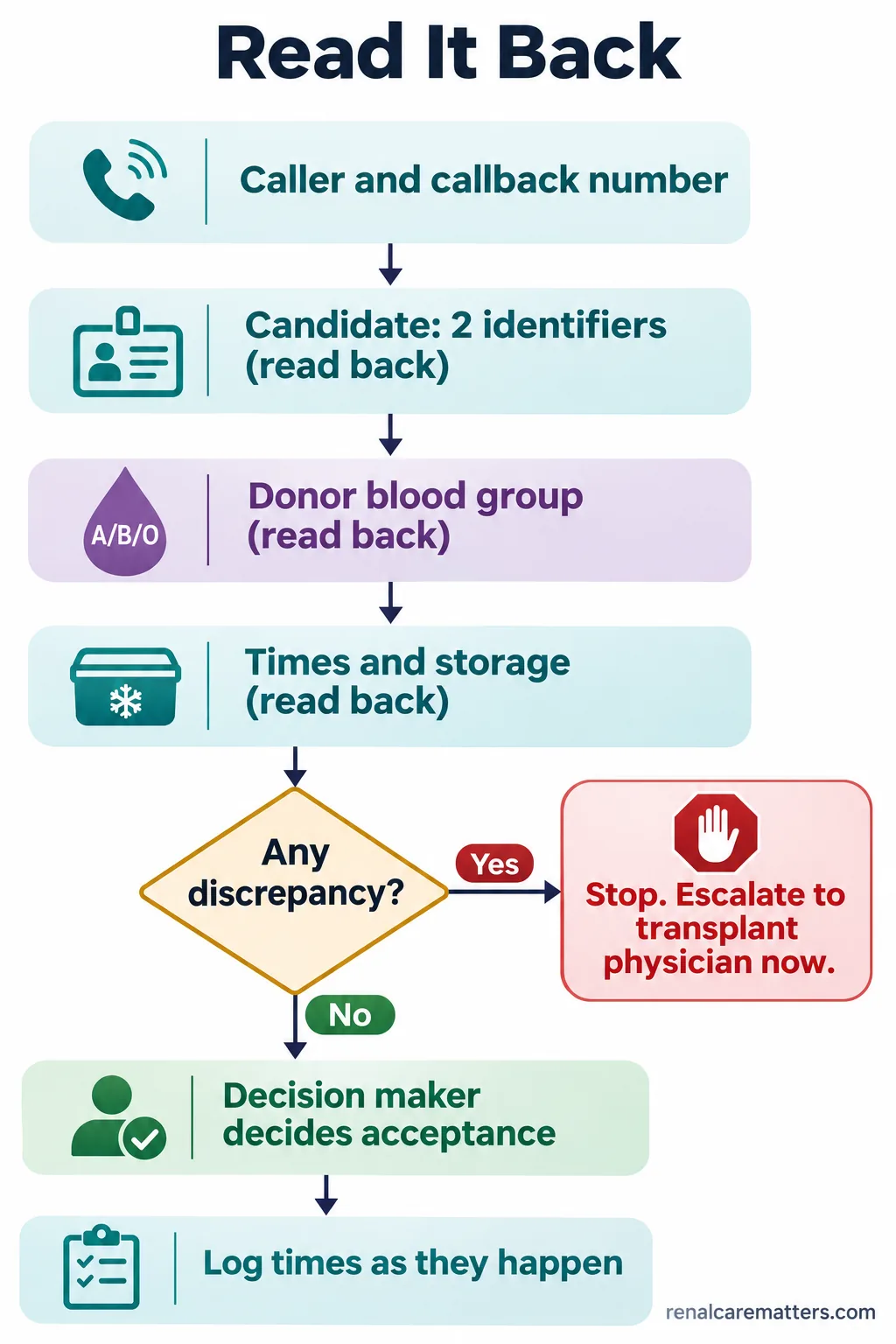
Figure 1. Read it back. A discrepancy on an offer call is a safety event, not a typo.
The picture has a limit. Air traffic control has radar to check the words against. On an offer call, the words are often all you have until the organ and its paperwork arrive. That is why the structure of the call, and the read-back, carry so much weight. And unlike a flight, a kidney has a clock: the longer it is stored outside a body, the more its early function tends to suffer, so delays have a real cost.
Your job is to capture the offer exactly, route it to the person who decides acceptance, bring the right people together in the right order, and keep a timeline. You never accept an organ, and you never assume a discrepancy is a typo.
Figure 2 · Key terms for this module
Organ offerA call proposing a specific deceased-donor organ for a specific candidate.
Read-backRepeating critical details to the caller and getting confirmation.
AcceptanceThe clinical decision to accept an offer, made by the transplant physician or surgeon on call.
Cold ischemia timeThe time a kidney spends cooled and stored between retrieval and transplantation.
Readiness huddleA short meeting to confirm that the recipient and team are ready to proceed.
Opening case · fictional
Case: 2:10 a.m.
At 2:10 a.m. your mobile rings. The caller from the procurement team says a deceased-donor kidney is available and your candidate, Mr. Nestor Villareal, 49, is first for it. She reads quickly: donor age, cause of death, blood group “A,” retrieval time, and that the kidney will be on cold storage.
Your waiting-list sheet says Mr. Villareal is blood group O. The caller is in a hurry and says, “It’s probably fine, they double-checked the matching.”
The on-call transplant surgeon, Dr. Paolo Ramirez, is not answering his phone.
Before reading on, decide:
What do you do about the blood group?
Whom do you call, in what order, if the surgeon does not answer?
What goes into the offer log?
Keep your answers in mind. The lesson gives you what you need, and the case review near the end shows one sound response.
Lesson · part 1
A script you can use at 2 a.m.
Night calls happen when people are tired. A printed script, kept by the phone and in the on-call bag, protects everyone.
Figure 3 · A structured offer call
Caller and callbackName, organization, direct callback number, time of call.
Candidate identityFull name and two identifiers, read back.
Organ and donor summaryOrgan, donor blood group, key donor information the caller provides, read back.
TimesRetrieval or cross-clamp time, expected arrival, storage method, read back.
LogisticsTransport plan, who carries the organ and documents, where it will arrive.
Next contactWhen you will call back with the clinical decision, and to whom.
Read back each block before moving on: “I have blood group A, retrieval at 11:40 p.m., cold storage. Is that correct?” Write directly on the form, not on scraps of paper.
RememberUse the script, write on the form, and read back every critical detail before the call ends.
Lesson · part 2
Stop, read back, escalate
Some discrepancies are clerical; some are the first sign of a wrong-organ or wrong-patient error. You cannot tell which from the phone. Treat them all as safety events.
Discrepancy
Why it matters
What you do
Blood group differs from your record
An ABO-incompatible kidney can be rejected within hours in a standard transplant
Stop; read back; escalate to the transplant physician at once; nothing proceeds until resolved
Candidate identifiers do not match
Wrong patient
Stop; verify with the caller and your record; escalate
Times do not add up
Storage time may be longer than stated
Clarify and record; escalate
Missing documents expected with the organ
The team cannot verify on arrival
Record; escalate before the organ arrives
“It’s probably fine” is not resolution. Resolution is a verified fact from the source — for example, the donor blood-group documentation — reviewed by the transplant physician.
RememberNever assume a discrepancy is a typo. Stop, read back, escalate, and record the resolution.
Lesson · part 3
Acceptance, readiness, logistics
Acceptance is a clinical decision by the transplant physician or surgeon on call, under program protocol. The coordinator’s job is to reach them fast and give them everything from the call. If the first person does not answer, use the escalation list in the role charter (Module 2): the backup surgeon, the transplant nephrologist on call, the program director. Record every attempt with times.
Once the offer is accepted, the work becomes logistics: contacting the candidate with the agreed message, arranging transport to the hospital, alerting the operating room, anesthesia, the human leukocyte antigen (HLA) laboratory for the final crossmatch, the ward, and the pharmacy, and coordinating organ transport with the procurement team under DOH arrangements for organ transport.1 A short readiness huddle before surgery brings the gates together (Module 14).
When you call the candidate, give a calm, clear message: an organ may be available, the team is reviewing it, please come to the hospital, nothing to eat or drink as instructed, bring your medicines and documents. Do not promise that the transplant will happen; final checks can still stop it.
RememberReach the decision maker first. Only after acceptance does the call become logistics, and the candidate hears “may,” not “will.”
Lesson · part 4
Why the log matters
A kidney’s storage time is associated with how well it works early after transplant, which is one reason programs move quickly. Record the times as they happen, not from memory afterward.
After a night offer, a recipient’s kidney is slow to work. At the morning review, the coordinator’s log shows that the organ arrived 90 minutes later than planned because the transport vehicle was redirected.
The program adds a confirmation call with the transport team at departure to its script.
A log written in real time turned a vague worry into a fixable step.
Illustrative scenario. Names and details are invented.
RememberWrite the times as they happen. The log serves safety review, logistics, and the claim.
On the floor
Real situations: problems and solutions
These are fictional but typical. For each one, cover the answer, decide what you would do, then compare. Where a step depends on local rules, your unit’s procedure and your supervisor’s direction come first.
The noisy line
What you see
You cannot hear the donor blood group clearly.
What is likely going on
A communication risk.
What to do
Ask for a callback on a better line or spell it out; read back.
Why it matters
A misheard blood group is a safety event.
The unreachable candidate
What you see
The candidate does not answer at 3 a.m.
What is likely going on
Possible missed offer.
What to do
Use the second number and the agreed contact list; record attempts; tell the decision maker.
Why it matters
Time and alternatives matter on an offer.
The family on the way
What you see
A candidate’s family is already driving in before acceptance.
What is likely going on
Expectations ahead of the decision.
What to do
Tell them calmly that the team is still reviewing.
Why it matters
Final checks can still stop a transplant.
Field notes
Keep the script in the on-call bag.
Read back blood group, identifiers, and times.
Follow the escalation list in order.
Say “may,” not “will.”
Case review
Back to the case: 2:10 a.m.
The blood group. Stop. Read back: “You said donor blood group A. Our candidate’s record says group O.” Ask the caller to verify from the donor documentation and to hold the process. Escalate to the transplant physician at once. A group A kidney is incompatible with a standard transplant into a group O recipient; nothing proceeds until the discrepancy is resolved from source documents and reviewed by the physician.
The surgeon. Follow the escalation list in the role charter: the backup transplant surgeon, then the transplant nephrologist on call, then the program director. Record each attempt and its time. Do not accept or decline the offer yourself, and tell the caller when you will call back.
The log. Time of call, caller and callback number, the read-back, the discrepancy and its resolution, every escalation attempt, the decision and who made it, the candidate contact, arrival times, and, if transplanted, the deceased-donor pre-authorization deadline.
Skills lab · with your preceptor
Skills checklist: Offer-call drill
Take a simulated night offer call with an injected discrepancy while your preceptor observes. Your preceptor rates each step as satisfactory, needs practice, or not observed. Steps marked Critical must all be satisfactory before sign-off. This checklist supports supervised learning; your unit’s own procedure and competency form are the authority. A printable version of every checklist is on the trainer page.
Uses the structured script and writes directly on the form.
CriticalReads back identifiers, blood group, and times before ending the call.
CriticalStops and escalates a blood-group discrepancy without assuming a typo.
CriticalFollows the escalation list when the first decision maker does not answer, recording each attempt.
Calls the candidate with a calm message that uses “may,” not “will.”
Completes the offer timeline log in real time.
Placement activity. Review your program’s offer script and on-call escalation list. Run one tabletop drill with the on-call team.
Self-assessment
Check your understanding
Each visit draws 5 questions at random from this module’s 10-question bank. Choose the single best answer for each, then select Check answers; an explanation appears under the best answer. Select New set of questions for a different mix. A good target is 4 of 5 on two different sets. Nothing you select is sent anywhere; scoring happens in your browser.
Go deeper
Read next on this site
Kidney TransplantWhat patients are told about receiving a call for a kidney.
Educational material for transplant coordination staff. Completing it is an Academy learning record only. It is not a DOH-recognized training credit, a PhilHealth requirement, a certification, or CPD units, and it does not appoint anyone as a donor advocate or confer any clinical authority.