Children are not small adults
A child on dialysis is still growing, still learning to read, still deciding who to trust. Kidney failure in childhood is rare, and that rarity is part of the danger: most dialysis nurses meet children only now and then, and the routines built for adults are the ones their hands know. In a 70-kilogram adult, a few hundred milliliters of blood outside the body, a misplaced decimal, or a fill volume that is slightly large are absorbed by the size of the body. In a 10-kilogram child they are not.
This track takes a registered nurse from the reasons children’s kidneys fail to the quality numbers of a pediatric program, in twenty modules over eight weeks. It assumes you know adult dialysis or pediatric nursing, and it fills the gap between them. Most pediatric guidance rests on registries, consensus and quality-improvement collaboratives rather than large trials, because children on dialysis are few. The modules say so whenever it matters.1,2
Figure 1 · Exit competencies
Prerequisites: a current Philippine nursing license; adult dialysis training (for example Nephrology Nursing Modules 1 to 10) if you are new to dialysis, or a pediatric assessment and resuscitation refresher if you are new to children. Rare emergencies are practiced in simulation and recorded as simulation.
What this series is, and is not
It is a training track written independently from published guidelines, research and Philippine issuances. It is not a license, Philippine Society of Nephrology (PSN) or National Kidney and Transplant Institute (NKTI) training, a Philippine Health Insurance Corporation (PhilHealth) staffing credential, continuing professional development (CPD) credit, or clinical privileges. No Philippine issuance reviewed for this track sets a separate pediatric dialysis nurse license or a pediatric nurse-to-patient ratio. It does not replace your unit’s pediatric protocols, the device instructions for use, or the pediatric nephrologist’s written orders.
Placement pre-test
Transferring from another unit, or already experienced in this role? Take the placement pre-test: a short check of up to 5 questions for each module, drawn from that module’s own question bank. Score 80% or better and the module becomes optional reading for you, so you study only what you need. 6 of the 20 modules (unit orientation, infection prevention, emergencies, medication safety, and the capstone) are required for everyone, whatever their experience.
Results stay on this device. The certificate still needs every module quiz; for a module you placed out of, go straight to its self-assessment.
What a pediatric dialysis nurse does
The pediatric dialysis nurse gives prescribed peritoneal dialysis (PD) or hemodialysis to infants, children and adolescents, teaches and supports their caregivers, and protects the things a child on dialysis still has to do: grow, learn, play and, usually, get ready for a transplant. The role below is a synthesized specification for local adaptation, not an official Department of Health, PSN or PhilHealth job description.
| Domain | What the nurse does | What the nurse does not do without separate authorization |
|---|---|---|
| Assessment | Weighs, measures, takes age-appropriate vital signs, reconciles orders, fluid, access and medicines | Set the target weight or fluid-removal goal |
| Treatment | Delivers validated PD and hemodialysis tasks using approved procedures and device instructions | Prescribe, prime with blood or albumin without an order, insert catheters, repair equipment |
| Safety | Recognizes deterioration, protects the child, escalates early | Choose antibiotics, change doses, adjust anticoagulation |
| Family | Teaches to safe independence, judged by return demonstration; supports siblings and schooling | Transfer prescribing responsibility to a caregiver |
| Continuity | Coordinates nutrition, growth, psychosocial care, school, transplant preparation and transition | Manage transplant immunosuppression (transplant pathway) |
| Quality | Keeps accurate records, gives structured handoffs, joins incident learning and improvement | Rank individual nurses by small-number infection rates |
Eight weeks, 164 planned hours
The plan pairs about 84 hours of self-study and simulation with 80 hours of supervised exposure in an authorized pediatric setting: 42 study, 42 simulation and 80 supervised hours in all. These are design estimates. They are not equivalent to PSN structured renal training or PhilHealth-recognized PD training, and no child is exposed to risk to fill a log: rare events are simulated.
| Week | Modules | Coached session | Supervised evidence | Competency |
|---|---|---|---|---|
| 1 | 1 · Role and scope 2 · Causes and modality 3 · Development, assent and safeguarding | Explain dialysis to a six-year-old with a drawing; role-play assent with a teenager | A learning agreement; a communication plan for one child | A |
| 2 | 4 · Assessment and arithmetic 5 · Infection prevention 6 · Medication safety | Reconcile a 24-hour chart with a seeded decimal error; scrub-the-hub on a model | Reconciled chart; observed aseptic hub care | B, C |
| 3 | 7 · PD prescription 8 · Catheter and exit site 9 · CAPD | Convert fill volumes to mL/m²; score exit-site photographs; mock exchange with a dry and a wet breach | Order review; exit-site assessment; observed exchange | C, D |
| 4 | 10 · APD 11 · Peritonitis | Cycler program cross-check; timed cloudy-bag call with Situation, Background, Assessment, Recommendation (SBAR) | Cycler setup or record review; urgent call log | D, F |
| 5 | 12 · hemodialysis (HD) prescription and access 13 · The small circuit 14 · The session | Extracorporeal volume worksheet; first-session time-out | Pre-treatment check; observed session monitoring | E |
| 6 | 15 · Emergencies 16 · acute kidney injury (AKI) and continuous kidney replacement therapy (CKRT) | Hyperkalemia and air-embolism drills; fluid overload percentage from a pediatric intensive care unit (PICU) chart | Assessed simulation; intensive care unit (ICU) balance interpretation | F |
| 7 | 17 · Growth and nutrition 18 · Caregiver teaching | Plot a growth chart; teach-back with a grandmother who reads poorly | Growth referral; return demonstration record | G |
| 8 | 19 · Adolescence and transition 20 · Philippine practice and quality | Transition interview; infection-rate run chart | Capstone and portfolio | G, H |
Before week 1. Confirm your license and resuscitation credentials, meet your preceptor, obtain the unit’s pediatric protocols and device instructions, and get oriented to emergency procedures and incident reporting. After week 8. Continue supervised practice until every sign-off item is observed on the unit’s own equipment and in the age and size band you will be assigned.
The numbers a pediatric dialysis nurse should know
| Number | What it means | Source and strength |
|---|---|---|
| Under about 10% of blood volume | Total extracorporeal volume (lines, needles, dialyzer) for a child on hemodialysis | ESPN practical guidelines, 2005; expert guidance3 |
| 150–200 mL/min/m² (5–7 mL/min/kg) | Blood flow often sufficient for a child’s hemodialysis | ESPN practical guidelines, 20053 |
| Up to about 1,400 mL/m² | Fill volume at which the peritoneum keeps recruiting in children 2 years and older; under 2, about 800 mL/m² is often the upper limit, by tolerance | Physiology review, 200917 |
| 0.4 or fewer | Peritonitis episodes per patient-year at risk for a pediatric PD program | International Society for Peritoneal Dialysis (ISPD) 2024 pediatric guideline, not graded1 |
| 3.3 → 0.8 | Hemodialysis catheter bloodstream infections per 100 patient-months after care bundles in Standardizing Care to Improve Outcomes in Pediatric End-Stage Kidney Disease collaborative (SCOPE) | Quality collaborative, pre–post18 |
| 20% or more | Fluid overload at the start of continuous kidney replacement therapy associated with 65.6% mortality, versus 29.4% below 10% | Prospective registry, observational10 |
| 67.2% | Share of critically ill children with low urine output whose AKI creatinine alone missed | Assessment of Worldwide Acute Kidney Injury, Renal Angina, and Epidemiology study (AWARE), prospective multinational9 |
| 5% at 3 years | Overall probability of death on maintenance PD in the International Pediatric Peritoneal Dialysis Network (IPPN) registry, from 2% in North America to 9% in Eastern Europe | Prospective registry8 |
Red flags the whole track comes back to
⚡ Required readiness: PALS. Academy recommendation; confirm your unit’s requirement. Practice it in Emergency Readiness: the quick cards, the Resuscitation Lab and the Megacode Practice Lab.
Twenty modules in four parts
Study the modules in order; Module 15 may be read early if you will be assigned to clinical work. Each starts from a plain picture of what is happening, moves to the physiology and the evidence, and ends with what you do at the bedside, with the family and in the record.
Part A · Foundations (weeks 1–2)
 Module 1
The Pediatric Dialysis Nurse: Role, Scope and the Child’s Journey
Separate authorizations, the pediatric team, the child’s path from diagnosis to transplant, and how to start safely.
 Module 2
Why Children’s Kidneys Fail, and How a Modality Is Chosen
Causes of kidney failure by age and region, chronic kidney disease (CKD) in a growing body, and a fair conversation about PD, hemodialysis and transplant.
 Module 3
Development, Assent, Consent and Safeguarding
Talking with a child at each age, assent beside parental consent, safeguarding, and privacy in a crowded dialysis room.
 Module 4
Assessment, Fluid Balance and Weight-Based Arithmetic
Reliable weights and pediatric blood pressure, every fluid route, and weight-based arithmetic checked with units.
 Module 5
Infection Prevention and Access Protection
How organisms reach a child’s bloodstream or peritoneum, key-part protection, and the bundles that lowered infection in SCOPE.
 Module 6
Medication Safety in Children on Dialysis
Ten-fold dosing errors, what dialysis removes, body-surface-area dosing logic, and the independent double check.
Part B · Peritoneal dialysis (weeks 3–4)
 Module 7
PD in Children: Physiology, Readiness and the Prescription
The peritoneum in a child, fill volume scaled to body surface area, intraperitoneal pressure, and reading the PD order.
 Module 8
The PD Catheter, Exit Site and Mechanical Problems
Catheter design and exit-site orientation, ISPD 2024 exit-site care, diapers and gastrostomies, and poor drainage.
 Module 9
CAPD: A Supervised Exchange in a Small Body
Preparing the space and the child, the exchange step by step, small-volume measurement, and dry versus wet contamination.
 Module 10
APD: Cycler Setup, Alarms and Home Monitoring
Cycling small volumes, alarms as clinical signals, the night with a cycler at home, and the treatment record.
 Module 11
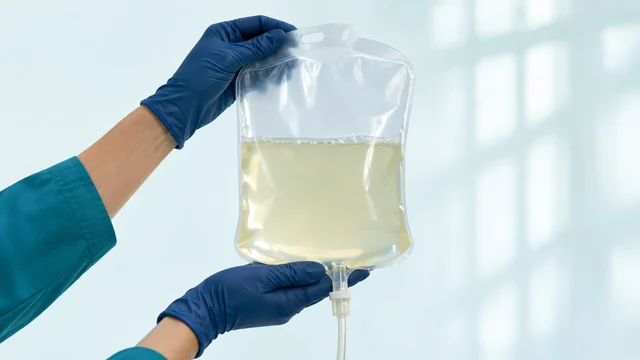
PD Peritonitis and Exit-Site Infection: The First Hour
The ISPD 2024 diagnostic criteria, the first hour after a cloudy bag, exit-site and tunnel infection, and program benchmarks.
Part C · Hemodialysis and acute care (weeks 5–6)
 Module 12
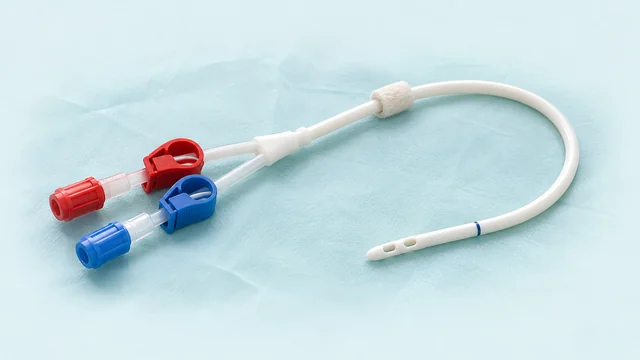
Pediatric Hemodialysis: Prescription Logic and Vascular Access
Why and when children receive hemodialysis, venous preservation, central lines versus fistulas, and catheter care bundles.
 Module 13
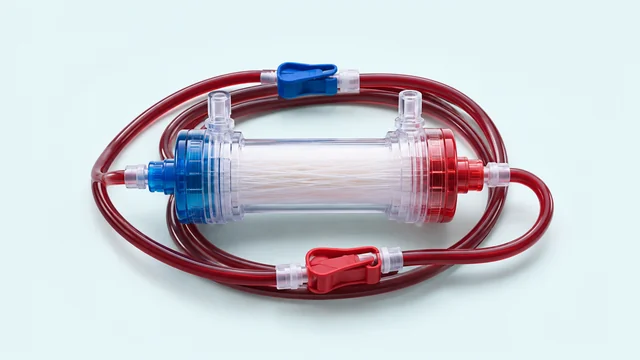
The Small Circuit: Blood Volume, Priming, Water and Preparation
Blood volume and the 10% rule, priming with saline, albumin or blood, dialyzer and line choice, and water release.
 Module 14
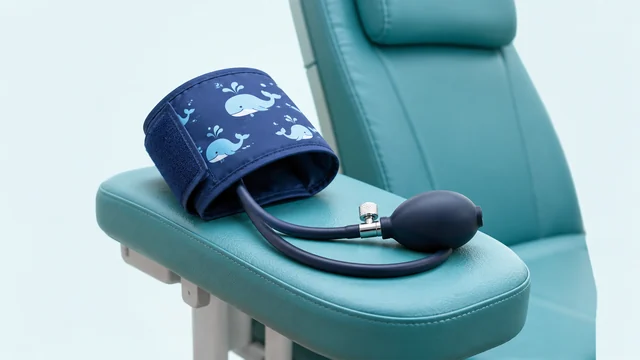
The Hemodialysis Session: Initiation, Monitoring and Completion
First sessions and disequilibrium, fluid removal in a small body, monitoring, and safe completion.
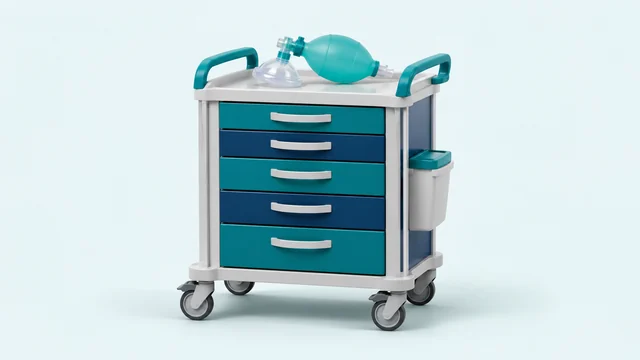 Module 15
Emergencies and Pediatric Resuscitation Readiness
Early warning in children, dialysis emergencies (hyperkalemia, hypotension, air, bleeding, reactions), and the team response.
 Module 16
AKI, Acute PD and Continuous Kidney Replacement Therapy
AKI in critically ill children, percent fluid overload, acute PD where machines are scarce, and orientation to CKRT.
Part D · Growing up on dialysis (weeks 7–8)
 Module 17
Growth, Nutrition, Anemia and Bone
Growth as an outcome, feeding and the renal dietitian, growth hormone candidacy, anemia and bone in children.
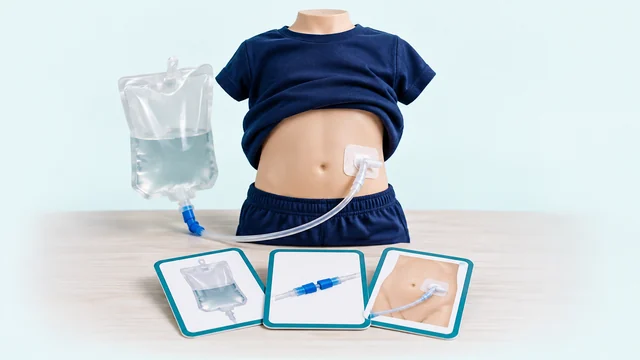 Module 18
Teaching Caregivers, Home Support and Disaster Planning
How caregivers learn, readiness by return demonstration, home support, and typhoon and power-outage plans.
 Module 19
Adolescence, School, Transplant and Transition
Adolescent development and adherence, school and play, preparing for transplant, and transition to adult care.
 Module 20
Philippine Requirements, Records, Quality and Capstone
Who governs a Philippine pediatric dialysis service, honest records, infection-rate arithmetic, and the capstone.
Calculators used in this track
Every calculator here verifies arithmetic against an order. None of them is a prescribing tool.
The same seven steps every time
Figure 2 · How to work through a module
- ObjectivesRead what you should be able to do by the end.
- Big pictureA plain-words summary and the key terms, before any detail.
- Opening caseA fictional shift problem. Decide what you would do first.
- LessonShort parts with pictures, tables, and worked examples.
- Case reviewCompare your answer with one sound response.
- Skills checklistPractice with a preceptor on real or training equipment.
- Self-assessmentFive questions drawn from a larger bank, with explanations.
New terms are explained the first time they appear, and every page ends with a glossary. Abbreviations are spelled out at first use. If a sentence still reads like jargon, check the glossary, then ask your preceptor to show you the real object on the unit: most of this work makes sense faster when you can see and touch the equipment.
The series at a glance
Each module takes about two to three hours to read and work through, plus coached practice. Skills checklists are completed with a preceptor, in simulation first and then in supervised practice.
| No. | Module | Lessons | Opening case | Skills checklist | Practice | Classroom (h) | Skills lab (h) | Placement (h) |
|---|---|---|---|---|---|---|---|---|
| 1 | The Pediatric Dialysis Nurse: Role, Scope and the Child’s Journey |
| The adult nurse who was asked to cover | Starting safely in pediatric dialysis | 15 questions · 3 real situations | 2 | 2 | 4 |
| 2 | Why Children’s Kidneys Fail, and How a Modality Is Chosen |
| The toddler who drinks all day | Cause, function and modality | 15 questions · 3 real situations | 2 | 2 | 4 |
| 3 | Development, Assent, Consent and Safeguarding |
| She hides under the blanket | Communication, assent and safeguarding | 15 questions · 3 real situations | 2 | 2 | 4 |
| 4 | Assessment, Fluid Balance and Weight-Based Arithmetic |
| 300 per hour | Measurement and arithmetic | 15 questions · 3 real situations | 2 | 2 | 4 |
| 5 | Infection Prevention and Access Protection |
| The diaper and the dressing | Asepsis and access protection | 15 questions · 3 real situations | 2 | 2 | 4 |
| 6 | Medication Safety in Children on Dialysis |
| Point five or five | Medication verification | 15 questions · 3 real situations | 2 | 2 | 4 |
| 7 | PD in Children: Physiology, Readiness and the Prescription |
| A 900 that looked like a 300 | Reading a pediatric PD order | 15 questions · 3 real situations | 2 | 2 | 4 |
| 8 | The PD Catheter, Exit Site and Mechanical Problems |
| He drains half | Exit site and drainage | 15 questions · 3 real situations | 2 | 2 | 4 |
| 9 | CAPD: A Supervised Exchange in a Small Body |
| The cap on the floor | Supervised manual exchange | 15 questions · 3 real situations | 2 | 2 | 4 |
| 10 | APD: Cycler Setup, Alarms and Home Monitoring |
| Every night at two | Cycler verification and alarms | 15 questions · 3 real situations | 2 | 2 | 4 |
| 11 | PD Peritonitis and Exit-Site Infection: The First Hour |
| Cloudy on a school morning | The cloudy-bag response | 15 questions · 3 real situations | 2 | 2 | 4 |
| 12 | Pediatric Hemodialysis: Prescription Logic and Vascular Access |
| The phlebotomist and the left arm | Prescription check and access protection | 15 questions · 3 real situations | 2 | 2 | 4 |
| 13 | The Small Circuit: Blood Volume, Priming, Water and Preparation |
| The new baby on the schedule | The small-circuit check | 15 questions · 3 real situations | 2 | 2 | 4 |
| 14 | The Hemodialysis Session: Initiation, Monitoring and Completion |
| Quiet in the third hour | Running a pediatric session | 15 questions · 3 real situations | 2 | 2 | 4 |
| 15 | Emergencies and Pediatric Resuscitation Readiness |
| The missed Friday | Emergency readiness | 15 questions · 3 real situations | 3 | 4 | 4 |
| 16 | AKI, Acute PD and Continuous Kidney Replacement Therapy |
| After the flood | AKI and acute PD support | 15 questions · 3 real situations | 2 | 2 | 4 |
| 17 | Growth, Nutrition, Anemia and Bone |
| The same trousers for two years | Growth and nutrition at the chair | 15 questions · 3 real situations | 2 | 2 | 4 |
| 18 | Teaching Caregivers, Home Support and Disaster Planning |
| The grandmother who signs with a thumbmark | Teaching to readiness | 15 questions · 3 real situations | 2 | 2 | 4 |
| 19 | Adolescence, School, Transplant and Transition |
| Sixteen and tired of it | Adolescent partnership and transition | 15 questions · 3 real situations | 2 | 2 | 4 |
| 20 | Philippine Requirements, Records, Quality and Capstone |
| The rate that doubled | Records, rates and the capstone | 15 questions · 3 real situations | 3 | 2 | 4 |
| Total | 42 | 42 | 80 |
Self-assessment is not sign-off
Each module ends with a self-assessment of 5 questions drawn at random from a bank of 15; the mastery mark is 4 of 5 on two different sets. The self-assessments are for learning. They tell you what to reread; they do not show that you can do the work.
| Milestone | What it involves | Pass mark | Who records it |
|---|---|---|---|
| 1 · Academy study | All twenty modules, cases and self-assessments; the end-of-track examination (40 questions, two from every module) | 4 of 5 on two sets per module; 32 of 40 on the examination | You, in your own learning record |
| 2 · Simulation | Eight skills stations (see the trainer page) | Every critical behavior, each station | Preceptor |
| 3 · Capstone | Portfolio and one improvement proposal for a fictional pediatric program | Rubric, full credit for urgent responses | Nurse educator |
| 4 · Facility authorization | Observed practice on the unit’s own devices, by modality, age and size band, with supervision level and review date | Independent and safe, critical items met | Authorized assessors, approved by the facility |
A critical failure in simulation or practice means stop, protect the child, debrief and reassess; a high quiz score cannot average it away. Completing milestone 1 never substitutes for milestone 4. Academy completion is an educational learning record only.
End-of-course examination. When you have finished every module, take the end-of-course examination. It draws questions at random from all 20 modules, so no two sittings are the same.
Personal study record
Need to show your head nurse or preceptor how far you have gone? Make a one-page study record: the modules you finished, your best quiz score and the date you passed each, the time you spent on each module page, your end-of-course examination result, and the date each checklist was signed off. Each module with a skills or competency checklist has a Preceptor sign-off box at the end of that section; enter the date your preceptor signed it, or enter it in the table below. Print it or save it as a PDF.
It is a record of your own self-study, not a certificate and not CPD units, and it stays on this device. Your signed checklists and the unit’s competency form remain the official record.
What the series is built on
Clinical content follows the International Society for Peritoneal Dialysis (ISPD) 2024 pediatric infection guideline, the European Society for Paediatric Nephrology (ESPN) Dialysis Working Group’s hemodialysis and vascular-access recommendations, the ISPD 2020 pediatric acute PD guideline, the Pediatric Renal Nutrition Taskforce, the Kidney Disease: Improving Global Outcomes (KDIGO) 2024 CKD guideline, and the registries and quality collaboratives that supply most pediatric evidence: SCOPE, IPPN, AWARE and the prospective pediatric continuous renal replacement therapy (CRRT) registry.1,3,2,4,5,6,7,8,9,10
Philippine requirements follow the Philippine Nursing Act, Department of Health licensing rules for dialysis facilities, the Philippine Society of Nephrology (PSN) hemodialysis guidelines, and PhilHealth PD benefit issuances.11,12,13,14,15,16 Philippine pediatric dialysis registry figures were not available for this track; where the text gives numbers, it names their source and country.
Requirements reference (reviewed November 27, 2026)
| Authority | Question it answers | What the review found |
|---|---|---|
| Professional Regulation Commission (PRC) and Board of Nursing | Is the nurse lawfully authorized? | Current license; scope includes care of children and families |
| Department of Health (DOH) licensing of dialysis facilities | Is the facility licensed for the service? | Regional assessment tool lists licensed nurses with renal dialysis training, Basic Life Support (BLS), Advanced Cardiovascular Life Support (ACLS)-trained nurse each shift, and 1:4 nurse-to-station staffing; not a pediatric-acuity standard |
| PSN hemodialysis guidelines (2024) | Professional expectations | Structured renal dialysis training; current BLS and ACLS |
| PhilHealth PD First self-assessment tool | PD program staffing and training | At least one full-time PD nurse; recognized PD training; nurse-to-patient wording “1:20” is a caseload statement needing interpretation |
| PhilHealth Advisories 2025-0074 and 2026-0013 | Pediatric automated PD pilot | Pilot sites NKTI, University of the Philippines–Philippine General Hospital (UP-PGH) and Philippine Children's Medical Center (PCMC); extended to July 31, 2026; later status not verified |
Verify every row with the responsible office before a hiring, staffing or compliance decision, and confirm pediatric benefit status with the PhilHealth Regional Office before discussing coverage with a family.
Frequently asked questions
Using the series in a training program
A pediatric dialysis nurse educator or unit head can use these modules as the guided-study part of a new nurse’s orientation. The trainer and preceptor page gathers the proposed hours, completion criteria, and every skills checklist in one printable place. These are proposals for a provider to adapt and validate on its own equipment; they are not requirements of any regulator.