Nephrology Nursing specialty subtrack for pediatric dialysis
This module is study material for registered nurses in pediatric dialysis. It explains the reasoning behind common nursing decisions; it is not a procedure. Exact steps follow your unit’s pediatric protocol and the device instructions; treatment parameters follow the written order of the pediatric nephrologist. Nurses assess, verify, teach, document and escalate; they do not prescribe, choose antibiotics, change doses or adjust anticoagulation. Every case is fictional and every value in a case is illustrative. Pending review by a pediatric nephrologist and a senior pediatric dialysis nurse.
Learning objectives
After this module you should be able to
Explain dialysis disequilibrium and why first sessions in children are short and gentle.
Verify a fluid-removal plan in mL/kg/h and % body weight, and explain why fast removal is harmful in small children.
Monitor a child during hemodialysis with attention to trends, behavior and early signs of intolerance.
Complete a session safely, including blood return, post-weight and handoff.
Classroom 2 hSkills lab 2 hSupervised placement 4 h
Pre-testBefore you read, answer the 5 self-assessment questions and note your score. After the module, select New set of questions and compare. The difference is what you learned; the questions you still miss are what to reread.
Start here
The big picture, in plain words
During hemodialysis, two things leave the child: solutes such as urea, and water. Both can leave too fast. Urea leaving the blood faster than the brain can follow causes disequilibrium. Water leaving the blood faster than it refills from the tissues causes low blood pressure. Children are vulnerable to both because their volumes are small and their signs come late.
Your work in this module is to run a session that removes what was ordered at a pace the child tolerates, and to notice intolerance before it becomes collapse.
In plain wordsThink of the blood as a small reservoir fed by a large lake, the tissues. The machine drains the reservoir. If you drain slowly, the lake refills it. Drain too fast, and the reservoir empties even though the lake is still full.
The picture has a limit. The refill rate is not fixed: it depends on how much extra fluid the tissues hold, the child’s albumin, heart function and blood vessel tone. A child near target weight refills slowly. That is why intolerance often appears at the end of a session, when the child is close to dry weight.1
Figure 1 · Key terms for this module
Dialysis disequilibriumBrain swelling from a rapid fall in blood urea, causing headache, vomiting, confusion or seizures.
Plasma refillingFluid moving from tissues back into the blood during ultrafiltration.
Ultrafiltration rateFluid removed per hour, best expressed per kilogram.
Intradialytic hypotensionA fall in blood pressure during dialysis with symptoms or the need to intervene.
Blood volume monitoringA machine sensor that tracks the relative change in blood volume during the session.
Opening case · fictional
Case: Quiet in the third hour
Jasmine Ortiz, 11, 30 kilograms, has a 1.2 kilogram fluid-removal goal over 3 hours. In the third hour she stops chatting, yawns repeatedly, and asks to lie flat. Her heart rate has risen from 92 to 118 beats per minute; her blood pressure is still in her usual range. Her mother says, “She’s just tired.” Nurse Leo is at the next chair.
Before reading on, decide:
What is Jasmine’s ultrafiltration rate in mL/kg/h?
What do the yawning and rising heart rate suggest?
What does Leo do first?
Keep your answers in mind. The lesson gives you what you need, and the case review near the end shows one sound response.
Lesson · part 1
First sessions and disequilibrium
When dialysis starts in a child with a high urea, a rapid fall in blood urea can leave the brain relatively concentrated; water moves into brain cells and they swell. This dialysis disequilibrium syndrome causes headache, nausea, vomiting, restlessness, confusion and, rarely, seizures, usually in the first hours or sessions.2,3
Figure 2. First sessions and disequilibrium. Early sessions are short and gentle so urea falls slowly.
Prevention is a gentle start. The ESPN guidelines describe a first-session blood flow of about 3 mL/kg/min (or 90 mL/m²), keeping urea clearance below about 3 mL/min/kg, and a first session of no more than 3 hours, adapted to the fluid need.1 A pediatric systematic review and clinical recommendations on disequilibrium support a gradual approach in children starting dialysis.3 Your role is to verify that the first-session order follows the unit’s pediatric start protocol, and to watch for early symptoms.
RememberFirst sessions are short and slow on purpose. Headache, vomiting or restlessness early in a first session is disequilibrium until proven otherwise.
Lesson · part 2
Fluid removal in a small body
The total fluid to remove comes from the difference between the pre-dialysis weight and the target weight, plus anything given during the session. Express the rate per kilogram so that children of different sizes can be compared.
Ultrafiltration rate (mL/kg/h) = volume to remove (mL) ÷ hours ÷ weight (kg) Example: 1,200 mL over 3 h in 30 kg → 400 mL/h ÷ 30 = about 13.3 mL/kg/h, or 1.3% of body weight per hour
Older pediatric practice guidelines described a weight loss of 1.5% to 2% of body weight per hour as standard, while warning that the amount and rate must be tolerable.1 More recent pediatric evidence links faster removal with harm to blood vessels: in the hemodiafiltration (HDF), Heart and Height study, a higher ultrafiltration rate was associated with higher carotid intima-media thickness and mean arterial pressure scores.4 The Pediatric Continuous Renal Replacement Therapy (PCRRT) Workgroup notes that intradialytic hypotension in children has not been studied extensively, so most preventive measures rest on adult data and expert opinion.5 The safe rate for a given child is a prescriber decision; your job is to calculate it, see whether the child tolerates it, and report when they do not.
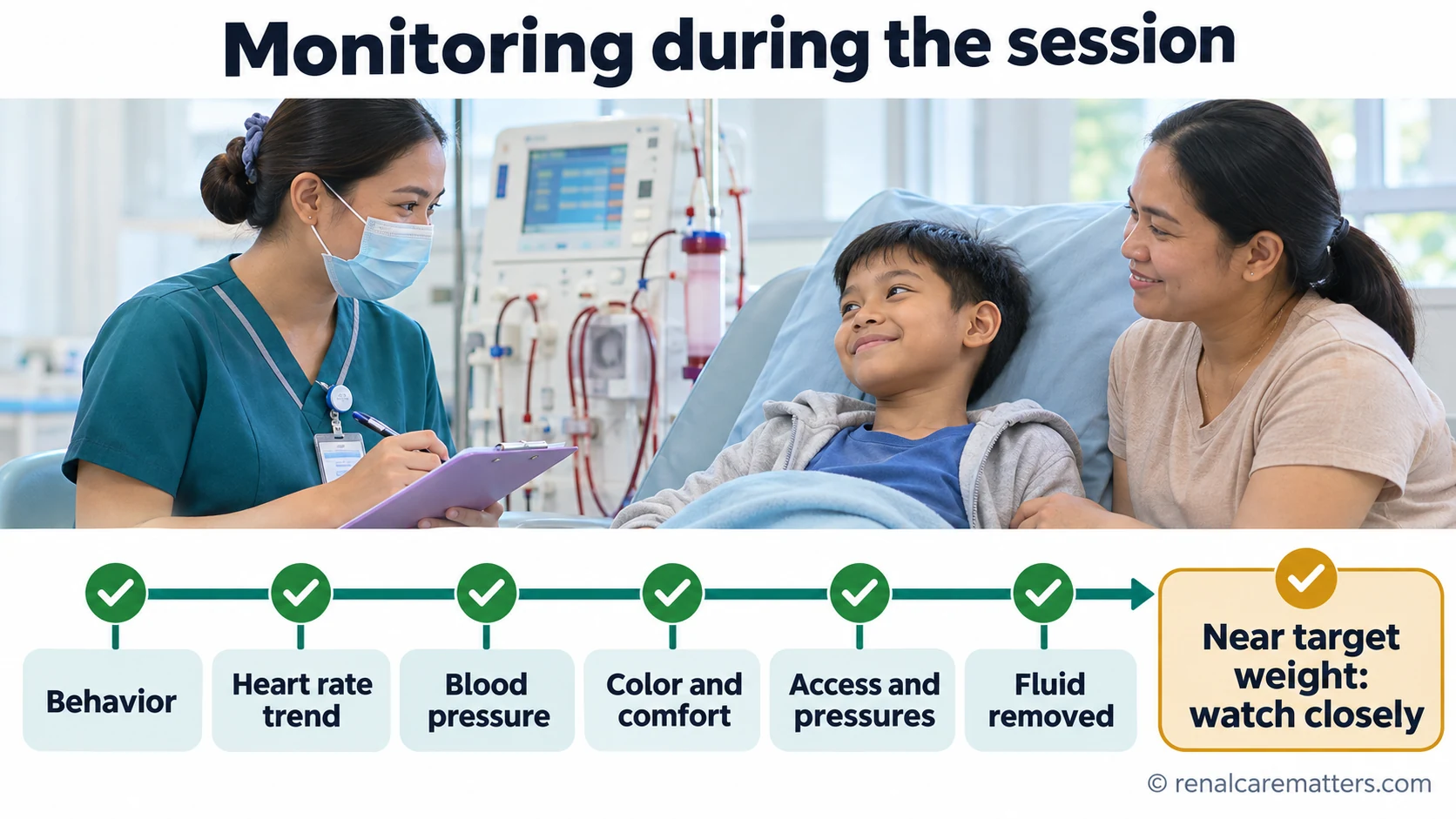
Figure 3. Monitoring during the session. Children often show distress late; watch trends, not only single values.
RememberExpress fluid removal in mL/kg/h. A rate the child does not tolerate is too fast, whatever the number says.
Lesson · part 3
Monitoring and completion
Children compensate for falling blood volume by raising their heart rate and tightening their vessels. Blood pressure can stay normal until compensation fails. Watch the trend and the child, not one number.
Watch
Early sign of trouble
Behavior
Quiet, yawning, restless, irritable, asking to lie down
Blood volume curve falling steeply, access and venous pressure changes
When intolerance appears: lay the child flat with legs raised if appropriate, reduce or stop ultrafiltration per protocol, and call the nephrologist. Fluid boluses and other treatments are given only as ordered.
Completion. Return blood per protocol and the priming plan, take a post-dialysis weight under the same conditions as the pre-weight, record vital signs and how the child feels, check the access, and hand over with Illness severity, Patient summary, Action list, Situation awareness, Synthesis by receiver (I-PASS) or your unit’s structured format, which was associated with fewer medical errors in pediatric hospitals.6
RememberBehavior and heart rate change before blood pressure in children. Act on the trend.
On the floor
Real situations: problems and solutions
These are fictional but typical. For each one, cover the answer, decide what you would do, then compare. Where a step depends on local rules, your unit’s procedure and your supervisor’s direction come first.
Headache in the first hour
What you see
A child’s first session; headache and vomiting at 60 minutes.
What is likely going on
Possible disequilibrium.
What to do
Slow or stop per protocol, call, monitor neurology.
Why it matters
Gentle starts prevent seizures.
Yawning
What you see
A child yawns and goes quiet late in the session.
What is likely going on
Falling blood volume.
What to do
Lay flat, reduce ultrafiltration per protocol, call.
Why it matters
Behavior changes before blood pressure.
Different post-weight
What you see
Post-weight taken in clothes and shoes.
What is likely going on
Conditions mismatched.
What to do
Reweigh to match pre-weight conditions.
Why it matters
Wrong weights mislead the next session.
Field notes
Watch the heart rate trend.
Use a structured handoff.
Case review
Back to the case: Quiet in the third hour
The rate. 1,200 mL ÷ 3 h ÷ 30 kg ≈ 13.3 mL/kg/h, about 1.3% of body weight per hour, in the third hour near her target weight.
The signs. Yawning, quietness, wanting to lie flat and a heart rate rising from 92 to 118 suggest falling blood volume with compensation still holding her blood pressure.
First action. Leo lays Jasmine flat, reduces or pauses ultrafiltration per protocol, rechecks her vital signs and calls the nephrologist. He tells her mother what he sees and why. Later he reports the episode so the team can review her target weight and removal plan.
Interactive case · fictional
Interactive case: Quiet in the third hour
Work through a shift one decision at a time. The panel at the top changes with what you choose. After each choice you see why it is, or is not, the best move; after a weaker one you can try again or carry on and see where it leads. Your first choice at each step is scored. The score stays on this device and nothing is sent anywhere. In real practice, your unit’s protocol and the people responsible for each decision come first.
Skills lab · with your preceptor
Skills checklist: Running a pediatric session
Simulation first, then supervised sessions. Your preceptor rates each step as satisfactory, needs practice, or not observed. Steps marked Critical must all be satisfactory before sign-off. This checklist supports supervised learning; your unit’s own procedure and competency form are the authority. A printable version of every checklist is on the trainer page.
CriticalVerifies a first-session order against the unit’s pediatric start protocol
CriticalCalculates ultrafiltration rate in mL/kg/h and % body weight per hour with a second check
Monitors behavior, heart rate trend, color and symptoms, not blood pressure alone
CriticalResponds to intolerance by positioning, reducing ultrafiltration per protocol and calling
Completes blood return, post-weight under matched conditions, and a structured handoff
Self-assessment
Check your understanding
Each visit draws 5 questions at random from this module’s 15-question bank. Choose the single best answer for each, then select Check answers; an explanation appears under the best answer. Select New set of questions for a different mix. A good target is 4 of 5 on two different sets. Nothing you select is sent anywhere; scoring happens in your browser.
Fischbach, M., Edefonti, A., Schröder, C., & Watson, A. (2005). Hemodialysis in children: General practical guidelines. Pediatric Nephrology, 20(8), 1054–1066. https://doi.org/10.1007/s00467-005-1876-y
Raina, R., Davenport, A., Warady, B., Vasistha, P., Sethi, S. K., Chakraborty, R., Khooblall, P., Agarwal, N., Vij, M., Schaefer, F., Malhotra, K., & Misra, M. (2022). Dialysis disequilibrium syndrome (DDS) in pediatric patients on dialysis: Systematic review and clinical practice recommendations. Pediatric Nephrology, 37(2), 263–274. https://doi.org/10.1007/s00467-021-05242-1
Shroff, R., Smith, C., Ranchin, B., Bayazit, A. K., Stefanidis, C. J., Askiti, V., Azukaitis, K., Canpolat, N., Ağbaş, A., Aitkenhead, H., Anarat, A., Aoun, B., Aofolaju, D., Bakkaloglu, S. A., Bhowruth, D., Borzych-Dużałka, D., Bulut, I. K., Büscher, R., Deanfield, J., . . . Schaefer, F. (2019). Effects of hemodiafiltration versus conventional hemodialysis in children with ESKD: The HDF, Heart and Height study. Journal of the American Society of Nephrology, 30(4), 678–691. https://doi.org/10.1681/ASN.2018100990
Raina, R., Lam, S., Raheja, H., Krishnappa, V., Hothi, D., Davenport, A., Chand, D., Kapur, G., Schaefer, F., Sethi, S. K., McCulloch, M., Bagga, A., Bunchman, T., & Warady, B. A. (2019). Pediatric intradialytic hypotension: Recommendations from the Pediatric Continuous Renal Replacement Therapy (PCRRT) Workgroup. Pediatric Nephrology, 34(5), 925–941. https://doi.org/10.1007/s00467-018-4190-1
Starmer, A. J., Spector, N. D., Srivastava, R., West, D. C., Rosenbluth, G., Allen, A. D., Noble, E. L., Tse, L. L., Dalal, A. K., Keohane, C. A., Lipsitz, S. R., Rothschild, J. M., Wien, M. F., Yoon, C. S., Zigmont, K. R., Wilson, K. M., O’Toole, J. K., Solan, L. G., Aylor, M., . . . Landrigan, C. P. (2014). Changes in medical errors after implementation of a handoff program. New England Journal of Medicine, 371(19), 1803–1812. https://doi.org/10.1056/NEJMsa1405556
Educational material for registered nurses. Completing it is an Academy learning record only. It does not confer CPD units, PSN or National Kidney and Transplant Institute (NKTI) training recognition, PhilHealth staffing credit, or clinical privileges, and it does not replace your facility’s protocols, device instructions, or written orders.