The doctor who answers at 2 a.m.
An attending appointment is a promise that someone with the right authority will answer when a patient deteriorates in the middle of the night. The attending nephrologist (AN) owns each patient’s renal plan: the diagnosis, the treatment goals, the initial and maintenance orders, the periodic review, and the decision to change course. The physician on duty (POD) and the dialysis nurse respond at the bedside; the AN decides what happens next, and makes sure the decision has an owner.
The track follows a patient through every setting an attending works in: the referral clinic, the ward, the intensive care unit (ICU), the hemodialysis (HD) unit, peritoneal dialysis (PD) at home, the transplant referral, and supportive care. Every module moves in the same order. It starts with a plain-language picture, explains the physiology, states what the best human evidence shows and how certain it is, and ends with what the attending does.
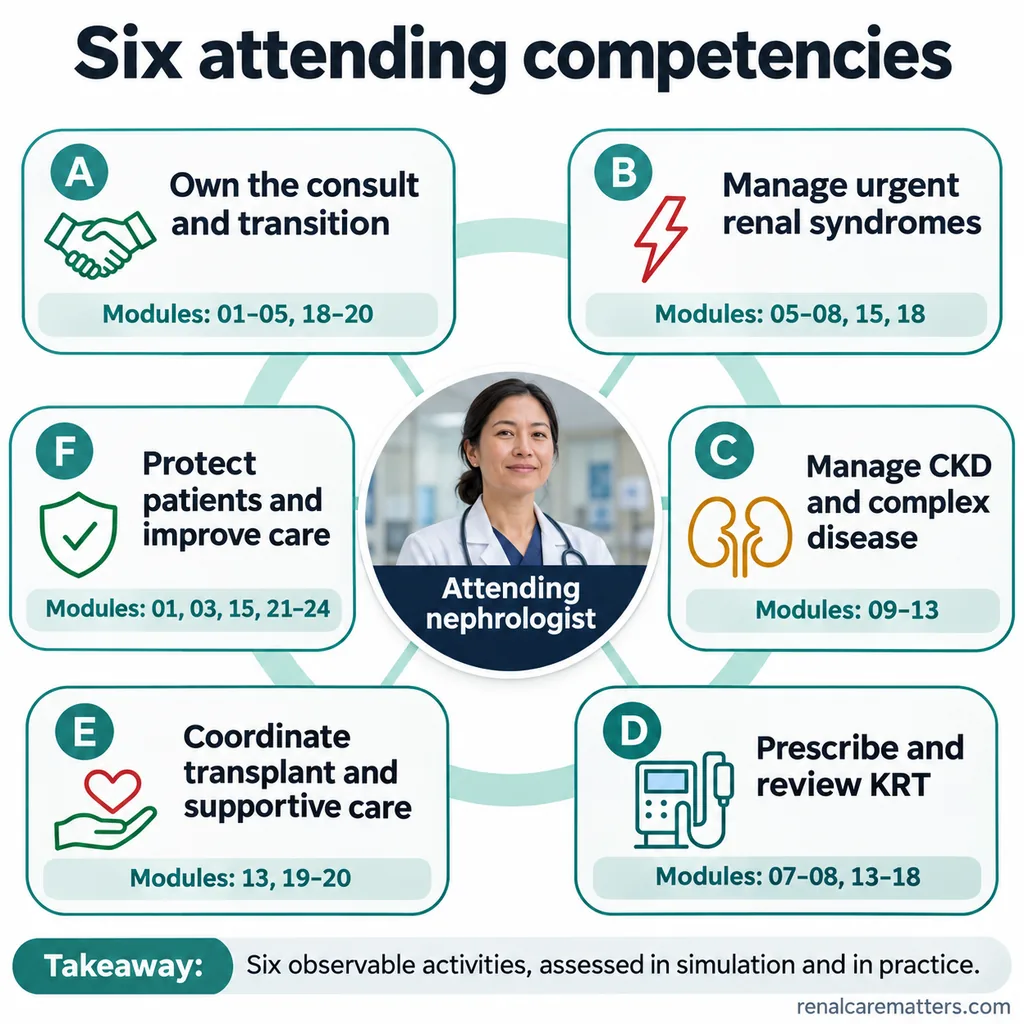
Figure 1 · What this track will help you do
How the role works in Philippine practice. A hemodialysis center (HDC) serves patients of several attending nephrologists, and each patient chooses his own. The attending nephrologist usually does not work in the unit. The nurses and the physician on duty update him by phone and message, he visits at least once a month to see his patients face to face, and he sees the others in his clinic or by telemedicine. He also signs the Philippine Health Insurance Corporation (PhilHealth) claims for all of his patients. The cases in this track are written from that position: off site, reached by phone, on the floor once a month, and responsible for every signature.
The Philippine Society of Nephrology (PSN) 2024 hemodialysis guidelines list the attending’s qualifications and fourteen duties in Section 1.2.1 Each module opens with the duty it teaches. The map below shows where each one is covered.
Figure 2 · PSN Section 1.2 and where this track teaches it
Every new term is explained when it first appears. Every module has figures, a case, a skills checklist, linked calculators, and a five-question self-assessment.
What this series is, and is not
It is a training track written independently from published guidelines, trials, laws, and regulations. It is not a license, Philippine Society of Nephrology (PSN) certification, continuing professional development (CPD) credit, hospital privileges, or PhilHealth accreditation. Clinical competence requires observation by a local assessor and facility credentialing.
Who can hold this role
Attending Nephrologist: qualifications at a glance
- PRC-licensed, with nephrology training from a PSN-accredited or recognized institution. PSN
- Practices in the area and is easily reached by the HDC; submits CV, updated PhilHealth accreditation, PRC license, and PSN or chapter endorsement. PSN
Sources: DOH Administrative Order No. 2012-0001, Sec. V.B.2.a; Philippine Society of Nephrology (2024), Guidelines for nephrologists in the operation of hemodialysis clinics, Sec. III.A; Republic Act No. 10862. A summary for orientation, not legal advice: check the current issuances, and your unit’s license and PhilHealth accreditation. The full table for every role is on the Academy home.
Twelve weeks of study, in six blocks
The 24 modules are grouped into six blocks of four, studied at two modules a week. Each block ends with a work sample that a preceptor reviews.
Figure 4 · The six blocks
Twenty-four modules in six blocks
Study the modules in order. Each one moves from intuition to physiology, then to the evidence, and ends with what the attending does.
Block 1 · Taking responsibility
 Module 1
Taking attending responsibility
Verify registration, appointment, privileges and facility capability before accepting a dialysis panel.
 Module 2
The renal consultation and diagnostic dataset
Build a problem representation from creatinine trajectory, urine output and examination.
 Module 3
Consultant communication and coverage
Give and receive a closed-loop escalation using a structured format.
 Module 4
Consent, prescribing and medication reconciliation
Use teach-back to confirm understanding and document an informed choice.
Block 2 · Acute and critical care
 Module 5
Acute kidney injury and post-AKI care
Stage acute kidney injury (AKI) from creatinine and urine-output trends and identify reversible causes in parallel.
 Module 6
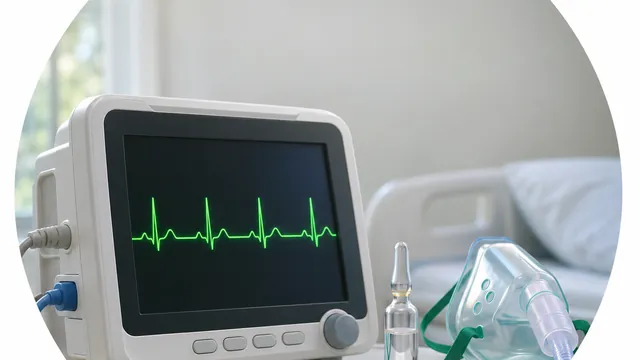
Potassium, sodium and acid-base emergencies
Prioritize immediately dangerous electrolyte abnormalities using electrocardiogram (ECG) and clinical context.
 Module 7
Acute kidney replacement and ICU consultation
Start acute kidney replacement therapy (KRT) for indications and trajectory, not for a creatinine number.
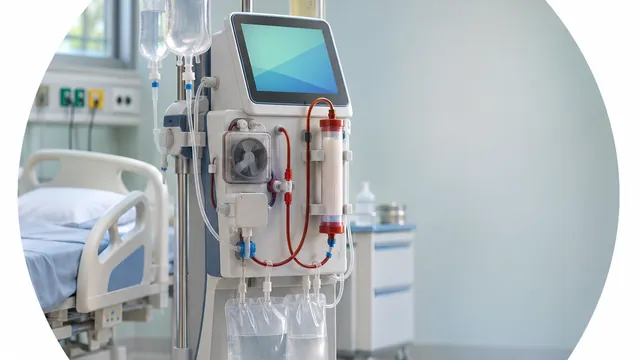 Module 8
CRRT delivery, special indications and stopping
Audit prescribed versus delivered effluent dose and fluid balance.
Block 3 · Chronic and complex disease
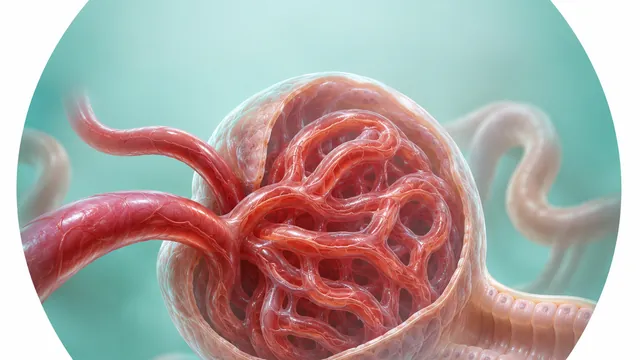 Module 9
CKD staging, progression and risk reduction
Classify chronic kidney disease (CKD) by cause, glomerular filtration rate (GFR) and albuminuria (CGA) and estimate kidney failure risk.
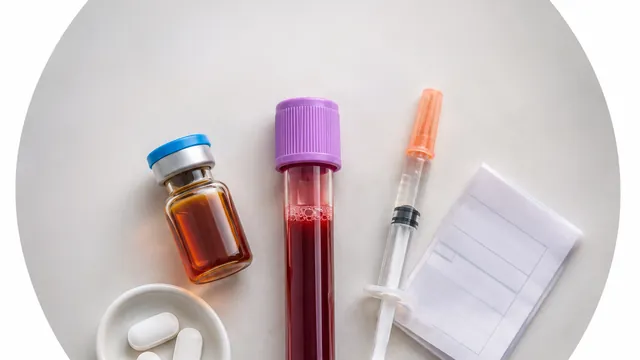 Module 10
CKD complications and multidisciplinary review
Separate iron deficiency, inflammation and erythropoietin deficiency as drivers of anemia.
 Module 11
Glomerular disease and kidney biopsy decisions
Triage nephritic, nephrotic and rapidly progressive presentations by tempo.
 Module 12
Tubulointerstitial, vascular and inherited disease
Build phenotype-driven work-ups for interstitial, tubular, vascular and inherited disease.
Block 4 · Kidney failure and HD
 Module 13
Kidney failure planning and dialysis initiation
Compare hemodialysis (HD), peritoneal dialysis (PD), transplantation and conservative care with the patient’s life in view.
 Module 14
Maintenance HD prescription and delivered adequacy
Write a complete hemodialysis (HD) order within unit capability.
 Module 15
HD emergencies and consultant escalation
Support immediate bedside action for hypotension, hemolysis, air embolism, reactions and arrhythmia.
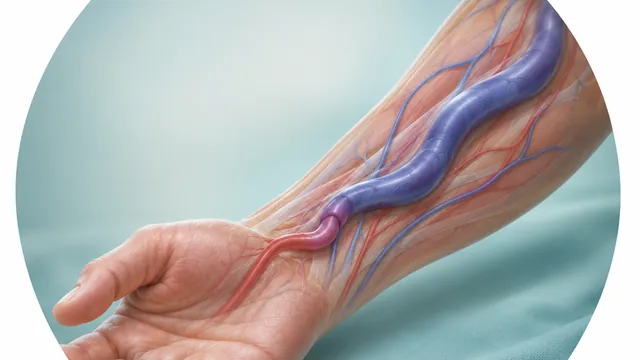 Module 16
HD access and infection prevention
Create a patient-specific access life-plan.
Block 5 · Home therapy and transitions
 Module 17
Peritoneal dialysis prescription and home follow-up
Design goal-directed peritoneal dialysis (PD) with the patient around residual function and lifestyle.
 Module 18
PD peritonitis and mechanical complications
Evaluate cloudy effluent the same day and start empiric therapy promptly.
 Module 19
Kidney transplantation referral and shared care
Refer suitable patients early with a complete, actionable dataset.
 Module 20
Conservative kidney management and serious illness
Elicit goals, assess decision-specific capacity and share prognosis honestly.
Block 6 · Professional practice
 Module 21
PhilHealth documentation and ethical claims
Reconcile delivered services with records before attesting.
 Module 22
Disasters, outbreaks and service continuity
Prepare patients and the unit for typhoons, floods, outages and outbreaks.
 Module 23
Supervision, evidence appraisal and quality improvement
Give behavior-specific feedback and match supervision to entrustment.
 Module 24
Integrated attending capstone
Defend longitudinal decisions across clinic, ward, dialysis unit and home.
The same seven steps every time
Figure 5 · How to work through a module
- ObjectivesRead what you should be able to do by the end.
- Big pictureA plain-words summary and the key terms, before any detail.
- Opening caseA fictional shift problem. Decide what you would do first.
- LessonShort parts with pictures, tables, and worked examples.
- Case reviewCompare your answer with one sound response.
- Skills checklistPractice with a preceptor on real or training equipment.
- Self-assessmentFive questions drawn from a larger bank, with explanations.
New terms are explained the first time they appear, and every page ends with a glossary. Abbreviations are spelled out at first use. If a sentence still reads like jargon, check the glossary, then ask your preceptor to show you the real object on the unit: most of this work makes sense faster when you can see and touch the equipment.
The series at a glance
Plan about 90 minutes per module for study, case discussion, and self-check, plus 12 hours of observed work or simulation and a 4-hour capstone, about 52 hours in all.
| No. | Module | Lessons | Opening case | Skills checklist | Practice |
|---|---|---|---|---|---|
| 1 | Taking attending responsibility |
| The panel that starts on Monday | Skills checklist | 5 questions · 3 real situations |
| 2 | The renal consultation and diagnostic dataset |
| The referral that arrived by text | Skills checklist | 5 questions · 3 real situations |
| 3 | Consultant communication and coverage |
| The call from the 8 p.m. shift | Skills checklist | 5 questions · 3 real situations |
| 4 | Consent, prescribing and medication reconciliation |
| Two lists in one plastic bag | Skills checklist | 5 questions · 3 real situations |
| 5 | Acute kidney injury and post-AKI care |
| The flood patient sent for dialysis | Skills checklist | 5 questions · 3 real situations |
| 6 | Potassium, sodium and acid-base emergencies |
| The man who missed Friday and Monday | Skills checklist | 5 questions · 3 real situations |
| 7 | Acute kidney replacement and ICU consultation |
| The ICU wants your machine | Skills checklist | 5 questions · 3 real situations |
| 8 | CRRT delivery, special indications and stopping |
| The filter that keeps clotting | Skills checklist | 5 questions · 3 real situations |
| 9 | CKD staging, progression and risk reduction |
| The patient who is not on your floor yet | Skills checklist | 5 questions · 3 real situations |
| 10 | CKD complications and multidisciplinary review |
| Hemoglobin 8.9 after pneumonia | Skills checklist | 5 questions · 3 real situations |
| 11 | Glomerular disease and kidney biopsy decisions |
| Coughing blood on the treatment floor | Skills checklist | 5 questions · 3 real situations |
| 12 | Tubulointerstitial, vascular and inherited disease |
| The patient who wants his sister’s kidney | Skills checklist | 5 questions · 3 real situations |
| 13 | Kidney failure planning and dialysis initiation |
| “The number is very low, Doctor” | Skills checklist | 5 questions · 3 real situations |
| 14 | Maintenance HD prescription and delivered adequacy |
| The Kt/V that fell | Skills checklist | 5 questions · 3 real situations |
| 15 | HD emergencies and consultant escalation |
| Two patients, one minute apart | Skills checklist | 5 questions · 3 real situations |
| 16 | HD access and infection prevention |
| Rigors at 30 minutes | Skills checklist | 5 questions · 3 real situations |
| 17 | Peritoneal dialysis prescription and home follow-up |
| The midday exchange that never happens | Skills checklist | 5 questions · 3 real situations |
| 18 | PD peritonitis and mechanical complications |
| “Just come to clinic next week” | Skills checklist | 5 questions · 3 real situations |
| 19 | Kidney transplantation referral and shared care |
| The clarithromycin from the corner clinic | Skills checklist | 5 questions · 3 real situations |
| 20 | Conservative kidney management and serious illness |
| “Please decide before you talk to him” | Skills checklist | 5 questions · 3 real situations |
| 21 | PhilHealth documentation and ethical claims |
| The claim you are asked to sign on Friday | Skills checklist | 5 questions · 3 real situations |
| 22 | Disasters, outbreaks and service continuity |
| The satellite unit that went under water | Skills checklist | 5 questions · 3 real situations |
| 23 | Supervision, evidence appraisal and quality improvement |
| Fewer infections, or fewer catheters? | Skills checklist | 5 questions · 3 real situations |
| 24 | Integrated attending capstone |
| Three weeks of one patient | Skills checklist | 5 questions · 3 real situations |
Self-assessment is not sign-off
Each module ends with a self-assessment of 5 questions; the mastery mark is 4 of 5. The end-of-track examination draws 40 questions from all 24 banks. The capstone follows one patient through every setting and is scored on five areas, 0 to 2 each; a pass is 8 of 10 with every critical action met.
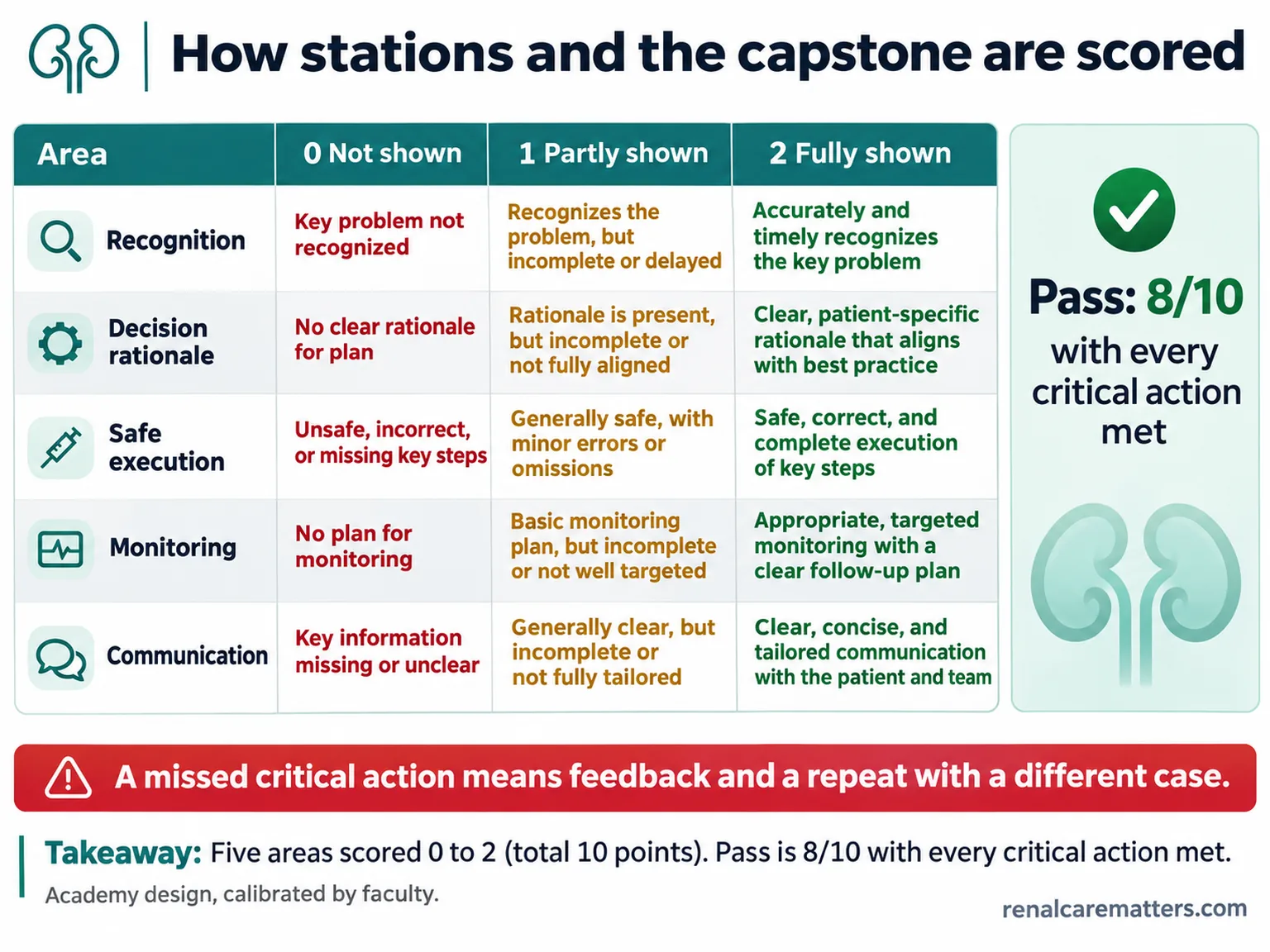
End-of-course examination. When you have finished every module, take the end-of-course examination. It draws questions at random from all 24 modules, so no two sittings are the same.
What the series is built on
The track is built from published sources: the Kidney Disease: Improving Global Outcomes (KDIGO) guidelines for chronic kidney disease (CKD), acute kidney injury (AKI), anemia, glomerular disease, and transplantation; the Kidney Disease Outcomes Quality Initiative (KDOQI) guidelines for hemodialysis adequacy and vascular access; the International Society for Peritoneal Dialysis (ISPD) recommendations; the landmark trials they rest on; and Philippine requirements from the Department of Health (DOH), PhilHealth, and the Philippine Society of Nephrology (PSN). Each module lists its own sources.
Evidence was reviewed on November 24, 2026. The KDIGO 2026 guideline for AKI and acute kidney disease is cited only as a public-review draft. PhilHealth rates and forms must be confirmed on the date of service.
Using the series in a training program
A nephrology program director or a senior attending can use these modules as the guided-study part of an attending’s orientation or a fellow’s final year. The trainer and preceptor page gathers the proposed hours, completion criteria, and every skills checklist in one printable place. These are proposals for a provider to adapt and validate on its own equipment; they are not requirements of any regulator.