Disasters hurt dialysis patients twice
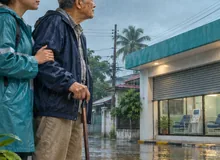
A dialysis patient depends on electricity, treated water, transport and trained staff, all at once, three times a week. A typhoon can take away all four in one night. The first harm is the event itself: a patient on a machine when the ground shakes, the power fails or smoke fills the corridor. The second harm comes in the days after, when sessions are missed while the body keeps adding water, salt and potassium.1
The second harm is the larger one, and it is the one a plan can change. After Hurricane Katrina, 44% of 386 New Orleans patients missed at least one session, and missing three or more was associated with hospitalization; patients who did not know their unit’s emergency plan were among the more likely to miss three or more.2 Before Hurricane Sandy, dialysis moved ahead of schedule was associated with fewer emergency visits, admissions and deaths in the following month.3 Both studies are observational, from the United States, where disasters have been studied. The Philippine lesson is the same: a unit that has planned, drilled and told its patients what to do keeps more of them dialyzed.
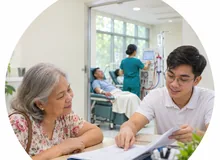
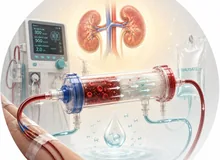
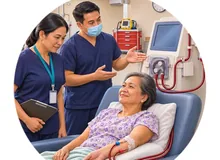
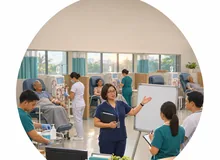
Figure 1 · What this course will help your unit do
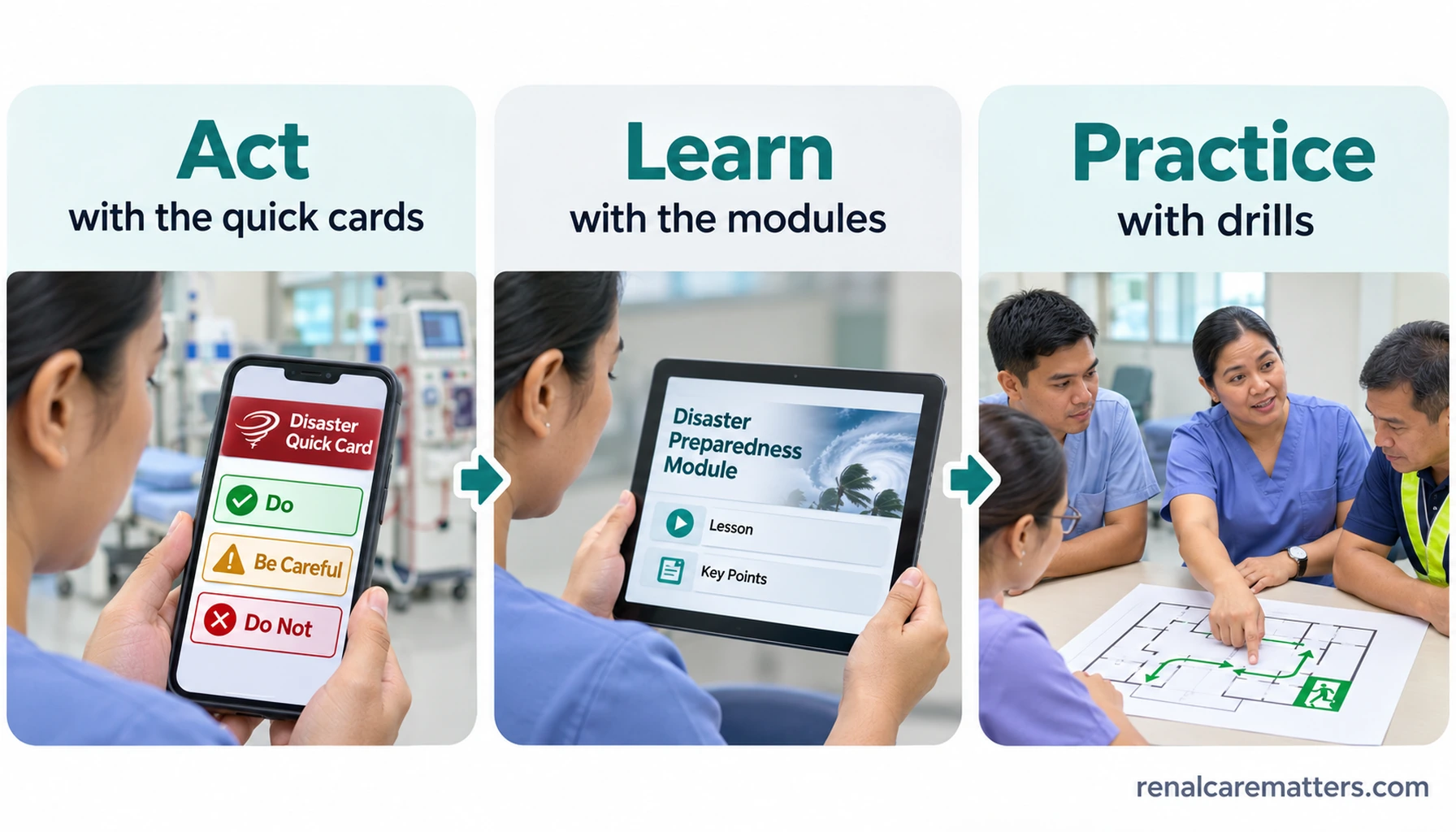
The course is cross-track. Eight role tracks already carry a disaster module, and this course is the shared core they point to: one unit plan, one drill program, one set of rules. Each module says which roles need it. The practice page holds the tabletop simulator, the call-down drill timer and the printable evacuation sheet. Cardiac arrest at the chair belongs to the Dialysis Team Resuscitation Lab; this course links to it and never re-teaches it.
Clinically reviewed
Signed off by Dr. William Gregory Rivero on November 28, 2026. Your unit protocol, the attending nephrologist and your local disaster authorities decide every real event.
What this series is, and is not
It is an original course written from published disaster and dialysis research, Philippine law and policy (Republic Act No. 10121, the Department of Health’s disaster risk reduction and management (DRRM)-H policy, the Fire Code), and public guidance from PAGASA, PHIVOLCS and the Office of Civil Defense. It is not a hospital disaster plan, it does not replace the hospital plan a hospital-based unit works inside, and it states no drill frequency as a legal requirement unless the law states it. Drill frequencies in this course are Academy suggestions.
Placement pre-test
Transferring from another unit, or already experienced in this role? Take the placement pre-test: a short check of up to 5 questions for each module, drawn from that module’s own question bank. Score 80% or better and the module becomes optional reading for you, so you study only what you need.
Results stay on this device. The certificate still needs every module quiz; for a module you placed out of, go straight to its self-assessment.
Twelve modules in four parts
The modules follow the life of a disaster: understand and plan, prepare the people, respond to each hazard, then keep everyone dialyzed, reopen and practice.
Figure 3 · The four parts
Which modules for which role
| Role group | Modules |
|---|---|
| Hemodialysis, charge and head nurses | All modules; Modules 6 to 8 hands-on; emergency take-off drill passed |
| Safety nurse (or head nurse) | All modules, plus the Module 12 facilitator capstone |
| Physician-on-duty, Dialysis Clinical Head, attending nephrologist | Modules 1, 3, 5, 8, 10, 11 |
| Technicians (dialysis, water treatment, biomedical, reprocessing) | Modules 1, 2, 6, 7, 8, 11 |
| Nurse assistants, support staff | Modules 1, 6, 7; the evacuation drill |
| Unit manager, unit owner | Modules 1, 2, 3, 10, 11, 12 |
| Social worker, records officer, dietitian | Modules 1, 3, 4, 10 |
The role paths are an Academy recommendation for the unit to adapt.
Twelve modules in four parts
Study in order the first time. Each module opens with a fictional Philippine scenario, teaches the reasoning, and ends with an interactive case, a skills checklist and a self-assessment.
Part 1 · Understand and plan
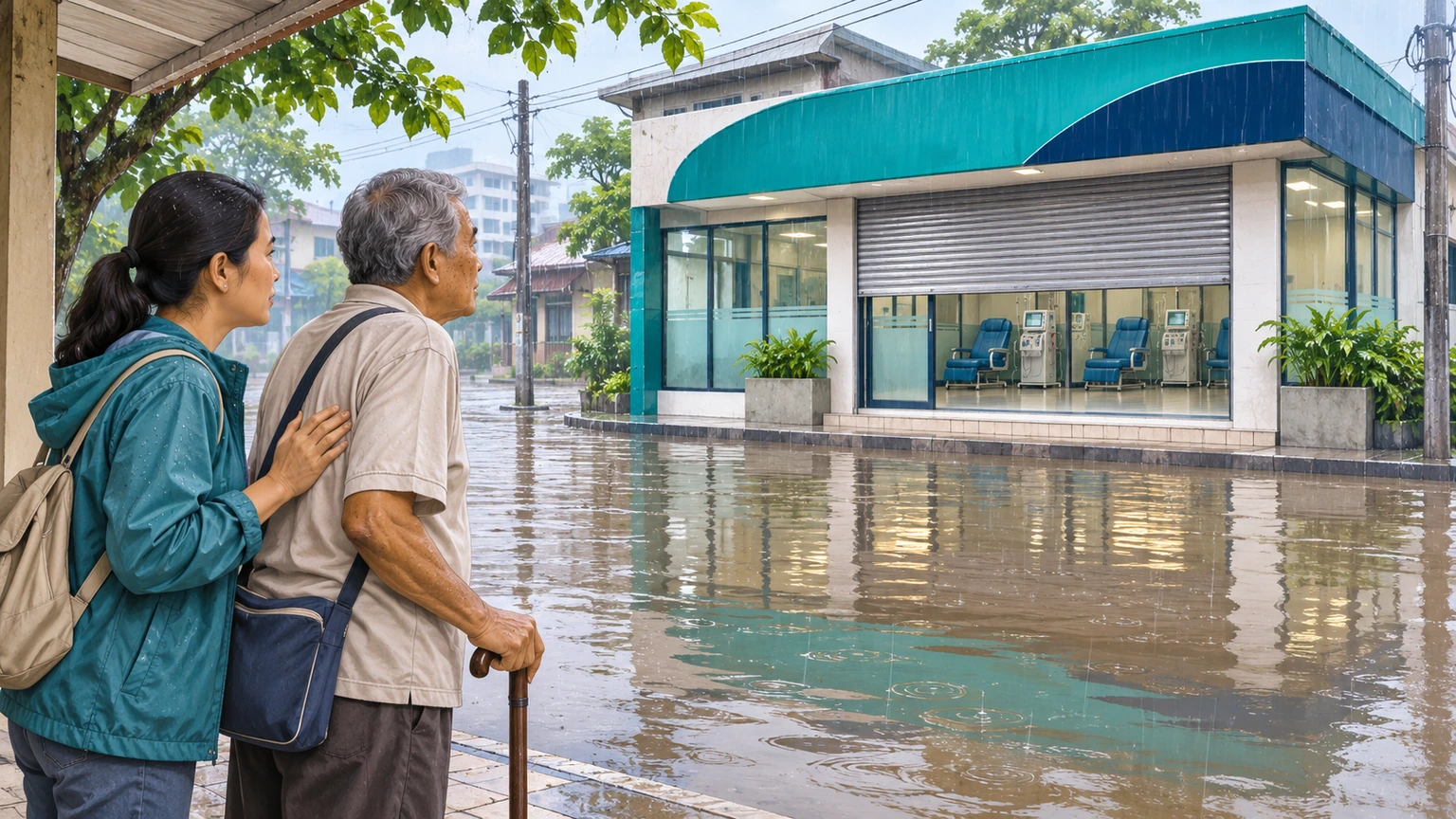 Module 1
Why Disasters Hurt Dialysis Patients Twice
The causal chain from warning to restart, what the studies show and their limits, and the hazards a Philippine unit plans for.
 Module 2
Know Your Unit's Hazards and Dependencies
A hazard assessment for a dialysis unit, the dependency map (power, water, staff, supplies, transport, records, communications), and the single points of failure.
 Module 3
The Unit Plan and Who Commands
A one-page activation plan, simple incident command for a dialysis unit, triggers, communications when networks fail, and receiving-unit agreements.
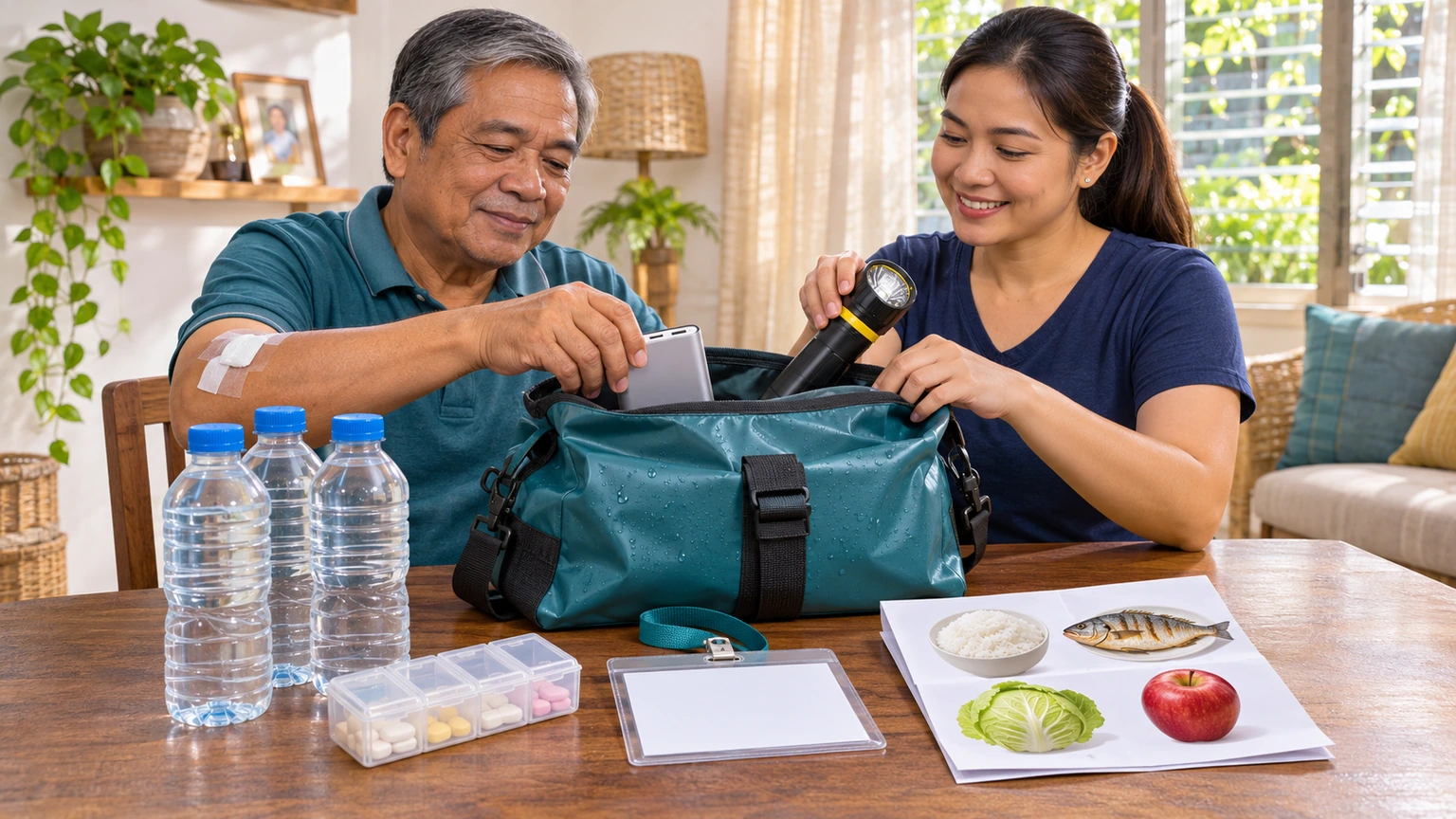
Part 2 · Ready patients
Part 3 · Respond
 Module 5
Typhoons and Floods
Before the season, when the signal is raised, during and after; early dialysis with the nephrologist; staff transport; flood water and leptospirosis exposure.
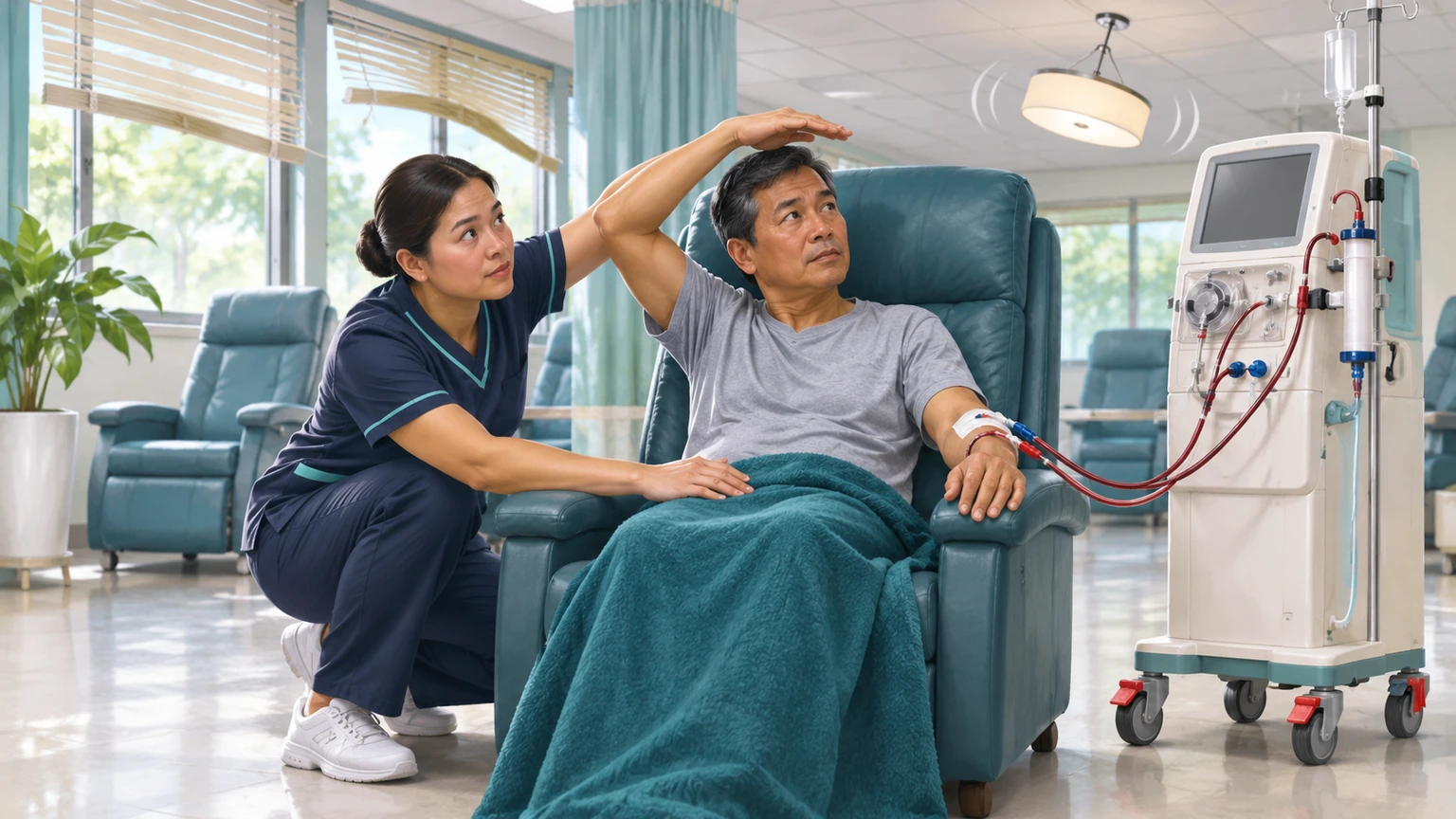 Module 6
Earthquake on the Machine
Protect in place, the checks after the shaking, when to take patients off, the emergency take-off, and joining the quarterly earthquake drill.
 Module 7
Fire and Evacuation
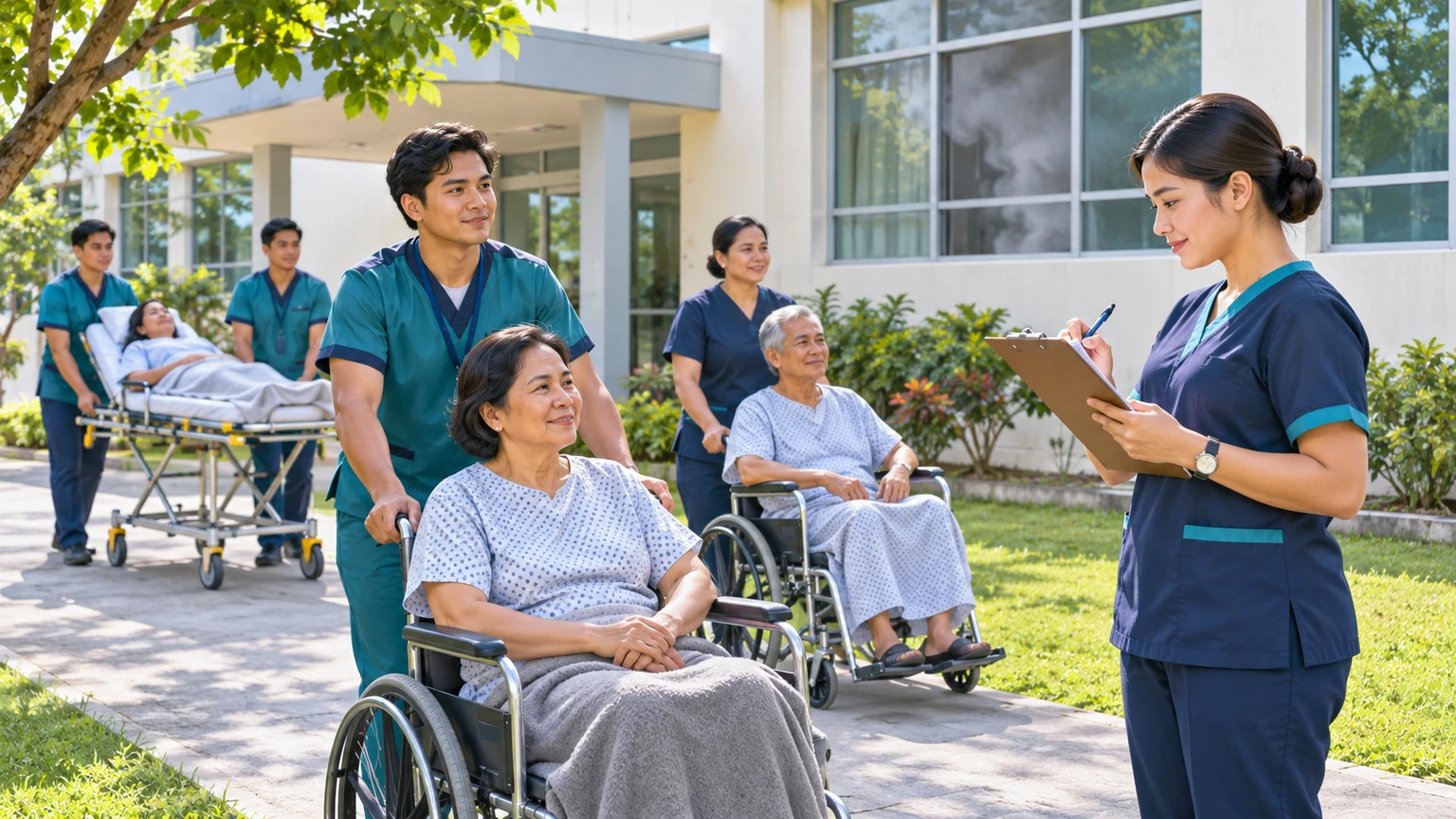
RACE and the extinguisher, oxygen and smoke, the emergency take-off for evacuation, mobility categories, the route, and the census at the assembly point.
 Module 8
Power, Water and Supplies
The first ten minutes of a power failure, blood return without power, generator and battery checks, water failure and contamination, and supply buffers.
 Module 9
Heat, Ashfall and Outbreaks
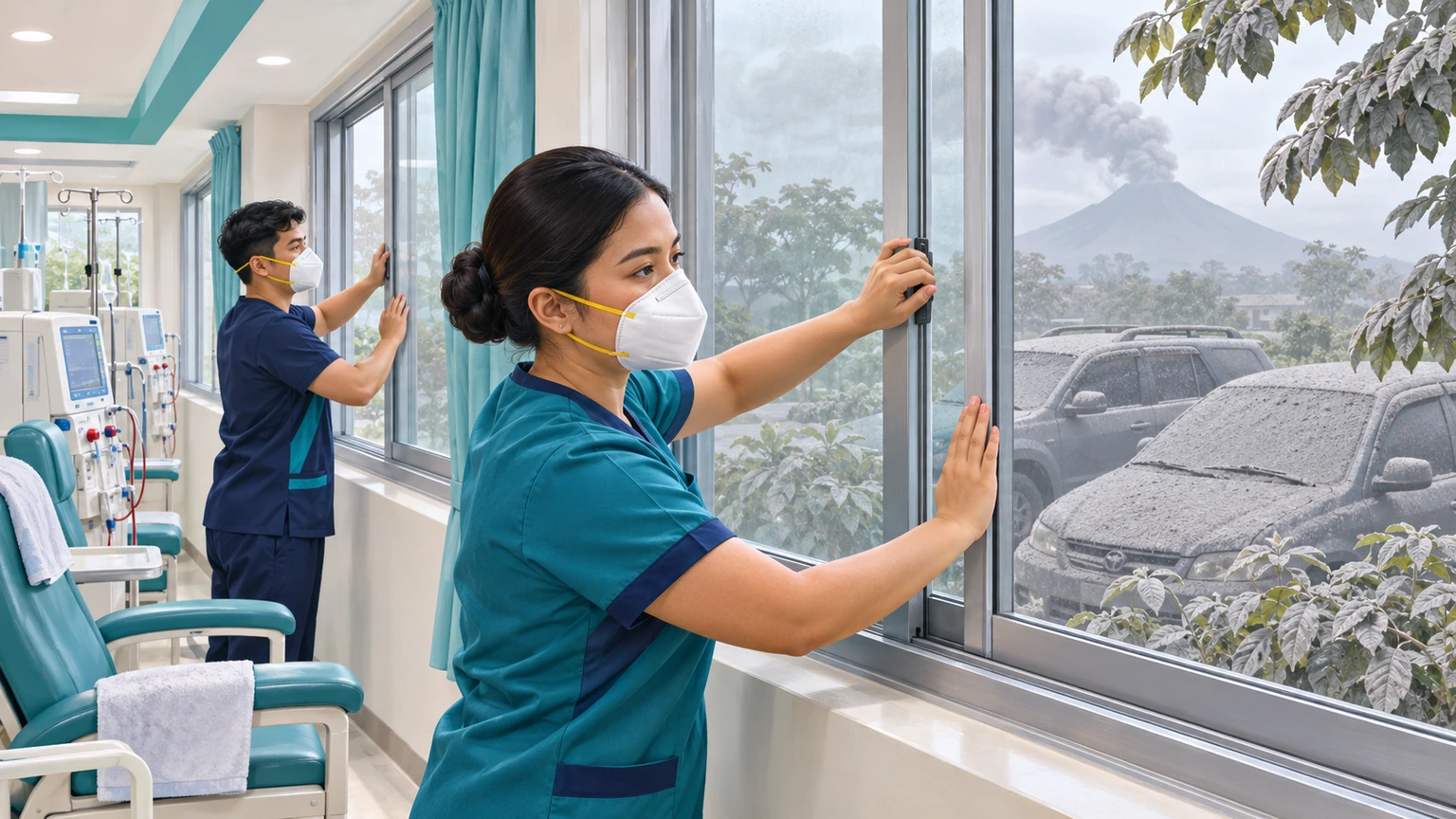
Heat-index days and the trip to the unit, volcanic ashfall and the water and air intakes, and an infectious outbreak treated as a disaster.
Part 4 · Continue, reopen, practice
 Module 10
Keeping Everyone Dialyzed: Priority, Placement, Tracking
Finding every patient within 24 hours, the medical priority roster, shortened sessions under six conditions, and placement at receiving units with a handoff.
 Module 11
Reopening Safely and Recovering
The five signed restart gates, reconciliation of who was dialyzed where, staff fatigue and distress, and patients' distress after disasters.
 Module 12
Running Drills That Change Practice
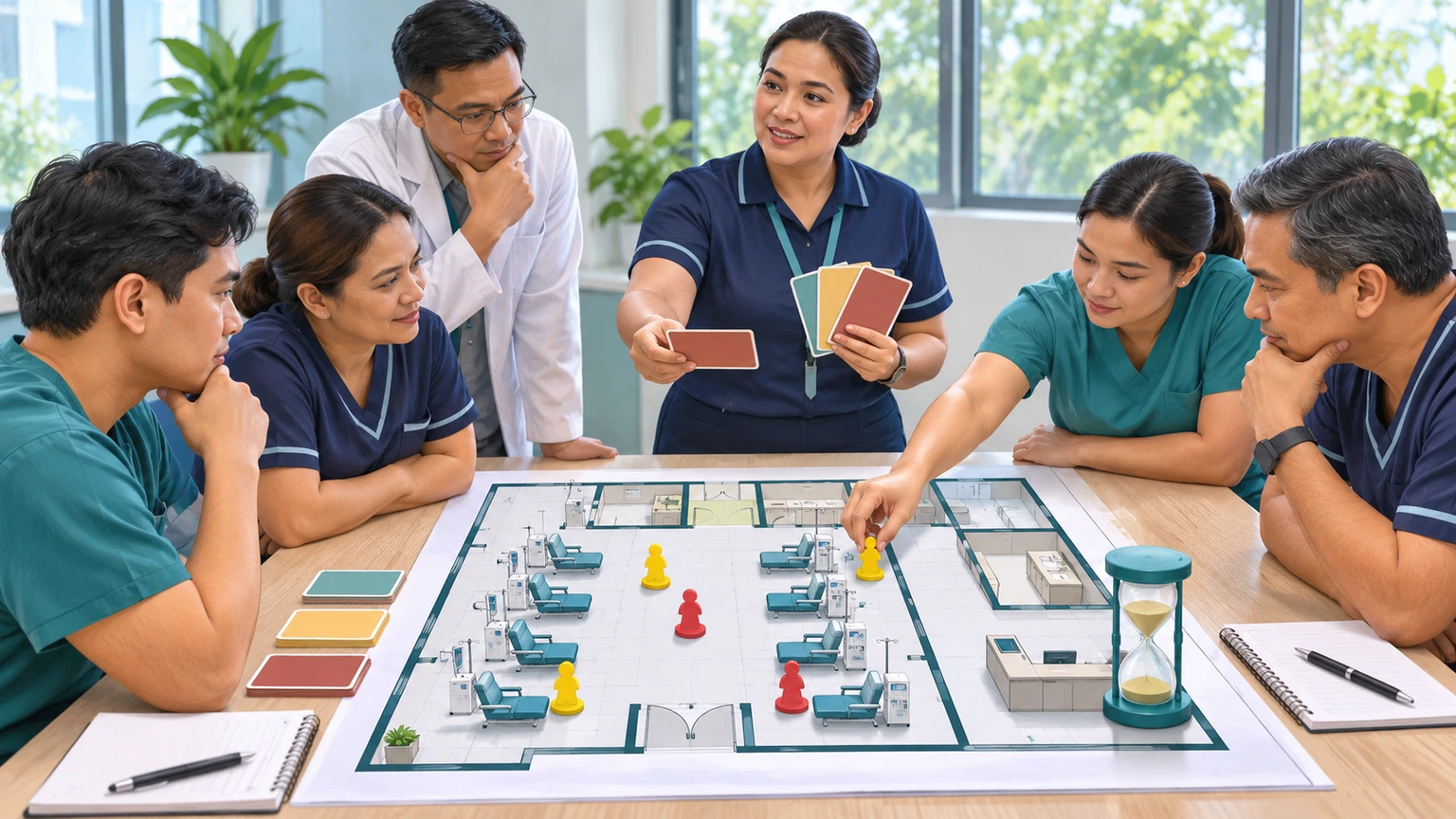
Exercise types, objectives and injects, the facilitator's script, the watcher rule, the hot wash, and the after-action report.
The same seven steps every time
Figure 4 · How to work through a module
- ObjectivesRead what you should be able to do by the end.
- Big pictureA plain-words summary and the key terms, before any detail.
- Opening caseA fictional shift problem. Decide what you would do first.
- LessonShort parts with pictures, tables, and worked examples.
- Case reviewCompare your answer with one sound response.
- Skills checklistPractice with a preceptor on real or training equipment.
- Self-assessmentFive questions drawn from a larger bank, with explanations.
New terms are explained the first time they appear, and every page ends with a glossary. Abbreviations are spelled out at first use. If a sentence still reads like jargon, check the glossary, then ask your preceptor to show you the real object on the unit: most of this work makes sense faster when you can see and touch the equipment.
The series at a glance
Each module plans about 1.5 hours: guided study, the interactive case and the self-assessment, about 18 hours in all, plus the unit drills. These are educational planning hours, not a Department of Health (DOH), Philippine Society of Nephrology (PSN) or licensing requirement.
| No. | Module | Lessons | Opening case | Skills checklist | Practice | Classroom (h) | Skills lab (h) | Placement (h) |
|---|---|---|---|---|---|---|---|---|
| 1 | Why Disasters Hurt Dialysis Patients Twice |
| Four days in Marikina | Reading your unit's last disruption | 10 questions · 3 real situations | 1 | 0.5 | 0 |
| 2 | Know Your Unit's Hazards and Dependencies |
| The map that missed the pump | Building your unit's dependency map | 10 questions · 3 real situations | 1 | 0.5 | 0 |
| 3 | The Unit Plan and Who Commands |
| Signal No. 2 on a Sunday | Writing and testing the one-page plan | 10 questions · 3 real situations | 1 | 0.5 | 0 |
| 4 | Ready Patients: Card, Diet, Medicines, Contacts |
| Mang Ernesto's go-bag | Preparing a patient for typhoon season | 10 questions · 3 real situations | 1 | 0.5 | 0 |
| 5 | Typhoons and Floods |
| Signal No. 3 by Thursday | Running the typhoon activation | 10 questions · 3 real situations | 1 | 0.5 | 0 |
| 6 | Earthquake on the Machine |
| Magnitude 6.8 at 9:40 a.m. | Protect in place and the emergency take-off | 10 questions · 3 real situations | 1 | 1 | 0 |
| 7 | Fire and Evacuation |
| Smoke from the reprocessing room | Fire response, take-off and census | 10 questions · 3 real situations | 1 | 1 | 0 |
| 8 | Power, Water and Supplies |
| Brownout at 4:20 p.m. | Power loss and blood return without power | 10 questions · 3 real situations | 1 | 1 | 0 |
| 9 | Heat, Ashfall and Outbreaks |
| Ash on the windshield | Slow hazards: heat, ash, outbreak | 10 questions · 3 real situations | 1 | 0.5 | 0 |
| 10 | Keeping Everyone Dialyzed: Priority, Placement, Tracking |
| Twelve chairs, forty patients | Tracking, priority and placement | 10 questions · 3 real situations | 1 | 0.5 | 0 |
| 11 | Reopening Safely and Recovering |
| The gate that wasn't signed | Restart and reconciliation | 10 questions · 3 real situations | 1 | 0.5 | 0 |
| 12 | Running Drills That Change Practice |
| Her first tabletop | Facilitator capstone: plan, run and report a tabletop | 10 questions · 3 real situations | 1 | 0.5 | 0 |
| Total | 12 | 7.5 | 0 |
Self-assessment is not sign-off
Each module ends with a self-assessment of 5 questions drawn at random from a bank of 10; aim for 4 of 5 on two different sets. Every question explains the best answer and why the others fail. The end-of-course self-study check draws three questions from each module (36 in all); the proposed pass is 29. Ten modules carry an interactive case with a unit board (time, alert level, power, water, patients connected, staff and roads); every case has at least one choice that breaks a hard rule, so you can see why the rule exists.
The drills on the practice page (tabletop simulator, call-down timer, evacuation sheet) are team exercises, not individual scores. A high written score never makes up for a safety-critical error in a drill: a connected patient left alone, blood returned after air or hemolysis, an evacuation drill run with patients on machines, or a reopening without a signed water release.
End-of-course examination. When you have finished every module, take the end-of-course examination. It draws questions at random from all 12 modules, so no two sittings are the same.
Personal study record
Need to show your head nurse or preceptor how far you have gone? Make a one-page study record: the modules you finished, your best quiz score and the date you passed each, the time you spent on each module page, your end-of-course examination result, and the date each checklist was signed off. Each module with a skills or competency checklist has a Preceptor sign-off box at the end of that section; enter the date your preceptor signed it, or enter it in the table below. Print it or save it as a PDF.
It is a record of your own self-study, not a certificate and not CPD units, and it stays on this device. Your signed checklists and the unit’s competency form remain the official record.
What the series is built on
The evidence comes mostly from United States hurricanes, Japanese earthquakes and international reviews, because those events were studied. Findings about missed sessions, early dialysis and outcomes are observational and are worded “associated with”; single-unit reports “suggest”; drill effectiveness is supported by low-quality evidence. No module says that a preparedness step prevents death.1,4,5
Philippine sources come first for rules and warnings: Republic Act No. 10121,6 the Department of Health’s disaster risk reduction and management in health (DRRM-H) policy and its hospital safety policy,7,8 the Fire Code’s implementing rules,9 PAGASA’s tropical cyclone wind signals,10 and the Office of Civil Defense’s quarterly Nationwide Simultaneous Earthquake Drill.11 Where an Academy module already teaches a step (the restart gates, manual blood return, the safety nurse role), this course repeats that module’s rule and links to it. Sources were checked on November 28, 2026.
Using the series in a training program
The unit’s safety nurse (or the head nurse, where none is designated) can use this page as the facilitator kit for disaster drills. The trainer and preceptor page gathers the proposed hours, completion criteria, and every skills checklist in one printable place. These are proposals for a provider to adapt and validate on its own equipment; they are not requirements of any regulator.