The first ten minutes of a power failure, blood return without power, generator and battery checks, water failure and contamination, and supply buffers.
PublishedNailathalaGipatikPepalwal:ReferencesMga SanggunianMga TinubdanReng Reperensya:3Audience: Every member of the dialysis unit: hemodialysis, charge, head and safety nurses, physicians-on-duty, the Dialysis Clinical Head and attending nephrologists, dialysis, water treatment, biomedical and reprocessing technicians, nurse assistants and support staff, social workers, records officers, dietitians, unit managers and ownersRead timeOras ng pagbasaOras sa pagbasaOras ning pamamasa:
This module is study material for dialysis teams. It explains the reasoning behind disaster decisions; it is not a unit protocol or an order set. Early dialysis, shortened sessions, priority rosters and emergency diets are decisions of the attending nephrologist and the Dialysis Clinical Head. Escalation follows your unit protocol, and you always ask the attending nephrologist for guidance. Every case, name, and identifier is fictional.
Learning objectives
After this module you should be able to
Act in the first ten minutes of a power failure: patients first, power status, a decision with the charge nurse, one staff member per patient.
Return blood without power by hand crank, with the operator’s eyes doing the air detector’s job, and know when to clamp without return.
Check the generator and uninterruptible power supply (UPS), and estimate generator runtime from fuel and fuel use.
Respond to a water failure or contamination alarm: stop starting treatments, end current ones per protocol, call the water technician, and resume only after a signed release.
Keep a supply buffer that survives the event.
Classroom 1 hSkills lab 1 hSupervised placement 0 h
Pre-testBefore you read, answer the 5 self-assessment questions and note your score. After the module, select New set of questions and compare. The difference is what you learned; the questions you still miss are what to reread.
Start here
The big picture, in plain words
In plain wordsThink of a dialysis machine as four devices in one box: a pump, a heater, a mixer and a set of alarms. When the power fails, all four stop together. The blood in the lines does not know that.
The picture has a limit: on many machines a battery keeps the blood pump and some alarms running for a short time, and the time varies by model, so ask your technician and do not assume a figure. When the battery ends, the blood stands still and begins to clot, and the venous air detector and clamp may stop guarding the vein. Water has the same hidden dependence: every treatment uses a large volume of treated water, so a fault in the water room reaches every patient on that loop at once.
Philippine licensing rules require a standby generator appropriate to the facility’s size and a plan for emergencies,1 and the Philippine Society of Nephrology (PSN) standard repeats both.2 A generator still takes time to start and can fail. This module repeats the rules taught in Physician-on-Duty, Module 30 and Water Treatment Technician, Module 12, from the whole team’s side.
Figure 1 · Key terms for this module
Standby generatorA fuel generator that takes over when the main power fails.
Transfer switchThe switch that moves the load from the utility line to the generator.
UPSA battery that keeps selected equipment running without interruption for a short time.
Manual blood returnReturning the circuit’s blood by turning the blood pump by hand.
Clamp and cutDisconnecting without returning the blood.
Signed water releaseThe water technician’s and the medical head’s written approval that the water is fit for dialysis again.
Opening case · fictional
Case: Brownout at 4:20 p.m.
At 4:20 p.m. the utility power fails at a 15-station unit in Ormoc, Leyte. The generator starts. Twelve patients are connected. At 5:10 p.m. the technician reports that the fuel delivery promised for that afternoon has not come; the generator will run out within the hour. The utility says the line will be restored “tonight.”
At 6:05 p.m. the generator stops. The machines alarm on battery. Two patients, at Stations 3 and 11, are early in their sessions; the others have less than an hour left. The charge nurse assigns staff and opens the take-off kits.
Before reading on, decide:
What should have happened at 5:10 p.m., when the fuel problem was known?
At 6:05 p.m., what happens at Stations 3 and 11?
Who watches the venous line, and what replaces the air detector?
Keep your answers in mind. The lesson gives you what you need, and the case review near the end shows one sound response.
Lesson · part 1
Power failure: the first ten minutes
Most power cuts end when the generator starts, and the shift goes on. A few become real emergencies. The order of the first ten minutes is fixed, so speed comes from not having to think.
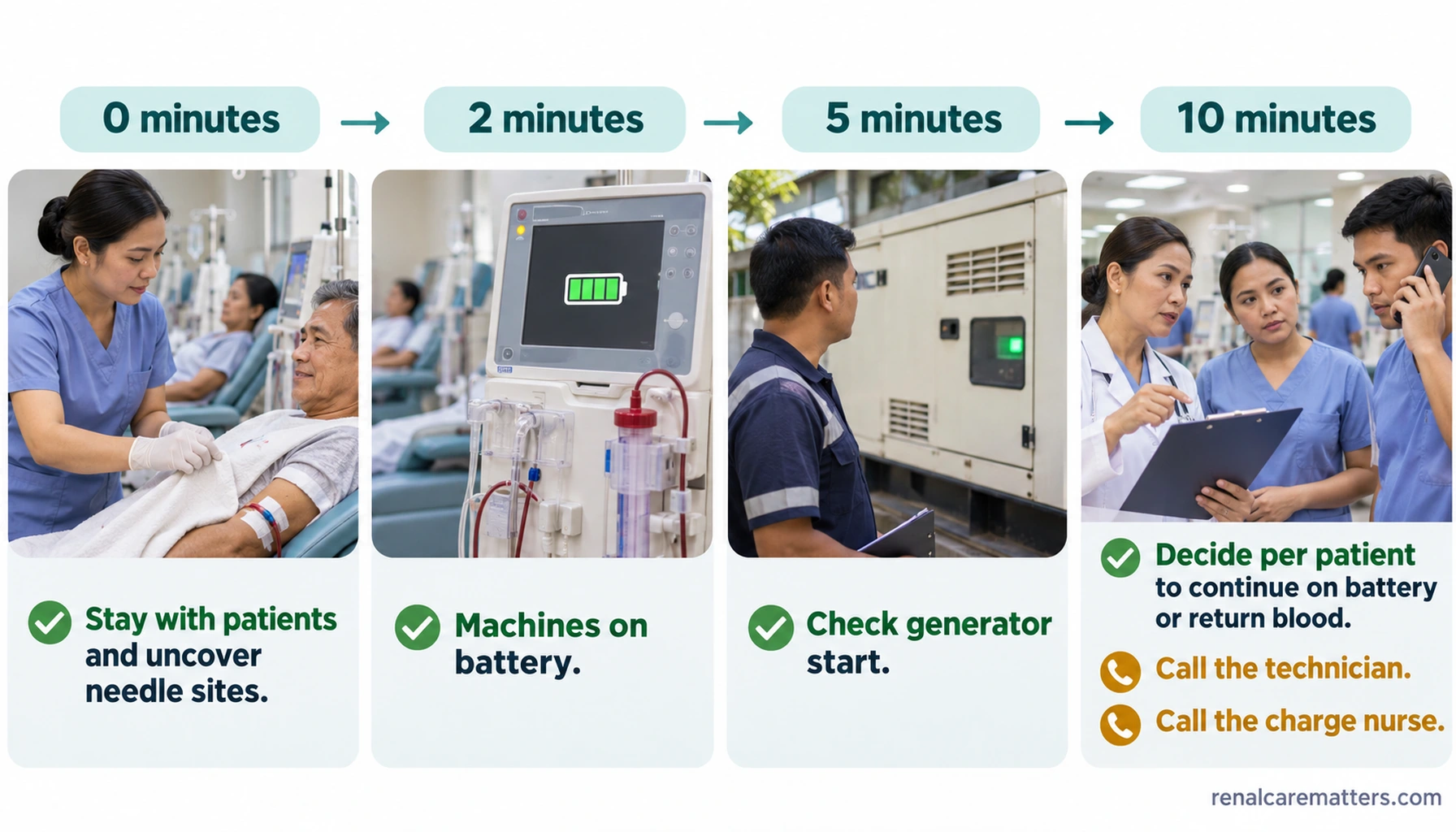
Figure 2. Power failure: the first ten minutes, in the order the Physician-on-Duty module teaches.
Patients first. Walk the floor. Check every patient’s airway, consciousness and access before you look at a machine. Uncover each access and look for bleeding.
Ask for the power status. The technician reports whether the generator has started, whether it is stable, and how long its fuel will last.
Decide with the charge nurse. Continue on generator power only if the technician confirms it is stable. Wait only as long as the unit’s protocol allows; otherwise begin emergency take-off.
One staff member per patient whose blood is being returned, watching the venous line.
Watch the patients;count and record each patient’s time off, method, and blood returned or not; call the attending nephrologist and the medical head.
How long will the generator run? Runtime (hours) = usable fuel (liters) ÷ fuel use at the expected load (liters per hour). For example, 120 liters ÷ 8 liters per hour = 15 hours. The fuel use comes from the generator’s data plate and the technician’s log. The arithmetic tells you roughly how long fuel supports treatment, not whether the generator will keep running, and a delivery may not arrive. Ask for this number at the start of every storm shift. The outage autonomy calculator (CALC-12) in Unit Manager, Module 12 does the same for the whole unit.
Lesson · part 2
Returning the blood by hand
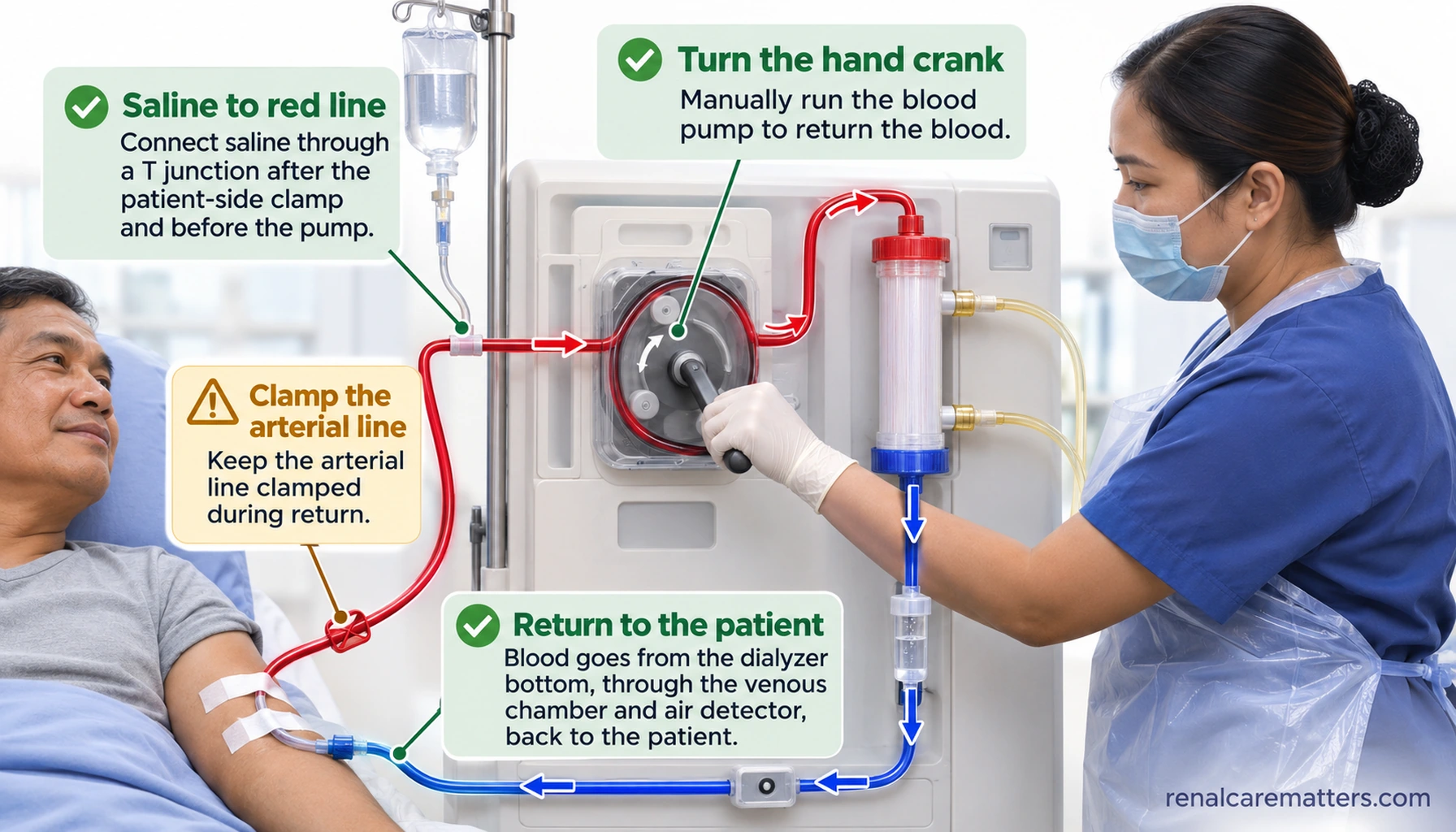
Without power, a nurse turns the blood pump with the hand crank, and the air detector and venous clamp may not act. The operator’s eyes now do the detector’s job. One staff member stays with each patient whose blood is being returned, watching the venous drip chamber and line until the clamp is closed.
Figure 3. Returning blood without power: the hand crank, as the manufacturer and your unit train it.
The blood rule is the same in every emergency: blood that may contain air, is hemolyzed, or follows a severe reaction is never returned; a clotted circuit is not forced back; when there is no time, clamp and disconnect. Otherwise return it, by hand if needed. A central catheter’s own clamps are closed before its lines are separated. The exact steps for your machine model (where the crank sits, how the saline is connected, how the venous clamp is opened by hand) come from the manufacturer and your biomedical technician; practice them on a training circuit twice a year (the power-loss drill).
RememberWithout power, the operator’s eyes replace the air detector. One staff member per patient, watching the venous line until the clamp is closed.
Lesson · part 3
Generator and UPS checks
A generator that fails its test in a storm is not a generator. The biomedical technician runs the checks; the head nurse sees the log.
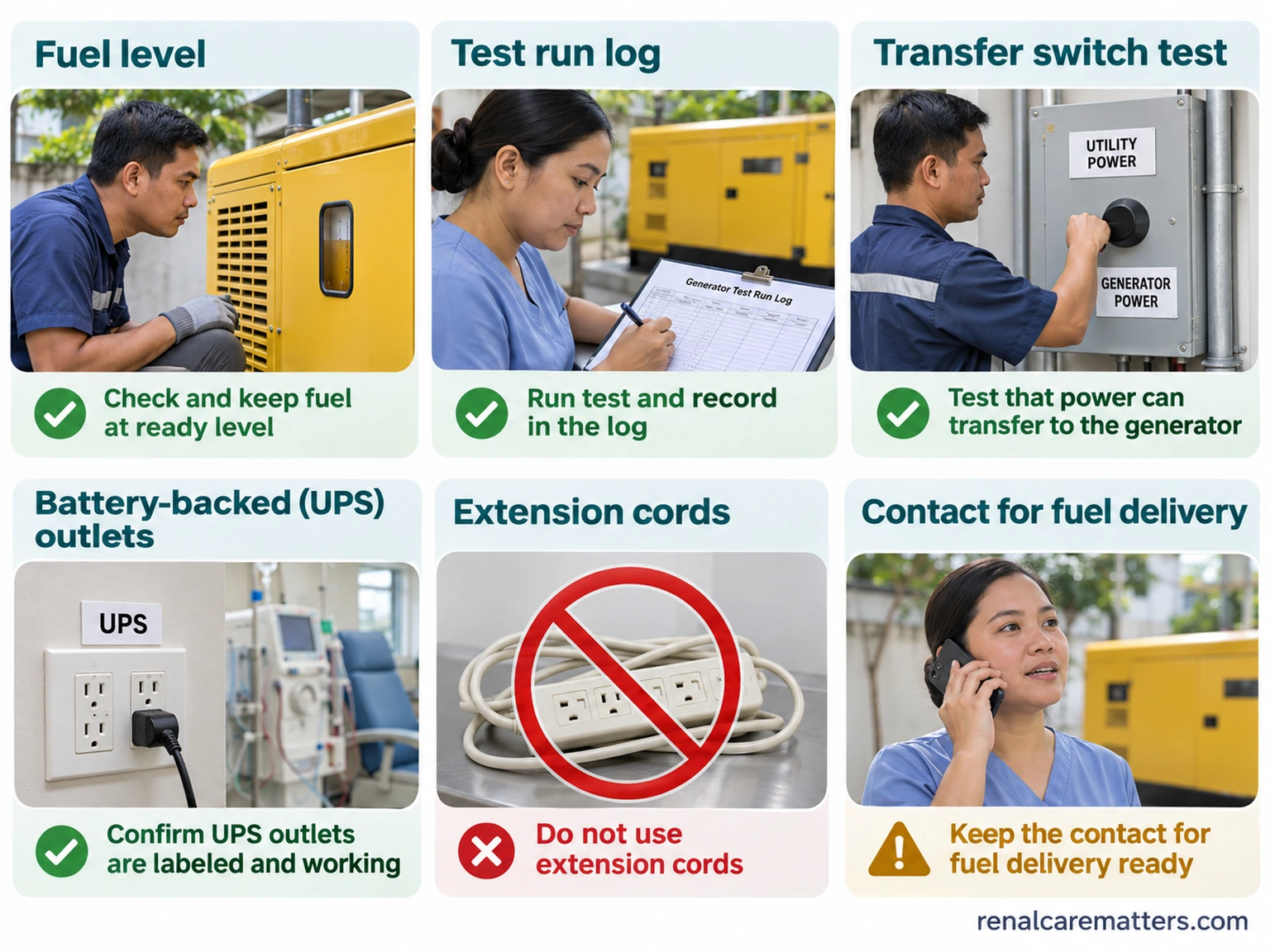
Figure 4. Generator and backup power checks, logged before they are needed.
Fuel level kept at the ready level the unit sets, with a named supplier and a backup supplier.
Test run and log under real load, including the water system (Module 2’s lesson).
Transfer switch test: power moves to the generator and back.
UPS outlets labeled and working for the equipment that must not stop.
No extension cords for dialysis equipment.
Fuel delivery contact ready, and called early when a long outage is expected.
Lesson · part 4
Water failure, contamination and the supply buffer
A dry tank, a cut supply, a flooded water room or a failed test stops treated water from the reverse osmosis (RO) system, and treatments stop with it.
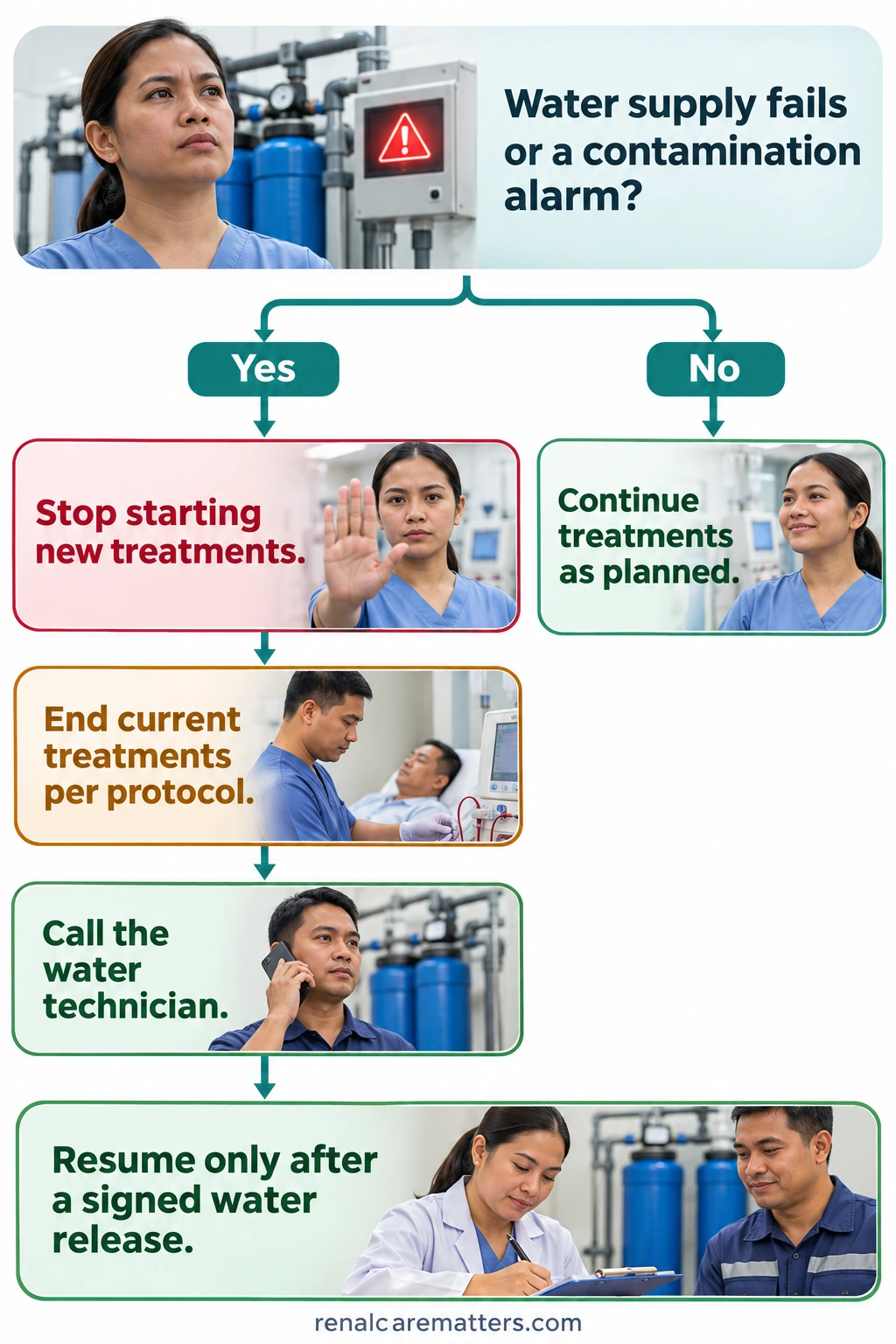
Figure 5. When water fails or turns unsafe: stop new starts, end per protocol, and resume only after a signed release.
Stop starting new treatments.
End current treatments per protocol. If hemolysis is possible (chest or back pain, wine-colored blood in the venous line), the blood is not returned.
Call the water treatment technician and the medical head; keep circuits and samples if contamination is suspected.
Resume only after a signed water release.
One sick patient is a patient problem. Two patients with the same symptoms in the same shift is a water problem until proven otherwise. When a water test fails, the Department of Health’s dialysis water order requires the facility to stop operations until a repeat test complies, disinfect the loop and notify its patients.3 Whether water is fit for dialysis is decided by the water technician and the medical head, never by the shift alone.
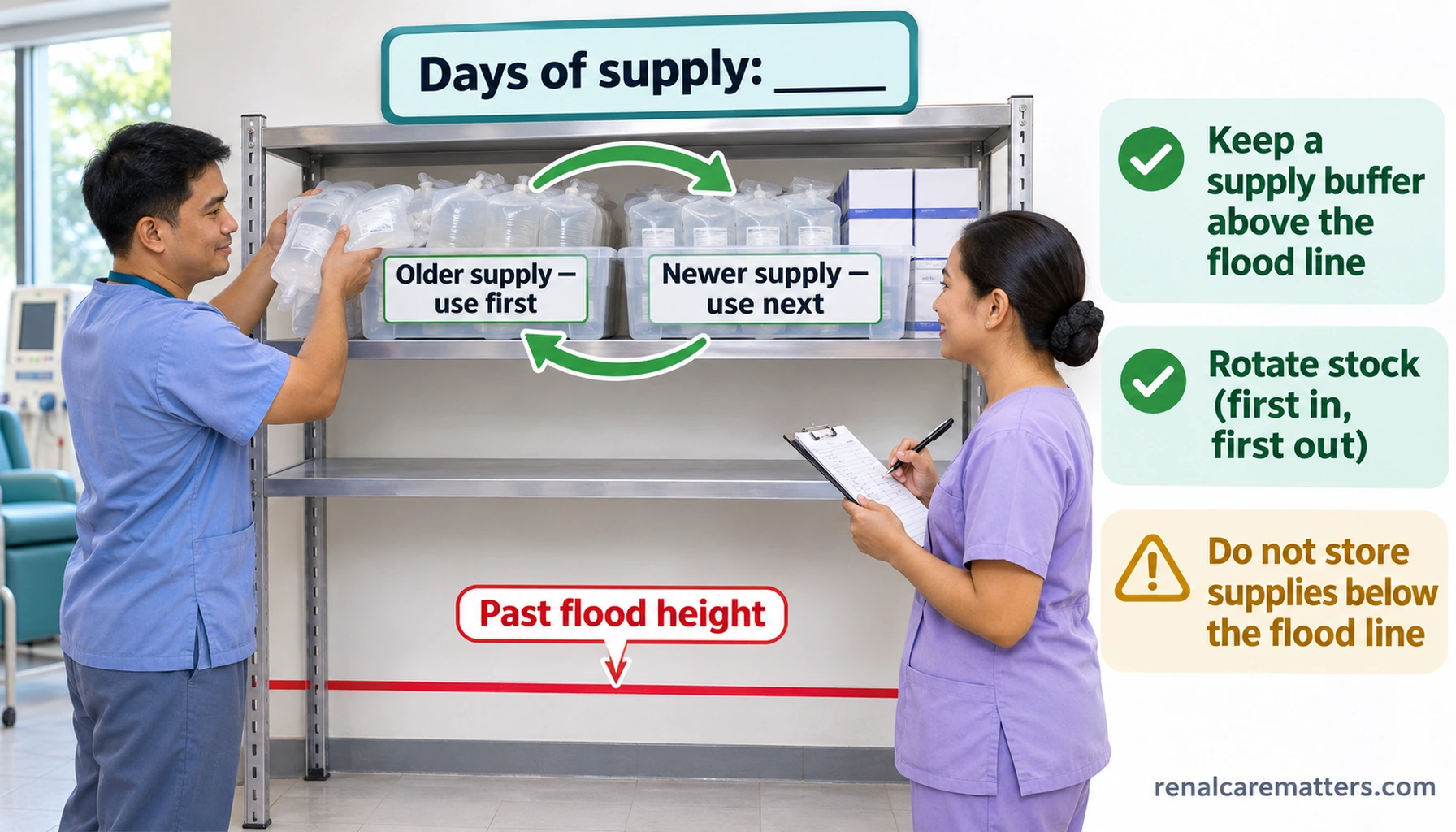
Figure 6. Keep a supply buffer above the flood line and rotate it.
The supply buffer. Keep a written number of days of supply (dialyzers, lines, concentrates, needles, medicines), rotate stock first in, first out, and store it above the past flood line. The number of days is a unit decision, set with the unit manager from the dependency map.
Stop and callGenerator failure with patients connected, any patient unstable during a power failure, blood that cannot be returned safely, or two patients with similar symptoms on the same water loop: call the attending nephrologist and the medical head at once while following your unit protocol, and always ask the attending nephrologist for guidance.
On the floor
Real situations: problems and solutions
These are fictional but typical. For each one, cover the answer, decide what you would do, then compare. Where a step depends on local rules, your unit’s procedure and your supervisor’s direction come first.
The extension cord
What you see
A machine is plugged into an extension cord because the UPS outlet near it is not working.
What is likely going on
A fire and power risk, and the machine is off the protected circuit.
What to do
Unplug it at the next safe moment, report the outlet, and move the station.
Why it matters
Dialysis equipment never runs on extension cords.
The crank nobody found
What you see
During a drill, staff cannot find the hand crank for one machine model.
What is likely going on
Model-specific equipment was never checked.
What to do
Keep cranks with the take-off kits and check them in each power-loss drill.
Why it matters
Drills find the missing crank before a blackout does.
“The water looks fine”
What you see
After a supply interruption, a nurse wants to start patients because the tap is running again.
What is likely going on
Running water is not released water.
What to do
Wait for the water technician’s tests and the signed release.
Why it matters
Every patient on the loop depends on that signature.
Field notes
Ask for the generator runtime at the start of every storm shift.
Label UPS outlets and test them monthly with the technician.
Case review
Back to the case: Brownout at 4:20 p.m.
At 5:10 p.m. The fuel problem was a known end time. The charge nurse and physician-on-duty, told the generator had under an hour, should have decided then: no new connections, end sessions in an orderly way while the generator still ran (normal rinse-back with working alarms), call the backup fuel supplier, and call the attending nephrologist about the patients cut short. Waiting for the utility’s “tonight” turned a planned take-off into a manual one.
At 6:05 p.m. Patients first, then the decision. At Stations 3 and 11, a nurse at each chair returns the blood by hand crank if the circuit is sound and there is no air, hemolysis or clotting; otherwise clamp and cut. The attending nephrologist decides when those two patients dialyze next.
Who watches. One staff member per patient being returned, watching the venous drip chamber and line until the clamp is closed, because the air detector may not work without power.
Interactive case · fictional
Interactive case: Brownout at 4:20 p.m.
Work through a shift one decision at a time. The panel at the top changes with what you choose. After each choice you see why it is, or is not, the best move; after a weaker one you can try again or carry on and see where it leads. Your first choice at each step is scored. The score stays on this device and nothing is sent anywhere. In real practice, your unit’s protocol and the people responsible for each decision come first.
Skills checklist: Power loss and blood return without power
With the biomedical technician, at an empty station with a training circuit (no patient), during the power-loss drill. Your preceptor rates each step as satisfactory, needs practice, or not observed. Steps marked Critical must all be satisfactory before sign-off. This checklist supports supervised learning; your unit’s own procedure and competency form are the authority. A printable version of every checklist is on the trainer page.
CriticalStates the first-ten-minutes order: patients first, power status, decision with the charge nurse, one staff per patient, record, call.
CriticalReturns the training circuit by hand crank while watching the venous drip chamber and line until the clamp is closed.
CriticalStates when not to return the blood: air, hemolysis, a clotted circuit, or no time.
Calculates generator runtime from usable fuel and fuel use, and states what the number does not tell you.
CriticalStates the four steps of a water failure, including resuming only after a signed release.
Checks the supply buffer: days of supply, rotation, and storage above the flood line.
Placement activity. Find the manufacturer’s manual blood return steps for each machine model in your unit and post them with the take-off kits.
Self-assessment
Check your understanding
Each visit draws 5 questions at random from this module’s 10-question bank. Choose the single best answer for each, then select Check answers; an explanation appears under the best answer. Select New set of questions for a different mix. A good target is 4 of 5 on two different sets. Nothing you select is sent anywhere; scoring happens in your browser.
Department of Health. (2013). Administrative Order No. 2013-0003: Implementing guidelines in the analysis, monitoring and maintenance of water used in dialysis facilities. Republic of the Philippines.
Educational course and drill resource for dialysis units. It is not a hospital disaster plan, a licensing requirement, or a substitute for your unit’s approved protocol, the machine manufacturer’s instructions, or instructions from PAGASA, PHIVOLCS, the Bureau of Fire Protection or your local disaster office. Clinical decisions in a disaster (early dialysis, shortened sessions, priority, diet) belong to the attending nephrologist.