Before the season, when the signal is raised, during and after; early dialysis with the nephrologist; staff transport; flood water and leptospirosis exposure.
PublishedNailathalaGipatikPepalwal:ReferencesMga SanggunianMga TinubdanReng Reperensya:4Audience: Every member of the dialysis unit: hemodialysis, charge, head and safety nurses, physicians-on-duty, the Dialysis Clinical Head and attending nephrologists, dialysis, water treatment, biomedical and reprocessing technicians, nurse assistants and support staff, social workers, records officers, dietitians, unit managers and ownersRead timeOras ng pagbasaOras sa pagbasaOras ning pamamasa:
This module is study material for dialysis teams. It explains the reasoning behind disaster decisions; it is not a unit protocol or an order set. Early dialysis, shortened sessions, priority rosters and emergency diets are decisions of the attending nephrologist and the Dialysis Clinical Head. Escalation follows your unit protocol, and you always ask the attending nephrologist for guidance. Every case, name, and identifier is fictional.
Learning objectives
After this module you should be able to
List what a unit does before typhoon season, when a signal is raised, during the storm and after it.
Explain early dialysis before landfall: who decides, how patients are chosen, and what the evidence shows.
Plan staff transport and minimum staffing for a storm, and decide when staff should not travel.
Recognize the hazards of flood water for staff and patients (electrical equipment, wounds, leptospirosis) and the precautions for each.
Classroom 1 hSkills lab 0.5 hSupervised placement 0 h
Pre-testBefore you read, answer the 5 self-assessment questions and note your score. After the module, select New set of questions and compare. The difference is what you learned; the questions you still miss are what to reread.
Start here
The big picture, in plain words
In plain wordsA typhoon is the one disaster that knocks before it comes in. The knock is the wind signal. A unit that hears it and acts can move sessions earlier, stock up and send people home safely before the roads close.
The knock has a limit. The signal warns about wind; the flood often comes from rain, can rise in hours, and can outlast the wind by days. A unit can be dry on the day of landfall and unreachable for a week after. So the plan has four phases, and the most important work happens in the first two.
The person who decides any change to a patient’s schedule, session length or fluid goal is the attending nephrologist. The head nurse turns those decisions into a roster (Head Nurse, Module 12); the physician-on-duty handles the shift (Physician-on-Duty, Module 30).
Figure 1 · Key terms for this module
Wind signalPhilippine Atmospheric, Geophysical and Astronomical Services Administration (PAGASA)’s Tropical Cyclone Wind Signal, Nos. 1 to 5, each with a wind threat and a lead time.
LandfallWhen the center of the typhoon crosses the coast.
Early dialysisA session moved ahead of schedule before an expected disruption.
Last safe sessionThe latest time the unit can finish treatments and still send patients and staff home safely.
LeptospirosisA bacterial infection from water or soil contaminated by animal urine, often after wading in flood water.
Minimum staffingThe smallest team that can run a shift safely.
Opening case · fictional
Case: Signal No. 3 by Thursday
On Tuesday evening PAGASA forecasts that a typhoon will make landfall over Luzon on Thursday morning, with Signal No. 3 expected for Quezon City by Wednesday night. A 24-station unit in Quezon City dialyzes a Tuesday–Thursday–Saturday group of 40 patients. Thursday’s sessions would fall during landfall.
The unit can add a Wednesday evening shift if staff can stay late. Eight staff live in Marikina and Rizal, where floods often close the roads. Three of Thursday’s patients use tricycles; one is a 74-year-old woman with heart failure who gained 3.5 kg before her last session.
Before reading on, decide:
Who decides whether Thursday’s patients dialyze early, and which of them first?
How do you staff a Wednesday evening shift and get staff home safely?
What do you tell the patients who will dialyze early about the days after?
Keep your answers in mind. The lesson gives you what you need, and the case review near the end shows one sound response.
Lesson · part 1
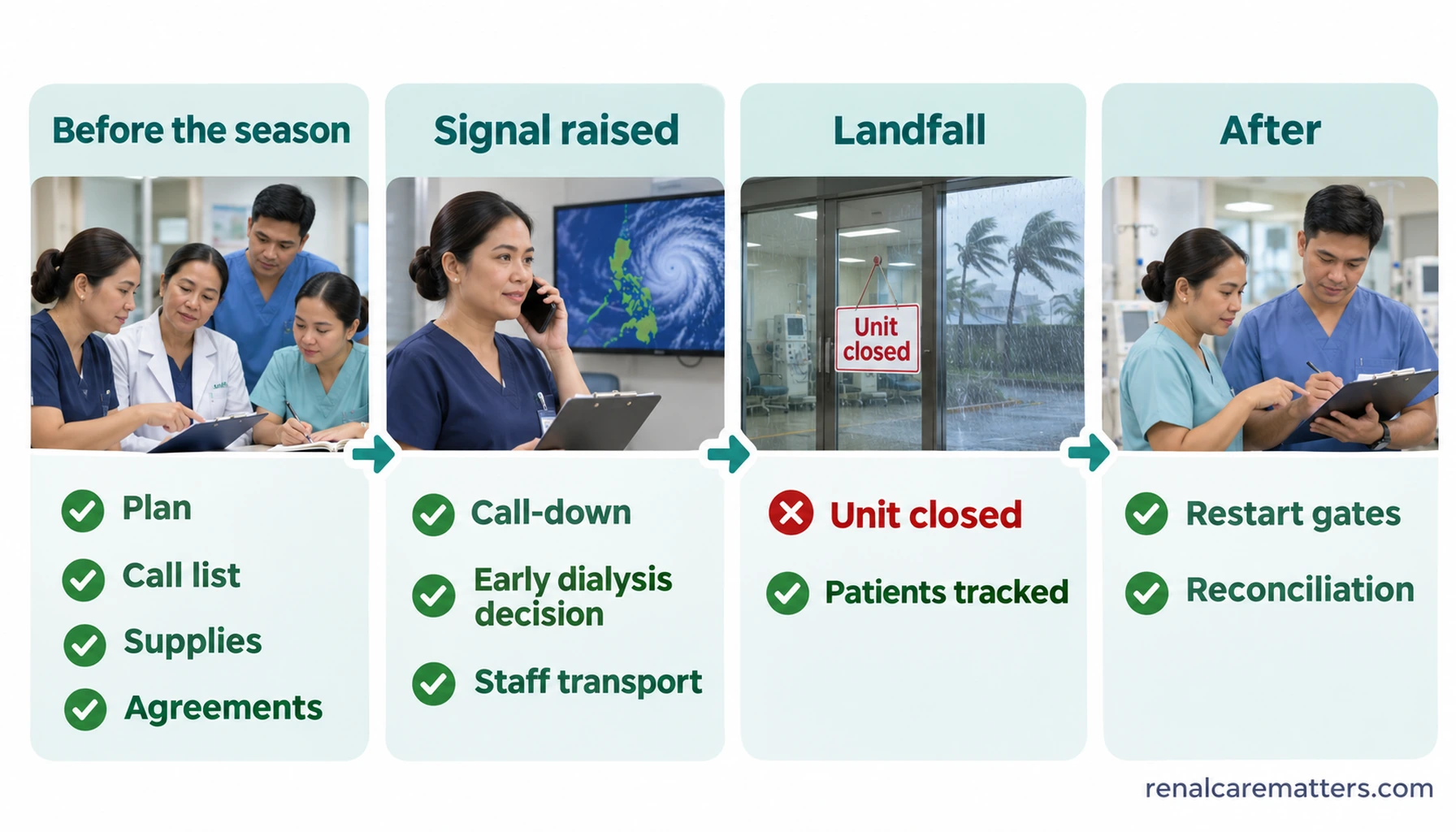
Before the season, when the signal is raised, during, after
A typhoon plan is a timeline. What the unit does in each phase depends on what it did in the phase before.
Figure 2. A typhoon in four phases, each with the unit's actions.
Phase
What the unit does
Before the season
Review the plan and dependency map; call-down drill to fix phone numbers; emergency cards updated; supply buffer stocked above the flood line; receiving-unit agreements checked; tabletop exercise (Modules 2, 3, 4, 12)
When the signal is raised
Activate the plan at the trigger; call-down; the attending nephrologist decides on early dialysis; staff transport; reminders to patients about diet, medicines and the go-bag; generator fuel and water checked
During
Unit closed when travel is unsafe; nobody sent onto flooded roads; patients tracked by phone; the incident lead keeps a log
After
Find every patient within 24 hours (Module 10); reopen only through the five signed gates (Module 11); reconcile who was dialyzed where
PAGASA’s signals give the lead time: Signal No. 3 means storm-force winds within 18 hours, and No. 4 within 12.1 At No. 4 and No. 5, PAGASA’s impact statements expect widespread loss of power and communications, the two things a unit needs to reach its patients.1 Use the earlier signals to do the work that needs roads and phones.
Lesson · part 2
Early dialysis before landfall
If landfall will fall on a patient’s session day, or the roads are likely to close for days, moving the session earlier shortens the longest gap the patient will face. Before Hurricane Sandy, 60% of 13,836 patients in the affected areas were dialyzed early; early dialysis was associated with lower odds of an emergency department visit, hospitalization and death within 30 days.2 The study was observational and could not see who was offered early dialysis and declined, so it supports the practice without proving it.
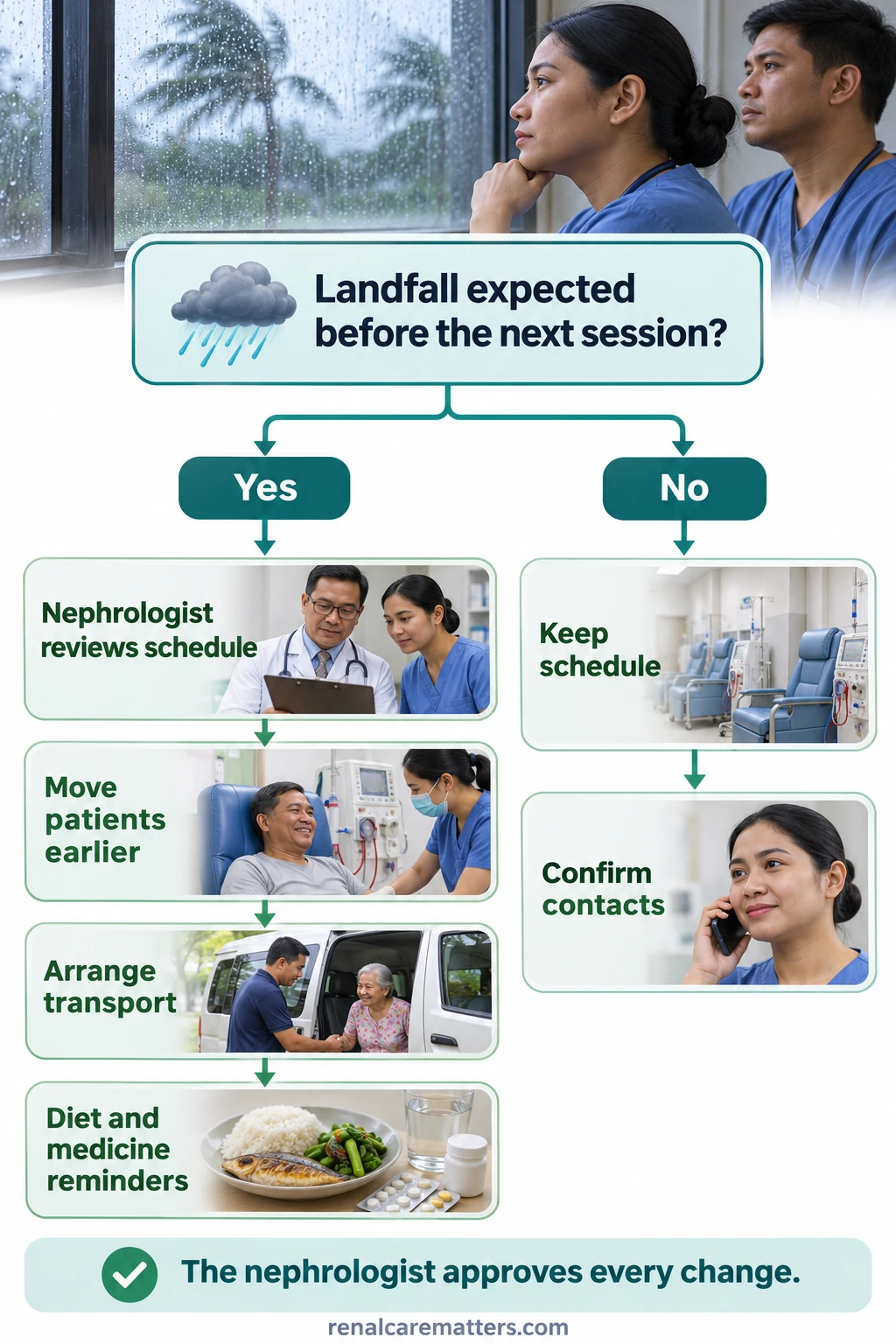
Figure 3. Early dialysis before landfall: a schedule change the nephrologist approves, with transport and reminders.
Who decides. The attending nephrologist decides which patients dialyze early, and whether any session length or fluid goal changes. The Dialysis Clinical Head and the head nurse turn the decision into a roster; the charge nurse calls the patients.
Who goes first. The nephrologist usually puts first the patients with the most to lose from a long gap: recent high potassium, large weight gains or fluid overload, heart failure, missed sessions, and those whose transport fails first in a flood. The same medical priority logic is taught in Module 10.
What to tell patients. That the next session may be later than usual, so the emergency diet starts after this session; where the backup unit is; and to keep the go-bag ready. The interdialytic weight gain calculator on the site shows how a longer gap raises the fluid to be removed next time.
RememberEarly dialysis shortens the longest gap. The nephrologist decides who and when; the unit makes it happen before the roads close.
Lesson · part 3
Staff who cannot come in, and staff who must get home
Staff live where patients live; the same flood that strands patients strands nurses. The call-down starts with staff because the unit cannot promise what it cannot staff (Module 3).
Know who can come. Map where staff live against the roads that flood first.
Set minimum staffing for an emergency shift with the head nurse, including at least one nurse with current Advanced Cardiovascular Life Support (ACLS), as the unit’s licensing requires.3,4
Arrange transport (the unit van, shared rides) and, if the shift ends late, somewhere safe to stay.
Set the last safe session time so the last patient and the last staff member are home before travel becomes unsafe. Nobody is sent onto a flooded road to keep a schedule.
Lesson · part 4
Flood water, wet equipment and leptospirosis
Flood water brings three hazards to a dialysis unit.
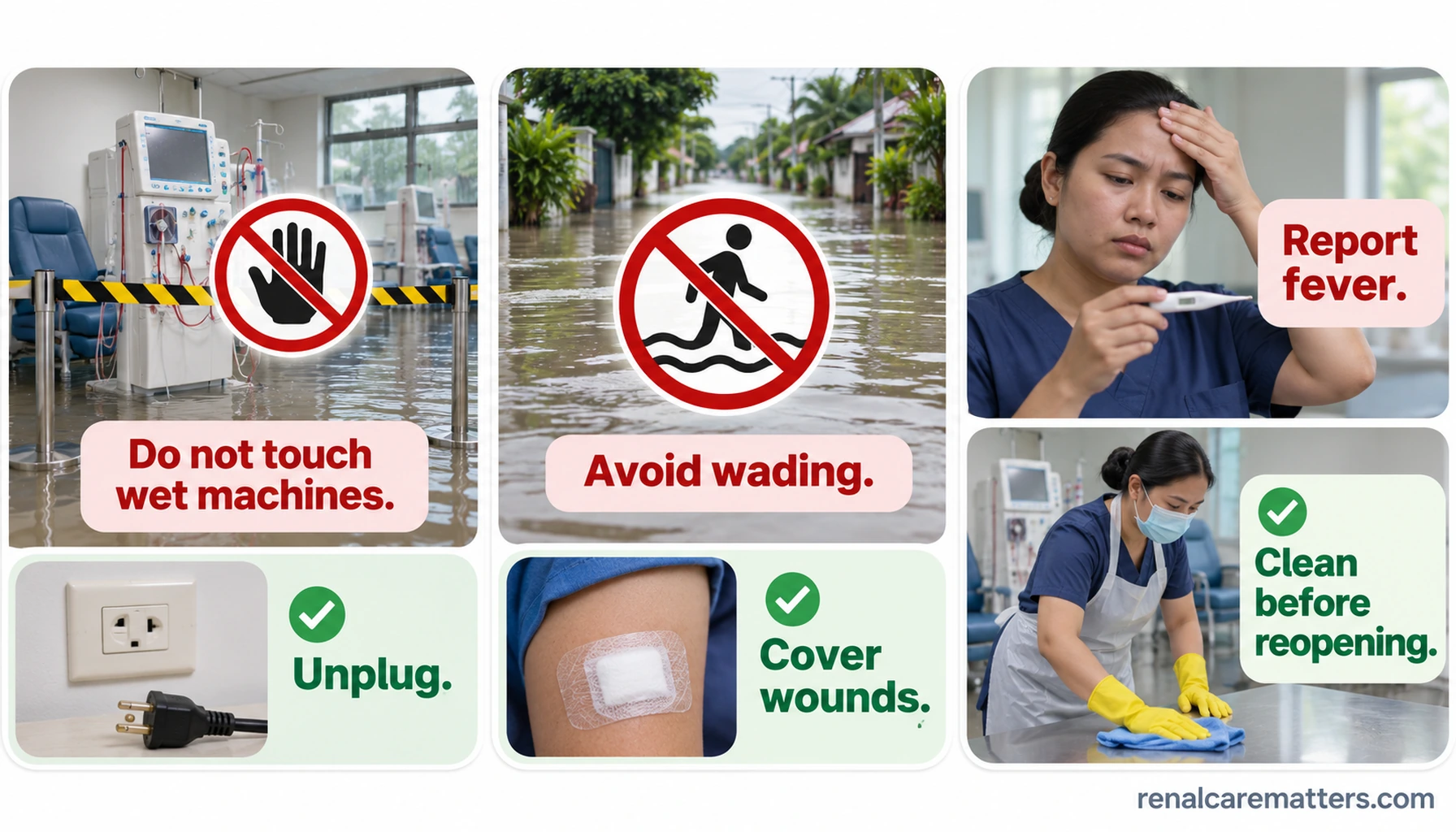
Figure 4. Flood water brings electrical, infection and contamination risks for staff and patients.
Electricity. Do not touch machines, plugs or panels that are wet or standing in water. Switch off at the main breaker only if it is dry and safe to reach; otherwise leave it to the electrician or technician. Unplug equipment before water arrives.
Wounds and the access. Avoid wading. If a patient or staff member must cross water, cover wounds and the access site with a waterproof dressing, and wash and dry the skin afterward.
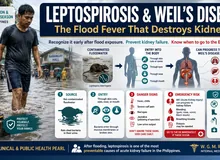
Leptospirosis. Flood water contaminated by animal urine can carry leptospirosis, which can damage the kidneys (acute kidney injury, acute kidney injury (AKI)). Anyone who waded and develops fever, muscle pain or red eyes in the weeks after should report it and see a physician; preventive treatment after exposure is a physician’s decision, following Department of Health guidance. The site’s leptospirosis guide explains why it matters for the kidneys.
After the water recedes, the unit is cleaned and disinfected before reopening, and nothing that stood in flood water is used until the technicians have checked it. The restart gates (Module 11) make that a signed decision.
Stop and callAny staff member or patient with fever after wading, any machine or panel that has been wet, or any flood water in the water treatment room: report to the incident lead and the technicians at once. Follow your unit protocol, and always ask the attending nephrologist for guidance.
On the floor
Real situations: problems and solutions
These are fictional but typical. For each one, cover the answer, decide what you would do, then compare. Where a step depends on local rules, your unit’s procedure and your supervisor’s direction come first.
The extra shift nobody can staff
What you see
A Wednesday evening shift is added for early dialysis, but half the staff live where roads close first.
What is likely going on
The roster was built before the staff call-down.
What to do
Call staff first, build the shift from those who can come and stay, and arrange the van.
Why it matters
Capacity is set by staff, not chairs.
“I will come anyway”
What you see
A patient says he will come on Thursday during landfall rather than come early.
What is likely going on
He fears missing his usual day.
What to do
Explain the early session and the backup unit, and ask the nephrologist to call him if he still declines.
Why it matters
The patient decides, but he must understand the risk.
Water at the door
What you see
Flood water starts entering the ground floor during the last session.
What is likely going on
The last safe session time was set too late.
What to do
Follow the take-off and evacuation plan, protect the electrical equipment, and set an earlier time next season.
Why it matters
Each storm should make the next plan better.
Field notes
Write the past flood height and the date on a wall in the unit.
Keep the unit van’s fuel full during typhoon season.
Case review
Back to the case: Signal No. 3 by Thursday
Who decides. The attending nephrologist decides on early dialysis for the Thursday group and which patients go first. The 74-year-old woman with heart failure and a 3.5 kg gain is a likely first choice; so are patients with a recent high potassium or missed sessions, and the three who depend on tricycles. The head nurse turns the list into a Wednesday roster.
Staffing. Call staff first. Build the Wednesday evening shift from staff who live closest or can stay overnight, with at least one ACLS-current nurse. Arrange the unit van for the Marikina and Rizal staff and set a last safe session time so everyone is home before Signal No. 3 takes effect. Nobody travels onto flooded roads.
What patients are told. Their next session may be later than usual, so the emergency diet starts tonight; their backup unit and contacts are on their emergency card; keep the go-bag and medicines ready; and do not wade through flood water.
Interactive case · fictional
Interactive case: Signal No. 3 by Thursday
Work through a shift one decision at a time. The panel at the top changes with what you choose. After each choice you see why it is, or is not, the best move; after a weaker one you can try again or carry on and see where it leads. Your first choice at each step is scored. The score stays on this device and nothing is sent anywhere. In real practice, your unit’s protocol and the people responsible for each decision come first.
🚨 Emergency quick card:Typhoon warning. One screen each, saved for use with no signal. Print a copy for the crash cart.
Skills lab · with your preceptor
Skills checklist: Running the typhoon activation
In a tabletop or on a real signal, run the unit’s typhoon activation with the head nurse. Your preceptor rates each step as satisfactory, needs practice, or not observed. Steps marked Critical must all be satisfactory before sign-off. This checklist supports supervised learning; your unit’s own procedure and competency form are the authority. A printable version of every checklist is on the trainer page.
CriticalActivates the plan at the unit’s trigger and records the time.
Calls staff first, then patients due within 24 hours.
CriticalObtains the attending nephrologist’s decision on early dialysis before changing any schedule.
Plans staff transport, minimum staffing with an ACLS-current nurse, and a last safe session time.
Reminds patients about the emergency diet, medicines, go-bag and backup unit.
Gives the flood water precautions, including reporting fever after wading.
Placement activity. Use the tabletop simulator on the practice page with the typhoon scenario and record your decisions.
Self-assessment
Check your understanding
Each visit draws 5 questions at random from this module’s 10-question bank. Choose the single best answer for each, then select Check answers; an explanation appears under the best answer. Select New set of questions for a different mix. A good target is 4 of 5 on two different sets. Nothing you select is sent anywhere; scoring happens in your browser.
Glossary & abbreviationsTalahulugan at mga daglatTalaan sa mga pulong ug daglatTalatinigan ampo reng daglatterms used on this page
Abbreviations
ACLS
Advanced Cardiovascular Life Support.
AKI
Acute kidney injury.
PAGASA
Philippine Atmospheric, Geophysical and Astronomical Services Administration — The national weather agency; it raises the tropical cyclone wind signals.
Terms in plain words
Wind signal
PAGASA’s Tropical Cyclone Wind Signal, Nos. 1 to 5.
Landfall
When the center of the typhoon crosses the coast.
Early dialysis
A session moved ahead of schedule before an expected disruption.
Last safe session
The latest time to finish treatments and still send people home safely.
Leptospirosis
An infection from water or soil contaminated by animal urine.
Lurie, N., Finne, K., Worrall, C., Jauregui, M., Thaweethai, T., Margolis, G., & Kelman, J. (2015). Early dialysis and adverse outcomes after Hurricane Sandy. American Journal of Kidney Diseases, 66(3), 507–512. https://doi.org/10.1053/j.ajkd.2015.04.050
Educational course and drill resource for dialysis units. It is not a hospital disaster plan, a licensing requirement, or a substitute for your unit’s approved protocol, the machine manufacturer’s instructions, or instructions from PAGASA, PHIVOLCS, the Bureau of Fire Protection or your local disaster office. Clinical decisions in a disaster (early dialysis, shortened sessions, priority, diet) belong to the attending nephrologist.