Supportive Care, Treatment Decisions, Grief, and Bereavement
Conservative kidney management, advance care planning, decisions to stop dialysis, and grief and bereavement follow-up.
PublishedNailathalaGipatikPepalwal:ReferencesMga SanggunianMga TinubdanReng Reperensya:4Audience: Registered social workers in dialysis units, hospital medical social work departments, and kidney transplant programs · medical social workers rotating into kidney care · navigation and support staff on the orientation pathRead timeOras ng pagbasaOras sa pagbasaOras ning pamamasa:
This module is study material for social workers and navigation staff in kidney care. It explains the reasoning behind social work decisions; it is not a facility procedure, legal advice, a benefits ruling, or a mental health diagnosis. Rules, assistance programs, and amounts change: confirm them against the current issuance and your facility’s approved policy. Medical treatment belongs to the nephrologist, benefits to PhilHealth, donation ethics to the ethics committee, and psychiatric diagnosis to the mental health team. Every case, name, and identifier is fictional.
Learning objectives
After this module you should be able to
Explain conservative kidney management and supportive care as active care, not the absence of care.
Prepare and support advance care planning conversations: what matters most, who will speak for the person, and what they want if they get sicker.
Support a person and family when stopping dialysis is being considered, in partnership with the nephrologist and after depression has been assessed.
Recognize normal grief and the signs of prolonged grief, and plan bereavement follow-up for families after a death.
Care for yourself and colleagues after deaths in the unit.
Classroom 1 hSkills lab 1 hSupervised placement 1 h
Pre-testBefore you read, answer the 5 self-assessment questions and note your score. After the module, select New set of questions and compare. The difference is what you learned; the questions you still miss are what to reread.
Start here
The big picture, in plain words
In plain wordsAdvance care planning is like planning a long journey by boat before the weather turns. You decide together where you want to go, who will steer if you cannot, and which harbors you would rather not enter. Nobody wants to talk about storms on a calm day. But the plan made on a calm day is the one that holds in the storm.
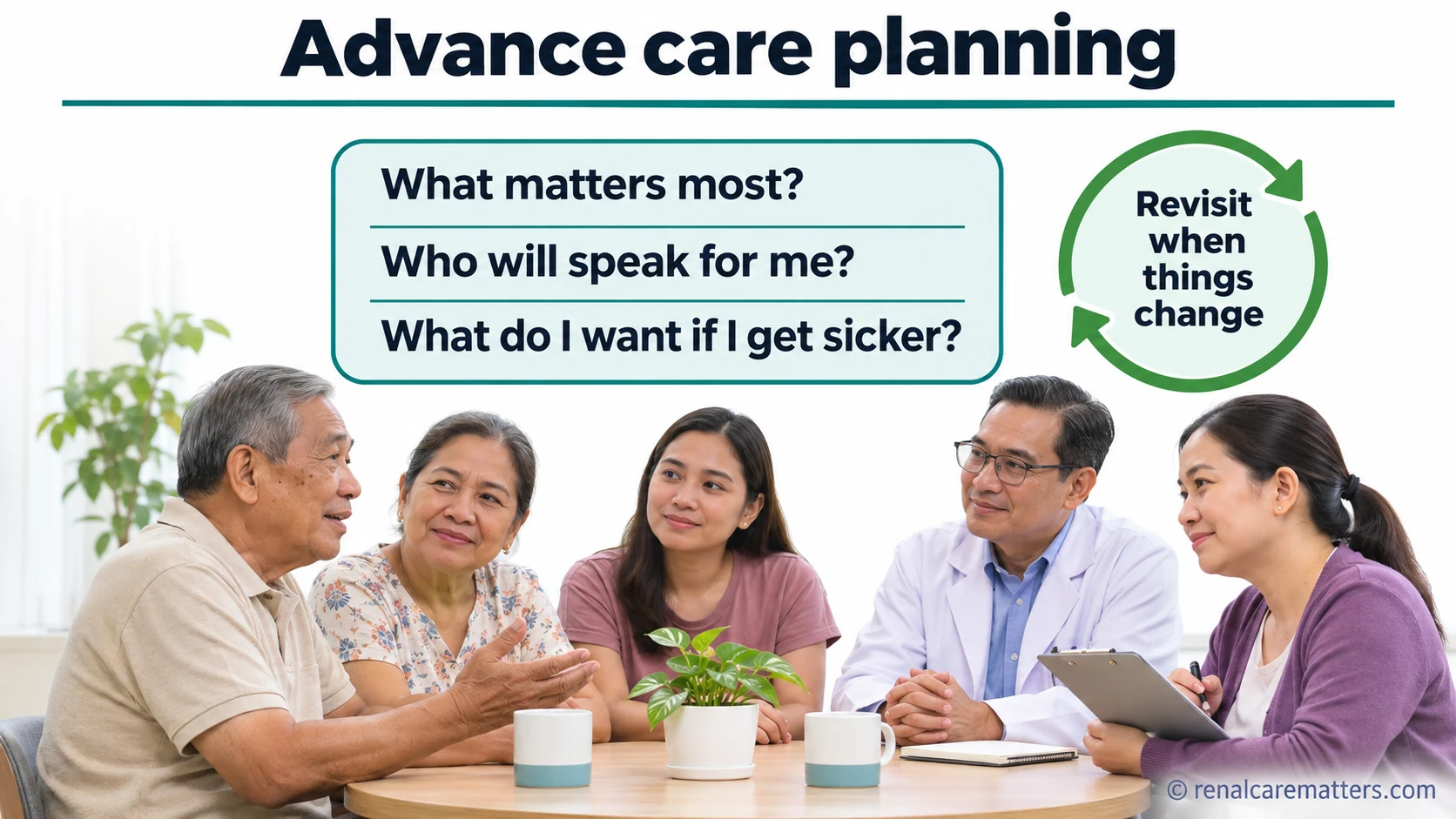
Figure 1. Advance care planning is a series of conversations about what matters most and who speaks for the person.
The picture has a limit. A journey has a destination; a life with kidney failure has many possible paths, and people change their minds as their health and their families change. An advance care plan is not a single form signed once. It is a series of conversations, revisited when things change, about what matters most and who speaks for the person.
Your job in this module is to help people face the hardest decisions in kidney care: whether to start dialysis at all, whether to continue, and how to live well when time is short. You also stay with families after a death. Supportive care, including symptom control, advance care planning, conservative kidney management, and end-of-life care, belongs inside good kidney care, including for people on dialysis; the Kidney Disease: Improving Global Outcomes (KDIGO) Controversies Conference on supportive care said so in 2015, as a conference statement rather than a graded recommendation.1
Figure 2 · Key terms for this module
Supportive careCare focused on symptoms, function, and quality of life, alongside or instead of life-prolonging treatment.
Conservative kidney managementPlanned care for kidney failure without dialysis, focused on symptoms and quality of life.
Advance care planning (ACP)Conversations about values, goals, and who will make decisions if the person cannot.
SurrogateThe person chosen to speak for the patient when the patient cannot.
Withdrawal from dialysisA decision to stop dialysis, made by the patient with the nephrologist and usually the family.
BereavementThe period of grief after a death.
Opening case · fictional
Case: “I want to stop”
Monday, 3:00 p.m. Mr. Tomas Reyes, 81, a retired fisherman with heart failure and diabetes, has been on hemodialysis for two years. He has been admitted three times in four months. He tells the nurse he wants to stop dialysis: “I have lived a long life. I am tired of the machine and the hospital. I want to go home to the sea.”
His daughter, Ms. Carmen Reyes, is distraught. “We cannot let him die. Tell him he must continue. We will pay for everything.” His wife, Lola Pilar, says nothing. His son works in Saudi Arabia and calls every night.
The attending nephrologist asks you to help prepare a family meeting for Thursday.
Before reading on, decide:
What must happen before the family meeting, and whose role is each part?
How do you prepare the family, including the son abroad and Lola Pilar?
If he decides to stop, what does the social worker do in the days that follow, and after his death?
Keep your answers in mind. The lesson gives you what you need, and the case review near the end shows one sound response.
Lesson · part 1
Choosing not to start dialysis
For some people, especially older people with many other illnesses, dialysis may add little time and a great deal of burden: hospital trips, procedures, and admissions. Conservative kidney management offers another path: no dialysis, but active care of symptoms (itch, breathlessness, nausea, pain, poor sleep), support for the family, and planning for the end of life at home where possible. It is a medical decision made with the nephrologist and a personal decision made by the patient.
Families sometimes hear conservative care as “giving up” or “doing nothing.” Part of your work is to help them see it as a different kind of care, with its own team, plan, and follow-up. Caregivers of people on conservative management carry a burden similar to that of dialysis caregivers, and they need the same attention (Module 13).2
What families fear
What you can explain
“They will abandon him.”
The kidney team keeps seeing him, managing symptoms and planning with the family
“He will suffer.”
Symptoms are actively treated; the goal is comfort and function
“People will say we did not love him.”
Choosing what he wants is an act of love; the decision is his and the doctor’s, not the family’s alone
“We cannot care for him at home.”
A caregiver plan, home care options, and when to come to hospital
RememberConservative kidney management is active care with a team and a plan. Help families see it that way.
Lesson · part 2
What matters, who speaks, what if
Advance care planning is a series of conversations about three questions: what matters most to the person; who will speak for them if they cannot (the surrogate); and what they would want if they became much sicker. Social workers are well placed to start and support these conversations, together with the nephrologist.
The evidence for structured planning in dialysis is encouraging but limited. The SPIRIT trial randomized 42 United States dialysis clinics with 426 patient-surrogate pairs; trained nurses and social workers led the planning talks. At two weeks, pairs agreed more often on end-of-life goals (odds ratio 1.61) and patients had less decisional conflict; surrogate confidence did not differ. Among 77 surrogates whose patient died, anxiety was lower, but depression and post-traumatic distress were similar.3 The outcomes were mostly agreement and distress scores, not whether care at the end matched wishes in every case.
Figure 3 · An advance care planning conversation
Ask permission“Would it be all right to talk about what matters most to you, in case you get sicker?”
Values“What makes a day good for you? What would you not want to live through?”
The surrogate“If you could not speak for yourself, who should speak for you? Do they know what you want?”
What ifWith the nephrologist: hospital care, resuscitation, continuing or stopping dialysis.
Record and shareDocument in the agreed place; share with the surrogate and team; revisit when health changes.
Include family members who live abroad by phone or video, with the patient’s consent. Overseas children often carry strong views and strong guilt, and they need to hear the patient’s own words.
RememberStart early, ask permission, name the surrogate, record it, and revisit it when things change.
Lesson · part 3
Respect, assess, support
A person who can decide has the right to stop a treatment they no longer want, including dialysis. That decision is made by the patient with the attending nephrologist and usually the family. It is not the social worker’s to make or to block.
Two things must happen alongside. First, depression and other treatable causes must be assessed, because depression can make a burden feel unbearable and can lift with treatment (Module 10). A request to stop is not the same as suicidal thinking, but the two can overlap; if there is any sign of thoughts of self-harm, the safety pathway comes first (Module 11). Second, the reasons behind the request deserve attention: uncontrolled symptoms, exhaustion from transport, money, feeling a burden. Some can be relieved, and the person may then choose differently. Some cannot, and the person’s choice stands.
Before the decision
Owner
Decision-making capacity and the medical picture
Attending nephrologist
Depression assessment and treatment offered
Nephrologist and mental health team; you screen and refer
A plan for symptom care, place of care, and family support
Team
After a decision to stop, people usually live days to a few weeks; the nephrologist explains what to expect. Your work then is practical and human: where the person wants to be, who needs to come home from abroad, what the family needs, and what the person wants to do with the time left.
RememberStopping dialysis is the patient’s decision with the nephrologist. Make sure depression and treatable burdens were addressed, then support the choice.
Lesson · part 4
Staying with the family
Grief after a death is normal and is not an illness. Most people grieve intensely and then, slowly, adjust. A minority develop prolonged grief disorder (PGD): grief that stays intense and disabling well beyond the expected time. A meta-analysis of 14 studies of adults bereaved by non-violent deaths estimated a prevalence of about 9.8%, higher in older people; the studies were heterogeneous and not all representative.4 A diagnosis of prolonged grief belongs to a mental health clinician; your part is to notice and refer.
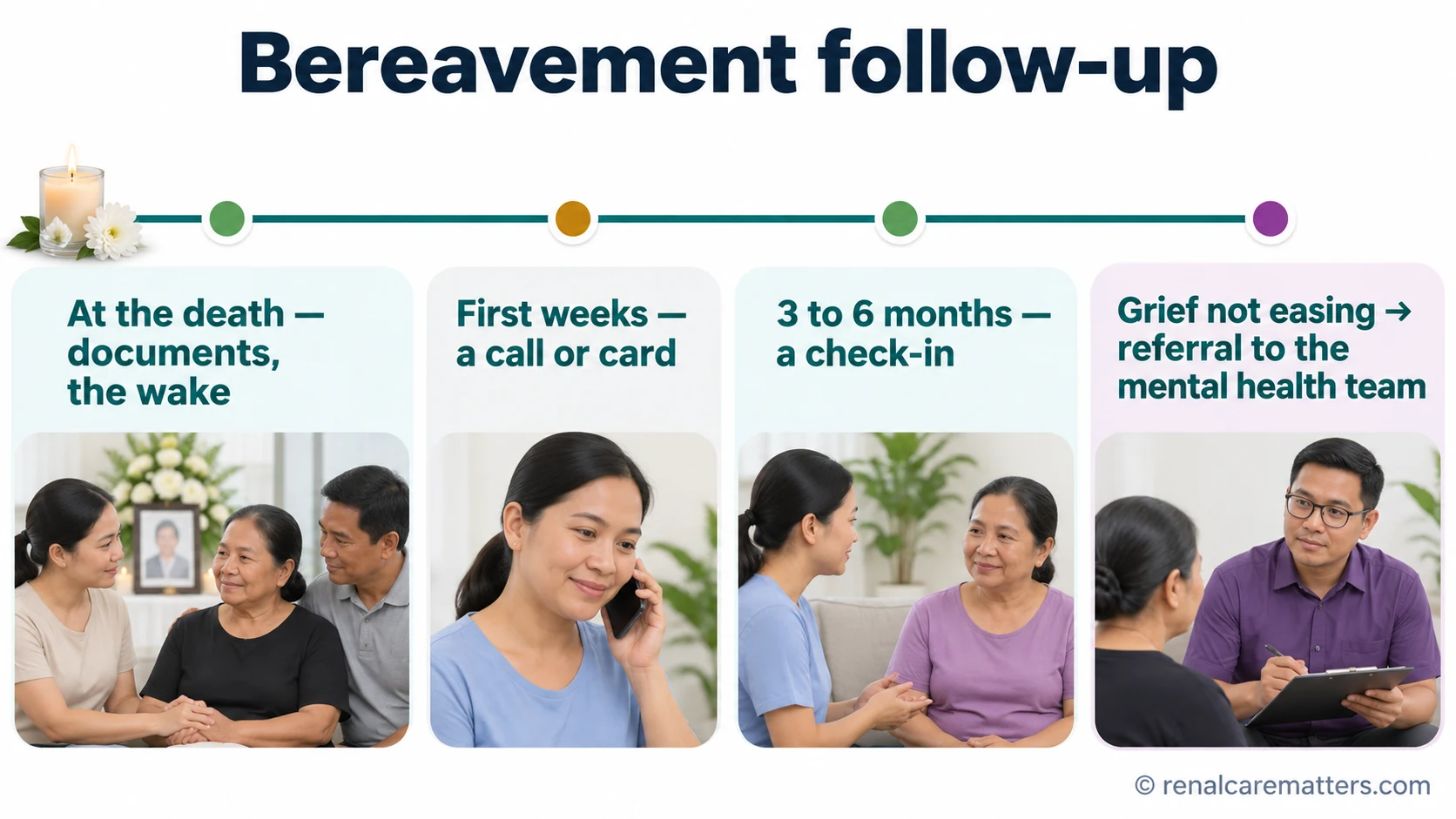
Figure 4. Stay with the family after a death.
Bereavement follow-up is simple and often forgotten. Families who spent three mornings a week in your unit for years lose a whole community when the patient dies. A call, a card, an invitation to a memorial, and a check-in at a few weeks and a few months tell them they were part of the unit too.
Timing
What you do
At the death
Practical help: documents, transport, the wake; information on the death certificate process
First weeks
A call or card from the unit; ask how they are coping
Around three to six months
A check-in; ask about sleep, mood, daily function
If grief is not easing and life is not resuming
Referral to the mental health team
Staff grieve too. A patient seen three times a week for years is not a stranger. A short pause at handover, a unit memorial, and supervision (Module 19) help teams keep caring well.
RememberCall the family after a death, and again months later. Notice grief that does not ease, and refer.
On the floor · The memorial board
Social worker Mrs. Rosa Valdez starts a simple tradition: once a quarter, the unit lights a candle for patients who died, and families are invited.
A widow who comes says it was the first time since the funeral that anyone mentioned her husband’s name.
Remembering together is care, for families and for staff.
Illustrative scenario. Names and details are invented.
On the floor
Real situations: problems and solutions
These are fictional but typical. For each one, cover the answer, decide what you would do, then compare. Where a step depends on local rules, your unit’s procedure and your supervisor’s direction come first.
“Ayoko na”
What you see
An older patient says, “I do not want this anymore.”
What is likely going on
A wish to stop dialysis, depression, exhaustion, or suicidal thoughts.
What to do
Ask what he means, screen for depression and safety, and tell the nephrologist.
Why it matters
Stopping dialysis is his right; depression and safety must be assessed alongside.
The son abroad
What you see
A son in Dubai insists by phone that his mother continue dialysis whatever she wants.
What is likely going on
Love, guilt, and distance.
What to do
With her consent, include him in the family meeting by video so he hears her own words.
Why it matters
Families accept decisions they have heard firsthand.
The widow’s silence
What you see
Three months after her husband’s death, a widow still cannot leave the house.
What is likely going on
Grief that is not easing.
What to do
Check in, ask about daily function, and refer to the mental health team if grief remains disabling.
Why it matters
Most grief eases; some needs help.
Field notes
Ask permission before starting an advance care planning conversation.
Put a bereavement call on your calendar for every patient who dies.
Case review
Back to the case: “I want to stop”
Before the meeting. The nephrologist assesses his decision-making capacity and medical picture and whether treatable problems (heart failure symptoms, uncontrolled breathlessness) are driving the request. You screen for depression with the Patient Health Questionnaire-2 (PHQ-2) and Patient Health Questionnaire-9 (PHQ-9), ask item 9, and report the results; any sign of thoughts of self-harm starts the safety pathway. You explore the social burdens: transport, money, the admissions. You ask Mr. Reyes privately whom he wants at the meeting and what he wants said.
Preparing the family. Meet Ms. Carmen Reyes separately: acknowledge her love and fear, and explain gently that the decision is her father’s, made with his doctor, and that conservative and supportive care are real care. See Lola Pilar alone; her silence may be agreement, grief, or fear of conflict. Arrange for the son in Saudi Arabia to join by video, with Mr. Reyes’s consent, so he hears his father’s own words. Plan who will sit where, and that Mr. Reyes speaks first.
If he stops, and after. Practical plans: home by the sea if possible, symptom care with the team, the son’s travel, the caregiver plan for Lola Pilar. After his death: help with documents and the wake, a call in the first weeks, a check-in at three to six months, and a referral if grief does not ease. Take time with your own team too.
Skills lab · with your preceptor
Skills checklist: An advance care planning conversation and a family meeting
In role-plays, open an advance care planning conversation and prepare a family meeting while your supervisor observes. Your preceptor rates each step as satisfactory, needs practice, or not observed. Steps marked Critical must all be satisfactory before sign-off. This checklist supports supervised learning; your unit’s own procedure and competency form are the authority. A printable version of every checklist is on the trainer page.
Asks permission before starting an advance care planning conversation.
Explores values, the surrogate, and what-if questions in plain words.
Explains conservative kidney management as active care.
CriticalScreens for depression and asks item 9 when a person asks to stop dialysis, and reports to the nephrologist.
CriticalKeeps the decision with the patient and nephrologist, without pressing the patient for the family.
Prepares a family meeting that includes absent family by phone or video with consent.
Plans bereavement follow-up with at least two contacts after a death.
Placement activity. Attend one family meeting about goals of care (with consent). Afterward, list who spoke, what the patient said they wanted, and what was recorded.
Self-assessment
Check your understanding
Each visit draws 5 questions at random from this module’s 10-question bank. Choose the single best answer for each, then select Check answers; an explanation appears under the best answer. Select New set of questions for a different mix. A good target is 4 of 5 on two different sets. Nothing you select is sent anywhere; scoring happens in your browser.
Davison, S. N., Levin, A., Moss, A. H., Jha, V., Brown, E. A., Brennan, F., Murtagh, F. E. M., Naicker, S., Germain, M. J., O’Donoghue, D. J., Morton, R. L., Obrador, G. T., & Kidney Disease: Improving Global Outcomes. (2015). Executive summary of the KDIGO Controversies Conference on Supportive Care in Chronic Kidney Disease: Developing a roadmap to improving quality care. Kidney International, 88(3), 447–459. https://doi.org/10.1038/ki.2015.110
Walavalkar, A., Craswell, A., & Gray, N. A. (2022). Experiences of caregivers of patients with conservatively managed kidney failure: A mixed methods systematic review. Canadian Journal of Kidney Health and Disease, 9, 20543581221089080. https://doi.org/10.1177/20543581221089080
Song, M.-K., Manatunga, A., Plantinga, L., Metzger, M., Kshirsagar, A. V., Lea, J., Abdel-Rahman, E. M., Jhamb, M., Wu, E., Englert, J., & Ward, S. E. (2024). Effectiveness of an advance care planning intervention in adults receiving dialysis and their families: A cluster randomized clinical trial. JAMA Network Open, 7(1), Article e2351511. https://doi.org/10.1001/jamanetworkopen.2023.51511
Lundorff, M., Holmgren, H., Zachariae, R., Farver-Vestergaard, I., & O’Connor, M. (2017). Prevalence of prolonged grief disorder in adult bereavement: A systematic review and meta-analysis. Journal of Affective Disorders, 212, 138–149. https://doi.org/10.1016/j.jad.2017.01.030
Educational material for social workers and navigation staff in kidney care. Completing it is an Academy learning record only. It is not a Professional Regulation Commission (PRC) license, a specialty credential, CPD units, or DOH or PhilHealth recognition, and it does not authorize anyone to practice beyond their own registration.