
The keeper of the record
A patient on maintenance hemodialysis (HD) comes in about 156 times a year. Each visit leaves a trail: the order that authorized the treatment, the run sheet that proves it happened, the dialyzer and water logs that prove it was safe, the claim that pays for it, the registry row that counts it. Months or years later, someone will depend on each of those facts being exactly right — the next nurse, the payer, an inspector, a receiving unit, a court.
Think of the dialysis record as a chain of custody for clinical truth. Clinicians create the facts. The medical records officer (MRO) never creates or changes a clinical fact; the MRO makes sure each one is attributed, attached to the right person, complete, findable, protected, and kept exactly as long as required. When a link breaks, the failure usually shows up far downstream — a denied claim, a registry rejection, a wrong-patient lab result, a privacy complaint — so this track teaches you to trace failures back upstream instead of patching them where they appear.
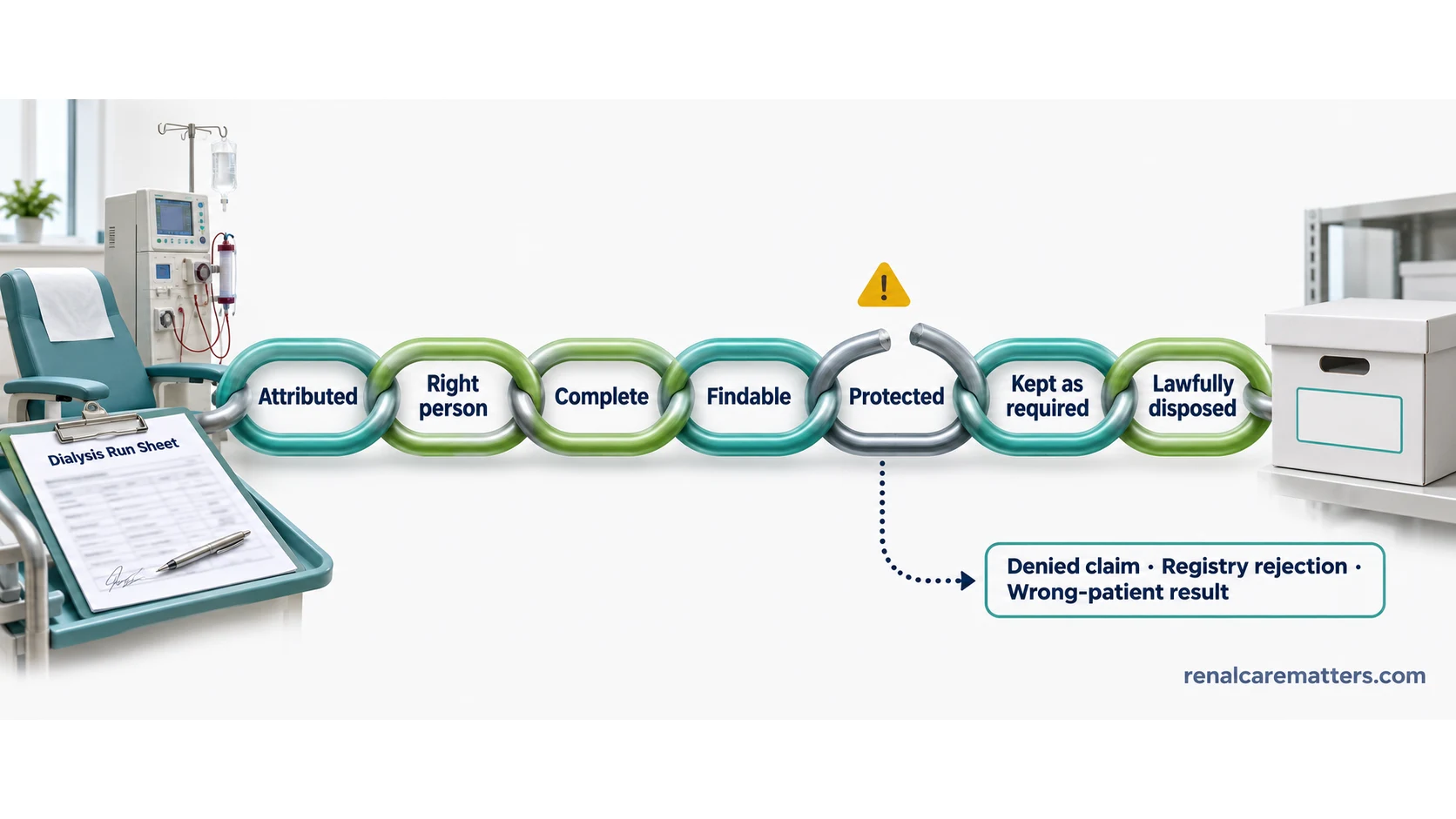
Figure 2 · What this track will help you do
The track is written in plain language at a college reading level, and no clinical license is assumed. Every module has a case, figures, a skills checklist for a preceptor, and a self-assessment drawn from a bank of fifteen questions. The target level is an independent records officer: someone who can run the dialysis records function for a week without supervision and who knows exactly which decisions belong to someone else.
What this series is, and is not
It is a training track written independently from published laws, regulations, guidelines, and research. It is not a DOH-recognized training certificate, a facility designation, Philippine Health Insurance Corporation (PhilHealth) accreditation, or legal advice. It does not replace your facility’s records manual, your data protection officer, or counsel, and clinical questions always go to the attending nephrologist.
Who can hold this role
Medical Records Officer/Custodian: qualifications at a glance
- A designated staff member who keeps the records and serves as the Philippine Renal Disease Registry (PRDR) coordinator. DOH
- Training in the International Classification of Diseases, 10th Revision (ICD-10), basic records management, and hospital health information management as required by DOH. PSN
Sources: DOH Administrative Order No. 2012-0001, Sec. V.B.2.a; Philippine Society of Nephrology (2024), Guidelines for nephrologists in the operation of hemodialysis clinics, Sec. III.A; Republic Act No. 10862. A summary for orientation, not legal advice: check the current issuances, and your unit’s license and PhilHealth accreditation. The full table for every role is on the Academy home.
Four weeks of study, in four parts
The fourteen modules follow the path a fact takes through a dialysis unit: who has authority over it, how it is captured and attached to the right person, how it is coded and paid and counted, how it is protected and released, how long it is kept, and how it survives a system failure, an inspection, or a transfer.
Figure 3 · The four weeks
Fourteen modules in four weeks
Study the modules in order. Each one starts from why a records control exists, moves to what the rules and the evidence say, and ends with what a records officer does on the next shift.
Week 1 · The record and the person
 Module 1
Role, Designation, and Sources of Authority
The four rulebooks that govern a dialysis record, reading a rule for issuer, scope, and date, the role file, and who decides what.
 Module 2
The Dialysis Chart and Its Technical Records
What the order, the run sheet, and the dialyzer, water, and machine logs each prove, and routing deficiencies to their owners.
 Module 3
Identity, Intake, and the Master Patient Index
Two person-level identifiers, search before create, how duplicates are really made, and resolving a suspected misfile safely.
 Module 4
Capture, Indexing, Authentication, and Corrections
Six-field capture, scan quality checks, indexing versus clinical corrections, late entries, and copied text.
Week 2 · Codes, claims, and counts
 Module 5
Coding: ICD-10 Today, ICD-11 Tomorrow, and Compliant Queries
Coding only from authenticated notes, tabular verification, diagnosis versus procedure fields, the ICD-11 transition, and non-leading queries.
 Module 6
PhilHealth: Eligibility, the 156-Session Ledger, and the Claim Packet
The current HD package, the per-session Annex A, the session ledger, three separate proofs, and duplicates.
 Module 7
Registries and Data Quality
Two different registries, event definitions, the event ledger, balancing a batch, and why registries inherit the chart's gaps.
Week 3 · Rights and lifecycle
 Module 8
Privacy, Patient Rights, and Release of Information
Five checks before release, access and correction as rights, and the first hour after a misdirected record.
 Module 9
Certificates, Clinical Abstracts, and Patient Requests
Preparing drafts from the authenticated chart, dialysis vintage and serology dates, physician authorship, and the request log.
 Module 10
Retention, Holds, and Lawful Disposition
The DOH disposition schedule, the right trigger date, holds that override schedules, and documented destruction.
Week 4 · Systems and handovers
 Module 11
Digital Custody, Access Control, and Audit Trails
One person, one account, access reviews and offboarding, reading the audit trail, backups, and national data standards.
 Module 12
Downtime and Recovery
Downtime kits, numbered paper sheets, reconciling schedule, paper, and electronic records, and balancing the counts.
 Module 13
Inspection Readiness, Metrics, and Improvement
The evidence index, defining numerators and denominators before sampling, confidence intervals, and re-measurement.
 Module 14
Transfers, Transient Dialysis, and International Practice
The transfer packet, verifying the recipient, closing on receipt, downstream updates, and borrowing good process from abroad.
The same seven steps every time
Figure 4 · How to work through a module
- ObjectivesRead what you should be able to do by the end.
- Big pictureA plain-words summary and the key terms, before any detail.
- Opening caseA fictional shift problem. Decide what you would do first.
- LessonShort parts with pictures, tables, and worked examples.
- Case reviewCompare your answer with one sound response.
- Skills checklistPractice with a preceptor on real or training equipment.
- Self-assessmentFive questions drawn from a larger bank, with explanations.
New terms are explained the first time they appear, and every page ends with a glossary. Abbreviations are spelled out at first use. If a sentence still reads like jargon, check the glossary, then ask your preceptor to show you the real object on the unit: most of this work makes sense faster when you can see and touch the equipment.
The series at a glance
Each module takes about 80 minutes: 25 to read, 15 for the worked example, 30 for practice, and 10 for the self-assessment (about 19 hours of study in all), plus 8 hours of supervised practice and 5 for review, the examination, and the capstone.
| No. | Module | Lessons | Opening case | Skills checklist | Practice |
|---|---|---|---|---|---|
| 1 | Role, Designation, and Sources of Authority |
| The binder before the inspection | Role file and decision map | 15 questions · 5 real situations |
| 2 | The Dialysis Chart and Its Technical Records |
| Reuse five, entry missing | Chart and technical-log audit | 15 questions · 5 real situations |
| 3 | Identity, Intake, and the Master Patient Index |
| Two Marias | Identity verification and exception handling | 15 questions · 5 real situations |
| 4 | Capture, Indexing, Authentication, and Corrections |
| The order on the wrong day | Capture, quality check, and correction routing | 15 questions · 5 real situations |
| 5 | Coding: ICD-10 Today, ICD-11 Tomorrow, and Compliant Queries |
| acute kidney injury (AKI) or CKD5? | Code validation and compliant query | 15 questions · 5 real situations |
| 6 | PhilHealth: Eligibility, the 156-Session Ledger, and the Claim Packet |
| Four rows, one patient | Claims readiness and the session ledger | 15 questions · 5 real situations |
| 7 | Registries and Data Quality |
| Three events, four rows | Registry event ledger and batch reconciliation | 15 questions · 5 real situations |
| 8 | Privacy, Patient Rights, and Release of Information |
| The sister and the wrong email | Release decision and breach escalation | 15 questions · 5 real situations |
| 9 | Certificates, Clinical Abstracts, and Patient Requests |
| Cebu on December 10 | Certificate preparation and release | 15 questions · 5 real situations |
| 10 | Retention, Holds, and Lawful Disposition |
| The batch due next month | Retention schedule, hold, and disposition | 15 questions · 5 real situations |
| 11 | Digital Custody, Access Control, and Audit Trails |
| The monthly review | Access review and audit-trail escalation | 15 questions · 5 real situations |
| 12 | Downtime and Recovery |
| Six hours dark | Downtime reconciliation | 15 questions · 5 real situations |
| 13 | Inspection Readiness, Metrics, and Improvement |
| Eighty percent | Evidence index and metric | 15 questions · 5 real situations |
| 14 | Transfers, Transient Dialysis, and International Practice |
| Before tomorrow’s session | Transfer packet and closure | 15 questions · 5 real situations |
Self-assessment is not sign-off
Each module ends with a self-assessment of 8 questions drawn at random from a bank of 15; the mastery mark is 7 of 8 on two different sets. The end-of-track examination draws 40 questions from all fourteen banks. The capstone is a 90-minute simulated shift — an inspection, a transfer, and a downtime at once — scored on five dimensions with listed critical failures, such as wrong-patient filing, unauthorized release, bypassing a hold, or inventing clinical data.
End-of-course examination. When you have finished every module, take the end-of-course examination. It draws questions at random from all 14 modules, so no two sittings are the same.
What the series is built on
The track is built from published sources. Philippine requirements follow the Department of Health (DOH) licensing order and assessment tool, the DOH records disposition schedule, PhilHealth circulars and advisories, the Philippine Society of Nephrology (PSN) hemodialysis guidelines, and the Data Privacy Act and National Privacy Commission (NPC) rules.1,2,3,4,5,6,7 Statements about how records fail rest on peer-reviewed studies of patient matching, wrong-patient errors, downtime, copy-and-paste, and registry accuracy.8,9,10,11,12
Where the evidence is observational, the text says “associated with.” Rules from other countries appear only as comparisons, never as Philippine deadlines. Regulatory statements were checked against public sources on November 24, 2026. Two items could be confirmed only in part: the claims switch-over date in DOH Administrative Order 2025-0021 on ICD-11, and the annex of non-patient record classes in DOH Department Circular 2021-0226. Confirm both locally before you rely on them.13
Using the series in a training program
A health information management head, a unit operations manager, or a dialysis clinical head can use these modules as the guided-study part of a records officer’s orientation. The trainer and preceptor page gathers the proposed hours, completion criteria, and every skills checklist in one printable place. These are proposals for a provider to adapt and validate on its own equipment; they are not requirements of any regulator.


