A role subtrack for the nurse who carries a portfolio
Most hemodialysis units ask one nurse to look after vascular access, another to watch infection control, another to teach new staff or keep the registry. The title varies by unit; the work is real. This subtrack prepares Philippine registered nurses (RN) for twelve of those portfolios, after a shared foundation module and before an integrated capstone. One nurse studies the portfolio she has been assigned; nobody is expected to hold all twelve.
Each module follows the parent course’s pattern: a plain-language picture, then the physiology or the system mechanism, then what the best evidence shows and how certain it is, then what the nurse actually does, with two or three worked scenarios from Philippine units. Every module has a practice case with a debrief and a harder second round, a 15-question knowledge check with a rationale for every option, a blank job aid, a portfolio measure, supervised-practice prompts, and links to this site’s guides and calculators. The subtrack is free, needs no account, and sends nothing you answer to any server.
What this subtrack is, and is not
It is self-study and simulation preparation for nurses already working in hemodialysis. Completing it does not appoint you to a role, grant clinical privileges or continuing professional development (CPD) credit, or create a recognized specialist qualification. None of the twelve portfolios is defined as a separate legally required post in the Philippine sources reviewed. Charge nurse and head nurse leadership are covered by their own tracks, not here.
Who can hold this role
Special Dialysis Nurse Roles (portfolio nurse): qualifications at a glance
- A hemodialysis nurse who meets the hemodialysis nurse requirements: PRC license (R.A. 9173), dialysis nursing training certificate, current BLS, ACLS where assigned. DOH, PSN
- The DOH and PSN rules name facility duties (patient education, transplant linkage, registry and records, QAPI) but do not define any of the twelve portfolios as a separate post; the employer assigns the portfolio in writing.
- Portfolio work is added to safe licensed staffing: DOH sets no more than 1 nurse to 4 stations; PSN describes 1:4 patients, or 1:6 with a nursing assistant.
Sources: DOH Administrative Order No. 2012-0001, Sec. V.B.2.a; Philippine Society of Nephrology (2024), Guidelines for nephrologists in the operation of hemodialysis clinics, Sec. III.A; Republic Act No. 10862. A summary for orientation, not legal advice: check the current issuances, and your unit’s license and PhilHealth accreditation. The full table for every role is on the Academy home.
A week of portfolio work
Before the modules, here is what portfolio work looks like. The week below is fictional, and so are all the people in it, but every moment comes from situations dialysis units meet regularly. Each day points to the module that prepares you for it. Nurse Aileen, the unit's access coordinator, Nurse Benjo, who holds the infection prevention portfolio, and Dr. Reyes, the attending nephrologist, appear throughout the subtrack.
Monday, 6:40 a.m. · station 4
- What happens
- Mang Tonyo's fistula has no thrill this morning. He says his left hand has felt cold and painful since last night. His surgical follow-up is three weeks away.
- What you do
- Do not cannulate. Check the hand against the other side, notify the nephrologist now, and get the vascular surgeon's same-day decision recorded with a named owner. Module 2.
Tuesday, 11 a.m. · second shift
- What happens
- Two patients with catheters develop rigors within an hour. A shared supply tray has been moving between their stations.
- What you do
- Help the charge nurse with immediate care, take the tray out of use, start a line list, and keep the supplies for review. Module 3.
Wednesday · quality meeting
- What happens
- A slide says referral completion is 100 percent. You know 20 referrals were due, 12 forms were sent, and only 8 plans have come back.
- What you do
- Show the true closure rate, 8 of 20, and propose one small test of change with a run chart. Module 6.
Thursday, 2 p.m. · power interruption
- What happens
- The lights flicker and machines switch to battery. One patient's venous needle is hidden under a blanket. Someone suggests silencing the alarms.
- What you do
- Uncover every needle site, keep alarms active, and follow the unit's power-failure procedure under the charge nurse's direction. Module 7.
Friday · anemia review
- What happens
- A patient's hemoglobin has fallen from 10.2 to 8.1 g/dL in two weeks. He mentions black stools. The spreadsheet suggests raising his erythropoiesis-stimulating agent dose.
- What you do
- Treat it as possible bleeding, not a dose step. Check vital signs, report to the physician today, and hold the spreadsheet suggestion until the prescriber reviews. Module 9.
Saturday · machine release
- What happens
- After overnight disinfection, a machine's release sheet is unsigned and the residual disinfectant test is missing. The next patient is waiting.
- What you do
- Keep the machine out of use, call the technician on duty for release, and move the patient to a released machine. Module 12.
None of these moments asks the nurse to make the medical or engineering decision. Every one depends on a nurse who notices, checks what the evidence actually shows, and hands over clearly to the person who decides. That is what a special role adds to a unit, and what this subtrack trains.
Which modules should you study?
Prerequisites are advice, not locks: every page stays open. Hours include supervised practice arranged by your unit.
| If you are | Study | About |
|---|---|---|
| Newly assigned vascular access nurse | Module 1; Module 2; Module 6; Module 14 | 30 h |
| Infection prevention champion | Module 1; Module 3; Module 6; Module 14 | 29 h |
| Unit educator or preceptor | Module 1; Module 4; Module 5; Module 6; Module 14 | 35 h |
| Patient education nurse | Module 1; Module 5; Module 8 | 19 h |
| Quality improvement or audit nurse | Module 1; Module 6; Module 14 | 20 h |
| Safety and emergency preparedness nurse | Module 1; Module 7; Module 6; Module 14 | 28 h |
| Care coordinator or case manager | Module 1; Module 8; Module 5; Module 6 | 27 h |
| Anemia and medication safety nurse | Module 1; Module 9; Module 6; Module 14 | 29 h |
| Transplant and treatment-options liaison | Module 1; Module 5; Module 8; Module 10 | 26 h |
| Records, registry or Philippine Health Insurance Corporation (PhilHealth) liaison nurse | Module 1; Module 11; Module 6 | 19 h |
| Water, dialysate and equipment liaison nurse | Module 1; Module 12; Module 3; Module 14 | 30 h |
| Adequacy, volume and outcomes nurse | Module 1; Module 13; Module 6; Module 14 | 29 h |
| Professional development: the whole subtrack | Module 1; Module 2; Module 3; Module 4; Module 5; Module 6; Module 7; Module 8; Module 9; Module 10; Module 11; Module 12; Module 13; Module 14 | 111 h |
Entry preparation
Complete the Hemodialysis Nurse core course through Module 12, or show equivalent knowledge; current Professional Regulation Commission (PRC) registration; current basic life support (BLS), and advanced cardiovascular life support (ACLS) where your unit assigns it. These are workplace checks, not website gates. A nurse without a practice placement can complete the reading and simulations but cannot claim observed workplace competence.
For shift and unit leadership, see the Charge Nurse and Head Nurse tracks. For the technical depth behind Module 12, see the Water Treatment Technician and Biomedical Equipment Technician tracks.
What the rules say, at the level they say it
Different sources carry different authority. Read each one in its own terms; never merge a station-based rule with a patient-based one, or treat society guidance as a license condition.
| Source | What it says (in its own terms) | What it means for a portfolio nurse |
|---|---|---|
| Department of Health (DOH) Administrative Order 2012-0001 | Dialysis nurses are PRC-licensed, with a renal dialysis training certificate and BLS; at least one ACLS-trained nurse per shift. Nurse-to-patient stations: no more than 1:4. Patient education, transplant linkage, registry participation and a records function are facility duties. | A portfolio is extra work on top of safe licensed staffing. Many of the twelve portfolios support duties the facility already owes; none is defined as a separate post. |
| Philippine Society of Nephrology (PSN) Hemodialysis Guidelines, 2024 | Describes structured renal-nursing preparation of three months or more, BLS and ACLS, and a nurse-to-patient ratio of 1:4, with 1:6 where a trained assistant supports the nurse. Discusses records, registry work and quality assessment and performance improvement (QAPI). | Society guidance, shown beside the DOH wording. It does not by itself change the DOH station-based provision. Never read either as permission to change a roster. |
| RA 9173, Philippine Nursing Act | The nursing process, health teaching, collaboration and carrying out prescribed therapies are within nursing practice. | Assess, coordinate, teach, check orders and escalate. Do not prescribe or change doses. |
| PhilHealth Circulars 2024-0029 and 2024-0023 | Payer quality standards and hemodialysis benefits, with prescription and treatment-documentation provisions. | Truthful delivered-treatment records. A benefit rule is not a clinical order or a nursing qualification. |
| RA 10173, Data Privacy Act | Health information is sensitive personal information. | Role-based access, minimum necessary data, secure release. Academy cases stay fictional. |
Fourteen modules in seven weeks
 Week 1Module 1 · Special Dialysis Nurse Roles (SDNR)-004 hS1, S4
Foundations: Portfolios, Authority and the Role Charter
What a special dialysis nurse role is, how to read a rule at its true level of authority, how to write a role charter with escalation and backup, and how to show competence through work rather than certificates.
 Week 1Module 2 · SDNR-0110 hS2, S4
Vascular Access Nurse and Coordinator
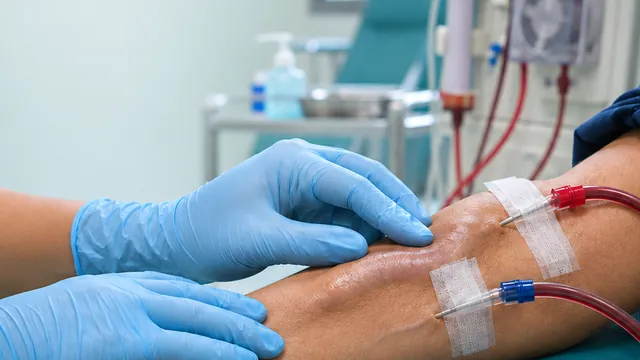
How a fistula matures, narrows and fails, what the look-listen-feel examination tells you, which findings need action now, today or this week, how to match cannulation to skill, and how to run a referral tracker that closes.
 Week 2Module 3 · SDNR-029 hS2, S6
Infection Prevention and Control Nurse
How germs and blood travel around a dialysis station, why hepatitis B survives on surfaces, how to observe a task and feed back without blame, how to count infections with the right denominator, and what to do in the first hour of a suspected cluster.
 Week 2Module 4 · SDNR-038 hS3
Nurse Educator and Clinical Preceptor
How to tell a training gap from a system gap, write objectives you can observe, teach a procedure in stages from demonstration to independence, assess what was actually done against critical steps, and document feedback, remediation and the limits of a sign-off.
 Week 3Module 5 · SDNR-047 hS3
Patient Education and Self-Management Nurse
Why patients nod but do not understand, how thirst and salt really work, how to teach one small action and check it with teach-back, how to build an education plan over months, and how to turn barriers into shared goals without blame.
 Week 3Module 6 · SDNR-058 hS5
Quality Improvement and Clinical Audit Nurse
How to choose a problem worth solving, define a measure before counting, tell a real change from noise with a run chart, run a small Plan-Do-Study-Act test, and make the quality meeting end in owned actions reported fairly.
 Week 4Module 7 · SDNR-068 hS6
Patient Safety and Emergency Preparedness Nurse
Why a dislodged venous needle can bleed a patient out before any alarm sounds, how to make hazards visible, how to prepare for the power cut, earthquake, typhoon and flood a Philippine unit actually faces, and how to respond first and investigate second.
 Week 4Module 8 · SDNR-078 hS4
Case Management and Care Coordination Nurse
Why the trip from hospital back to the dialysis chair is one of the riskiest moments, how to reconcile prescription, access, labs and medicines before the next treatment, how to build one plan with several owners, and how to support continuity when goals change.
 Week 5Module 9 · SDNR-089 hS2, S4
Anemia Management and Medication Safety Nurse
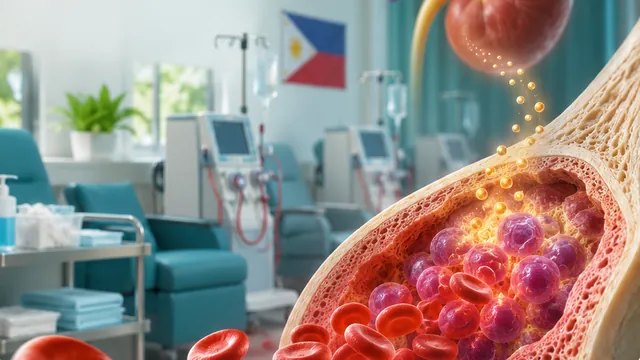
How the marrow, erythropoietin and iron work together, why the hemoglobin target sits below normal, what the big trials showed, when a falling hemoglobin is bleeding rather than a dose step, what a protocol does and does not authorize, and how to make every injection reliable.
 Week 5Module 10 · SDNR-097 hS3, S4
Transplant Referral and Treatment Options Liaison
Why every patient should hear about all kidney failure treatments, why transplant usually helps most but carries early risk, how referral, evaluation and listing differ, how to keep a referral moving, and how to protect donors from pressure and payment.
 Week 6Module 11 · SDNR-107 hS7
Documentation, Registry and PhilHealth Liaison Nurse
Why one dialysis session produces three records, the chart, the registry and the claim, and why they must tell the same truth; how to audit for accuracy, correct an error without concealing it, protect privacy, and make reporting reliable without signing what you cannot attest.
 Week 6Module 12 · SDNR-119 hS2, S6
Water, Dialysate and Equipment Safety Liaison Nurse
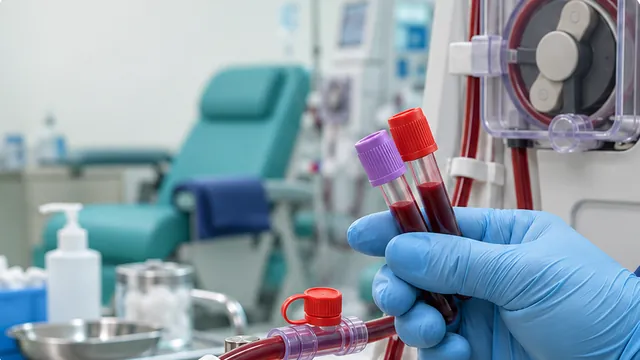
Why a dialysis patient's blood meets more water in a week than most people drink in a year, what chemical, microbial and endotoxin hazards travel across the membrane, what the nurse must verify before connecting, and why restart needs both technical release and clinical approval.
 Week 7Module 13 · SDNR-129 hS2, S5
Dialysis Adequacy, Volume and Outcomes Nurse
What the urea numbers really measure and how a bad sample fools them, why a good Kt/V can hide a patient who keeps ending early, how fast fluid removal stuns the heart, what the trials say about dose and time, and how to run a monthly review that treats volume and tolerance as clinical questions.
 Week 7Module 14 · SDNR-138 hS1–S8
Integrated Portfolio Practicum and Capstone
One shift where several portfolios collide: a patient back from hospital with an unclear antibiotic, rigors on dialysis, a second patient with chills on the same water loop, an incomplete machine release and a transplant appointment tomorrow. Then a bounded portfolio project, a four-station objective structured clinical examination (OSCE), and a 30-60-90-day plan.
When you have finished: take the end-of-course knowledge check: fourteen questions, one from each module, drawn at random. The pass mark is 12 of 14, and every safety-critical question must be answered correctly.
What you will be able to do
| Code | The learner can | Evidence |
|---|---|---|
| S1 | Read a requirement at its true level of authority and write a role charter with escalation, backup and limits. | Signed role charter and source-authority worksheet |
| S2 | Turn a bedside finding (access, infection, anemia trend, water or equipment status, adequacy data) into the right urgency and the right person. | Focused assessment and Situation, Background, Assessment, Recommendation (SBAR) in simulation; observed escalation |
| S3 | Teach a patient or a colleague and check the result by observation or teach-back, not by attendance. | Teach-back record, microteaching, direct-observation form |
| S4 | Close a loop: referral sent, received, acted on, returned and documented, with one named owner per action. | Referral tracker and transition reconciliation record |
| S5 | Define a measure with an honest numerator, denominator and exclusions, show it over time, and run a small test of change. | Measure specification, run chart and Plan-Do-Study-Act (PDSA) log |
| S6 | Recognize a system hazard (transmission, emergency, water or equipment) and stop harm before investigating. | infection prevention and control (IPC) observation set, drill debrief, stop-use and release record |
| S7 | Keep clinical, registry and claims records truthful, amend without concealment, and protect privacy. | Documentation audit and amendment exercise |
| S8 | Integrate safety, scope and coordination in a multi-problem shift and present portfolio evidence. | Four-station capstone OSCE and portfolio presentation |
Syllabus and planned hours
Hours are Academy planning estimates, not statutory minima or contact-hour accreditation. Preceptors may extend supervised exposure until the skill is shown safely.
Three separate records
| Record | Requirement | Recorded by |
|---|---|---|
| Self-study complete | Modules read and the end-of-course knowledge check passed: 12 of 14 or better, with every safety-critical question correct. | The learner, here (optionally saved in this browser only) |
| Simulation passed | The four capstone OSCE stations: at least 32 of 40, at least 7 of 10 per station, no critical error. | The facilitator |
| Facility competency | Portfolio skills observed and signed off at the locally required level. | The employing facility, in its authorized records |
A missed safety-critical question means more study even when the total is high. Educators making consequential decisions should use parallel versions of the check. Finishing the online flow never records simulation or workplace competency, and a self-ticked checklist never does either.
Calculators used in this subtrack
The Dialysis Nurse Portfolio Toolkit was built for this subtrack. It turns audit counts into honest percentages with a 95% range, calculates infection rates by access type, checks whether a treatment was delivered as prescribed (urea reduction ratio, minutes, ultrafiltration rate), and shows how fast hemoglobin is changing. It never suggests a dose. The others are existing site tools linked from the modules.
Sources behind this subtrack
Desk review dated 24 November 2026. Clinical content is reviewed at least annually; DOH orders, PhilHealth issuances (especially the 2026 kidney transplantation benefit circular, whose full operative text was not verified for this draft) and unit procedures must be checked before each use. Before release, the clinical content requires review by a Philippine nephrologist and an experienced dialysis nurse educator, with infection prevention, technical, pharmacy, records and transplant reviewers for their modules.1,2,3,4,5,6,7,8,9,10,11,12,13,14,15,16,17