After this module you should be able to
- Assess readiness, language, hearing, vision, cognition and health literacy before teaching.
- Teach one small action at a time and confirm it with teach-back or show-me.
- Build an individualized education plan over time, including caregivers, and refer when needed.
- Evaluate understanding and behavior without blaming the patient, and turn barriers into shared goals.
Time plan. 2 h study · 2 h workshop · 3 h supervised practice. The supervised hours are arranged by your unit and recorded in its own competency system; this page records self-study only.
Teaching is checking
Imagine giving directions to a visitor in Quezon City. You explain three turns, two landmarks and a jeepney route. The visitor nods and thanks you. Ten minutes later he is lost. He was not careless; he heard words he could not hold. The only way you would have known is if you had asked him, "Tell me how you will get there," and listened.
The picture has a limit. A lost visitor loses time. A patient who misunderstands fluid, potassium or a warning sign may arrive at the next session breathless, or with a heart rhythm problem, or with a clotted access. That is why patient education in dialysis is not a talk; it is a loop of teaching, checking and reteaching until the patient can say or show what to do. The chart entry "advised on fluid restriction" proves that something was said. It proves nothing about what was understood.
The education nurse holds the unit's plan for this: who has learned what, who needs what next, and which barriers (hearing, reading, money, distance, family) are getting in the way. The nurse explains existing medical plans; she does not create new fluid, diet or medicine prescriptions.
Why patients nod
Health literacy is the ability to find, understand and use health information to make decisions. It is not the same as schooling. A retired engineer can struggle with "restrict your phosphorus" when he is frightened, tired after dialysis, or hard of hearing in a noisy unit. Limited health literacy is a mismatch between what the information demands and what the person can use at that moment.
It is common. A systematic review of 20 studies with 12,324 patients found a pooled prevalence of limited health literacy of 25 percent across chronic kidney disease, and 27 percent among patients on dialysis; most studies were from the United States and were of low or moderate quality.1 In a prospective cohort of 480 patients starting hemodialysis, 32 percent had limited health literacy, which was associated with higher mortality (hazard ratio 1.54) after adjustment for age, sex, race and diabetes.2 This is an association: literacy is linked to income, education and illness, and the study does not show that teaching alone would change survival. It does show that a large share of patients in any unit will not absorb information delivered as a lecture.
Universal precautions. Because you cannot tell by looking who has limited literacy, teach every patient as if they might: plain words, short sentences, one topic at a time, and a check. The United States Agency for Healthcare Research and Quality (AHRQ) calls this health literacy universal precautions, with teach-back as its core tool.3
| Check before you teach | Why it matters | What you adjust |
|---|---|---|
| Immediate concern | A worried patient hears nothing else | Address the worry first |
| Language and dialect | Tagalog, Kapampangan, Cebuano, Ilocano, English | Teach in the patient's language; use an interpreter or family carefully |
| Hearing and vision | Machines are loud; printed sheets are small | Face the patient, lower background noise, large print or pictures |
| Fatigue and cognition | Many patients are exhausted after dialysis; some have memory problems | Teach before or early in the session; short messages; involve a caregiver |
| Practical life | Work, money, transport, who cooks | Make the action fit the life |
Why 'drink less' fails, and what to teach instead
Fluid teaching fails more than any other topic, and the reason is physiology. Thirst is driven mainly by the concentration of the blood. When a person eats salt, sodium in the blood rises; sensors in the brain (osmoreceptors in the hypothalamus) detect the rise and switch on thirst until enough water is drunk to dilute the sodium back to normal. Angiotensin II, often high in kidney failure, adds to the drive. A person without working kidneys cannot remove that water, so it stays in the body as weight gain between sessions.
Two practical consequences follow. First, all fluid counts, not only drinks: soup, sabaw, porridge, ice, watery fruit and the liquid in noodles. Second, salty foods (instant noodles, dried fish, bagoong, patis, toyo, processed meats, chips) drive thirst for hours afterward. The patient's prescribed fluid allowance and target weight come from the physician; the nurse's job is to make them understandable and doable. For individual diet changes, refer to the renal dietitian.
Mang Celso, 58, a farmer from Pampanga, gains 4 kilograms between sessions. His chart says "advised on fluid restriction" six times. When Nurse Grace asks what he drinks, he says, "Only two glasses of water, Ma'am, as the doctor said." Asked to describe yesterday, he lists two bowls of sinigang with plenty of sabaw, a big bowl of lugaw, and dried fish at lunch and dinner. "Soup is food, not drink." He also works in the field until noon and is very thirsty.
Grace does not repeat the lecture. She explains in Kapampangan that sabaw is water and that the dried fish makes his thirst stronger. She asks him to choose one change for this week. He chooses: "One bowl of sinigang, eat the vegetables, leave most of the sabaw." She asks him to tell her back what he will do and why; he explains it correctly the second time. She notes it in his education record with his own words.
What this shows. The problem was a belief and a physiology gap, not disobedience. One chosen action, checked by teach-back, is worth more than six "advised" entries.

Salt raises blood sodium, brain sensors switch on thirst, and without kidneys the water stays as weight gain; less salt reduces the drive to drink.
Teach a small action and check the explanation
Teach-back means asking the patient to explain or show, in their own words, what they will do, then correcting and asking again until it is right. It checks your teaching, not the patient's intelligence, so the question is phrased that way: "I want to make sure I explained this well. Can you tell me how you will check your fistula tonight?" Show-me is the same idea for skills: "Show me how you press on the needle site if it bleeds at home."
In a systematic review of 20 studies across many settings, teach-back was associated with better outcomes in 19, ranging from knowledge and recall to readmissions and quality of life; the studies were varied and of mixed quality.4 A systematic review in kidney disease found teach-back improved knowledge, self-efficacy and self-management in most studies, although trials were small and heterogeneous.5
- AskWhat worries you most today? What do you already know?
- Teach one thingOne action, plain words, a real object if possible (cup, bowl, the arm).
- Check"Tell me in your own words" or "Show me."
- ReteachIf any part is wrong, explain differently and check again.
- RecordWhat was taught, the patient's own words, who else was there, and the next topic.
Aling Tess has just started dialysis through a neck catheter. Nurse Grace teaches three warning signs to call about: fever or chills, bleeding or a wet dressing at the catheter, and shortness of breath when lying flat. Aling Tess repeats "fever and bleeding." Grace explains the breathlessness differently ("if you need extra pillows to breathe at night"), and on the second try Aling Tess says all three and where the unit's number is written.
What this shows. The first teach-back found a gap that would otherwise have been discovered at 2 a.m.

Understanding is confirmed when the patient explains or shows the action, not when they nod.
Build a complete education plan over time
No one learns dialysis in one sitting. Spread topics across weeks, in the order the patient needs them, and track them in the unit's record so any nurse can see what is next.
| When | Topics (examples) | Check |
|---|---|---|
| First week | Access care and warning signs; who to call; what to do if a session is missed; fluid basics | Teach-back of warning signs and contact plan |
| First month | Salt and thirst; potassium foods within their plan; medicines and when to take them on dialysis days | Teach-back; review a real day of eating with the dietitian's plan |
| First three months | Anemia and blood tests; travel and holidays; disasters and typhoons; work | Teach-back; written emergency plan in hand |
| Ongoing | Treatment options including transplant and home dialysis; supportive care; goals and advance care planning | Documented options conversation (Module 10) |
Caregivers. In many Filipino families, a daughter, spouse or grandchild cooks, buys medicines and brings the patient to dialysis. Ask the patient whom they want included, and teach that person too, with the patient's permission. Check the caregiver's understanding with the same teach-back.
Refer, do not prescribe. A new diet, a different fluid allowance, a medicine change or a new target weight is a referral to the dietitian or the physician, not something the education nurse invents to solve a problem. Record the referral and close the loop.
Turn barriers into shared goals
When a patient keeps gaining weight or missing medicines, the easy story is "noncompliant." The useful question is "What is in the way?" Common answers in Philippine units: the patient cannot afford the binder this month; works outdoors in the heat; lives with family who cook salty food for everyone; takes medicines from three doctors who do not know about each other; cannot read the small label; is depressed.
Shared goal setting means the patient chooses the change, sized to be achievable, and you agree how you will both know it worked. "Leave most of the sabaw this week" is a goal. "Follow your fluid restriction" is not. Revisit at the next session, praise any progress, and adjust.
Measure honestly. A good portfolio measure is "teaching encounters with documented teach-back showing understanding, divided by teaching encounters sampled," paired with the patient's own experience of being taught. Avoid measures that count leaflets handed out.
Case: Six times advised
Wednesday, first shift. Mr. Ernesto Bautista, 63, a retired jeepney driver, has been on hemodialysis for four months. His interdialytic weight gain is often 4 to 5 kilograms; last Monday he arrived breathless and needed extra fluid removal. His chart says "advised on fluid restriction" six times and "noncompliant" twice.
He is hard of hearing on the left and the unit is noisy. His wife, Aling Marites, cooks; she makes sinigang and tinola most days and buys instant noodles for him when she works late. He says, "I'm following the doctor, I only drink a little water." He does not read small print well.
Before reading on, decide what you would assess, whom you would contact and what you would say, what you would teach, and what would make you escalate. Then compare with the debrief below.
Assess
Communicate
Teach
Escalate
Mr. Bautista chose to eat the vegetables and leave most of the sabaw, and Aling Marites chose to buy low-salt options for nights she works late. Over three weeks his average weight gain fell by about 1 kilogram. The word "noncompliant" was replaced in his chart by a dated education plan in his own words.
Submit: A teach-back plan for this belief, and the note you would send to the physician, without changing or restarting the medicine yourself.
Check your understanding
Each visit draws 5 questions at random from this module’s 15-question bank, in a shuffled order. Choose the single best answer for each, then select Check answers; a rationale appears under every option. Select New set of questions for a different mix. Nothing you select is sent anywhere; scoring happens in your browser and records self-study only.
What this module builds
| Code | The learner can | Course evidence |
|---|---|---|
| S3 | Teach a patient or a colleague and check the result by observation or teach-back, not by attendance. | Teach-back record, microteaching, direct-observation form |
Performance evidence for this module: Three teaching encounters with documented teach-back (one including a caregiver) and an individualized education plan.
- Patient code, date, session time (before, during, after dialysis)
- Immediate concern raised by the patient
- Language used; hearing, vision, cognition adjustments made
- Topic (one) and method (object, picture, demonstration)
- Teach-back or show-me: the patient's own words or action
- Reteaching needed (yes/no) and second check result
- Caregiver present and taught (name, relationship, consent)
- Barrier found and shared goal chosen by the patient
- Referral made (physician, dietitian, social worker) and owner
- Next topic and date
Print it or copy it into your unit’s own form. Use it with fictional data here; real entries belong only in the facility’s approved records.
Portfolio measure. Teaching encounters with documented teach-back showing understanding, divided by teaching encounters sampled; balanced by patient-reported experience of being taught and timely referral access.
With your preceptor
Use role-play first, then real teaching under your preceptor's observation. These are prompts for supervised learning, not a procedure. Use your center’s own protocols, contacts and forms; your preceptor observes and signs off each item on the facility’s competency record.
- Role-play teach-back on three topics with a colleague acting as a hard-of-hearing patient.
- Observe a teaching encounter and note whether understanding was checked.
- Write an education plan for one patient covering the first three months.
- Teach one caregiver, with the patient's permission, and check their understanding.
- Audit ten chart entries for teaching: how many record a teach-back in the patient's words?
Read next on this site
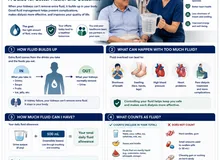
- Fluid Management on DialysisFluid management written for patients.
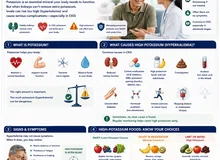
- Potassium and HyperkalemiaPotassium explained in plain language.
- Why Starting Dialysis Is Not a Death Sentence, but a New BeginningA guide to share with new patients and families.
- Hemodialysis Nurse Module 17: Teaching and evidence-based practiceRelated Renal Care Academy module.
Back to the Special Dialysis Nurse Roles home · the Hemodialysis Nurse core course.