Get help the same day during or after chemotherapy if you notice:Magpatingin sa parehong araw habang o pagkatapos ng chemotherapy kapag napansin mo ang:Pagpatan-aw sa samang adlaw samtang o human sa chemotherapy kung imong mamatikdan ang:Magpalawe king pareung aldo kabang o kaibat ning chemotherapy nung apansin mu ing:
- Passing much less urine than usual, or none for 12 hoursNapakakaunting ihi kaysa karaniwan, o walang ihi sa loob ng 12 orasDiyutay kaayo nga ihi kaysa kasagaran, o walay ihi sulod sa 12 ka orasKakaunti a ihi kesa karaniwan, o alang ihi king lub ning 12 oras
- New swelling of the legs or face, or breathlessness when lying flatBagong pamamaga ng binti o mukha, o hirap huminga kapag nakahigaBag-ong hubag sa bitiis o nawong, o kalisod sa pagginhawa kung naghigdaBayung pamagbaga ning bitis o lupa, o kasakitan king pamanginga nung makaili
- Vomiting or diarrhea that stops you from drinking, or dizziness when you standPagsusuka o pagtatae na pumipigil sa iyong pag-inom, o pagkahilo pagtayoPagsuka o pagkalibanga nga nakapugong sa imong pag-inom, o pagkalipong pagbarogPamuta o pamagtae a mamigil king paminum mu, o pamagkalilu nung tatalakad ka
- Muscle cramps, twitching, a racing or skipping heartbeat, or unusual weakness (possible low magnesium or potassium)Pulikat, pagkibot ng kalamnan, mabilis o palaktaw na tibok ng puso, o kakaibang panghihina (posibleng mababang magnesium o potassium)Kalambre, pagkibot sa kaunoran, paspas o palaktaw nga pitik sa kasingkasing, o lahi nga kaluya (posibleng ubos nga magnesium o potassium)Pulikat, pamagkibut ning laman, mabilis o palaktaw a pitik ning pusu, o kakaibang kaluya (malyaring mababang magnesium o potassium)
- Confusion or unusual sleepinessPagkalito o kakaibang pagkaantokPagkalibog o lahi nga pagkatulogonPamagkalitu o kakaibang pamagkatudtud
- Easy bruising, tiny red dots on the skin, or tea-colored urine with new high blood pressure, weeks to months after gemcitabine or mitomycinMadaling pagpasa, maliliit na pulang tuldok sa balat, o kulay-tsaang ihi kasama ang bagong pagtaas ng presyon, ilang linggo hanggang buwan pagkatapos ng gemcitabine o mitomycinDali nga pagpasa, gagmay nga pula nga tuldok sa panit, o kolor-tsaa nga ihi uban ang bag-ong pagsaka sa presyon, pipila ka semana hangtod bulan human sa gemcitabine o mitomycinMadaling pamagpasa, malating maglulang tuldok king balat, o kule-tsaang ihi kayabe ing bayung pamitaas ning presyun, pilan a domingu anggang bulan kaibat ning gemcitabine o mitomycin
Go to the emergency room for chest pain, fainting, severe breathlessness, or no urine at all. Bring your chemotherapy schedule and medicine list.Pumunta sa emergency room kapag may pananakit ng dibdib, pagkahimatay, matinding hirap sa paghinga, o walang ihi. Dalhin ang iskedyul ng chemotherapy at listahan ng gamot.Adto sa emergency room kung adunay sakit sa dughan, pagkaluya, grabe nga kalisod sa pagginhawa, o walay ihi. Dad-a ang iskedyul sa chemotherapy ug listahan sa tambal.Munta king emergency room nung atin sakit king salu, pamaglupasay, malalang kasakitan king pamanginga, o alang ihi. Dalan ing iskedyul ning chemotherapy at listahan ning gamut.
The one-minute answerAng sagot sa isang minutoAng tubag sa usa ka minutoIng sagot king metung a minutu
- Many cancer medicines leave the body through the kidneys, and a few can injure them. That is why your kidney function is checked before every cycle, not just once.Maraming gamot sa kanser ang lumalabas sa katawan sa pamamagitan ng bato, at ang ilan ay maaaring makapinsala rito. Kaya sinusuri ang bato mo bago ang bawat cycle, hindi lang isang beses.Daghang tambal sa kanser ang mogawas sa lawas pinaagi sa bato, ug ang pipila makadaot niini. Mao nga gisusi ang imong bato sa dili pa ang matag cycle, dili lang kausa.Dakal a gamut king kanser ing lalabas king katawan king batu, at ing pilan malyaring makasira kaniti. Kaya susuyuran ing batu mu bayu ing balang cycle, ali mu metung a beses.
- Having chronic kidney disease (CKD) or being on dialysis does not automatically rule out cancer treatment. The dose, the timing, or the choice of medicine may change.Ang pagkakaroon ng chronic kidney disease (CKD) o pagda-dialysis ay hindi awtomatikong humahadlang sa gamutan ng kanser. Maaaring magbago ang dosis, oras, o piniling gamot.Ang pagbaton og chronic kidney disease (CKD) o pag-dialysis dili awtomatikong mopugong sa pagtambal sa kanser. Mahimong mausab ang dosis, oras, o ang gipili nga tambal.Ing pamakaroon chronic kidney disease (CKD) o pamag-dialysis ali awtomatikung mamigil king pamanulu king kanser. Malyaring mibayu ing dosis, oras, o ing pinili a gamut.
- Drink the amount your team advises, avoid pain relievers such as ibuprofen and mefenamic acid, skip herbal "detox" products, and keep every blood test on schedule, including magnesium.Uminom ng dami na ipinapayo ng team mo, iwasan ang pain reliever gaya ng ibuprofen at mefenamic acid, huwag gumamit ng herbal na "detox", at huwag lumiban sa anumang blood test, kasama ang magnesium.Inom sa gidaghanon nga gitambag sa imong team, likayi ang pain reliever sama sa ibuprofen ug mefenamic acid, ayaw paggamit og herbal nga "detox", ug ayaw paglangan sa bisan unsang blood test, apil ang magnesium.Uminum king dakal a ipapayu ning team mu, iwasan ing pain reliever anti ing ibuprofen at mefenamic acid, eme gagamit herbal a "detox", at eme lilibanan ing anumang blood test, kayabe ing magnesium.
- Ask your oncologist and your nephrologist to talk to each other. Kidney-safe cancer care is a team plan.Hilingin sa iyong oncologist at nephrologist na mag-usap sila. Plano ng isang team ang ligtas-sa-batong gamutan ng kanser.Hangyoa ang imong oncologist ug nephrologist nga mag-istoryahanay sila. Plano sa usa ka team ang luwas-sa-bato nga pagtambal sa kanser.Pakisabyan me ing oncologist at nephrologist mu ban magsalita la. Plano ning metung a team ing ligtas-king-batung pamanulu king kanser.
Paalala: draft pa ang salin na ito at hinihintay ang pagsusuri ng katutubong tagapagsalita. Ang Ingles na bersyon ang sinuri.Pahinumdom: draft pa kini nga hubad ug naghulat sa pagsusi sa lumad nga mamumulong. Ang Ingles nga bersyon ang nasusi.Paalala: draft pa ing salin a iti at manaya king pamanigaral ning katutubung manyalita. Ing Ingles a bersyun ing linawe.
Why cancer treatment involves your kidneysBakit kasali ang bato sa gamutan ng kanserNganong apil ang bato sa pagtambal sa kanserNung bakit kasali ing batu king pamanulu king kanser
Think of the kidney as both the exit door and a possible target. Many chemotherapy medicines leave the body through the kidneys. On the way out, a few of them collect inside the very kidney cells that are pushing them out.Isipin ang bato bilang pintuang labasan at posibleng target. Maraming gamot sa chemotherapy ang lumalabas sa katawan sa pamamagitan ng bato. Habang palabas, naiipon ang ilan sa loob mismo ng mga cell ng bato na nagtutulak sa kanila palabas.Hunahunaa ang bato isip pultahan nga gawasan ug posible nga target. Daghang tambal sa chemotherapy ang mogawas sa lawas pinaagi sa bato. Samtang pagawas, ang pipila matipon sulod mismo sa mga cell sa bato nga nagduso kanila pagawas.Isipan me ing batu bilang pasbul a lalabasan at malyaring target. Dakal a gamut king chemotherapy ing lalabas king katawan king batu. Kabang lalabas, ing pilan kareti mitipun king lub mismu dareng cell ning batu a manulak karela palwal.
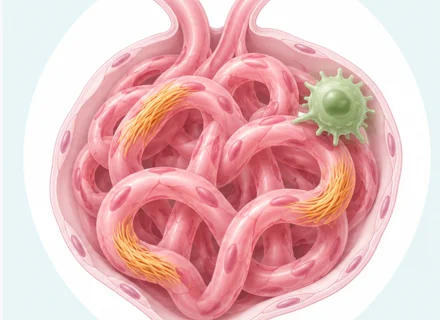
Each kidney has about a million filtering units. Blood is first filtered at the glomerulus, a tiny ball of blood vessels. The filtered fluid then flows through a long tube, the tubule. The first part of that tube, the proximal tubule, works like a busy pump station. Its cells use protein "doors" (transporters) to pull certain medicines from the blood and push them into the urine. This is how the body clears drugs such as cisplatin, methotrexate, and pemetrexed.May humigit-kumulang isang milyong pansala ang bawat bato. Unang sinasala ang dugo sa glomerulus, isang maliit na bola ng mga daluyan ng dugo. Dumadaloy ang nasalang likido sa isang mahabang tubo, ang tubule. Ang unang bahagi nito, ang proximal tubule, ay parang abalang pumping station. Gumagamit ang mga cell nito ng mga protinang "pinto" (transporter) para hilahin ang ilang gamot mula sa dugo at itulak sa ihi. Ganito inaalis ng katawan ang mga gamot gaya ng cisplatin, methotrexate, at pemetrexed.Adunay mga usa ka milyon nga pansala ang matag bato. Una nga gisala ang dugo sa glomerulus, usa ka gamay nga bola sa mga ugat sa dugo. Modagayday ang nasala nga likido sa usa ka taas nga tubo, ang tubule. Ang unang bahin niini, ang proximal tubule, sama sa busy nga pumping station. Mogamit ang mga cell niini og protina nga "pultahan" (transporter) aron bitlingon ang pipila ka tambal gikan sa dugo ug iduso sa ihi. Mao kini ang paagi sa lawas sa pagkuha sa mga tambal sama sa cisplatin, methotrexate, ug pemetrexed.Atin intang metung a milyung pansala ing balang batu. Mumuna yang sasalan ing daya king glomerulus, metung a malating bola dareng dalanan ning daya. Daloy ing sinalang likidu king metung a malagwang tubu, ing tubule. Ing mumunang bage na, ing proximal tubule, anti yang abalang pumping station. Gagamit la reng cell na kareng protinang "pasbul" (transporter) ban gulutan ing pilan a gamut menibat king daya at itulak king ihi. Makanyan ing pamanalis ning katawan kareng gamut anti ing cisplatin, methotrexate, at pemetrexed.
The trouble starts when a drug comes in faster than it can leave. Cisplatin is a good example: the cell pulls it in efficiently through an entry door called organic cation transporter 2 (OCT2), but the exit pump, multidrug and toxin extrusion protein 1 (MATE1), is slower. The drug builds up inside the cell, damages its energy factories (mitochondria), and the injured cells leak salt, potassium, and especially magnesium into the urine. If injury is heavier, the kidney filters less and creatinine rises. Other drugs harm different parts of the kidney: methotrexate can form crystals in acidic urine, and gemcitabine or mitomycin can injure the lining of tiny blood vessels.Nagsisimula ang problema kapag mas mabilis pumasok ang gamot kaysa lumabas. Halimbawa ang cisplatin: mahusay itong hinihila papasok ng cell sa pintong tinatawag na organic cation transporter 2 (OCT2), pero mas mabagal ang exit pump na multidrug and toxin extrusion protein 1 (MATE1). Naiipon ang gamot sa loob ng cell, sinisira ang pabrika nito ng enerhiya (mitochondria), at tumatagas sa ihi ang asin, potassium, at lalo na ang magnesium. Kapag mas mabigat ang pinsala, mas kaunti ang nasasala ng bato at tumataas ang creatinine. Iba-ibang bahagi ng bato ang tinatamaan ng ibang gamot: maaaring bumuo ng kristal ang methotrexate sa maasim na ihi, at maaaring masira ng gemcitabine o mitomycin ang lining ng maliliit na daluyan ng dugo.Magsugod ang problema kung mas paspas mosulod ang tambal kaysa mogawas. Pananglitan ang cisplatin: maayo kining bitlingon sa cell pasulod agi sa pultahan nga gitawag og organic cation transporter 2 (OCT2), apan mas hinay ang exit pump nga multidrug and toxin extrusion protein 1 (MATE1). Matipon ang tambal sulod sa cell, madaot ang pabrika niini sa enerhiya (mitochondria), ug motulo sa ihi ang asin, potassium, ug labi na ang magnesium. Kung mas bug-at ang kadaot, mas gamay ang masala sa bato ug mosaka ang creatinine. Lain-laing bahin sa bato ang maigo sa ubang tambal: mahimong mohimo og kristal ang methotrexate sa aslom nga ihi, ug mahimong madaot sa gemcitabine o mitomycin ang lining sa gagmay nga ugat sa dugo.Mumpisa ing problema nung mas mabilis lumub ing gamut kesa lumwal. Alimbawa ing cisplatin: mayap nang gugulutan ning cell papasok king pasbul a aus dang organic cation transporter 2 (OCT2), pero mas mabagal ing exit pump a multidrug and toxin extrusion protein 1 (MATE1). Mitipun ing gamut king lub ning cell, sirain na ing pabrika na ning enerhiya (mitochondria), at tutulu king ihi ing asin, potassium, at lalu na ing magnesium. Nung mas mabigat ing pamakasira, mas kakaunti ing sasalan ning batu at tutaas ing creatinine. Miyayaliwang bage ning batu ing tatamaan dareng aliwang gamut: malyaring magbuo kristal ing methotrexate king maslam a ihi, at malyaring sirain ning gemcitabine o mitomycin ing lining dareng malating dalanan ning daya.

The kidney is both the exit door and a target: cisplatin enters tubule cells faster than it leaves, builds up, injures mitochondria, and magnesium leaks into the urine.Ang bato ay pintuang labasan at target: mas mabilis pumasok ang cisplatin sa mga cell ng tubule kaysa lumabas, naiipon, sinisira ang mitochondria, at tumatagas ang magnesium sa ihi.Ang bato pultahan nga gawasan ug target: mas paspas mosulod ang cisplatin sa mga cell sa tubule kaysa mogawas, matipon, madaot ang mitochondria, ug motulo ang magnesium sa ihi.Ing batu pasbul a lalabasan at target: mas mabilis lumub ing cisplatin kareng cell ning tubule kesa lumwal, mitipun, sirain ing mitochondria, at tutulu ing magnesium king ihi.
- OCT2
- Organic cation transporter 2 (entry door)
- MATE1
- Multidrug and toxin extrusion protein 1 (exit pump)
- Mg
- Magnesium
An analogy, and its limitIsang paghahambing, at ang hangganan nitoUsa ka pagtandi, ug ang utlanan niiniMetung a pamanalunga, at ing angganan na
"Exit door and target" explains why the kidneys are watched so closely, but it is not the whole story. Most people finish chemotherapy with their kidneys working well. Risk depends on the specific drug, the total dose, your hydration, other medicines, and how strong your kidneys were to begin with.Ipinapaliwanag ng "pintuang labasan at target" kung bakit mahigpit na binabantayan ang bato, pero hindi ito ang buong kuwento. Karamihan ay natatapos ang chemotherapy na maayos pa rin ang bato. Nakadepende ang panganib sa partikular na gamot, kabuuang dosis, sapat na tubig sa katawan, ibang gamot, at kung gaano kalakas ang bato sa simula.Gipasabot sa "pultahan nga gawasan ug target" kung nganong gibantayan pag-ayo ang bato, apan dili kini ang tibuok istorya. Kadaghanan mahuman sa chemotherapy nga maayo gihapon ang bato. Nagdepende ang peligro sa partikular nga tambal, kinatibuk-ang dosis, igo nga tubig sa lawas, ubang tambal, ug unsa ka kusog ang bato sa sinugdanan.Ipaliwanag ning "pasbul a lalabasan at target" nung bakit pakamalagu dang babantayan ing batu, pero ali ya ing buung kwentu. Ing kayanakung tau mayari la ing chemotherapy a mayap pa ing batu. Makasalalay ing panganib king partikular a gamut, kabuuang dosis, sapat a danum king katawan, aliwang gamut, at nung makananu kasikan ing batu king pamimuklat.
The cancer itself can affect the kidneysAng kanser mismo ay maaaring makaapekto sa batoAng kanser mismo mahimong makaapekto sa batoIng kanser mismu malyaring makaapektu king batu
Not every kidney problem in a person with cancer comes from chemotherapy. Sometimes the kidneys are affected before treatment even starts. Knowing this helps your team look for the right cause instead of simply stopping a useful medicine.Hindi lahat ng problema sa bato ng taong may kanser ay galing sa chemotherapy. Minsan, apektado na ang bato bago pa magsimula ang gamutan. Nakatutulong ito para hanapin ng team ang tamang sanhi sa halip na basta ihinto ang isang kapaki-pakinabang na gamot.Dili tanang problema sa bato sa tawo nga adunay kanser gikan sa chemotherapy. Usahay, apektado na ang bato sa dili pa magsugod ang pagtambal. Makatabang kini aron pangitaon sa team ang sakto nga hinungdan imbes nga hunongon lang ang usa ka mapuslanon nga tambal.Ali eganagang problema king batu ning taung atin kanser manibat king chemotherapy. Kekatamu, apektadu ne ing batu bayu pa mumpisa ing pamanulu. Makasaup iti ban panintunan ning team ing tamang sanhi, kesa basta itian ing metung a makasaup a gamut.
- Dehydration from poor appetite, vomiting, or diarrhea lowers blood flow to the kidneys.Kakulangan sa tubig dahil sa walang gana, pagsusuka, o pagtatae ay nagpapababa ng daloy ng dugo sa bato.Kakulang sa tubig tungod sa walay gana, pagsuka, o pagkalibanga mopaubos sa dagayday sa dugo sa bato.Kakulangan king danum uli ning alang gana, pamuta, o pamagtae mamababa king daloy ning daya king batu.
- High blood calcium, which some cancers cause, makes the kidneys lose water and can cause confusion.Mataas na calcium sa dugo, na dulot ng ilang kanser, ay nagpapawala ng tubig sa bato at maaaring magdulot ng pagkalito.Taas nga calcium sa dugo, nga gipahinabo sa pipila ka kanser, mopawala sa tubig sa bato ug mahimong hinungdan sa pagkalibog.Matas a calcium king daya, a gawan ning pilan a kanser, mamawala king danum king batu at malyaring gawan pamagkalitu.
- Abnormal antibody pieces (light chains) in myeloma can clog the kidney tubules.Abnormal na piraso ng antibody (light chain) sa myeloma ay maaaring magbara sa tubule ng bato.Abnormal nga piraso sa antibody (light chain) sa myeloma mahimong mobabag sa tubule sa bato.Abnormal a piraso ning antibody (light chain) king myeloma malyaring mabara ing tubule ning batu.
- Blocked urine flow from a pelvic or abdominal tumor, or cancer cells growing in the kidney itself.Baradong daloy ng ihi dahil sa tumor sa balakang o tiyan, o mga cell ng kanser na tumutubo mismo sa bato.Babag nga dagayday sa ihi tungod sa tumor sa hawak o tiyan, o mga cell sa kanser nga motubo mismo sa bato.Baradung daloy ning ihi uli ning tumor king balakang o atian, o cell ning kanser a tutubu mismu king batu.
- Tumor lysis: when fast-growing cancers break down quickly at the start of treatment, they release uric acid, potassium, and phosphate that can overwhelm the kidneys. Teams prevent this with fluids and uric-acid-lowering medicine.Tumor lysis: kapag mabilis masira ang mabilis lumaking kanser sa simula ng gamutan, naglalabas ito ng uric acid, potassium, at phosphate na maaaring lumunod sa bato. Iniiwasan ito ng team gamit ang likido at gamot na nagpapababa ng uric acid.Tumor lysis: kung paspas madaot ang paspas motubo nga kanser sa sinugdanan sa pagtambal, mopagawas kini og uric acid, potassium, ug phosphate nga mahimong molunod sa bato. Gilikayan kini sa team gamit ang likido ug tambal nga mopaubos sa uric acid.Tumor lysis: nung mabilis masira ing mabilis tumubung kanser king pamimuklat ning pamanulu, magpalwal yang uric acid, potassium, at phosphate a malyaring lunuran ing batu. Iwasan iti ning team gamit ing likidu at gamut a mamababa king uric acid.
What is checked before treatment, and whyAno ang sinusuri bago ang gamutan, at bakitUnsa ang gisusi sa dili pa ang pagtambal, ug nganoNanu ing susuyuran bayu ing pamanulu, at bakit
Your team wants to know how well your kidneys filter, because that number guides the dose of medicines the kidneys clear. They also check salts in the blood, because some drugs make the kidneys waste them.Gusto ng team mong malaman kung gaano kahusay sumala ang bato mo, dahil ang numerong iyon ang gabay sa dosis ng mga gamot na inaalis ng bato. Sinusuri rin nila ang mga asin sa dugo, dahil may mga gamot na nagpapawala nito sa bato.Gusto sa imong team nga mahibal-an kung unsa ka maayo mosala ang imong bato, tungod kay kana nga numero ang giya sa dosis sa mga tambal nga gikuha sa bato. Gisusi usab nila ang mga asin sa dugo, tungod kay ang pipila ka tambal mopawala niini sa bato.Buri ning team mu ing balu nung makananu kayap manala ing batu mu, uli ta ing numerung ita ing giya king dosis dareng gamut a aalisan ning batu. Susuyuran da mu naman deng asin king daya, uli ta atin gamut a mamawala karela king batu.
| TestTestTestTest | What it tells your teamAno ang sinasabi nito sa teamUnsa ang gisulti niini sa teamNanu ing sasabyan na king team |
|---|---|
| Creatinine and eGFRCreatinine at eGFRCreatinine ug eGFRCreatinine at eGFR | Estimated glomerular filtration rate (eGFR) is your estimated filtering power, calculated from blood creatinine, age, and sex.Ang estimated glomerular filtration rate (eGFR) ay tantiya ng lakas ng pagsala, kinukuwenta mula sa creatinine sa dugo, edad, at kasarian.Ang estimated glomerular filtration rate (eGFR) mao ang banabana sa kusog sa pagsala, gikuwenta gikan sa creatinine sa dugo, edad, ug sekso.Ing estimated glomerular filtration rate (eGFR) tantya ning sikan ning pamanala, kukuwentan menibat king creatinine king daya, edad, at kasarian. |
| Cystatin CCystatin CCystatin CCystatin C | A second blood marker that does not depend on muscle; used when creatinine may be misleading.Pangalawang marker sa dugo na hindi nakadepende sa kalamnan; ginagamit kapag maaaring nakalilinlang ang creatinine.Ikaduha nga marker sa dugo nga dili nagdepende sa kaunoran; gigamit kung mahimong makapahisalaag ang creatinine.Kadua a marker king daya a ali makasalalay king laman; gagamitan nung malyaring makapanlinlang ing creatinine. |
| Measured glomerular filtration rate (GFR)Measured GFR (glomerular filtration rate)Measured GFR (glomerular filtration rate)Measured GFR (glomerular filtration rate) | A direct test (a tracer is injected and timed blood samples are taken) for when the dose must be exact, such as high-dose methotrexate.Direktang test (may itinuturok na tracer at may nakatakdang pagkuha ng dugo) para kapag kailangang eksakto ang dosis, gaya ng high-dose methotrexate.Direkta nga test (adunay ituturok nga tracer ug adunay gitakdang pagkuha sa dugo) para kung kinahanglan eksakto ang dosis, sama sa high-dose methotrexate.Direktang test (atin iturok a tracer at atin takdang pamanguang daya) para nung kailangan eksaktu ing dosis, anti ing high-dose methotrexate. |
| Magnesium, potassium, sodium, calcium, phosphateMagnesium, potassium, sodium, calcium, phosphateMagnesium, potassium, sodium, calcium, phosphateMagnesium, potassium, sodium, calcium, phosphate | Salts that some drugs make the kidneys waste; low magnesium also raises cisplatin risk.Mga asin na pinapawala ng ilang gamot sa bato; nagpapataas din ng panganib sa cisplatin ang mababang magnesium.Mga asin nga gipawala sa pipila ka tambal sa bato; mopataas usab sa peligro sa cisplatin ang ubos nga magnesium.Deng asin a pawalan ning pilan a gamut king batu; mamataas mu naman king panganib king cisplatin ing mababang magnesium. |
| Uric acidUric acidUric acidUric acid | Checks the risk of tumor lysis in fast-growing cancers.Sinusuri ang panganib ng tumor lysis sa mabilis lumaking kanser.Gisusi ang peligro sa tumor lysis sa paspas motubo nga kanser.Susuyuran ing panganib ning tumor lysis king mabilis tumubung kanser. |
| Urine testTest ng ihiTest sa ihiTest ning ihi | Protein, blood, sugar, and crystals in the urine can reveal kidney injury early.Ang protina, dugo, asukal, at kristal sa ihi ay maaaring magpakita ng maagang pinsala sa bato.Ang protina, dugo, asukar, ug kristal sa ihi mahimong mopakita sa sayo nga kadaot sa bato.Ing protina, daya, asukal, at kristal king ihi malyaring pakit da ing aga a pamakasira king batu. |
Why a "normal" creatinine can misleadBakit maaaring nakalilinlang ang "normal" na creatinineNganong makapahisalaag ang "normal" nga creatinineNung bakit malyaring makapanlinlang ing "normal" a creatinine
Creatinine comes from muscle. People who are thin, older, bedridden, or who have lost weight from cancer make less creatinine, so their creatinine looks "normal" even when the kidneys filter less. The estimate then overstates kidney function, and a dose based on it may be too high. Cystatin C avoids the muscle problem but has its own trap: cancer, inflammation, and steroid medicines can raise it and make the kidneys look weaker than they are. When the dose must be exact, a measured GFR settles the question.Galing sa kalamnan ang creatinine. Ang mga taong payat, matanda, nakaratay, o pumayat dahil sa kanser ay gumagawa ng mas kaunting creatinine, kaya mukhang "normal" ito kahit mas mahina ang pagsala ng bato. Sobra tuloy ang tantiya sa kakayahan ng bato, at maaaring sobra ang dosis na batay rito. Iniiwasan ng cystatin C ang problema sa kalamnan pero may sarili itong bitag: maaari itong pataasin ng kanser, pamamaga, at steroid, kaya mukhang mas mahina ang bato kaysa totoo. Kapag kailangang eksakto ang dosis, ang measured GFR ang sasagot.Gikan sa kaunoran ang creatinine. Ang mga tawo nga niwang, tigulang, naghigda lang, o niwang tungod sa kanser mohimo og mas gamay nga creatinine, busa morag "normal" kini bisan mas huyang ang pagsala sa bato. Sobra ang banabana sa abilidad sa bato, ug mahimong sobra ang dosis nga gibase niini. Malikayan sa cystatin C ang problema sa kaunoran apan adunay kaugalingong lit-ag: mahimo kining pataason sa kanser, panghubag, ug steroid, busa morag mas huyang ang bato kaysa tinuod. Kung kinahanglan eksakto ang dosis, ang measured GFR ang motubag.Manibat king laman ing creatinine. Deng taung malati, matwa, makaili mu, o mekapayat uli ning kanser gagawa la kakaunting creatinine, kaya "normal" ya king pamanalakad agyang mas makaya ing pamanala ning batu. Sobra ing tantya king kakayan ning batu, at malyaring sobra ing dosis a mibatay kaniti. Iwasan ning cystatin C ing problema king laman pero atin yang sariling bitag: malyari yang pataasan ning kanser, pamagbaga, at steroid, kaya mas makaya ya ing batu king pamanalakad kesa kaniting tutu. Nung kailangan eksaktu ing dosis, ing measured GFR ing sasagot.
Bring to every cycleDalhin sa bawat cycleDad-a sa matag cycleDalan king balang cycle
- A full list of medicines, including vitamins, herbal products, and pain relieversKumpletong listahan ng gamot, kasama ang bitamina, herbal, at pain relieverKompleto nga listahan sa tambal, apil ang bitamina, herbal, ug pain relieverKumpletung listahan ning gamut, kayabe ing bitamina, herbal, at pain reliever
- Your most recent creatinine, eGFR, and magnesium resultsPinakahuling resulta ng creatinine, eGFR, at magnesiumPinakaulahing resulta sa creatinine, eGFR, ug magnesiumPekabayung resulta ning creatinine, eGFR, at magnesium
- Your weight today, and how much you are eating and drinkingTimbang mo ngayon, at kung gaano karami ang kinakain at iniinom moImong timbang karon, ug pila ang imong gikaon ug giinomTimbang mu ngeni, at nung pilan ing pamangan at paminum mu
- If you are on dialysis: your dialysis days and unit contact numberKung nagda-dialysis: araw ng dialysis at numero ng unitKung nag-dialysis: adlaw sa dialysis ug numero sa unitNung magdialysis ka: aldo ning dialysis at numeru ning unit
Cancer medicines that need extra kidney careMga gamot sa kanser na nangangailangan ng dagdag na pag-iingat sa batoMga tambal sa kanser nga nagkinahanglan og dugang nga pag-amping sa batoDeng gamut king kanser a mangailangan dagdag a pamag-ingat king batu
These are the conventional chemotherapy medicines most often linked with kidney injury, based on the 2026 international expert consensus of the Acute Disease Quality Initiative (ADQI). Your oncologist chooses the cancer treatment; this table explains what your team does to protect your kidneys while you receive it.Ito ang mga karaniwang gamot sa chemotherapy na pinakamadalas na nauugnay sa pinsala sa bato, batay sa 2026 internasyonal na pinagkasunduan ng mga eksperto ng Acute Disease Quality Initiative (ADQI). Ang oncologist ang pumipili ng gamutan sa kanser; ipinapaliwanag ng talahanayang ito kung ano ang ginagawa ng team para protektahan ang bato mo.Kini ang kasagarang tambal sa chemotherapy nga kanunay nga nalambigit sa kadaot sa bato, base sa 2026 internasyonal nga panagkauyon sa mga eksperto sa Acute Disease Quality Initiative (ADQI). Ang oncologist ang mopili sa pagtambal sa kanser; gipasabot niini nga talaan kung unsa ang buhaton sa team aron panalipdan ang imong bato.Iti reng karaniwang gamut king chemotherapy a pekamalimit a kaugnay king pamakasira king batu, mibatay king 2026 internasyunal a pamikasundu dareng eksperto ning Acute Disease Quality Initiative (ADQI). Ing oncologist ing mamili king pamanulu king kanser; ipaliwanag ning talaan a iti nung nanu ing gagawan ning team ban protektan ing batu mu.
| MedicineGamotTambalGamut | What it can do to the kidneyAno ang maaaring gawin nito sa batoUnsa ang mahimo niini sa batoNanu ing malyaring gawan na king batu | What your team doesAno ang ginagawa ng teamUnsa ang buhaton sa teamNanu ing gagawan ning team |
|---|---|---|
| Cisplatin | Injures tubule cells; magnesium and potassium wasting; rise in creatinine days to weeks after a doseSinisira ang mga cell ng tubule; nawawala ang magnesium at potassium; tumataas ang creatinine ilang araw hanggang linggo pagkataposMadaot ang mga cell sa tubule; mawala ang magnesium ug potassium; mosaka ang creatinine pipila ka adlaw hangtod semana humanSirain na ing cell ning tubule; mawala ing magnesium at potassium; tutaas ing creatinine pilan aldo anggang domingu kaibat | IV fluids before and after, magnesium added to the drip, no NSAIDs (nonsteroidal anti-inflammatory drugs), blood tests before each cycleIV fluids bago at pagkatapos, magnesium sa suwero, walang NSAID, blood test bago ang bawat cycleIV fluids sa wala pa ug human, magnesium sa suwero, walay NSAID, blood test sa dili pa ang matag cycleIV fluids bayu at kaibat, magnesium king suwero, alang NSAID, blood test bayu ing balang cycle |
| Ifosfamide | Injures tubule cells (a "leaky" tubule called Fanconi syndrome); bladder bleeding from a different breakdown productSinisira ang mga cell ng tubule (tumatagas na tubule na tinatawag na Fanconi syndrome); pagdurugo ng pantog mula sa ibang byproductMadaot ang mga cell sa tubule (motulo nga tubule nga gitawag og Fanconi syndrome); pagdugo sa pantog gikan sa laing byproductSirain na ing cell ning tubule (tutulung tubule a aus dang Fanconi syndrome); pamagdaya ning pantug manibat king aliwang byproduct | Fluids; mesna protects the bladder but not the kidney; frequent urine and blood checksLikido; pinoprotektahan ng mesna ang pantog pero hindi ang bato; madalas na pagsusuri ng ihi at dugoLikido; gipanalipdan sa mesna ang pantog apan dili ang bato; kanunay nga pagsusi sa ihi ug dugoLikidu; protektan ning mesna ing pantug pero ali ing batu; malimit a pamanuyu king ihi at daya |
| High-dose methotrexate | Forms crystals in acidic urine that block tubules; drug levels can stay dangerously highBumubuo ng kristal sa maasim na ihi na bumabara sa tubule; maaaring manatiling mapanganib na mataas ang antas ng gamotMohimo og kristal sa aslom nga ihi nga mobabag sa tubule; mahimong magpabilin nga delikado nga taas ang lebel sa tambalMagbuo kristal king maslam a ihi a mabara king tubule; malyaring manatili ing mapanganib a matas a antas ning gamut | Lots of IV fluid with bicarbonate to keep urine alkaline, urine pH checked at each void, blood levels, leucovorin "rescue", a rescue enzyme (glucarpidase) if levels stay highMaraming IV fluid na may bicarbonate para manatiling alkaline ang ihi, pH ng ihi sa bawat pag-ihi, antas sa dugo, leucovorin "rescue", at rescue enzyme (glucarpidase) kung mataas pa rinDaghang IV fluid nga adunay bicarbonate aron magpabilin nga alkaline ang ihi, pH sa ihi sa matag pag-ihi, lebel sa dugo, leucovorin "rescue", ug rescue enzyme (glucarpidase) kung taas gihaponDakal a IV fluid a atin bicarbonate ban manatiling alkaline ing ihi, pH ning ihi king balang pamag-ihi, antas king daya, leucovorin "rescue", at rescue enzyme (glucarpidase) nung matas ya pa |
| Pemetrexed | Slowly scars the tubules over many cycles; risk grows with total doseDahan-dahang pinepeklat ang tubule sa maraming cycle; lumalaki ang panganib sa kabuuang dosisHinay-hinay nga gipeklat ang tubule sa daghang cycle; modako ang peligro sa kinatibuk-ang dosisDahan-dahan nang peklatan ing tubule king dakal a cycle; lalagu ing panganib king kabuuang dosis | Folic acid and vitamin B12 before starting; kidney check every cycle; not used when filtering is lowFolic acid at vitamin B12 bago magsimula; pagsusuri ng bato bawat cycle; hindi ginagamit kapag mababa ang pagsalaFolic acid ug vitamin B12 sa dili pa magsugod; pagsusi sa bato matag cycle; dili gamiton kung ubos ang pagsalaFolic acid at vitamin B12 bayu mumpisa; pamanuyu king batu balang cycle; ali gagamitan nung mababa ing pamanala |
| Gemcitabine, mitomycin C | Can injure the lining of tiny blood vessels (thrombotic microangiopathy, TMA), often after months of treatment: uncommon with gemcitabine, more likely with high total doses of mitomycinMaaaring sirain ang lining ng maliliit na daluyan ng dugo (thrombotic microangiopathy, TMA), madalas pagkatapos ng ilang buwang gamutan: bihira sa gemcitabine, mas malamang sa mataas na kabuuang dosis ng mitomycinMahimong madaot ang lining sa gagmay nga ugat sa dugo (thrombotic microangiopathy, TMA), kasagaran human sa pipila ka bulan nga pagtambal: talagsa sa gemcitabine, mas lagmit sa taas nga kinatibuk-ang dosis sa mitomycinMalyari nang sirain ing lining dareng malating dalanan ning daya (thrombotic microangiopathy, TMA), malimit kaibat ning pilan a bulan a pamanulu: bihira king gemcitabine, mas malyari king matas a kabuuang dosis ning mitomycin | Blood pressure and blood counts checked; drug stopped at the first signSinusuri ang presyon at bilang ng dugo; ititigil ang gamot sa unang senyalesGisusi ang presyon ug ihap sa dugo; hunongon ang tambal sa unang timaanSusuyuran ing presyun at bilang ning daya; itian ing gamut king mumunang tanda |
| Melphalan (high dose) | Injures tubule cells, mainly before stem-cell transplant for myeloma or amyloidosisSinisira ang mga cell ng tubule, kadalasan bago ang stem-cell transplant para sa myeloma o amyloidosisMadaot ang mga cell sa tubule, kasagaran sa dili pa ang stem-cell transplant para sa myeloma o amyloidosisSirain na ing cell ning tubule, kadalasan bayu ing stem-cell transplant para king myeloma o amyloidosis | Fluids; dose lowered when kidney function is reduced; given after dialysis if you are on dialysisLikido; binabawasan ang dosis kapag mahina ang bato; ibinibigay pagkatapos ng dialysis kung nagda-dialysisLikido; gipaubos ang dosis kung huyang ang bato; ihatag human sa dialysis kung nag-dialysisLikidu; babawasan ing dosis nung makaya ing batu; ibibie kaibat ning dialysis nung magdialysis ka |
Carboplatin and newer medicinesCarboplatin at mas bagong gamotCarboplatin ug mas bag-ong tambalCarboplatin at mas bayung gamut
Carboplatin is much gentler on the kidney than cisplatin, but because the kidneys clear it, its dose is calculated from your kidney function. Immunotherapy and targeted medicines can also affect the kidneys in different ways (for example, an allergic-type kidney inflammation, or protein in the urine with high blood pressure); report new swelling, rash with fever, or less urine.Mas banayad sa bato ang carboplatin kaysa cisplatin, pero dahil inaalis ito ng bato, kinukuwenta ang dosis nito mula sa kakayahan ng bato mo. Maaari ring makaapekto sa bato ang immunotherapy at targeted na gamot sa ibang paraan (halimbawa, pamamaga ng bato na parang allergy, o protina sa ihi kasama ang altapresyon); iulat ang bagong pamamaga, pantal na may lagnat, o pagkaunti ng ihi.Mas malumo sa bato ang carboplatin kaysa cisplatin, apan tungod kay gikuha kini sa bato, gikuwenta ang dosis niini gikan sa abilidad sa imong bato. Mahimo usab nga makaapekto sa bato ang immunotherapy ug targeted nga tambal sa laing paagi (pananglitan, panghubag sa bato nga sama sa allergy, o protina sa ihi uban ang taas nga presyon); ireport ang bag-ong hubag, pantal nga adunay hilanat, o pagkagamay sa ihi.Mas malambing king batu ing carboplatin kesa cisplatin, pero uli ta aalisan ya ning batu, kukuwentan ing dosis na menibat king kakayan ning batu mu. Malyari mu naman makaapektu king batu ing immunotherapy at targeted a gamut king aliwang paralan (alimbawa, pamagbaga ning batu a anti allergy, o protina king ihi kayabe ing altapresyun); ireport ing bayung pamagbaga, pantal a atin lagnat, o pamakakaunti ning ihi.
Cancer treatment with CKD or on dialysisGamutan ng kanser habang may CKD o nagda-dialysisPagtambal sa kanser samtang adunay CKD o nag-dialysisPamanulu king kanser kabang atin CKD o magdialysis
Cancer is common in people with kidney disease, and kidney disease is common in people with cancer. For years, people with reduced kidney function were left out of most cancer drug trials, so the evidence is thinner than anyone would like. That is a reason for careful planning, not a reason to give up on treatment.Karaniwan ang kanser sa may sakit sa bato, at karaniwan ang sakit sa bato sa may kanser. Matagal na hindi isinama sa karamihan ng pag-aaral ng gamot sa kanser ang mga taong mahina ang bato, kaya kulang ang ebidensya. Dahilan ito para sa maingat na pagpaplano, hindi para sumuko sa gamutan.Kasagaran ang kanser sa adunay sakit sa bato, ug kasagaran ang sakit sa bato sa adunay kanser. Dugay nga wala iapil sa kadaghanan sa pagtuon sa tambal sa kanser ang mga tawo nga huyang ang bato, busa kulang ang ebidensya. Hinungdan kini sa mabinantayon nga pagplano, dili aron mohunong sa pagtambal.Karaniwan ing kanser kareng atin sakit king batu, at karaniwan ing sakit king batu kareng atin kanser. Matagal ali dela kayabe king kayanakung pamanigaral ning gamut king kanser deng taung makaya ing batu, kaya kulang ing ebidensya. Sanhi ya iti para king maingat a pamaplanu, ali para sumuku king pamanulu.
- The dose may change. Medicines cleared by the kidneys are often reduced. Others need no change at all.Maaaring magbago ang dosis. Madalas binabawasan ang gamot na inaalis ng bato. Ang iba ay walang kailangang baguhin.Mahimong mausab ang dosis. Kanunay gipaubos ang tambal nga gikuha sa bato. Ang uban walay kinahanglang usbon.Malyaring mibayu ing dosis. Malimit babawasan ing gamut a aalisan ning batu. Ing aliwa alang kailangan bayuan.
- The medicine may change. Some drugs are avoided when filtering is low, and an equally effective alternative is chosen.Maaaring magbago ang gamot. Iniiwasan ang ilang gamot kapag mababa ang pagsala, at pinipili ang alternatibong kasing-epektibo.Mahimong mausab ang tambal. Gilikayan ang pipila ka tambal kung ubos ang pagsala, ug gipili ang alternatibo nga parehas ka epektibo.Malyaring mibayu ing gamut. Iwasan ing pilan a gamut nung mababa ing pamanala, at pilinan ing alternatibung pareung epektibu.
- Timing around dialysis matters. Some drugs are given right after a session so the next session does not wash them out too early; others are given and then followed by dialysis a few hours later.Mahalaga ang oras kaugnay ng dialysis. Ibinibigay ang ilang gamot pagkatapos ng session para hindi ito maagang matanggal ng susunod na session; ang iba ay ibinibigay at sinusundan ng dialysis pagkalipas ng ilang oras.Importante ang oras kalabot sa dialysis. Ihatag ang pipila ka tambal human sa session aron dili kini sayo nga matangtang sa sunod nga session; ang uban ihatag ug sundan sa dialysis human sa pipila ka oras.Mahalaga ing oras kaugnay ning dialysis. Ibibie ing pilan a gamut kaibat ning session ban ali ya maagang mekuang ning susunud a session; ing aliwa ibibie at sundan dialysis kaibat ning pilan oras.
- Someone coordinates. Ask who will tell your dialysis unit about each cycle, and make sure the unit has your chemotherapy calendar.May nag-uugnay. Itanong kung sino ang magsasabi sa dialysis unit tungkol sa bawat cycle, at tiyaking may kopya ng kalendaryo ng chemotherapy ang unit.Adunay mo-coordinate. Pangutan-a kung kinsa ang mosulti sa dialysis unit bahin sa matag cycle, ug siguroha nga adunay kopya sa kalendaryo sa chemotherapy ang unit.Atin mag-coordinate. Kutnan nung ninu ing manyabi king dialysis unit tungkul king balang cycle, at siguraduan a atin kopya ning kalendaryu ning chemotherapy ing unit.
Protecting your kidneys during treatmentPagprotekta sa bato habang ginagamotPagpanalipod sa bato samtang gitambalanPamagprotekta king batu kabang gagamutan
DoGawinBuhataGawan
- Drink the amount your team advises in the days around each cycle. If you have heart failure or are on dialysis, follow your fluid limit; more is not always better.Uminom ng dami na ipinapayo ng team sa mga araw bago at pagkatapos ng bawat cycle. Kung may heart failure o nagda-dialysis, sundin ang limitasyon sa likido; hindi laging mas mabuti ang mas marami.Inom sa gidaghanon nga gitambag sa team sa mga adlaw palibot sa matag cycle. Kung adunay heart failure o nag-dialysis, sunda ang limitasyon sa likido; dili kanunay mas maayo ang mas daghan.Uminum king dakal a ipapayu ning team kareng aldo palibut ning balang cycle. Nung atin kang heart failure o magdialysis, sunden ing limitasyun king likidu; ali palagi mas mayap ing mas dakal.
- Keep every blood test, even when you feel fine. Low magnesium often causes no symptoms until it is quite low.Huwag lumiban sa anumang blood test kahit maayos ang pakiramdam. Kadalasang walang sintomas ang mababang magnesium hanggang sa napakababa na.Ayaw paglangan sa bisan unsang blood test bisan maayo ang pamati. Kasagaran walay sintomas ang ubos nga magnesium hangtod nga ubos na kaayo.Eme lilibanan ing anumang blood test agyang mayap ing pakiramdam. Kadalasan alang sintomas ing mababang magnesium anggang kababa na.
- Take magnesium tablets exactly as prescribed; they can loosen stools, so tell your team if diarrhea starts.Inumin ang magnesium tablet ayon sa reseta; maaari itong magpalambot ng dumi, kaya sabihin sa team kung magtatae.Inom ang magnesium tablet sumala sa reseta; mahimo kining mopahumok sa tae, busa sultihi ang team kung magkalibang.Inumin ing magnesium tablet anti ing reseta; malyari yang pamalambut ning tai, kaya sabyan ing team nung magtae ka.
- Tell every doctor and pharmacist that you are on chemotherapy before starting any new medicine, including antibiotics and acid-reducers.Sabihin sa bawat doktor at parmasyutiko na nagki-chemotherapy ka bago magsimula ng bagong gamot, kasama ang antibiotic at pampababa ng asido.Sultihi ang matag doktor ug parmasyutiko nga nag-chemotherapy ka sa dili pa magsugod og bag-ong tambal, apil ang antibiotic ug pampaubos sa asido.Sabyan ing balang doktor at parmasyutiku a magchemotherapy ka bayu mumpisa bayung gamut, kayabe ing antibiotic at pamababa ning asidu.
AvoidIwasanLikayiIwasan
- Pain relievers called NSAIDs (nonsteroidal anti-inflammatory drugs), such as ibuprofen, mefenamic acid, naproxen, diclofenac, and celecoxib. Ask about paracetamol instead, but call your team first about any fever during chemotherapy.Mga pain reliever na tinatawag na NSAID (nonsteroidal anti-inflammatory drug), gaya ng ibuprofen, mefenamic acid, naproxen, diclofenac, at celecoxib. Magtanong tungkol sa paracetamol, pero tawagan muna ang team kapag nilagnat habang nagki-chemotherapy.Mga pain reliever nga gitawag og NSAID (nonsteroidal anti-inflammatory drug), sama sa ibuprofen, mefenamic acid, naproxen, diclofenac, ug celecoxib. Pangutana bahin sa paracetamol, apan tawagi una ang team kung hilantan samtang nag-chemotherapy.Deng pain reliever a aus dang NSAID (nonsteroidal anti-inflammatory drug), anti ing ibuprofen, mefenamic acid, naproxen, diclofenac, at celecoxib. Kutang tungkul king paracetamol, pero tawagan mu pamu ing team nung lagnatan ka kabang magchemotherapy.
- Herbal "detox," "kidney cleanse," and high-dose supplements. Some are directly toxic to the kidney; others change how chemotherapy is cleared.Herbal na "detox," "kidney cleanse," at high-dose na supplement. Ang ilan ay direktang nakalalason sa bato; ang iba ay nagbabago kung paano inaalis ang chemotherapy.Herbal nga "detox," "kidney cleanse," ug high-dose nga supplement. Ang pipila direkta nga makahilo sa bato; ang uban mousab kung giunsa pagkuha ang chemotherapy.Herbal a "detox," "kidney cleanse," at high-dose a supplement. Ing pilan direktang makalasun king batu; ing aliwa mamayu nung makananu aalisan ing chemotherapy.
- Imaging with contrast dye on the same days as a nephrotoxic cycle, unless your team has planned for it.Imaging na may contrast dye sa parehong araw ng nephrotoxic na cycle, maliban kung pinlano ito ng team.Imaging nga adunay contrast dye sa samang adlaw sa nephrotoxic nga cycle, gawas kung giplano kini sa team.Imaging a atin contrast dye king pareung aldo ning nephrotoxic a cycle, liban nung pinlanu ning team.
- Skipping meals and fluids on chemotherapy days because of nausea. Ask for anti-nausea medicine early.Paglaktaw ng pagkain at inumin sa araw ng chemotherapy dahil sa pagduduwal. Humingi agad ng gamot laban sa pagduduwal.Paglaktaw sa pagkaon ug ilimnon sa adlaw sa chemotherapy tungod sa kasukaon. Pangayo dayon og tambal batok sa kasukaon.Paglaktaw king pamangan at inumin king aldo ning chemotherapy uli ning pamagduduwal. Mamanyaup agad gamut laban king pamagduduwal.
If you are receiving high-dose methotrexateKung tumatanggap ng high-dose methotrexateKung nakadawat og high-dose methotrexateNung tatanggap kang high-dose methotrexate
Your nurses will test the pH (acidity) of every urine you pass. Methotrexate dissolves far better in alkaline urine, so bicarbonate is added to your drip. Common medicines can slow methotrexate removal, including NSAIDs, some antibiotics (penicillins, trimethoprim-sulfamethoxazole), and acid-reducers called proton pump inhibitors (PPIs, such as omeprazole). Do not take any of these unless your oncology team approves.Susuriin ng nurse ang pH (asim) ng bawat ihi mo. Mas natutunaw ang methotrexate sa alkaline na ihi, kaya may bicarbonate sa suwero. Maaaring pabagalin ng karaniwang gamot ang pag-alis ng methotrexate, kasama ang NSAID, ilang antibiotic (penicillin, trimethoprim-sulfamethoxazole), at pampababa ng asido na proton pump inhibitor (PPI, gaya ng omeprazole). Huwag inumin ang mga ito maliban kung aprubado ng oncology team.Susihon sa nurse ang pH (kaaslom) sa matag ihi nimo. Mas matunaw ang methotrexate sa alkaline nga ihi, busa adunay bicarbonate sa suwero. Mahimong pahinayon sa kasagarang tambal ang pagkuha sa methotrexate, apil ang NSAID, pipila ka antibiotic (penicillin, trimethoprim-sulfamethoxazole), ug pampaubos sa asido nga proton pump inhibitor (PPI, sama sa omeprazole). Ayaw inom niini gawas kung aprobado sa oncology team.Suyuran ning nurse ing pH (asim) ning balang ihi mu. Mas matunaw ya ing methotrexate king alkaline a ihi, kaya atin bicarbonate king suwero. Malyaring pabagalan ning karaniwang gamut ing pamanalis king methotrexate, kayabe ing NSAID, pilan a antibiotic (penicillin, trimethoprim-sulfamethoxazole), at pamababa ning asidu a proton pump inhibitor (PPI, anti ing omeprazole). Eme inumin deti nung ali aprubadu ning oncology team.
Related: NSAIDs and kidney injury · Herbal nephropathy · Magnesium supplements · Contrast and the kidneysKaugnay: NSAID at pinsala sa bato · Herbal nephropathy · Magnesium supplement · Contrast at ang batoMay kalabotan: NSAID ug kadaot sa bato · Herbal nephropathy · Magnesium supplement · Contrast ug ang batoKaugnay: NSAID at pamakasira king batu · Herbal nephropathy · Magnesium supplement · Contrast at ing batu
Will my kidneys recover?Gagaling ba ang bato ko?Maayo ba ang akong bato?Mumayap ya ba ing batu ku?
Most kidney injury from chemotherapy improves, fully or partly, once the drug is adjusted or stopped. In a large follow-up of adults who survived at least five years after cisplatin, many had a small, lasting drop in eGFR (a median of about 10 points), but fewer than 3 in 100 fell to severe kidney disease, and none were known to need dialysis. Methotrexate injury is usually reversible. Some effects, like magnesium wasting, can linger for months or years.Karamihan ng pinsala sa bato mula sa chemotherapy ay bumubuti, buo man o bahagya, kapag inayos o itinigil ang gamot. Sa isang malaking pag-aaral ng mga adultong nabuhay nang hindi bababa sa limang taon pagkatapos ng cisplatin, marami ang may maliit at pangmatagalang pagbaba ng eGFR (median na mga 10 puntos), pero wala pang 3 sa 100 ang umabot sa malubhang sakit sa bato, at walang nalamang nangailangan ng dialysis. Kadalasang nawawala ang pinsala ng methotrexate. Ang ilang epekto, gaya ng pagkawala ng magnesium, ay maaaring tumagal nang ilang buwan o taon.Kadaghanan sa kadaot sa bato gikan sa chemotherapy mouswag, hingpit man o bahin, kung usbon o hunongon ang tambal. Sa usa ka dako nga pagtuon sa mga hamtong nga nabuhi labing menos lima ka tuig human sa cisplatin, daghan ang adunay gamay ug malungtaron nga pagkunhod sa eGFR (median nga mga 10 puntos), apan wala pay 3 sa 100 ang miabot sa grabe nga sakit sa bato, ug walay nahibal-an nga nanginahanglan og dialysis. Kasagaran mawala ang kadaot sa methotrexate. Ang pipila ka epekto, sama sa pagkawala sa magnesium, mahimong molungtad og pipila ka bulan o tuig.Ing kayanakung pamakasira king batu manibat king chemotherapy mumayap, buu man o bage mu, nung ayusan o itian ing gamut. King metung a maragul a pamanigaral dareng matwang mebie a e kukulang limang banwa kaibat ning cisplatin, dakal ing atin malati at matagal a pamagbaba ning eGFR (median a intang 10 puntus), pero ali la pa mekaratang 3 king 100 ing mekarating king malalang sakit king batu, at alang mebalu a mengailangan dialysis. Kadalasan mawala ing pamakasira ning methotrexate. Ing pilan a epektu, anti ing pamagkawala ning magnesium, malyaring tumagal pilan a bulan o banwa.
After treatment ends, ask for a kidney check (creatinine, eGFR, urine test, blood pressure, and magnesium) at least once a year, and more often if your eGFR dropped during treatment. This matters even more if you have diabetes or high blood pressure.Pagkatapos ng gamutan, humingi ng pagsusuri sa bato (creatinine, eGFR, test ng ihi, presyon, at magnesium) kahit isang beses kada taon, at mas madalas kung bumaba ang eGFR habang ginagamot. Mas mahalaga ito kung may diabetes o altapresyon.Human sa pagtambal, pangayo og pagsusi sa bato (creatinine, eGFR, test sa ihi, presyon, ug magnesium) labing menos kausa matag tuig, ug mas kanunay kung mikunhod ang eGFR samtang gitambalan. Mas importante kini kung adunay diabetes o taas nga presyon.Kaibat ning pamanulu, mamanyaup pamanuyu king batu (creatinine, eGFR, test ning ihi, presyun, at magnesium) agyang misan king metung a banwa, at mas malimit nung mibaba ing eGFR kabang gagamutan. Mas mahalaga iti nung atin kang diabetes o altapresyun.
Related: AKI does not end at dischargeKaugnay: Hindi natatapos ang AKI sa paglabas sa ospitalMay kalabotan: Dili mahuman ang AKI sa paggawas sa ospitalKaugnay: Ali mayari ing AKI king pamanalwal king ospital
Should I be screened for kidney cancer?Dapat ba akong i-screen para sa kanser sa bato?Angay ba ko nga i-screen para sa kanser sa bato?Dapat ku bang i-screen para king kanser king batu?
Kidney cancer is uncommon in people without symptoms, so scanning everyone would find very few cancers at a high cost and would create worry over harmless findings. A 2026 review in Kidney International describes smarter approaches being studied: offering screening to higher-risk people (for example, older adults who smoke, or people with obesity or high blood pressure), and adding a quick kidney look to scans people are already having, such as low-dose chest scans for lung-cancer screening. In two linked screening studies in Yorkshire, England, chest-plus-abdominal computed tomography (CT) found kidney cancer in about 4 per 1,000 people screened.Bihira ang kanser sa bato sa mga taong walang sintomas, kaya ang pag-scan sa lahat ay makakakita ng iilang kanser sa mataas na halaga at magdudulot ng pag-aalala sa mga hindi mapanganib na resulta. Inilalarawan ng isang 2026 review sa Kidney International ang mas matalinong paraang pinag-aaralan: pag-screen sa mas mataas ang panganib (halimbawa, matatandang naninigarilyo, o may obesity o altapresyon), at pagdagdag ng mabilis na pagtingin sa bato sa scan na ginagawa na, gaya ng low-dose chest computed tomography (CT) para sa lung-cancer screening. Sa dalawang magkaugnay na pag-aaral sa Yorkshire, England, ang CT ng dibdib at tiyan ay nakakita ng kanser sa bato sa mga 4 sa bawat 1,000 na na-screen.Talagsa ang kanser sa bato sa mga tawo nga walay sintomas, busa ang pag-scan sa tanan makakita og gamay nga kanser sa taas nga gasto ug magpahinabo og kabalaka sa dili delikado nga resulta. Gihulagway sa usa ka 2026 review sa Kidney International ang mas maalamon nga paagi nga gitun-an: pag-screen sa mas taas og peligro (pananglitan, tigulang nga nanigarilyo, o adunay obesity o taas nga presyon), ug pagdugang og dali nga pagtan-aw sa bato sa scan nga gihimo na, sama sa low-dose chest computed tomography (CT) para sa lung-cancer screening. Sa duha ka may kalabotan nga pagtuon sa Yorkshire, England, ang CT sa dughan ug tiyan nakakita og kanser sa bato sa mga 4 sa matag 1,000 nga na-screen.Bihira ing kanser king batu kareng taung alang sintomas, kaya ing pamag-scan king eganaga makakit mu kakaunting kanser king matas a alaga at magdulut pamag-alala kareng ali mapanganib a resulta. Ilarawan ning metung a 2026 review king Kidney International ing mas matalinung paralan a pagaralan: pamag-screen kareng mas matas ing panganib (alimbawa, matwang manigarilyu, o atin obesity o altapresyun), at pamagdagdag mabilis a pamanalakad king batu king scan a gagawan na, anti ing low-dose chest computed tomography (CT) para king lung-cancer screening. King adwang magkaugnay a pamanigaral king Yorkshire, England, ing CT ning salu at atian mekakit kanser king batu king intang 4 king balang 1,000 a me-screen.
People on long-term dialysis (especially with many cysts in their own kidneys) and kidney transplant recipients have a higher risk of kidney cancer, but expert groups disagree on routine screening because of competing health risks and limited evidence. Discuss your own situation with your nephrologist. Blood in the urine, flank pain, or a lump should always be checked promptly.Mas mataas ang panganib ng kanser sa bato sa mga matagal nang nagda-dialysis (lalo na kung maraming cyst ang sariling bato) at sa may kidney transplant, pero hindi nagkakasundo ang mga grupo ng eksperto sa regular na screening dahil sa ibang panganib sa kalusugan at kulang na ebidensya. Pag-usapan ang sitwasyon mo sa nephrologist. Dapat laging masuri agad ang dugo sa ihi, pananakit ng tagiliran, o bukol.Mas taas ang peligro sa kanser sa bato sa mga dugay nang nag-dialysis (labi na kung daghang cyst ang kaugalingong bato) ug sa adunay kidney transplant, apan dili magkauyon ang mga grupo sa eksperto sa regular nga screening tungod sa ubang peligro sa panglawas ug kulang nga ebidensya. Istoryaha ang imong sitwasyon sa nephrologist. Kinahanglan kanunay nga masusi dayon ang dugo sa ihi, sakit sa kilid, o bukol.Mas matas ing panganib ning kanser king batu kareng matagal nang magdialysis (lalu na nung dakal a cyst ing sariling batu) at kareng atin kidney transplant, pero ali la misundu deng grupu ning eksperto king regular a screening uli ning aliwang panganib king kalusugan at kulang a ebidensya. Pisalitan ing kalagayan mu kaibe ing nephrologist. Dapat palaging masuyu agad ing daya king ihi, sakit king gilid, o bukul.
Related: Kidney cancers · Prostate cancer and CKDKaugnay: Kanser sa bato · Prostate cancer at CKDMay kalabotan: Kanser sa bato · Prostate cancer ug CKDKaugnay: Kanser king batu · Prostate cancer at CKD
Questions to ask your teamMga tanong para sa iyong teamMga pangutana para sa imong teamDeng tanong para king team mu
Tick the questions that matter to you. A short list appears below that you can print or copy into a message. Nothing you tick is saved or sent anywhere.Lagyan ng tsek ang mga tanong na mahalaga sa iyo. Lalabas sa ibaba ang maikling listahan na maaari mong i-print o kopyahin sa mensahe. Walang nai-save o naipapadala sa anumang tsinek mo.Tsek-i ang mga pangutana nga importante kanimo. Mogawas sa ubos ang mubo nga listahan nga mahimo nimong i-print o kopyahon sa mensahe. Walay ma-save o mapadala sa bisan unsang imong gitsek.Tsekan me ing tanong a mahalaga keka. Lumwal king lalam ing makaba a listahan a malyari mung i-print o kopyan king mensahe. Alang ma-save o mipadala king anumang tsinek mu.
My questions for my cancer and kidney teamMga tanong ko para sa aking cancer at kidney teamAkong mga pangutana para sa akong cancer ug kidney teamDeng tanong ku para king cancer at kidney team ku
Frequently asked questionsMga madalas itanongKanunay nga pangutanaDeng malimit a kutnan
Can I receive chemotherapy if I am on dialysis?Puwede ba akong mag-chemotherapy kung nagda-dialysis?Mahimo ba ko mag-chemotherapy kung nag-dialysis?Malyari ku bang magchemotherapy nung magdialysis ku?
Should I drink a lot of water during chemotherapy?Dapat ba akong uminom ng maraming tubig habang nagki-chemotherapy?Angay ba ko moinom og daghang tubig samtang nag-chemotherapy?Dapat ku bang uminum dakal a danum kabang magchemotherapy?
My creatinine went up after a cycle. Does that mean I must stop chemotherapy?Tumaas ang creatinine ko pagkatapos ng isang cycle. Ibig bang sabihin ay dapat nang ihinto ang chemotherapy?Misaka ang akong creatinine human sa usa ka cycle. Buot ba ipasabot nga hunongon na ang chemotherapy?Tinas ing creatinine ku kaibat ning metung a cycle. Kabaldugan na ba a dapat nang itian ing chemotherapy?
Why do I need magnesium tablets?Bakit kailangan ko ng magnesium tablet?Nganong kinahanglan ko og magnesium tablet?Bakit kailangan ku magnesium tablet?
ADQI 34: what the consensus is, and what it is not
The 34th Acute Disease Quality Initiative (ADQI) conference met in Charlottesville, Virginia, from September 26 to 29, 2024, with nephrologists, oncologists, hematologists, intensivists, and pharmacists divided into four workgroups. The conventional cytotoxic workgroup report (Lentini et al., Kidney International 2026;109:1114–1124) covers seven agents: cisplatin, ifosfamide, methotrexate, pemetrexed, gemcitabine, melphalan, and mitomycin C. For each it synthesizes epidemiology, mechanism, risk factors, clinical phenotype, prevention, management, and a research agenda, organized as four tables (mechanisms; risk factors and prevention; pharmacology, dosing in reduced GFR, and toxicity management; knowledge gaps), a histopathologic pattern figure, a transport schematic, and a prevention-to-management algorithm.
Reading it correctly matters. ADQI states that it provides "expert-based statements" from available evidence. This report contains no numbered, graded recommendation statements; its content is narrative synthesis and tabulated practice, largely resting on observational cohorts, case series, and pharmacokinetic data. On the certainty ladder it sits at expert consensus. Where this guide gives a number from ADQI, it gives the primary study behind it when that study is load-bearing (the cisplatin risk score, the mannitol and glucarpidase target trial emulations, the EXTRIP recommendations). The meeting was industry-sponsored; the report states that sponsors had no input into the consensus.
| Source used in this guide | Type | How to weigh it |
|---|---|---|
| ADQI 34 (Lentini 2026) | Expert consensus, ungraded | Best current synthesis; individual numbers trace to observational data |
| ADDIKD (Sandhu 2025, three papers) | International consensus guideline; Grading of Recommendations Assessment, Development and Evaluation (GRADE) appraisal of the literature plus consensus voting | The most explicit framework for kidney function assessment and dosing in cancer |
| Kidney Disease: Improving Global Outcomes (KDIGO) 2024 chronic kidney disease (CKD) guideline | Graded guideline with ungraded practice points | Governs GFR estimation and drug dosing principles across medicine |
| EXtracorporeal TReatments In Poisoning (EXTRIP) methotrexate review (Ghannoum 2022) | Systematic review with GRADE; very low quality evidence | Clear direction against extracorporeal removal, very low certainty |
| Gupta 2024 and 2025 multicenter cohorts (cisplatin risk score; glucarpidase; mannitol) | Large multicenter cohorts; two target trial emulations | Strongest available outcome data; residual confounding possible |
The cancer can injure the kidney before the drug does
AKI in a patient receiving chemotherapy is not chemotherapy nephrotoxicity until the alternatives are excluded. The common non-drug causes are prerenal physiology (poor intake, vomiting, diarrhea, sepsis, third-spacing), obstruction (pelvic malignancy, retroperitoneal nodes), hypercalcemia, paraprotein injury, tumor infiltration, and tumor lysis. Two 2026 Kidney International nephrology images illustrate the last few. In one, a 73-year-old man with known κ light-chain myeloma presented with AKI (creatinine 559.6 μmol/L, about 6.3 mg/dL, from a baseline of 79.5 μmol/L) and an 18-cm renal mass that proved to be an extramedullary plasmacytoma; kidney failure was attributed to infiltration plus cast nephropathy, and creatinine fell to 127.3 μmol/L after a complete hematologic response. In the other, severe hypercalcemia (17.2 mg/dL) with AKI requiring emergency hemodialysis mimicked secretory myeloma (urine Bence Jones λ, skewed free light-chain ratio), but diffuse marrow fluorodeoxyglucose (FDG) uptake on positron emission tomography/computed tomography (PET/CT) led to a diagnosis of primary bone-marrow diffuse large B-cell lymphoma (DLBCL); parathyroid hormone–related peptide was undetectable and 1,25-dihydroxyvitamin D suppressed, and calcium normalized after zoledronic acid.
The practical lesson is to send a urine sediment, a urine protein-to-creatinine ratio with albumin, serum free light chains with immunofixation when a plasma-cell disorder is possible, calcium, uric acid, phosphate, and a renal ultrasound early. For myeloma, the International Myeloma Working Group (IMWG) recommends high fluid intake with anti-myeloma therapy (grade B) and bortezomib-based regimens as the cornerstone for myeloma-related renal impairment (grade A). Tumor lysis syndrome is covered in Beyond cytotoxics; amyloid and other paraprotein lesions in light-chain (AL) amyloidosis and the kidneys.
Which kidney-function number should set an anticancer dose?
Physiology first. Creatinine is generated by muscle; its serum level reflects generation divided by clearance. Cachexia, sarcopenia, amputation, paralysis, and prolonged bed rest lower generation, so creatinine-based estimates overstate GFR in exactly the patients most exposed to dose-related toxicity. Cystatin C is generated by nucleated cells and is largely independent of muscle, but malignancy, inflammation, high cell turnover, systemic glucocorticoids, obesity, and smoking raise it independently of GFR (thyroid dysfunction can move it either way), so cystatin C–based estimates can understate GFR and push toward underdosing. A 2026 commentary by Delanaye and Agarwal summarizes the directions of these errors and makes the bedside point plainly: even the best combined equations place only 85% to 90% of estimates within 30% of measured GFR, so at least one patient in ten is materially misestimated, and measured GFR should be considered when the decision matters.
| Situation common in oncology | Creatinine-based eGFR | Cystatin C–based eGFR | Consequence if uncorrected |
|---|---|---|---|
| Low muscle mass (cachexia, sarcopenia, amputation) | Falsely high | Little effect | Overdosing of renally cleared drugs |
| Systemic glucocorticoids (antiemetic and lymphoma regimens) | Little effect | Falsely low | Underdosing |
| Malignancy, inflammation, high cell turnover | Variable | Falsely low | Underdosing; prognostic signal mistaken for filtration |
| Trimethoprim, cimetidine, some antiretrovirals (block creatinine secretion) | Falsely low | Little effect | Spurious "AKI," unnecessary dose reduction |
| Thyroid dysfunction (including checkpoint inhibitor thyroiditis) | Little effect | Falsely low or high | Misclassification until euthyroid |
Adapted from Delanaye & Agarwal, Kidney International 2026, Table 1 (rows selected for oncology relevance).
What the guidelines now say
KDIGO 2024 holds that creatinine-based eGFR is appropriate for dosing most drugs, but that eGFR combining creatinine and cystatin C (eGFRcr-cys), or measured GFR, is preferred when a drug has a narrow therapeutic or toxic range, and that eGFR not indexed to body surface area (BSA) should be used at extremes of body size. These are practice points, not graded recommendations.
The International Consensus Guideline for Anticancer Drug Dosing in Kidney Dysfunction (ADDIKD), built by 38 working-group members using GRADE appraisal of 59 drugs plus consensus voting and published as three papers in eClinicalMedicine in 2025, brings oncology into line with KDIGO:
- Assess kidney function with eGFR from the Chronic Kidney Disease Epidemiology Collaboration (CKD-EPI) equation rather than Cockcroft-Gault creatinine clearance (CrCl), and classify it by KDIGO categories. The main barrier identified was oncologists' familiarity with Cockcroft-Gault.
- For dosing, convert eGFR to an absolute value (mL/min) by removing the 1.73 m² indexing (BSA-adjusted eGFR = eGFR × BSA ÷ 1.73), particularly when body size is far from average.
- Use directly measured GFR (clearance of iohexol, iothalamate, 51Cr-ethylenediaminetetraacetic acid [EDTA], or 99mTc-diethylenetriaminepentaacetic acid [DTPA], in mL/min) at baseline before high-dose methotrexate (a strong recommendation), before high-dose cisplatin, and whenever eGFR is unreliable (extremes of body composition, amputation, paraplegia, skeletal muscle disease).
- For carboplatin, measured GFR is preferred in the Calvert formula, especially with curative intent or when eGFR is above 125 or at or below 45 mL/min/1.73 m²; if unavailable, use BSA-adjusted CKD-EPI eGFR, which predicts drug exposure (area under the curve, AUC) more accurately than Cockcroft-Gault.
- eGFR is out of scope in AKI, on kidney replacement therapy (KRT), in pregnancy, and under 18 years. In non–steady-state AKI, a kinetic eGFR is a better bedside estimate than any static equation.
Worked example: de-indexing (illustrative only)
A 58-kg woman, height 152 cm (Mosteller BSA about 1.56 m²), has CKD-EPI eGFR 72 mL/min/1.73 m². Absolute GFR = 72 × 1.56 ÷ 1.73 ≈ 65 mL/min. For carboplatin at a target AUC of 5, Calvert gives 5 × (65 + 25) = 450 mg, versus 485 mg if the indexed value were used unchanged. When creatinine-based eGFR is the input, the U.S. Food and Drug Administration (FDA) advises capping GFR at 125 mL/min (maximum dose = target AUC × 150). Doses are set by the treating team and pharmacy protocol, not by this example.

Choosing a kidney-function value for dosing: confirm steady state, start with eGFR, add cystatin C when creatinine is unreliable, measure GFR when the decision is high-stakes, and convert to mL/min for dosing.
- eGFR
- Estimated glomerular filtration rate
- GFR
- Glomerular filtration rate
- BSA
- Body surface area
- AKI
- Acute kidney injury
- CKD-EPI
- Chronic Kidney Disease Epidemiology Collaboration
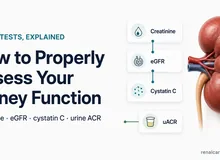
Background: How to properly assess kidney function. A dedicated chemotherapy renal-dosing calculator (carboplatin by Calvert with de-indexed eGFR, and renal adjustment tables) is planned as a separate, independently verified build.
Mechanisms, risk, prevention, and management
The agents differ in which nephron segment they injure, and that anatomy predicts the clinical picture. Proximal acute tubular injury (ATI) from cisplatin, ifosfamide, melphalan, or pemetrexed produces creatinine rise with electrolyte wasting and sometimes Fanconi syndrome; intratubular crystals (high-dose methotrexate) produce nonoliguric AKI with delayed drug clearance; endothelial injury (gemcitabine, mitomycin C) produces thrombotic microangiopathy (TMA) with hypertension, hematuria, and proteinuria.

Where each drug injures the nephron: vessel lining (TMA), proximal tubule (acute tubular injury and Fanconi syndrome), tubular lumen (crystals), and interstitium (interstitial nephritis and fibrosis). Original schematic, redrawn from the ADQI 34 pattern figure.
- TMA
- Thrombotic microangiopathy
- ATI
- Acute tubular injury
- MTX
- Methotrexate
- ADQI
- Acute Disease Quality Initiative
| Agent | Lesion and phenotype | Key risk factors (ADQI Table 2) | Prevention |
|---|---|---|---|
| Cisplatin | Proximal tubule (S3, outer medulla) acute tubular injury; magnesium and potassium wasting, salt wasting, Fanconi syndrome | Female sex, older age, smoking, hypoalbuminemia, reduced GFR, nephrotoxins, diabetes, heart failure, pre-existing hypomagnesemia | IV saline 2–4 L over 4–6 h; IV magnesium 8–16 mEq; avoid nephrotoxins; monitor |
| Ifosfamide | Proximal tubulopathy, Fanconi syndrome; rarely nephrogenic diabetes insipidus | Older age; platinum co-exposure; cumulative dose above 60 g/m² and prior nephrectomy (pediatric data) | Volume repletion; mesna for bladder only; frequent tubular-function monitoring; stop at first signs |
| Methotrexate (high dose) | Crystalline nephropathy, nonoliguric AKI, delayed drug clearance | Pre-existing kidney disease, volume depletion, acidic urine, interacting drugs, liver disease, hypoalbuminemia, third-space fluid | Hydration, urine alkalinization to pH above 7.1, level-guided leucovorin, glucarpidase for delayed clearance |
| Pemetrexed | Tubular injury progressing to chronic tubulointerstitial fibrosis | Prolonged therapy (cumulative exposure), reduced GFR, nephrotoxins | Folic acid 0.5 mg daily from 7 days before; vitamin B12 1,000 μg intramuscularly; monitoring |
| Gemcitabine | Type 1 TMA, often renal-limited; hypertension, hematuria, proteinuria | Multiple cycles (3–5 months); prior mitomycin C | No established prophylaxis; monitor blood pressure and hemolysis labs |
| Mitomycin C | Type 1 TMA and acute tubular injury | High cumulative dose; prolonged exposure; combination cytotoxics; hypertension; CKD; older age | Limit cumulative dose; no validated prophylaxis; monitor |
| Melphalan (high dose) | Acute tubular injury before autologous stem-cell transplant (ASCT) | Older age, proteinuria, reduced eGFR, hypoalbuminemia, nephrotoxins, atrial fibrillation, raised natriuretic peptides, autonomic dysfunction in light-chain (AL) amyloidosis | Volume repletion; dose adjustment; electrolyte and sediment monitoring |
Cisplatin
Mechanism. Cisplatin is taken up across the basolateral membrane of proximal tubular cells mainly by organic cation transporter 2 (OCT2) and copper transporter 1 (CTR1), with possible contributions from organic anion transporters 1 and 3, and is extruded apically by multidrug and toxin extrusion protein 1 (MATE1). Uptake that outpaces efflux concentrates the drug, which forms reactive thiol metabolites, cross-links nuclear and mitochondrial DNA, inhibits respiratory complexes (reactive oxygen species, adenosine triphosphate depletion), depletes glutathione, and triggers apoptotic and inflammatory signaling. The S3 segment in the outer medulla bears the brunt. Hypomagnesemia is both a consequence and, by enhancing tubular platinum handling, a risk factor.
Incidence and prediction. AKI is reported in roughly 20% to 45% of patients depending on definition and preventive practice. A stricter endpoint gives a clearer picture: in 24,717 adults receiving a first dose of intravenous cisplatin at six U.S. cancer centers, severe cisplatin-associated AKI (doubling of creatinine or KRT within 14 days) occurred in 5.2% of the derivation and 3.3% of the validation cohort. A simple nine-item score built from routine variables (age, hypertension, diabetes, current or former smoking, hemoglobin, white blood cell count, serum albumin, serum magnesium, and cisplatin dose; smoking applies to the simple score only, per the published correction) predicted risk monotonically; the highest category carried about 24-fold higher odds than the lowest in derivation (17.9-fold in validation), and the full model had a C statistic of 0.75. This is a validated prognostic tool, not yet an intervention trial: no study has shown that acting on the score changes outcomes.
Prevention, calibrated. Intravenous saline before and after the dose is standard and physiologically sound (higher tubular flow, lower luminal concentration). Magnesium supplementation is the best-supported adjunct: a meta-analysis of 15 observational studies (1,841 patients) found lower odds of cisplatin AKI with magnesium (odds ratio 0.24, 95% confidence interval [CI] 0.19–0.32). Because these were nonrandomized, confounding by protocol era and patient selection cannot be excluded; the effect is associated, not demonstrated. Mannitol is not supported: a multicenter target trial emulation in more than 24,000 adults found no benefit and more AKI with mannitol, so routine use is hard to justify outside protocols. Sodium-glucose cotransporter 2 (SGLT2) inhibitors reduce cisplatin uptake and nephrotoxicity in animal models; human evidence is lacking. Amifostine has some benefit but is limited by toxicity. Dose reduction, longer infusions, or switching to carboplatin can be considered in high-risk patients when oncologically acceptable.
Long-term course. Among 821 adults who survived at least five years after cisplatin, AKI (above 25% creatinine rise) occurred in 31.5%, the median early eGFR decline was 10 mL/min/1.73 m², fewer than 3% ever fell below 29 mL/min/1.73 m², and none were known to require dialysis. Most survivors therefore carry a small, permanent decrement, which matters when later drugs are dosed and when CKD risk factors accumulate.

Before a nephrotoxic cycle: document the GFR method, correct magnesium and potassium, plan hydration, remove nephrotoxins, and schedule monitoring.
- GFR
- Glomerular filtration rate
- NSAID
- Nonsteroidal anti-inflammatory drug
- PPI
- Proton pump inhibitor
- Mg
- Magnesium
- K
- Potassium
Ifosfamide
Ifosfamide enters proximal tubular cells via OCT2, where local metabolism yields chloroacetaldehyde, which inhibits mitochondrial complex I, depletes adenosine triphosphate, and impairs endocytosis, producing Fanconi syndrome (glycosuria with normal glucose, phosphaturia, aminoaciduria, bicarbonate and potassium wasting). Hepatic metabolism also yields acrolein, which causes hemorrhagic cystitis. Mesna neutralizes acrolein in the bladder but does not protect the kidney from chloroacetaldehyde. Fanconi syndrome occurs in up to about 30% of children. In adults, a prospective cohort of 259 patients showed a mean eGFR fall of about 15 mL/min/1.73 m² after initial exposure with continued gradual decline, and a French case series reported progression to kidney failure in 29%. There is no proven nephroprotectant; N-acetylcysteine helped in preclinical studies, but human data are inconclusive. Management is supportive: phosphate, bicarbonate, and potassium replacement, and dialysis for conventional indications (it does not remove the toxic metabolites). Ifosfamide encephalopathy is treated by stopping the infusion, with methylene blue with or without thiamine.
Pemetrexed
Pemetrexed is 70% to 90% renally excreted unchanged. It enters tubular cells basolaterally via the reduced folate carrier and apically via folate receptor-α, is polyglutamated and retained, and disrupts purine and pyrimidine synthesis. AKI occurs in about 21% of treated patients; 8.1% discontinued for nephrotoxicity in one cohort, and about half of patients on pemetrexed-bevacizumab maintenance in another stopped because of kidney injury. Risk rises with cumulative exposure, so this is a drug for which eGFR should be trended across cycles rather than checked as a pass/fail gate. ADQI Table 3 lists pemetrexed as contraindicated when CrCl is below 45 mL/min (the U.S. label gives no dose recommendation below this level); ADQI's text also cites eGFR below 30 as a contraindication, an internal inconsistency in the source that should be resolved toward the label threshold. Folate and vitamin B12 prophylaxis reduce hematologic toxicity; whether folinic acid rescues kidney injury is unproven. Pemetrexed is only partly removed by hemodialysis.
Melphalan (high dose)
High-dose melphalan before ASCT is associated with AKI in 7.7% to 29% (definitions vary), with dialysis in about 5%, mostly in myeloma and AL amyloidosis. Melphalan enters tubular cells via the L-amino acid transporter. Exposure is higher with reduced kidney function despite limited renal clearance, and baseline GFR below 60 mL/min is associated with delayed engraftment, more infections, diarrhea, and greater parenteral nutrition use; lower eGFR is also linked with more severe mucositis. IMWG considers high-dose therapy with melphalan 100–140 mg/m² feasible in renal impairment (grade C). Melphalan is not dialyzable, but administration should be separated from hemodialysis by at least 2 hours to reduce pharmacokinetic variability.
Crystals, clearance, and rescue
Physiology. Methotrexate and its metabolite 7-hydroxymethotrexate are cleared by glomerular filtration and saturable tubular secretion (uptake via organic anion transporters and the reduced folate carrier; apical efflux via multidrug resistance proteins 2 and 4 and breast cancer resistance protein). Both are weak acids that are poorly soluble at low urine pH; raising urine pH from 6.0 to 7.0 increases solubility five- to eightfold. At doses above 500 mg/m², intratubular precipitation, direct tubular toxicity, oxidative stress, and afferent vasoconstriction combine to produce AKI, which then slows methotrexate clearance and prolongs systemic exposure: a self-reinforcing loop whose extrarenal consequences (mucositis, myelosuppression, hepatotoxicity) are what make it dangerous.
Incidence. Reported AKI ranges from 2% to 50%; in lymphoma it was 21.6% and 15.6% in derivation and validation cohorts of a prediction model. Risk is raised by pre-existing kidney disease, volume depletion, urine pH below 7.0, third-space collections (pleural effusion, ascites), hypoalbuminemia, liver disease, variants in ABCC2, the gene encoding multidrug resistance protein 2 (MRP2), and drugs that impair secretion: nonsteroidal anti-inflammatory drugs (NSAIDs), penicillins, proton pump inhibitors (PPIs), trimethoprim-sulfamethoxazole, amiodarone, probenecid, imatinib, and valacyclovir.
Evidence for glucarpidase. In a sequential target trial emulation of 708 adults with methotrexate AKI at 28 U.S. cancer centers, 209 received glucarpidase within 4 days. Glucarpidase was associated with 2.70-fold higher adjusted odds of kidney recovery at discharge (95% CI 1.69–4.31), faster recovery (adjusted hazard ratio 1.88), and halved odds of grade 2 or higher neutropenia and transaminitis on day 7 (adjusted odds ratio 0.50 for each); time to death did not differ (adjusted hazard ratio 0.76, 95% CI 0.49–1.18). This is the strongest outcome evidence available, but it remains observational: the verb is associated, and residual confounding by indication is possible.
Extracorporeal removal. Methotrexate is moderately dialyzable; 6 hours of high-flux hemodialysis lowers plasma levels by about 63%, but rapid redistribution from cells causes rebound, so repeated sessions are needed. The EXtracorporeal TReatments In Poisoning (EXTRIP) workgroup suggested against extracorporeal treatment when glucarpidase is not given, and recommended against it when glucarpidase is given or as a substitute for glucarpidase, all on very low quality evidence. Rationale: methotrexate is largely intracellular, dialysis also removes folinic acid, and glucarpidase lowers levels faster than any extracorporeal method. Dialysis remains appropriate for conventional AKI indications.
Gemcitabine and mitomycin C
Drug-induced TMA from cytotoxics is type 1: dose-dependent, direct endothelial toxicity (with possible complement amplification), presenting late and with frequently incomplete renal recovery. Gemcitabine TMA typically appears after 2 to 6 months (ADQI text; its Table 2 says 3 to 5 months), occasionally up to 12, usually after multiple cycles and more often after prior mitomycin C; incidence is about 0.3% to 1.4% (ADQI Table 2; the text cites 0.015% to 1.4%). Mitomycin C TMA (historically, mitomycin-associated hemolytic uremic syndrome [HUS]) is dose-related: under 3% below 50 mg/m² cumulative in one prospective cohort, rising to 28% at 70 mg/m² or more; ADQI's Table 2 cites an incidence of 4% to 15% in the context of high cumulative dose (it is not explicit whether this is the overall or the high-dose rate), with onset 8 to 12 weeks after dosing and rarely up to 12 months. Type 2 TMA, linked to vascular endothelial growth factor (VEGF) pathway inhibitors and proteasome inhibitors, is not dose-dependent and tends to appear earlier.
Recognition. New or worsening hypertension, rising creatinine, hematuria, and proteinuria, with or without systemic microangiopathic hemolytic anemia (falling hemoglobin, schistocytes, high lactate dehydrogenase, low haptoglobin, thrombocytopenia). Renal-limited TMA is easy to miss when blood counts are confounded by chemotherapy itself; a kidney biopsy is diagnostic when safe.
Management. Stop the drug, permanently for mitomycin C. Control blood pressure (renin-angiotensin blockade is reasonable on mechanistic grounds), treat AKI supportively, and dialyze for conventional indications. For gemcitabine TMA, ADQI states that corticosteroids and plasma exchange have no proven benefit. Eculizumab has been used in refractory cases; in reported gemcitabine-associated TMA series, hematologic remission exceeded 80%, with complete and partial renal remission in 17% and 67%. These are uncontrolled case series and the timing and true effect of complement blockade remain unknown. For mitomycin C, plasma exchange has been used empirically with variable results.
Differential and complement work-up: Complement-mediated kidney disease: TMA.
Dose adjustment in reduced kidney function and around dialysis
The table reproduces ADQI 34 Table 3 as published. Note that its thresholds use creatinine clearance, the legacy metric of most product labels. ADDIKD recommends eGFR-based (BSA-adjusted) assessment instead, and for cisplatin and high-dose methotrexate tailors the adjustment to treatment intent. Where the two differ, the difference is shown.
| Agent | Reduced GFR (ADQI 34, CrCl-based) | Dialysis | ADDIKD perspective |
|---|---|---|---|
| Cisplatin | CrCl 50 to <60: ↓ about 25%; 40 to <50: ↓ about 50%; <40: avoid | Avoid; if used, give after hemodialysis with dose ↓ about 50%. Hemodialysis removes only free drug early. | Avoid at eGFR <45. Curative intent, good performance status, ≤50 mg/m², no nephrotoxins: full dose at eGFR 45–59. Measure GFR before high-dose cisplatin. |
| Ifosfamide | CrCl 46–60: ↓ about 20%; 31–45: ↓ about 25%; <30: ↓ about 30% | Not recommended; some removal | — |
| Methotrexate (high dose) | Regimen-specific; for example, in hyper-CVAD (cyclophosphamide, vincristine, doxorubicin, dexamethasone) for acute lymphoblastic leukemia, creatinine 1.5–2 mg/dL: ↓ about 25%; >2 mg/dL: ↓ about 50% | Not recommended | Measured GFR at baseline (strong recommendation). Curative intent (for example, primary central nervous system lymphoma) with good performance status: full dose at eGFR or measured GFR 45–59. |
| Pemetrexed | Contraindicated if CrCl <45 | Limited data; generally avoid; only partly dialyzable | — |
| Gemcitabine | CrCl <30 increases hematologic toxicity; no standard adjustment | Give, then hemodialysis 6–12 hours later (the inactive metabolite is dialyzable) | — |
| Mitomycin C | CrCl <30: avoid | Not removed | — |
| Melphalan (high dose, ASCT conditioning) | CrCl 30–59: 200 → 140 mg/m² (or full dose); <30: 140 mg/m² | Not dialyzable; give after hemodialysis, separated by at least 2 hours | — |
| Carboplatin | Dosed by Calvert: dose (mg) = target AUC × (GFR + 25) | Formula still applies; with negligible GFR, dose is driven by the nonrenal term; timing relative to dialysis must follow an institutional protocol | Measured GFR preferred; otherwise BSA-adjusted CKD-EPI eGFR, not Cockcroft-Gault. Cap estimated GFR at 125 mL/min (FDA). |
The "25" in the Calvert formula is the nonrenal clearance term. In the 1989 prospective study (31 patients, GFR 33–135 mL/min, target AUC 3–8 mg/mL·min), an earlier version of the formula was tested and then refined to (GFR + 25) using those data. Several lower-dose reduction values above are expert-derived; none comes from randomized trials, because patients with reduced kidney function were routinely excluded from anticancer drug trials.
Checkpoint inhibitors, VEGF-pathway drugs, and tumor lysis
ADQI 34 deliberately excluded immunotherapy and targeted agents. Three points are essential enough to state briefly here, each from a separately verified source.
Immune checkpoint inhibitor (ICI) AKI. In a multicenter study of 138 patients with ICI-associated AKI (creatinine doubling or new dialysis) and 276 controls, lower baseline eGFR, proton pump inhibitor use, and combination ICI therapy were independently associated with AKI. Median onset was 14 weeks (interquartile range 6–37). Acute tubulointerstitial nephritis was the dominant lesion in 93% of 60 biopsies, and 69% of all 138 patients were also taking a drug known to cause interstitial nephritis. Most (86%) received corticosteroids; recovery was complete in 40%, partial in 45%, and absent in 15%, and failure to recover was associated with higher mortality. ICI rechallenge occurred in 22%, with recurrent AKI in 23% of those rechallenged. Reasonable practical implications: stop or switch PPIs where possible, consider biopsy when the diagnosis is uncertain, and use corticosteroids, which were associated with better renal prognosis.
VEGF-pathway inhibitors (bevacizumab, VEGF-receptor tyrosine kinase inhibitors [TKIs]) cause hypertension and proteinuria and can cause renal-limited type 2 TMA, mechanistically through loss of podocyte-derived VEGF signaling to the glomerular endothelium. Monitor blood pressure and urine protein at each cycle.
Tumor lysis syndrome (TLS) results from rapid release of potassium, phosphate, and nucleic acids (metabolized to uric acid) from bulky, rapidly proliferating, chemosensitive tumors. AKI follows from uric acid and calcium phosphate precipitation and from other mechanisms. Prevention is risk-stratified: hydration for all at risk, allopurinol for intermediate risk, and rasburicase for high risk (contraindicated in glucose-6-phosphate dehydrogenase deficiency). Urine alkalinization is no longer routine because it promotes calcium phosphate deposition.
What is settled, what is open, and survivorship
| Question | Current position |
|---|---|
| Should cancer patients be dosed by Cockcroft-Gault CrCl? | No, per ADDIKD and KDIGO: use eGFR (de-indexed for dosing) and measure GFR when the decision is high-stakes. Many labels and order sets still use CrCl. |
| Does magnesium protect against cisplatin AKI? | Associated with lower AKI in observational studies; no randomized trial. |
| Do SGLT2 inhibitors prevent cisplatin nephrotoxicity? | Mechanistic and animal data only; human trials needed. |
| Does mannitol help? | No benefit and more AKI in a large target trial emulation; not recommended routinely. |
| Does glucarpidase improve outcomes in methotrexate AKI? | Associated with better kidney recovery and less extrarenal toxicity in a large target trial emulation; no survival difference. |
| Is there a role for dialysis to remove methotrexate? | EXTRIP recommends against it when glucarpidase is used, and suggests against it otherwise (very low quality evidence). |
| Are early biomarkers (neutrophil gelatinase–associated lipocalin [NGAL], kidney injury molecule-1 [KIM-1]) ready for routine use? | Not yet; they may detect tubular injury earlier but are not validated to change management. |
| Does eculizumab treat chemotherapy-associated TMA? | Case series only; timing and benefit uncertain. |
ADQI's research agenda prioritizes a modular, drug-class–specific risk score embedded in electronic health records, validated oncology AKI prediction models, randomized trials of nephroprotectants (magnesium, cilastatin, SGLT2 inhibitors), genetic predisposition (OCT2 polymorphisms), and long-term outcome data, particularly for melphalan in AL amyloidosis and pre-existing CKD.
Survivorship. Because cisplatin and ifosfamide leave many survivors with a permanent eGFR decrement and persistent tubular wasting, treat them as people with kidney risk: annual eGFR, urine albumin-to-creatinine ratio (UACR), blood pressure, and magnesium, more often after an AKI episode, with standard CKD care when criteria are met. AKI does not end at discharge outlines the 90-day pathway.
Making this work in the Philippines
- Kidney function method. Many oncology order sets still dose by Cockcroft-Gault CrCl. Reporting a BSA-adjusted CKD-EPI eGFR alongside it, and requesting cystatin C in cachectic or bedridden patients where the laboratory offers it, is an inexpensive step toward ADDIKD practice. Measured GFR (for example, 99mTc-DTPA plasma clearance) is offered by some nuclear medicine units; ask before scheduling high-dose methotrexate or curative-intent carboplatin.
- Methotrexate levels. Confirm before admission that 24-hourly plasma methotrexate levels with same-day results are available; high-dose methotrexate without timely levels removes the key safety signal.
- Glucarpidase. As of November 2026 we could not find a Philippine Food and Drug Administration registration for glucarpidase. Access, if needed, is likely to require special importation, which takes longer than the 48–60 hour window. Check the current status on the FDA Philippines verification portal and with your hospital pharmacy before scheduling high-dose methotrexate. Prevention (hydration, alkalinization, drug-interaction review, levels, leucovorin) therefore carries more weight locally.
- Magnesium and electrolytes. Intravenous magnesium sulfate and oral magnesium are widely available and inexpensive; build them into cisplatin order sets.
- Over-the-counter nephrotoxins. Mefenamic acid and other NSAIDs, and herbal "detox" products, are easily bought without prescription. Ask about them explicitly at every cycle.
- Financing. Philippine Health Insurance Corporation (PhilHealth) Z Benefit packages cover selected cancers, and the Cancer Assistance Fund (Section 20 of the National Integrated Cancer Control Act, Republic Act 11215) supports medicines, treatment, and related diagnostics; the Department of Health and Department of Budget and Management implementing guidelines limit it to eight priority cancer types. Eligibility and package contents change, so confirm with the hospital's PhilHealth and social service offices. See PhilHealth Z packages.