Symptoms, Graft Dysfunction, and Urgent Escalation
Why delay matters, a disciplined urgent contact, routing within scope, and closing the loop.
PublishedNailathalaGipatikPepalwal:ReferencesMga SanggunianMga TinubdanReng Reperensya:3Audience: Clinical transplant coordinators (usually registered nurses) and coordination-support staff in Philippine kidney transplant programs · Z Benefits coordinators · transplant and dialysis staff who refer, prepare, or follow recipients and living donorsRead timeOras ng pagbasaOras sa pagbasaOras ning pamamasa:
Training track for the people who navigate kidney recipients and living donors
This module is study material for kidney transplant coordinators and coordination-support staff. It explains the reasoning behind coordination decisions; it is not a hospital protocol, legal advice, or a benefits ruling. Rules and rates change: confirm every rule against the current issuance and your facility’s approved policy. Medical decisions belong to the transplant team, donation ethics to the ethics committee, and benefits to PhilHealth. Every case, name, and identifier is fictional.
Learning objectives
After this module you should be able to
Explain, in plain words, why delay matters after transplant: rejection, infection, and missed medicines.
Recognize the symptoms and situations that need same-day or emergency clinical review, for recipients and donors.
Route an urgent call within scope, using the program’s protocol, and never give clinical advice outside it.
Close the loop: confirm receipt, action, and the patient’s understanding, then document.
Classroom 2 hSkills lab 2 hSupervised placement 2 h
Pre-testBefore you read, answer the 5 self-assessment questions and note your score. After the module, select New set of questions and compare. The difference is what you learned; the questions you still miss are what to reread.
Start here
The big picture, in plain words
In plain wordsAfter a transplant, the new kidney is like a newly planted tree in dry season. Most days it grows quietly. But when something threatens it — a pest, a missed watering, a storm — the signs are small at first, and by the time the leaves wilt, the damage is harder to undo. The gardener who acts on small signs saves the most trees.
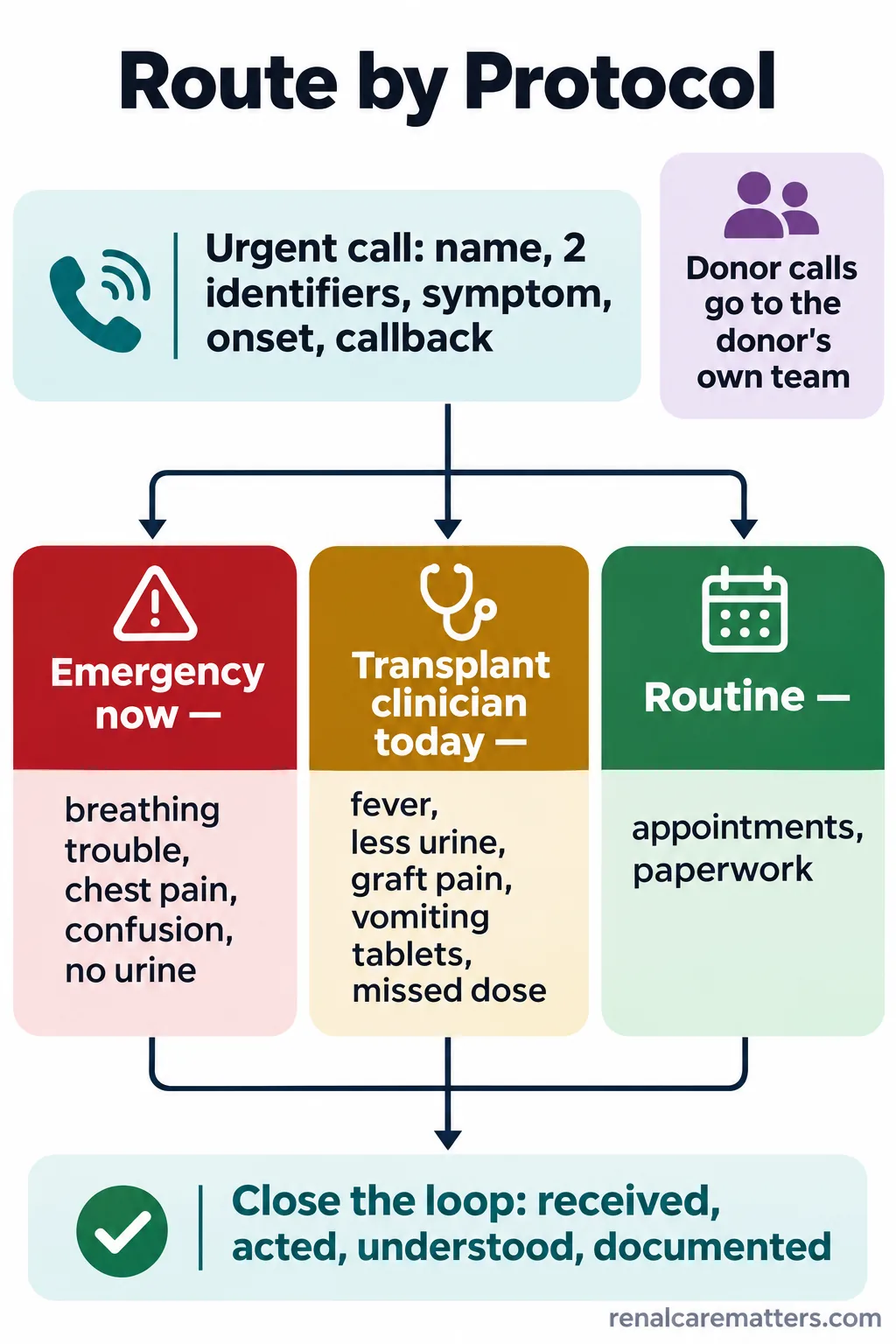
Figure 1. Route by protocol, then close the loop with the caller.
The picture has a limit. A tree does not fight back against itself. A transplanted kidney faces three kinds of threat at once: the recipient’s immune system (rejection), infections made more likely by the medicines that prevent rejection, and gaps in those medicines. All three can start quietly. Fever, less urine, swelling, pain over the kidney, vomiting that stops tablets from staying down, diarrhea that changes drug levels, or a rising creatinine on a routine test can each be the first sign.
Kidney Disease: Improving Global Outcomes (KDIGO)’s recipient guideline frames post-transplant care around early detection: frequent monitoring of kidney function early on, and prompt evaluation of a rise.1 Your job is to make sure the right clinician hears about a warning sign quickly, and that the loop closes. Clinical coordinators may take a structured history under protocol; support staff route at once. Nobody in this role diagnoses or advises outside protocol.
Figure 2 · Key terms for this module
RejectionThe immune system attacking the transplanted kidney; often silent at first and treatable when found early.
Graft dysfunctionThe kidney working less well, from any cause.
CreatinineA blood test the team uses to follow kidney function.
Urgent-call protocolThe program’s written list of symptoms and where each is routed: emergency now, transplant team today, or routine.
Closed loopReceipt, action, and the patient’s understanding confirmed and documented.
Opening case · fictional
Case: Three calls before noon
It is Tuesday morning at the transplant clinic.
9:05 a.m. Mrs. Corazon Lopez, 50, two weeks after transplant, calls: since last night she has had a fever of 38.4 °C and is passing less urine than usual.
9:40 a.m. Mr. Rodel Aquino, 35, eight months after transplant, texts: he has been vomiting since early morning and could not keep his tablets down. He asks whether he should “just take them tomorrow.”
11:15 a.m. Mr. Ben Garcia, Mrs. Lopez’s brother and her donor, one week after nephrectomy, calls separately: his abdominal pain has been getting worse for two days and he feels feverish.
Before reading on, decide:
Where does each call go, and how fast?
What do you say to Mr. Aquino about tomorrow’s tablets?
Whose team handles Mr. Garcia, and what must you avoid?
Keep your answers in mind. The lesson gives you what you need, and the case review near the end shows one sound response.
Lesson · part 1
Three threats that start quietly
Threat
What happens
What you may hear
Rejection
The immune system attacks the kidney; often found first as a rise in creatinine
Usually nothing; sometimes less urine, swelling, tenderness over the kidney, fever
Infection
Immunosuppression lowers defenses; infections can progress fast
Fever, chills, cough, painful urination, diarrhea
Missed or low medicines
Vomiting, diarrhea, running out, or skipping lowers drug levels, which can trigger rejection
“I couldn’t keep my tablets down,” “I ran out,” “I stopped one”
Surgical problems
Leaks, bleeding, blocked flow, especially early
Pain, swelling at the wound, much less urine
Nonadherence is associated with a large share of graft losses (Module 15),2 and rejection treated early generally has a better chance of recovery than rejection found late. That is the whole case for urgency: the earlier the team knows, the more options it has.
RememberAfter transplant, a small sign can be the first sign. Route it the same day; let the team decide what it means.
Lesson · part 2
Protocol, not advice
Every program needs a written urgent-call protocol that lists symptoms and their routes, and every coordinator keeps it by the phone. A simple structure:
Route
Examples (the program’s protocol is the authority)
Emergency now
Difficulty breathing, chest pain, confusion, fainting, severe bleeding, no urine
Transplant clinician today
Fever, less urine, new pain or swelling over the kidney, vomiting or diarrhea that stops medicines, a missed immunosuppressant, a rising creatinine reported by a laboratory
Routine
Questions about appointments, paperwork, or stable symptoms the protocol lists as routine
Take down the caller’s name, two identifiers, the symptom in their words, when it started, and a callback number. Clinical coordinators assigned to do so may ask the protocol’s structured questions. Support staff route at once to the on-call clinician and do not ask clinical questions beyond the protocol’s first screen.
Never tell a caller to take, skip, delay, or double a medicine, or to “wait and see,” unless that exact advice is in the protocol you are authorized to use. “Just take them tomorrow” can be the wrong answer, and only a clinician can give the right one.
RememberRoute by protocol, take a callback number, and never give medicine advice outside protocol.
Lesson · part 3
The donor has their own team
Donors can develop complications after nephrectomy: wound infection, bleeding, bowel problems, or chest infection, mostly in the first weeks.3 A donor’s urgent call goes to the donor’s surgical or donor team, not to the recipient’s team, and the donor’s information stays in the donor’s record. If donor and recipient call about the same day’s worries, treat them as two calls, two logs, two routes.
On the floor · Two calls from one house
A recipient and her donor husband call within ten minutes of each other, both feverish. Coordinator Mr. Jun Santos opens two urgent-call log entries, routes the recipient to the transplant clinician and the donor to the donor surgical team, and calls each back separately with their own plan.
The recipient is admitted for review; the donor is seen the same afternoon in the surgical clinic.
Living in one house did not make them one patient.
Illustrative scenario. Names and details are invented.
RememberDonor calls go to the donor’s team. Two people, two logs, two routes.
Lesson · part 4
From call to confirmed plan
An urgent call is closed only when four things have happened and been written down:
Figure 3 · A closed urgent call
ReceivedThe clinician confirms they have the message, with the time.
ActedThe clinician gives a plan: come in now, go to emergency, a test, a medicine instruction.
UnderstoodThe patient repeats the plan back to you or the clinician.
DocumentedThe log shows times, who decided, the plan, and the follow-up check.
A text, a voicemail, or a message in a group chat is dispatch, not closure. If the clinician does not respond within the protocol’s time, escalate to the backup on the list. Check later that the patient actually arrived or did what was planned.
Trends matter too. The site’s allograft eGFR trend tool is a clinician tool for following kidney function over time; coordinators make sure routine results reach the team and that an abnormal result triggers a call, not a filing.
RememberReceived, acted, understood, documented. Anything less is an open urgent call.
On the floor
Real situations: problems and solutions
These are fictional but typical. For each one, cover the answer, decide what you would do, then compare. Where a step depends on local rules, your unit’s procedure and your supervisor’s direction come first.
The text at midnight
What you see
A recipient texts at midnight about fever.
What is likely going on
An urgent symptom outside clinic hours.
What to do
Follow the after-hours route; tell them to use the emergency or on-call number now.
Why it matters
Texts can sit unread until morning.
“Just a cold”
What you see
A recipient says it is “just a cold” and declines review.
What is likely going on
Minimizing.
What to do
Route to the clinician per protocol; explain why.
Why it matters
Infections progress faster on immunosuppressants.
The lab calls you
What you see
The laboratory phones a sharply higher creatinine.
What is likely going on
A possible rejection or other problem.
What to do
Read back and route to the transplant physician at once.
Why it matters
Early action protects the graft.
Field notes
Keep the protocol by the phone.
Take a callback number on every call.
Give no medicine advice outside protocol.
Close every urgent loop in four steps.
Case review
Back to the case: Three calls before noon
Mrs. Lopez (9:05). Fever and less urine two weeks after transplant: transplant clinician today, now, under protocol. Take her details and a callback number, route at once, and confirm the plan with her. If she has any emergency sign, emergency route.
Mr. Aquino (9:40). Vomiting with missed immunosuppressants: transplant clinician the same day. Tell him you are getting a doctor’s instruction now, and do not tell him to take them tomorrow, double up, or skip. Close the loop when he has the clinician’s instruction and repeats it back.
Mr. Garcia (11:15). Worsening abdominal pain and fever one week after nephrectomy: the donor surgical team, urgently, under protocol. Open a separate log in his record. Do not route him through his sister’s team and do not share his call with her.
Skills lab · with your preceptor
Skills checklist: Urgent-call routing
Take three simulated urgent calls, including one from a donor, while your preceptor observes. Your preceptor rates each step as satisfactory, needs practice, or not observed. Steps marked Critical must all be satisfactory before sign-off. This checklist supports supervised learning; your unit’s own procedure and competency form are the authority. A printable version of every checklist is on the trainer page.
Records name, two identifiers, symptom in the caller’s words, onset, and callback number.
CriticalRoutes each call by the protocol to emergency, same-day clinician, or routine.
CriticalGives no medicine advice outside the protocol, including to a caller who asks to delay doses.
CriticalRoutes a donor’s call to the donor’s team in a separate log.
CriticalCloses each loop: received, acted, understood, documented.
Escalates to the backup when a clinician does not respond in time.
Placement activity. Review your program’s urgent-call protocol. Audit five recent urgent calls for each of the four closure steps.
Self-assessment
Check your understanding
Each visit draws 5 questions at random from this module’s 10-question bank. Choose the single best answer for each, then select Check answers; an explanation appears under the best answer. Select New set of questions for a different mix. A good target is 4 of 5 on two different sets. Nothing you select is sent anywhere; scoring happens in your browser.
Kidney Disease: Improving Global Outcomes Transplant Work Group. (2009). KDIGO clinical practice guideline for the care of kidney transplant recipients. American Journal of Transplantation, 9(Suppl 3), S1–S155. https://doi.org/10.1111/j.1600-6143.2009.02834.x
Butler, J. A., Roderick, P., Mullee, M., Mason, J. C., & Peveler, R. C. (2004). Frequency and impact of nonadherence to immunosuppressants after renal transplantation: A systematic review. Transplantation, 77(5), 769–776. https://doi.org/10.1097/01.tp.0000110408.83054.88
Lentine, K. L., Lam, N. N., Axelrod, D., Schnitzler, M. A., Garg, A. X., Xiao, H., Dzebisashvili, N., Schold, J. D., Brennan, D. C., Randall, H., King, E. A., & Segev, D. L. (2016). Perioperative complications after living kidney donation: A national study. American Journal of Transplantation, 16(6), 1848–1857. https://doi.org/10.1111/ajt.13687
Educational material for transplant coordination staff. Completing it is an Academy learning record only. It is not a DOH-recognized training credit, a PhilHealth requirement, a certification, or CPD units, and it does not appoint anyone as a donor advocate or confer any clinical authority.