Integrated Case Conference and Readiness for Practice
Running a case conference, the integrated case, readiness and limits, and your development plan.
PublishedNailathalaGipatikPepalwal:Audience: Registered social workers in dialysis units, hospital medical social work departments, and kidney transplant programs · medical social workers rotating into kidney care · navigation and support staff on the orientation pathRead timeOras ng pagbasaOras sa pagbasaOras ning pamamasa:
This module is study material for social workers and navigation staff in kidney care. It explains the reasoning behind social work decisions; it is not a facility procedure, legal advice, a benefits ruling, or a mental health diagnosis. Rules, assistance programs, and amounts change: confirm them against the current issuance and your facility’s approved policy. Medical treatment belongs to the nephrologist, benefits to PhilHealth, donation ethics to the ethics committee, and psychiatric diagnosis to the mental health team. Every case, name, and identifier is fictional.
Learning objectives
After this module you should be able to
Prepare and present a case at a multidisciplinary conference with a formulation, the person’s goals, and specific requests.
Integrate assessment, benefits, distress, safety, caregiving, modality, and continuity work for one family across a year.
Identify which decisions in a complex case belong to which professional, and close every loop.
Judge your own readiness for independent practice honestly, and name your limits and the supervision you need.
Write a personal development plan for your first year in kidney care.
Classroom 1 hSkills lab 1 hSupervised placement 0 h
Pre-testBefore you read, answer the 5 self-assessment questions and note your score. After the module, select New set of questions and compare. The difference is what you learned; the questions you still miss are what to reread.
Start here
The big picture, in plain words
In plain wordsA case conference is like a barangay assembly about one family’s house after a storm. The carpenter, the electrician, the plumber, and the family each see a different part of the damage. The house gets fixed only if someone lays out the whole picture, the family says what they need most, and each person leaves knowing exactly which part is theirs.
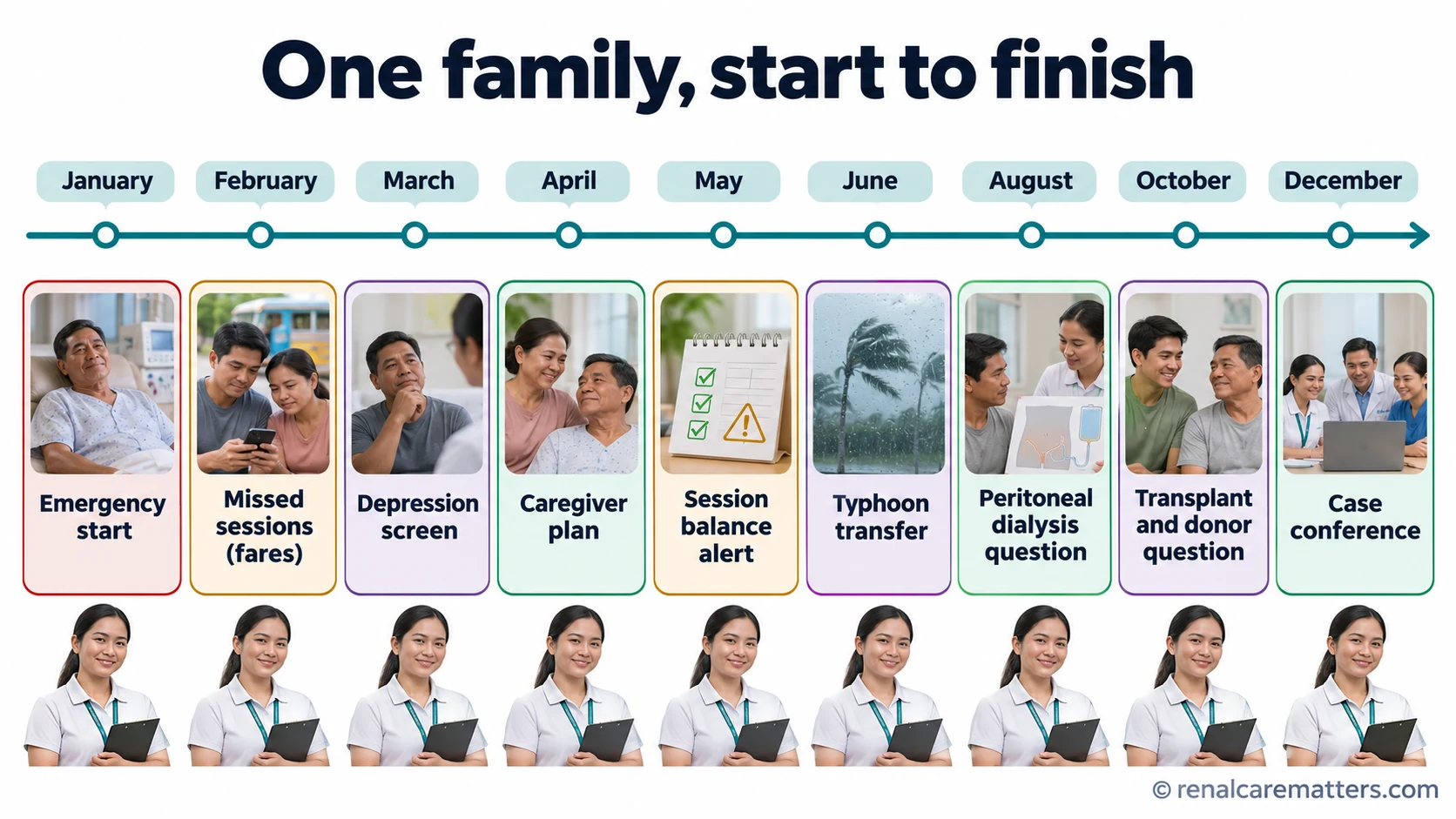
Figure 1. One family, start to finish. The integrated case brings every module together.
The picture has a limit. A house stays still while people discuss it. A family’s situation keeps moving: by the time the conference meets, a benefit has run out or a caregiver has fallen ill. So the conference is not the end of the work; it is a checkpoint where the team agrees the plan for the next stretch, with owners and dates, and the social worker carries the threads between meetings.
This module brings the course together in one fictional family over a year, and then turns to you: what you are ready to do alone, what you still need supervision for, and how you will keep learning. Completing this track is an Academy learning record, not a license or a specialty credential. Your registration, your employer’s appointment, and your supervisor’s judgment decide what you may do.
Figure 2 · Key terms for this module
Case conferenceA multidisciplinary meeting to review a person’s situation and agree a plan.
PresentationA short structured account: who, goals, formulation, what has been done, and specific requests.
IntegrationBringing together work across domains so that plans do not contradict each other.
ReadinessThe ability to do a task safely alone, judged by a supervisor against observed practice.
Scope limitA task you should not do alone yet, or at all.
Development planYour written learning goals, methods, and dates for the coming year.
Opening case · fictional
Case: The Dizon family, start to finish
You have followed Mr. Romeo Dizon, 58, and his wife, Aling Nena, for a year. In January he started hemodialysis after an emergency admission, through a neck catheter. In March he missed sessions over fares and the household lost Aling Nena’s market income. In May his Patient Health Questionnaire-9 (PHQ-9) was 16 (item 9 zero); he started talking therapy through the hospital’s psychiatry service. In July Aling Nena told you she was exhausted; their daughter Ella, 15, had missed school. In September an admission used extra sessions, and his Philippine Health Insurance Corporation (PhilHealth) balance projected to run out in late December. In October a typhoon closed the unit for three days. In November he asked about peritoneal dialysis and about whether his younger brother could donate a kidney.
The nephrologist asks you to present the family at the monthly case conference on Thursday, with the nurse, dietitian, peritoneal dialysis nurse, and transplant coordinator present.
Before reading on, decide:
How will you structure a five-minute presentation?
What decisions do you need from whom?
What has to be in place before the end of December?
Keep your answers in mind. The lesson gives you what you need, and the case review near the end shows one sound response.
Lesson · part 1
Five minutes, three requests
Team members have many cases and little time. A good presentation gives them the whole picture in five minutes and ends with specific requests. A rambling story ends with nothing decided.
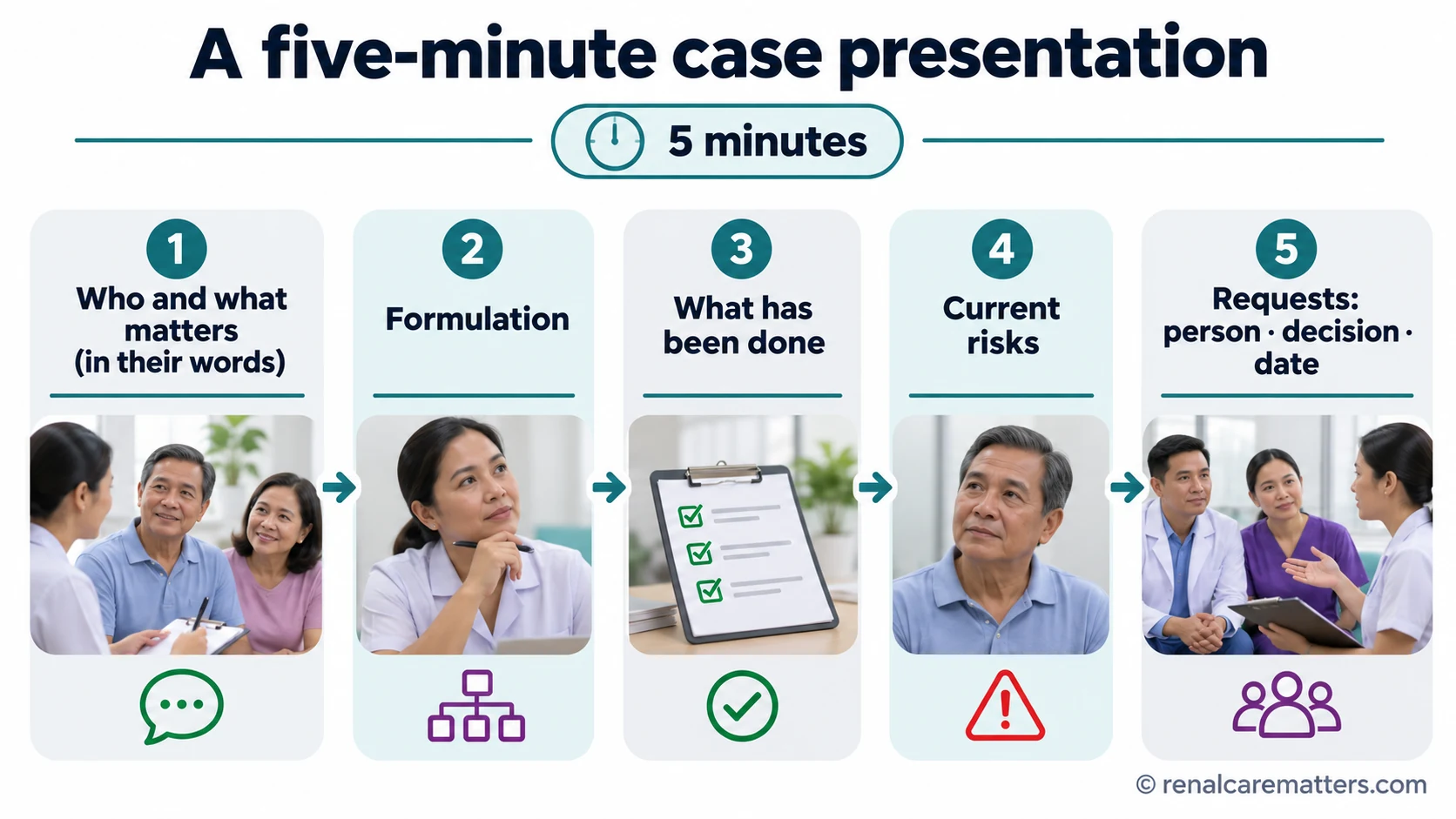
Figure 3. Open with the person’s goal; close with requests to named people.
Figure 4 · A five-minute case presentation
Who and what mattersName, age, treatment, and the person’s own goal in their words.
FormulationTwo to four sentences on why things are as they are (Module 5).
What has been doneKey actions and their outcomes, not a diary.
Current risksSafety, clinical red flags, financial cliffs, caregiver strain.
RequestsEach one to a named person, with a date.
Prepare the person for the conference too. Ask what they want the team to hear, whether they want to attend, and what they do not want discussed. Their goals and words should open the presentation, not close it.
After the meeting, write the decisions, owners, and dates in the record, tell the person and family what was decided, and add each action to your referral tracking (Module 6).
RememberOpen with the person’s goal, explain with a formulation, close with specific requests to named people.
Lesson · part 2
One plan, not seven
Over a year, a family collects plans from many directions: a benefit plan, a mood plan, a caregiver plan, a transport plan, a modality discussion, a transplant inquiry, a disaster plan. If each lives in a separate note, they will contradict each other. Integration means one current plan that a colleague can read in two minutes.
Domain
Module
Current state
Next action and owner
Goals
1, 5
“To be there for Ella’s graduation and not be a burden”
Revisit at every review (social worker)
Benefits
7
Sessions projected to run out late December
Plan the gap now (social worker, claims officer)
Assistance and access
8, 9
Fare covered by a shared ride; income halved
Assistance for the December gap; livelihood options for Aling Nena
Mood
10
In talking therapy; PHQ-9 to recheck
Rescreen; liaise with psychiatry
Caregiver and child
13
Backup plan in place; Ella back in school
Check on Aling Nena’s own health
Modality
14
Interested in peritoneal dialysis
Nephrologist and peritoneal dialysis nurse assess; home visit
Transplant and donor
15
Brother may wish to donate
Transplant team; donor evaluated separately and privately
Continuity
17
Missed no sessions in the typhoon
Update the emergency plan
Advance care planning
16
Not yet discussed
Offer the conversation, with his permission
RememberKeep one current integrated plan. Each domain has a state, a next action, and an owner.
Lesson · part 3
What you may do alone
Readiness is not a feeling; it is a judgment your supervisor makes from watching you work. This track ends with six observed stations and a supervised practicum for that reason. A high written score cannot make up for a safety failure (see the trainer page).
Area
Ready to do alone when…
Still needs supervision when…
Assessment and formulation
Your formulations are accurate and checked with patients
Cases with safety concerns, complex families, or legal issues
Benefits and assistance
You explain by version and date and never promise
New circulars, disputes, unusual cases
Distress and safety
You ask item 9 and follow the safety pathway every time
Any active risk, any request to stop dialysis
Donor protection
You interview donors privately and route signals correctly
Any coercion or trafficking signal
Counseling
Supportive counseling and problem solving within competence
Psychotherapy, which needs its own training and is outside this course
Know your scope limits. You do not diagnose psychiatric illness, prescribe, decide claims, select transplant candidates, or provide specialist psychotherapy without the training for it. Saying “that is beyond my role; here is who can help” is a professional skill, not an admission of weakness.
RememberReadiness is judged by observed practice. Name your scope limits out loud and keep supervision for safety and complex cases.
Lesson · part 4
The first year
Close the course with a written plan for your first year: what you will learn, how, and by when. Keep it short and concrete, and review it with your supervisor every three months.
Goal
How
Evidence
By
Confident with benefit navigation
Two hours a month with the claims officer; read each new circular
A dated source register
3 months
Skilled in motivational conversations
Practice and recorded feedback in supervision
Supervisor’s observation notes
6 months
A working assistance map for the area
Visit each office; record requirements and decision times
The map, updated quarterly
3 months
A measured service
One measure on a run chart (Module 19)
Six months of data
6 months
Further training where needed
A recognized course in an area such as grief or trauma-informed care
Certificate from the provider
12 months
The rules you work with will change. Benefits, assistance programs, and forms are revised; this course itself will be reviewed annually. Keep your own source register dated, and when you find that something here has changed, tell the course owner.
RememberWrite a short development plan with goals, methods, evidence, and dates, and review it with your supervisor every three months.
On the floor · The first-year review
After her first year, social worker Ms. Bea Lorenzo reviews her plan with her supervisor. Four goals are met; the motivational conversation goal is not.
They agree on monthly recorded role-plays for the next quarter. She also adds a new goal: setting up a caregiver support group.
A development plan is useful because it shows what is not yet done.
Illustrative scenario. Names and details are invented.
On the floor
Real situations: problems and solutions
These are fictional but typical. For each one, cover the answer, decide what you would do, then compare. Where a step depends on local rules, your unit’s procedure and your supervisor’s direction come first.
The ten-minute monologue
What you see
A presenter tells a family’s whole history and ends without a request.
What is likely going on
No structure.
What to do
Use the five-minute format: goal, formulation, actions, risks, requests.
Why it matters
Specific requests get decisions.
Contradicting plans
What you see
The benefit plan says “apply for hemodialysis assistance” while the modality plan says “starting peritoneal dialysis next month.”
What is likely going on
Plans kept in separate notes.
What to do
Keep one integrated plan and update every domain when one changes.
Why it matters
Integration prevents wasted work and confusion.
The confident new worker
What you see
A new social worker wants to handle donor interviews alone in the first month.
What is likely going on
Confidence ahead of observed readiness.
What to do
Agree supervised practice and observation first, with a date to review.
Why it matters
Readiness is judged from watched practice, not feeling.
Field notes
Prepare the person before a case conference: ask what they want the team to hear.
Review your development plan with your supervisor every three months.
Case review
Back to the case: The Dizon family, start to finish
The five-minute presentation. “Mr. Romeo Dizon, 58, on hemodialysis since January; his goal is to be at his daughter’s graduation and not be a burden. Formulation: an emergency start and the loss of his wife’s income drove missed sessions and depression; both have improved with a shared ride and talking therapy, but the household is fragile, and his PhilHealth sessions will run out in late December. Risks: the December gap; his wife’s own health. Requests below.”
Decisions from whom. The nephrologist and peritoneal dialysis nurse: is he a candidate for peritoneal dialysis, and can a home visit be booked? The transplant coordinator: start his evaluation, and arrange a separate, private evaluation for his brother if the brother wishes. The claims officer: confirm his session count and what the unit will charge after the limit. The dietitian: a check on his weight and diet now that money is tight. The nephrologist: a goals-of-care conversation in the coming months.
Before the end of December. A funded plan for the sessions after the PhilHealth limit (assistance applications decided, not just submitted); a recheck of his mood; a check on Aling Nena’s blood pressure; an updated emergency plan; and every action from the conference tracked to an outcome.
Skills lab · with your preceptor
Skills checklist: A case conference presentation and a development plan
Present a fictional integrated case at a simulated conference and present your development plan to your supervisor. Your preceptor rates each step as satisfactory, needs practice, or not observed. Steps marked Critical must all be satisfactory before sign-off. This checklist supports supervised learning; your unit’s own procedure and competency form are the authority. A printable version of every checklist is on the trainer page.
Presents a case in five minutes, opening with the person’s goal.
Gives a formulation and current risks, not a diary of events.
Makes specific requests to named professionals with dates.
Keeps one integrated plan across all domains with owners.
CriticalNames the decisions that belong to other professionals in the case.
CriticalStates personal scope limits and the supervision still needed.
Writes a development plan with goals, methods, evidence, and dates.
Placement activity. Present one of your own supervised cases (with consent and using your facility’s approved process) at a team meeting, and agree your development plan with your supervisor.
Self-assessment
Check your understanding
Each visit draws 5 questions at random from this module’s 10-question bank. Choose the single best answer for each, then select Check answers; an explanation appears under the best answer. Select New set of questions for a different mix. A good target is 4 of 5 on two different sets. Nothing you select is sent anywhere; scoring happens in your browser.
Educational material for social workers and navigation staff in kidney care. Completing it is an Academy learning record only. It is not a Professional Regulation Commission (PRC) license, a specialty credential, CPD units, or DOH or PhilHealth recognition, and it does not authorize anyone to practice beyond their own registration.