Domains and sources, strengths before deficits, the formulation, and writing it so the team can use it.
PublishedNailathalaGipatikPepalwal:ReferencesMga SanggunianMga TinubdanReng Reperensya:3Audience: Registered social workers in dialysis units, hospital medical social work departments, and kidney transplant programs · medical social workers rotating into kidney care · navigation and support staff on the orientation pathRead timeOras ng pagbasaOras sa pagbasaOras ning pamamasa:
This module is study material for social workers and navigation staff in kidney care. It explains the reasoning behind social work decisions; it is not a facility procedure, legal advice, a benefits ruling, or a mental health diagnosis. Rules, assistance programs, and amounts change: confirm them against the current issuance and your facility’s approved policy. Medical treatment belongs to the nephrologist, benefits to PhilHealth, donation ethics to the ethics committee, and psychiatric diagnosis to the mental health team. Every case, name, and identifier is fictional.
Learning objectives
After this module you should be able to
Conduct a psychosocial assessment that covers every domain and records strengths beside barriers.
Separate facts, their sources, your interpretations, and what is still unknown.
Write a formulation that explains why the situation is as it is, using predisposing, precipitating, perpetuating, and protective factors.
Replace labels such as “noncompliant” with factual descriptions of behavior and its causes.
Decide when an assessment must stop for an immediate safety or clinical concern.
Classroom 1 hSkills lab 1 hSupervised placement 1 h
Pre-testBefore you read, answer the 5 self-assessment questions and note your score. After the module, select New set of questions and compare. The difference is what you learned; the questions you still miss are what to reread.
Start here
The big picture, in plain words
In plain wordsAn assessment is like a fisherman reading the sea before he goes out. He looks at the wind, the clouds, the tide, his boat, and his crew, and only then decides where to go. A form filled in from top to bottom is a weather report nobody read. The point of looking is to decide something.
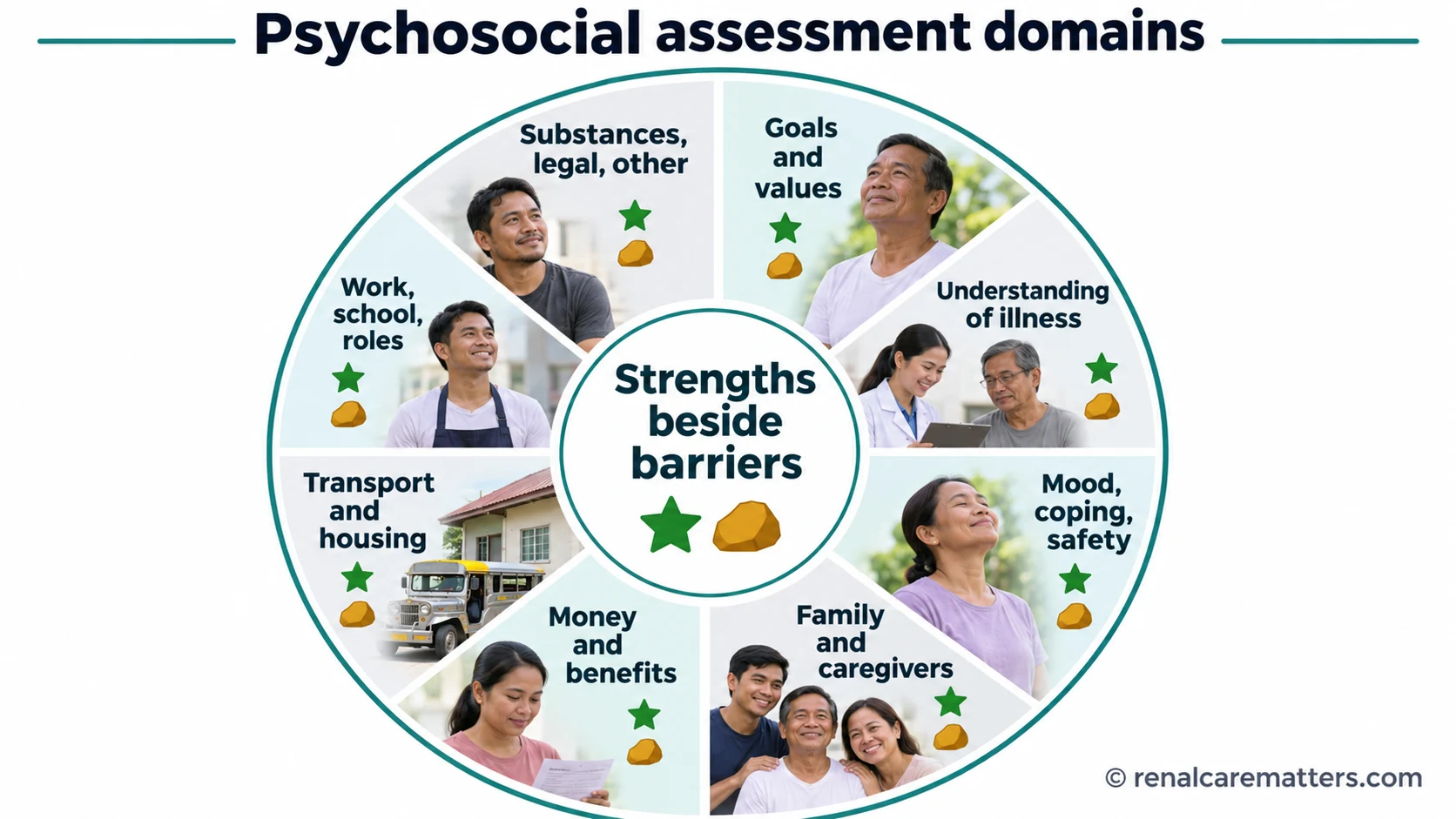
Figure 1. The psychosocial assessment covers every domain and records strengths beside barriers.
The picture has a limit. The sea does not change because the fisherman watched it. People do. A good assessment is itself an intervention: being listened to carefully, perhaps for the first time since diagnosis, changes what a person is willing to tell you and to try. And unlike the weather, a person has a view on what you conclude. The formulation should be something they recognize as true about their own life.
Your job in this module is to gather the right information from the right sources, notice the strengths that will carry the plan, and turn it all into a short explanation of why things are as they are. That explanation, the formulation, is what makes your plan more than a list of referrals. International guidance points the same way: a United Kingdom consensus recommends a holistic wellbeing assessment for everyone approaching dialysis or transplant listing, with referral onward for identified needs,1 and the Kidney Disease: Improving Global Outcomes (KDIGO) transplant candidate guideline treats psychosocial assessment as part of candidacy.2
Figure 2 · Key terms for this module
Psychosocial assessmentA structured conversation, with other sources, about the person’s goals, coping, relationships, resources, and risks.
DomainOne area of life the assessment covers, such as money, family, or safety.
Collateral sourceInformation from someone other than the person, gathered with permission.
FormulationA short explanation of why the situation is as it is, which guides the plan.
StrengthsAbilities, relationships, beliefs, and resources the person can use.
Descriptive languageWords that say what happened (“missed 4 of 13 sessions in October”) instead of labels (“noncompliant”).
Opening case · fictional
Case: “Noncompliant” on the referral slip
Monday, 8:30 a.m. A referral slip from the dialysis unit reads: “Mr. Danilo Ramos, 39, hemodialysis (HD) 1 year. NONCOMPLIANT. Missed 4 sessions this month, interdialytic weight gain (IDWG) 4–5 kg. For counseling.”
You meet Mr. Ramos at 11:00 a.m. after his session. He is a construction worker paid by the day. He lives in Valenzuela with his wife, who works at a garment factory, and two children aged 9 and 6. He says little at first. When you ask what a normal week looks like, he says the foreman gives work only to men who show up every day, and that he has two jobs a week that pay more than a dialysis day costs him. He smiles when he talks about his son’s basketball.
At the end, he mentions that he has not slept well for weeks and that “minsan naiisip ko, mas mabuti pang wala na ako” (sometimes I think it would be better if I were gone).
Before reading on, decide:
What do you do first, before finishing the assessment?
Once he is safe, what facts, sources, and unknowns would you record?
Write a short formulation that would replace “noncompliant.”
Keep your answers in mind. The lesson gives you what you need, and the case review near the end shows one sound response.
Lesson · part 1
Cover everything, record the source
A renal psychosocial assessment covers more ground than most medical social work because kidney failure reaches into every part of daily life. Cover each domain at least briefly; go deeper where the person’s goals or risks are.
Domain
Ask about
Strengths to look for
Goals and values
What matters most; hopes for the next year
A clear purpose (children, work, faith)
Understanding of illness
What they know about kidney failure and treatment; teach-back
Past success managing another illness
Mood, coping, and safety
Sleep, interest, worry; past coping; thoughts of self-harm
Faith, humor, friends, past resilience
Family and caregivers
Household, who helps with what, who depends on them
A reliable helper; backup
Money and benefits
Income, debts, Philippine Health Insurance Corporation (PhilHealth) status, assistance already used
Savings, employer support, family abroad
Transport and housing
How they get to the unit, time, cost; water, space, safety at home
A neighbor with a vehicle; a stable home
Work, school, roles
Job type, schedule, employer attitude; changes in roles
Skills, flexible work
Substances, legal, other
Alcohol, smoking, other substances; legal problems; other illnesses
Past success stopping a habit
Use several sources, with permission: the person, the family, the nurses who see them three times a week, the chart, and the claims officer. Record where each fact came from. “Wife reports he drinks every weekend” is different from “He drinks every weekend.”
The Department of Health (DOH) issued demographic and assessment tools for medical social workers in 2024; only the overview was reviewed for this course, so check your facility’s required forms before you replace anything.3 The toolkit worksheet T01 in the handoff package is a teaching form, not an official DOH tool.
RememberCover every domain. Write down the source of every fact.
Lesson · part 2
What will carry the plan
A referral usually arrives full of problems. If the assessment only adds more problems, the plan will have nothing to stand on. Every barrier you record should sit beside a strength you can use.
This is not optimism for its own sake. Plans that use what a person already does well are more likely to be carried out. A man who never misses his son’s basketball games is a man who can keep a schedule when it matters to him. A grandmother who has run a sari-sari store for 20 years can manage a medicine budget.
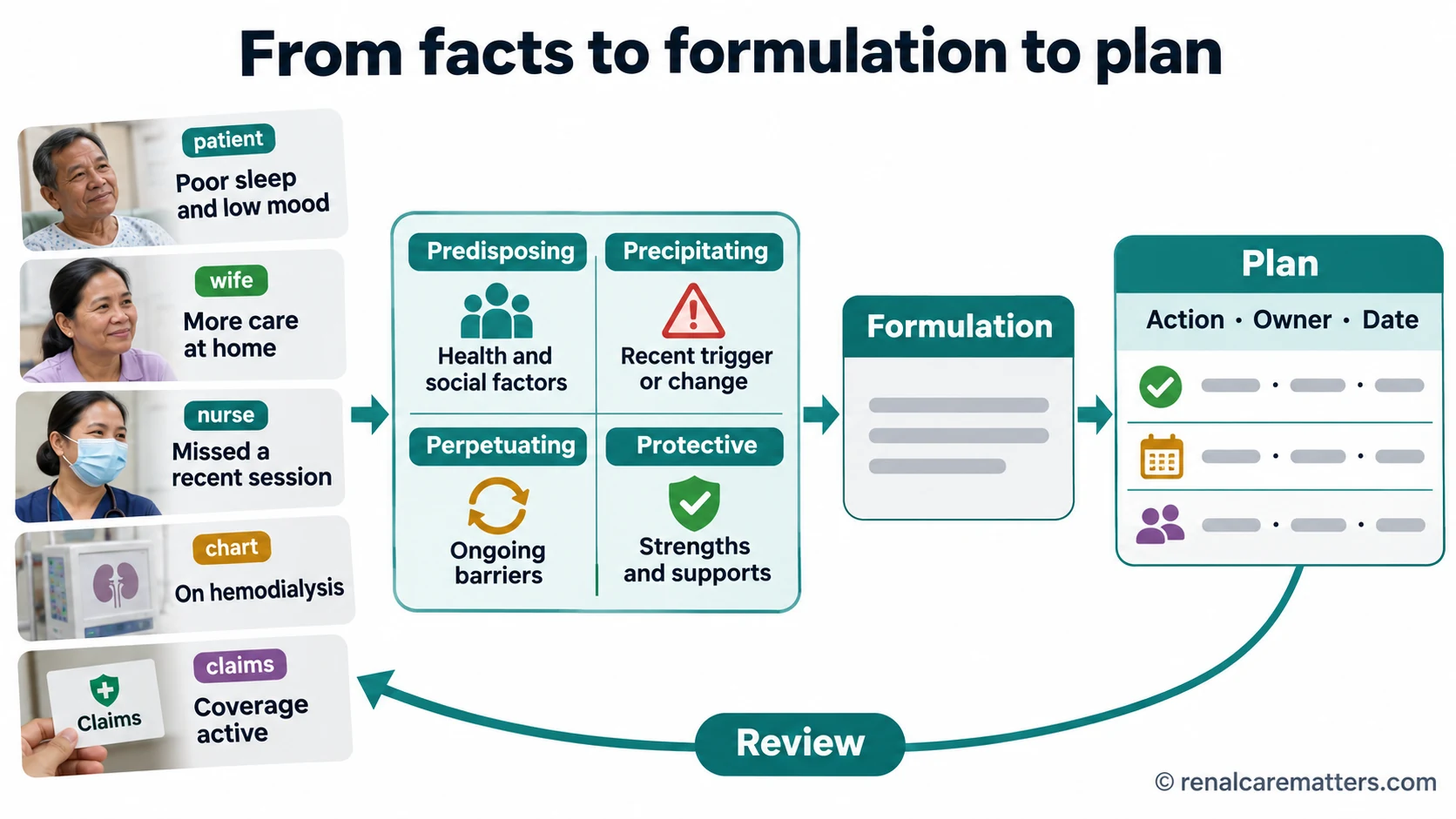
Figure 3. From facts to formulation to plan. The formulation explains why; the plan says who does what by when.
Barrier recorded
Strength beside it
How the plan uses it
Misses sessions for day work
Reliable worker, valued by his foreman
Explore a schedule change with the unit; a letter to the foreman
Cannot read the medicine labels
Daughter in high school is good with phones
Picture schedule; daughter sets phone reminders
Wife exhausted
Sister-in-law offers help on weekends
A written backup plan (Module 13)
Fear of transplant surgery
Strong faith; trusts the parish priest
Invite questions; with permission, include the priest in a family talk
RememberEvery barrier gets a strength beside it. The plan stands on the strengths.
Lesson · part 3
Explaining why
A formulation turns a pile of facts into an explanation. A simple frame is the four Ps: what made the person vulnerable (predisposing), what triggered the current problem (precipitating), what keeps it going (perpetuating), and what protects them (protective). Write it in two to five sentences that the person would recognize.
Part
Question
Example (Mr. Ramos)
Predisposing
What made this person vulnerable?
Daily-wage work with no sick pay; household depends on his income
Precipitating
What started the current problem?
The foreman began giving work only to men present every day
Perpetuating
What keeps it going?
Each missed session saves a day’s wage; poor sleep and hopelessness
Protective
What helps?
Devoted to his children; wife employed; values being a provider
The formulation is a hypothesis, not a verdict. Say it to the person: “It sounds like you are missing dialysis to keep your job, because your family needs the money, and the worry is keeping you awake. Is that right?” If they correct you, the correction is the most valuable data you collected.
Worked example, illustrative. Formulation: Mr. Ramos, 39, is missing about one session a week because his daily-wage income would otherwise fall below what the family needs; his foreman now favors men present every day. The missed sessions and the worry about money are feeding poor sleep and hopelessness, and he has had a passing thought that his family would be better off without him. His love for his children and his wife’s steady job are strengths the plan can build on.
RememberA formulation explains why in a few sentences and is checked with the person.
Lesson · part 4
Facts, sources, unknowns, safety
Write the assessment so a colleague who has never met the person could act on it. Use descriptive language, not labels. “Noncompliant” tells the reader nothing about what to do, and it tells the person they are the problem. “Missed 4 of 13 sessions in October; reports he works on those days to keep his job” tells everyone what to do next.
Label
Description to write instead
Noncompliant
“Missed 4 of 13 sessions in October; reports work conflicts.”
Difficult family
“Daughter raised her voice twice about waiting times; asked for a written schedule.”
In denial
“States he expects his kidneys to recover; has not yet heard from the nephrologist that they will not.”
Poor support
“Lives alone; neighbor helps with transport on Mondays only.”
Some things stop the assessment. A statement about not wanting to live, a disclosure of violence, chest pain, or confusion comes before every other domain. You can finish the assessment another day; you cannot take back a missed warning. Module 11 covers the safety pathway in full.
Stop and callIf a person says anything suggesting thoughts of death or self-harm, stop the assessment, ask directly, stay with them, and follow your unit’s safety pathway before you do anything else.
On the floor · The unknowns line
Social worker Mr. Ben Aquino ends every assessment with a line titled “Unknown.” For one patient it reads: “Whether the brother abroad still sends money; whether the patient knows his transplant work-up has stalled.”
At the next visit, the line tells him exactly what to ask.
Writing down what you do not know is what keeps an assessment honest and current.
Illustrative scenario. Names and details are invented.
On the floor
Real situations: problems and solutions
These are fictional but typical. For each one, cover the answer, decide what you would do, then compare. Where a step depends on local rules, your unit’s procedure and your supervisor’s direction come first.
The one-domain assessment
What you see
An assessment covers only income because the referral was for assistance.
What is likely going on
The form drove the interview.
What to do
Cover every domain at least briefly; the hidden problem is often outside the referral question.
Why it matters
Depression and caregiver collapse rarely appear on referral slips.
The collateral surprise
What you see
A nurse tells you the patient’s wife looks frightened when he raises his voice.
What is likely going on
Possible tension or harm at home; one source only.
What to do
Record it with its source and ask the wife privately how things are at home.
Why it matters
Sources matter, and safety questions need privacy.
The formulation that fit
What you see
A patient corrects your formulation: “It is not the money; I am afraid of the needles.”
What is likely going on
Your hypothesis was wrong in an important way.
What to do
Thank him, revise the formulation, and tell the nurse about the needle fear.
Why it matters
A correction is the most valuable data you can collect.
Field notes
End every assessment with an “Unknown” line.
Never write a label you would not say to the person’s face.
Case review
Back to the case: “Noncompliant” on the referral slip
First, safety. “Sometimes I think it would be better if I were gone” stops the assessment. Ask directly and calmly: “When you say that, do you have thoughts of ending your life?” Asking does not put the idea in his head (Module 11). Stay with him, follow your unit’s safety pathway, and tell the attending nephrologist today. If he denies any plan or intent, you still arrange follow-up and a mental health referral, and you record exactly what he said.
Facts, sources, unknowns. Facts: missed 4 sessions this month (unit records); daily-wage construction work, foreman favors daily attendance (patient); wife employed at a garment factory (patient); weeks of poor sleep and a passive death thought (patient). Unknowns: household income and debts; whether a different dialysis shift is possible; whether his wife knows how he feels; whether anything has been prescribed for sleep.
Formulation. Something close to the worked example above: missing sessions to protect the family’s income after a change in how his foreman assigns work; the money worry and missed sessions are feeding poor sleep and hopelessness; his children and his wife’s job are protective. That replaces “noncompliant” with a reason, and a reason points to a plan: a shift change, an employer letter, a cost review, a mental health referral, and a talk with his wife if he agrees.
Skills lab · with your preceptor
Skills checklist: An assessment and a formulation
With a simulated patient, complete a psychosocial assessment and present a formulation while your supervisor observes. Your preceptor rates each step as satisfactory, needs practice, or not observed. Steps marked Critical must all be satisfactory before sign-off. This checklist supports supervised learning; your unit’s own procedure and competency form are the authority. A printable version of every checklist is on the trainer page.
Covers all eight domains at least briefly and goes deeper where the goals or risks are.
Records the source of each fact and separates facts from interpretation.
Records at least one strength beside each major barrier.
Writes a formulation of two to five sentences using the four Ps and checks it with the person.
CriticalReplaces labels with descriptive language in the written note.
CriticalStops the assessment and follows the safety pathway on any statement suggesting self-harm.
Ends with a list of unknowns and the plan to resolve them.
Placement activity. Complete one supervised psychosocial assessment of a patient new to dialysis, with consent, in your facility’s approved record. Discuss the formulation with your supervisor.
Self-assessment
Check your understanding
Each visit draws 5 questions at random from this module’s 10-question bank. Choose the single best answer for each, then select Check answers; an explanation appears under the best answer. Select New set of questions for a different mix. A good target is 4 of 5 on two different sets. Nothing you select is sent anywhere; scoring happens in your browser.
Coyne, E., Briggs, J., Loud, F., Bristow, P., Young, H. M. L., Castle, E. M., Lightfoot, C. J., Graham-Brown, M., Eyre, M., Ormandy, P., Sachar, A., Bevin, A., Burton, J. O., Wilkinson, T. J., Koufaki, P., Macdonald, J., Ashman, N., & Greenwood, S. A. (2023). Achieving consensus on psychosocial and physical rehabilitation management for people living with kidney disease. Clinical Kidney Journal, 16(11), 2185–2193. https://doi.org/10.1093/ckj/sfad116
Chadban, S. J., Ahn, C., Axelrod, D. A., Foster, B. J., Kasiske, B. L., Kher, V., Kumar, D., Oberbauer, R., Pascual, J., Pilmore, H. L., Rodrigue, J. R., Segev, D. L., Sheerin, N. S., Tinckam, K. J., Wong, G., & Knoll, G. A. (2020). KDIGO clinical practice guideline on the evaluation and management of candidates for kidney transplantation. Transplantation, 104(4S1 Suppl 1), S11–S103. https://doi.org/10.1097/TP.0000000000003136
Educational material for social workers and navigation staff in kidney care. Completing it is an Academy learning record only. It is not a Professional Regulation Commission (PRC) license, a specialty credential, CPD units, or DOH or PhilHealth recognition, and it does not authorize anyone to practice beyond their own registration.