Nephrology Nursing specialty subtrack for pediatric dialysis
This module is study material for registered nurses in pediatric dialysis. It explains the reasoning behind common nursing decisions; it is not a procedure. Exact steps follow your unit’s pediatric protocol and the device instructions; treatment parameters follow the written order of the pediatric nephrologist. Nurses assess, verify, teach, document and escalate; they do not prescribe, choose antibiotics, change doses or adjust anticoagulation. Every case is fictional and every value in a case is illustrative. Pending review by a pediatric nephrologist and a senior pediatric dialysis nurse.
Learning objectives
After this module you should be able to
Adapt explanations, distraction and privacy to a child’s developmental stage, not only to the age in years.
Distinguish parental informed consent from a child’s assent, and respond when a child refuses.
Recognize safeguarding concerns in a dialysis setting and follow the reporting pathway without investigating yourself.
Protect a child’s privacy and data in a shared treatment room.
Classroom 2 hSkills lab 2 hSupervised placement 4 h
Pre-testBefore you read, answer the 5 self-assessment questions and note your score. After the module, select New set of questions and compare. The difference is what you learned; the questions you still miss are what to reread.
Start here
The big picture, in plain words
A procedure that an adult tolerates because they understand it can terrify a child who does not. Fear changes physiology: crying raises blood pressure, a struggling child can pull a line, and a child who learns to dread the unit may resist care for years. How you talk is part of how you treat.
Your work in this module is to speak to each child at the level they understand, to ask for their agreement even when the law asks only their parents, and to notice when something at home is not safe.
In plain wordsThink of development as a ladder. A toddler on the lower rungs sees the world in the present moment and needs a parent’s arms and simple words. A school-age child on the middle rungs wants reasons and rules. A teenager near the top wants privacy and a say.
The picture has a limit. Children do not climb at the same pace, and illness pushes them up and down. A chronically ill 12-year-old may understand dialysis better than many adults yet regress to toddler behavior during a painful procedure. Assess the child in front of you on the day.
Figure 1 · Key terms for this module
AssentA child’s agreement to care, sought in words that fit their understanding.
Informed consentLegal permission given by a parent or guardian after explanation of benefits, risks and alternatives.
SafeguardingProtecting children from abuse, neglect and exploitation.
Developmental stageA child’s level of thinking and emotional maturity.
Teach-backAsking the child or parent to explain in their own words what they understood.
Opening case · fictional
Case: She hides under the blanket
Princess Dela Cruz, 9, has been on hemodialysis for four months. Today she pulls the blanket over her head and says she will not let anyone touch her line. Her father, Ramon, a jeepney driver, says firmly, “Just do it, nurse, she has to.” While settling her, Nurse Bea notices fingertip-shaped bruises on Princess’s upper arm. Princess says she fell.
Before reading on, decide:
How should Bea approach Princess’s refusal?
What does the father’s consent allow, and what does it not settle?
What should Bea do about the bruises, and what should she avoid?
Keep your answers in mind. The lesson gives you what you need, and the case review near the end shows one sound response.
Lesson · part 1
Talking with a child at each stage
Match your words, tools and privacy to the developmental stage. Always introduce yourself to the child first, by name, at eye level.
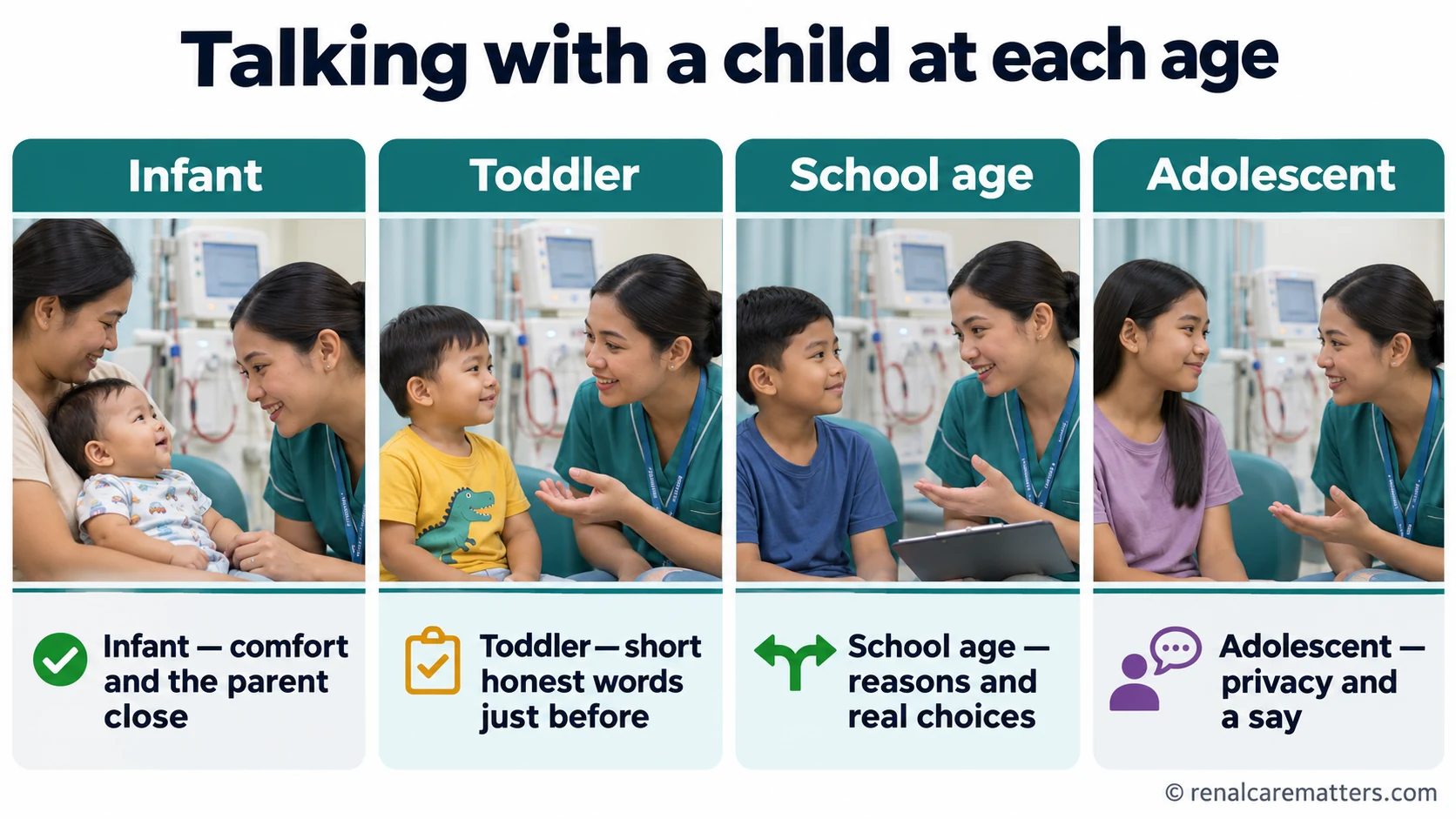
Figure 2. Talking with a child at each age. Match words, tools and privacy to the stage, not only to the age in years.
Stage
How the child thinks
What helps
Infant (under 1 year)
Through comfort, routine and the caregiver
Parent holding or touching; warmth; feeding plans; minimal separation
Toddler and preschool (1–5 years)
In the present; magical thinking; fear of separation and of the body being damaged
Short, honest words just before the step; a toy or comfort object; bandages count
School age (6–11 years)
Concrete; wants rules, reasons and some control
Simple diagrams; real choices (“Which arm for the blood pressure?”); a role in the routine
Adolescent (12–17 years)
Abstract; body image, privacy, peers and independence matter most
Private time without parents; honesty; shared decisions; respect for appearance
Avoid false choices. “Do you want to be connected now?” invites a no you cannot honor. Offer real choices inside the necessary task.
RememberSpeak to the child first and at eye level. Offer real choices, never false ones.
Lesson · part 2
Assent beside consent
In the Philippines, a person under 18 is a minor, and informed consent for treatment is given by a parent or legal guardian. Consent is a process, not a signature: it is renewed when the plan, the risks or the modality change.
Assent is the child’s agreement, sought in words they can understand. It is an ethical practice rather than a legal form. Asking for assent tells the child that their body and voice matter, and it usually makes care safer because a cooperating child moves less.
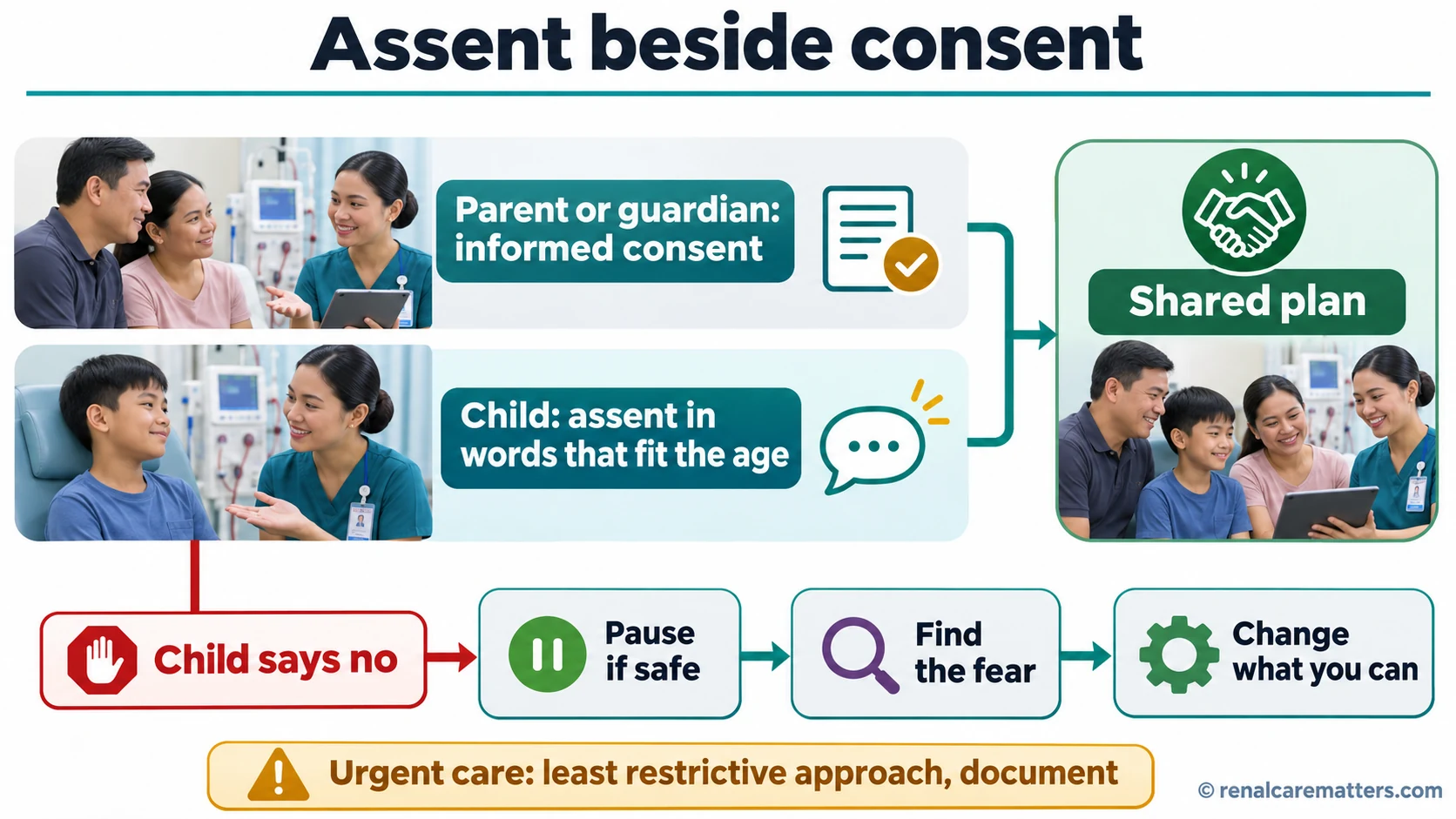
Figure 3. Assent beside consent. Parents consent; children are asked, in their own terms, and their answer is taken seriously.
When a child says no
Pause if it is safe to pause. Find out what the fear is. Often it is one step: the tape, the cold scrub, a nurse they do not know.
Change what you can: who does it, the order of steps, a parent’s hand, distraction, a numbing method the team has ordered.
Tell the truth about what cannot change. “The treatment has to happen today, and you can choose how we start.”
If the treatment is urgent, the parent’s consent and the clinical need may override the child’s refusal. Tell the nephrologist, use the least restrictive approach, and document. Forced care is a last resort, never a routine.
RememberParents consent. Children are asked. A child’s no is information, not defiance.
Lesson · part 3
Safeguarding and privacy
Children with chronic illness are at higher risk of neglect and abuse, partly because their care is demanding and families are stressed. Republic Act 7610 provides special protection for children against abuse, exploitation and discrimination.1 Your duty is to notice, record and report through your facility’s child protection pathway, often a Women and Children Protection Unit (WCPU). It is not your duty to investigate or to confront the family.
Concern
Examples at the dialysis chair
Physical
Bruises in patterns or unusual places, explanations that do not fit the injury
Neglect
Repeated missed sessions without reason, poor hygiene of the exit site despite training, untreated pain or hunger
Emotional
A child who is withdrawn, frightened of a caregiver, or blamed for being ill
Exploitation
An adolescent kept from school to work, or pressured in ways that concern you
Privacy in a shared room
Dialysis rooms are crowded. Lower your voice for personal topics, give adolescents private time, and never discuss one child near another family. Health information is sensitive personal information under the Data Privacy Act of 2012; share it only with those who need it for care.2
On the floor · Settling Princess
Bea kneels by the chair. “I won’t touch your line yet. What part is the worst?” Princess whispers that the new nurse scrubbed too hard last week. Bea promises to do it herself, slowly, and lets Princess hold the gauze packet.
Later, alone with the charge nurse, Bea describes the bruises exactly: four oval marks on the inner upper arm, the explanation given, and who was present. She does not question Ramon or Princess further.
Comfort the child, describe what you saw in plain words, and hand the concern to the people trained to assess it.
Illustrative scenario. Names and details are invented.
RememberNotice, record exactly, report through the pathway. Do not investigate, and do not promise a child you will keep a secret.
On the floor
Real situations: problems and solutions
These are fictional but typical. For each one, cover the answer, decide what you would do, then compare. Where a step depends on local rules, your unit’s procedure and your supervisor’s direction come first.
The silent teenager
What you see
A 14-year-old answers only “okay” while her mother talks.
What is likely going on
No private time has been offered.
What to do
Explain confidentiality and its limits, then ask the mother to step out for a few minutes.
Why it matters
Adolescents speak when they are given space.
The false choice
What you see
A colleague asks a 5-year-old, “Do you want your treatment now?” and he says no.
What is likely going on
A choice was offered that could not be honored.
What to do
Reframe with a real choice: “Do you want to sit on Mama’s lap or the chair?”
Why it matters
False choices create refusals.
The bruise story
What you see
A child’s explanation of a burn mark changes each time.
What is likely going on
Possible non-accidental injury.
What to do
Record exactly what you saw and heard and report through the child protection pathway.
Why it matters
Investigation belongs to trained staff.
Field notes
Kneel to eye level.
Never promise a child to keep a secret.
Case review
Back to the case: She hides under the blanket
The refusal. Bea pauses, finds the specific fear, changes who does the step and how, and gives Princess a real role. The treatment still happens, with assent obtained.
The father’s consent. Ramon’s consent makes treatment lawful. It does not oblige Bea to ignore Princess’s fear, and it does not make forced handling routine.
The bruises. Bea records exactly what she saw and was told, reports through the child protection pathway, and lets trained staff assess. She does not interrogate the child or accuse the father, and she does not promise to keep a secret.
Skills lab · with your preceptor
Skills checklist: Communication, assent and safeguarding
Practice with role-players before patient contact. Your preceptor rates each step as satisfactory, needs practice, or not observed. Steps marked Critical must all be satisfactory before sign-off. This checklist supports supervised learning; your unit’s own procedure and competency form are the authority. A printable version of every checklist is on the trainer page.
Introduces self to the child first, at eye level, using the child’s name
CriticalExplains a procedure in words that fit the developmental stage and checks understanding by teach-back
Offers a real choice and avoids a false one
Responds to a refusal by pausing, identifying the fear and adapting the approach
CriticalDocuments a safeguarding concern factually and reports it through the facility pathway
Self-assessment
Check your understanding
Each visit draws 5 questions at random from this module’s 15-question bank. Choose the single best answer for each, then select Check answers; an explanation appears under the best answer. Select New set of questions for a different mix. A good target is 4 of 5 on two different sets. Nothing you select is sent anywhere; scoring happens in your browser.
Educational material for registered nurses. Completing it is an Academy learning record only. It does not confer CPD units, PSN or National Kidney and Transplant Institute (NKTI) training recognition, PhilHealth staffing credit, or clinical privileges, and it does not replace your facility’s protocols, device instructions, or written orders.