The frail dialysis patient, fragile bones, numb feet, and amputation: assessment and rehabilitation when several problems stack up.
PublishedNailathalaGipatikPepalwal:ReferencesMga SanggunianMga TinubdanReng Reperensya:3Audience: Philippine-registered occupational therapists and physical therapists who see people with kidney disease · rehabilitation leads, physiatrists and renal teams who refer to them · students on an observer pathwayRead timeOras ng pagbasaOras sa pagbasaOras ning pamamasa:
Renal rehabilitation track for licensed occupational and physical therapists
Study material for licensed occupational therapists (RA 11241) and physical therapists (RA 5680) working with people who have kidney disease. It explains the reasoning behind renal rehabilitation; it is not a hospital protocol. It never authorizes changes to dialysis settings, handling of a needled access or catheter, medicine decisions or benefit promises. Exercise parameters come from the referring physician and your unit’s agreed sheet: per unit protocol, but always ask the attending nephrologist’s guidance. Every case, name and number in the cases is fictional and illustrative.
Learning objectives
After this module you should be able to
Assess and grade frailty and explain what it means for goals and risk.
Adapt exercise and handling for fragile bone, without making the person afraid to move.
Assess sensation and foot risk in neuropathy and route foot problems promptly.
Plan rehabilitation after amputation in a person on dialysis, including prosthetic fit with fluid shifts.
Prioritize when several problems stack up in one person, and agree the plan with them.
Classroom 2 hSkills lab 2 hSupervised placement 1 h
Pre-testBefore you read, answer the 5 self-assessment questions and note your score. After the module, select New set of questions and compare. The difference is what you learned; the questions you still miss are what to reread.
Start here
The big picture, in plain words
In plain wordsImagine a table with four legs: muscle, bone, nerves and blood supply. Kidney failure shortens all four legs at once. The table still stands, but it wobbles, and a small knock tips it over.
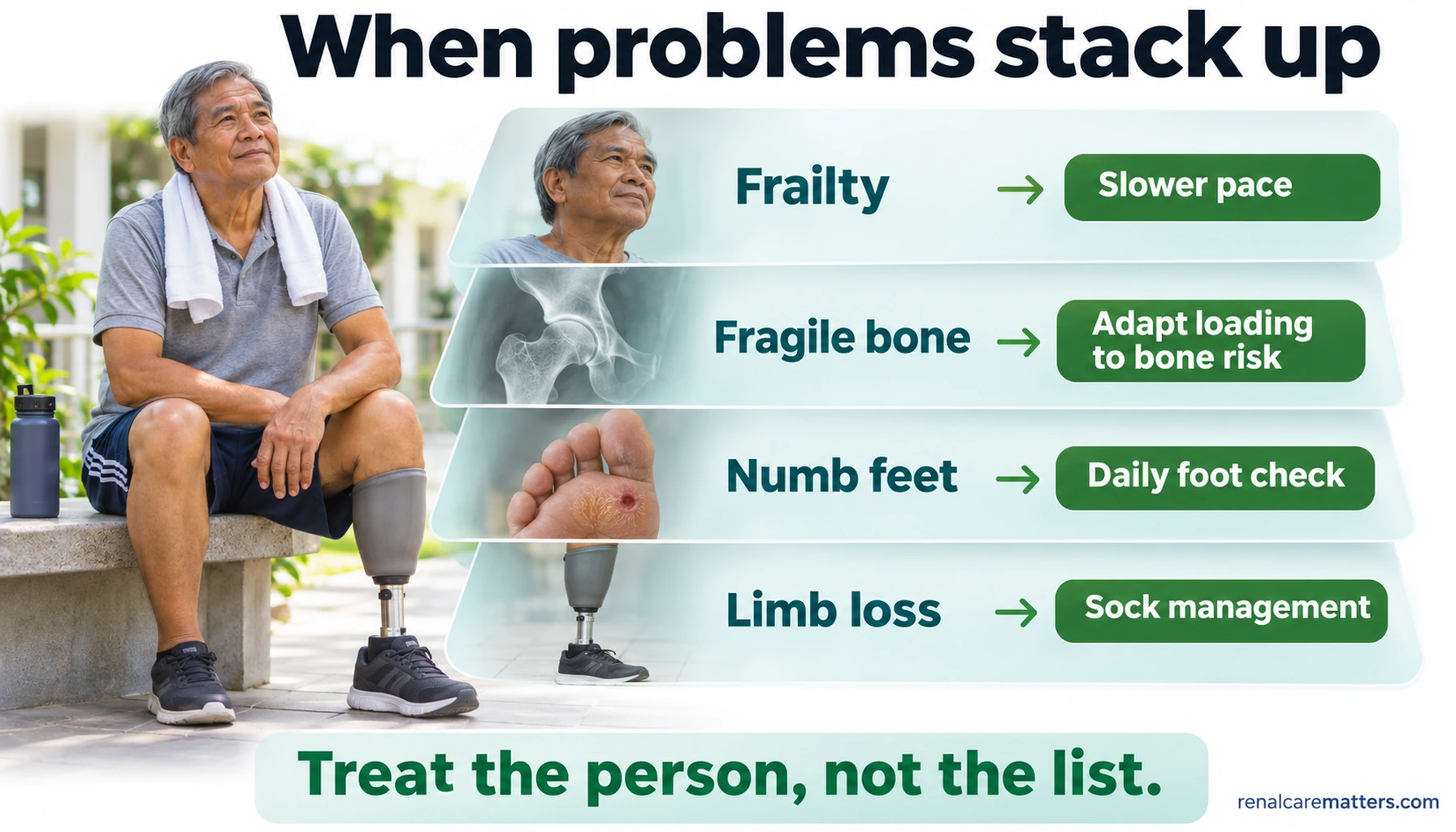
Figure 1. When problems stack up. Treat the person, not the list.
The picture has a limit. You cannot lengthen every leg of the table. Bone disease and peripheral artery disease need medical treatment; an amputation cannot be undone. But you can lengthen the muscle leg, add a support (an aid, a prosthesis, a rail), and clear the floor so knocks are fewer. This module is about the patient in whom several problems stack up, which in dialysis is common rather than rare.
Figure 2 · Key terms for this module
Clinical Frailty Scale (CFS)A 1 to 9 judgment from very fit to terminally ill, based on function.
chronic kidney disease (CKD)–mineral and bone disorderDisturbed calcium, phosphate, hormone and bone metabolism in CKD.
Protective sensationEnough feeling in the foot to notice injury.
Residual limbThe remaining part of an amputated limb.
Prosthetic socketThe part of an artificial limb that fits the residual limb.
Opening case · fictional
Case: The prosthesis that stopped fitting
Thursday, 2:00 p.m. Mr. Teodoro Aquino, 67, has diabetes and has been on hemodialysis for three years. Eight months ago he had a right below-knee amputation after a foot ulcer became infected. He has a prosthesis but rarely wears it: “Some days it is loose, some days it hurts.” He uses a wheelchair at home.
His left foot has no protective sensation and a callus over the big-toe joint. He had a spine fracture last year. His Clinical Frailty Scale score is 6. He says his goal is “to walk to the church for my granddaughter’s wedding in five months.”
Before reading on, decide:
Why does his prosthesis fit differently on different days?
What is the most urgent risk to his remaining leg, and who must know?
How do you plan toward the wedding goal with his frailty and fragile bone?
Keep your answers in mind. The lesson gives you what you need, and the case review near the end shows one sound response.
Lesson · part 1
Grading frailty and using it
The Clinical Frailty Scale grades a person from 1 (very fit) to 9 (terminally ill) using their function and dependence, and correlates with risk of death and institutional care in older adults.1 In dialysis, frailty is common and associated with death and hospitalization (Module 2). Use the score to calibrate goals and pace, not to deny rehabilitation: frail people gain from exercise too, starting lower and progressing slower, and maintaining independence may itself be the goal.
Frailty also changes how you talk about risk. A person at CFS 6 has little reserve; a fall, a hospital stay or a bad infection can cost months of function. That makes fall prevention, careful progression and early reporting of illness more important, and it makes goal conversations about what matters most more urgent (Module 16).
RememberFrailty lowers the starting point and slows the pace. It does not cancel rehabilitation.
Lesson · part 2
Fragile bone: protect without frightening
In dialysis, bone is weakened by disturbed mineral metabolism, hormones, inflammation, sometimes steroids, and inactivity. The relative risk of hip fracture has been estimated at about 4.4 times the general population.2 Vertebral fractures can happen with minor strain.
The response is not to stop movement, because inactivity weakens bone and muscle further. Instead:
Avoid loaded spinal flexion and twisting (toe touches, sit-ups, lifting from the floor with a bent back); teach hip-hinge movement.
Emphasize balance and leg strength to prevent falls, the main cause of hip fracture.
Prefer weight-bearing activity that the person can do safely (walking, sit-to-stand).
Report fractures, new back pain and height loss to the nephrologist, who manages bone medicines and mineral levels.
RememberFor fragile bone: balance and strength yes, loaded bending and twisting no.
Lesson · part 3
The neuropathic foot: the leg you must save
Diabetes and kidney failure together are a dangerous combination for feet. In a cohort comparing people with diabetes on dialysis to those with a history of foot ulcers, amputations occurred at 58.0 per 1,000 person-years in the dialysis group versus 13.3 in the ulcer-history group, and foot-related admissions were more frequent (32.9 versus 14.0 percent).3 After one amputation, the remaining foot carries more load and more risk.
Check feet at every assessment: sensation (with a monofilament if trained and available), skin, nails, calluses, blisters, color and temperature, and footwear. A callus over a pressure point in an insensate foot is a pre-ulcer. Teach daily foot inspection (with a mirror or a family member), never walking barefoot, and shoes that fit.
Stop and reportA new wound, blister, color change, swelling or warmth in a neuropathic foot needs same-day review by the nurse and physician, and a referral to the foot or wound team. Stop weight-bearing exercise on that foot until reviewed.
Lesson · part 4
Rehabilitation after amputation in a person on dialysis
Prosthetic rehabilitation in dialysis has one problem that most amputees do not have: the volume of the residual limb changes with the dialysis cycle. Before a session, after two or three days of fluid gain, the limb is fuller and the socket is tight; after fluid removal, it shrinks and the socket is loose. Loose sockets cause pistoning, skin breakdown and falls; tight ones cause pain.
Teach sock management: add or remove prosthetic socks to match the day’s volume.
Check the skin of the residual limb at every session; breakdown in a diabetic dialysis patient heals slowly.
Work with the prosthetist on socket design; report persistent fit problems.
Build hip and core strength, sitting and standing balance, and transfers before and during gait training.
Plan for energy cost: walking with a below-knee prosthesis costs more energy than normal walking, which matters for a frail, anemic person.
Illustrative goal plan toward the wedding (five months). Weeks 1–4: foot review for the left callus; hip and core strengthening; standing balance at parallel bars; sock management taught; prosthesis worn 1 to 2 hours on non-dialysis days. Weeks 5–12: gait training with a walker; wear time built up; transfers in and out of a car. Weeks 13–20: walking 50, then 100 meters with a walker or cane; practice on the church entrance steps; a wheelchair for the longer distances on the day. Measures: wear time, walking distance, Timed Up and Go (TUG) with prosthesis.
On the floor
Real situations: problems and solutions
These are fictional but typical. For each one, cover the answer, decide what you would do, then compare. Where a step depends on local rules, your unit’s procedure and your supervisor’s direction come first.
The heel blister
What you see
A blister on a numb heel noticed during gait training.
What is likely going on
A pre-ulcer.
What to do
Stop weight-bearing on that foot; same-day review.
Why it matters
Ulcers in dialysis patients often lead to amputation.
Loose on Monday afternoon
What you see
A prosthesis is loose after dialysis.
What is likely going on
Residual-limb volume fell with fluid removal.
What to do
Add socks; check skin; involve the prosthetist.
Why it matters
A loose socket causes falls and wounds.
Toe touches
What you see
A patient with a past spine fracture does toe-touch stretches.
What is likely going on
Loaded spinal flexion.
What to do
Replace with safe hip and hamstring alternatives.
Why it matters
Fragile vertebrae fracture with bending under load.
Field notes
Check both feet at every session.
Teach sock management to amputees on dialysis.
Avoid loaded bending and twisting with fragile bone.
Use frailty to set the pace, not to refuse care.
Case review
Back to the case: The prosthesis that stopped fitting
Why the fit changes. His residual-limb volume swells with fluid between sessions and shrinks after fluid removal, so the socket is tight before dialysis and loose after. Sock management and prosthetist adjustment address it; the nephrologist may also review his interdialytic weight gains.
The most urgent risk. The callus over the big-toe joint of his insensate left foot is a pre-ulcer in his only remaining leg. Carlo reports it the same day, requests foot-care referral, and protects the foot during training.
Planning toward the wedding. Frailty (CFS 6) and spine fracture mean a lower start and slower progression, no loaded spinal flexion, and fall prevention throughout. The goal is realistic in part: walking short distances with an aid and using a wheelchair for longer ones. Bea plans the day itself: transport, seating, rest, toileting, and what to wear over the prosthesis.
Skills lab · with your preceptor
Skills checklist: Multimorbidity assessment
Assess a simulated patient with frailty, neuropathy and a prosthesis, and prioritize a plan. Your preceptor rates each step as satisfactory, needs practice, or not observed. Steps marked Critical must all be satisfactory before sign-off. This checklist supports supervised learning; your unit’s own procedure and competency form are the authority. A printable version of every checklist is on the trainer page.
Scores the Clinical Frailty Scale and explains the score.
CriticalInspects both feet and the residual limb, and identifies pre-ulcer signs.
CriticalRoutes a new foot lesion for same-day review.
CriticalAdapts exercise for fragile bone: no loaded spinal flexion or twisting; balance emphasized.
Explains residual-limb volume change with dialysis and teaches sock management.
Prioritizes problems with the patient and writes a staged plan toward their goal.
Placement activity. Review three patients on your caseload with diabetes on dialysis: record foot status, footwear and whether a foot-care referral exists.
Self-assessment
Check your understanding
Each visit draws 5 questions at random from this module’s 10-question bank. Choose the single best answer for each, then select Check answers; an explanation appears under the best answer. Select New set of questions for a different mix. A good target is 4 of 5 on two different sets. Nothing you select is sent anywhere; scoring happens in your browser.
Rockwood, K., Song, X., MacKnight, C., Bergman, H., Hogan, D. B., McDowell, I., & Mitnitski, A. (2005). A global clinical measure of fitness and frailty in elderly people. CMAJ, 173(5), 489–495. https://doi.org/10.1503/cmaj.050051
Alem, A. M., Sherrard, D. J., Gillen, D. L., Weiss, N. S., Beresford, S. A., Heckbert, S. R., Wong, C., & Stehman-Breen, C. (2000). Increased risk of hip fracture among patients with end-stage renal disease. Kidney International, 58(1), 396–399. https://doi.org/10.1046/j.1523-1755.2000.00178.x
Lavery, L. A., Lavery, D. C., Hunt, N. A., La Fontaine, J., Ndip, A., & Boulton, A. J. (2015). Amputations and foot-related hospitalisations disproportionately affect dialysis patients. International Wound Journal, 12(5), 523–526. https://doi.org/10.1111/iwj.12146
Educational material for licensed occupational and physical therapists. Completing it is an Academy learning record only. It is not a PRC, DOH, PhilHealth or PSN credential, not CPD units, and not a workplace privilege. Your license, your referral or prescription, your employer’s privileges and the renal team’s plan govern what you may do.