Nephrology Nursing Track · By Role · Module 9 of 13
Partnering With Patients
Why patients shorten or miss sessions, teach-back, routine symptom questions, and closing referrals.
PublishedNailathalaGipatikPepalwal:ReferencesMga SanggunianMga TinubdanReng Reperensya:9Audience: Head nurses and charge nurses in hemodialysis units · senior dialysis nurses preparing to lead · medical directors and nursing administrators who orient themRead timeOras ng pagbasaOras sa pagbasaOras ning pamamasa:
This module is study material for head nurses in hemodialysis units. It explains the reasoning behind common decisions; it is not a protocol. On the floor, follow your unit’s protocol and ask the attending nephrologist for guidance. Doses, limits, and cut-off values are set by your unit. Every case is fictional.
Learning objectives
After this module you should be able to
Explain why skipping or shortening sessions harms patients, using the physiology from Modules 2 and 3.
Summarize what predicts missed sessions, and why much of it lies in systems.
Find the real reason a patient shortens or skips treatment, and bring in the person who can help.
Teach with teach-back, and say how strong the evidence for it is.
Ask two routine questions each month and use the answers.
Track every referral until an outcome is recorded.
Pre-testBefore you read, answer the 8 self-assessment questions and note your score. After the module, select New set of questions and compare. The difference is what you learned; the questions you still miss are what to reread.
Start here
The big picture, in plain words
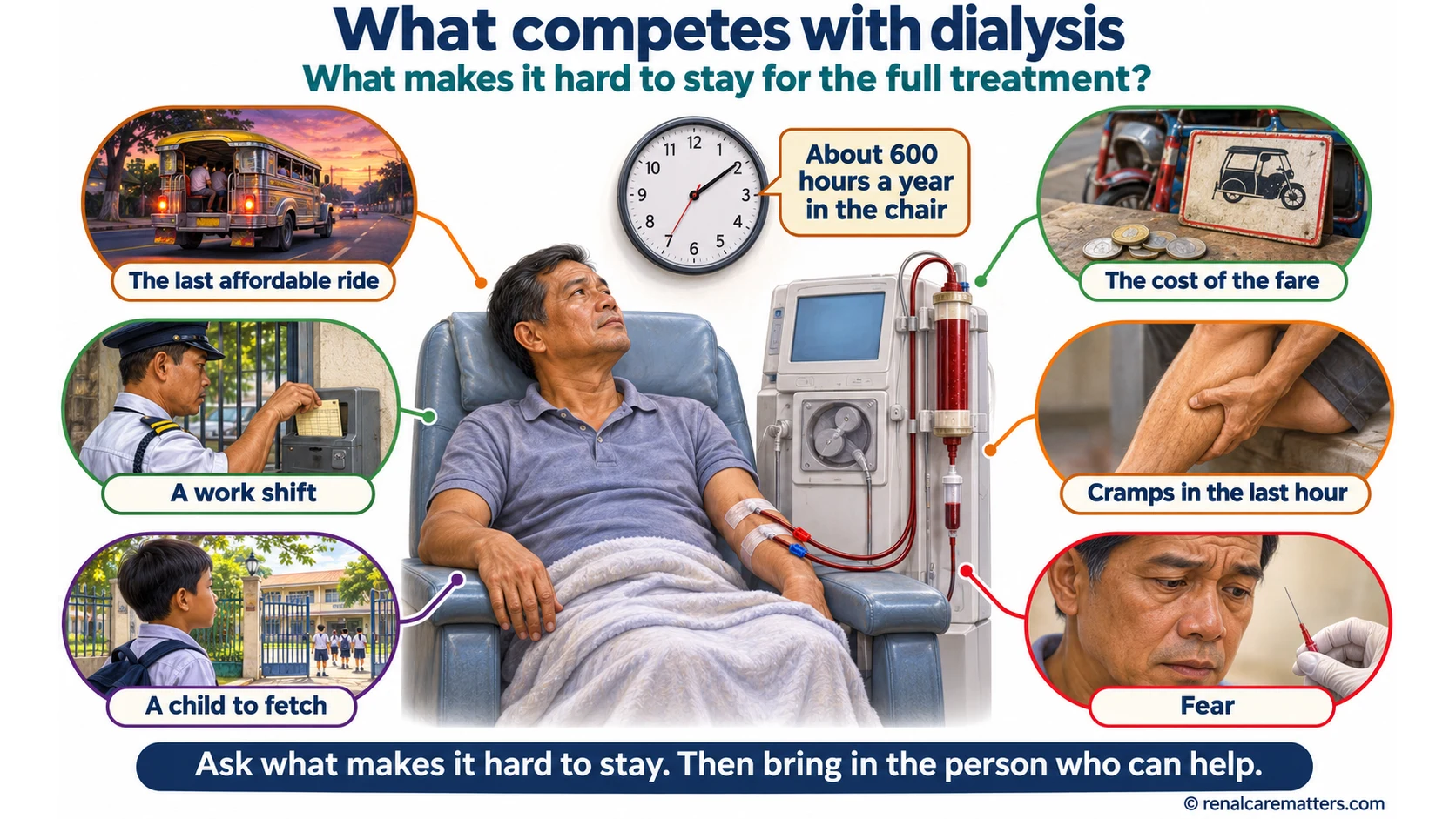
In plain wordsWhen a patient shortens or skips a session, the chart often says “non-adherent.” Replace that word with a question: what is competing with dialysis today?
Dialysis takes about 600 hours a year in the chair, plus travel and recovery. It competes with a job, a child, a ride, the cost of the ride, pain, fear, and exhaustion. A patient who leaves early is usually making a rational trade with information you do not have yet.
The picture has a limit. Some patients do decide, with full information, to shorten or stop dialysis. That is their right. Your work is to make sure the decision is informed, assessed, and documented, not assumed.
Figure 1. Replace the word non-adherent with a question: what is competing with dialysis today?
Figure 2 · Key terms for this module
Teach-backAsking the patient to explain or show what was taught, so that gaps become visible.
Health literacyThe ability to find, understand, and use health information.
Recovery timeHow long a patient takes to feel normal after a session.
ReferralA request for another service, such as transplant assessment, the dietitian, or social work.
Shared decisionA decision made with the patient, using their goals and the evidence.
Conservative careKidney care without dialysis, focused on symptoms and quality of life.
Opening case · fictional
Case: The last affordable ride
Mr. Danilo Ramos, 49, works as a security guard and dialyzes on the afternoon shift. In three weeks he has signed off early three times, each time about 45 minutes before the end. The nurses have recorded “refused full treatment.” His weight gain is 3.8 kilograms on a dry weight of 68 kilograms.
When you sit down with him, he says: “The last jeepney that goes past my barangay leaves at 5:30. If I miss it, the tricycle costs me 250 pesos. I can’t pay that three times a week.”
Before reading on, decide:
What is the actual problem, and who can help solve it?
What will you show Mr. Ramos, and how?
What do you change in the chart, and how do you know the plan worked?
Keep your answers in mind. The lesson gives you what you need, and the case review near the end shows one sound response.
Lesson · part 1
Why skipping and shortening matter
Modules 2 and 3 explained the physiology. Skipping lengthens the gap, so potassium and fluid climb. Shortening removes diffusion time and forces the same fluid off faster.
What the patient feels is the result: breathlessness before sessions, cramps and a washed-out afternoon after them. Many patients do not connect the washed-out feeling with the speed of fluid removal. Making that link in plain words is often the most persuasive thing you can teach, because it trades something they feel for something they can change.
Finding
Data
Strength
Missed sessions
Associated with 68% higher mortality. Four-month risk of missing ranged from under 1% to 24% between countries. Longer travel time and depressive symptoms predicted it1
Cohort
Skipping
Associated with 30% higher mortality and more hospital admission2
Cohort
Storms
Tropical storm exposure was associated with 55% higher risk of a missed session over the following week3
Cohort
Health literacy
In 480 new patients, 32% had limited health literacy, which was associated with higher mortality (hazard ratio 1.54)4
Cohort
A fiftyfold difference between countries cannot be explained by patient character. It points to transport, scheduling, cost, and support, which is where you can act. You cannot tell by looking which patients have limited health literacy, so teach everyone as if they might.
On the floor · The washed-out afternoon
Mrs. Linda Soriano, 57, tells her nurse that she “loses the whole afternoon” after dialysis. She lies down when she gets home and cannot cook dinner. She thinks this is just how dialysis is.
Her weight gains are often 4 kilograms on a dry weight of 55, so her machine removes about 18 mL/kg/h over four hours. The nurse explains in plain words: “When the machine has to take off a lot of water in a short time, your blood pressure drops and your body has to work hard to catch up. That is part of why you feel washed out. If you come in carrying less water, the machine can go gentler.” The nurse brings in the dietitian to talk about salt and thirst. Six weeks later, Mrs. Soriano’s gains average 2.8 kilograms, and she says she can cook dinner on dialysis days again. She did not change her habits because she was told to. She changed them because she could feel the difference.
Illustrative scenario. Names and details are invented.
Lesson · part 2
Ask before you teach
“What makes it hard to stay the full time?” Then be quiet. Typical answers, and who can act:
Barrier
Who to bring in
Possible moves
Last affordable ride leaves early
Scheduling, social worker, family
An earlier shift, shared transport, local government or charity transport help
Work hours
Scheduling, a letter to the employer
A different shift or days
Cramps or feeling ill in the last hour
Attending nephrologist
Review dry weight, fluid removal rate, and time. This is a prescription problem, not an adherence problem
Cost
Billing, social worker, Philippine Health Insurance Corporation (PhilHealth) desk
Confirm dialysis database registration and remaining sessions (Module 10), medical assistance programs
Low mood, hopelessness
Attending nephrologist, mental health referral
Screen, refer, follow up
Needle pain or fear
Senior cannulator, nephrologist
A consistent cannulator, numbing cream if ordered
On the floor · Better off without me
Mr. Arturo Valdez, 58, has missed two Fridays this month. When the nurse asks what makes it hard to come, he says quietly, “My children are paying for all of this. They would be better off without the expense.”
That sentence is not a scheduling problem. It may be hopelessness, and it is one of the triggers in this module for calling the attending nephrologist the same day. The nurse thanks him for saying it, stays with him, and tells you. You call the nephrologist, who speaks with Mr. Valdez before he leaves, arranges a referral for support, and asks the social worker to look at coverage. You document what he said, in his words, and who was told. Asking “What makes it hard?” is how this came out. A note that said “missed sessions, counseled” would have missed it.
Illustrative scenario. Names and details are invented.
Stop and callStop and call the attending nephrologist when a patient has shortened or missed two or more sessions in a month, when a patient expresses hopelessness or a wish to stop dialysis, or when cramps or low pressure are driving early sign-off. Follow your unit’s protocol while you call.
Lesson · part 3
Teaching that you can check
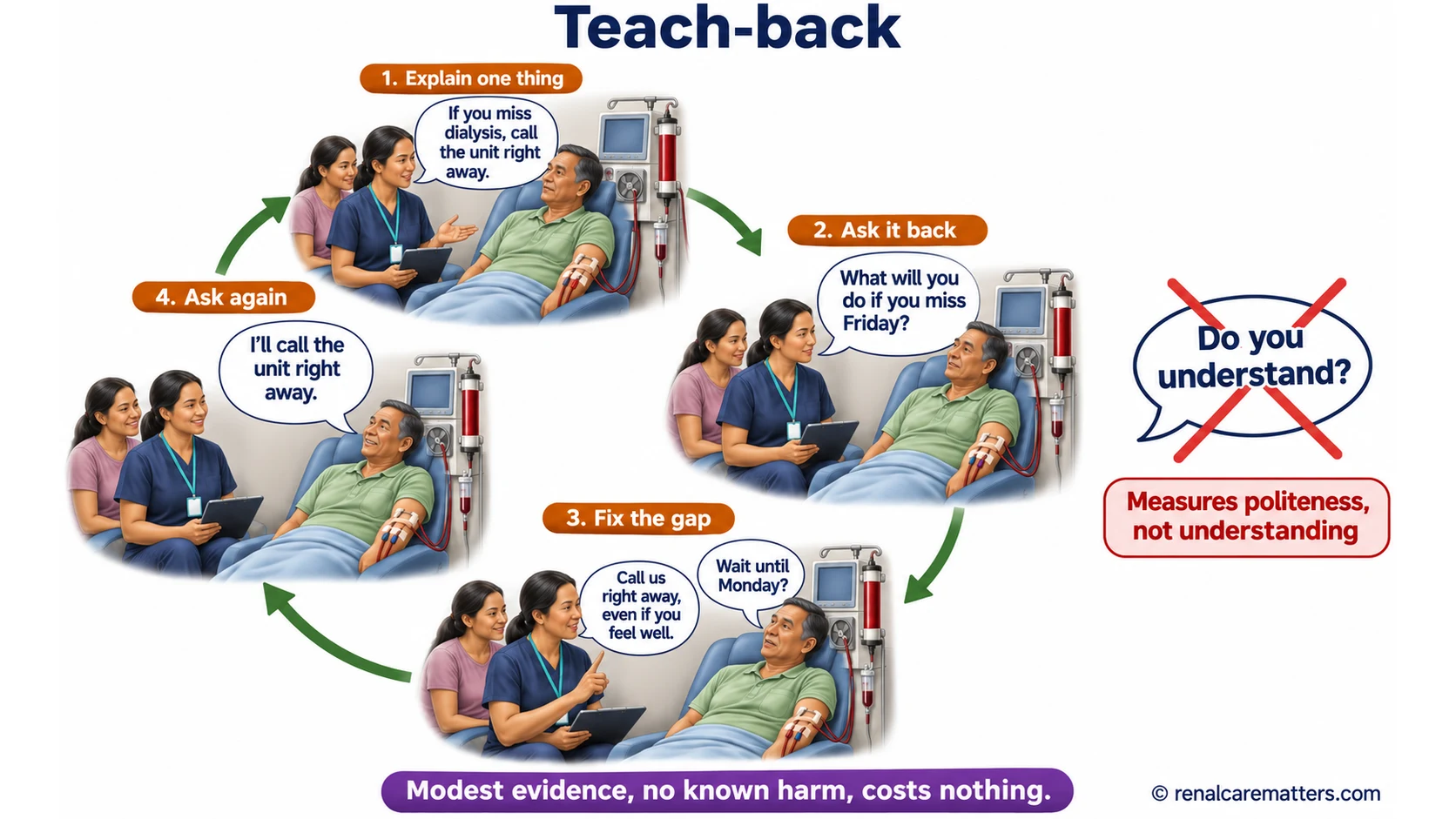
Figure 3. Teach-back checks your explanation, not the patient's intelligence.
Figure 4 · Teach-back in three steps
ExplainOne thing, in plain words. “If potassium gets too high, the heart can stop without warning.”
Ask backCheck yourself, not the patient. “I want to be sure I explained that well. If you miss Friday, what would you watch for, and what would you do?”
Fix and ask againCorrect the gap and ask once more. Record the topic and what the patient said.
“Do you understand?” almost always gets a yes. It measures politeness, not understanding.
The evidence for teach-back is modest. A systematic review in kidney disease found six studies with 520 participants and some evidence of better self-management, self-efficacy, and knowledge, but limited evidence for quality of life, and the studies were too different to combine.5 A broader review in chronic disease found similar results.6 The method costs nothing and has no known harm, which is why it is recommended despite the limited evidence.
Use the patient’s language. Offer the site’s Tagalog, Cebuano, or Kapampangan materials where reviewed translations exist. Bring in the family member who cooks and the one who drives.
On the floor · The answer that needed fixing
The nurse explains to Mr. Gregorio Lopez that if he misses a session, potassium builds up and can make the heart beat dangerously. Then she asks, “I want to be sure I explained that well. If you miss Friday, what would you do?”
Mr. Lopez says, “I’d drink more water to flush it out.” That is the opposite of safe, and “Do you understand?” would never have revealed it. The nurse corrects it gently: “Without kidneys, water doesn’t flush potassium out. It just adds to the fluid. If you miss a session, call us to come in as early as possible, avoid fruits like banana, and go to the emergency room if you feel weak or your heart is racing.” Then she asks again, and he says it back correctly. She records the topic and his answer.
Illustrative scenario. Names and details are invented.
Lesson · part 4
Two questions every month
“How long does it take you to recover after a session?” One patient in ten takes more than twelve hours, and longer recovery was associated with hospital admission and death.7 “What symptom bothers you most?” Routine electronic symptom checks with feedback to clinicians are feasible in dialysis units and take under seven minutes.8 Whether they improve outcomes is still being tested.
Record both answers and bring them to the monthly review with the nephrologist and dietitian.
On the floor · Sixteen hours
At the monthly review, Mr. Simeon Bautista answers the first question: “It takes me until the next morning to feel normal. Maybe sixteen hours.” He has never mentioned it, because no one asked.
His records show weight gains of 3.5 to 4 kilograms and frequent cramping in the last hour. The nurse brings both to the nephrologist with his recovery time. The nephrologist adds thirty minutes to his sessions and asks the dietitian to see him. Two months later, he says he feels normal by evening. The question took ten seconds. Without it, his long recovery would have stayed invisible, because nothing in the machine records it.
Illustrative scenario. Names and details are invented.
Lesson · part 5
Options, and closing referrals
Every patient should have a documented conversation about transplant and peritoneal dialysis, and where appropriate about conservative care. Staffing touches this too: in young patients, the most stretched nursing quartile was associated with 14% lower incidence of transplant.9 Referral work is among the tasks left undone.
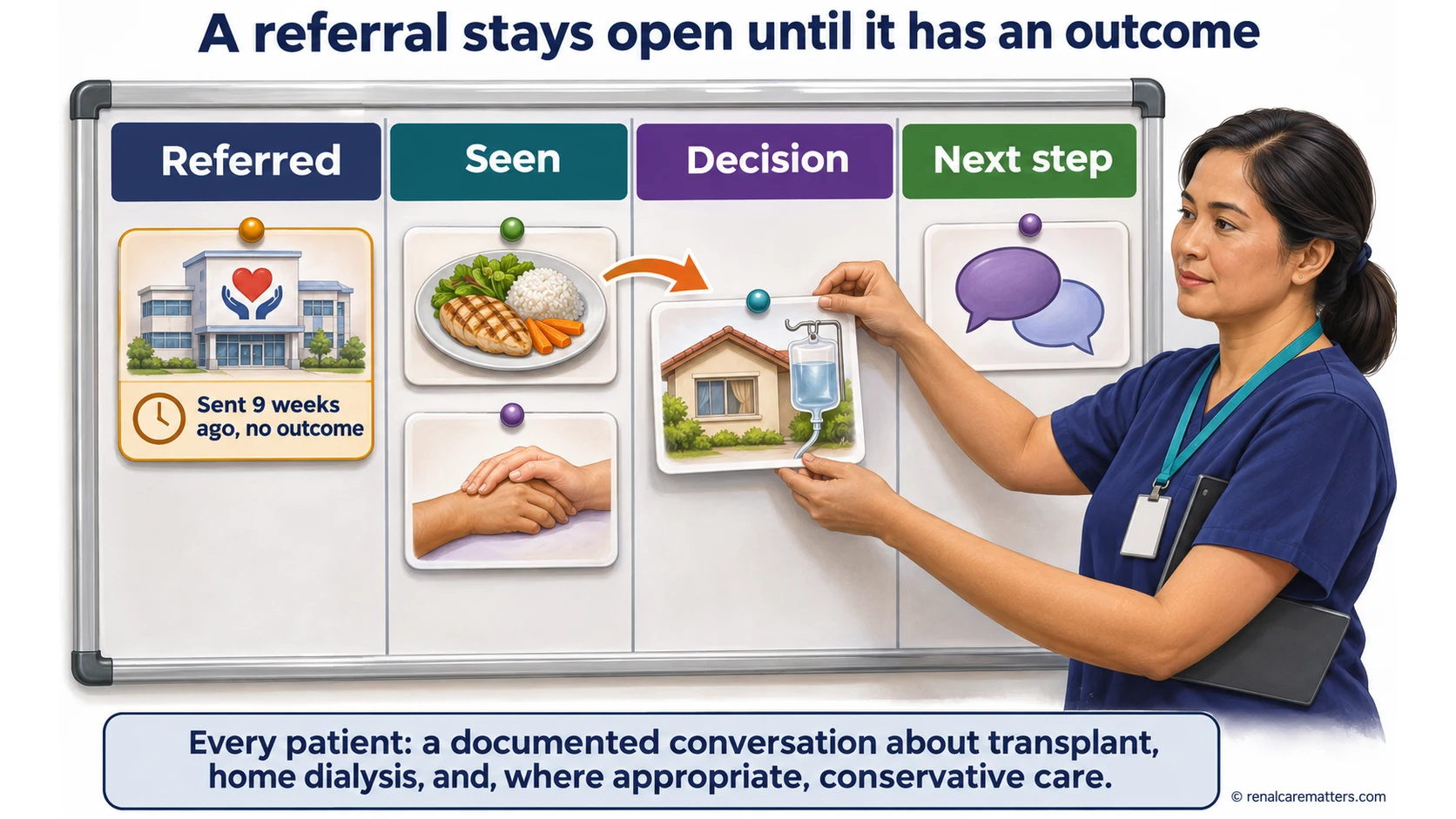
Figure 5. A referral stays open until an outcome is recorded.
Track each referral to an outcome: referred, seen, decision, next step. A referral with no recorded outcome is still open.
When a patient wants to leave early. Signing off early is the patient’s right. Leaving without being assessed is the unit’s failure. Assess symptoms, explain the specific risk in plain words, confirm the next session, inform the physician, and document the conversation. In a conflict, lower your voice, acknowledge the concern, state the safety boundary, offer the options that exist, and call for support if there is any threat.
On the floor · Leaving at three hours, done properly
At three hours, Mrs. Teresa Garcia asks to stop because her grandson’s school program starts at 5:00. The nurse does not argue and does not simply disconnect.
She checks Mrs. Garcia’s pressure and symptoms, and explains: “You still have about 800 mL of fluid that we planned to remove. Leaving now means you start the weekend carrying it, which can make you short of breath by Sunday.” She tells the physician, confirms Monday’s session, and agrees with Mrs. Garcia that she will come early on Monday. She writes down what was said, the actual minutes and fluid removed, and the reason. Mrs. Garcia leaves for the program. The record shows an informed choice, not a refusal.
Illustrative scenario. Names and details are invented.
On the floor
Real situations: problems and solutions
These are fictional but typical. For each one, cover the answer, decide what you would do, then compare. Where a step depends on local rules, your unit’s procedure and your supervisor’s direction come first.
“Refused” three times
What you see
A patient’s chart says refused full treatment three times this month.
What is likely going on
Nobody has asked why.
What to do
Sit down and ask what makes it hard to stay. Bring in the person who can solve it.
Why it matters
Accurate words lead to the right fix.
“Yes, I understand”
What you see
A patient nods through your explanation of potassium.
What is likely going on
Politeness, not understanding.
What to do
Ask him to tell you what he would watch for if he missed Friday.
Why it matters
Teach-back shows what was not understood.
No point anymore
What you see
A patient says quietly that she does not see the point of continuing dialysis.
What is likely going on
She may be depressed, exhausted, or making a considered decision.
What to do
Listen. Tell the attending nephrologist the same day.
Why it matters
This needs a physician’s conversation, not reassurance alone.
Field notes
Ask before you teach.
Track every referral until an outcome is recorded.
Bring the family member who cooks and the one who drives.
Case review
Back to the case: The last affordable ride
The actual problem. Transport and cost, recorded as refusal. Ask Mr. Ramos’s permission to work on it with him. Scheduling may have a morning or midday slot that fits his work. The social worker may know of transport help from the barangay, the city, or a charity. The nephrologist needs to know about three shortened sessions now, because the plan may need to change while the transport problem is solved.
What you show him. His fluid removal rate at the full time and at the time he actually stays. With 3.8 liters on 68 kilograms over four hours, the rate is about 14 mL/kg/h. Over three hours and fifteen minutes, it is about 17. Ask whether he feels washed out after sessions, and link the feeling to the number. Then use teach-back on the agreed plan.
The chart and the check. Change “refused” to what happened: “Signed off 45 minutes early because of transport. Transport and schedule options under review with social work.” Name who will check that the next session ran to time, and close the issue only when it has.
Skills lab · with your preceptor
Skills checklist: Patient conversation and handoff
Role-play the conversation with a facilitator playing the patient, then hand off to scheduling and social work. Your preceptor rates each step as satisfactory, needs practice, or not observed. Steps marked Critical must all be satisfactory before sign-off. This checklist supports supervised learning; your unit’s own procedure and competency form are the authority. A printable version of every checklist is on the trainer page.
Asks permission and sits at eye level.
CriticalAsks an open question about what makes it hard to stay, and listens.
CriticalNames the barrier in the patient’s own words.
Avoids the words non-adherent and refused unless accurate.
CriticalIdentifies who can help with the barrier.
CriticalInforms the nephrologist of repeated shortened sessions.
CriticalUses teach-back on the plan and repairs any gap.
Asks the recovery-time question and records the answer.
CriticalRecords an owner and a follow-up date.
Placement activity. For one month, review every session signed off early or missed on your shifts. For each, record the reason the patient gave and the action taken. Discuss the pattern with your facilitator.
Self-assessment
Check your understanding
Each visit draws 8 questions at random from this module’s 15-question bank. Choose the single best answer for each, then select Check answers; an explanation appears under the best answer. Select New set of questions for a different mix. A good target is 7 of 8 on two different sets. Nothing you select is sent anywhere; scoring happens in your browser.
Al Salmi, I., Larkina, M., Wang, M., Subramanian, L., Morgenstern, H., Jacobson, S. H., Hakim, R., Tentori, F., Saran, R., Akiba, T., Tomilina, N. A., Port, F. K., Robinson, B. M., & Pisoni, R. L. (2018). Missed hemodialysis treatments: International variation, predictors, and outcomes in the dialysis outcomes and Practice patterns study (DOPPS). American Journal of Kidney Diseases, 72(5), 634–643. https://doi.org/10.1053/j.ajkd.2018.04.019
Saran, R., Bragg-Gresham, J. L., Rayner, H. C., Goodkin, D. A., Keen, M. L., Van Dijk, P. C., Kurokawa, K., Piera, L., Saito, A., Fukuhara, S., Young, E. W., Held, P. J., & Port, F. K. (2003). Nonadherence in hemodialysis: associations with mortality, hospitalization, and practice patterns in the DOPPS. Kidney International, 64(1), 254–262. https://doi.org/10.1046/j.1523-1755.2003.00064.x
Remigio, R. V., Song, H., Raimann, J. G., Kotanko, P., Maddux, F. W., Lasky, R. A., He, X., & Sapkota, A. (2023). Inclement weather and risk of missing scheduled hemodialysis appointments among patients with kidney failure. Clinical Journal of the American Society of Nephrology, 18(7), 904–912. https://doi.org/10.2215/CJN.0000000000000174
Cavanaugh, K. L., Wingard, R. L., Hakim, R. M., Eden, S., Shintani, A., Wallston, K. A., Huizinga, M. M., Elasy, T. A., Rothman, R. L., & Ikizler, T. A. (2010). Low health literacy associates with increased mortality in ESRD. Journal of the American Society of Nephrology, 21(11), 1979–1985. https://doi.org/10.1681/ASN.2009111163
Jagodage, H. M. H., McGuire, A., Seib, C., & Bonner, A. (2024). Effectiveness of teach-back for chronic kidney disease patient education: A systematic review. Journal of Renal Care, 50(2), 92–103. https://doi.org/10.1111/jorc.12462
Ha Dinh, T. T., Bonner, A., Clark, R., Ramsbotham, J., & Hines, S. (2016). The effectiveness of the teach-back method on adherence and self-management in health education for people with chronic disease: a systematic review. JBI Database of Systematic Reviews and Implementation Reports, 14(1), 210–247. https://doi.org/10.11124/jbisrir-2016-2296
Rayner, H. C., Zepel, L., Fuller, D. S., Morgenstern, H., Karaboyas, A., Culleton, B. F., Mapes, D. L., Lopes, A. A., Gillespie, B. W., Hasegawa, T., Saran, R., Tentori, F., Hecking, M., Pisoni, R. L., & Robinson, B. M. (2014). Recovery time, quality of life, and mortality in hemodialysis patients: the dialysis outcomes and Practice patterns study (DOPPS). American Journal of Kidney Diseases, 64(1), 86–94. https://doi.org/10.1053/j.ajkd.2014.01.014
Agarwal, N., Shah, K. K., Dansie, K., Bennett, P. N., Greenham, L., Brown, C., Smyth, B., McDonald, S., Jesudason, S., Viecelli, A. K., Morton, R. L., & Symptom monitoring With Feedback Trial (SWIFT) Investigators. (2023). Feasibility of symptom monitoring wIth feedback trial (SWIFT) for adults on hemodialysis: a registry-based cluster randomized pilot trial. BMC Nephrology, 24(1), 345. https://doi.org/10.1186/s12882-023-03399-5
Bicki, A. C., Grimes, B., McCulloch, C. E., Copeland, T. P., & Ku, E. (2024). Dialysis facility staffing ratios and kidney transplant access among adolescents and young adults. JAMA, 332(23), 2003–2013. https://doi.org/10.1001/jama.2024.18210
Educational study material for nurses. Does not replace the attending nephrologist’s orders, the unit’s protocols, required training and certification, or supervised practice.