The first fifteen minutes, looking for a shared exposure, talking with a family, the reporter on the line, and supporting staff.
PublishedNailathalaGipatikPepalwal:ReferencesMga SanggunianMga TinubdanReng Reperensya:4Audience: Physician heads of adult maintenance hemodialysis units · nephrologists preparing to take an appointment · head nurses, operations managers, and quality leads who share the leadership tableRead timeOras ng pagbasaOras sa pagbasaOras ning pamamasa:
Training track for physician heads of hemodialysis services
This module is study material for physician heads of adult maintenance hemodialysis services. It explains the reasoning behind common decisions; it is not a protocol and not legal advice. Regulations change: confirm every rule against the current text and your regional office before you rely on it. Clinical limits are set by your unit’s approved protocols and the attending nephrologist. Every case and record is fictional.
Learning objectives
After this module you should be able to
Lead the first fifteen minutes of a serious event: protect patients, preserve evidence, and assign communication.
Recognize a possible shared exposure and look actively for other affected patients.
Speak with a family about what is known, what is not, and when they will hear next, through the facility’s disclosure process.
Route media, regulator, and insurer enquiries to an authorized spokesperson while protecting patient privacy.
Support staff involved in an event, separately from the fact-finding.
Separate confirmed facts, open questions, and decisions at every review.
Pre-testBefore you read, answer the 8 self-assessment questions and note your score. After the module, select New set of questions and compare. The difference is what you learned; the questions you still miss are what to reread.
Start here
The big picture, in plain words
In plain wordsWhen one patient becomes unwell, it is an emergency. When a second patient from the same shift becomes unwell, it is a question: what do they share?
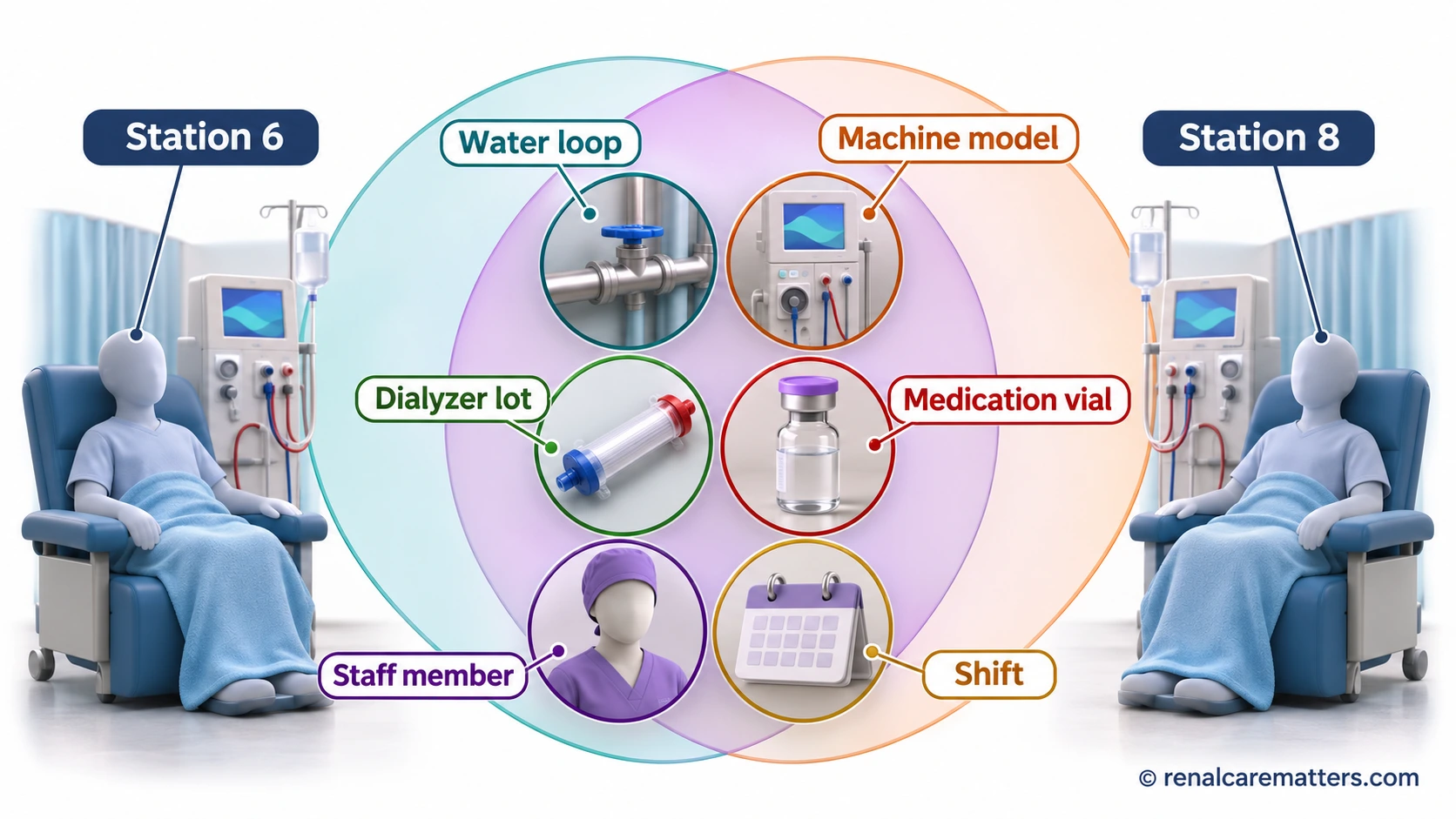
Figure 1. When a second patient is unwell, ask what the two share before you call it a coincidence.
The picture has a limit. Two patients on the same shift share many things by chance, and most second illnesses are coincidences. But the water loop, a dialyzer lot, a medication vial, or a machine can harm several patients at once, and the cost of looking is small compared with the cost of missing a cluster.
Figure 2 · Key terms for this module
Serious eventAn event that caused, or could have caused, death or serious harm.
Shared exposureSomething two or more affected patients had in common that could explain harm.
DisclosureHonest communication with a patient or family about an event, its consequences, and what is being done.
Communication-and-resolution programAn approach that combines prompt disclosure, investigation, explanation, apology when warranted, and fair resolution.
Second victimA health worker distressed after being involved in an adverse event.
SpokespersonThe person authorized to speak for the facility to the media and outside parties.
Opening case · fictional
Case: A second patient feels unwell
At 11:20 on a Friday, Mr. Andres Villareal, 66, collapses at station 6, an hour into treatment. The team resuscitates him and he is transferred to the hospital emergency department. At 11:45, Mrs. Remedios Tan at station 8 on the same shift reports chest tightness and nausea.
Mr. Villareal’s daughter, Ms. Cora Villareal, arrives at 12:10 and asks you directly, “Did the clinic do this to my father?” At 12:30 the receptionist tells you a reporter from a local radio station is on the line asking whether a patient died during dialysis.
Before reading on, decide:
What do you do in the first fifteen minutes after hearing about Mrs. Tan?
What can you tell Ms. Villareal now, and when will you speak again?
What do you tell the receptionist to say to the reporter?
Keep your answers in mind. The lesson gives you what you need, and the case review near the end shows one sound response.
Lesson · part 1
Care, preserve, communicate
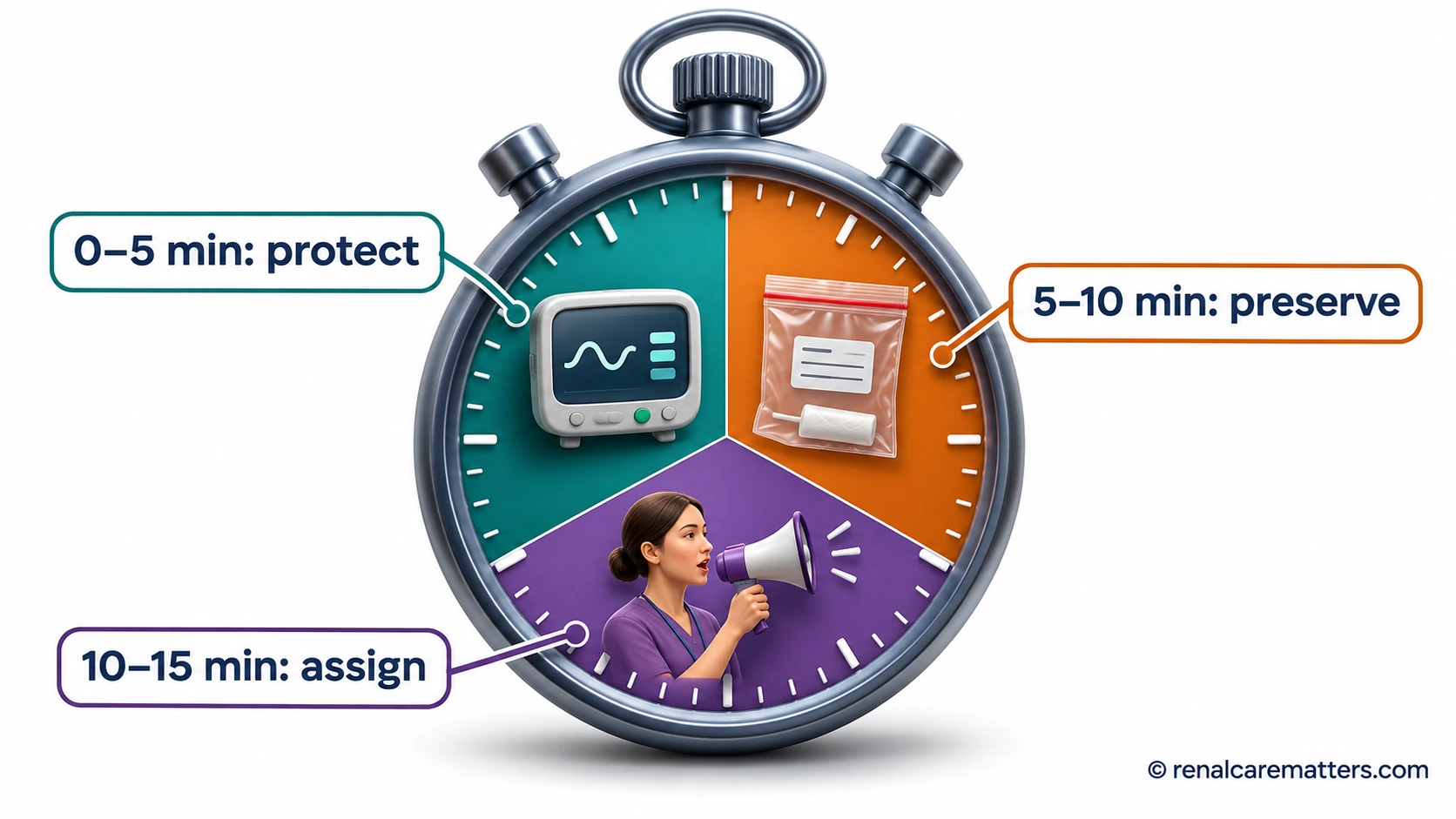
Figure 3. The first fifteen minutes. Care first, then preserve, then communicate with one voice.
Figure 4 · The first fifteen minutes
Minutes 0 to 5: protectAssess Mrs. Tan now. Check every patient on the shift for symptoms. Activate the clinical response for anyone unwell.
Minutes 5 to 10: preserveAsk the technical lead to secure water results and samples, and to tag out the machines and lines used at stations 6 and 8. Keep the dialyzers, lines, vials, and lot numbers. Do not discard or clean what may be evidence.
Minutes 10 to 15: assignName one person to lead communication with each family, one to monitor the remaining patients, and one to keep a timeline.
Then ask the cluster question explicitly: what did Mr. Villareal and Mrs. Tan share? Station neighbors, the same water loop, the same dialyzer lot, the same heparin or iron vial, the same staff member, the same machine model. Check the rest of the shift and the previous shift for similar symptoms.
Stop and callStop new connections on any loop, machine, or product lot that may be shared until the responsible technical lead and you have reviewed the evidence. Escalate to the owner, infection prevention, and the quality lead at once. Check reporting obligations and deadlines with compliance.
RememberPreserve before you clean. The evidence that explains a cluster is usually thrown away in the first hour.
Lesson · part 2
Talking with a family before you know
Families want to know what happened, whether it could have been prevented, and what is being done. Early, honest communication is both right and, in the hospitals that have studied it, compatible with sound risk management. In four Massachusetts hospitals, communication-and-resolution programs were associated with improved trends in new claims and legal defense costs at some hospitals and no worsening in any.1 In New York hospitals, disclosure conversations happened in 92% of cases handled through such a program; three quarters of the events did not involve substandard care.2
Figure 5. Tell the family what is known, what is being done, and when you will call again. Then call.
Say
Avoid
“Your father collapsed during dialysis. The team restarted his heart, and he is in the emergency department now.”
Medical jargon, or blaming anyone
“We do not yet know why. We are checking everything about his treatment today, including the water and the equipment.”
Guessing a cause, or denying one before you know
“I am sorry this happened.”
Silence because of fear of liability
“I will call you at 6 this evening, and here is a number you can call anytime.”
“We will let you know.”
Use your facility’s disclosure process, consider who the patient would want informed, and document what was shared. Repeat the conversation when new findings arrive.
Lesson · part 3
Media, regulators, and insurers
Route every outside enquiry to the authorized spokesperson. Staff should know one sentence: “I cannot discuss any patient. Let me give you the number of the person who can speak for the clinic.” Confirming that a named person was a patient, or describing what happened, would breach the patient’s privacy.3
Record each request from a regulator, insurer, or media outlet, with its deadline and owner. Check, with the quality, privacy, and compliance leads, which notifications are required and by when, and record the decision and the time.
At the first review meeting, separate three lists: confirmed facts, open questions with owners, and decisions with times. Agree the criteria for any restriction and for restoring normal operation, and tell affected patients what changed.
Lesson · part 4
Supporting the people involved
Health workers involved in an adverse event often suffer guilt, anxiety, sleeplessness, and doubt. A systematic review found that between 10% and 43% of clinicians involved in adverse events experienced this second-victim response, and that how they cope affects their later patients and colleagues.4
Offer support separately from the investigation, so that seeking help is not confused with being investigated. Check on the involved staff over the following days, not only on the day itself. A team that is supported is more likely to report the next problem early.
On the floor
Real situations: problems and solutions
These are fictional but typical. For each one, cover the answer, decide what you would do, then compare. Where a step depends on local rules, your unit’s procedure and your supervisor’s direction come first.
Two patients, one shift
What you see
Two patients from the same afternoon shift develop fever and rigors.
What is likely going on
A possible shared exposure.
What to do
Treat both, secure the water results, machines, and supplies, and check the rest of the shift.
Why it matters
Clusters hide in coincidences.
The reporter on the line
What you see
A reporter calls reception asking whether a patient died from dialysis.
What is likely going on
An external query before facts are known.
What to do
Refer to the designated spokesperson. Say nothing about any patient.
Why it matters
Privacy and accuracy both protect the patient.
The nurse who cannot sleep
What you see
The nurse caring for the patient who died has not slept for two nights.
What is likely going on
A second victim.
What to do
Offer support separately from the review, and check on her again.
Why it matters
Supported staff make safer decisions afterward.
Field notes
Separate facts, questions, and decisions at every update.
Name one person to speak with the family.
Preserve before you clean.
Case review
Back to the case: A second patient feels unwell
The first fifteen minutes. Assess Mrs. Tan now and check every other patient on the shift. Secure the water results and samples, tag out the machines at stations 6 and 8, and keep the dialyzers, lines, vials, and lot numbers. Ask what the two patients shared. Hold new connections on any shared loop, machine, or lot. Escalate to the owner, infection prevention, and the quality lead, and assign one person to the timeline.
What to tell Ms. Villareal. What happened, in plain words; that her father is being cared for in the emergency department; that you do not yet know why and are checking everything, including the water and equipment; that you are sorry it happened; and the time you will call her again, with a number she can call meanwhile. Then call at that time, even if there is little new.
The reporter. The receptionist says the clinic cannot discuss any patient and gives the spokesperson’s contact. Log the call. The spokesperson, with compliance, decides what, if anything, the clinic will say.
Skills lab · with your preceptor
Skills checklist: Serious event command and family conversation
Run the first fifteen minutes and a family conversation in simulation; repeat the family conversation after a new finding is injected. Your preceptor rates each step as satisfactory, needs practice, or not observed. Steps marked Critical must all be satisfactory before sign-off. This checklist supports supervised learning; your unit’s own procedure and competency form are the authority. A printable version of every checklist is on the trainer page.
CriticalAssesses the second patient and screens the rest of the shift.
CriticalAsks explicitly what affected patients share.
CriticalSecures water results, machines, lines, dialyzers, vials, and lot numbers before cleaning.
CriticalHolds new connections on any possibly shared loop, machine, or lot.
Assigns family communication, patient monitoring, and the timeline to named people.
Tells the family what is known and unknown, apologizes, and sets a time for the next call.
CriticalKeeps identifiable information within authorized channels and routes media to the spokesperson.
Offers staff support separately from the investigation.
Placement activity. Write your unit’s one-sentence script for outside enquiries and check that every receptionist and nurse knows it.
Self-assessment
Check your understanding
Each visit draws 8 questions at random from this module’s 15-question bank. Choose the single best answer for each, then select Check answers; an explanation appears under the best answer. Select New set of questions for a different mix. A good target is 7 of 8 on two different sets. Nothing you select is sent anywhere; scoring happens in your browser.
Kachalia, A., Sands, K., Van Niel, M., Dodson, S., Roche, S., Novack, V., Yitshak-Sade, M., Folcarelli, P., Benjamin, E. M., Woodward, A. C., & Mello, M. M. (2018). Effects of a communication-and-resolution program on hospitals' malpractice claims and costs. Health Affairs, 37(11), 1836–1844. https://doi.org/10.1377/hlthaff.2018.0720
Mello, M. M., Greenberg, Y., Senecal, S. K., & Cohn, J. S. (2016). Case outcomes in a communication-and-resolution program in New York hospitals. Health Services Research, 51(Suppl. 3), 2583–2599. https://doi.org/10.1111/1475-6773.12594
Republic Act No. 10173: Data Privacy Act of 2012. (2012). Congress of the Philippines.
Seys, D., Wu, A. W., Van Gerven, E., Vleugels, A., Euwema, M., Panella, M., Scott, S. D., Conway, J., Sermeus, W., & Vanhaecht, K. (2013). Health care professionals as second victims after adverse events: a systematic review. Evaluation & the Health Professions, 36(2), 135–162. https://doi.org/10.1177/0163278712458918
Educational material for physicians and unit leaders. Completing it is an Academy learning record only. It does not confer CPD units, PSN attestation, DOH eligibility, PhilHealth accreditation, or appointment authority, and it does not replace current regulations, your facility’s bylaws and protocols, or legal advice.