The minimum safe data set, the paper bridge, reconciliation, and what the Data Privacy Act asks when a roster leaks.
PublishedNailathalaGipatikPepalwal:ReferencesMga SanggunianMga TinubdanReng Reperensya:5Audience: Physician heads of adult maintenance hemodialysis units · nephrologists preparing to take an appointment · head nurses, operations managers, and quality leads who share the leadership tableRead timeOras ng pagbasaOras sa pagbasaOras ning pamamasa:
Training track for physician heads of hemodialysis services
This module is study material for physician heads of adult maintenance hemodialysis services. It explains the reasoning behind common decisions; it is not a protocol and not legal advice. Regulations change: confirm every rule against the current text and your regional office before you rely on it. Clinical limits are set by your unit’s approved protocols and the attending nephrologist. Every case and record is fictional.
Learning objectives
After this module you should be able to
List the systems your unit depends on for orders, documentation, results, inventory, contacts, and claims.
Define the minimum verified information needed to treat a patient safely, and what to do when it cannot be recovered.
Run a paper downtime process with a designated source record and protected offline rosters.
Reconcile identities, orders, treatments, results, and claims after restoration, with a second checker.
Recognize a personal data breach, contain it, and get it to the privacy lead in time for the 72-hour notification rule.
Explain why information system outages are a patient-safety risk, not only an IT problem.
Pre-testBefore you read, answer the 8 self-assessment questions and note your score. After the module, select New set of questions and compare. The difference is what you learned; the questions you still miss are what to reread.
Start here
The big picture, in plain words
In plain wordsDowntime is like a power cut in a kitchen. You can still cook if you know where the matches are, which recipes need the oven, and who is keeping track of what has already been served.
The picture has a limit. In a kitchen, a dish cooked twice is wasted food. In a dialysis unit, an order applied from memory, a session recorded twice, or a patient list sent to the wrong group chat can harm a patient or break the law. Downtime planning is about knowing, in advance, where the verified information lives when the screens go dark.
Figure 1 · Key terms for this module
DowntimeA period when an information system is unavailable, planned or not.
Source recordThe record designated as authoritative during downtime.
Minimum safe data setThe information you must verify before treating a patient.
ReconciliationMatching paper and electronic records after restoration, entry by entry.
Personal data breachA security incident leading to accidental or unlawful destruction, loss, alteration, or disclosure of personal data.
Privacy leadThe data protection officer or designated person who assesses breaches under the facility’s policy.
NPCNational Privacy Commission.
Opening case · fictional
Case: The chart goes dark
At 07:40 on a Tuesday, the electronic record at your sixteen-station unit fails. IT says it may be down for the day. Two patients have new orders written yesterday afternoon that nobody printed. The receptionist, Ms. Daisy Cruz, proposes sending the full patient census, with names, phone numbers, and hepatitis status, to the staff’s personal group chat so everyone can see who is coming.
When the system returns at 15:00, three patients appear twice for the same day, and one paper treatment record has no matching electronic entry.
Before reading on, decide:
Which treatments can go ahead, and on what information?
What do you say to Ms. Cruz, and what do you do if the census has already been sent?
How will you check the paper records against the recovered system?
Keep your answers in mind. The lesson gives you what you need, and the case review near the end shows one sound response.
Lesson · part 1
Outages are a clinical risk
Health systems are increasingly targets of ransomware and other attacks, and the harm spreads beyond the hospital attacked. After a ransomware attack on one United States health system, the census and ambulance arrivals at adjacent emergency departments rose sharply.1 At the same untargeted adjacent hospitals, cardiac arrests increased during the attack phase, and survival with good neurologic outcome after out-of-hospital arrest fell.2 These are observational studies of single events, but they show that losing information systems changes care well beyond the computer room.
A dialysis unit depends on current orders, the last laboratory results, infection status, access details, and contact numbers. When those vanish, the risks are treatment from memory, missed results, and improvised sharing that breaks privacy law.
RememberKnow where the verified information is before the network fails.
Lesson · part 2
The minimum safe data set
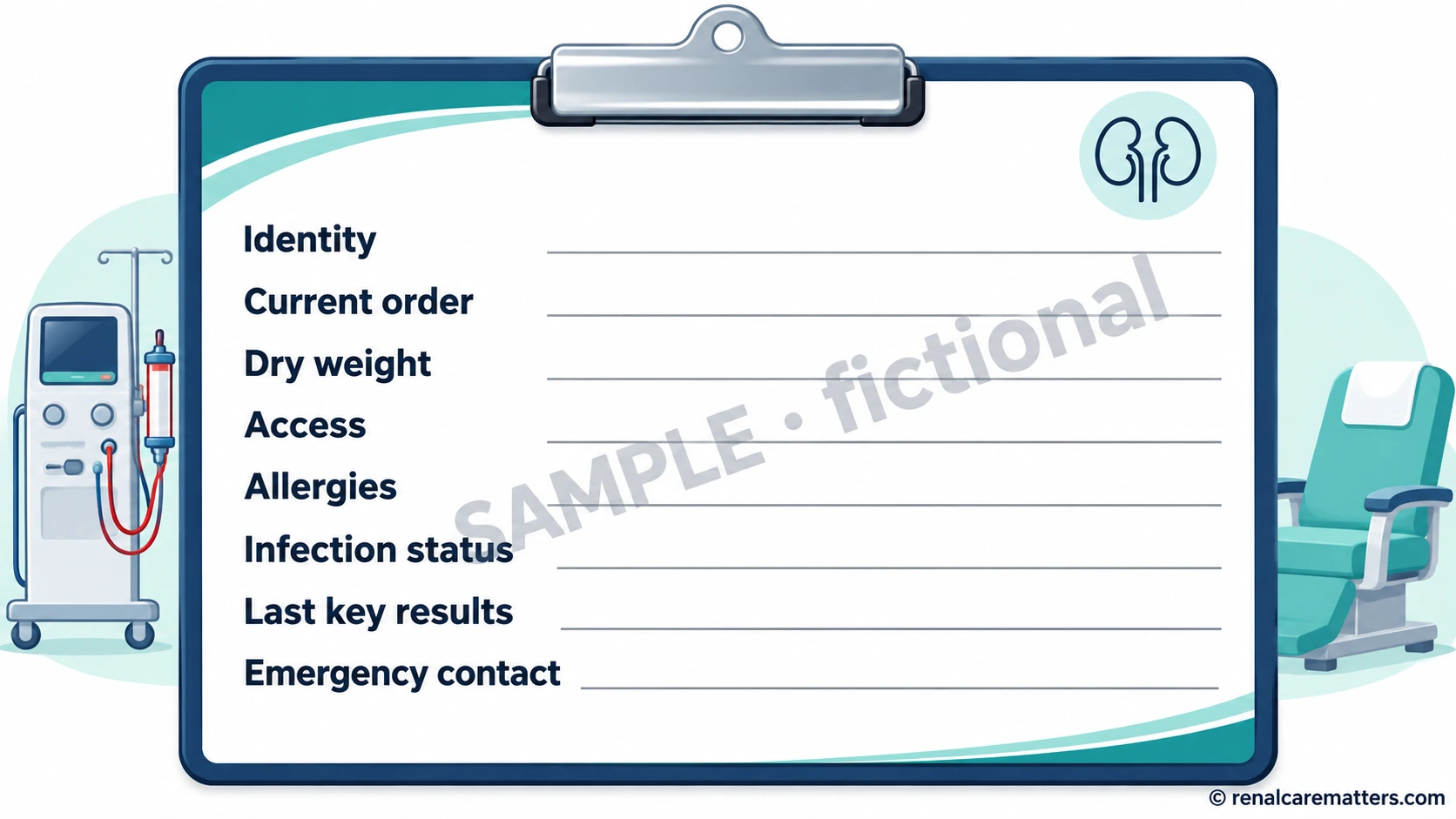
Figure 2. The minimum safe data set. If you cannot verify these, the session waits for a physician’s decision.
Agree in advance what must be verified before any patient is treated during downtime: identity, the current signed order, dry weight, access type, allergies, infection status, the most recent key laboratory values, and an emergency contact. Keep this on a protected offline roster, printed or stored on an approved device, refreshed on a schedule, with old copies destroyed.
Stop and callStop treatment for any patient whose current order cannot be verified. Ask the prescribing or covering physician to confirm the order directly and record it. Do not treat from memory or from an older order.
Designate the source record during downtime, usually paper downtime forms, and assign owners: intake, orders, pending results, treatment entries, and a hold on claims for the affected period.
Lesson · part 3
Carrying the paper back across
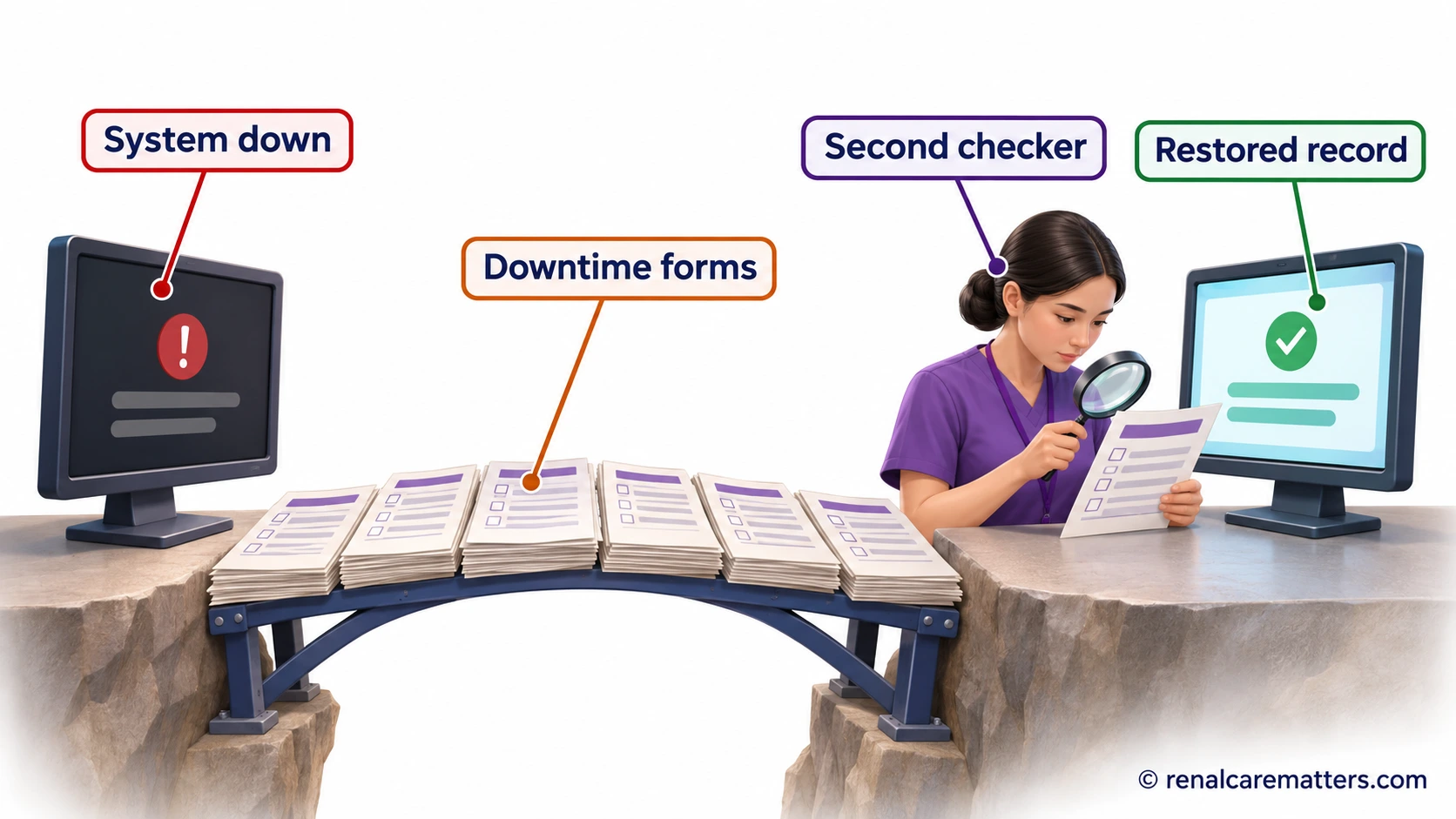
Figure 3. The paper bridge. Every downtime entry must be carried across and checked, not retyped from memory.
When the system returns, every downtime entry must be carried back and checked, not retyped from memory. Reconcile patient identity, order versions, completed treatments, pending and resulted laboratory tests, transmissions to other systems, and duplicate encounters. Preserve the original timestamps and the fact that the entry was made from a downtime record. Use a second checker for any discrepancy with clinical or billing consequences.
Item
Check
Owner
Orders
The order used matches the signed order in force
Physician on duty
Treatments
Each paper record has one electronic entry, not zero or two
Head nurse
Results
Results received during downtime were seen and acted on
Named clinician
Claims
Claims for the downtime period held until treatments reconcile
Claims lead
A cancer center in Ireland, hit by a national ransomware attack in May 2021, restored email on day 28 and cleared its reporting backlog only by day 210.3 Plan for downtime that lasts weeks, not hours.
Lesson · part 4
When personal data leak
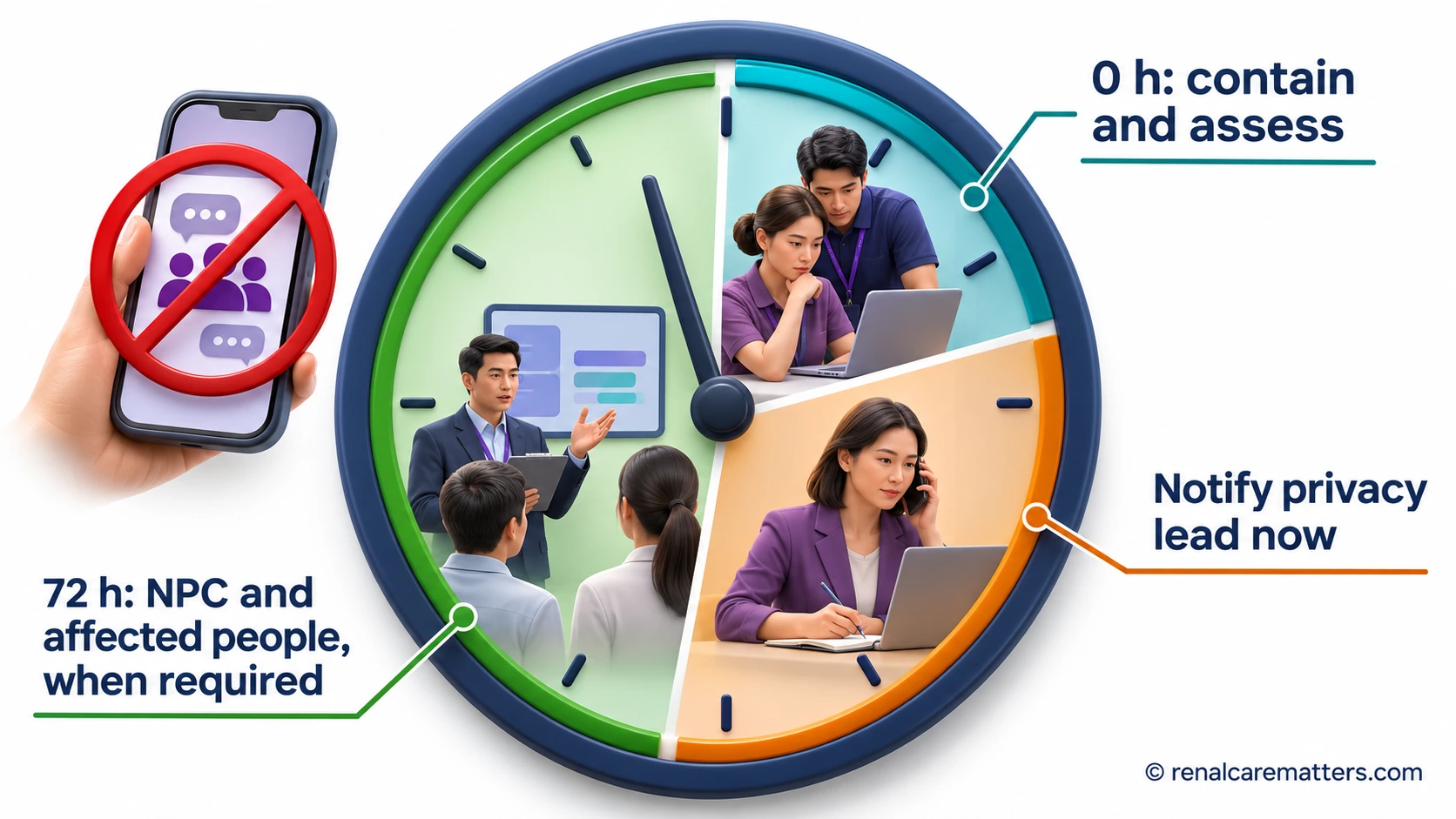
Health information is sensitive personal information under the Data Privacy Act.4 Sending a census with names, numbers, and hepatitis status to a personal group chat is an unauthorized disclosure, however well meant. Under the National Privacy Commission’s breach management rules, when notification is required, the NPC and affected individuals must be notified within 72 hours of knowledge or reasonable belief that a breach occurred.5
Figure 4. When personal data leak, the clock starts at knowledge. The privacy lead decides; the unit contains and reports at once.
Figure 5 · If it has already happened
ContainAsk the sender to delete the message and the group members to delete copies, and record who confirmed.
PreserveKeep a record of what was sent, to whom, and when.
Notify the privacy lead nowThe privacy lead assesses whether notification is required and handles the NPC and patients.
Fix the causeProvide an approved way to share the minimum information during downtime.
The unit’s job is to contain the problem and escalate it at once. The privacy lead’s job is to assess and notify. Do not wait until the end of the shift; the clock starts at knowledge.
On the floor
Real situations: problems and solutions
These are fictional but typical. For each one, cover the answer, decide what you would do, then compare. Where a step depends on local rules, your unit’s procedure and your supervisor’s direction come first.
The group chat roster
What you see
Reception proposes sending the full patient list to a personal group chat during an outage.
What is likely going on
An unauthorized disclosure.
What to do
Stop it. Use the approved offline roster and contact only those who need it.
Why it matters
Convenience is not a lawful basis.
The duplicate encounter
What you see
After restoration, three patients appear twice for the same day.
What is likely going on
A reconciliation gap.
What to do
Hold billing for those dates and reconcile against the paper source with a second checker.
Why it matters
Duplicate claims are billing errors even when unintended.
The order nobody can see
What you see
A new order written yesterday cannot be retrieved.
What is likely going on
Unverified orders.
What to do
Ask the prescriber to confirm the order directly before treatment.
Why it matters
Treat from verified information only.
Field notes
Print the offline roster on a schedule and destroy the old one.
Run a downtime drill once a year.
Know your privacy lead’s number by heart.
Case review
Back to the case: The chart goes dark
Which treatments go ahead? Patients whose identity, current order, and minimum safe data can be verified from the protected offline roster and paper records. The two patients with unprinted new orders wait until the prescriber confirms the orders directly; record the confirmation on the downtime form.
Ms. Cruz and the census. Stop it before it is sent, and use the approved offline roster, sharing only what each person needs. If it has already been sent, ask for deletion, record who confirmed, and notify the privacy lead immediately; the 72-hour clock may already be running.
Reconciliation. Assign a verifier and a second checker. Match each paper treatment to exactly one electronic entry, resolve the three duplicates and the one missing entry against the paper source, and hold claims for the period until the treatments reconcile. Review the event at the next quality meeting and schedule a downtime drill.
Skills lab · with your preceptor
Skills checklist: Downtime treatment, reconciliation, and breach escalation
Run a downtime simulation for one shift and a restoration with a preceptor and two role players. Your preceptor rates each step as satisfactory, needs practice, or not observed. Steps marked Critical must all be satisfactory before sign-off. This checklist supports supervised learning; your unit’s own procedure and competency form are the authority. A printable version of every checklist is on the trainer page.
CriticalTreats only from verified identity, current orders, and the minimum safe data set.
CriticalHolds treatment on an unverifiable order until the prescriber confirms it.
CriticalPrevents unauthorized sharing of patient lists.
Designates the downtime source record and owners for intake, orders, results, and claims.
Reconciles each paper entry to exactly one electronic entry with a second checker.
CriticalHolds claims for the downtime period until reconciled.
CriticalContains a suspected breach and notifies the privacy lead at once.
Placement activity. Print your unit’s offline roster, check that it is current and protected, and run a one-hour downtime drill on a quiet shift.
Self-assessment
Check your understanding
Each visit draws 8 questions at random from this module’s 15-question bank. Choose the single best answer for each, then select Check answers; an explanation appears under the best answer. Select New set of questions for a different mix. A good target is 7 of 8 on two different sets. Nothing you select is sent anywhere; scoring happens in your browser.
Dameff, C., Tully, J., Chan, T. C., Castillo, E. M., Savage, S., Maysent, P., Hemmen, T. M., Clay, B. J., & Longhurst, C. A. (2023). Ransomware attack associated with disruptions at adjacent emergency departments in the US. JAMA Network Open, 6(5), e2312270. https://doi.org/10.1001/jamanetworkopen.2023.12270
Pham, T. T., Loo, T. M., Malhotra, A., Longhurst, C. A., Hylton, D., Dameff, C., Tully, J., Wardi, G., Sell, R. E., & Pearce, A. K. (2024). Ransomware cyberattack associated with cardiac arrest incidence and outcomes at untargeted, adjacent hospitals. Critical Care Explorations, 6(4), e1079. https://doi.org/10.1097/CCE.0000000000001079
Keogh, R. J., Harvey, H., Brady, C., Hassett, E., Costelloe, S. J., O'Sullivan, M. J., Twomey, M., O'Leary, M. J., Cahill, M. R., O'Riordan, A., Joyce, C. M., Moloney, G., Flavin, A., Bambury, R. M., Murray, D., Bennett, K., Mullooly, M., & O'Reilly, S. (2024). Dealing with digital paralysis: Surviving a cyberattack in a national cancer center. Journal of Cancer Policy, 39, 100466. https://doi.org/10.1016/j.jcpo.2023.100466
Republic Act No. 10173: Data Privacy Act of 2012. (2012). Congress of the Philippines.
National Privacy Commission. (2016). NPC Circular No. 16-03: Personal data breach management. https://privacy.gov.ph/?p=553
Educational material for physicians and unit leaders. Completing it is an Academy learning record only. It does not confer CPD units, PSN attestation, DOH eligibility, PhilHealth accreditation, or appointment authority, and it does not replace current regulations, your facility’s bylaws and protocols, or legal advice.