Competence-matched staffing, protecting the person who speaks up, separating safety from discipline, and burnout.
PublishedNailathalaGipatikPepalwal:ReferencesMga SanggunianMga TinubdanReng Reperensya:3Audience: Physician heads of adult maintenance hemodialysis units · nephrologists preparing to take an appointment · head nurses, operations managers, and quality leads who share the leadership tableRead timeOras ng pagbasaOras sa pagbasaOras ning pamamasa:
Training track for physician heads of hemodialysis services
This module is study material for physician heads of adult maintenance hemodialysis services. It explains the reasoning behind common decisions; it is not a protocol and not legal advice. Regulations change: confirm every rule against the current text and your regional office before you rely on it. Clinical limits are set by your unit’s approved protocols and the attending nephrologist. Every case and record is fictional.
Learning objectives
After this module you should be able to
Recalculate safe slots after an absence, counting only assignments within each person’s validated competency.
Resolve an ambiguous order through the responsible physician and document the confirmed plan.
Refuse a request to falsify a record, and protect the person who raised it.
Keep patient protection and competency assessment on a separate track from employment investigation.
Recognize the signs of overload and burnout in a dialysis workforce, and break the loop that feeds them.
Negotiate coverage with an owner using the limiting resource, not volume.
Pre-testBefore you read, answer the 8 self-assessment questions and note your score. After the module, select New set of questions and compare. The difference is what you learned; the questions you still miss are what to reread.
Start here
The big picture, in plain words
In plain wordsStaffing a dialysis floor is like seating guests at a table where some dishes can only be served by certain waiters. Counting waiters tells you nothing until you know who can serve what.
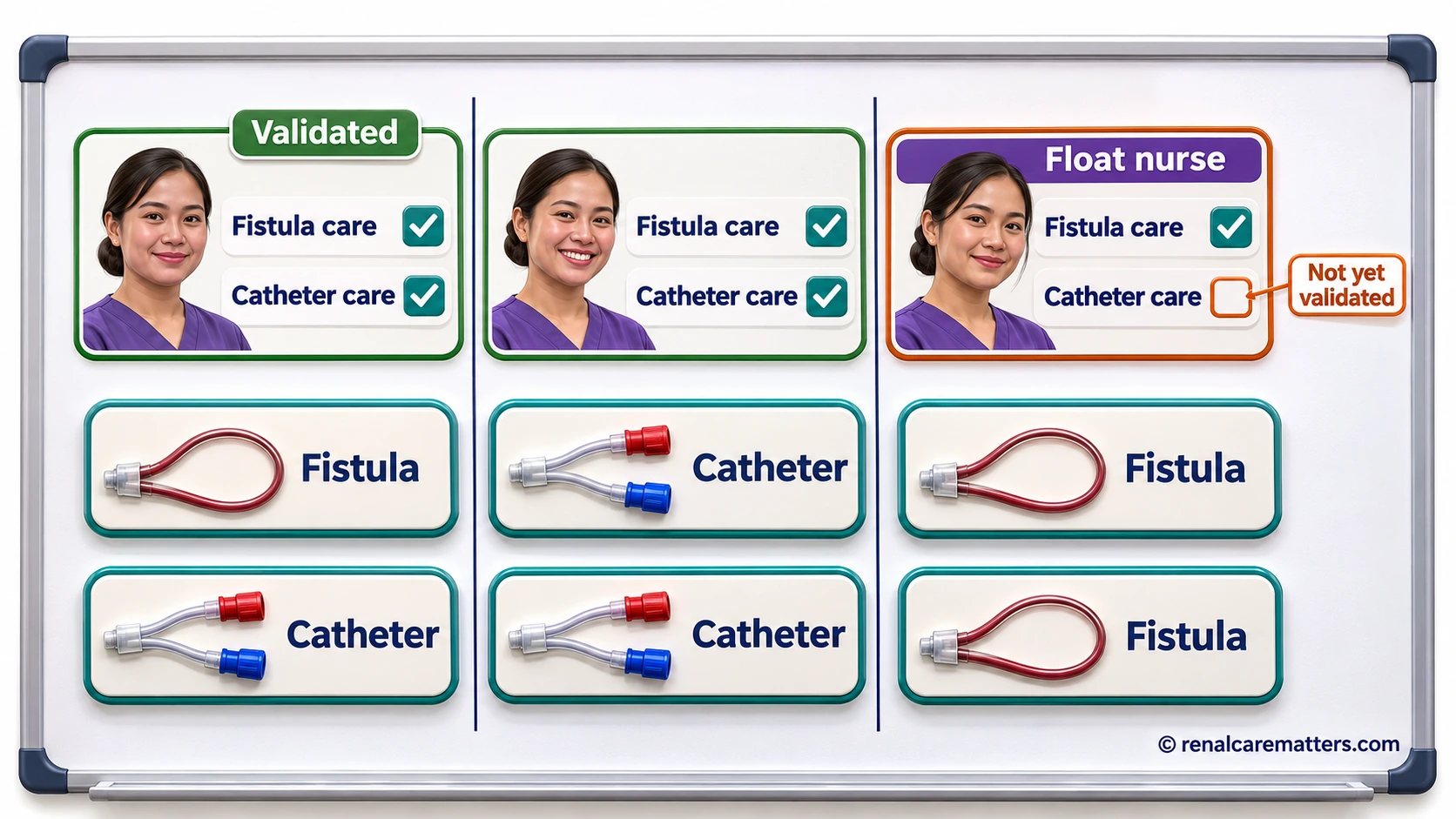
Figure 1. Count competencies, not bodies. A nurse counts toward the assignments she has been validated to do.
The picture has a limit. Waiters can learn a dish in an afternoon. A nurse needs observed, signed practice in your unit before she can safely connect a catheter alone, and a shortcut taken under pressure tends to become the habit that harms a patient months later.
Figure 2 · Key terms for this module
Validated competencyA skill observed and signed in your unit, with a date to check again.
Float nurseA nurse moved in from another unit or pool for a shift.
SupernumeraryPresent on the shift but not counted toward staffing.
Just cultureAn approach that separates honest error, at-risk behavior, and reckless conduct, and responds to each differently.
RetaliationAny adverse treatment of a person because they raised a safety concern.
BurnoutEmotional exhaustion, detachment, and a reduced sense of accomplishment caused by chronic work stress.
Opening case · fictional
Case: The nurse who calls out
At 5:30 on a Saturday, nurse Mr. Rodel Aquino calls in sick. The float nurse sent by nursing administration, Ms. Jenny Lopez, is experienced in the ward but has no validated catheter-care competency in dialysis. Four of the shift’s patients dialyze through catheters. An order for Mrs. Estrella Gomez says “ultrafiltration (UF) 3.5” (ultrafiltration) without units or time, and her attending nephrologist is not answering.
The owner, Mrs. Cynthia Sy, texts: “Fill all twelve chairs. We cannot afford cancellations this month.” At 5:50 the charge nurse, Ms. Liza Ramos, tells you quietly that a senior staff member has asked her to sign Ms. Lopez’s catheter competency “as of last month” so the roster looks complete.
Before reading on, decide:
Which assignments can Ms. Lopez safely take?
What do you do about Mrs. Gomez’s order, and about the backdating request?
What do you say to Mrs. Sy?
Keep your answers in mind. The lesson gives you what you need, and the case review near the end shows one sound response.
Lesson · part 1
Count competencies, not bodies
After an absence or a change in acuity, recalculate. Usable slots per shift are the smallest of released stations, competence-matched nursing, physician coverage, and any isolation or other restriction (Module 8). A float nurse counts toward the assignments she has been validated to do, with the supervision those assignments require, and no others.
Start with centrally approved backup staff. Then consider limiting capacity, clinically prioritized rescheduling, and confirmed transfers. A qualified physician decides which patients need urgent treatment and whose schedule can safely change; operations arranges transport and tells families through agreed channels.
Stop and callStop any assignment outside a staff member’s validated competency. Hold treatment on any order that is ambiguous until the responsible physician, or the covering physician named in your protocol, confirms it. Follow your unit’s protocol and record the escalation.
Lesson · part 2
A record that lies makes every record suspect
Backdating a competency sign-off is falsifying a record. It puts the patient in the hands of someone whose competence has not been shown, and it destroys the value of every other signature on the roster. Refuse it plainly, assess the competency properly, and escalate the request through human resources.
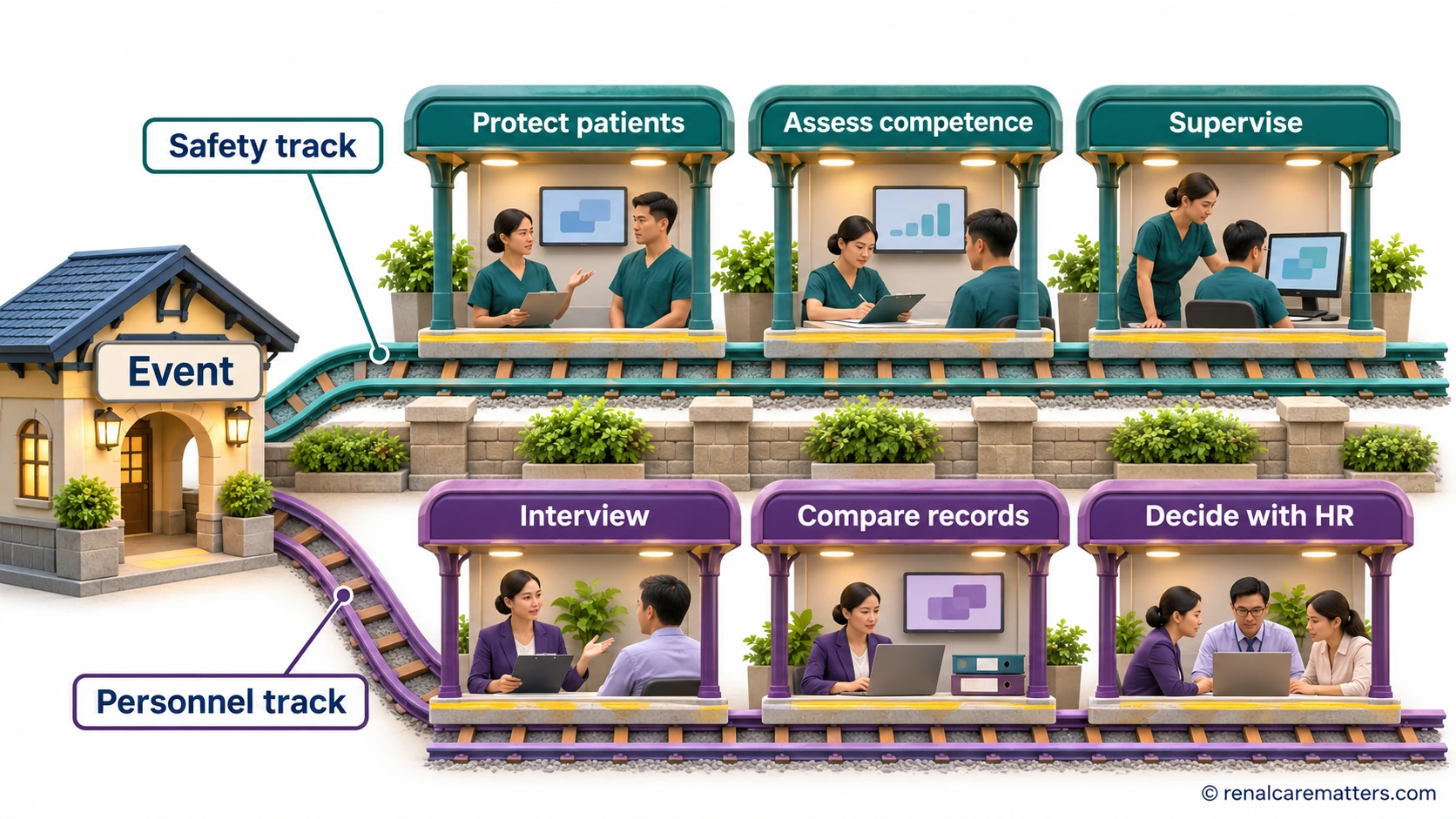
Figure 3. Keep patient safety and discipline on separate tracks, so people keep reporting.
Keep two tracks apart. On the safety track, protect patients now, assess the competency that is in question, and set temporary supervision or scope restrictions if needed, with objective criteria for return. On the personnel track, interview the people involved separately, compare accounts with records, and decide with human resources or medical staff leadership under your procedures. Mixing the tracks teaches staff that reporting a problem gets someone disciplined, and they stop reporting.
Protect the person who spoke up. Ms. Ramos did exactly what the system needs. Thank her, tell her what you will do, and watch for retaliation, including subtle forms such as worse shifts.
RememberThe first job after someone reports a problem is to make sure they would report the next one.
Lesson · part 3
The overload loop
Dialysis work is repetitive, physically demanding, and emotionally heavy, with patients who are chronically ill and sometimes angry. In a national United States survey of the interdisciplinary dialysis workforce, most staff were satisfied with their jobs, yet only 54% met criteria for professional fulfillment and 33% met criteria for burnout, driven by work exhaustion. Respondents commonly reported high workloads, lack of respect, including violence and hostility, and limited autonomy.1 In Italian renal units surveyed ten years apart, violence remained frequent despite training and reporting systems.2
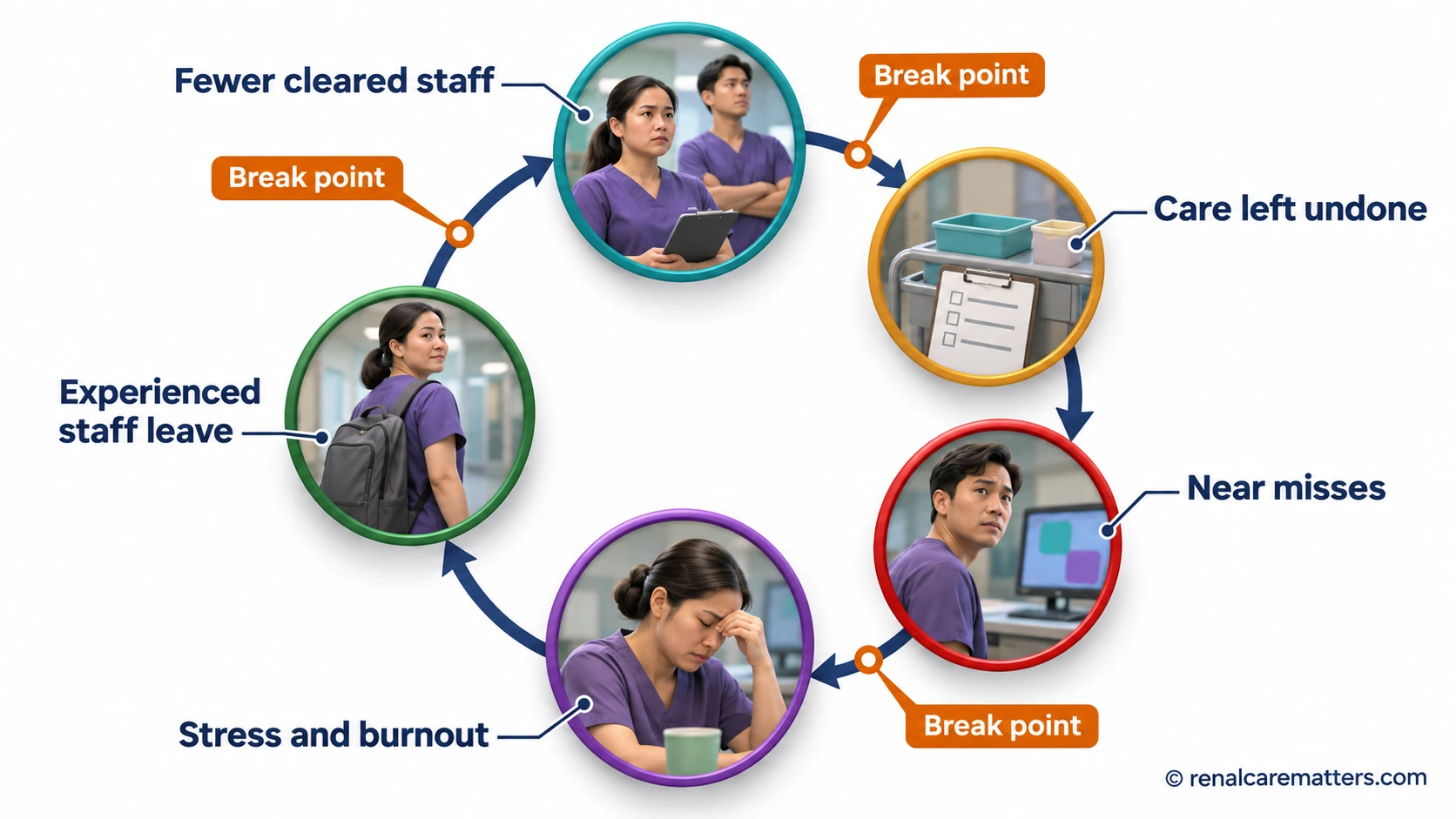
Figure 4. The overload loop feeds itself unless a leader breaks it.
Philippine data on dialysis staff burnout were not found. The mechanism, though, does not depend on country. Thin staffing leaves care undone; care left undone produces near misses; near misses and overtime produce exhaustion; exhausted experienced staff leave; and the remaining staff are thinner still.3 Break the loop where you can: protect breaks, spread difficult shifts instead of leaning on the same reliable people, close the loop on every hazard reported, and treat violence against staff as a safety event.
Lesson · part 4
Negotiating with the owner
The owner’s concern is real: cancellations cost money, and money pays staff. Your job is to show the trade-off clearly, not to win an argument.
Say
Why
“We can treat nine safely this morning. Here is the one thing that limits us.”
Names the limiting resource
“These three patients will be treated this afternoon or at our partner unit; their nephrologists agreed.”
Shows nobody is abandoned
“If we approve one relief nurse with catheter competency, we recover all twelve.”
Gives a decision with a cost
“I cannot sign off an assignment that is outside a nurse’s competency.”
States the line once, without heat
In a small unit, you may have a conflict, for example if the person asking for the backdated record is a relative of the owner. Arrange an alternate reviewer.
On the floor
Real situations: problems and solutions
These are fictional but typical. For each one, cover the answer, decide what you would do, then compare. Where a step depends on local rules, your unit’s procedure and your supervisor’s direction come first.
The backdated record
What you see
A senior employee asks the charge nurse to backdate a competency sign-off.
What is likely going on
A request to falsify a record.
What to do
Refuse, protect the charge nurse, and assess the competency properly. Escalate the request through HR.
Why it matters
A false record makes every other record suspect.
The same three nurses
What you see
The same three nurses absorb every short shift.
What is likely going on
Hidden overload.
What to do
Track who covers gaps and spread the load. Ask what would let them say no.
Why it matters
The most reliable people burn out first.
The nurse who spoke up
What you see
A nurse who reported an unsafe assignment is now being given the worst shifts.
What is likely going on
Retaliation.
What to do
Stop it, document it, and involve HR.
Why it matters
People stop reporting when reporting costs them.
Field notes
Thank the person who raises a concern before you answer it.
Write objective return-to-duty criteria.
Arrange an alternate reviewer when you have a conflict.
Case review
Back to the case: The nurse who calls out
Ms. Lopez’s assignments. She can take patients with fistulas or grafts if she is validated for those tasks in your unit, or work supernumerary alongside a validated nurse. The four catheter patients go to validated nurses. If that leaves fewer safe slots than patients, the physicians prioritize, and some patients move to the afternoon or a partner unit.
The order and the backdating. Mrs. Gomez’s treatment waits for her attending nephrologist or the covering physician to confirm the ultrafiltration goal in units and time; record each call. Refuse the backdating, thank Ms. Ramos, and escalate the request to human resources on the personnel track. Ms. Lopez’s competency is assessed properly, on a later day, by an observer.
What to tell Mrs. Sy. The safe number, the limiting resource, where each remaining patient will be treated, and the decision that would recover full capacity: approving a validated relief nurse. Then review, over the next month, whether the same people keep absorbing these gaps.
Skills lab · with your preceptor
Skills checklist: Staffing decision and protected escalation
Role-play the first fifteen minutes of the case and the owner meeting with a preceptor and two role players. Your preceptor rates each step as satisfactory, needs practice, or not observed. Steps marked Critical must all be satisfactory before sign-off. This checklist supports supervised learning; your unit’s own procedure and competency form are the authority. A printable version of every checklist is on the trainer page.
Identifies the limiting resource and recalculates safe slots.
CriticalAssigns the float nurse only within validated competency, with supervision as required.
CriticalHolds treatment on an ambiguous order until the responsible physician confirms it.
CriticalRefuses to falsify or backdate any record.
CriticalThanks and protects the person who raised the concern.
Separates the safety track from the personnel track.
Presents the owner with the safe number, the plan for every patient, and a decision with a cost.
Arranges an alternate reviewer when there is a conflict.
Placement activity. Track for one month who covers short shifts on your unit. If the same few people carry most of them, present a plan to spread the load.
Self-assessment
Check your understanding
Each visit draws 8 questions at random from this module’s 15-question bank. Choose the single best answer for each, then select Check answers; an explanation appears under the best answer. Select New set of questions for a different mix. A good target is 7 of 8 on two different sets. Nothing you select is sent anywhere; scoring happens in your browser.
Plantinga, L. C., Bender, A. A., Urbanski, M., Hoge, C., Joseph, J., Damron, K. C., Douglas-Ajayi, C. J., Rickenbach, F., Morgan, J. C., & Jaar, B. G. (2023). Work experiences of the interdisciplinary dialysis workforce in the United States: A cross-Sectional survey. American Journal of Nephrology, 54(3-4), 145–155. https://doi.org/10.1159/000530553
de Barbieri, I., Buja, A., Noble, H., & Strini, V. (2022). Violence and aggression prevention and management strategies in renal units: a survey after 10 years. Journal of Renal Care, 48(3), 207–214. https://doi.org/10.1111/jorc.12417
Thomas-Hawkins, C., Flynn, L., & Clarke, S. P. (2008). Relationships between registered nurse staffing, processes of nursing care, and nurse-reported patient outcomes in chronic hemodialysis units. Nephrology Nursing Journal, 35(2), 123-30, 145; quiz 131.
Educational material for physicians and unit leaders. Completing it is an Academy learning record only. It does not confer CPD units, PSN attestation, DOH eligibility, PhilHealth accreditation, or appointment authority, and it does not replace current regulations, your facility’s bylaws and protocols, or legal advice.