Infection, Water, and Machines: The Invisible Barriers
Why dialysis is an infection-prone setting, what water can do to a patient, reading a water log, and two-signature release.
PublishedNailathalaGipatikPepalwal:ReferencesMga SanggunianMga TinubdanReng Reperensya:13Audience: Physician heads of adult maintenance hemodialysis units · nephrologists preparing to take an appointment · head nurses, operations managers, and quality leads who share the leadership tableRead timeOras ng pagbasaOras sa pagbasaOras ning pamamasa:
Training track for physician heads of hemodialysis services
This module is study material for physician heads of adult maintenance hemodialysis services. It explains the reasoning behind common decisions; it is not a protocol and not legal advice. Regulations change: confirm every rule against the current text and your regional office before you rely on it. Clinical limits are set by your unit’s approved protocols and the attending nephrologist. Every case and record is fictional.
Learning objectives
After this module you should be able to
Explain why patients on hemodialysis are unusually vulnerable to bloodstream infection and to contaminants in water.
Name the core interventions for preventing bloodstream infection, and audit one with an honest denominator.
Read a water treatment diagram and log: what each stage removes, where samples come from, and which limits apply.
Hold affected operations when a critical check fails or is unknown, and bound the exposure by station and shift.
Separate technical verification from clinical authorization, and require both before restart.
Plan placement and timely dialysis for a patient with possible tuberculosis or a reactive hepatitis B result.
Pre-testBefore you read, answer the 8 self-assessment questions and note your score. After the module, select New set of questions and compare. The difference is what you learned; the questions you still miss are what to reread.
Start here
The big picture, in plain words
In plain wordsThink of the water room as part of every patient’s bloodstream. Whatever gets past the filters gets to the blood.
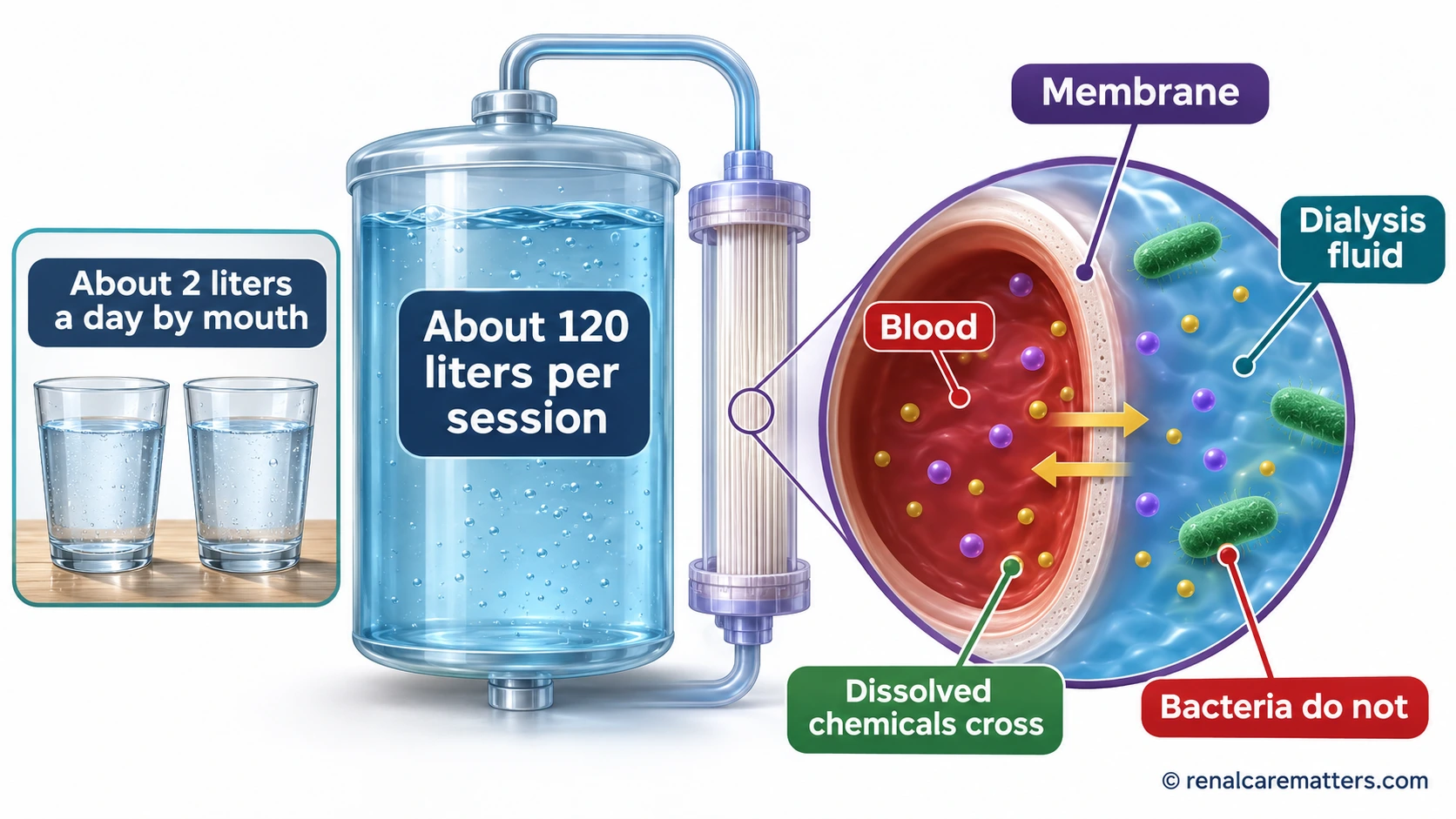
The picture is closer to the truth than it sounds, with one limit. Most bacteria cannot cross an intact dialyzer membrane, but bacterial fragments such as endotoxin can, and small dissolved chemicals cross freely. That is why dialysis water is held to standards stricter than drinking water, and why a chlorine test matters more than a clean-looking tank.
Figure 1 · Key terms for this module
Bloodstream infection (BSI)Bacteria or fungi growing in the blood. In dialysis, most start at the vascular access.
Core interventionsThe Centers for Disease Control and Prevention (CDC) set of practices proven together to reduce dialysis bloodstream infections.
ChloramineA disinfectant added to city water. It passes through reverse osmosis and destroys red cells if not removed by carbon.
EndotoxinFragments of bacterial cell walls that can cross a dialyzer membrane and cause fever and inflammation.
colony-forming unit (CFU)/mLColony-forming units per milliliter, the count of live bacteria in a sample.
endotoxin unit (EU)/mLEndotoxin units per milliliter.
Action levelA result below the maximum that triggers investigation before the maximum is reached.
Technical releaseThe signed statement by the technical lead that a system is within limits.
Opening case · fictional
Case: Two patients have rigors
At 10:15 on a Wednesday at a sixteen-station hospital-based unit in Pampanga, two patients on the second shift, Mr. Domingo Reyes at station 4 and Mrs. Luz Mercado at station 11, develop shaking chills an hour into treatment. Both have fistulas. Both were well before they connected.
The water technician, Mr. Allan Pineda, reports that this morning’s total chlorine test was not logged; the night technician says he did it but forgot to write it. A product-water culture from last week came back this morning at 70 CFU/mL from a port labeled only “reverse osmosis (RO) room” (reverse osmosis room). The vendor’s representative tells you by phone that “yesterday everything was normal.”
Before reading on, decide:
Who do you call first, and what do you stop?
Which stations and shifts are potentially affected, and how do you find out?
What evidence do you need before anyone restarts, and who signs it?
Keep your answers in mind. The lesson gives you what you need, and the case review near the end shows one sound response.
Lesson · part 1
Why dialysis is an infection-prone setting
Patients on hemodialysis have their bloodstream accessed three times a week, often through a catheter, in a room shared with other patients, while their immune response is blunted by uremia. In United States surveillance from 2017 to 2020, the Staphylococcus aureus bloodstream infection rate among patients on hemodialysis was about 100 times that of other adults (4,248 versus 42 per 100,000 person-years). Central venous catheters carried about six times the risk of fistulas.1
Philippine data point the same way. In a retrospective cohort at the Philippine General Hospital, where temporary catheters were still being used for maintenance dialysis, catheter-related bloodstream infection occurred at 6.72 episodes per 1,000 catheter-days. Gram-negative organisms, including Burkholderia cepacia complex, were the most common, and nearly half of isolates were multidrug-resistant.2 Gram-negative organisms in dialysis infections should make you look at water and environmental sources, not only skin.
RememberThe catheter is the single biggest modifiable infection risk in your unit. Every catheter-day you remove is a risk you remove.
Lesson · part 2
The core interventions, and an honest audit
The CDC core interventions combine surveillance with feedback, hand hygiene observation, catheter and vascular access care observation, staff competency, patient education, catheter reduction, chlorhexidine skin antisepsis, catheter hub disinfection, and antimicrobial ointment at catheter exit sites.3 In a United States collaborative of 17 facilities that adopted them, bloodstream infection rates fell 32% and access-related bloodstream infection rates fell 54% at the start of the intervention period, and the decline was sustained.4 There was no control group, so some of the effect may reflect secular trends, but the direction is consistent with the mechanism.
An audit is useful only with a denominator. “Hand hygiene is good” is a feeling. “We observed 120 opportunities this month and 96 were correct, 80%, down from 88%” is a measurement you can act on.
Figure 2 · An actionable audit
ObserveA set number of opportunities, on different shifts and staff.
CountCorrect over observed, with the definition written down.
Feed backTo the person, on the day, privately.
Re-observeAfter correction, to see whether it held.
Review hepatitis B screening, vaccination, and isolation arrangements against your facility’s pathway. Hemodialysis-linked hepatitis B transmission fell sharply where vaccination, serologic screening, and dedicated machines and staff for infected patients were used together.5
Lesson · part 3
What water can do to a patient
Figure 3. About 120 liters of dialysis fluid meet the blood across a thin membrane every session. The water room is part of the patient’s circulation.
A person drinks about two liters a day, filtered by the gut and liver. A patient on hemodialysis meets roughly 120 liters of dialysis fluid across a membrane a few micrometers thick, every session. Contaminants that are harmless to drink can be harmful at that volume and route.
Event
What happened
Lesson
Caruaru, Brazil, 1996
Water from a reservoir with cyanobacteria reached a dialysis center without adequate treatment. 101 patients met the case definition for acute liver injury and 50 died; microcystin toxins were found in the water and in patients’ tissue6
Source water and treatment failures can kill a unit’s patients within days
São Paulo, Brazil, 2000
Chlorine and chloramine residuals above limits in dialysis water and reprocessed dialyzers were associated with an outbreak of hemolytic reactions7
Chlorine tests must be done, logged, and acted on every shift
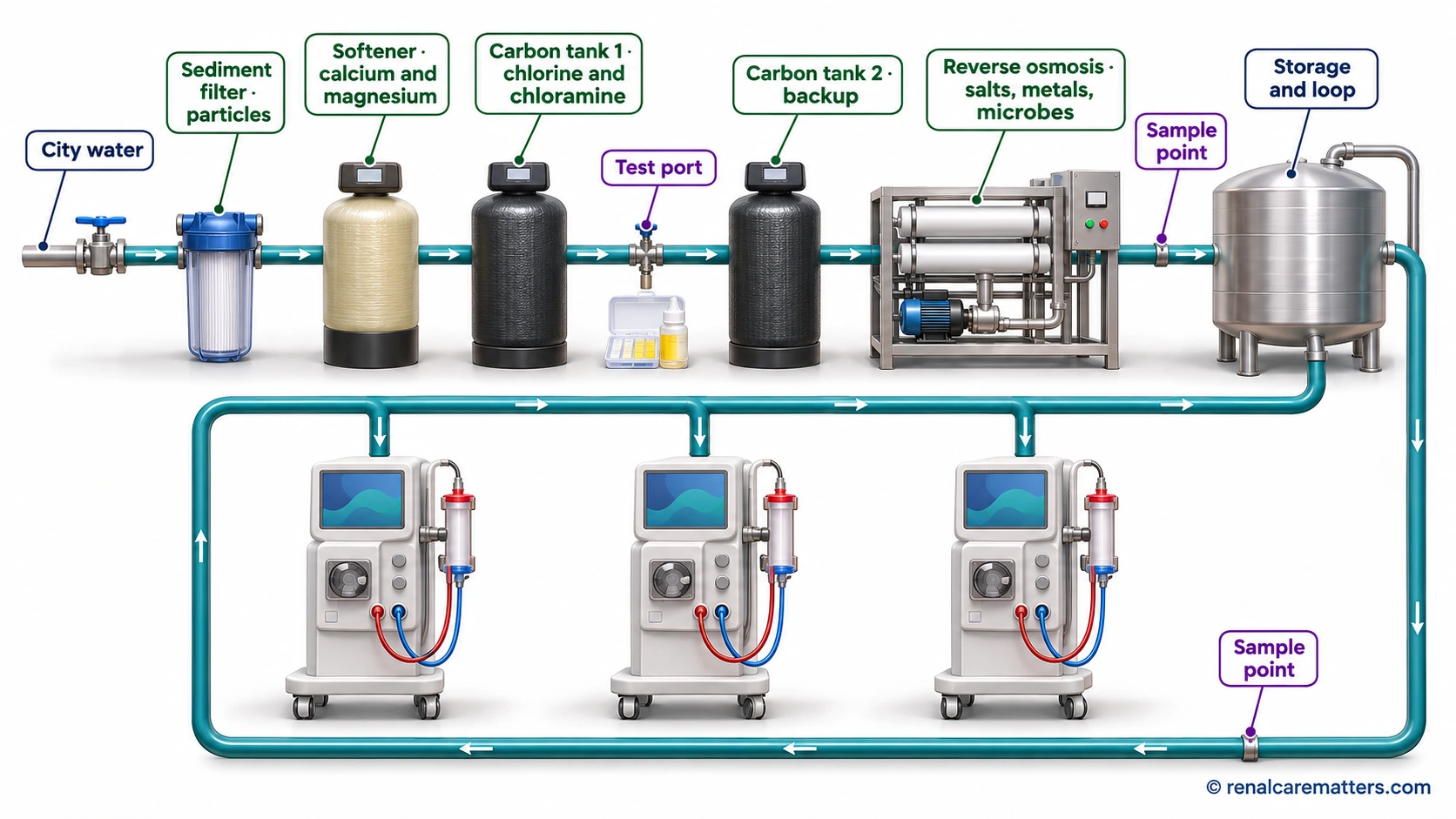
Figure 4. The water treatment train. Two carbon tanks in series let a chlorine breakthrough be caught after the first tank, before the second one fails.
Chloramine is not removed by reverse osmosis. It depends on activated carbon, and carbon can be exhausted without warning when the incoming level rises. Placing two carbon tanks in series, with a test port between them, lets a breakthrough be caught after the first tank, before the second fails.8
The International Organization for Standardization (ISO) water standard, ISO 23500-3 (2024), sets maximum limits for dialysis water of fewer than 100 CFU/mL of bacteria and less than 0.25 EU/mL of endotoxin, and calls for lower action levels so that problems are investigated before the maximum is reached.9 Action levels are commonly set at half the maximums. In the Philippines, the Department of Health (DOH) water order governs sampling, analysis, and records; use the limits your unit adopted under it, and check whether they match the current ISO edition.10 Calculator 8 compares a result with the limits you enter.
Stop and callStop dialysis on the affected loop when a critical water check fails, is missing, or cannot be traced to a named port. Call the technical lead and the attending nephrologists. Restart only on a documented technical release followed by your clinical authorization.
Lesson · part 4
Two signatures, two questions
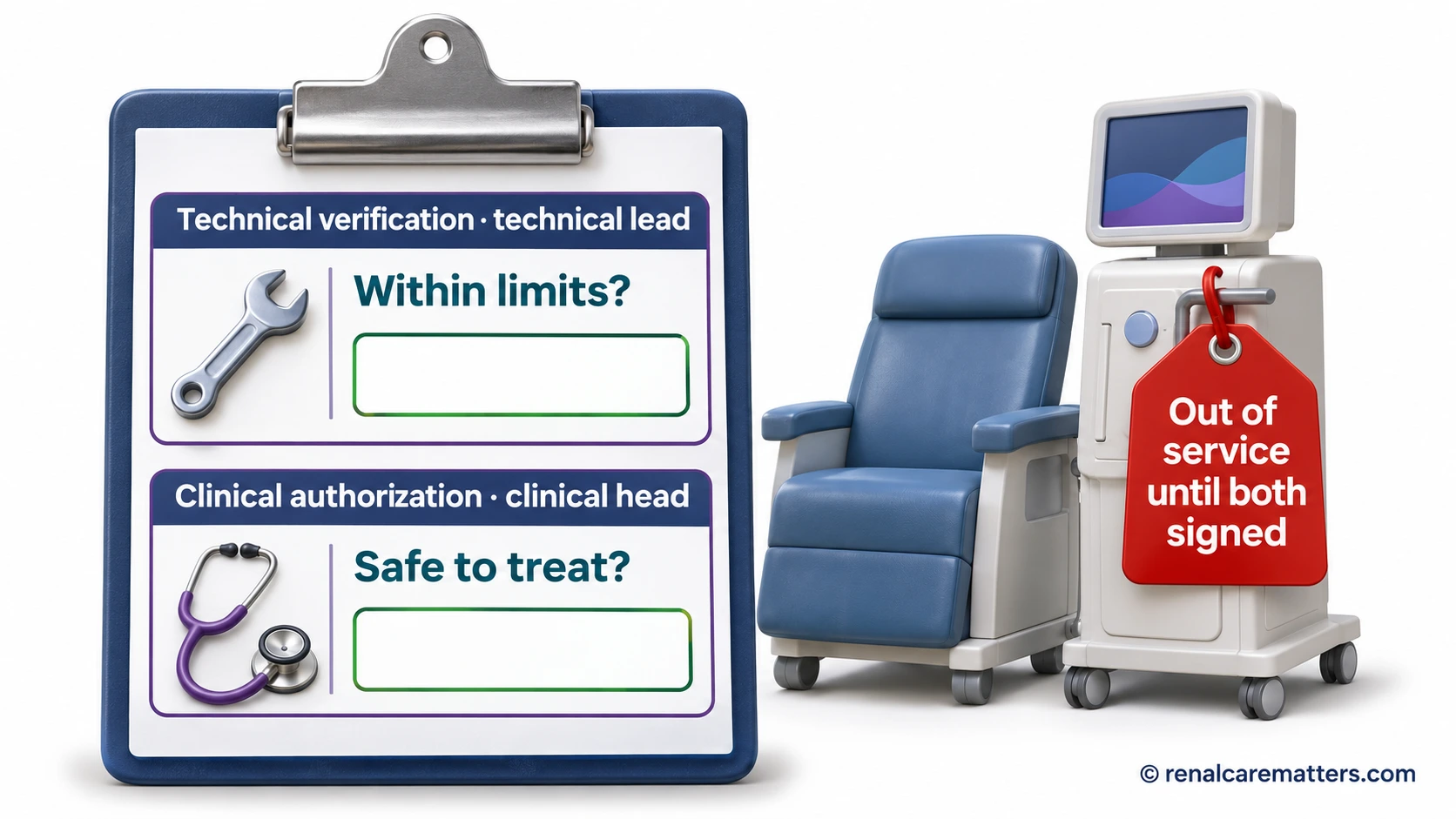
Figure 5. Two signatures, two questions. Is the system within limits? Is it safe to treat patients again?
Technical verification asks whether the system is within its limits: the result, the port, the sample identity, the laboratory, the date, and the corrective action. The technical lead signs it. Clinical authorization asks whether it is safe to treat patients again: whether affected patients have been assessed, exposure bounded, and staff told. The clinical head signs it. Neither signature can stand in for the other.
Apply the same discipline to machines. A machine returns after repair, recall, or a failed disinfection only with a documented technical release. If your unit reprocesses dialyzers, trace one through patient assignment, reprocessing, testing for integrity and fiber bundle volume, and release, against the rules and the manufacturer’s instructions. A systematic review of reuse and mortality found mostly very low-quality evidence and no consistent difference from single use; the safety of reuse depends on how well it is done.11
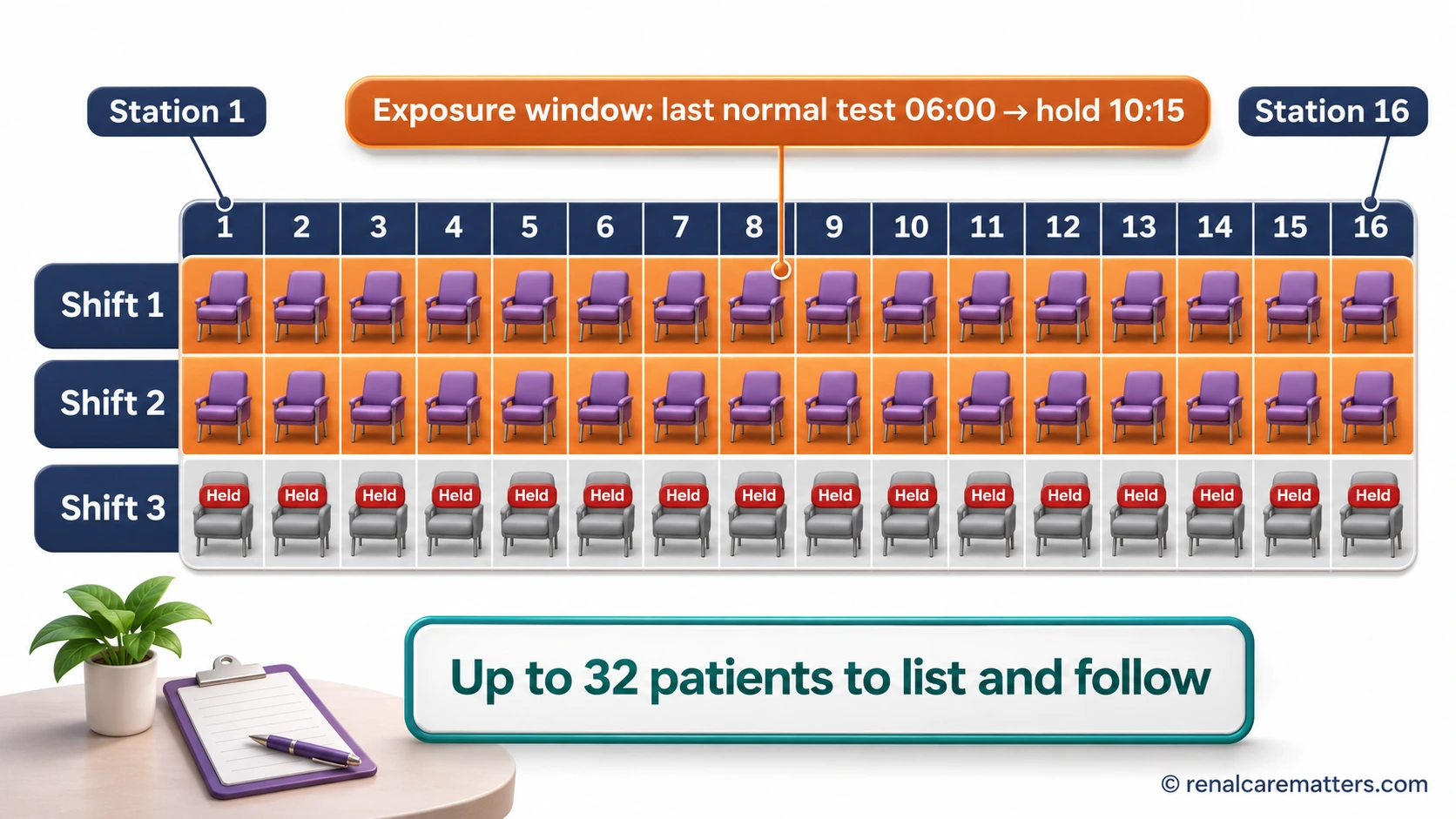
Bounding exposure, illustration only. One water loop serves stations 1 to 16. A chlorine breakthrough sometime between the 06:00 and 10:00 checks could have reached every patient treated on the loop in that window: two shifts × 16 stations = up to 32 patients. List them by station and shift.
Figure 6. Bound the exposure by station and shift, then give every patient in the window a follow-up owner.
Lesson · part 5
Admitting a patient with an infection concern
Patients on dialysis have a much higher risk of tuberculosis than the general population. In Singapore, incidence among patients with chronic kidney disease stage 5 ranged from 279 to 630 per 100,000, against 33 to 41 per 100,000 in the general population.12 The World Health Organization recommends systematic testing and treatment of latent tuberculosis infection in patients receiving dialysis.13
If a patient arrives with possible infectious pulmonary tuberculosis, arrange prompt clinical assessment and activate your respiratory infection pathway with infection prevention and the tuberculosis team. Time on treatment alone does not settle which precautions are needed. If a transfer record shows a reactive hepatitis B surface antigen, confirm the result and apply your hepatitis B pathway, including whether a dedicated room, machine, and staff are available, while arranging dialysis without unsafe delay. Make the exposure decision and the placement decision separately for each case.
On the floor
Real situations: problems and solutions
These are fictional but typical. For each one, cover the answer, decide what you would do, then compare. Where a step depends on local rules, your unit’s procedure and your supervisor’s direction come first.
“Yesterday was normal”
What you see
The vendor says yesterday’s chlorine test was normal, but today’s is not logged.
What is likely going on
Reassurance in place of evidence.
What to do
Test now. Hold dialysis on the affected loop until the result is within limits and signed.
Why it matters
Chloramine can break through a carbon tank within hours.
The port called “RO room”
What you see
A culture result is labeled only “RO room.”
What is likely going on
An unidentifiable sample.
What to do
Repeat it from a named port, and fix the labeling.
Why it matters
A result you cannot place cannot support a release.
A reactive transfer
What you see
A transferring patient’s record shows a reactive hepatitis B surface antigen.
What is likely going on
A result that needs confirmation and a placement plan.
What to do
Confirm the result, apply the hepatitis B virus (HBV) pathway, and arrange timely dialysis while placement is settled.
Why it matters
Delaying dialysis is a risk too.
Field notes
Read the water log yourself once a week.
Audit hand hygiene with a denominator, not a feeling.
Keep the technical and clinical signatures on separate lines.
Case review
Back to the case: Two patients have rigors
Who first, and what stops? Call the attending nephrologists and the physician on duty for the two patients, and the technical lead for the water. Stop new connections on the loop now. For patients already connected, the physicians decide, patient by patient, whether to end treatment early; do not return blood from a circuit suspected of a dialyzer reaction without a physician’s decision. Draw blood cultures and, if hemolysis is possible, check for it.
Who is affected? Everyone treated on that loop since the last documented normal chlorine test, by station and shift. Ask the technical lead to test chlorine before and after each carbon tank now, and to repeat the culture from named ports. The “RO room” result cannot support any decision until it can be traced to a port; 70 CFU/mL is below a 100 CFU/mL maximum but above a common action level, so it requires investigation in any case.
What evidence before restart? A documented within-limit chlorine result after the carbon, the corrective action recorded, the culture repeated from identified ports, and the technical lead’s signed release. Then your clinical authorization, after the affected patients are assessed and followed up by named owners. The vendor’s reassurance is not evidence. Report through your incident system, and check your reporting obligations.
Skills lab · with your preceptor
Skills checklist: Infection prevention audit, water-log review, and two-signature release
Run a short infection prevention audit, review a water log with an ambiguous port and a missing chlorine entry, and lead a release decision with a preceptor playing the technical lead. Your preceptor rates each step as satisfactory, needs practice, or not observed. Steps marked Critical must all be satisfactory before sign-off. This checklist supports supervised learning; your unit’s own procedure and competency form are the authority. A printable version of every checklist is on the trainer page.
Audits a core intervention with a written definition and an observed denominator.
Gives same-day feedback and schedules re-observation.
CriticalIdentifies a missing or untraceable water result as a failed check.
CriticalHolds dialysis on the affected loop until a technical release is documented.
CriticalBounds exposure by station and shift and names a follow-up owner for each patient.
CriticalRequires technical release before signing clinical authorization.
CriticalRejects verbal reassurance in place of a documented result.
Plans timely dialysis and placement for a patient with a reactive hepatitis B or tuberculosis concern.
Reports the event through the incident system and checks reporting obligations.
Placement activity. Review your unit’s water log every week for a month. Check that every result names a port, a time, and a signature, and that every result above an action level has a recorded action.
Self-assessment
Check your understanding
Each visit draws 8 questions at random from this module’s 15-question bank. Choose the single best answer for each, then select Check answers; an explanation appears under the best answer. Select New set of questions for a different mix. A good target is 7 of 8 on two different sets. Nothing you select is sent anywhere; scoring happens in your browser.
Rha, B., See, I., Dunham, L., Kutty, P. K., Moccia, L., Apata, I. W., Ahern, J., Jung, S., Li, R., Nadle, J., Petit, S., Ray, S. M., Harrison, L. H., Bernu, C., Lynfield, R., Dumyati, G., Tracy, M., Schaffner, W., Ham, D. C., . . . Novosad, S. (2023). Vital signs: Health disparities in hemodialysis-associated Staphylococcus aureus bloodstream infections — United States, 2017–2020. MMWR. Morbidity and Mortality Weekly Report, 72(6), 153–159. https://doi.org/10.15585/mmwr.mm7206e1
Pasilan, R. M., Tomacruz-Amante, I. D., & Dimacali, C. T. (2024). The epidemiology and microbiology of central venous catheter related bloodstream infections among hemodialysis patients in the Philippines: a retrospective cohort study. BMC Nephrology, 25(1), 331. https://doi.org/10.1186/s12882-024-03776-8
Centers for Disease Control and Prevention. (n.d.). Dialysis safety: Core interventions. Retrieved November 23, 2026, from https://www.cdc.gov/dialysis-safety/hcp/clinical-safety/
Patel, P. R., Yi, S. H., Booth, S., Bren, V., Downham, G., Hess, S., Kelley, K., Lincoln, M., Morrissette, K., Lindberg, C., Jernigan, J. A., & Kallen, A. J. (2013). Bloodstream infection rates in outpatient hemodialysis facilities participating in a collaborative prevention effort: a quality improvement report. American Journal of Kidney Diseases, 62(2), 322–330. https://doi.org/10.1053/j.ajkd.2013.03.011
Winston, A., Wurcel, A. G., Gordon, C., & Goyal, N. (2020). Viral hepatitis in patients on hemodialysis. Seminars in Dialysis, 33(3), 254–262. https://doi.org/10.1111/sdi.12882
Jochimsen, E. M., Carmichael, W. W., An, J. S., Cardo, D. M., Cookson, S. T., Holmes, C. E., Antunes, M. B., de Melo Filho, D. A., Lyra, T. M., Barreto, V. S., Azevedo, S. M., & Jarvis, W. R. (1998). Liver failure and death after exposure to microcystins at a hemodialysis center in Brazil. New England Journal of Medicine, 338(13), 873–878. https://doi.org/10.1056/NEJM199803263381304
Calderaro, R. V., & Heller, L. (2001). Outbreak of hemolytic reactions associated with chlorine and chloramine residuals in hemodialysis water [in Portuguese]. Revista de Saúde Pública, 35(5), 481–486. https://doi.org/10.1590/s0034-89102001000500012
International Organization for Standardization. (2024). Preparation and quality management of fluids for haemodialysis and related therapies: Part 3. Water for haemodialysis and related therapies (ISO Standard No. 23500-3:2024, 2nd ed.). ISO.
Department of Health. (2013). Administrative Order No. 2013-0003: Implementing guidelines in the analysis, monitoring and maintenance of water used in dialysis facilities. Republic of the Philippines.
Galvao, T. F., Silva, M. T., Araujo, M. E. d. A., Bulbol, W. S., & Cardoso, A. L. d. M. P. (2012). Dialyzer reuse and mortality risk in patients with end-stage renal disease: a systematic review. American Journal of Nephrology, 35(3), 249–258. https://doi.org/10.1159/000336532
Metussin, D., Tavitian-Exley, I., Hao, Y., Kyaw, W. M., Khoo, B., & Ng, D. H. L. (2026). Incidence and risk factors for tuberculosis in patients with chronic kidney disease in Singapore. Annals of the Academy of Medicine, Singapore, 55(2), 64–73. https://doi.org/10.47102/annals-acadmedsg.2025321
Getahun, H., Matteelli, A., Abubakar, I., Aziz, M. A., Baddeley, A., Barreira, D., Den Boon, S., Borroto Gutierrez, S. M., Bruchfeld, J., Burhan, E., Cavalcante, S., Cedillos, R., Chaisson, R., Chee, C. B.-E., Chesire, L., Corbett, E., Dara, M., Denholm, J., de Vries, G., . . . Raviglione, M. (2015). Management of latent Mycobacterium tuberculosis infection: WHO guidelines for low tuberculosis burden countries. The European Respiratory Journal, 46(6), 1563–1576. https://doi.org/10.1183/13993003.01245-2015
Educational material for physicians and unit leaders. Completing it is an Academy learning record only. It does not confer CPD units, PSN attestation, DOH eligibility, PhilHealth accreditation, or appointment authority, and it does not replace current regulations, your facility’s bylaws and protocols, or legal advice.