Which DOH rule governs what, changes that need approval first, the three-source tracer, and closing a finding with proof.
PublishedNailathalaGipatikPepalwal:ReferencesMga SanggunianMga TinubdanReng Reperensya:4Audience: Physician heads of adult maintenance hemodialysis units · nephrologists preparing to take an appointment · head nurses, operations managers, and quality leads who share the leadership tableRead timeOras ng pagbasaOras sa pagbasaOras ning pamamasa:
Training track for physician heads of hemodialysis services
This module is study material for physician heads of adult maintenance hemodialysis services. It explains the reasoning behind common decisions; it is not a protocol and not legal advice. Regulations change: confirm every rule against the current text and your regional office before you rely on it. Clinical limits are set by your unit’s approved protocols and the attending nephrologist. Every case and record is fictional.
Learning objectives
After this module you should be able to
Identify which Department of Health (DOH) issuances govern your facility, and which questions each one answers.
Recognize changes that need a regulatory decision before they happen: new stations, a new bay, relocation, or a change of ownership.
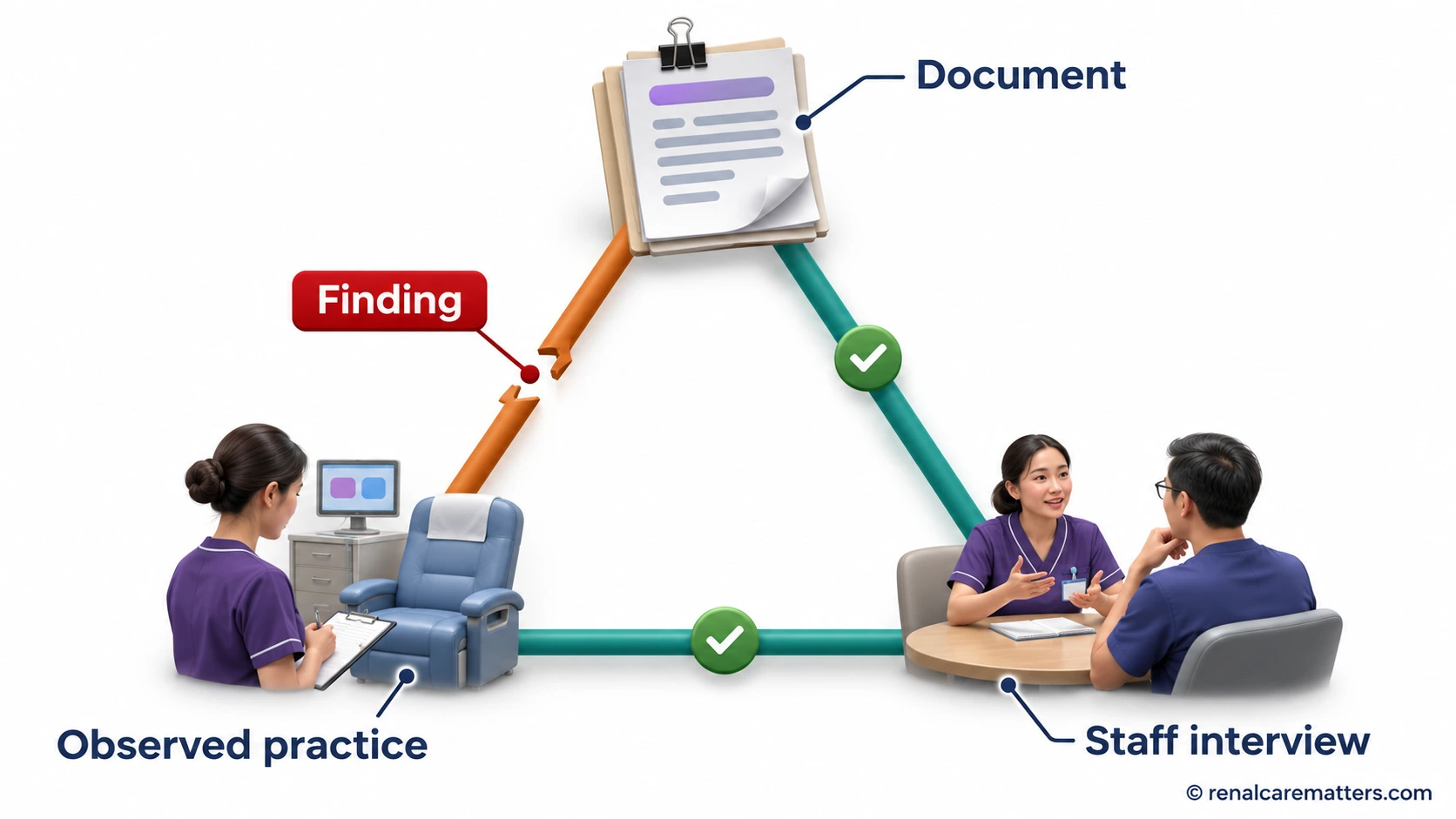
Run a three-source tracer that compares the document, the observed practice, and the staff interview.
Write a finding with its requirement, condition, exposure, containment, owner, due date, and closure evidence.
Distinguish completing a corrective action from proving that it worked.
Keep an evidence index that an inspector can follow without you in the room.
Pre-testBefore you read, answer the 8 self-assessment questions and note your score. After the module, select New set of questions and compare. The difference is what you learned; the questions you still miss are what to reread.
Start here
The big picture, in plain words
In plain wordsA license is a photograph of your unit on the day it was approved. Every change you make afterward, a new chair, a moved wall, a new owner, makes the photograph a little less true.
The picture has a limit. A photograph does not change, but the rules do. The DOH can revise what a clinic must show, and your regional office decides how a new rule applies to you. Readiness means knowing both what your unit looks like today and which version of the rules it is being measured against.
Figure 1 · Key terms for this module
PTCPermit to Construct, the DOH approval to build or substantially alter a facility before it operates.
Assessment toolThe checklist the regional licensing office uses during inspection. Ask for the current revision.
TracerFollowing one patient, machine, or process through the unit to test whether the system works as written.
FindingA gap between a requirement and what the inspector, or you, observed.
ContainmentThe immediate step that stops a finding from harming anyone while the real fix is made.
Closure evidenceObjective proof that a corrective action works, checked by a named person on a named date.
PRDRPhilippine Renal Disease Registry, to which dialysis clinics report their patients.
Opening case · fictional
Case: Two machines and an empty bay
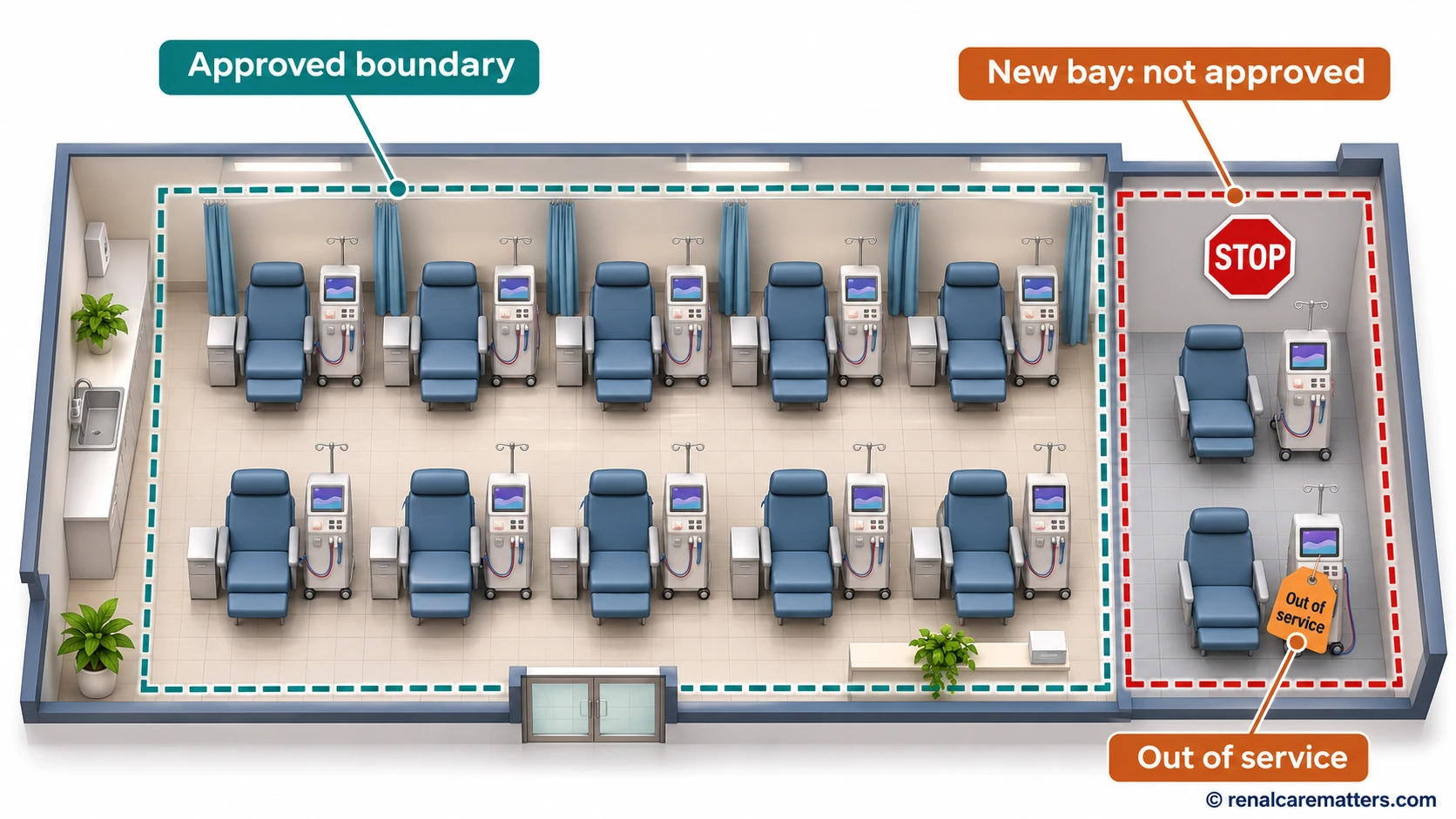
St. Lorenzo Renal Center, a ten-station freestanding unit in Bulacan, has a waiting list. The administrator, Ms. Grace Dizon, plans to move two machines into the adjacent storage bay and open them on Monday. The bay is not on the approved floor plan. One of the two machines came back from repair on Friday, and its maintenance record has no signed release.
“The inspector already came last month,” she says. “We passed. Two more chairs will help eight patients on the list. Can you approve them today?”
Before reading on, decide:
What can you approve today, and what can you not?
What evidence would change your decision about each machine and the bay?
What will you ask the regional office, and how?
Keep your answers in mind. The lesson gives you what you need, and the case review near the end shows one sound response.
Lesson · part 1
Which issuance answers which question
The core licensing order for dialysis facilities sets out how hemodialysis clinics are licensed, who must head and staff them, what the physical plant needs, and what they must report, including registration of patients in the PRDR.1 A separate order governs the analysis, monitoring, and maintenance of dialysis water.2 The DOH has also issued planning and design guidelines for dialysis clinics, which describe room relationships and controlled entry to the treatment area.3
Question
Where to look
Status of the evidence in this course
What must a licensed hemodialysis clinic have and report?
DOH planning and design guidelines for dialysis clinics, 20253
Posted by a regional office; confirm it is the edition your region applies
Have licensing rules for hemodialysis clinics changed?
DOH Department Circular 2026-0112, interim guidelines on licensing hemodialysis clinics4
Title confirmed; text not reviewed. Read it, with its annexes and transition clauses, before applying any earlier rule
How are applications filed?
Your regional office’s current instructions, including any online licensing system
Varies by region and year
Stop and callStop and ask the Regulatory, Licensing and Enforcement Division (RLED) in writing whenever a change touches stations, rooms, location, services, or ownership. Hold the change until the written answer is in your file.
Lesson · part 2
Changes that need a decision before they happen
Figure 2. A change before approval. New stations, a new bay, or a new site may need DOH action before the first patient is connected.
An approved floor plan is part of your license. Adding stations, opening a new room, relocating, adding a service such as hemodiafiltration, or changing owners can each require a regulatory step before the first patient is treated in the new arrangement. Moving a chair into an unapproved bay is not an interior-design decision.
A machine has its own gate. It returns to service only after the technical lead documents the checks and signs a release. Your signature, as clinical head, comes after theirs and answers a different question: is it safe to treat patients again?
RememberAsk before you move. A delay of a week is recoverable. Treating patients in an unapproved space puts the whole license at risk.
Lesson · part 3
The three-source tracer
Figure 3. The three-source tracer. A policy is real only when the document, the practice, and the people agree.
Inspectors do not only read binders. They pick a patient, a machine, or a shift and follow it. You should do the same, before they arrive, because the gaps that matter are usually between what is written and what is done.
Figure 4 · Three tracers worth running every quarter
A shiftFrom the roster to the duty physician to the nurse’s description of how she escalates a falling blood pressure.
A machineFrom the inventory to its maintenance log, its release, its disinfection record, and its use today.
A patientFrom acceptance to the current order, the last laboratory results, the access plan, and the Philippine Health Insurance Corporation (PhilHealth) record.
For each discrepancy, write the requirement, what you observed, which patients were or could be exposed, the immediate containment, the owner, the due date, and the evidence that will close it. Bring high-risk or resource-dependent findings to the owner with a request, not only a report.
Field
Example
Requirement
Every machine returned from repair has a signed technical release before use
Observed
Machine 9 returned Friday; release unsigned
Exposure
None yet; machine not used
Containment
Tagged out of service by the head nurse at 08:10
Owner and due date
Biomedical lead, Tuesday
Closure evidence
Signed release, then a check one month later that every repaired machine had its release before first use
Lesson · part 4
Closing a finding with proof
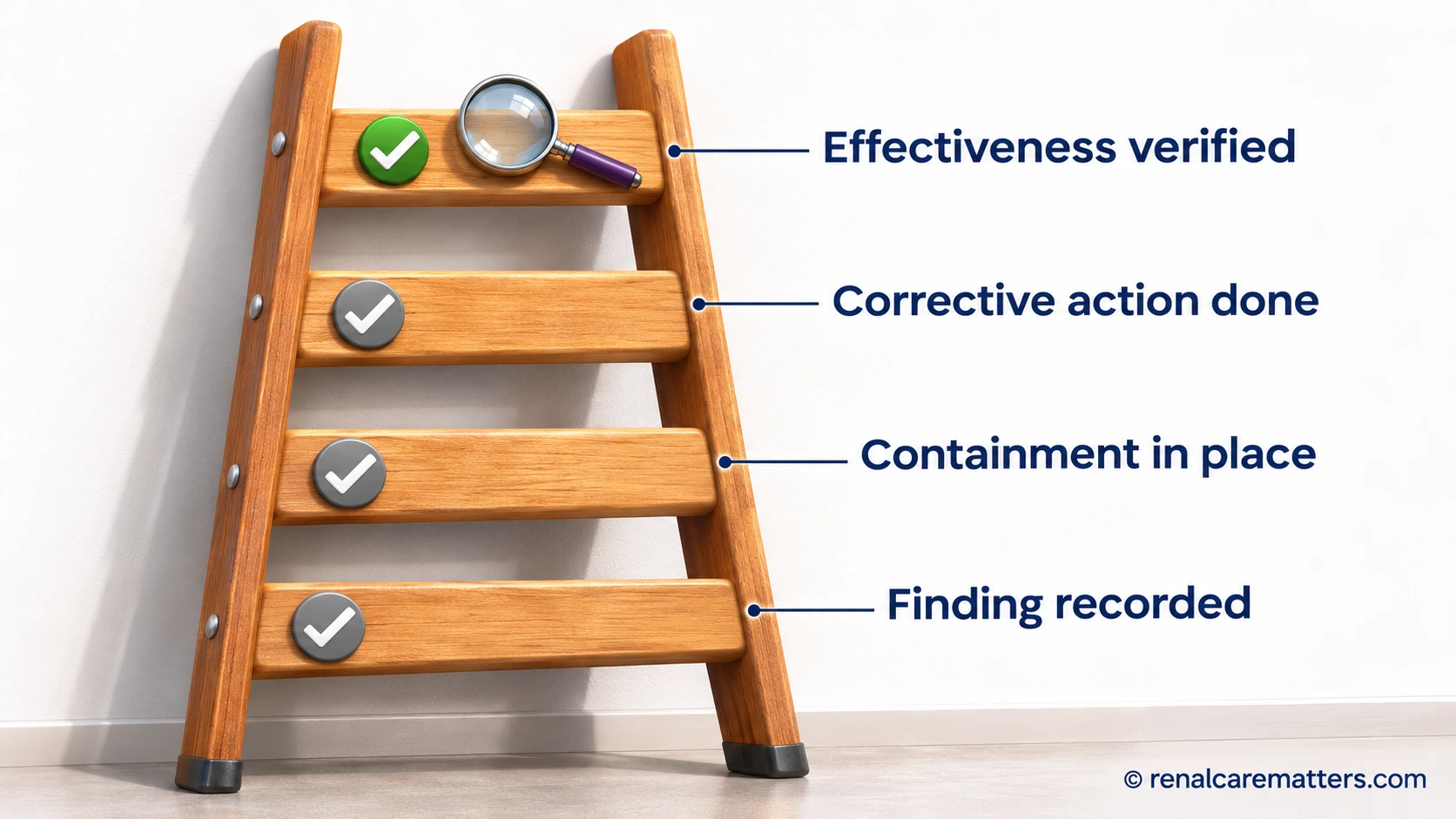
Figure 5. A finding is closed when the control is shown to work, not when the action is done.
A corrective action is done when it has been carried out. A finding is closed when someone has checked that the control works in practice. “Staff retrained” closes nothing until you have watched the step being done correctly, on more than one shift, some weeks later.
Give each controlled document a custodian and a review date. Withdraw obsolete versions from the floor and keep one archived copy. When an inspector asks for a policy, the version on the wall should match the version in the binder.
Scoring a finding, illustration only. Likelihood 3 of 5 × severity 4 of 5 = 12. In this course’s teaching scale, a score of 15 or more, or any catastrophic consequence, goes to leadership. Use your facility’s approved thresholds in practice. Calculator 4 does the arithmetic.
On the floor
Real situations: problems and solutions
These are fictional but typical. For each one, cover the answer, decide what you would do, then compare. Where a step depends on local rules, your unit’s procedure and your supervisor’s direction come first.
The binder that is always ready
What you see
Every policy is signed and filed, but the nurses describe a different workflow.
What is likely going on
Paper compliance.
What to do
Trace three workflows on the floor and fix the gap between the document and the practice.
Why it matters
Inspectors interview staff for this reason.
Two chairs by Monday
What you see
The owner wants two extra chairs in a storage room before the licensing visit.
What is likely going on
A change in stations that may need approval.
What to do
Ask the regional office before moving a single machine. Keep the room closed until you have an answer.
Why it matters
Adding stations is a licensing event, not an interior decision.
The finding that came back
What you see
A finding closed last year with “staff retrained” is found again.
What is likely going on
The weakest kind of fix.
What to do
Reopen it. Choose a control that does not depend on memory, and measure it.
Why it matters
A recurring finding is evidence that the fix did not work.
Field notes
Walk the unit as a patient would, from the gate to the chair.
Give every controlled document a custodian and a review date.
Keep a list of pending regulatory questions with the date each was asked.
Case review
Back to the case: Two machines and an empty bay
What can you approve today? Nothing that adds stations in the bay. Keep the bay closed and ask the RLED, in writing, what approval the change requires. The machine returned Friday stays tagged out until the biomedical lead signs a release. The second machine, if it has a valid release, can stay in an approved station where it already belongs.
What evidence would change your decision? For the bay: a written regional answer that the change is permitted, and any required approvals in hand. For the repaired machine: a signed technical release. For both: confirmation that staffing and water capacity can support two more stations, which is Module 8’s question.
What do you ask, and how? A letter to the RLED describing the proposed change, the current approved plan, and the date you need an answer. Meanwhile, tell Ms. Dizon what the waiting-list patients need instead: their attending nephrologists should review urgency, and the unit can look for verified capacity elsewhere.
Skills lab · with your preceptor
Skills checklist: Three-source tracer and finding record
Run one shift tracer and one machine tracer on a real or simulated unit while a preceptor observes, and write up two findings. Your preceptor rates each step as satisfactory, needs practice, or not observed. Steps marked Critical must all be satisfactory before sign-off. This checklist supports supervised learning; your unit’s own procedure and competency form are the authority. A printable version of every checklist is on the trainer page.
Identifies the facility type and the current assessment tool and submission route.
CriticalRecognizes a change that needs a regulatory decision before implementation.
CriticalCompares the document, the observed practice, and a staff interview for each tracer.
Writes each finding with requirement, observation, exposure, containment, owner, and due date.
CriticalKeeps an unverified area or machine out of use until approvals and releases are confirmed.
CriticalDefines closure as evidence that the control works, with a named verifier and date.
Assigns a custodian and review date to controlled documents.
Brings resource-dependent findings to the owner with a specific request.
Placement activity. Run the three quarterly tracers on your own unit. Present the findings and their closure criteria at your next quality meeting.
Self-assessment
Check your understanding
Each visit draws 8 questions at random from this module’s 15-question bank. Choose the single best answer for each, then select Check answers; an explanation appears under the best answer. Select New set of questions for a different mix. A good target is 7 of 8 on two different sets. Nothing you select is sent anywhere; scoring happens in your browser.
Department of Health. (2013). Administrative Order No. 2013-0003: Implementing guidelines in the analysis, monitoring and maintenance of water used in dialysis facilities. Republic of the Philippines.
Department of Health. (2025). Planning and design guidelines for dialysis clinics [Annex A-1]. Retrieved November 24, 2026, from https://caro.doh.gov.ph/wp-content/uploads/2025/08/Planning-and-Design-guidelines-dialysis-8-12-2025.pdf
Department of Health. (2026). Department Circular No. 2026-0112: Interim guidelines on the licensing of hemodialysis clinics. Republic of the Philippines. [Title confirmed from a regional DOH issuance index; full text not reviewed for this course.]
Educational material for physicians and unit leaders. Completing it is an Academy learning record only. It does not confer CPD units, PSN attestation, DOH eligibility, PhilHealth accreditation, or appointment authority, and it does not replace current regulations, your facility’s bylaws and protocols, or legal advice.