1. Treatment access cost and gap
Counts what it costs a household to attend treatment beyond the treatment itself: fares both ways, a companion, food or other costs per visit, and one-time costs. Only confirmed support is subtracted; pending requests are not money yet (Modules 8 and 9). Gross = visits × (fare out + fare back + companion + other) + one-time. Gap = gross − confirmed support.
2. Household health-spending share
Out-of-pocket health spending as a share of total household spending (or income) in the same period. The United Nations Sustainable Development Goal indicator 3.8.2 counts households above 10% and above 25%. These marks describe financial hardship across populations; they are not eligibility rules for any Philippine program (Module 9).
3. PhilHealth hemodialysis session balance
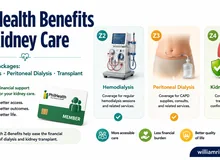
PhilHealth Circular 2024-0023, as explained in its official Tamang Sagot, covers up to 156 hemodialysis sessions a year. This tool counts the sessions left and estimates when they run out at the current schedule, so the gap is planned weeks ahead. Confirm the circular in force and how the year is counted with your claims officer (Module 7).
4. Referral and follow-up aging
A referral is open until the outcome reaches the person. This tool turns the date sent and the agreed due date into days open, days to or past due, and a tier: on track, due soon, overdue, or escalate (more than 7 days past due) (Modules 6 and 17).
5. Workload and coverage
Estimates the weekly hours a caseload generates and compares them with the hours available. Demand = (routine episodes × minutes + complex episodes × minutes) ÷ 60 + fixed hours. No social worker staffing ratio was identified in the reviewed Philippine dialysis documents; this is planning arithmetic, not a staffing rule (Modules 3 and 19).
6. Quality measure rate
Rate = numerator ÷ denominator × 100, for a defined period. The numerator cannot exceed the denominator, and 0 over 0 is not calculable, not 0%. Write down what the measure cannot show (Module 19).