Welcome. If you have been on dialysis for several years, your fistula has changed. It is bigger, perhaps twistier, with hard and soft areas you can feel under the skin. This guide explains why — in plain language — and what to watch for so we can keep it working for many more years.Maligayang pagdating. Kung ilang taon ka nang nasa dialysis, nagbago na ang iyong fistula. Mas malaki na ito, marahil mas pilipit, may matigas at malambot na bahagi na nararamdaman mo sa ilalim ng balat. Ipinapaliwanag ng gabay na ito ang dahilan — sa simpleng salita — at kung ano ang dapat bantayan upang mapanatili itong gumagana pa sa maraming taon.Maayong pag-abot. Kung pila na ka tuig ka sa dialysis, nausab na ang imong fistula. Mas dako na kini, tingali mas liko-liko, adunay gahi ug humok nga mga bahin nga imong mabati ilalom sa panit. Kini nga giya nagpasabot sa ngano — sa yano nga pinulongan — ug unsa ang bantayan aron mapadayon kini nga molihok pa sa daghan pang tuig.Malaus kayu. Nung pilan nang banua kang atyu king dialysis, meyalilan ne ing kekang fistula. Mas maragul ne, mangyaring mas pilipit, atin yang matigas at malambut a parte a maramdaman mu king lalam ning balat. Ing giya a ini paliwanan na ing bakit — king simpleng amanu — at nanu ing dapat bantayan ba yang panatilian a gagana pa king dakal a banua.
The Living Fistula: How an AVF Is Born and How It MaturesAng Buhay na Fistula: Paano Isinisilang ang AVF at Paano Ito HumihinogAng Buhi nga Fistula: Giunsa Pagkatawo ang AVF ug Giunsa Kini PagkahamtongIng Mabie a Fistula: Makananu yang mibait ing AVF at Makananu yang tumatas
A fistula begins as a surgical decision. Your vascular surgeon connects an artery (which carries blood under high pressure) to a nearby vein (which normally carries blood under very low pressure). The moment the two are joined, the vein is exposed to forces it was never designed to handle — pressures up to fifty times what it has carried for your whole life.Nagsisimula ang fistula bilang isang desisyong pang-operasyon. Ikinokonekta ng iyong vascular surgeon ang isang artery (na nagdadala ng dugo sa mataas na presyon) sa isang kalapit na vein (na karaniwang nagdadala ng dugo sa napakababang presyon). Sa sandaling pagsamahin ang dalawa, nalantad ang vein sa mga puwersang hindi ito idinisenyong harapin — mga presyong umaabot ng limampung beses ng dinala nito sa buong buhay mo.Ang fistula magsugod isip usa ka desisyon sa operasyon. Ang imong vascular surgeon magsumpay sa usa ka artery (nga nagdala ug dugo sa taas nga presyon) ngadto sa duol nga vein (nga sagad nagdala ug dugo sa ubos kaayo nga presyon). Sa gutlo nga giusa ang duha, ang vein maladlad sa mga puwersa nga wala kini gidisenyo nga atubangon — mga presyon nga moabot ug kalim-an ka pilo sa iyang gidala sa tibuok mong kinabuhi.Magsisimula ing fistula bilang metung a desisyun keng operasyun. Ing kekang vascular surgeon ikonekta na ing metung a artery (a maglele daya king matas a presyon) king malapit a vein (a karaniwan maglele daya king marok kayung mababang presyon). Keng saglit a mepisamak la reng adua, ing vein malantad ya karing puersa a e ne diningsenyong arapan — presyon a umabot king limang pulu a beses ning dela na king mabilug mung bie.
The vein responds. It does not stay still. Within hours, the inner lining of the vein begins to sense the new flow. Within days, the wall starts to thicken. Within weeks, the lumen — the space inside through which blood travels — widens. This whole process is called outward remodeling, and it is the body's way of saying: "I will become strong enough to carry this load."Tumutugon ang vein. Hindi ito nananatiling tahimik. Sa loob ng ilang oras, nagsisimulang maramdaman ng panloob na lining ng vein ang bagong daloy. Sa loob ng ilang araw, nagsisimulang kumapal ang dingding. Sa loob ng ilang linggo, lumalawak ang lumen — ang espasyo sa loob kung saan dumadaloy ang dugo. Ang buong prosesong ito ay tinatawag na outward remodeling, at ito ang paraan ng katawan upang sabihin: "Magiging sapat akong malakas upang dalhin ang pasaning ito."Motubag ang vein. Dili kini magpabilin nga hilom. Sulod sa pipila ka oras, ang sulod nga lining sa vein magsugod pagbati sa bag-ong dagayday. Sulod sa pipila ka adlaw, ang bungbong magsugod pagbaga. Sulod sa pipila ka semana, ang lumen — ang luna sa sulod diin moagi ang dugo — molapad. Kining tibuok proseso gitawag ug outward remodeling, ug kini ang paagi sa lawas sa pag-ingon: "Mahimo akong igo nga kusgan aron madala kining palas-anon."Tumutugun ya ing vein. E ya manatiling tahimik. King lalam da reng mapilan a oras, ing panloob a lining ning vein magsisimula neng maramdaman ing bayung agus. King lalam da reng mapilan a aldo, magsisimula yang kumapal ing dinding. King lalam da reng mapilan a dominggo, lalawak ya ing lumen — ing espasyu king kilub nung nu ya maglele ing daya. Ing mabilug a prosesung ini ausan yang outward remodeling, at iti ing paralan ning katawan ba nang sabian: "Maging sapat kung masikan ba keng dalan ing pasan a ini."
We call the early phase maturation. A useful rule that vascular surgeons follow is the rule of 6s: by six weeks after surgery, the vein in the cannulation segment should be at least 6 millimetres wide, no deeper than 6 millimetres from the skin, and carrying a flow of at least 600 millilitres per minute. When all three are reached, your fistula is mature enough to be needled safely for dialysis.Tinatawag naming maturation ang maagang yugto. Isang kapaki-pakinabang na tuntunin na sinusunod ng mga vascular surgeon ay ang rule of 6s: pagsapit ng anim na linggo pagkatapos ng operasyon, ang vein sa cannulation segment ay dapat na hindi bababa sa 6 millimetres ang lapad, hindi lalalim sa 6 millimetres mula sa balat, at may daloy na hindi bababa sa 600 millilitres kada minuto. Kapag naabot ang tatlo, sapat nang hinog ang iyong fistula upang ligtas na tusukin ng karayom para sa dialysis.Gitawag namo ang sayo nga hugna nga maturation. Usa ka mapuslanon nga lagda nga gisunod sa mga vascular surgeon mao ang rule of 6s: sa unom ka semana human sa operasyon, ang vein sa cannulation segment kinahanglan dili moubos sa 6 millimetres ang gilapdon, dili molalom sa 6 millimetres gikan sa panit, ug adunay dagayday nga dili moubos sa 600 millilitres kada minuto. Kung maabot ang tulo, hamtong na ang imong fistula aron luwas nga matusok sa dagom para sa dialysis.Ausan mi yang maturation ing maagang yugtu. Metung a mapapakinabangan a tuntunin a tinutuki da reng vascular surgeon ya ing rule of 6s: pisatan da reng anam a dominggo kaibat ning operasyun, ing vein king cannulation segment dapat e ya mababa king 6 millimetres ing lapad, e ya lalalum king 6 millimetres ibat king balat, at atin yang agus a e mababa king 600 millilitres kada minutu. Nung ma-abot la reng atlu, sapat nang matas ing kekang fistula ba yang ligtas a tusukan king karayom para king dialysis.
But maturation does not stop at six weeks. It continues for months and years. After five years of dialysis, your fistula often looks nothing like it did at creation. It is larger, sometimes much larger. Parts of it may bulge. Parts may feel firmer. The course of the fistula under your skin may have curved or coiled. This is not failure — it is the long-term result of carrying arterial-level blood through what was originally a thin-walled vein.Ngunit hindi humihinto ang maturation sa anim na linggo. Nagpapatuloy ito sa loob ng mga buwan at taon. Pagkatapos ng limang taon ng dialysis, madalas na hindi na kamukha ng iyong fistula ang dati nitong anyo noong likhain ito. Mas malaki na ito, minsan ay mas malaki pa. May mga bahaging maaaring umumbok. May mga bahaging maaaring mas matigas. Maaaring lumiko o kumulot ang daanan ng fistula sa ilalim ng iyong balat. Hindi ito pagkabigo — ito ang pangmatagalang resulta ng pagdadala ng dugong nasa antas ng artery sa dating manipis na dingding na vein.Apan dili mohunong ang maturation sa unom ka semana. Magpadayon kini sulod sa mga bulan ug tuig. Human sa lima ka tuig nga dialysis, kanunay nga dili na parehas sa imong fistula ang dagway niini sa una nga gihimo. Mas dako na kini, usahay mas dako pa. Ang uban nga bahin mahimong moburot. Ang uban mahimong mas gahi. Ang agianan sa fistula ilalom sa imong panit mahimong nag-liko o nag-kulon. Dili kini kapakyasan — kini ang dugay nga sangputanan sa pagdala ug dugo nga lebel-arterial pinaagi sa kaniadto nipis-ang-bungbong nga vein.Dapot e ya manuknangan ing maturation king anam a dominggo. Magpatuli ya king lalam da reng bulan at banua. Kaibat ning limang banua king dialysis, karaniwan a e ne kamukha ning kekang fistula ing dating anyu na kanitang megawa ya. Mas maragul ne, kaminsan mas maragul pa. Atin yang parte a mangyaring umumbuk. Atin yang parte a mas matigas. Mangyaring miliko o mikulot ing daralanan ning fistula king lalam ning kekang balat. E ini pamangabigo — iti ing malwat nang resulta ning pamandala king daya a atyu king lebel ning artery king datiling manipis a dinding a vein.
The driver of all this change is wall shear stress — the friction your blood creates as it slides along the inner wall. Think of a river: the faster the water flows, the more it shapes the banks. Your fistula is the river. Your vein wall is the bank. Year after year, the flow shapes the wall.Ang nagtutulak sa lahat ng pagbabagong ito ay ang wall shear stress — ang friction na nililikha ng iyong dugo habang dumudulas ito sa panloob na dingding. Isipin ang isang ilog: mas mabilis ang daloy ng tubig, mas hinuhubog nito ang mga pampang. Ang iyong fistula ang ilog. Ang dingding ng iyong vein ang pampang. Taon-taon, hinuhubog ng daloy ang dingding.Ang nagtukmod niining tanan nga kausaban mao ang wall shear stress — ang friction nga gimugna sa imong dugo samtang modailos kini sa sulod nga bungbong. Hunahunaa ang usa ka suba: mas paspas ang dagayday sa tubig, mas gihulma niini ang mga daplin. Ang imong fistula mao ang suba. Ang bungbong sa imong vein mao ang daplin. Tuig-tuig, ang dagayday naghulma sa bungbong.Ing manuknad king ngan a pamanialiwang a ini ya ing wall shear stress — ing friction a linalang ning kekang daya kabang dudulas ya king panloob a dinding. Isipan me ing metung a ilug: mas malagua ing agus ning danum, mas ihuhubu na la reng pampang. Ing kekang fistula ya ing ilug. Ing dinding ning kekang vein ya ing pampang. Banua-banua, ihuhubu na ning agus ing dinding.

Why AVFs Grow Gigantic: The Biology of Long-Term Venous ArterializationBakit Lumalaki nang Napakalaki ang mga AVF: Ang Biology ng Pangmatagalang Venous ArterializationNgano nga Modako ug Dako Kaayo ang mga AVF: Ang Biology sa Dugay nga Venous ArterializationBakit la Lalu Maragul Kayu reng AVF: Ing Biology ning Malwat nang Venous Arterialization
Think about the math. Three sessions per week, four hours per session, for five years equals roughly 3,000 hours of arterial-pressure flow through a vein. The vein is constantly being asked to dilate, to remodel, to accommodate. Over years, this repeated signal pushes the wall toward larger and larger diameters. This is why your fistula is bigger today than it was at year one.Isipin ang matematika. Tatlong session kada linggo, apat na oras kada session, sa loob ng limang taon ay katumbas ng humigit-kumulang 3,000 oras ng daloy sa presyon ng artery sa loob ng isang vein. Patuloy na hinihiling sa vein na lumawak, mag-remodel, umangkop. Sa paglipas ng mga taon, itinutulak ng paulit-ulit na senyas na ito ang dingding tungo sa mas malaki at mas malaking diameter. Ito ang dahilan kung bakit mas malaki ang iyong fistula ngayon kaysa noong unang taon.Hunahunaa ang matematika. Tulo ka session kada semana, upat ka oras kada session, sulod sa lima ka tuig katumbas sa gibana-bana nga 3,000 ka oras nga dagayday sa presyon-arterial sulod sa usa ka vein. Kanunay nga gihangyo ang vein nga molapad, mag-remodel, mopahiangay. Sa paglabay sa mga tuig, kining balik-balik nga senyas nagtukmod sa bungbong padulong sa mas dako ug mas dako nga diameter. Mao kini ngano nga mas dako ang imong fistula karon kaysa sa unang tuig.Isipan me ing matematika. Atlung session kada dominggo, apat a oras kada session, king lalam ning limang banua katumbas ne ning mangatatakan a 3,000 oras ning agus king presyon ning artery king kilub ning metung a vein. Patuli yang alalanan ing vein a lumawak, mag-remodel, umangkup. King pamanlipas da reng banua, ituknad na ning paulit-ulit a senyas a ini ing dinding papunta king mas maragul at mas maragul a diameter. Iti ing bakit mas maragul ne ing kekang fistula ngeni kesa kanitang mumunang banua.
Some patients dilate more than others. The strongest risk factors for excessive enlargement are:May mga pasyenteng mas lumalawak kaysa sa iba. Ang pinakamalakas na risk factor para sa labis na paglaki ay:Ang uban nga pasyente mas molapad kaysa sa uban. Ang pinakakusog nga risk factor para sa sobra nga pagdako mao ang:Atin lang pasyente a mas lalawak kesa karing aliwa. Ing pekamasikan a risk factor para king labis a pamaragul ya:
- Uncontrolled hypertension — higher pressure means more force on the wall.Uncontrolled hypertension — mas mataas na presyon ay nangangahulugan ng mas malaking puwersa sa dingding.Uncontrolled hypertension — mas taas nga presyon nagpasabot ug mas dako nga puwersa sa bungbong.Uncontrolled hypertension — mas matas a presyon buri nang sabian mas maragul a puersa king dinding.
- Proximal access — upper-arm fistulas tend to carry higher flows than forearm fistulas, so they dilate more aggressively.Proximal access — ang mga fistula sa itaas na braso ay may posibilidad na magdala ng mas mataas na daloy kaysa sa mga fistula sa forearm, kaya mas agresibo silang lumalawak.Proximal access — ang mga fistula sa ibabaw nga bukton lagmit magdala ug mas taas nga dagayday kaysa sa mga fistula sa forearm, mao nga mas agresibo sila nga molapad.Proximal access — deng fistula king babo a gamat mangyaring magdala lang mas matas a agus kesa karing fistula king forearm, inya mas agresibu lang lumawak.
- Naturally high-flow AVFs — some fistulas carry 1.5 to 2 litres of blood per minute, and over years that volume forces continuous outward remodeling.Naturally high-flow AVFs — may mga fistulang nagdadala ng 1.5 hanggang 2 litres ng dugo kada minuto, at sa paglipas ng mga taon ay pinipilit ng volume na iyon ang tuluy-tuloy na outward remodeling.Naturally high-flow AVFs — ang uban nga fistula magdala ug 1.5 hangtod 2 litres nga dugo kada minuto, ug sa paglabay sa mga tuig kana nga volume nagpugos sa padayon nga outward remodeling.Naturally high-flow AVFs — atin lang fistula a magdala ng 1.5 anggang 2 litres a daya kada minutu, at king pamanlipas da reng banua pipilitan na ning volume ita ing tuluy-tuloy a outward remodeling.
- Large surgical anastomosis — a wider connection at creation allows more flow from day one.Large surgical anastomosis — ang mas malawak na koneksyon sa paglikha ay nagbibigay-daan sa mas maraming daloy mula sa unang araw.Large surgical anastomosis — ang mas lapad nga koneksyon sa paghimo nagtugot ug mas daghan nga dagayday sukad sa unang adlaw.Large surgical anastomosis — ing mas malwak a koneksyun king pamanggawa magbie-dalan king mas dakal a agus ibat king mumunang aldo.
- Genetic and inflammatory factors we still do not fully understand.Genetic at inflammatory factors na hindi pa natin lubos na nauunawaan.Genetic ug inflammatory factors nga wala pa nato hingpit nga masabti.Genetic at inflammatory factors a e mi pa lubus a aintindian.
It is important to distinguish physiologic enlargement — gradual, uniform widening of the whole fistula course, with intact skin — from pathologic aneurysmal change, which is more localized, faster-growing, and may threaten the skin overlying a particular bulge. Physiologic enlargement is normal and expected. Pathologic change requires attention.Mahalagang matukoy ang pagkakaiba ng physiologic enlargement — unti-unti, pantay na paglawak ng buong daanan ng fistula, na buo ang balat — sa pathologic aneurysmal change, na mas nakatuon sa isang lugar, mas mabilis lumaki, at maaaring magbanta sa balat sa ibabaw ng isang partikular na umbok. Normal at inaasahan ang physiologic enlargement. Kailangan ng atensyon ang pathologic change.Importante nga mailhan ang kalainan sa physiologic enlargement — hinay-hinay, patas nga paglapad sa tibuok agianan sa fistula, nga buo ang panit — gikan sa pathologic aneurysmal change, nga mas naka-focus sa usa ka lugar, mas paspas motubo, ug mahimong mohulga sa panit ibabaw sa usa ka partikular nga burot. Normal ug gidahom ang physiologic enlargement. Ang pathologic change nagkinahanglan ug pagtagad.Importanti yang atukid ing pamiyaliwa ning physiologic enlargement — unti-unti, pantay a pamanlawak ning mabilug a daralanan ning fistula, a bilug ing balat — king pathologic aneurysmal change, a mas naka-focus king metung a lugal, mas malagua a lumaki, at mangyaring magbanta king balat king babo ning metung a partikular a umbuk. Normal at aasahan ing physiologic enlargement. Kaylangan nang atensyun ing pathologic change.

The Hard Areas: What Creates Stiffness and FibrosisAng mga Matigas na Bahagi: Ano ang Lumilikha ng Katigasan at FibrosisAng mga Gahi nga Bahin: Unsa ang Naghimo sa Katig-a ug FibrosisDeng Matigas a Parte: Nanu ing Lalang king Katigasan at Fibrosis
When you feel along your fistula, some areas are firm — almost like a small rope or ridge under the skin. These hard areas come from several layered processes that all share one theme: injury followed by scarring.Kapag hinawakan mo ang iyong fistula, may mga bahaging matigas — halos parang maliit na lubid o tagaytay sa ilalim ng balat. Ang mga matigas na bahaging ito ay nagmumula sa ilang magkakapatong na prosesong may iisang tema: pinsala na sinusundan ng peklat.Kung imong hikapon ang imong fistula, ang uban nga bahin gahi — hapit sama sa gamay nga pisi o taluktok ilalom sa panit. Kining gahi nga mga bahin naggikan sa pipila ka sinapaw nga proseso nga adunay usa ka tema: samad nga sundan sa peklat.Nung hikapan me ing kekang fistula, atin lang parte a matigas — malapit a anti ing malating pisi o tagaytay king lalam ning balat. Deng matigas a parte a ini manibat la king mapilan a magkapatung a prosesu a atin metung a tema: sugat a tutukian ning peklat.
Each time a needle enters your fistula — three times a session, two needles per session, hundreds of sessions per year — there is a tiny injury to the wall. Inflammation arrives to heal it. Repair cells called myofibroblasts arrive, deposit collagen, and leave behind a small scar. Multiplied over years, these scars become palpable as a firm zone along the needling track.Sa tuwing pumapasok ang karayom sa iyong fistula — tatlong beses kada session, dalawang karayom kada session, daan-daang session kada taon — may maliit na pinsala sa dingding. Dumarating ang inflammation upang gamutin ito. Dumarating ang mga repair cell na tinatawag na myofibroblasts, naglalagay ng collagen, at nag-iiwan ng maliit na peklat. Sa dami sa paglipas ng mga taon, nagiging nararamdaman ang mga peklat na ito bilang isang matigas na sona sa daanan ng karayom.Kada higayon nga mosulod ang dagom sa imong fistula — tulo ka higayon kada session, duha ka dagom kada session, gatosan ka session kada tuig — adunay gamay nga samad sa bungbong. Moabot ang inflammation aron ayohon kini. Moabot ang mga repair cell nga gitawag ug myofibroblasts, magbutang ug collagen, ug magbilin ug gamay nga peklat. Sa kadaghan sa paglabay sa mga tuig, kining mga peklat mahimong mabati isip usa ka gahi nga sona sa agianan sa dagom.Balang oras a sumulud ing karayom king kekang fistula — atlung beses kada session, adua karayom kada session, dinalan-dalan session kada banua — atin yang malating sugat king dinding. Datang ya ing inflammation ba yang lunasan. Datang la reng repair cell a ausan dang myofibroblasts, mangilage collagen, at mag-iwan lang malating peklat. King karakal king pamanlipas da reng banua, maging maramdaman la reng peklat a ini bilang metung a matigas a sona king daralanan ning karayom.
Beyond needling, the inside of the vessel wall responds to flow with a process called intimal hyperplasia. Plain language: the cells that line the inside of your fistula multiply and thicken. Imagine a callus forming on the inside of the vessel. This callus narrows the lumen and stiffens the wall. It is especially common at the junction where the artery and vein were originally joined — the juxta-anastomotic region — and at curves and bends along the fistula course.Bukod sa pagtusok ng karayom, tumutugon ang loob ng dingding ng ugat sa daloy sa pamamagitan ng prosesong tinatawag na intimal hyperplasia. Sa simpleng salita: dumarami at kumakapal ang mga cell na nasa loob ng iyong fistula. Isipin ang isang kalyo na nabubuo sa loob ng ugat. Pinapaliit ng kalyong ito ang lumen at pinatitigas ang dingding. Karaniwan ito lalo na sa junction kung saan orihinal na pinagsama ang artery at vein — ang juxta-anastomotic region — at sa mga liko at baluktot sa daanan ng fistula.Gawas sa pagtusok sa dagom, motubag ang sulod sa bungbong sa ugat sa dagayday pinaagi sa proseso nga gitawag ug intimal hyperplasia. Sa yano nga pinulongan: modaghan ug mobaga ang mga cell nga naa sa sulod sa imong fistula. Hunahunaa ang usa ka kubal nga naporma sa sulod sa ugat. Kining kubal nagpaliit sa lumen ug nagpagahi sa bungbong. Sagad kini ilabi na sa junction diin gisumpay una ang artery ug vein — ang juxta-anastomotic region — ug sa mga liko ug baliko sa agianan sa fistula.Bukud king pamanusuk ning karayom, tumutugun ya ing kilub ning dinding ning ugat king agus king pamamilatan ning prosesu a ausan dang intimal hyperplasia. King simpleng amanu: dadakal at kukapal la reng cell a atyu king kilub ning kekang fistula. Isipan me ing metung a kalyu a mibubu king kilub ning ugat. Piparagulan na ning kalyung ini ing lumen at pipatigasan na ing dinding. Karaniwan ya lalu na king junction nu la orihinal a mepisamak ing artery at vein — ing juxta-anastomotic region — at karing liko at baluktut king daralanan ning fistula.
Other contributors to hard segments:Iba pang nag-aambag sa matitigas na bahagi:Uban pang nakatampo sa gahi nga mga bahin:Aliwang mag-ambag karing matitigas a parte:
- Mural thrombus — small clots that stick to the wall and organize into fibrotic cords over time.Mural thrombus — maliliit na namuong dugo na dumidikit sa dingding at unti-unting nagiging fibrotic cord sa paglipas ng panahon.Mural thrombus — gagmay nga namuo nga dugo nga mopilit sa bungbong ug hinay-hinay nga mahimong fibrotic cord sa paglabay sa panahon.Mural thrombus — mangalating memuong daya a dudikit king dinding at unti-unting maging fibrotic cord king pamanlipas ning panaun.
- Calcification — calcium deposits in the vessel wall, common in people with long-standing kidney disease because phosphate, calcium, and parathyroid hormone are difficult to balance.Calcification — mga deposito ng calcium sa dingding ng ugat, karaniwan sa mga taong may matagal nang sakit sa bato dahil mahirap balansehin ang phosphate, calcium, at parathyroid hormone.Calcification — mga deposito sa calcium sa bungbong sa ugat, sagad sa mga tawo nga dugay na ang sakit sa kidney tungod kay lisod balansehon ang phosphate, calcium, ug parathyroid hormone.Calcification — deng deposito ning calcium king dinding ning ugat, karaniwan karing tau a malwat nang atin sakit king batu uli na mahirap balansian ing phosphate, calcium, at parathyroid hormone.
There is a useful paradox to remember: hard areas are often the most narrowed but the least likely to rupture. The scarring itself acts as reinforcement. The areas that worry vascular specialists are usually soft bulging areas, not the firm ones. That said, when a hard zone forms close to the anastomosis at the elbow or wrist, it often signals an inflow stenosis — a narrowing that is making your fistula work harder upstream. This is treatable, and your dialysis team should know about it.May isang kapaki-pakinabang na paradox na dapat tandaan: ang mga matigas na bahagi ay madalas na pinakamakitid ngunit pinakamaliit na posibilidad na pumutok. Ang peklat mismo ang nagsisilbing pampalakas. Ang mga bahaging ikinababahala ng mga vascular specialist ay kadalasang malambot na umuumbok na bahagi, hindi ang matitigas. Gayunpaman, kapag nabuo ang isang matigas na sona malapit sa anastomosis sa siko o pulso, madalas itong senyales ng inflow stenosis — isang paninikip na nagpapahirap sa iyong fistula sa itaas na bahagi. Nagagamot ito, at dapat malaman ito ng iyong dialysis team.Adunay usa ka mapuslanon nga paradox nga angay hinumdoman: ang gahi nga mga bahin sagad ang pinakapig-ot apan pinakagamay nga posibilidad nga mobuto. Ang peklat mismo ang naglihok isip pagpalig-on. Ang mga bahin nga gikabalak-an sa mga vascular specialist kasagaran mao ang humok nga nagburot nga mga bahin, dili ang gahi. Bisan pa niana, kung maporma ang usa ka gahi nga sona duol sa anastomosis sa siko o pulso, sagad kini nagsenyas ug inflow stenosis — usa ka pagpig-ot nga naghimo sa imong fistula nga maglisod pa sa ibabaw. Matambalan kini, ug angay mahibaloan sa imong dialysis team.Atin metung a mapapakinabangan a paradox a dapat tandan: deng matigas a parte karaniwan a pekamakitid dapot pekamalati a posibilidad a pumutuk. Ing peklat mismu ya ing magsilbing pampasikan. Deng parte a ikababala da reng vascular specialist karaniwan lang malambut a umuumbuk a parte, e deng matitigas. Makanian man, nung mibubu ing metung a matigas a sona malapit king anastomosis king siku o pulsu, karaniwan yang senyales ning inflow stenosis — metung a pamanikip a papahirapan na ing kekang fistula king babo a parte. Malunasan ya, at dapat abalu na ning kekang dialysis team.
The Soft Areas: Aneurysms, Pseudoaneurysms, and Pulsatile PouchesAng mga Malambot na Bahagi: Aneurysms, Pseudoaneurysms, at Pulsatile PouchesAng mga Humok nga Bahin: Aneurysms, Pseudoaneurysms, ug Pulsatile PouchesDeng Malambut a Parte: Aneurysms, Pseudoaneurysms, at Pulsatile Pouches
The bulging soft pouches you feel along your fistula are not all the same thing, and the distinction matters.Ang mga umuumbok na malambot na pouch na nararamdaman mo sa iyong fistula ay hindi lahat pare-pareho, at mahalaga ang pagkakaiba.Ang nagburot nga humok nga mga pouch nga imong mabati sa imong fistula dili tanan managsama, ug importante ang kalainan.Deng umuumbuk a malambut a pouch a maramdaman mu king kekang fistula e la ngan magkaparehu, at importanti ing pamiyaliwa.
True aneurysmTrue aneurysmTrue aneurysmTrue aneurysm
A true aneurysm is a widening of the fistula that involves all three layers of the vessel wall — the inner lining, the muscle layer, and the outer covering. It develops slowly over years. It is usually uniform, follows the course of the fistula, and is strongly pulsatile and "thrilling" when you press over it. Because all three wall layers are present, true aneurysms have some intrinsic strength, even when large.Ang true aneurysm ay isang paglawak ng fistula na sangkot ang lahat ng tatlong layer ng dingding ng ugat — ang panloob na lining, ang muscle layer, at ang panlabas na balot. Dahan-dahan itong nabubuo sa loob ng mga taon. Karaniwan itong pantay, sumusunod sa daanan ng fistula, at malakas na pumipintig at may "thrill" kapag pinindot mo ito. Dahil naroroon ang lahat ng tatlong layer ng dingding, may likas na lakas ang mga true aneurysm, kahit malaki.Ang true aneurysm usa ka paglapad sa fistula nga nalambigit ang tanang tulo ka layer sa bungbong sa ugat — ang sulod nga lining, ang muscle layer, ug ang gawas nga tabon. Hinay-hinay kini motubo sulod sa mga tuig. Kasagaran patas kini, mosunod sa agianan sa fistula, ug kusog nga mopitik ug adunay "thrill" kung imong ipislit. Tungod kay anaa ang tanang tulo ka layer sa bungbong, ang true aneurysm adunay kinaiyanhon nga kusog, bisan dako.Ing true aneurysm metung yang pamanlawak ning fistula a kayabe la reng ngan atlung layer ning dinding ning ugat — ing panloob a lining, ing muscle layer, at ing panlabas a balut. Dahan-dahan yang mibubu king lalam da reng banua. Karaniwan yang pantay, tutuki ya king daralanan ning fistula, at masikan yang pupintik at atin yang "thrill" nung pislitan me. Uli na atyu la reng ngan atlung layer ning dinding, atin yang likas a sikanan ing true aneurysm, agyang maragul.
PseudoaneurysmPseudoaneurysmPseudoaneurysmPseudoaneurysm
A pseudoaneurysm is different. It happens when a needle puncture creates a small defect in the wall that does not fully heal. Blood escapes through the defect into the surrounding tissue and forms a contained collection, walled off only by scar tissue and skin. There is no true vessel wall around a pseudoaneurysm — and that is what makes them more dangerous than true aneurysms of similar size. They tend to be more localized (think of a small balloon attached to a larger pipe by a narrow neck), and they often form at buttonhole needling sites, where the same hole is used session after session.Iba ang pseudoaneurysm. Nangyayari ito kapag ang tusok ng karayom ay lumilikha ng maliit na depekto sa dingding na hindi lubos na gumagaling. Tumatagas ang dugo sa depekto papunta sa nakapaligid na tissue at bumubuo ng nakapaloob na koleksyon, na napaliligiran lamang ng scar tissue at balat. Walang tunay na dingding ng ugat sa paligid ng pseudoaneurysm — at iyan ang dahilan kung bakit mas mapanganib ang mga ito kaysa sa true aneurysm na kasinlaki. May posibilidad silang mas nakatuon sa isang lugar (isipin ang isang maliit na lobo na nakakabit sa mas malaking tubo sa pamamagitan ng makitid na leeg), at madalas silang nabubuo sa buttonhole needling sites, kung saan ang parehong butas ang ginagamit session-session.Lahi ang pseudoaneurysm. Mahitabo kini kung ang tusok sa dagom maghimo ug gamay nga depekto sa bungbong nga dili hingpit nga moayo. Motulo ang dugo latas sa depekto ngadto sa naglibot nga tissue ug maghimo ug sinudlan nga koleksyon, nga gilibotan lamang sa scar tissue ug panit. Walay tinuod nga bungbong sa ugat palibot sa pseudoaneurysm — ug mao kana ang naghimo kanila nga mas peligroso kaysa true aneurysm nga pareho ug gidak-on. Lagmit sila mas naka-focus sa usa ka lugar (hunahunaa ang gamay nga lobo nga gisumpay sa mas dako nga tubo pinaagi sa pig-ot nga liog), ug sagad sila maporma sa buttonhole needling sites, diin ang samang lungag gigamit session-session.Aliwa ya ing pseudoaneurysm. Malyari ya nung ing tusuk ning karayom lalang yang malating depektu king dinding a e ya lubus a maganaka. Tutubu ya ing daya king depektu papunta king mangkakabud a tissue at mibubu yang kalub a koleksyun, a mekulung mu ning scar tissue at balat. Alang tune a dinding ning ugat king painawak ning pseudoaneurysm — at ita ing bakit mas makapangdilikadu la kesa karing true aneurysm a kasinragul. Mangyari lang mas naka-focus king metung a lugal (isipan me ing metung a malating lobu a mekakabit king mas maragul a tubu king pamamilatan ning makitid a batal), at karaniwan lang mibubu king buttonhole needling sites, nu la ing parehung butas gagamitan session-session.
How to tell the difference (clinically)Paano matukoy ang pagkakaiba (klinikal)Unsaon pag-ila sa kalainan (klinikal)Makananu atukid ing pamiyaliwa (klinikal)
- True aneurysm: smooth, gradual along the fistula course, pulsatile, has a thrill.True aneurysm: makinis, unti-unti sa daanan ng fistula, pumipintig, may thrill.True aneurysm: hamis, hinay-hinay sa agianan sa fistula, mopitik, adunay thrill.True aneurysm: makinis, unti-unti king daralanan ning fistula, pupintik, atin yang thrill.
- Pseudoaneurysm: localized "pouch," sometimes with a palpable neck, less uniform, more concerning when growing rapidly.Pseudoaneurysm: nakatuon sa isang lugar na "pouch," minsan may nararamdamang leeg, hindi gaanong pantay, mas nakababahala kapag mabilis lumaki.Pseudoaneurysm: naka-focus sa usa ka lugar nga "pouch," usahay adunay mabati nga liog, dili kaayo patas, mas makabalaka kung paspas motubo.Pseudoaneurysm: naka-focus king metung a lugal a "pouch," kaminsan atin yang maramdaman a batal, e ya masiadung pantay, mas makababala nung malagua yang lumaki.
The Da Silva grading system (patient-friendly version)Ang Da Silva grading system (bersyong madaling maunawaan ng pasyente)Ang Da Silva grading system (bersyon nga sayon masabtan sa pasyente)Ing Da Silva grading system (bersyon a madaling aintindian ning pasyente)
Vascular surgeons use a four-level grading system originally described by Da Silva:Gumagamit ang mga vascular surgeon ng apat na antas na grading system na orihinal na inilarawan ni Da Silva:Naggamit ang mga vascular surgeon ug upat ka lebel nga grading system nga orihinal nga gihulagway ni Da Silva:Gagamit la reng vascular surgeon king apat a lebel a grading system a orihinal a delarawan nang Da Silva:
- Type I — Diffuse dilation. The fistula is widened but there are no localized bulges. Skin is healthy. Monitor.Type I — Diffuse dilation. Lumawak ang fistula ngunit walang nakatuong umbok. Malusog ang balat. Bantayan.Type I — Diffuse dilation. Milapad ang fistula apan walay naka-focus nga burot. Himsog ang panit. Bantayi.Type I — Diffuse dilation. Milawak ya ing fistula dapot alang naka-focus a umbuk. Malusug ing balat. Bantayan.
- Type II — Localized aneurysm. A pouch is present but the skin over it is intact. Monitor closely; intervention may be needed if it grows.Type II — Localized aneurysm. May pouch na naroroon ngunit buo ang balat sa ibabaw nito. Bantayang mabuti; maaaring kailanganin ang interbensyon kung lumaki ito.Type II — Localized aneurysm. Adunay pouch apan buo ang panit ibabaw niini. Bantayi pag-ayo; mahimong kinahanglan ang interbensyon kung motubo kini.Type II — Localized aneurysm. Atin yang pouch dapot bilug ing balat king babo na. Bantayan a mayap; mangyaring kaylangan ing interbensyon nung lumaki ya.
- Type III — Skin involved. The skin over the bulge is thinning, shiny, dark, or hair-bare. Threatened — needs urgent surgical review.Type III — Skin involved. Ang balat sa ibabaw ng umbok ay nanipis, makintab, madilim, o walang buhok. Nanganganib — kailangan ng agarang surgical review.Type III — Skin involved. Ang panit ibabaw sa burot nanipis, mahayag, itom, o walay buhok. Namiligro — nagkinahanglan ug dinalian nga surgical review.Type III — Skin involved. Ing balat king babo ning umbuk maninipis ya, makinang, madilim, o alang buak. Namimiligru — kaylangan nang dinaling surgical review.
- Type IV — Skin broken or infected. Scab, eschar, ulcer, or active infection present. Emergency — needs same-day care.Type IV — Skin broken or infected. May scab, eschar, ulcer, o aktibong impeksyon. Emergency — kailangan ng pag-aalaga sa mismong araw.Type IV — Skin broken or infected. Adunay scab, eschar, ulcer, o aktibo nga impeksyon. Emergency — nagkinahanglan ug pag-atiman sa samang adlaw.Type IV — Skin broken or infected. Atin yang scab, eschar, ulcer, o aktibung impeksyun. Emergency — kaylangan nang pamanibala king mismung aldo.
When soft is dangerous. A soft area becomes dangerous when any of these appear: skin thinning to a glassy, shiny appearance; loss of hair over the bulge; dark, purple, or black discoloration; rapid increase in size; spontaneous pain at the site; or any scab, blister, or open wound. Any of these should prompt an immediate call to your dialysis centre.Kailan mapanganib ang malambot. Nagiging mapanganib ang malambot na bahagi kapag lumitaw ang alinman sa mga ito: pagnipis ng balat tungo sa parang salamin, makintab na anyo; pagkawala ng buhok sa ibabaw ng umbok; madilim, lila, o itim na pagbabago ng kulay; mabilis na paglaki ng sukat; biglaang sakit sa lugar; o anumang scab, paltos, o bukas na sugat. Anuman sa mga ito ay dapat magtulak sa iyo na agad tumawag sa iyong dialysis centre.Kanus-a peligroso ang humok. Ang humok nga bahin mahimong peligroso kung motungha ang bisan hain niini: pagnipis sa panit ngadto sa sama-salamin, mahayag nga panagway; pagkawala sa buhok ibabaw sa burot; itom, purpura, o itom nga pagbag-o sa kolor; paspas nga pagdako sa gidak-on; kalit nga kasakit sa lugar; o bisan unsang scab, blister, o bukas nga samad. Bisan hain niini angay magtukmod kanimo nga dayon motawag sa imong dialysis centre.Kapilan makapangdilikadu ing malambut. Maging makapangdilikadu ing malambut a parte nung lumitau ing alin karing ini: pamaninipis ning balat papunta king anti salamin, makinang a anyu; pamaniawala ning buak king babo ning umbuk; madilim, lila, o itim a pamanialiwa king kule; malagua a pamaragul ning sukad; biglang sakit king lugal; o nanumang scab, paltus, o mabuklat a sugat. Alin karing ini dapat na kang ituknad a agad kang tumawag king kekang dialysis centre.
One final note: when the venous outflow above your fistula is narrowed (called central or outflow stenosis), pressure backs up downstream. That elevated pressure can make the fistula segment proximal to it balloon outward more quickly than it otherwise would. This is one reason your vascular team will sometimes order a venogram or fistulogram even when the bulging segment itself looks straightforward.Isang huling paalala: kapag makitid ang venous outflow sa itaas ng iyong fistula (tinatawag na central o outflow stenosis), umaatras ang presyon sa ibabang bahagi. Ang mataas na presyong iyon ay maaaring magpaumbok nang mas mabilis sa segment ng fistula na nasa harap nito kaysa sa karaniwan. Ito ang isang dahilan kung bakit minsan ay nag-uutos ang iyong vascular team ng venogram o fistulogram kahit na mukhang simple lang ang umuumbok na segment.Usa ka kataposang pahinumdom: kung pig-ot ang venous outflow sa ibabaw sa imong fistula (gitawag ug central o outflow stenosis), mobalik ang presyon sa ubos. Kanang taas nga presyon mahimong maghimo sa segment sa fistula nga naa sa atubangan niini nga moburot mas paspas kaysa sa naandan. Kini ang usa ka rason ngano nga usahay mag-order ang imong vascular team ug venogram o fistulogram bisan kung ang nagburot nga segment mismo daw yano ra.Metung a tauling paalala: nung makitid ya ing venous outflow king babo ning kekang fistula (ausan yang central o outflow stenosis), mibalik ya ing presyon king lalam a parte. Ing matas a presyong ita mangyaring magpaumbuk yang mas malagua king segment ning fistula a atyu king arap na kesa king karaniwan. Iti ing metung a bakit kaminsan mag-utus ing kekang vascular team king venogram o fistulogram agyang malino a simpleng lalawe ing umuumbuk a segment.


Tortuosity: Why the Fistula Coils and TwistsTortuosity: Bakit Kumukulot at Pumipilipit ang FistulaTortuosity: Ngano nga Mokulon ug Moliko ang FistulaTortuosity: Bakit ya Kukulut at Pipilipit ing Fistula
Older fistulas often follow a coiled or S-shaped path under the skin. There is a geometric reason for this. As the fistula lumen widens — and the wall thickens — the vein lengthens as well. The vein has no rigid bone-tendon attachments holding it straight, so the extra length has to go somewhere. It curls.Ang mga mas lumang fistula ay madalas na sumusunod sa kumulot o hugis-S na daanan sa ilalim ng balat. May geometric na dahilan para dito. Habang lumalawak ang lumen ng fistula — at kumakapal ang dingding — humahaba rin ang vein. Walang matigas na bone-tendon na nakakabit sa vein na humahawak dito nang tuwid, kaya kailangang mapunta sa isang lugar ang labis na haba. Kumukulot ito.Ang mga mas tigulang nga fistula sagad mosunod sa nagkulon o S-porma nga agianan ilalom sa panit. Adunay geometric nga rason niini. Samtang molapad ang lumen sa fistula — ug mobaga ang bungbong — motaas usab ang vein. Walay gahi nga bone-tendon nga nagkabit sa vein nga nagkupot niini nga tul-id, mao nga ang sobra nga gitas-on kinahanglan moadto sa usa ka dapit. Mokulon kini.Deng mas lumang fistula karaniwan lang tutuki king kukulut o hugis-S a daralanan king lalam ning balat. Atin yang geometric a dahilan para kaniti. Kabang lalawak ya ing lumen ning fistula — at kukapal ya ing dinding — humaba ya mu naman ing vein. Alang matigas a bone-tendon a mekakabit king vein a kukuput kaniti a tuid, inya ing labis a kaba dapat munta king metung a lugal. Kukulut ya.
At every bend, the flow becomes turbulent — meaning the blood does not move smoothly. Turbulent flow causes local injury, which causes local remodeling, which deepens the bend. The process feeds itself. This is why upper-arm fistulas, which have more "free length" in the arm tissue, tend to become more tortuous over years than forearm fistulas, which are anchored against bone.Sa bawat baluktot, nagiging turbulent ang daloy — ibig sabihin, hindi maayos na gumagalaw ang dugo. Ang turbulent na daloy ay nagdudulot ng lokal na pinsala, na nagdudulot ng lokal na remodeling, na nagpapalalim sa baluktot. Pinapakain ng proseso ang sarili nito. Ito ang dahilan kung bakit ang mga upper-arm fistula, na may mas maraming "free length" sa tissue ng braso, ay may posibilidad na maging mas tortuous sa paglipas ng mga taon kaysa sa forearm fistula, na nakaangkla sa buto.Sa matag baliko, ang dagayday mahimong turbulent — buot ipasabot, ang dugo dili molihok nga hapsay. Ang turbulent nga dagayday maghimo ug lokal nga samad, nga maghimo ug lokal nga remodeling, nga magpalalom sa baliko. Ang proseso magpakaon sa iyang kaugalingon. Mao kini ngano nga ang mga upper-arm fistula, nga adunay mas daghan nga "free length" sa tissue sa bukton, lagmit mahimong mas tortuous sa paglabay sa mga tuig kaysa forearm fistula, nga naka-angkla sa bukog.King balang baluktut, maging turbulent ya ing agus — buri nang sabian, e ya mayap a gagalo ing daya. Ing turbulent a agus lalang yang lokal a sugat, a lalang king lokal a remodeling, a piparalman na ing baluktut. Papakanan na ning prosesu ing sarili na. Iti ing bakit deng upper-arm fistula, a atin mas dakal a "free length" king tissue ning gamat, mangyari lang maging mas tortuous king pamanlipas da reng banua kesa king forearm fistula, a naka-angkla king butul.
Tortuosity has real clinical consequences:May tunay na klinikal na epekto ang tortuosity:Adunay tinuod nga klinikal nga epekto ang tortuosity:Atin yang tune a klinikal a epektu ing tortuosity:
- Cannulation becomes harder. Needling along curved segments is technically more difficult and infiltrations (leaks during needling) are more common.Nagiging mas mahirap ang cannulation. Ang pagtusok ng karayom sa mga kurbadong segment ay teknikal na mas mahirap at mas karaniwan ang infiltrations (mga tagas habang tinutusok).Mahimong mas lisod ang cannulation. Ang pagtusok sa dagom sa kurbado nga mga segment mas lisod sa teknikal ug mas sagad ang infiltrations (mga tulo samtang gitusok).Maging mas mahirap ing cannulation. Ing pamanusuk ning karayom king kurbadong segment mas mahirap ya king teknikal at mas karaniwan la reng infiltrations (deng tulo kabang tutusukan).
- Kinking versus angulation matters. A gentle curve usually causes no flow disturbance. A sharp kink, especially with arm position changes, can choke flow and even thrombose the fistula.Mahalaga ang pagkakaiba ng kinking at angulation. Ang banayad na kurba ay karaniwang hindi nakakaabala sa daloy. Ang matalim na kink, lalo na sa pagbabago ng posisyon ng braso, ay maaaring pumigil sa daloy at kahit ma-thrombose ang fistula.Importante ang kalainan sa kinking ug angulation. Ang hinay nga kurba kasagaran walay makababalda sa dagayday. Ang hait nga kink, ilabi na sa pagbag-o sa posisyon sa bukton, mahimong mopugong sa dagayday ug bisan mo-thrombose sa fistula.Importanti ing pamiyaliwa ning kinking at angulation. Ing banayad a kurba karaniwan e ya makaabala king agus. Ing matalim a kink, lalu na king pamanialiwa ning posisyun ning gamat, mangyaring mamigil king agus at agyang ma-thrombose ing fistula.
- Surveillance is harder. A coiled fistula is more challenging to scan with ultrasound, and stenoses can hide inside the curves.Mas mahirap ang surveillance. Mas mahirap i-scan ang kumulot na fistula gamit ang ultrasound, at maaaring magtago ang mga stenosis sa loob ng mga kurba.Mas lisod ang surveillance. Mas lisod i-scan ang nagkulon nga fistula gamit ang ultrasound, ug ang mga stenosis mahimong motago sulod sa mga kurba.Mas mahirap ing surveillance. Mas mahirap i-scan ing kukulut a fistula gamit ing ultrasound, at mangyari lang manalikid deng stenosis king kilub da reng kurba.
If a particular bend is causing repeated cannulation failures or you can feel flow changing with arm position, raise this with your dialysis team.Kung ang isang partikular na baluktot ay nagdudulot ng paulit-ulit na pagkabigo sa cannulation o nararamdaman mong nagbabago ang daloy sa posisyon ng braso, ipaalam ito sa iyong dialysis team.Kung ang usa ka partikular nga baliko maoy hinungdan sa balik-balik nga kapakyasan sa cannulation o mabati nimo nga mausab ang dagayday sa posisyon sa bukton, isulti kini sa imong dialysis team.Nung ing metung a partikular a baluktut ya ing manuknad king paulit-ulit a pamangabigo king cannulation o maramdaman mung mengaliwa ing agus king posisyun ning gamat, ipabalu me iti king kekang dialysis team.
Surveillance: Reading Your FistulaSurveillance: Pagbabasa sa Iyong FistulaSurveillance: Pagbasa sa Imong FistulaSurveillance: Pamamasa king Kekang Fistula
Your fistula tells you what is happening — if you know how to listen. The international standard set by the KDOQI Vascular Access Guidelines is a short physical exam by your dialysis nurse at every session and a more thorough exam at least monthly. You can do a simpler version at home every day.Sinasabi sa iyo ng iyong fistula kung ano ang nangyayari — kung alam mong makinig. Ang internasyonal na pamantayang itinakda ng KDOQI Vascular Access Guidelines ay isang maikling physical exam ng iyong dialysis nurse sa bawat session at isang mas masusing exam kahit buwan-buwan. Maaari kang gumawa ng mas simpleng bersyon sa bahay araw-araw.Gisultihan ka sa imong fistula kung unsa ang nahitabo — kung kahibalo ka mamati. Ang internasyonal nga sumbanan nga gitakda sa KDOQI Vascular Access Guidelines mao ang mubo nga physical exam sa imong dialysis nurse sa matag session ug mas hingpit nga exam bisan binulan. Makahimo ka ug mas yano nga bersyon sa balay adlaw-adlaw.Sasabian na ka ning kekang fistula nung nanu ing malyari — nung balu mung makinig. Ing internasyonal a pamantayan a detakda ning KDOQI Vascular Access Guidelines ya ing metung a makuyad a physical exam ning kekang dialysis nurse king balang session at metung a mas masusing exam agyang bulan-bulan. Malyari kang gumawa king mas simpleng bersyon king bale aldo-aldo.
Home self-monitoring: LOOK · FEEL · LISTENSariling pagsubaybay sa bahay: TINGNAN · HAWAKAN · PAKINGGANKaugalingong pagbantay sa balay: TAN-AWA · HIKAPA · PAMINAWASariling pamanmasid king bale: LAWAN · HIKAPAN · PAKIRAMDAM
LOOK. Look at the skin over your fistula every day. Note anything new: redness, swelling, change in colour, new bulges, hair loss in a particular spot, shiny patches, blisters, scabs, or any sweat-like discharge. A small change one day may not matter; the same change persisting for several days is worth reporting.TINGNAN. Tingnan ang balat sa ibabaw ng iyong fistula araw-araw. Pansinin ang anumang bago: pamumula, pamamaga, pagbabago ng kulay, bagong umbok, pagkawala ng buhok sa isang partikular na lugar, makintab na patse, paltos, langib, o anumang parang pawis na discharge. Ang maliit na pagbabago sa isang araw ay maaaring hindi mahalaga; ang parehong pagbabago na tumatagal ng ilang araw ay dapat iulat.TAN-AWA. Tan-awa ang panit ibabaw sa imong fistula adlaw-adlaw. Timan-i ang bisan unsang bag-o: kapula, hubag, kausaban sa kolor, bag-ong burot, pagkawala sa buhok sa usa ka partikular nga dapit, mahayag nga patse, blister, kugan, o bisan unsang sama-singot nga discharge. Ang gamay nga kausaban sa usa ka adlaw mahimong dili importante; ang samang kausaban nga molungtad ug pipila ka adlaw angay itaho.LAWAN. Lawan me ing balat king babo ning kekang fistula aldo-aldo. Pansinan me ing nanumang bayu: pamula, pamaga, pamanialiwa king kule, bayung umbuk, pamaniawala ning buak king metung a partikular a lugal, makinang a patse, paltus, langib, o nanumang anti pawas a discharge. Ing malating pamanialiwa king metung a aldo mangyaring e importanti; ing parehung pamanialiwa a matagal king mapilan a aldo dapat yang iulat.
FEEL. Place your fingers lightly along the entire length of the fistula. You should feel a continuous thrill — a soft, vibrating, buzzing sensation. The thrill should be present at the anastomosis, along the body of the fistula, and proximally. Any segment where the thrill becomes a sharp pulse instead of a continuous hum suggests a narrowing nearby. Loss of the thrill entirely is an emergency — your fistula may have clotted.HAWAKAN. Ilagay ang iyong mga daliri nang bahagya sa buong haba ng fistula. Dapat mong maramdaman ang tuluy-tuloy na thrill — isang malambot, nanginginig, umuugong na pakiramdam. Dapat naroroon ang thrill sa anastomosis, sa katawan ng fistula, at sa itaas na bahagi. Ang anumang segment kung saan nagiging matalim na pintig ang thrill sa halip na tuluy-tuloy na ugong ay senyales ng paninikip sa malapit. Ang lubos na pagkawala ng thrill ay isang emergency — maaaring namuo na ang dugo sa iyong fistula.HIKAPA. Ibutang ang imong mga tudlo nga hinay sa tibuok gitas-on sa fistula. Angay nimong mabati ang padayon nga thrill — usa ka humok, nagkurog, nagbagting nga pamati. Ang thrill angay anaa sa anastomosis, sa lawas sa fistula, ug sa ibabaw nga bahin. Bisan unsang segment diin ang thrill mahimong hait nga pitik imbis padayon nga huni nagsenyas ug pagpig-ot duol. Ang bug-os nga pagkawala sa thrill usa ka emergency — mahimong namuo na ang dugo sa imong fistula.HIKAPAN. Ilage mo la reng kekang taliri a banayad king mabilug a kaba ning fistula. Dapat mung maramdaman ing tuluy-tuloy a thrill — metung a malambut, gigilgil, uumugung a pakiramdam. Dapat atyu ing thrill king anastomosis, king katawan ning fistula, at king babo a parte. Ing nanumang segment nu ing thrill maging matalim a pintik imbes tuluy-tuloy a ugung senyales yang pamanikip king malapit. Ing lubus a pamaniawala ning thrill ya ing metung a emergency — mangyaring memuo ne ing daya king kekang fistula.
LISTEN. If you have a stethoscope (or use the bell of a doctor's stethoscope at the dialysis centre), the sound over a healthy fistula is a soft, continuous bruit — like a low whoosh that does not stop between heartbeats. A bruit that becomes high-pitched, pulsatile, or interrupted between heartbeats suggests a stenosis (narrowing) somewhere in the system.PAKINGGAN. Kung may stethoscope ka (o gamitin ang bell ng stethoscope ng doktor sa dialysis centre), ang tunog sa ibabaw ng malusog na fistula ay isang malambot, tuluy-tuloy na bruit — parang mababang whoosh na hindi tumitigil sa pagitan ng tibok ng puso. Ang bruit na nagiging matinis, pumipintig, o naaabala sa pagitan ng tibok ng puso ay senyales ng stenosis (paninikip) sa isang lugar sa sistema.PAMINAWA. Kung adunay ka stethoscope (o gamiton ang bell sa stethoscope sa doktor sa dialysis centre), ang tingog ibabaw sa himsog nga fistula usa ka humok, padayon nga bruit — sama sa ubos nga whoosh nga dili mohunong tunga-tunga sa pitik sa kasingkasing. Ang bruit nga mahimong taas ug tono, mopitik, o mabalda tunga-tunga sa pitik sa kasingkasing nagsenyas ug stenosis (pagpig-ot) sa usa ka dapit sa sistema.PAKIRAMDAM. Nung atin kang stethoscope (o gamitan me ing bell ning stethoscope ning doktor king dialysis centre), ing tunug king babo ning malusug a fistula metung yang malambut, tuluy-tuloy a bruit — anti ing mababang whoosh a e manuknangan king pilatan da reng tibuk ning pusu. Ing bruit a maging matinis, pupintik, o maaabala king pilatan da reng tibuk ning pusu senyales yang stenosis (pamanikip) king metung a lugal king sistema.
Duplex ultrasound — when and whyDuplex ultrasound — kailan at bakitDuplex ultrasound — kanus-a ug nganoDuplex ultrasound — kapilan at bakit
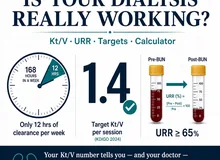
A duplex ultrasound is a non-invasive scan that measures both the flow rate (Qa) inside your fistula and the anatomy of the wall and lumen. The KDOQI guidelines recommend duplex surveillance at least every 6 to 12 months in a mature, well-functioning fistula, and sooner if anything new arises — including a new hard area, a new bulge that is growing, persistent post-needling bleeding, a thrill that has changed, or a drop in dialysis efficiency (low Kt/V).Ang duplex ultrasound ay isang non-invasive na scan na sumusukat sa flow rate (Qa) sa loob ng iyong fistula at sa anatomy ng dingding at lumen. Inirerekomenda ng KDOQI guidelines ang duplex surveillance nang hindi bababa sa bawat 6 hanggang 12 buwan sa isang hinog at maayos na gumaganang fistula, at mas maaga kung may bagong lumitaw — kabilang ang bagong matigas na bahagi, bagong umbok na lumalaki, tuluy-tuloy na pagdurugo pagkatapos ng pagtusok, thrill na nagbago, o pagbaba ng dialysis efficiency (mababang Kt/V).Ang duplex ultrasound usa ka non-invasive nga scan nga nagsukod sa flow rate (Qa) sulod sa imong fistula ug sa anatomy sa bungbong ug lumen. Girekomenda sa KDOQI guidelines ang duplex surveillance labing menos matag 6 hangtod 12 ka bulan sa hamtong, maayong molihok nga fistula, ug mas sayo kung adunay bag-ong motungha — lakip ang bag-ong gahi nga bahin, bag-ong burot nga motubo, padayon nga pagdugo human sa pagtusok, thrill nga nausab, o pagkunhod sa dialysis efficiency (ubos nga Kt/V).Ing duplex ultrasound metung yang non-invasive a scan a sususukat king flow rate (Qa) king kilub ning kekang fistula at king anatomy ning dinding at lumen. Irerekomenda na ning KDOQI guidelines ing duplex surveillance a e mababa king balang 6 anggang 12 bulan king metung a matas at mayap a gaganang fistula, at mas maaga nung atin yang bayung lumitau — kayabe ing bayung matigas a parte, bayung umbuk a lumaki, tuluy-tuloy a pamandugu kaibat ning pamanusuk, thrill a mengaliwa, o pamababa king dialysis efficiency (mababang Kt/V).
Cardiac consequence — why your nephrologist asks about shortness of breathEpekto sa puso — bakit nagtatanong ang iyong nephrologist tungkol sa kapos na paghingaEpekto sa kasingkasing — ngano nga mangutana ang imong nephrologist bahin sa kakulang sa gininhawaEpektu king pusu — bakit magkutang ing kekang nephrologist tungkul king kakulang king pamanginawa
A very high-flow fistula (more than 1.5 to 2 litres per minute) recirculates a lot of blood from the artery directly to the vein, bypassing the body's tissues. The heart has to work harder to maintain perfusion. Over years, this can enlarge the left side of the heart and contribute to heart failure. If you ever have new breathlessness, unexplained swelling not relieved by dialysis, or fatigue out of proportion to your sessions — tell your nephrologist. We can check this with an echo and a flow measurement.Ang isang napakataas na daloy na fistula (higit sa 1.5 hanggang 2 litres kada minuto) ay muling nagpapaikot ng maraming dugo mula sa artery diretso sa vein, na nilalaktawan ang mga tissue ng katawan. Kailangang magtrabaho nang mas mabigat ang puso upang mapanatili ang perfusion. Sa paglipas ng mga taon, maaari nitong palakihin ang kaliwang bahagi ng puso at mag-ambag sa heart failure. Kung magkaroon ka ng bagong kapos na paghinga, hindi maipaliwanag na pamamaga na hindi naibsan ng dialysis, o pagod na labis kaysa sa dulot ng iyong mga session — sabihin sa iyong nephrologist. Masusuri namin ito gamit ang echo at flow measurement.Ang usa ka taas kaayo ug dagayday nga fistula (kapin sa 1.5 hangtod 2 litres kada minuto) magpalibot ug daghang dugo gikan sa artery diretso sa vein, nga naglaktaw sa mga tissue sa lawas. Ang kasingkasing kinahanglan maghago pa ug maayo aron mapadayon ang perfusion. Sa paglabay sa mga tuig, mahimo niini padak-on ang wala nga bahin sa kasingkasing ug motampo sa heart failure. Kung ikaw makasinati ug bag-ong kakulang sa gininhawa, dili maexplika nga hubag nga wala maibsan sa dialysis, o kakapoy nga sobra kaysa sa gikan sa imong mga session — sultihi ang imong nephrologist. Masusi namo kini gamit ang echo ug flow measurement.Ing metung a matas kayung agus a fistula (labis king 1.5 anggang 2 litres kada minutu) papalibutan na neng pasibayu ing dakal a daya ibat king artery diretsu king vein, a lalaktawan na la reng tissue ning katawan. Kaylangan mag-obra a mas mabayat ing pusu ba nang panatilian ing perfusion. King pamanlipas da reng banua, mangyari nang paragulan ing kaili a parte ning pusu at mag-ambag king heart failure. Nung magkaroan kang bayung kakulang king pamanginawa, e maipaliwanag a pamaga a e naibsan ning dialysis, o pagud a labis kesa king dela da reng kekang session — sabian me king kekang nephrologist. Asuri mi iti gamit ing echo at flow measurement.

When Should Surgery Be Considered?Kailan Dapat Isaalang-alang ang Operasyon?Kanus-a Angay Hunahunaon ang Operasyon?Kapilan Dapat Isaalang-alang ing Operasyun?
Most enlarged, tortuous fistulas do not need surgery. The first line of management is always conservative: careful monitoring, skin care, controlled blood pressure, and a smart needling strategy. If something does need to be done, there are options short of full surgery, and surgical options short of losing your access.Karamihan sa mga lumaki at tortuous na fistula ay hindi nangangailangan ng operasyon. Ang unang linya ng pamamahala ay palaging konserbatibo: maingat na pagsubaybay, pag-aalaga sa balat, kontroladong blood pressure, at matalinong needling strategy. Kung may kailangang gawin, may mga opsyon na hindi umaabot sa buong operasyon, at mga surgical na opsyon na hindi umaabot sa pagkawala ng iyong access.Kadaghanan sa nagdako, tortuous nga fistula dili nagkinahanglan ug operasyon. Ang unang linya sa pagdumala kanunay konserbatibo: mabinantayong pagbantay, pag-atiman sa panit, kontrolado nga blood pressure, ug maalamon nga needling strategy. Kung adunay kinahanglang buhaton, adunay mga opsyon nga dili moabot sa bug-os nga operasyon, ug mga surgical nga opsyon nga dili moabot sa pagkawala sa imong access.Karakalan da reng milaki at tortuous a fistula e la kaylangan ning operasyun. Ing mumunang linya ning pamanibala parati yang konserbatibo: maingat a pamanmasid, pamanibala king balat, kontroladung blood pressure, at matalinung needling strategy. Nung atin yang kaylangan gawan, atin lang opsyun a e umabot king mabilug a operasyun, at surgical a opsyun a e umabot king pamaniawala ning kekang access.
Conservative care. Watchful surveillance, skin protection, rotation of needle sites, optimization of dialysis prescription, and control of blood pressure and anaemia. The majority of patients with large, mature, tortuous AVFs are managed this way for years.Conservative care. Maingat na surveillance, proteksyon ng balat, pag-ikot ng needle sites, pag-optimize ng dialysis prescription, at kontrol ng blood pressure at anemia. Karamihan sa mga pasyenteng may malaki, hinog, tortuous na AVF ay pinamamahalaan nang ganito sa loob ng mga taon.Conservative care. Mabinantayong surveillance, proteksyon sa panit, pag-rotate sa needle sites, pag-optimize sa dialysis prescription, ug kontrol sa blood pressure ug anemia. Kadaghanan sa mga pasyente nga adunay dako, hamtong, tortuous nga AVF gidumala niining paagiha sulod sa mga tuig.Conservative care. Maingat a surveillance, proteksyun ning balat, pamag-ikut da reng needle sites, pamag-optimize king dialysis prescription, at kontrol king blood pressure at anemia. Karakalan da reng pasyente a atin maragul, matas, tortuous a AVF papanibalan lang makanini king lalam da reng banua.
Interventional radiology (angioplasty / PTA). If a narrowing upstream is making the fistula work harder and is driving downstream dilation, a balloon angioplasty (sometimes with a stent) can re-open the narrowed segment. This is the most common access intervention performed worldwide. It is done through a small needle puncture, often as a day procedure, and your fistula can usually be used within 24 hours.Interventional radiology (angioplasty / PTA). Kung ang isang paninikip sa itaas na bahagi ay nagpapahirap sa fistula at nagtutulak ng dilation sa ibaba, maaaring buksang muli ng balloon angioplasty (minsan may stent) ang makitid na segment. Ito ang pinakakaraniwang access intervention na ginagawa sa buong mundo. Ginagawa ito sa pamamagitan ng maliit na tusok ng karayom, madalas bilang isang day procedure, at karaniwang magagamit ang iyong fistula sa loob ng 24 oras.Interventional radiology (angioplasty / PTA). Kung ang usa ka pagpig-ot sa ibabaw naghimo sa fistula nga maglisod pa ug nagtukmod sa dilation sa ubos, ang balloon angioplasty (usahay adunay stent) makahimo pag-abli pag-usab sa pig-ot nga segment. Kini ang pinakasagad nga access intervention nga gihimo sa tibuok kalibotan. Gihimo kini pinaagi sa gamay nga tusok sa dagom, sagad isip day procedure, ug kasagaran magamit ang imong fistula sulod sa 24 ka oras.Interventional radiology (angioplasty / PTA). Nung ing metung a pamanikip king babo a parte papahirapan na ing fistula at ituknad na ing dilation king lalam, mangyaring buksan neng pasibayu ning balloon angioplasty (kaminsan atin yang stent) ing makitid a segment. Iti ing pekakaraniwan a access intervention a gagawan king mabilug a yatu. Gagawan ya king pamamilatan ning malating tusuk ning karayom, karaniwan bilang metung a day procedure, at karaniwan agamit me ing kekang fistula king lalam ning 24 oras.
Surgical options — in plain language:Surgical na opsyon — sa simpleng salita:Surgical nga opsyon — sa yano nga pinulongan:Surgical a opsyun — king simpleng amanu:
- Aneurysmorrhaphy (wall plication). The surgeon opens the bulging segment, trims away the excess wall, and reconstructs the lumen at a more normal size. The fistula is preserved.Aneurysmorrhaphy (wall plication). Binubuksan ng surgeon ang umuumbok na segment, tinatanggal ang labis na dingding, at muling itinatayo ang lumen sa mas normal na sukat. Napapanatili ang fistula.Aneurysmorrhaphy (wall plication). Giablihan sa surgeon ang nagburot nga segment, gitangtang ang sobra nga bungbong, ug gitukod pag-usab ang lumen sa mas normal nga gidak-on. Napreserbar ang fistula.Aneurysmorrhaphy (wall plication). Bubuksan na ning surgeon ing umuumbuk a segment, tatanggalan na ing labis a dinding, at itatayung pasibayu ing lumen king mas normal a sukad. Mapreserba ya ing fistula.
- Segmental resection with reconstruction. The diseased segment is cut out and the two healthy ends are rejoined, sometimes with a short bridging piece of vein or graft material.Segmental resection with reconstruction. Tinatanggal ang may sakit na segment at muling pinagdurugtong ang dalawang malusog na dulo, minsan may maikling bridging na piraso ng vein o graft material.Segmental resection with reconstruction. Giputol ang masakiton nga segment ug gisumpay pag-usab ang duha ka himsog nga tumoy, usahay adunay mubo nga bridging nga piraso sa vein o graft material.Segmental resection with reconstruction. Tatanggalan ing atin sakit a segment at pisamakan lang pasibayu deng adua malusug a sepu, kaminsan atin yang makuyad a bridging a piye ning vein o graft material.
- Banding. For a fistula carrying too much flow and stressing the heart, a tight band is placed surgically around a short segment to reduce the flow to a safer level.Banding. Para sa fistula na nagdadala ng sobrang daloy at nagbibigay-diin sa puso, isang masikip na band ang inilalagay sa pamamagitan ng operasyon sa paligid ng maikling segment upang bawasan ang daloy sa mas ligtas na antas.Banding. Para sa fistula nga nagdala ug sobra nga dagayday ug nagpugos sa kasingkasing, usa ka hugot nga band ang gibutang pinaagi sa operasyon palibot sa mubo nga segment aron makunhoran ang dagayday sa mas luwas nga lebel.Banding. Para king fistula a magdala king labis a agus at magbie-diin king pusu, metung a masikip a band ing ilalage king pamamilatan ning operasyun king painawak ning makuyad a segment ba nang babawasan ing agus king mas ligtas a lebel.
- Ligation and conversion to an AVG (arteriovenous graft). When a fistula cannot be salvaged, it is tied off and a synthetic graft (AVG) is created elsewhere to continue dialysis.Ligation at conversion sa AVG (arteriovenous graft). Kapag hindi na maisalba ang fistula, tinatalian ito at gumagawa ng synthetic graft (AVG) sa ibang lugar upang ipagpatuloy ang dialysis.Ligation ug conversion ngadto sa AVG (arteriovenous graft). Kung dili na maluwas ang fistula, ihikot kini ug maghimo ug synthetic graft (AVG) sa laing dapit aron ipadayon ang dialysis.Ligation at conversion king AVG (arteriovenous graft). Nung e ne malwas ing fistula, tatalian ya at gagawa king synthetic graft (AVG) king aliwang lugal ba nang ipagpatuli ing dialysis.
The decision principle. Function preserved or function threatened — these are the questions vascular surgeons ask. Pure cosmesis is rarely an indication for surgery on its own, because every intervention carries some risk of losing the access altogether.Ang prinsipyo ng desisyon. Napanatili ba ang function o nanganganib ang function — ito ang mga tanong na itinatanong ng mga vascular surgeon. Bihira lang na ang purong kosmetiko ay dahilan para sa operasyon nang mag-isa, dahil ang bawat interbensyon ay may kaakibat na panganib na mawala nang tuluyan ang access.Ang prinsipyo sa desisyon. Napreserbar ba ang function o namiligro ang function — kini ang mga pangutana nga gipangutana sa mga vascular surgeon. Talagsa ra nga ang puro nga kosmetiko maoy hinungdan sa operasyon lang, tungod kay ang matag intervention adunay peligro nga mawala sa hingpit ang access.Ing prinsipyu ning desisyun. Mepreserba ya ing function o namiligru ya ing function — deni la reng kutang a ikukutang da reng vascular surgeon. Bihira mu ing purung kosmetiku a dahilan para king operasyun mu, uli na balang intervention atin yang kayabe a peligru a mawala king lubusan ing access.
In the Philippine setting. Vascular surgical referral is arranged through your nephrologist and your dialysis centre. Major access centres include the National Kidney and Transplant Institute (NKTI), the Philippine General Hospital (PGH), the University of Santo Tomas Hospital, St. Luke's Medical Center, Makati Medical Center, and Asian Hospital, among others. Ask your team which centre is most accessible for you.Sa Philippine setting. Ang vascular surgical referral ay isinasaayos sa pamamagitan ng iyong nephrologist at ng iyong dialysis centre. Kabilang sa mga pangunahing access centre ang National Kidney and Transplant Institute (NKTI), ang Philippine General Hospital (PGH), ang University of Santo Tomas Hospital, St. Luke's Medical Center, Makati Medical Center, at Asian Hospital, at iba pa. Itanong sa iyong team kung aling centre ang pinakaaksesible para sa iyo.Sa Philippine setting. Ang vascular surgical referral giayo pinaagi sa imong nephrologist ug sa imong dialysis centre. Kauban sa mga nag-unang access centre mao ang National Kidney and Transplant Institute (NKTI), ang Philippine General Hospital (PGH), ang University of Santo Tomas Hospital, St. Luke's Medical Center, Makati Medical Center, ug Asian Hospital, ug uban pa. Pangutana sa imong team kung asa nga centre ang pinaka-accessible para kanimo.King Philippine setting. Ing vascular surgical referral iaayus ya king pamamilatan ning kekang nephrologist at ning kekang dialysis centre. Kayabe karing pangunang access centre ing National Kidney and Transplant Institute (NKTI), ing Philippine General Hospital (PGH), ing University of Santo Tomas Hospital, St. Luke's Medical Center, Makati Medical Center, at Asian Hospital, at aliwa pa. Kutang me king kekang team nung liang centre ing pekaakses para keka.
High-Output Heart Failure from a Giant AVFHigh-Output Heart Failure mula sa Higanteng AVFHigh-Output Heart Failure gikan sa Higante nga AVFHigh-Output Heart Failure ibat king Higanteng AVF
This is the most underrecognized complication of long-term, high-flow fistulas — and one that we as nephrologists actively look for.Ito ang pinakahindi kinikilalang komplikasyon ng pangmatagalang, high-flow na fistula — at isang bagay na aktibong hinahanap namin bilang mga nephrologist.Kini ang pinakawala mailhi nga komplikasyon sa dugay, high-flow nga fistula — ug usa nga aktibo namong gipangita isip mga nephrologist.Iti ing pekae kikilalang komplikasyun ning malwat nang, high-flow a fistula — at metung a aktibu ming panintunan bilang mga nephrologist.
Think of your fistula as a short circuit. Blood that would normally have to travel through your body's tissues — meeting resistance the whole way — instead takes a shortcut from artery directly to vein. When the shortcut is small, the heart barely notices. When the shortcut is carrying one and a half to two litres of blood every minute, the heart must work much harder to keep enough blood flowing to the rest of the body. Over years, this extra work enlarges the left ventricle and can eventually weaken it.Isipin ang iyong fistula bilang isang short circuit. Ang dugong karaniwang kailangang dumaan sa mga tissue ng iyong katawan — na nakakatagpo ng resistance sa buong daan — ay sa halip ay dumadaan sa shortcut mula sa artery diretso sa vein. Kapag maliit ang shortcut, halos hindi ito napapansin ng puso. Kapag ang shortcut ay nagdadala ng isa at kalahati hanggang dalawang litro ng dugo bawat minuto, kailangang magtrabaho nang mas mabigat ang puso upang mapanatili ang sapat na daloy ng dugo sa iba pang bahagi ng katawan. Sa paglipas ng mga taon, pinapalaki ng dagdag na trabahong ito ang left ventricle at maaaring pahinain ito sa kalaunan.Hunahunaa ang imong fistula isip usa ka short circuit. Ang dugo nga sagad kinahanglang moagi sa mga tissue sa imong lawas — nga makasugat ug resistance sa tibuok agianan — imbis moagi sa shortcut gikan sa artery diretso sa vein. Kung gamay ang shortcut, halos dili kini mamatikdan sa kasingkasing. Kung ang shortcut nagdala ug usa ug tunga hangtod duha ka litro nga dugo matag minuto, ang kasingkasing kinahanglan maghago pa ug maayo aron mapadayon ang igong dagayday sa dugo sa ubang bahin sa lawas. Sa paglabay sa mga tuig, kining dugang nga trabaho magpadako sa left ventricle ug mahimong magpaluya niini sa kadugayan.Isipan me ing kekang fistula bilang metung a short circuit. Ing daya a karaniwan a kaylangan dumalan karing tissue ning kekang katawan — a makatagpu king resistance king mabilug a dalan — imbes dumalan king shortcut ibat king artery diretsu king vein. Nung malati ing shortcut, malapit e ne apansin ning pusu. Nung ing shortcut magdala king metung at kapitna anggang adua litru a daya balang minutu, kaylangan mag-obra a mas mabayat ing pusu ba nang panatilian ing sapat a agus ning daya king aliwang parte ning katawan. King pamanlipas da reng banua, piparagulan na ning dagdag a obra a ini ing left ventricle at mangyari nang pasnawan iti king kaladwan.
Symptoms. The clues are easy to dismiss because they overlap with everyday dialysis experiences:Mga sintomas. Madaling balewalain ang mga palatandaan dahil nagsasapawan ito sa pang-araw-araw na karanasan sa dialysis:Mga sintomas. Sayon isalikway ang mga timailhan tungod kay nagsapaw kini sa adlaw-adlaw nga kasinatian sa dialysis:Deng sintomas. Madaling balewalan deng palatandaan uli na magsasapawan la king aldo-aldo a karanasan king dialysis:
- New or worsening shortness of breath, especially on exertion or lying flat at night.Bago o lumalalang kapos na paghinga, lalo na sa pagsusumikap o paghiga nang patag sa gabi.Bag-o o mograbe nga kakulang sa gininhawa, ilabi na sa pagpaningkamot o paghigda nga patag sa gabii.Bayu o lumalang kakulang king pamanginawa, lalu na king pamagpagal o pamiga a patag king bengi.
- Swelling of the legs or face that is not relieved by your usual dialysis session.Pamamaga ng mga binti o mukha na hindi naibsan ng iyong karaniwang dialysis session.Hubag sa mga bitiis o nawong nga wala maibsan sa imong naandan nga dialysis session.Pamaga da reng bitis o lupa a e naibsan ning kekang karaniwan a dialysis session.
- Fatigue out of proportion to what your sessions normally cause.Pagod na labis kaysa sa karaniwang dulot ng iyong mga session.Kakapoy nga sobra kaysa sa kasagarang gikan sa imong mga session.Pagud a labis kesa king karaniwan a dela da reng kekang session.
The Nicoladoni–Branham sign — at the bedside. Your doctor may temporarily compress the body of your fistula with a finger while monitoring your pulse. If your heart rate drops noticeably when the fistula is occluded — usually by five to ten beats per minute or more — it is a strong sign that the fistula is contributing significantly to your cardiac workload. It is named for the two physicians who first described this finding more than a century ago.Ang Nicoladoni–Branham sign — sa tabi ng kama. Maaaring pansamantalang idiin ng iyong doktor ang katawan ng iyong fistula gamit ang daliri habang sinusubaybayan ang iyong pulso. Kung kapansin-pansing bumaba ang iyong heart rate kapag na-occlude ang fistula — karaniwang limang hanggang sampung tibok kada minuto o higit pa — malakas na senyales ito na malaki ang naiaambag ng fistula sa cardiac workload mo. Ipinangalan ito sa dalawang doktor na unang naglarawan ng natuklasang ito mahigit isang siglo na ang nakalipas.Ang Nicoladoni–Branham sign — sa kilid sa katre. Ang imong doktor mahimong temporaryong mopislit sa lawas sa imong fistula gamit ang tudlo samtang gibantayan ang imong pulso. Kung mamatikdan nga mokunhod ang imong heart rate kung ma-occlude ang fistula — kasagaran ug lima hangtod napulo ka pitik matag minuto o kapin pa — kusog kini nga timailhan nga ang fistula dako ug natampo sa imong cardiac workload. Ginganlan kini sunod sa duha ka doktor nga unang naghulagway niini nga nakita kapin sa usa ka siglo na ang milabay.Ing Nicoladoni–Branham sign — king siping ning kama. Mangyaring pansamantalang idiin ning kekang doktor ing katawan ning kekang fistula gamit ing taliri kabang sususubaybayan ing kekang pulsu. Nung mapansin a bumaba ing kekang heart rate nung ma-occlude ing fistula — karaniwan limang anggang apulung tibuk kada minutu o labis pa — masikan yang senyales a maragul ing naiaambag ning fistula king cardiac workload mu. Pemalagyan ya iti kasunud da reng adua doktor a mumunang delarawan king natuklasang ini labis king metung a siglo na ing milabas.
Assessment. A combination of duplex ultrasound (to measure Qa, your access flow) and an echocardiogram (to measure your heart's size and function) gives us the answers we need.Assessment. Ang kombinasyon ng duplex ultrasound (upang sukatin ang Qa, ang iyong access flow) at echocardiogram (upang sukatin ang laki at function ng iyong puso) ang nagbibigay sa amin ng mga sagot na kailangan namin.Assessment. Ang kombinasyon sa duplex ultrasound (aron sukdon ang Qa, ang imong access flow) ug echocardiogram (aron sukdon ang gidak-on ug function sa imong kasingkasing) naghatag kanamo sa mga tubag nga among gikinahanglan.Assessment. Ing kombinasyun ning duplex ultrasound (ba nang sukatan ing Qa, ing kekang access flow) at echocardiogram (ba nang sukatan ing lake at function ning kekang pusu) ing magbie kekami karing sagut a kaylangan mi.
Management. When intervention is needed, banding — surgically narrowing the fistula to reduce its flow — is usually preferred over ligation, because it preserves the access. Banding aims to bring the flow back into a safer range (typically around 700 to 1000 mL/min) and is often followed over months by partial reversal of the cardiac enlargement.Management. Kapag kailangan ng interbensyon, ang banding — surgical na pagpapakitid sa fistula upang bawasan ang daloy nito — ay karaniwang mas pinipili kaysa ligation, dahil pinapanatili nito ang access. Layunin ng banding na ibalik ang daloy sa mas ligtas na saklaw (karaniwang nasa 700 hanggang 1000 mL/min) at madalas na sinusundan sa loob ng mga buwan ng bahagyang pagbabalik ng cardiac enlargement.Management. Kung kinahanglan ang intervention, ang banding — surgical nga pagpaig-ot sa fistula aron makunhoran ang dagayday niini — kasagaran mas gipili kaysa ligation, tungod kay gipreserbar niini ang access. Ang banding nagtinguha nga ibalik ang dagayday sa mas luwas nga range (kasagaran mga 700 hangtod 1000 mL/min) ug sagad sundan sulod sa mga bulan sa partial nga pagbalik sa cardiac enlargement.Management. Nung kaylangan ing intervention, ing banding — surgical a pamanipit king fistula ba nang babawasan ing agus na — karaniwan yang mas piline kesa ligation, uli na papanatilian na ing access. Layun ning banding a ibalik ing agus king mas ligtas a saklo (karaniwan atyu king 700 anggang 1000 mL/min) at karaniwan yang tutukian king lalam da reng bulan ning bahagyang pamibalik ning cardiac enlargement.
Cosmetic Concerns: Honest CounselingMga Alalahanin sa Kaanyuan: Tapat na PagpapayoMga Kabalaka sa Panagway: Matinud-anon nga PagtambagDeng Alalahanin king Anyu: Tapat a Pamamie-payu
Let us speak honestly. A large, coiled, visibly bulging fistula on your forearm or upper arm is a striking change. People notice. You notice. You may dress around it, hide it under long sleeves, or feel self-conscious in social situations. Your distress about this is real and legitimate — it is not vanity.Magsalita tayo nang tapat. Ang isang malaki, kumulot, kitang-kitang umuumbok na fistula sa iyong forearm o upper arm ay isang kapansin-pansing pagbabago. Napapansin ito ng mga tao. Napapansin mo ito. Maaari kang magbihis sa paligid nito, itago ito sa ilalim ng mahahabang manggas, o mahiya sa mga sitwasyong panlipunan. Tunay at makatuwiran ang iyong pagkabalisa tungkol dito — hindi ito kapalaluan.Magsulti kita nga matinud-anon. Ang usa ka dako, nagkulon, klaro nga nagburot nga fistula sa imong forearm o upper arm usa ka makapadani nga kausaban. Mamatikdan sa mga tawo. Mamatikdan nimo. Mahimo ka magsul-ob palibot niini, itago kini ilalom sa taas nga manggas, o maulaw sa mga sitwasyon sa katilingban. Ang imong kabalaka bahin niini tinuod ug makatarunganon — dili kini pagpagarbo.Magsalita katamu a tapat. Ing metung a maragul, kukulut, malinawan a umuumbuk a fistula king kekang forearm o upper arm metung yang kapansin-pansin a pamanialiwa. Apansin da reng tau. Apansin mu. Malyari kang magbisti king painawak na, itaguan me king lalam da reng makabang manggas, o maya king mga sitwasyun a panlipunan. Tune at makatuiran ing kekang pamangabalisa tungkul kaniti — e ini kapalaluan.
It is also true that we cannot make the fistula disappear without risking the access itself. Aggressive intervention purely for cosmesis carries a real chance of losing the fistula altogether, and your fistula is what keeps you alive between sessions. So when a vascular surgeon declines to "fix" the appearance of a functioning fistula, it is not dismissal — it is risk-balanced judgment.Totoo rin na hindi namin mapapawi ang fistula nang hindi inilalagay sa panganib ang access mismo. Ang agresibong interbensyon na para lamang sa kaanyuan ay may tunay na posibilidad na tuluyang mawala ang fistula, at ang iyong fistula ang nagpapanatili sa iyong buhay sa pagitan ng mga session. Kaya kapag tumanggi ang vascular surgeon na "ayusin" ang hitsura ng gumaganang fistula, hindi ito pagbabalewala — ito ay pagpapasyang nakatimbang sa panganib.Tinuod usab nga dili namo mahimo nga mawala ang fistula nga dili ibutang sa peligro ang access mismo. Ang agresibo nga intervention nga para lang sa panagway adunay tinuod nga posibilidad nga mawala sa hingpit ang fistula, ug ang imong fistula mao ang nagpabilin kanimong buhi tunga-tunga sa mga session. Busa kung ang vascular surgeon modumili sa "pag-ayo" sa panagway sa naglihok nga fistula, dili kini pagsalikway — kini ang paghukom nga gitimbang sa peligro.Tutu mu naman a e mi apawi ing fistula nga e ilalage king peligru ing access mismu. Ing agresibung intervention a para mu king anyu atin yang tune a posibilidad a lubusan a mawala ing fistula, at ing kekang fistula ya ing magpanatili king kekang bie king pilatan da reng session. Inya nung tumanggi ing vascular surgeon a "ayusan" ing itsura ning gaganang fistula, e ini pamamalewala — iti pamanigsan yang naka-timbang king peligru.
What can be done:Ano ang maaaring gawin:Unsa ang mahimo:Nanu ing malyaring gawan:
- When intervention is medically indicated (skin compromise, high cardiac flow, recurrent bleeding, or significant pseudoaneurysm), the surgical repair often improves appearance as a secondary benefit.Kapag ang interbensyon ay medikal na kinakailangan (kompromiso sa balat, mataas na cardiac flow, paulit-ulit na pagdurugo, o malaking pseudoaneurysm), madalas na napapabuti ng surgical repair ang kaanyuan bilang pangalawang benepisyo.Kung ang intervention medikal nga gikinahanglan (kompromiso sa panit, taas nga cardiac flow, balik-balik nga pagdugo, o dako nga pseudoaneurysm), ang surgical repair sagad mopauswag sa panagway isip ikaduha nga benepisyo.Nung ing intervention medikal a kaylangan (kompromisu king balat, matas a cardiac flow, paulit-ulit a pamandugu, o maragul a pseudoaneurysm), karaniwan na ning surgical repair a papasnawan ing anyu bilang pangaduang benepisyu.
- Skin care over aneurysmal segments — gentle cleansing, daily moisturizer, sun protection — can keep the skin healthier and reduce visible pigmentation changes.Ang pag-aalaga sa balat sa ibabaw ng aneurysmal na segment — banayad na paglilinis, araw-araw na moisturizer, proteksyon sa araw — ay makakapagpapanatili ng mas malusog na balat at makakabawas sa kitang-kitang pagbabago ng pigmentation.Ang pag-atiman sa panit ibabaw sa aneurysmal nga mga segment — hinay nga paghinlo, adlaw-adlaw nga moisturizer, proteksyon sa adlaw — makapabilin sa panit nga mas himsog ug makakunhod sa makita nga kausaban sa pigmentation.Ing pamanibala king balat king babo da reng aneurysmal a segment — banayad a pamanlinis, aldo-aldo a moisturizer, proteksyun king aldo — mangyari nang panatilian ing mas malusug a balat at babawasan ing malinawan a pamanialiwa king pigmentation.
- Clothing adaptations: long sleeves, sleeve garments, looser cuffs, light wraps. These should not be tight enough to compress the fistula.Mga pagbabago sa damit: mahahabang manggas, sleeve garments, mas maluwag na cuff, magaan na balot. Ang mga ito ay hindi dapat masikip na makakadiin sa fistula.Mga pagbag-o sa sinina: taas nga manggas, sleeve garments, mas luag nga cuff, gaan nga wrap. Kini dili angay hugot nga makapislit sa fistula.Deng pamanialiwa king imalan: makabang manggas, sleeve garments, mas maluag a cuff, magaan a balut. Deni e la dapat masikip a makadiin king fistula.
- Arm positioning in photographs and social settings — a learned skill that many long-term patients develop on their own.Pagpoposisyon ng braso sa mga litrato at social settings — isang natutunang kasanayan na binubuo ng maraming pangmatagalang pasyente nang kusa.Pagposisyon sa bukton sa mga litrato ug social settings — usa ka natun-an nga kahanas nga gimugna sa daghang dugay nga pasyente sa ilang kaugalingon.Pamagposisyun ning gamat karing litratu at social settings — metung a peagaralan a kasanayan a binubu da reng dakal a malwat nang pasyente king sarili da.
If cosmetic distress is affecting your mood, your relationships, or your willingness to dialyze, please tell us. Body-image distress is a documented and significant burden of long-term dialysis. It deserves to be named and addressed — sometimes by a counsellor, sometimes through peer support, and sometimes by being heard clearly by your medical team. None of this dismisses the underlying truth: your fistula is a lifeline. Acknowledging cosmetic distress is not the opposite of gratitude for the access — it is part of treating the whole person.Kung ang pagkabahala sa kaanyuan ay nakakaapekto sa iyong kalooban, sa iyong mga relasyon, o sa iyong kagustuhang mag-dialyze, mangyaring sabihin sa amin. Ang body-image distress ay isang dokumentado at malaking pasanin ng pangmatagalang dialysis. Nararapat itong pangalanan at tugunan — minsan ng isang tagapayo, minsan sa pamamagitan ng peer support, at minsan sa pamamagitan ng malinaw na pakikinig ng iyong medical team. Wala sa mga ito ang nagbabalewala sa pinagbabatayang katotohanan: ang iyong fistula ay isang lifeline. Ang pagkilala sa pagkabahala sa kaanyuan ay hindi kabaligtaran ng pasasalamat para sa access — bahagi ito ng paggamot sa buong tao.Kung ang kabalaka sa panagway makaapekto sa imong pagbati, sa imong mga relasyon, o sa imong kagustohan nga mag-dialyze, palihog sultihi kami. Ang body-image distress usa ka dokumentado ug dako nga palas-anon sa dugay nga dialysis. Angay kini nga nganlan ug atubangon — usahay sa usa ka counsellor, usahay pinaagi sa peer support, ug usahay pinaagi sa tin-aw nga pagpaminaw sa imong medical team. Walay usa niini nga nagsalikway sa nagpasukaranan nga kamatuoran: ang imong fistula usa ka lifeline. Ang pag-ila sa kabalaka sa panagway dili kaatbang sa pagpasalamat para sa access — kabahin kini sa pagtambal sa tibuok tawo.Nung ing pamangabala king anyu makaapektu king kekang kalub-lub, karing kekang relasyun, o king kekang kaburian a mag-dialyze, pakisabi mu kekami. Ing body-image distress metung yang dokumentadu at maragul a pasan ning malwat nang dialysis. Karapat-dapat yang pemalagyan at tugunan — kaminsan ning metung a tagapayu, kaminsan king pamamilatan ning peer support, at kaminsan king pamamilatan ning malinaw a pamakiramdam ning kekang medical team. Alang metung karing ini a mamalewala king pinagbabatayan a katutuan: ing kekang fistula metung yang lifeline. Ing pamikilala king pamangabala king anyu e ya kabaligtaran ning pamisalamat para king access — parte ya iti ning pamanlunas king mabilug a tau.

Go to Your Dialysis Center or Emergency Room Immediately If You Notice:Pumunta Agad sa Iyong Dialysis Center o Emergency Room Kung Mapapansin Mo:Adto Dayon sa Imong Dialysis Center o Emergency Room Kung Imong Mamatikdan:Munta kang agad king Kekang Dialysis Center o Emergency Room Nung Apansin Mu:
- Skin over the fistula is turning very thin, shiny, or dark.Ang balat sa ibabaw ng fistula ay nagiging napakanipis, makintab, o madilim.Ang panit ibabaw sa fistula nahimong nipis kaayo, mahayag, o itom.Ing balat king babo ning fistula maging maninipis kayu, makinang, o madilim.
- A blister, sore, scab, or open wound over a bulge.Isang paltos, sugat, langib, o bukas na sugat sa ibabaw ng umbok.Usa ka blister, samad, kugan, o bukas nga samad ibabaw sa burot.Metung a paltus, sugat, langib, o mabuklat a sugat king babo ning umbuk.
- Sudden rapid increase in the size of a soft area.Biglaang mabilis na paglaki ng sukat ng malambot na bahagi.Kalit ug paspas nga pagdako sa gidak-on sa humok nga bahin.Biglang malagua a pamaragul ning sukad ning malambut a parte.
- Spontaneous bleeding from the fistula site.Kusang pagdurugo mula sa fistula site.Kusog nga pagdugo gikan sa fistula site.Kusang pamandugu ibat king fistula site.
- No thrill (buzzing sensation) when you touch the fistula.Walang thrill (umuugong na pakiramdam) kapag hinawakan mo ang fistula.Walay thrill (nagbagting nga pamati) kung imong hikapon ang fistula.Alang thrill (uumugung a pakiramdam) nung hikapan me ing fistula.
- Arm is cold, numb, or painful below the fistula.Malamig, manhid, o masakit ang braso sa ibaba ng fistula.Bugnaw, mamanhid, o sakit ang bukton ubos sa fistula.Malamig, pasmadu, o masakit ing gamat king lalam ning fistula.
- Signs of infection: redness, warmth, pus, fever.Mga senyales ng impeksyon: pamumula, init, nana, lagnat.Mga timailhan sa impeksyon: kapula, kainit, nana, hilanat.Deng senyales ning impeksyun: pamula, kayapan, nana, pasnu.
- Unusual shortness of breath or swelling not explained by missed dialysis.Hindi pangkaraniwang kapos na paghinga o pamamaga na hindi maipaliwanag ng nalaktawang dialysis.Dili kasagaran nga kakulang sa gininhawa o hubag nga wala maexplika sa nalaktawan nga dialysis.E karaniwan a kakulang king pamanginawa o pamaga a e maipaliwanag ning nalaktawan a dialysis.
Protecting Your Fistula for the Long TermPagprotekta sa Iyong Fistula sa PangmatagalanPagpanalipod sa Imong Fistula sa Taas nga PanahonPamanproteksyun king Kekang Fistula king Malwat Nang
The rules are short, the discipline is lifelong.Maikli ang mga tuntunin, panghabambuhay ang disiplina.Mubo ang mga lagda, tibuok kinabuhi ang disiplina.Makuyad la reng tuntunin, habang-bie ing disiplina.
- No blood pressure cuffs, no blood draws, no IV lines on your fistula arm — ever. Tell every healthcare worker who approaches your arm. Wear an alert band if helpful.Walang blood pressure cuff, walang pagkuha ng dugo, walang IV lines sa iyong fistula arm — kailanman. Sabihin sa bawat healthcare worker na lalapit sa iyong braso. Magsuot ng alert band kung nakatutulong.Walay blood pressure cuff, walay pagkuha ug dugo, walay IV lines sa imong fistula arm — bisan kanus-a. Sultihi ang matag healthcare worker nga moduol sa imong bukton. Pagsul-ob ug alert band kung makatabang.Alang blood pressure cuff, alang pamangua daya, alang IV lines king kekang fistula arm — kailanman. Sabian me king balang healthcare worker a lumapit king kekang gamat. Magsulud kang alert band nung makatulung.
- Skin care over aneurysmal segments. Daily gentle wash, daily moisturizer, daily inspection. Avoid harsh soaps and abrasive scrubbing. Protect from sun.Pag-aalaga sa balat sa ibabaw ng aneurysmal na segment. Araw-araw na banayad na paghuhugas, araw-araw na moisturizer, araw-araw na inspeksyon. Iwasan ang matatapang na sabon at magaspang na pagkuskos. Protektahan mula sa araw.Pag-atiman sa panit ibabaw sa aneurysmal nga mga segment. Adlaw-adlaw nga hinay nga paghugas, adlaw-adlaw nga moisturizer, adlaw-adlaw nga inspeksyon. Likayi ang isog nga sabon ug garas nga pagkuskos. Panalipdi gikan sa adlaw.Pamanibala king balat king babo da reng aneurysmal a segment. Aldo-aldo a banayad a pamaghugas, aldo-aldo a moisturizer, aldo-aldo a inspeksyun. Iwasan me la reng matapang a sabun at magaspang a pamikuskus. Proteksyunan me king aldo.
- Rope-ladder needling. Ask your dialysis nurses to rotate your needling sites along the entire usable length of the fistula. The same hole used session after session (buttonhole) injures one spot repeatedly and can drive pseudoaneurysm formation.Rope-ladder needling. Hilingin sa iyong dialysis nurses na iikot ang iyong needling sites sa buong magagamit na haba ng fistula. Ang parehong butas na ginagamit session-session (buttonhole) ay paulit-ulit na sumusugat sa isang lugar at maaaring magbunsod ng pagbuo ng pseudoaneurysm.Rope-ladder needling. Hangyoa ang imong dialysis nurses nga i-rotate ang imong needling sites sa tibuok magamit nga gitas-on sa fistula. Ang samang lungag nga gigamit session-session (buttonhole) balik-balik nga nagsamad sa usa ka dapit ug mahimong magpatunghag pseudoaneurysm formation.Rope-ladder needling. Aduan mo la reng kekang dialysis nurses a ikutan da la reng kekang needling sites king mabilug a magamit a kaba ning fistula. Ing parehung butas a gagamitan session-session (buttonhole) paulit-ulit yang susugat king metung a lugal at mangyaring magbunsud king pamibubu ning pseudoaneurysm.
- If pseudoaneurysms are forming, stop the buttonhole technique. Have this conversation with your dialysis team.Kung nabubuo ang mga pseudoaneurysm, itigil ang buttonhole technique. Pag-usapan ito sa iyong dialysis team.Kung naporma ang mga pseudoaneurysm, hunonga ang buttonhole technique. Isulti kini sa imong dialysis team.Nung mibubu la reng pseudoaneurysm, tuknangan me ing buttonhole technique. Pisabian me iti king kekang dialysis team.
- Sleep positioning. Try not to lie on your fistula arm for prolonged periods. Some patients put a small pillow as a reminder.Posisyon sa pagtulog. Subukang huwag humiga sa iyong fistula arm nang matagal. May mga pasyenteng naglalagay ng maliit na unan bilang paalala.Posisyon sa pagkatulog. Sulayi nga dili maghigda sa imong fistula arm sa dugay nga panahon. Ang uban nga pasyente magbutang ug gamay nga unlan isip pahinumdom.Posisyun king pamitudtud. Subukan mung e miga king kekang fistula arm king malwat a panaun. Atin lang pasyente a mangilage king malating ulunan bilang paalala.
- Avoid tight watches, bracelets, and tight sleeves on the fistula arm.Iwasan ang masikip na relo, pulseras, at masikip na manggas sa fistula arm.Likayi ang hugot nga relo, pulseras, ug hugot nga manggas sa fistula arm.Iwasan me la reng masikip a relos, pulseras, at masikip a manggas king fistula arm.
- Carry a card in your wallet noting: "Dialysis access on [left/right] arm — do not stick, do not measure BP."Magdala ng card sa iyong pitaka na nakasaad: "Dialysis access on [left/right] arm — do not stick, do not measure BP."Pagdala ug card sa imong pitaka nga nag-ingon: "Dialysis access on [left/right] arm — do not stick, do not measure BP."Magdala kang card king kekang pitaka a makasulat: "Dialysis access on [left/right] arm — do not stick, do not measure BP."
- Report any change in thrill, bruit, or appearance to your dialysis team — same day if possible.Iulat ang anumang pagbabago sa thrill, bruit, o kaanyuan sa iyong dialysis team — sa mismong araw kung maaari.Itaho ang bisan unsang kausaban sa thrill, bruit, o panagway sa imong dialysis team — sa samang adlaw kung mahimo.Iulat me ing nanumang pamanialiwa king thrill, bruit, o anyu king kekang dialysis team — king mismung aldo nung malyari.
- Keep your blood pressure controlled. Uncontrolled hypertension accelerates aneurysmal degeneration.Panatilihing kontrolado ang iyong blood pressure. Pinabibilis ng uncontrolled hypertension ang aneurysmal degeneration.Padayona nga kontrolado ang imong blood pressure. Ang uncontrolled hypertension nagpapaspas sa aneurysmal degeneration.Panatilian mung kontroladu ing kekang blood pressure. Pipapaganan na ning uncontrolled hypertension ing aneurysmal degeneration.
- Keep your phosphate, calcium, and PTH (parathyroid hormone) at target. Mineral imbalances drive vascular calcification, which damages your access.Panatilihin sa target ang iyong phosphate, calcium, at PTH (parathyroid hormone). Ang mineral imbalances ay nagtutulak ng vascular calcification, na nakakasira sa iyong access.Padayona sa target ang imong phosphate, calcium, ug PTH (parathyroid hormone). Ang mineral imbalances nagtukmod sa vascular calcification, nga nagdaot sa imong access.Panatilian me king target ing kekang phosphate, calcium, at PTH (parathyroid hormone). Deng mineral imbalances ituknad da ing vascular calcification, a maminsala king kekang access.

Questions to Ask Your Dialysis Team and SurgeonMga Tanong na Itatanong sa Iyong Dialysis Team at SurgeonMga Pangutana nga Ipangutana sa Imong Dialysis Team ug SurgeonDeng Kutang a Ikutang king Kekang Dialysis Team at Surgeon
Bring this list with you. You are entitled to clear answers.Dalhin ang listahang ito. May karapatan ka sa malinaw na mga sagot.Dad-a kining listahana. Adunay ka katungod sa tin-aw nga mga tubag.Dalan me ing listahang ini. Atin kang karapatan king malinaw a mga sagut.
About needling and site rotationTungkol sa needling at site rotationBahin sa needling ug site rotationTungkul king needling at site rotation
- What needling technique is being used on my fistula — rope ladder, buttonhole, or area puncture?Anong needling technique ang ginagamit sa aking fistula — rope ladder, buttonhole, o area puncture?Unsa nga needling technique ang gigamit sa akong fistula — rope ladder, buttonhole, o area puncture?Nanung needling technique ing gagamitan king kakung fistula — rope ladder, buttonhole, o area puncture?
- Are my needle sites being rotated along the full length of my fistula?Iniikot ba ang aking needle sites sa buong haba ng aking fistula?Gi-rotate ba ang akong needle sites sa tibuok gitas-on sa akong fistula?Iikutan da la reng kakung needle sites king mabilug a kaba ning kakung fistula?
- If buttonhole is being used and I have new bulges, can we switch to rope ladder?Kung ginagamit ang buttonhole at may mga bagong umbok ako, maaari ba tayong lumipat sa rope ladder?Kung gigamit ang buttonhole ug adunay ako bag-ong burot, mahimo ba ta mobalhin sa rope ladder?Nung gagamitan ing buttonhole at atin kung bayung umbuk, malyari ta kang lumipat king rope ladder?
About surveillanceTungkol sa surveillanceBahin sa surveillanceTungkul king surveillance
- When was my last duplex ultrasound? When is the next one scheduled?Kailan ang huli kong duplex ultrasound? Kailan naka-schedule ang susunod?Kanus-a ang akong kataposang duplex ultrasound? Kanus-a naka-schedule ang sunod?Kapilan ing tauli kung duplex ultrasound? Kapilan naka-schedule ing tutuki?
- Has my access flow (Qa) been measured? What was the number?Nasukat na ba ang aking access flow (Qa)? Ano ang numero?Nasukod na ba ang akong access flow (Qa)? Unsa ang numero?Mesukat ne ing kakung access flow (Qa)? Nanu ing numeru?
- Is there any sign of stenosis on the monthly physical examination?May anumang senyales ba ng stenosis sa buwanang physical examination?Adunay ba senyales sa stenosis sa binulan nga physical examination?Atin yang nanumang senyales ning stenosis king bulanan a physical examination?
About surgery and referralTungkol sa operasyon at referralBahin sa operasyon ug referralTungkul king operasyun at referral
- If a soft area continues to grow, at what point will I be referred to a vascular surgeon?Kung patuloy na lumaki ang isang malambot na bahagi, sa anong punto ako ire-refer sa isang vascular surgeon?Kung magpadayon sa pagtubo ang usa ka humok nga bahin, sa unsa nga punto ako i-refer sa usa ka vascular surgeon?Nung tuli yang lumaki ing metung a malambut a parte, king nanung punto ku ire-refer king metung a vascular surgeon?
- What is the threshold for skin compromise that would mean urgent surgery?Ano ang threshold para sa kompromiso sa balat na mangangahulugan ng agarang operasyon?Unsa ang threshold para sa kompromiso sa panit nga magpasabot ug dinalian nga operasyon?Nanu ing threshold para king kompromisu king balat a buri nang sabian dinaling operasyun?
- What are my options if the fistula cannot be saved — graft, peritoneal dialysis, or transplant evaluation?Ano ang aking mga opsyon kung hindi na maisalba ang fistula — graft, peritoneal dialysis, o transplant evaluation?Unsa ang akong mga opsyon kung dili na maluwas ang fistula — graft, peritoneal dialysis, o transplant evaluation?Nanu la reng kakung opsyun nung e ne malwas ing fistula — graft, peritoneal dialysis, o transplant evaluation?
About the heartTungkol sa pusoBahin sa kasingkasingTungkul king pusu
- Given how mature my fistula is, should I have an echocardiogram?Dahil sa kung gaano na kahinog ang aking fistula, dapat ba akong magpa-echocardiogram?Tungod sa unsa na kahamtong ang akong fistula, angay ba ako magpa-echocardiogram?Uli na king makananu na katas ing kakung fistula, dapat ku bang magpa-echocardiogram?
- Has anyone calculated my Qa to cardiac output ratio?May nag-compute na ba ng aking Qa to cardiac output ratio?Adunay na bay nag-compute sa akong Qa to cardiac output ratio?Atin na yang menigal king kakung Qa to cardiac output ratio?
About home monitoringTungkol sa home monitoringBahin sa home monitoringTungkul king home monitoring
- What specifically should I watch for at home, between dialysis sessions?Ano ang partikular na dapat kong bantayan sa bahay, sa pagitan ng mga dialysis session?Unsa gyud ang angay nakong bantayan sa balay, tunga-tunga sa mga dialysis session?Nanu ing partikular a dapat kung bantayan king bale, king pilatan da reng dialysis session?
- Who do I call if I notice any of the warning signs after hours?Sino ang tatawagan ko kung mapansin ko ang alinman sa mga warning sign pagkatapos ng oras?Kinsa ang akong tawagan kung akong mamatikdan ang bisan hain sa mga warning sign human sa oras?Ninu ing kakung tawagan nung apansin ku ing alin karing warning sign kaibat ning oras?