After this module you should be able to
- Explain renal anemia as a causal chain of erythropoietin deficiency, iron availability, inflammation and blood loss, and organize trends to show it.
- Recognize findings that need prescriber review now rather than a protocol step, including signs of bleeding.
- State what a physician-authorized plan permits and apply it without independent prescribing.
- Prevent erythropoiesis-stimulating agent and intravenous iron administration errors and track response, adverse effects and missed doses.
Time plan. 3 h study · 2 h workshop · 4 h supervised practice. The supervised hours are arranged by your unit and recorded in its own competency system; this page records self-study only.
A factory, an order slip and a delivery truck
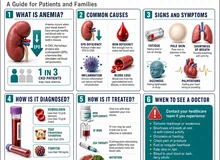
Think of the bone marrow as a factory that makes red cells. It needs an order slip to start production: the hormone erythropoietin, made mainly by the kidneys. It needs raw material: iron, delivered by a truck called transferrin. And it needs the factory floor to be calm: inflammation slows everything down. In kidney failure the order slips stop coming, the trucks are often half-empty or held at the gate, and dialysis itself loses a little blood every session. Anemia is the result.
The picture has a limit. Factories can simply be pushed to produce more. The marrow can too, with an erythropoiesis-stimulating agent (ESA), but pushing hemoglobin all the way back to normal turned out to cause harm, especially strokes. So renal anemia care is not "raise the number as high as possible"; it is a balance between symptoms, transfusion avoidance and risk, decided by the physician. The anemia nurse keeps the factory's records honest and makes sure every delivery is exactly what was ordered.
Interpret the pattern before the number
Erythropoietin deficiency. Kidney cells that sense oxygen release erythropoietin when oxygen delivery falls. Damaged kidneys make too little for the degree of anemia, so the marrow is under-stimulated.
Iron. Two measures are used together. Ferritin reflects stored iron but also rises with inflammation, so a high ferritin does not always mean plenty of usable iron. Transferrin saturation (TSAT) reflects iron in transit to the marrow. Hepcidin, a liver hormone that rises with inflammation and in kidney failure, locks iron in storage and blocks absorption from the gut, which is why intravenous iron is the usual route in hemodialysis.
Blood loss. Blood left in the circuit, frequent sampling, access bleeding, and gastrointestinal bleeding (more common in kidney failure, and with antiplatelet and anticoagulant medicines) all drain red cells and iron.
| Pattern | What may be happening | What the nurse does |
|---|---|---|
| Slow fall over months, low TSAT | Iron deficiency or ongoing small losses | Organize iron studies and losses for the scheduled review |
| Fall with fever, high ferritin, low TSAT | Inflammation blocking iron use (infection, catheter, surgery) | Report; check the order on holding iron during active infection |
| Rapid fall with black stools, vomiting blood, dizziness, chest pain | Bleeding | Vital signs and the physician today, not a dose step |
| Rapid rise | Response faster than intended; risk with ESA | Report before the next scheduled dose |
| No response despite doses given | Iron deficiency, inflammation, missed doses, other causes | Check actual doses given (not just ordered) and report |
Mrs. Celia Navarro, 64, is on an ESA under the unit's anemia protocol. Her hemoglobin was 9.4 g/dL on the 3rd and 10.8 g/dL on the 17th: a rise of 1.4 g/dL in 14 days. The protocol's next step reads "continue current dose." Her blood pressure before dialysis has crept up over the same two weeks.
Nurse Lorna, the anemia nurse, works out the change per week (0.7 g/dL), sees that it is above the label's trigger of more than 1 g/dL in any 2-week period, and notes that the protocol step does not address it. She does not change the dose herself. She sends an Situation, Background, Assessment, Recommendation (SBAR) to Dr. Reyes with the two dated values, the rate of rise, the blood pressure trend, and the question "Please review the ESA dose." Dr. Reyes reduces the dose and asks for a repeat hemoglobin in two weeks; Lorna writes the order, the owner and the check date on the anemia tracker.
What this shows. A fast rise is a safety signal even when the number is still below target, because the speed of change, not just the level, is linked with harm. The nurse recognizes and reports; the prescriber decides.

Kidney failure reduces erythropoietin, hepcidin and inflammation lock iron away, and blood is lost; treatment aims to reduce transfusions and symptoms, not to normalize hemoglobin.
- ESA
- Erythropoiesis-stimulating agent
- TSAT
- Transferrin saturation
Why the target sits below normal
Too high is harmful. In the TREAT trial, 4,038 patients with diabetes, chronic kidney disease (not on dialysis) and anemia were randomly assigned to darbepoetin aiming for a hemoglobin of about 13 g/dL, or to placebo with rescue treatment below 9 g/dL. The higher target did not reduce death or cardiovascular events (hazard ratio 1.05) or death or kidney failure (1.06). Stroke occurred in 101 patients on darbepoetin versus 53 on placebo (hazard ratio 1.92), an absolute difference of about 2.4 percentage points, roughly one extra stroke for every 42 patients treated to the higher target. Transfusions were fewer and fatigue improved only modestly.1 Earlier trials in other populations pointed the same way. This is why ESA dosing aims to reduce transfusions and symptoms, not to normalize hemoglobin.
Iron given proactively. In the PIVOTAL trial, 2,141 adults on maintenance hemodialysis were randomly assigned to proactive high-dose intravenous iron sucrose (withheld if ferritin was above 700 µg/L or TSAT 40 percent or higher) or reactive low-dose iron. Over a median of 2.1 years, the combined outcome of heart attack, stroke, heart failure hospitalization or death occurred in 29.3 versus 32.3 percent (hazard ratio 0.85), an absolute difference of 3.0 percentage points, about one event prevented per 33 patients over two years. Patients on proactive iron needed less ESA, and infection rates were the same.2 The trial was open-label with blinded outcome assessment, and its findings apply to the iron product and thresholds tested.
The current guideline. The Kidney Disease: Improving Global Outcomes (KDIGO) 2026 anemia guideline, the first update since 2012, frames treatment as an individual decision that weighs symptoms against risks, calls for a complete blood count, reticulocyte count, ferritin and TSAT when anemia is evaluated, and advises withholding iron when ferritin exceeds 700 ng/mL or TSAT reaches 40 percent, and suspending iron during active infection.3 Newer oral agents (hypoxia-inducible factor prolyl hydroxylase inhibitors, HIF-PHIs) raise erythropoietin by mimicking low oxygen; whether and which to use is the physician's decision, based on the guideline and local availability.

TREAT showed that aiming for near-normal hemoglobin increased strokes; PIVOTAL showed proactive iron within limits reduced a cardiovascular composite and ESA use.
- ESA
- Erythropoiesis-stimulating agent
- IV
- Intravenous
Know what a protocol authorizes
Many units use an anemia protocol: a physician-signed document that sets laboratory schedules, hemoglobin bands, and the dose steps the prescriber has pre-approved. A protocol is a prescription written in advance. It authorizes only what it says, for the patients it covers, and only while its exclusions do not apply.
Mr. Romy Aquino's hemoglobin fell from 10.2 to 8.1 g/dL in two weeks. The unit's anemia spreadsheet automatically suggests the next ESA step up. Before the session he mentions black stools for three days and feeling dizzy when standing.
Nurse Marie, the anemia nurse, does not follow the spreadsheet. She checks his blood pressure and pulse lying and standing, asks about aspirin and pain relievers, and calls Dr. Reyes: "Hemoglobin down 2.1 g/dL in two weeks, black stools for three days, dizzy on standing, pulse 108 standing. I'm concerned about bleeding." Dr. Reyes reviews him at once and arranges urgent evaluation.
What this shows. A fall of 2.1 g/dL in 14 days, about 1 g/dL a week, with bleeding symptoms, is outside any dosing protocol. The toolkit's hemoglobin trend shows the pace; the symptoms decide the urgency.

Bleeding and other red flags go to the physician now; rapid changes are reported before the next dose; protocols apply only to covered patients with no exclusion.
Make administration reliable
- OrderCurrent, signed, for this patient: product, dose, route, frequency, hold rules.
- ProductRight product and strength; ESAs differ in units and dosing intervals; check the label, not the box color.
- StorageESAs are kept refrigerated and protected from light per label; record the fridge temperature; do not shake.
- IdentityTwo identifiers at the chair.
- Route and timingAs ordered: into the venous line or subcutaneously; intravenous iron infused per order and label, watched for reactions.
- RecordWhat was actually given, or held and why, the same session.
Adverse reactions. Intravenous iron can rarely cause hypersensitivity reactions; know the unit's reaction protocol, keep emergency medicines ready, and stop and call if the patient develops breathlessness, chest tightness, rash, low blood pressure or swelling. ESAs raise blood pressure in some patients and, as the trials showed, carry thrombotic risk; new high blood pressure, access clotting or neurological symptoms are reported.
Actual exposure. A patient may be "on" an ESA in the chart and have missed four doses because of stock-outs, cost or missed sessions. Track doses given, not ordered. Many cases of "ESA resistance" are missed doses or unrecognized iron deficiency.
Mr. Danilo Ramos, 58, dialyzes through a tunneled catheter. Today's schedule lists his weekly IV iron under the proactive iron protocol. At connection he has a temperature of 38.2 °C, and the skin around the catheter exit site is red, warm and tender, with a small amount of pus.
Nurse Lorna does not give the iron. The unit protocol, signed by the nephrologist, says to hold IV iron in suspected active infection and to notify the prescriber. She tells the charge nurse and Dr. Reyes, who examines him, orders blood cultures from the catheter and a peripheral vein before the first antibiotic dose, and starts treatment. Lorna records "IV iron held, suspected catheter infection, Dr. Reyes informed 7:10 a.m." and puts a review flag on the anemia tracker for the next week.
What this shows. Holding a dose because the protocol says so is not a dose change; it is following the order. Any decision about when to restart belongs to the prescriber. The same red site also belongs to the infection prevention nurse's surveillance (Module 3).
In a Philippine unit
ESAs and intravenous iron are costly, and supply depends on Philippine Health Insurance Corporation (PhilHealth) benefits, hospital stock and what patients can buy. Benefit packages list services; they are not dosing orders and do not set targets for an individual patient.5 When a patient brings an ESA from an outside pharmacy, check the product, strength, storage during transport, and the order before giving it. Blood transfusion needs a separate order, consent per policy and bedside double-checking; for patients being considered for a kidney transplant, tell the transplant liaison about every transfusion, because transfusions can create antibodies that make matching harder (Module 10).
Case: Black stools and a dose suggestion
Friday, 6:20 a.m. Mr. Romy Aquino, 59, on hemodialysis for two years, has a hemoglobin of 8.1 g/dL; two weeks ago it was 10.2. The unit spreadsheet suggests the next ESA step. He takes aspirin and recently bought an over-the-counter pain reliever for knee pain. He reports black stools for three days and dizziness when standing. Lying: blood pressure 118/70, pulse 92. Standing: 96/60, pulse 112.
A colleague says, "Just follow the protocol and give the higher dose; the doctor comes on Tuesday."
Before reading on, decide what you would assess, whom you would contact and what you would say, what you would teach, and what would make you escalate. Then compare with the debrief below.
Assess
Communicate
Teach
Escalate
Dr. Reyes reviewed him within the hour, held heparin for the session, reduced fluid removal and arranged same-day gastroenterology referral. Endoscopy found a bleeding ulcer. The over-the-counter product was an NSAID. The ESA plan was reviewed after the bleeding was treated.
Submit: A trend note using the Portfolio Toolkit, the label statement on rapid rise, and the message you would send to the prescriber before the next scheduled dose.
Check your understanding
Each visit draws 5 questions at random from this module’s 15-question bank, in a shuffled order. Choose the single best answer for each, then select Check answers; a rationale appears under every option. Select New set of questions for a different mix. Nothing you select is sent anywhere; scoring happens in your browser and records self-study only.
What this module builds
| Code | The learner can | Course evidence |
|---|---|---|
| S2 | Turn a bedside finding (access, infection, anemia trend, water or equipment status, adequacy data) into the right urgency and the right person. | Focused assessment and SBAR in simulation; observed escalation |
| S4 | Close a loop: referral sent, received, acted on, returned and documented, with one named owner per action. | Referral tracker and transition reconciliation record |
Performance evidence for this module: A three-month anemia trend review for five fictional patients with correct escalation decisions, and an observed ESA and IV iron administration check.
- Patient code; ESA product and current order (date, prescriber)
- Hemoglobin values with dates (last 3 months)
- Ferritin and TSAT with dates
- Change per week (Portfolio Toolkit)
- Red flags: bleeding, infection, surgery, chest pain, neurological symptoms
- Medicines that raise bleeding risk (aspirin, anticoagulant, NSAID)
- Doses ordered versus given; reasons for missed doses
- Adverse effects (blood pressure, reactions, access clotting)
- Transfusions (and transplant liaison informed)
- Reported to prescriber (date, decision)
Print it or copy it into your unit’s own form. Use it with fictional data here; real entries belong only in the facility’s approved records.
Portfolio measure. Anemia reviews due with a documented prescriber plan and completed follow-up, divided by reviews due; balanced by adverse events, transfusions, missed doses and treatment burden.
With your preceptor
Use de-identified trends or the fictional cases; administration is observed by your preceptor. These are prompts for supervised learning, not a procedure. Use your center’s own protocols, contacts and forms; your preceptor observes and signs off each item on the facility’s competency record.
- Plot hemoglobin, ferritin and TSAT for five patients over six months and identify each pattern.
- Read your unit's anemia protocol and list its exclusions and who signed it.
- Complete an observed ESA administration from order check to documentation.
- Observe an intravenous iron infusion and review the reaction protocol and emergency medicines.
- Audit one month of ESA doses ordered versus given and report missed doses with reasons.
Read next on this site
- Anemia ManagementThe site's guide to anemia in kidney disease.
- erythropoietin (EPO)-Resistant Renal Anemia: ESA Hyporesponsiveness in chronic kidney disease (CKD)When erythropoietin does not seem to work.
- Iron — Fueling Every Red Cell in Your BloodIron explained for patients.
- Hemodialysis Nurse Module 3: CKD complications, nutrition and medicinesRelated Renal Care Academy module.
Back to the Special Dialysis Nurse Roles home · the Hemodialysis Nurse core course.