Mapping sources before applying, government assistance programs, factual social case studies, and tracking decisions, not submissions.
PublishedNailathalaGipatikPepalwal:ReferencesMga SanggunianMga TinubdanReng Reperensya:4Audience: Registered social workers in dialysis units, hospital medical social work departments, and kidney transplant programs · medical social workers rotating into kidney care · navigation and support staff on the orientation pathRead timeOras ng pagbasaOras sa pagbasaOras ning pamamasa:
This module is study material for social workers and navigation staff in kidney care. It explains the reasoning behind social work decisions; it is not a facility procedure, legal advice, a benefits ruling, or a mental health diagnosis. Rules, assistance programs, and amounts change: confirm them against the current issuance and your facility’s approved policy. Medical treatment belongs to the nephrologist, benefits to PhilHealth, donation ethics to the ethics committee, and psychiatric diagnosis to the mental health team. Every case, name, and identifier is fictional.
Learning objectives
After this module you should be able to
Map the assistance sources available to a household (Department of Social Welfare and Development (DSWD), Philippine Charity Sweepstakes Office (PCSO), Malasakit Center, Department of Health (DOH) hospital programs, local government, employer, community) before applying.
Match each source to what it can pay for, its current requirements, and its decision route.
Write a factual, proportionate social case study that supports an application without exaggeration or unnecessary disclosure.
Track an application to its decision and to what actually reached the household, not to its submission.
Protect dignity and consent when assistance comes with publicity, political offices, or conditions.
Classroom 1 hSkills lab 1 hSupervised placement 1 h
Pre-testBefore you read, answer the 5 self-assessment questions and note your score. After the module, select New set of questions and compare. The difference is what you learned; the questions you still miss are what to reread.
Start here
The big picture, in plain words
In plain wordsRaising money for dialysis is like filling a water jar from several small taps. No single tap fills it. Some taps run only on certain days; some need a ticket; some drip. A household that runs from tap to tap without a plan wastes the day and still goes home with a half-empty jar.
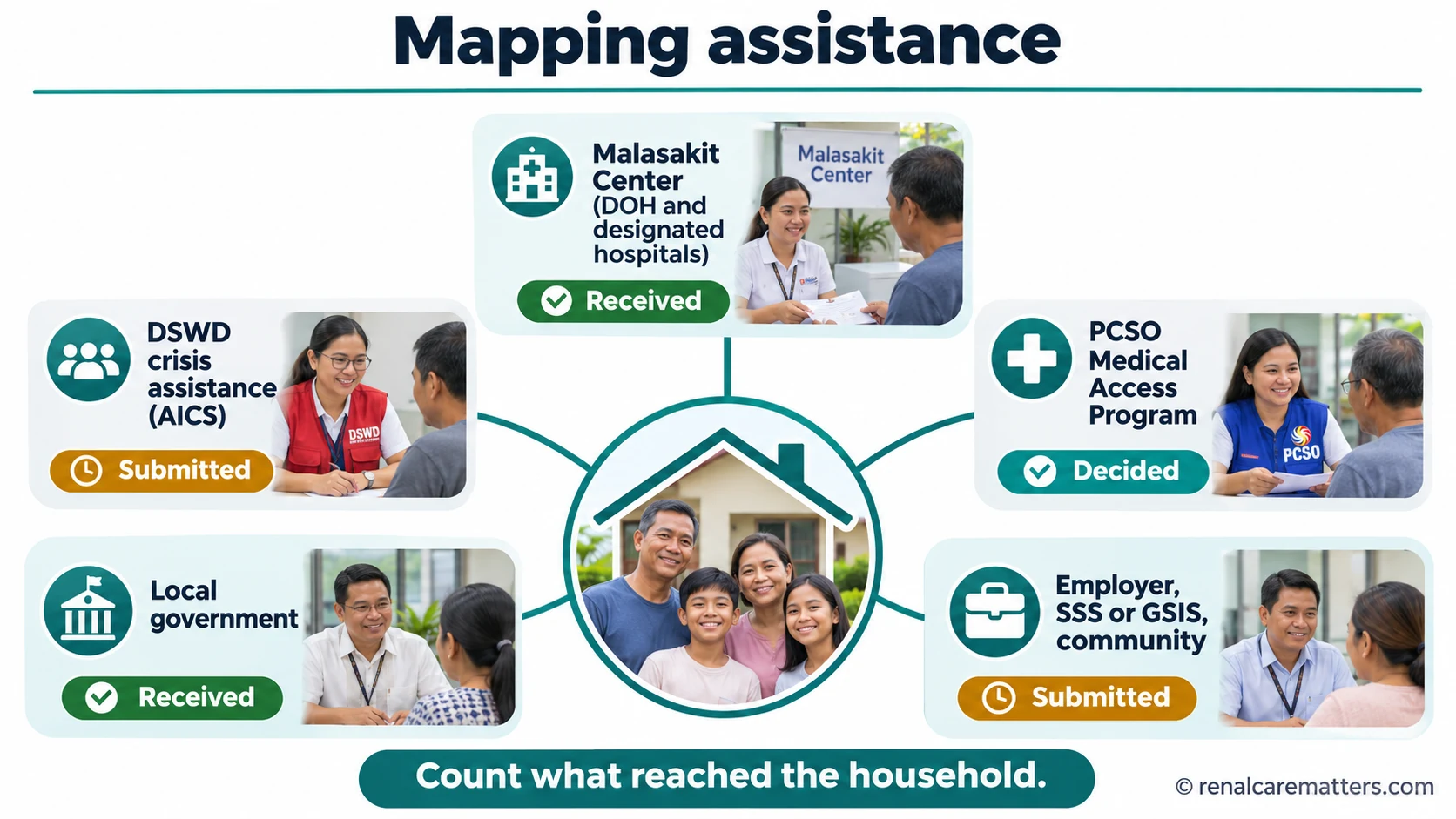
Figure 1. Map before you apply. Track each request to its decision and to what actually reached the household.
The picture has a limit. Taps do not judge you. Assistance programs assess need, ask for documents, have budgets that run out, and change their requirements. A request can be approved for less than was asked, paid to the facility rather than the family, or arrive after the bill was due. That is why your work is not collecting documents. It is knowing which source fits which cost, preparing one strong request instead of many weak ones, and following each to what actually reached the household.
Your job in this module is resource mobilization with integrity: honest about need, honest about what each program can do, and protective of the person’s dignity and privacy along the way.
Figure 2 · Key terms for this module
AICSAssistance to Individuals in Crisis Situation, a DSWD program that may provide medical, transport, and other crisis aid after assessment.
PCSO Medical Access ProgramA PCSO program that may help with medical costs, including hemodialysis, after application.
Malasakit CenterA one-stop assistance desk in DOH hospitals and other designated hospitals, set up under Republic Act No. 11463.
Guarantee letterA written commitment by an agency to pay a stated amount to a facility.
Social case studyA professional report by a registered social worker describing a person’s situation and need.
Indigency certificateA barangay or local document stating that a household has limited means.
Opening case · fictional
Case: The guarantee letter that covered half
Tuesday, 9:00 a.m. Mr. Arnel Santos, 44, a former delivery rider, has been on hemodialysis for six months at a private freestanding unit in Quezon City. His wife, Mrs. Rowena Santos, brings you a guarantee letter from an assistance program. It covers about half the amount the unit billed for the sessions beyond Philippine Health Insurance Corporation (PhilHealth)’s coverage after his recent admission.
She says she spent three days queuing at four offices last month and was told by one of them to come back with a “letter from the social worker saying he is dying.” A local official’s staff also offered to pay the rest if the family appears in a photo for the official’s social media page.
The unit’s billing clerk wants to know today who will pay the remainder.
Before reading on, decide:
What would an assistance map for this household look like?
How do you answer the request for a letter saying he is dying?
How do you handle the photo offer, and the remaining balance?
Keep your answers in mind. The lesson gives you what you need, and the case review near the end shows one sound response.
Lesson · part 1
Which tap for which cost
Start with the costs, not the programs. List what the household must pay in the next three months: sessions beyond PhilHealth coverage, medicines, laboratory tests, an access operation, transport, food. Then match each cost to the sources that can pay for that kind of cost.
Source
What it may help with
What to check
DSWD crisis assistance (AICS)
Medical, transport, and other crisis needs, after assessment
The current Citizen’s Charter requirements at the field office; the social case study or case summary it asks for1
PCSO Medical Access Program
Medical costs, with hemodialysis-specific requirements
The current documentary list; that the provider accepts its guarantee letters2
Malasakit Center
One-stop help in DOH hospitals and designated hospitals, bringing several agencies together
Whether the patient’s hospital has one; freestanding units usually do not3
Local government (city, municipality, province, barangay)
Medical or transport aid, varying by locality
The local social welfare office’s current program and residency rules
Employer, union, Social Security System (SSS) or Government Service Insurance System (GSIS)
Sick leave, disability benefits, loans
The person’s membership status and contributions
Community, faith, family abroad
Transport, food, small regular amounts
The person’s wishes about asking; dignity
Keep the map dated and local. Requirements, amounts, and office procedures change and differ by region. A checklist from last year, or from another city, sends a family to the wrong office with the wrong papers.
Assistance is an application pathway, not a guaranteed benefit. Never promise approval, an amount, or a processing time.
RememberStart from the costs, match each to a source that pays for that kind of cost, and check the current local requirements before anyone queues.
Lesson · part 2
Honest need, minimum disclosure
A social case study is a professional report. It describes the person’s situation, the need, and the plan, in facts with sources. It is signed only by the registered social worker who assessed the person (Module 1).
It must not exaggerate. Writing that a person is “dying” or “has no family” when that is untrue is false documentation, harms the person if discovered, and spends trust that every future applicant from your unit depends on. Kidney failure treated with dialysis is serious and life-sustaining treatment is ongoing; you can say exactly that, with the treatment schedule and costs.
Include
Leave out unless needed for the purpose
Diagnosis and treatment in plain terms, as stated by the attending physician
Unrelated diagnoses, mental health details, family conflicts
Household members, income, and the specific costs requested
Debts and private matters not relevant to the request
Assistance already received and from whom
Identification numbers beyond what the form requires
The plan: what this assistance will make possible
Opinions about the person’s character
Get the person’s consent for what goes into the report and where it goes. Under the Data Privacy Act, health information is sensitive personal information that needs a lawful basis and safeguards (Module 18).4
RememberA social case study is factual, proportionate, consented, and signed only by the social worker who did the assessment. Never exaggerate.
Lesson · part 3
What reached the household
The most common failure in assistance work is counting submissions. “We submitted four applications” says nothing about whether the family can pay the next bill. Track every request to its decision and to the money or service that actually arrived.
Status
Record
Prepared
Documents checked against the current checklist
Submitted
Date, office, officer, reference number
Decided
Approved, partial, declined, waitlisted; amount and reason
Received
What the facility or family actually received, and when
Gap remaining
What is still unpaid after this decision
Pending support is not money. When you calculate a household’s gap, subtract only confirmed support. The access cost tool follows this rule.
Worked example, illustrative. Gap = total cost − confirmed support (pending support is not subtracted). Sessions beyond coverage this month: PHP 12,000. Guarantee letter confirmed: PHP 6,000. Local government request: pending. Gap = 12,000 − 6,000 = PHP 6,000, until the local decision arrives. What the number tells you: what the household must still find this month. What it does not tell you: whether the pending request will be approved.
Over months, your records show which sources actually help people in your area and how long they take. That knowledge is one of the most valuable things a renal social worker builds.
RememberCount what reached the household. Subtract only confirmed support.
Lesson · part 4
Help without humiliation
Assistance sometimes comes with conditions that cost the person something: a photo for social media, a public testimonial, standing in a line for hours while visibly ill, or telling their story in front of strangers. People in need may feel they cannot say no.
Your role is to make sure the choice is theirs. Ask the person privately, without the offering party present, whether they want to accept the condition. Explain that refusing will not affect their care at your unit. If they accept, help them set limits (no faces of children, no hospital setting, no diagnosis named). If they refuse, look for another source and record that the refusal was their choice.
Protect people from the costs of the system itself. Combine visits so a patient does not queue on a dialysis day. Ask whether a family member can file on the patient’s behalf. Check which offices accept documents from your unit directly.
RememberAssistance must never cost a person their dignity without their free consent. Ask privately, and make refusal safe.
On the floor · The queue
Social worker Mr. Ramon Villanueva learns that patients from his unit queue at the same assistance office every Monday, a dialysis day.
He calls the office, agrees on a Thursday intake for dialysis patients with a list sent ahead, and tells the patients’ families.
One call changed the system so twenty people did not have to choose between dialysis and assistance.
Illustrative scenario. Names and details are invented.
On the floor
Real situations: problems and solutions
These are fictional but typical. For each one, cover the answer, decide what you would do, then compare. Where a step depends on local rules, your unit’s procedure and your supervisor’s direction come first.
Seven offices in a week
What you see
A wife has queued at seven offices with the same incomplete documents.
What is likely going on
No map, no checklist, no plan.
What to do
Map costs to sources, check current requirements by phone, and prepare one or two strong applications.
Why it matters
Exhausting the caregiver is a hidden cost of poor planning.
The half guarantee
What you see
A guarantee letter covers half the balance.
What is likely going on
Partial approval is common.
What to do
Record the decision, recalculate the gap with confirmed support only, and plan the rest.
Why it matters
Pending support is not money.
The photo condition
What you see
An office offers help if the patient poses for a publicity photo.
What is likely going on
Help with a cost to dignity.
What to do
Ask the patient privately, make refusal safe, and help set limits if they agree.
Why it matters
Consent under pressure is not free consent.
Field notes
Update your assistance map every quarter with requirements and typical decision times.
Ask offices whether they accept documents from your unit directly, so patients queue less.
Case review
Back to the case: The guarantee letter that covered half
The assistance map. List the costs for the next three months, then match them: the remaining balance and future sessions beyond coverage (DSWD crisis assistance, PCSO, local government), transport (local government, community), medicines (the hospital pharmacy, PCSO), and income loss (SSS disability or sickness benefits if he contributed). Check current requirements by phone before anyone queues. A freestanding unit usually has no Malasakit Center, so ask whether his hospital of record has one.
The “dying” letter. Decline to write anything untrue. Offer a factual social case study: kidney failure, hemodialysis three times a week for life unless he receives a transplant, the specific costs, the household income, and the assistance already received. Call the office to ask what it actually requires; the request may have been a misunderstanding.
The photo and the balance. Speak with Mr. and Mrs. Santos privately. It is their choice; refusing will not affect his care. If they accept, help them set limits. Tell the billing clerk honestly: one guarantee letter is confirmed, other requests are being prepared, and you will update by a set date. Ask the unit head whether a payment schedule is possible for the remaining amount while decisions are pending. Treatment must not stop while the paperwork moves.
Skills lab · with your preceptor
Skills checklist: An assistance map and a factual case study
For a fictional household, build an assistance map and write a social case study while your supervisor observes. Your preceptor rates each step as satisfactory, needs practice, or not observed. Steps marked Critical must all be satisfactory before sign-off. This checklist supports supervised learning; your unit’s own procedure and competency form are the authority. A printable version of every checklist is on the trainer page.
Lists the household’s costs for three months before choosing sources.
Matches each cost to sources that pay for that kind of cost, with current local requirements.
Writes a factual, proportionate social case study with sources and the person’s consent.
CriticalRefuses to exaggerate or write anything untrue in a report.
Tracks each request to its decision and what was received; subtracts only confirmed support.
CriticalAsks the person privately about any condition attached to assistance and makes refusal safe.
CriticalNever promises approval, an amount, or a processing time.
Placement activity. Build a dated assistance map for your unit’s catchment area: each office, what it pays for, current requirements, contact, and typical decision time.
Self-assessment
Check your understanding
Each visit draws 5 questions at random from this module’s 10-question bank. Choose the single best answer for each, then select Check answers; an explanation appears under the best answer. Select New set of questions for a different mix. A good target is 4 of 5 on two different sets. Nothing you select is sent anywhere; scoring happens in your browser.
Educational material for social workers and navigation staff in kidney care. Completing it is an Academy learning record only. It is not a Professional Regulation Commission (PRC) license, a specialty credential, CPD units, or DOH or PhilHealth recognition, and it does not authorize anyone to practice beyond their own registration.