The first five minutes, language and health literacy, family and culture without stereotype, and consent for family participation.
PublishedNailathalaGipatikPepalwal:ReferencesMga SanggunianMga TinubdanReng Reperensya:1Audience: Registered social workers in dialysis units, hospital medical social work departments, and kidney transplant programs · medical social workers rotating into kidney care · navigation and support staff on the orientation pathRead timeOras ng pagbasaOras sa pagbasaOras ning pamamasa:
This module is study material for social workers and navigation staff in kidney care. It explains the reasoning behind social work decisions; it is not a facility procedure, legal advice, a benefits ruling, or a mental health diagnosis. Rules, assistance programs, and amounts change: confirm them against the current issuance and your facility’s approved policy. Medical treatment belongs to the nephrologist, benefits to PhilHealth, donation ethics to the ethics committee, and psychiatric diagnosis to the mental health team. Every case, name, and identifier is fictional.
Learning objectives
After this module you should be able to
Open a first interview in a way that protects privacy, uses the person’s preferred language, and explains your role.
Recognize signs of limited health literacy and check understanding with teach-back instead of “Do you understand?”
Arrange language support without using a child or an interested relative as the interpreter for sensitive topics.
Use cultural concepts such as hiya and utang na loob as questions to explore, not as labels to apply.
Obtain an adult patient’s permission before involving family, and record what they agreed.
Classroom 1 hSkills lab 1 hSupervised placement 1 h
Pre-testBefore you read, answer the 5 self-assessment questions and note your score. After the module, select New set of questions and compare. The difference is what you learned; the questions you still miss are what to reread.
Start here
The big picture, in plain words
In plain wordsThe first five minutes of a conversation are like the first steps onto a footbridge. If the person feels it sway, because the room is crowded, the words are foreign, or a relative is answering for them, they will not cross. Everything you hope to learn depends on whether the bridge feels steady.
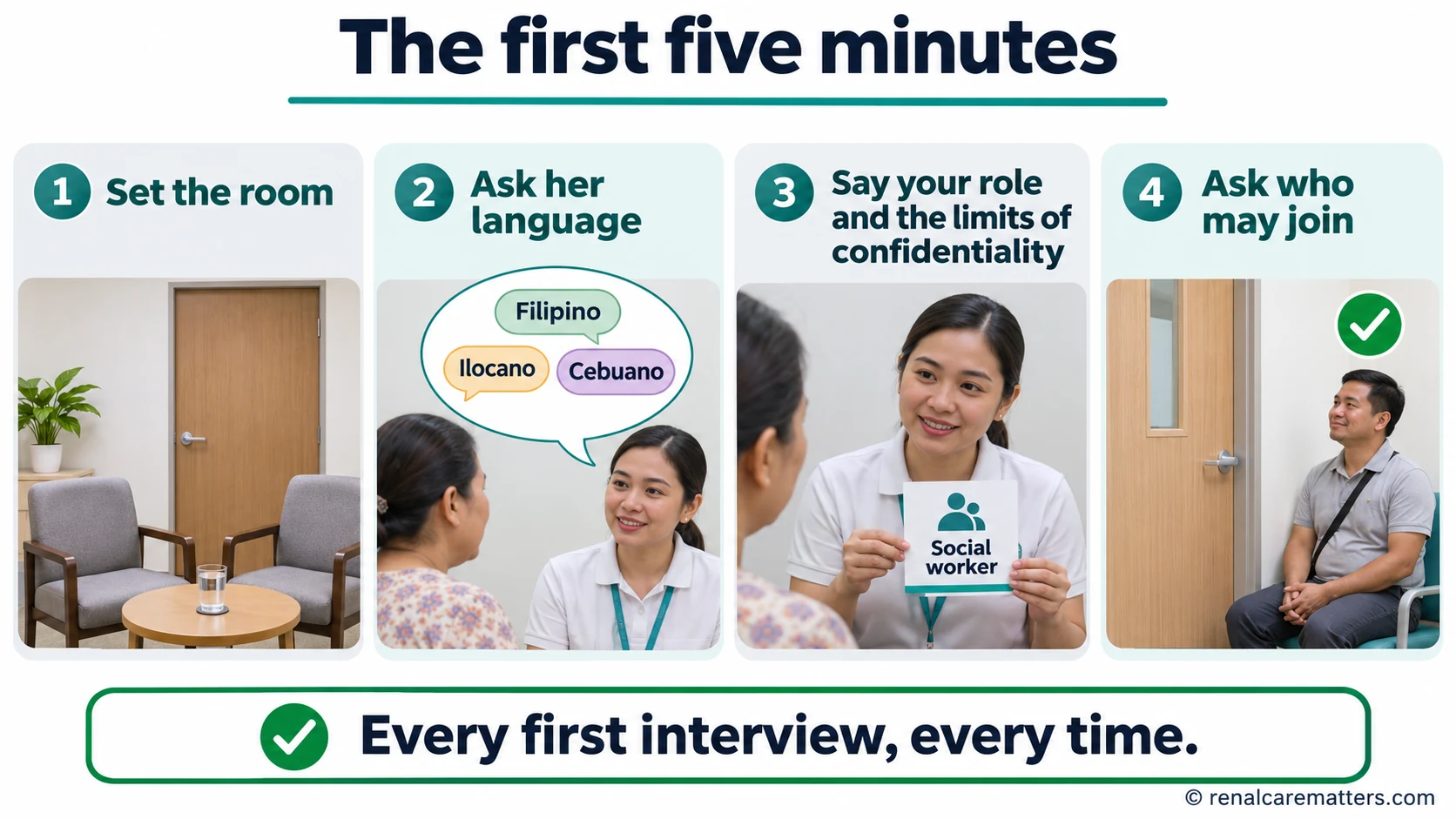
Figure 1. The first five minutes. Privacy, the person's language, your role, and their permission before anyone else joins.
The picture has a limit. A bridge either holds or it does not. Trust is built over many conversations and can be repaired after a bad start. A person who said little in the first interview may tell you the real story in the third, once they have seen that what they said did not reach their family or their employer. So engagement is not a single technique. It is a set of habits you repeat every time.
Your job in this module is to make the first conversation safe and understandable. That means privacy, the person’s own language, words they can use, and their permission before anyone else joins. It also means curiosity about culture without assuming that any one Filipino family thinks or behaves in a particular way.
Figure 2 · Key terms for this module
Health literacyA person’s ability to find, understand, and use health information to make decisions.
Teach-backAsking the person to explain, in their own words, what they understood, to check your explanation, not their intelligence.
Trained interpreterA person, other than family, who interprets accurately and neutrally and keeps confidences.
Cultural safetyCare in which the person, not the worker, judges whether they were treated with respect for who they are.
HiyaOften translated as shame or social propriety; may make it hard to ask questions or admit not understanding.
Utang na loobA debt of gratitude that can shape who helps whom, and what a person feels they may refuse.
Opening case · fictional
Case: The son who answers every question
Mrs. Florencia Agustin, 72, a widow from a farming town in Nueva Ecija, started hemodialysis two weeks ago through a catheter. At 11:00 a.m. on Tuesday she comes to her first social work interview with her eldest son, Mr. Romeo Agustin, 48, an overseas worker home on leave.
She speaks Ilocano at home and some Filipino; she reads little. Every time you ask her a question, Mr. Agustin answers: “Okay lang si Nanay. We will handle everything. Just tell us what to sign.” Mrs. Agustin looks at her hands. When you ask whether she understands why she needs dialysis, she nods and says “Opo.”
The nurse mentioned this morning that Mrs. Agustin asked her, alone, whether she “has to keep doing this” once her son flies back next month.
Before reading on, decide:
How do you create a private conversation with Mrs. Agustin without offending her son?
How do you check whether she understands, given that she said “Opo”?
How do you involve her son in a way that respects both of them?
Keep your answers in mind. The lesson gives you what you need, and the case review near the end shows one sound response.
Lesson · part 1
Privacy, language, role, permission
Set the room before you speak. Sit at eye level, not across a desk. Close the door or draw the curtain. Have water. Ask the person what language they prefer and what they like to be called: Nanay, Lola, Mrs. Agustin, or by name.
Then say four things, briefly: who you are, what a social worker does here, why you are meeting today, and what happens to what they tell you, including the limits of confidentiality (Module 1). Only then ask your first question, and make it open: “Ano po ang pinakamahalaga sa inyo ngayon?” (What matters most to you right now?)
Habit
Why it works
What breaks it
See the person alone first, then invite family with permission
Many people will not speak of money, fear, or violence in front of relatives
Interviewing the family in the corridor “to save time”
Ask the preferred language and use it
Thinking in a second language adds load to frightening news
Assuming everyone is comfortable in English
Explain your role before asking
People share more when they know why you ask and who will see it
Starting with “How much is your monthly income?”
Open questions first
The person’s priorities surface
A checklist read aloud
Seeing the person alone is not an accusation against the family. Make it a rule you apply to everyone: “I start with every patient alone for a few minutes, then I will ask you to join us.” A rule that applies to everyone offends no one.
RememberRoom, language, role, permission, then an open question. Every first interview, every time.
Lesson · part 2
“Opo” is not understanding
Limited health literacy is common in kidney disease. A systematic review of 20 studies with 12,324 patients, mostly in the United States, estimated that about one in four people with chronic kidney disease had limited health literacy (pooled prevalence 25%; 27% among those on dialysis), more often among people with low income.1 The studies were of low to moderate quality and few came from countries like ours, so treat the number as a signal, not a local figure. In a Philippine unit, add the many people who speak a regional language at home and read little in any language.
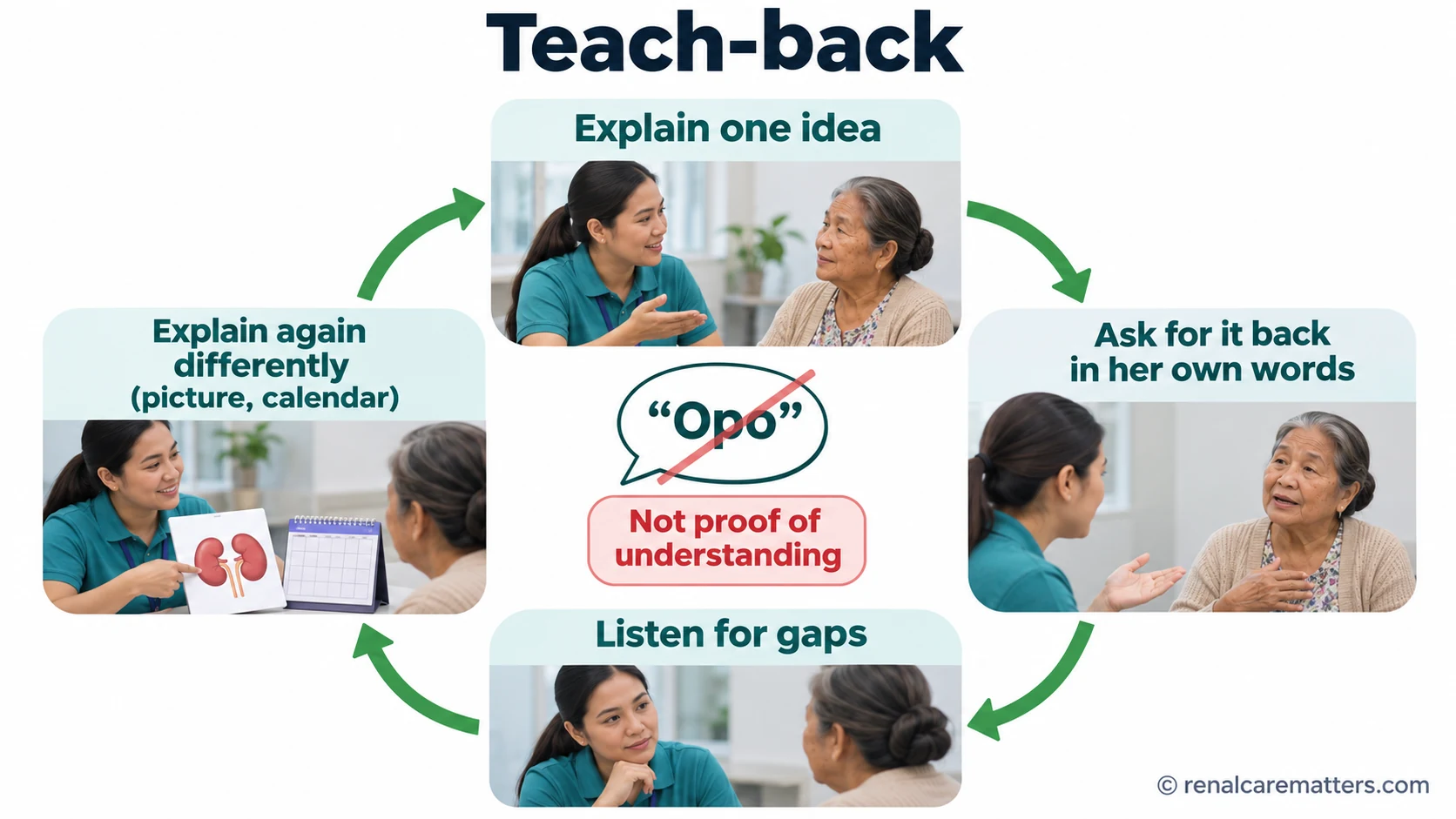
Figure 3. Teach-back checks the explanation, not the person.
“Opo” and a nod often mean “I heard you” or “I respect you,” not “I understand.” Hiya may make it hard for an older person to admit confusion to a younger professional. So do not ask “Do you understand?” Ask the person to teach it back.
Figure 4 · Teach-back in four steps
Explain one ideaShort sentences, everyday words, one idea at a time.
Ask for it back“So I know I explained it well, can you tell me in your own words what we will do on Monday?”
Listen for gapsNote what is missing or mistaken without correcting in a way that shames.
Explain again differentlyUse a picture, a calendar, an example from their own day; then ask again.
Language support matters most for sensitive topics. A child, a grandchild, or a relative who pays for care is not a neutral interpreter. They may soften bad news, leave out a question about violence, or answer for the person. Use a trained interpreter, a bilingual staff member who is not involved in the family, or a telephone interpreter if your facility has one. If none is available, keep sensitive questions for a time when one is, and record why.
RememberCheck understanding with teach-back. Never use a child or an interested relative to interpret sensitive questions.
Lesson · part 3
Concepts as questions
Filipino social science offers useful concepts: hiya, utang na loob (a debt of gratitude), pakikisama (getting along with the group), bahala na (leaving the outcome to God or fate), and strong family obligation. They can help you understand why a person accepts help from one relative but not another, or why a family decides together. They can also become stereotypes that stop you from listening.
Concept
A useful question
The trap
Hiya
“Some people find it hard to ask questions here. What would make it easier for you?”
Assuming silence means agreement
Utang na loob
“Who has helped you most? Is there anyone you would not want to ask?”
Assuming every debt of gratitude is welcome or freely chosen
Family decision making
“How do decisions like this usually get made in your family? How would you like this one made?”
Letting the family decide for a competent adult without asking her
Bahala na, faith
“What gives you strength? How does your faith help you with this?”
Treating faith as denial or fatalism
Families in the Philippines differ by region, religion, language, income, and history: a fisher family in Samar, a Muslim family in Lanao, an Indigenous family in the Cordillera, a call-center worker’s household in Pasig. Cultural safety means the person, not you, judges whether they were respected. Ask, then believe them.
RememberUse cultural concepts to ask better questions. Never use them to predict what one family thinks.
On the floor · The decision in Lanao
Social worker Ms. Amina Pangandaman meets a young man starting dialysis whose uncle, the family elder, speaks for the family. The young man is quiet.
She asks the young man alone how he would like the decision made. He says he wants his uncle involved but wants to hear the doctor himself. She arranges a meeting where the nephrologist speaks to him first, then to the family together.
She did not override the family’s way; she asked the patient where he stood inside it.
Illustrative scenario. Names and details are invented.
Lesson · part 4
An adult decides who joins
An adult who can understand and decide has the right to choose who hears their information and who joins their decisions. Family members are often the person’s greatest strength, and most people want them involved. Your job is to ask, not to assume, and to record the answer.
Ask three questions: who should join this conversation; what may I share with them, and what should stay between us; and who should I call if you are very sick and cannot speak for yourself? Write down the answers, with the date. People change their minds; ask again when circumstances change.
If…
Then…
The person wants family present for everything
Still see them alone briefly at intervals, to ask about safety and money
The person wants something kept from family
Respect it within the limits of confidentiality; help them plan what to say if they choose
The family asks you to keep the diagnosis from the person
Explore the fear; involve the nephrologist; ask the person how much they want to know
The person cannot currently decide
Follow your facility’s process for decision-making capacity, led by the attending physician
A son who flies home from abroad to “handle everything” usually acts from love and guilt about being away. Bring him in as a resource, with his mother’s agreement: he can learn the schedule, arrange money, and plan backup for when he leaves. What he cannot do is answer for her.
RememberAsk who may join, what may be shared, and who speaks if the person cannot. Record the answers and the date.
On the floor
Real situations: problems and solutions
These are fictional but typical. For each one, cover the answer, decide what you would do, then compare. Where a step depends on local rules, your unit’s procedure and your supervisor’s direction come first.
The nodding grandmother
What you see
An older woman nods and says “Opo” to everything but cannot say when her next session is.
What is likely going on
Politeness, hiya, or limited literacy.
What to do
Use teach-back with a calendar picture, in her language.
Why it matters
Agreement is not understanding.
The grandchild interpreter
What you see
A 12-year-old is brought to interpret for her grandfather’s interview about money and mood.
What is likely going on
No other interpreter was arranged.
What to do
Thank her, keep her for simple logistics only, and arrange an adult interpreter for sensitive topics.
Why it matters
Children should not carry adult disclosures.
The family elder
What you see
In a Muslim family, the uncle speaks for the young patient.
What is likely going on
A family decision pattern the patient may accept.
What to do
Ask the patient privately how he wants decisions made, then honor it.
Why it matters
Respecting culture means asking the person where they stand within it.
Field notes
Learn greetings and a few key phrases in the main languages of your catchment area.
Keep simple picture cards for dialysis days, medicines, and diet.
Case review
Back to the case: The son who answers every question
A private conversation. Use the rule that applies to everyone: “Sir, I start every interview with the patient alone for a few minutes; then I would like you to join us, because Nanay will need your help.” Thank him for coming home. Arrange an Ilocano-speaking staff member who is not family, or a telephone interpreter, for the private part.
Checking understanding. “Opo” told you she was polite, not that she understood. Use teach-back in Ilocano: “So I know I explained well, Nanay, what will happen if you stop coming to dialysis?” Her question to the nurse about whether she “has to keep doing this” deserves a direct, private answer: it may be fear, exhaustion, a wish to stop, or loneliness about her son leaving. Ask what she means. If she raises stopping dialysis, the attending nephrologist must hear it (Module 16); if anything suggests thoughts of self-harm, follow the safety pathway (Module 11).
Involving her son. With her permission, bring him in as the planner for the months after he leaves: the backup caregiver, transport, money transfers, and a phone number for the unit. Write down whom she wants informed and what stays private.
Skills lab · with your preceptor
Skills checklist: A first interview with language support and teach-back
In a role-play with a simulated older patient and relative, open the interview and check understanding while your supervisor observes. Your preceptor rates each step as satisfactory, needs practice, or not observed. Steps marked Critical must all be satisfactory before sign-off. This checklist supports supervised learning; your unit’s own procedure and competency form are the authority. A printable version of every checklist is on the trainer page.
Sets the room for privacy and eye-level seating before speaking.
Asks the preferred language and form of address, and uses them.
CriticalSees the patient alone first using a rule that applies to everyone, without accusing the relative.
CriticalExplains role, purpose, and confidentiality limits before personal questions.
Uses teach-back instead of “Do you understand?” and re-explains differently when needed.
CriticalDeclines to use a child or interested relative as interpreter for sensitive topics, and arranges an alternative.
Records whom the patient wants involved, what may be shared, and who speaks if they cannot.
Placement activity. Observe two first interviews by an experienced social worker. Note how the first five minutes were set, and how understanding was checked.
Self-assessment
Check your understanding
Each visit draws 5 questions at random from this module’s 10-question bank. Choose the single best answer for each, then select Check answers; an explanation appears under the best answer. Select New set of questions for a different mix. A good target is 4 of 5 on two different sets. Nothing you select is sent anywhere; scoring happens in your browser.
Taylor, D. M., Fraser, S. D. S., Bradley, J. A., Bradley, C., Draper, H., Metcalfe, W., Oniscu, G. C., Tomson, C. R. V., Ravanan, R., & Roderick, P. J. (2017). A systematic review of the prevalence and associations of limited health literacy in CKD. Clinical Journal of the American Society of Nephrology, 12(7), 1070–1084. https://doi.org/10.2215/CJN.12921216
Educational material for social workers and navigation staff in kidney care. Completing it is an Academy learning record only. It is not a Professional Regulation Commission (PRC) license, a specialty credential, CPD units, or DOH or PhilHealth recognition, and it does not authorize anyone to practice beyond their own registration.