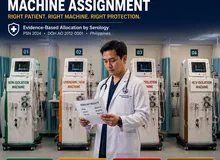
A Clean Unit: Hepatitis, HIV, Tuberculosis, and Vaccines
How infection spreads in a dialysis unit, isolation rules, screening, vaccines, and what to do after a needlestick.
PublishedNailathalaGipatikPepalwal:ReferencesMga SanggunianMga TinubdanReng Reperensya:21Audience: Physicians who cover hemodialysis shifts · attending nephrologists, medical directors, and head nurses who orient themRead timeOras ng pagbasaOras sa pagbasaOras ning pamamasa:
This module is study material for physicians on duty in hemodialysis units. It explains the reasoning behind common decisions; it is not a protocol. At the chairside, follow your unit’s protocol and ask the attending nephrologist for guidance. Doses and cut-off values are set by your unit. Every case is fictional.
Learning objectives
After this module you should be able to
Explain how hepatitis B virus (HBV), hepatitis C virus (HCV), and human immunodeficiency virus (HIV) travel between dialysis stations, and which practices interrupt each route.
Apply the station, machine, and staff rules for each virus, citing the Centers for Disease Control and Prevention (CDC) 2001 recommendations and the Kidney Disease: Improving Global Outcomes (KDIGO) 2022 hepatitis C guideline with its grades.
Interpret a hemodialysis serology panel and take the first steps after a new positive result.
Screen for and recognize tuberculosis in a dialysis patient, and manage a patient with a respiratory infection so that others are protected.
List the vaccines for dialysis patients and staff, interpret a post-vaccination antibody result, and recognize a nonresponder.
Respond to a needlestick or blood splash in the first hour, per your unit’s protocol.
Pre-testBefore you read, answer the 8 self-assessment questions and note your score. After the module, select New set of questions and compare. The difference is what you learned; the questions you still miss are what to reread.
Start here
The big picture, in plain words
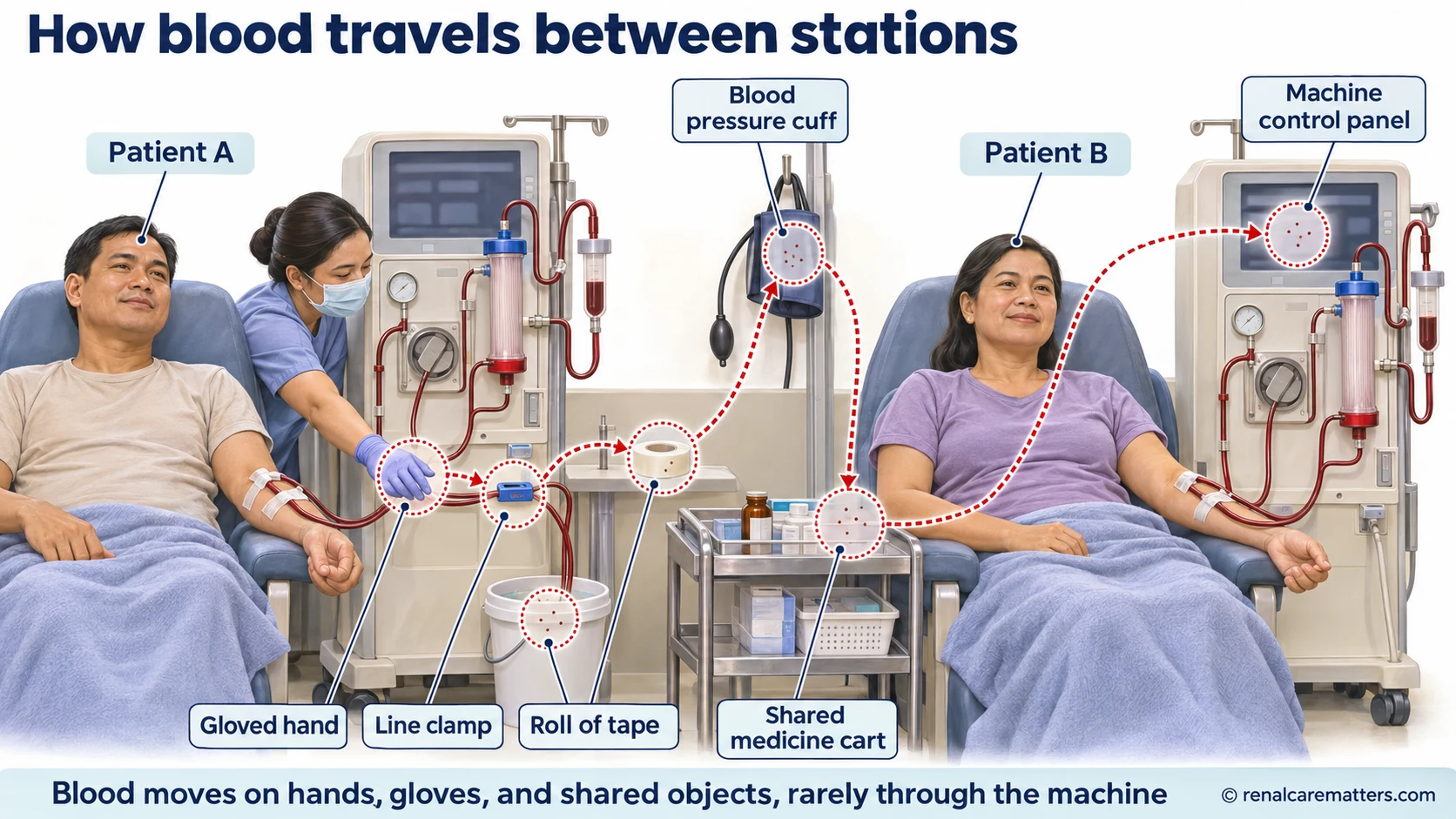
In plain wordsPicture a row of freshly painted benches in a barangay hall, and nobody can see which bench is still wet. Whoever touches one carries a little paint to the next bench and the next hand. Blood at a dialysis station behaves the same way. A smear too small to see rides on a glove, a clamp, or a blood pressure cuff to the next chair.
The picture has a limit: viruses differ. Hepatitis B virus (HBV) reaches very high levels in blood and survives for days on a dry surface. Hepatitis C virus (HCV) has spread between neighboring dialysis stations in many outbreaks. Human immunodeficiency virus (HIV) travels in blood too, but patient-to-patient spread in dialysis units has not been reported in the United States.1 Tuberculosis and respiratory viruses travel in air. Each one needs its own rule.
Figure 1 · Key terms for this module
Standard precautionsPractices used for every patient: hand hygiene, gloves, safe sharps and medicine handling, and cleaning.
HBsAgHepatitis B surface antigen, a protein of the virus. A positive test usually means current hepatitis B infection.
Anti-HBsAntibody to hepatitis B surface antigen. A level of 10 milli-international units per milliliter (mIU/mL) or more after vaccination means protection.
Anti-HBcAntibody to the hepatitis B core protein. It appears after infection, never after vaccination.
Anti-HCVAntibody to hepatitis C. It shows exposure at some time and stays positive after recovery or cure.
HCV RNAThe genetic material (ribonucleic acid) of hepatitis C. A positive test means the virus is present now.
SeroconversionA change from a negative to a positive result.
Postexposure prophylaxis (PEP)Treatment given soon after an exposure to lower the chance that infection takes hold.
Most shifts pass without a new infection. A few bring a new positive result, a coughing patient, or a needlestick. Your work is to keep the station rules exact, to recognize these three events, and to start the first steps your unit’s protocol allows while you call.
Opening case · fictional
Case: A new hepatitis B result
Mrs. Teresita Aquino, 61, has dialyzed for eight months at station 9 in the general area, on the Tuesday-Thursday-Saturday morning shift. Last month she spent one week in her home province for a family wake and dialyzed at a unit there.
At 10:00 a.m. on Thursday, during her session, the laboratory calls Nurse Paolo Cruz. Her monthly HBsAg test, drawn on Tuesday, is reactive. Last month it was nonreactive. She received a hepatitis B vaccine series, but no anti-HBs result was ever recorded. She is at hour two with stable vital signs and no complaints. The patients at stations 8 and 10 are susceptible to hepatitis B. Nurse Cruz has been covering stations 8, 9, and 10 since 7:00 a.m. He calls you to the nurses’ station (illustrative scenario).
Before reading on, decide:
What do you do now, during this session, about Mrs. Aquino, her neighbors, and the nurse’s assignment?
What does this result mean, what must be confirmed, and what other markers do you need?
Whom do you call, what do you tell Mrs. Aquino and when, and what is written and reported?
Keep your answers in mind. The lesson gives you what you need, and the case review near the end shows one sound response.
Lesson · part 1
How Blood Travels Between Stations
In a hemodialysis unit, many people’s blood leaves their bodies on the same shift, handled by the same staff. Catheter infection (Modules 10 and 17) and water (Module 6) are covered elsewhere.
Three things decide how easily a virus travels between chairs: how much virus a drop of blood carries, how long the virus survives outside the body, and how often blood reaches a surface. Hepatitis B is the extreme case. An infected person can carry 108 to 109 virus particles in each milliliter of blood, and the virus stays viable for at least 7 days on surfaces at room temperature.1 A smear too small to see can infect. Hepatitis C transmission between hemodialysis patients has been documented often, and investigations keep tracing it to lapses in infection control.2 Blood reaches surfaces at every needle insertion and disconnection, and the routes follow the hands.
Figure 2. Blood moves between stations on hands, gloves, and shared objects. The machine’s internal pathway is rarely the route; the surfaces around the chair are.
Route
What interrupts it
Hands and gloves: a glove that touched one line touches the next machine
Hand hygiene and fresh gloves between patients, and between dirty and clean tasks
Shared items: clamps, tape, tourniquets, and cuffs move between chairs
Each item is discarded, kept for one patient, or cleaned and disinfected1
Medicines: a multidose vial or cart touched with soiled gloves
Medicines prepared in a separate clean area. No common cart on the floor1
Cleaning and disinfection before the next patient sits
What the outbreak investigations found
In one United States clinic, 18 patients acquired hepatitis C between 2008 and 2013, an estimated attack rate of 16.7%. Viral sequencing linked 11 of them in 4 clusters. In each cluster, the patients had dialyzed at neighboring stations on the same shift, or at the same station on consecutive shifts. Investigators saw lapses in infection control and found visible and invisible blood on surfaces after cleaning.3 In a low-resource unit in Vietnam, 11 patients seroconverted to hepatitis C within 2 months. A shared machine was the likely route in only 1 case; contact through the environment explained the other 10.4 These were outbreak investigations, not trials. They show how spread happened, not how much each precaution prevents.
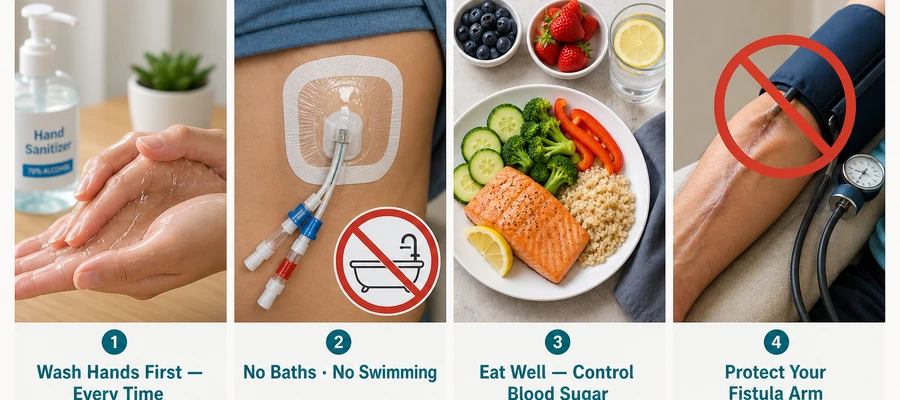
Figure 3. Hand hygiene before and after every contact with a patient or the machine is the first barrier against blood-borne spread.
RememberMost transmission in a dialysis unit travels on hands, gloves, shared items, and surfaces, not through the machine. Clean practice at the station is the main defense.
Lesson · part 2
The Rules for Stations, Machines, and Staff
The rules differ by virus because the viruses differ. You apply them when you assign a station or clear a patient (Module 11).
Rules for every patient
The CDC recommendations of 2001 apply to all patients: any item taken to a station is discarded, kept for that patient, or disinfected, and medicines are prepared away from the treatment floor.1 These recommendations predate the Grading of Recommendations Assessment, Development, and Evaluation (GRADE) system and are ungraded. KDIGO recommends that units follow standard infection-control procedures that prevent the transfer of blood between patients (1A), with regular observational audits (1C).5
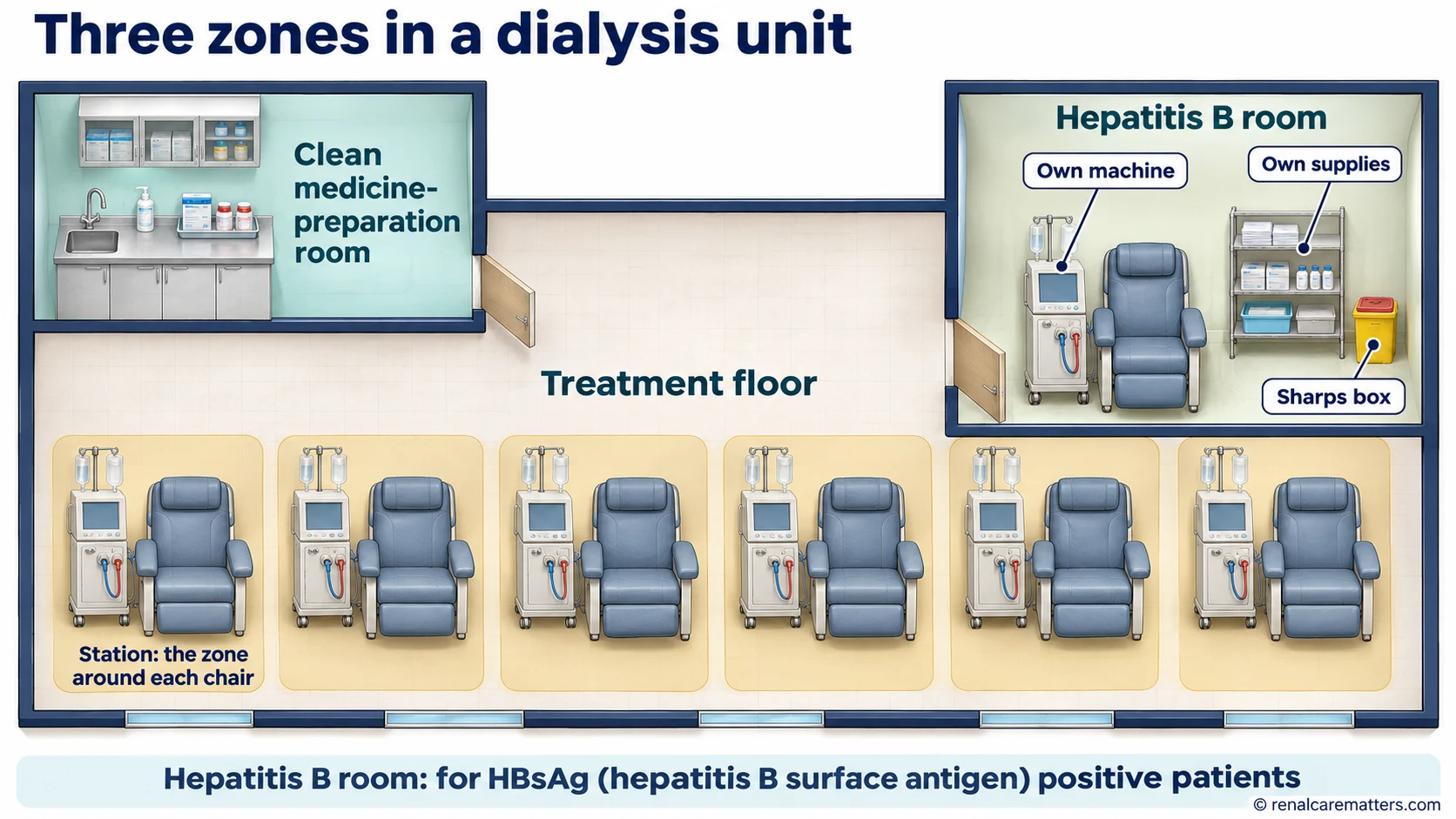
Figure 4. Three zones: the clean area where medicines are prepared, the station around each chair, and the separate room for patients positive for hepatitis B surface antigen (HBsAg).
Hepatitis B: a separate room, machine, and staff
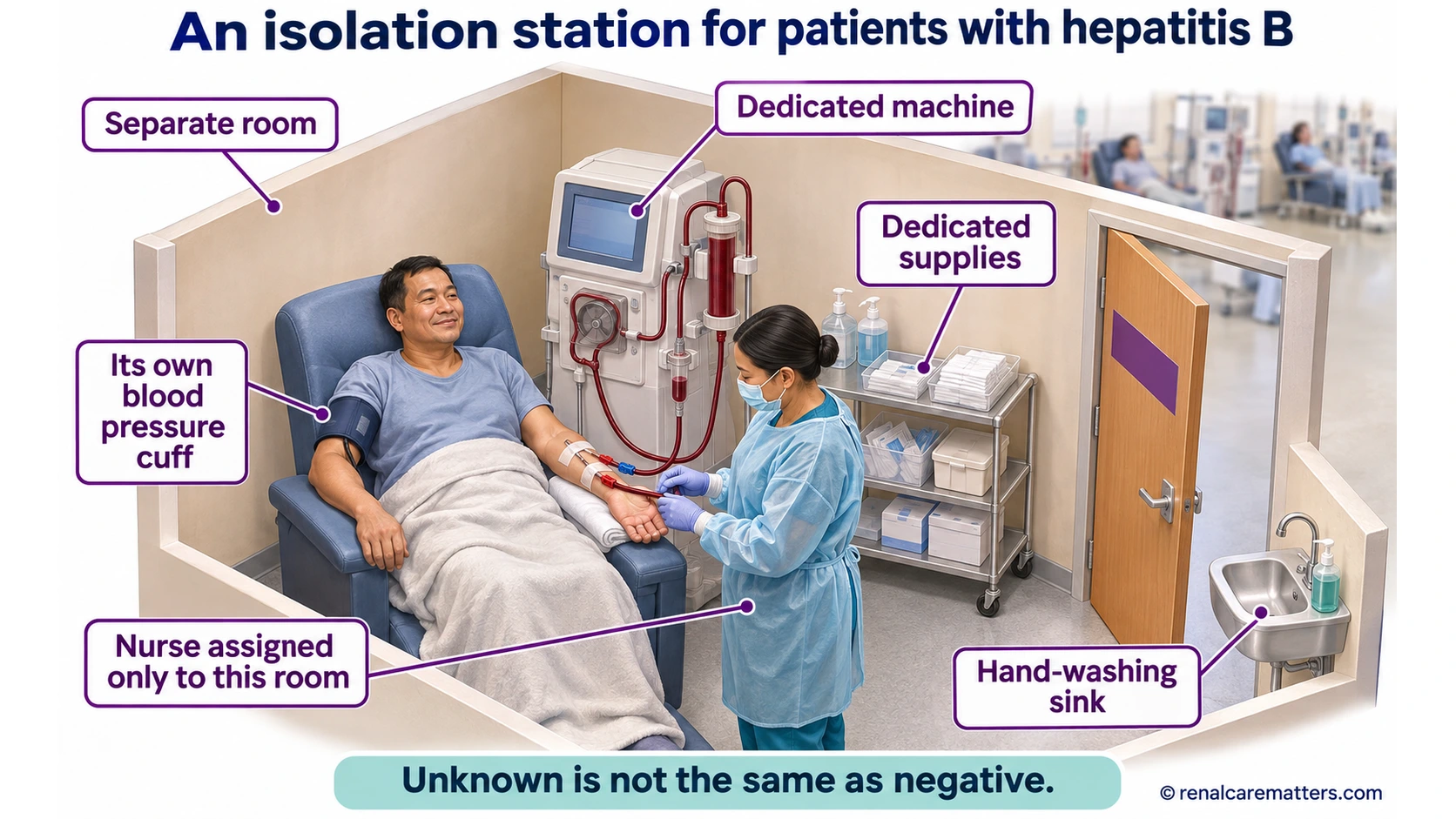
For patients positive for HBsAg, CDC adds a separate room with dedicated machines, equipment, supplies, and medicines. Staff caring for these patients do not care for susceptible patients at the same time. Isolation of this kind was associated with 70% to 80% reductions in new hepatitis B infections among hemodialysis patients.1 That figure comes from experience in United States units, not from a randomized trial. Philippine licensing rules require a clinic to assign at least one machine to patients with hepatitis B.6
Figure 5. The hepatitis B station: a separate room, a dedicated machine, and its own supplies.
Hepatitis C and HIV: flawless standard precautions
KDIGO 2022 takes a different line for hepatitis C. Its prevention chapter was carried over unchanged from 2018.7 It recommends not using dedicated machines for patients with hepatitis C (1D) and suggests not isolating them (2C). Their dialyzers may be reused if standard infection control is followed (2D). Prevention should rest on infection control, not mainly on treating infected patients (Not Graded).5 The logic follows from the outbreaks: a separate machine does not stop a soiled glove or a vial prepared beside a blood sample. The letters C and D show low to very low certainty, and some regulators and units still dedicate machines to hepatitis C. Where your unit’s rule is stricter, follow it.
For HIV, CDC does not recommend routine testing for infection control; standard precautions apply.1 Testing for clinical care is a separate question (Module 27).
Status
Where
Machine
Staff
Source and grade
HBsAg positive
Separate room
Dedicated, with its own supplies and medicines
Not caring for susceptible patients at the same time
May care for infected and immune patients on one shift
CDC 2001, not graded
Susceptible to hepatitis B
General area
Shared, never the hepatitis B machine
Not shared with an HBsAg-positive patient at the same time
CDC 2001, not graded
Hepatitis C
General area with strict precautions, unless your unit’s rule differs
Shared (1D)
Standard precautions
KDIGO 2022: no isolation (2C), reuse allowed (2D)
HIV
General area
Shared
Standard precautions
CDC 2001, not graded
RememberHepatitis B gets its own room, machine, and staff. Hepatitis C is controlled by flawless standard precautions, not by a separate machine, according to KDIGO. Where your unit’s rule differs, follow your unit’s rule.
Lesson · part 3
Reading the Serology Panel and the Testing Schedule
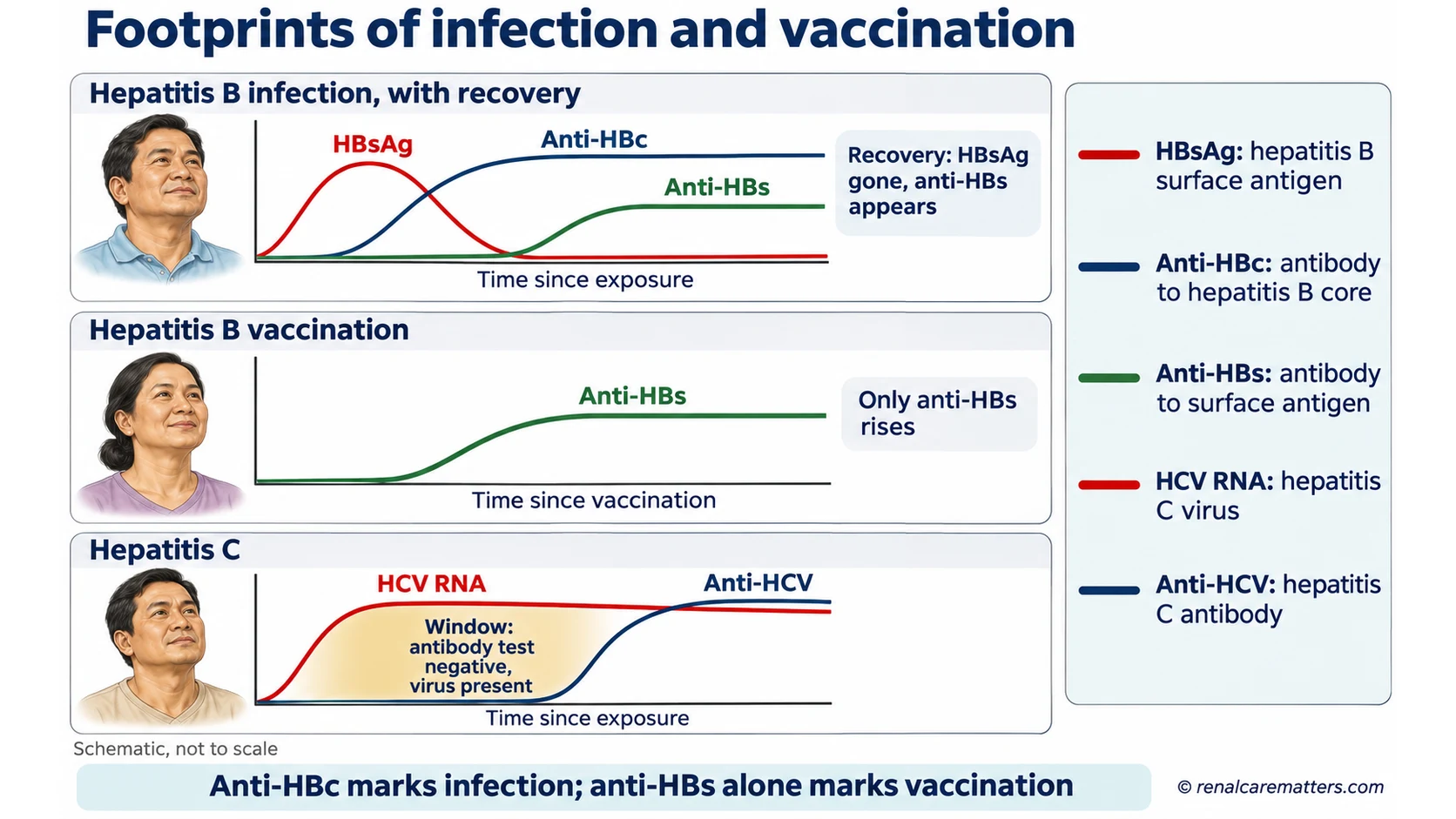
Think of the panel as five questions. HBsAg: is hepatitis B present now? Anti-HBs: is the patient protected? Anti-HBc: was the patient ever infected? Its IgM (immunoglobulin M) form marks a recent infection. Anti-HCV: was the patient ever exposed to hepatitis C? HCV RNA: is hepatitis C present now?
The hepatitis B vaccine contains only the surface protein, so a vaccinated person makes anti-HBs alone. A person who meets the whole virus also makes anti-HBc. A few patients test HBsAg positive for up to 18 days after a vaccine dose.1 In hepatitis C, the virus multiplies for weeks before antibody is detectable. In that window, the antibody test is negative while virus is in the blood.
Figure 6. Infection and vaccination leave different footprints. Anti-HBc marks past or present infection; anti-HBs alone marks vaccination. In hepatitis C, the virus can be present before the antibody test turns positive.
In seven United Kingdom units, 2 of 348 antibody-negative patients had hepatitis C RNA. Both infections dated to holiday dialysis abroad. Only one had a raised alanine aminotransferase (ALT), the liver enzyme used for screening, and both developed antibody within 8 to 13 weeks. Of 153 travel episodes followed prospectively, 4 led to new infection (2.6%).8 The study was small, but its point is direct: a recent exposure can hide behind a negative antibody test (Module 28 covers travel).
The testing schedules
CDC 2001 advises monthly HBsAg for susceptible patients, yearly anti-HBs for vaccine responders, and anti-HCV every 6 months with monthly ALT.1 KDIGO 2022 recommends hepatitis C screening at the start of in-center hemodialysis or on transfer (1A), then every 6 months by antibody test or nucleic acid testing (1B). It suggests ALT at the start or on transfer (2B) and monthly after that (2B). A new hepatitis C infection is reported to public health (Not Graded).5 Follow your unit’s schedule.
Pattern
Meaning
Station
Next step
HBsAg positive, IgM anti-HBc positive
Recent hepatitis B
Hepatitis B room
Confirm, call, report, look back
HBsAg positive, IgM anti-HBc negative
Usually long-standing hepatitis B
Hepatitis B room
Confirm and call. Look back if HBsAg was negative before
Worked example 1: reading three panels (illustrative values). Panel A: HBsAg negative, anti-HBs 4 mIU/mL, anti-HBc negative. Susceptible (nonresponder or unvaccinated). Monthly HBsAg; vaccine history to the nephrologist. Panel B: HBsAg negative, anti-HBs 120 mIU/mL, anti-HBc negative. Immune by vaccination. Anti-HBs yearly. Panel C: anti-HCV positive, HCV RNA positive. Current hepatitis C. Under KDIGO 2022, no dedicated machine (1D) and no isolation (2C), unless your unit’s rule differs. What this does not tell you: a panel describes the day it was drawn, not exposure since.
Worked example 2: a seroconversion rate (illustrative arithmetic). Formula: incidence rate = new seroconversions ÷ patient-months at risk × 100. A unit follows 80 hepatitis C-negative patients for 6 months: 80 × 6 = 480 patient-months. Two convert to anti-HCV positive. Rate = 2 ÷ 480 × 100 = 0.42 per 100 patient-months. Attack rate in an outbreak = cases ÷ patients at risk × 100. The clinic above had 18 cases and an attack rate of 16.7%.3 What the number does and does not tell you: it lets a unit compare itself over time. In a small unit it swings widely, and one new case is a signal whatever the rate. KDIGO recommends aggressive measures when a new case is likely dialysis related (1A).5
The site’s access infection rate, run chart, and quality scorecard calculators use this arithmetic (Module 31).
RememberRead every result with its date. A negative test describes the day it was drawn, not today.
Lesson · part 4
A New Positive Result: The First Steps
A new positive result is a clinical event for one patient and a possible warning for the whole unit. It may be a laboratory error, a brief positive after a vaccine dose, an infection acquired elsewhere, or transmission in your own unit. The first steps protect today’s patients and begin the search for the source.
CDC 2001 asks units to report a new HBsAg-positive or anti-HCV-positive result as the law requires, to review all patients’ results, and to investigate whether spread happened in the unit. For new hepatitis B, HBsAg is often the only marker at first, so CDC advises repeating HBsAg and testing anti-HBc, including IgM anti-HBc.1 The timing follows your unit’s protocol and the attending nephrologist. KDIGO recommends tracking all hepatitis C results to find new cases (1B). When a new case is likely dialysis related, it recommends aggressive measures on hand hygiene, glove use, injection safety, and environmental cleaning (1A).5
Figure 7 · A new positive result: first steps
ConfirmCheck the name, the date, and the test. Ask the attending nephrologist which confirmatory test to send, per your unit’s protocol.
CallCall the attending nephrologist now. Make sure the Medical Director hears the same day.
Place the patientApply the rule for that virus. For HBsAg, the hepatitis B room and machine. For hepatitis C, the unit’s rule.
Separate the staffA nurse caring for an HBsAg-positive patient does not care for susceptible patients at the same time.
Look backList the stations, shifts, and neighbors since the last negative result. Testing of others follows the protocol.
AuditObserve hand hygiene, gloves, medicine preparation, and cleaning.
Tell the patientIn private, with time for questions, after the nephrologist has reviewed the result.
ReportPublic health notification as the regulation requires, and an incident report (Module 31).
Privacy and treatment
A hepatitis or HIV result is sensitive personal information under the Data Privacy Act.9 Never announce a result at the station, in the corridor, or in a group chat. Share it only with staff who need it for care.
KDIGO 2022 recommends that patients with chronic kidney disease and hepatitis C, including those on dialysis, be evaluated for direct-acting antiviral therapy (1A).5 The 2022 update extended sofosbuvir-based regimens to patients on dialysis.7 The referral and drug choice belong to the attending nephrologist and the liver specialist.
Stop and callStop and call the attending nephrologist on the same shift for any new positive HBsAg, anti-HCV, or HCV RNA, and for any result that conflicts with the patient’s station assignment. Call at once if the positive result is found after the patient has already dialyzed in the general area today. Follow your unit’s protocol for the station and the staff assignment while you call.
RememberAct on a new positive result as if it were true until it is confirmed or disproved, and keep it private.
Lesson · part 5
Tuberculosis in the Dialysis Patient
Tuberculosis is often a sleeping infection, walled off in a small scar for years by the immune system. When immunity falls, the wall gives way.
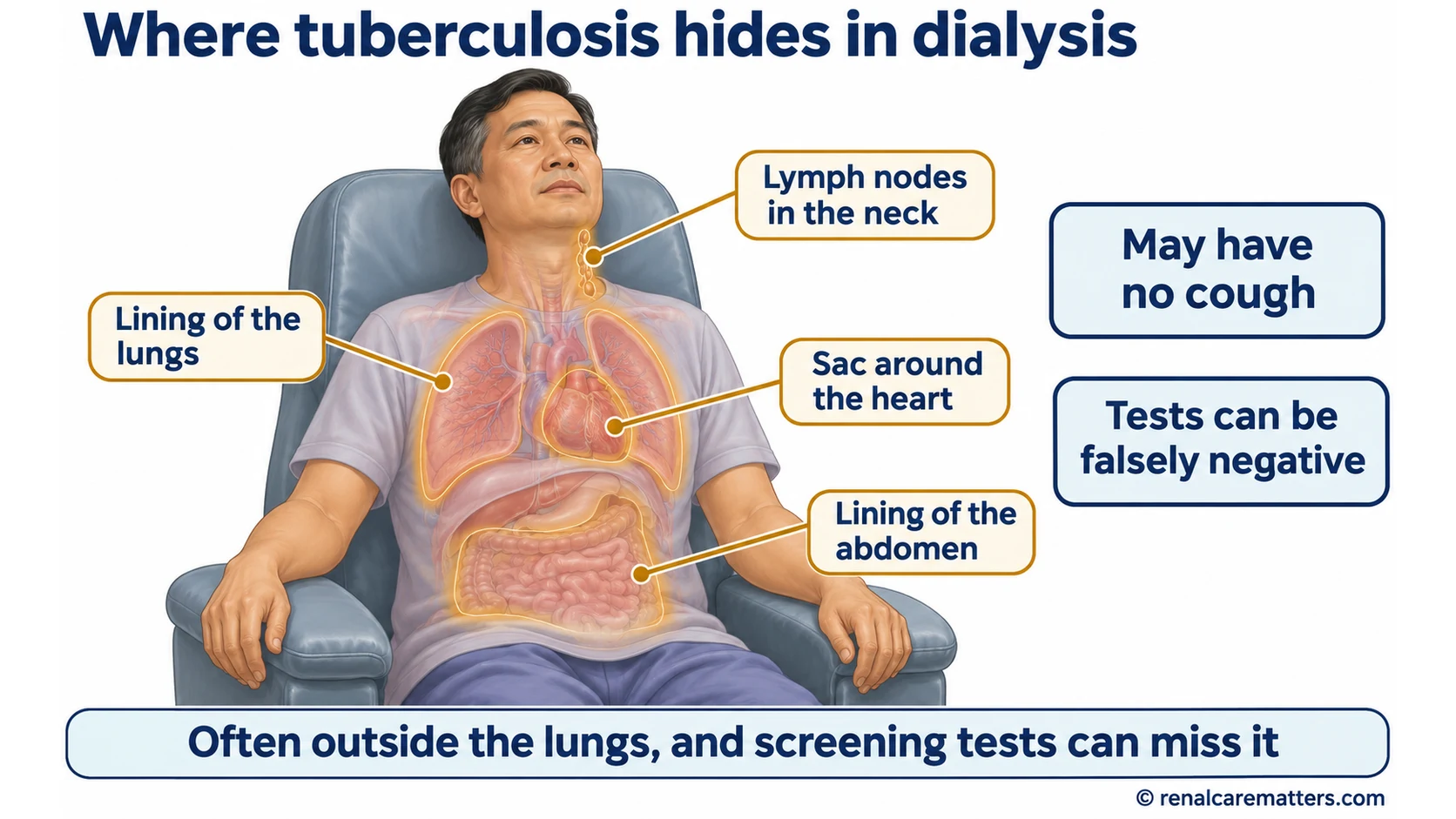
The picture has a limit. In a dialysis patient the waking is often quiet too. Containment depends on T lymphocytes, the white cells that direct the walling off, and kidney failure weakens them (Module 4). The same weakness blunts the signals you rely on. Fever and cough come partly from the immune response, so they may be mild. The tuberculin skin test and the interferon-gamma release assay (IGRA) both measure a T-cell response, so both can be falsely negative. Disease outside the lungs may appear as a pleural or pericardial effusion, swollen lymph nodes, peritonitis, weight loss, or fever without a source.
Figure 8. Tuberculosis in a dialysis patient often hides outside the lungs, and the screening tests can miss it.
What the evidence shows
The Philippines accounted for 6.8% of the world’s tuberculosis cases in the World Health Organization (WHO) report of 2024, among the five countries with the most cases.10 Dialysis and transplant patients are at higher risk, and screening tests perform poorly in chronic kidney disease.11 A meta-analysis of 122 studies of untreated people with a positive skin test or IGRA found 0.3 cases per 1,000 person-years in the general population, and consistently higher rates in at-risk groups, including people requiring dialysis.12 These cohorts describe risk, not treatment.
WHO recommends that people receiving dialysis be systematically tested and treated for tuberculosis infection, as a strong recommendation with low to very low certainty of evidence.13 For transplant candidates in intermediate and high prevalence areas, KDIGO suggests latent tuberculosis screening according to local guidelines (2C).14 The test, the timing, and any preventive treatment are the attending nephrologist’s decision under the unit’s policy.
A cough at the chair
Airborne infections are not stopped by the station rules for blood. Active pulmonary tuberculosis needs airborne precautions that most outpatient units cannot provide, so where such a patient dialyzes is decided by the attending nephrologist and the Medical Director.
Figure 9 · A cough at the door or in the chair
MaskGive the patient a surgical mask. Staff wear the protection your unit’s protocol sets.
SeparateSeat the patient apart from others in time or space, per protocol, before connection where possible.
Ask and examineCough duration, blood in the sputum, night sweats, weight loss, contacts. Temperature, oxygen saturation, and the chest.
CallThe attending nephrologist, before the patient is placed on the general floor.
RecordSymptoms, where the patient dialyzed, and who was nearby.
Stop and callStop and call the attending nephrologist before placing a patient on the general floor when there is cough for two weeks or more, blood in the sputum, night sweats with weight loss, an unexplained fever pattern, or known or suspected active tuberculosis. Mask and separate the patient per your unit’s protocol while you call.
RememberIn a dialysis patient, tuberculosis may come without a cough, without a high fever, and with a negative test. Keep it on your list when a patient loses weight or has fluid around the lung or heart.
Lesson · part 6
Lessons From COVID-19 for the Next Respiratory Outbreak
A dialysis patient cannot stay home when a respiratory virus spreads.
In the European Renal Association COVID-19 Database (ERACODA), 768 dialysis patients with COVID-19 in early 2020 had a 28-day probability of death of 25.0% (95% confidence interval 20.2% to 30.0%). Age and frailty were the main factors associated with death.15 At the Philippine General Hospital, 25% of 68 hemodialysis patients admitted with COVID-19 in 2020 died in hospital. A low ratio of arterial to inspired oxygen (PaO2/FiO2) and the need for ventilation were independently associated with death, with wide confidence intervals in this small cohort.16 Both were observational studies from before vaccines. Later, a research letter from the United Kingdom reported reduced neutralizing antibody responses after vaccination in hemodialysis patients.17 Antibody level is a surrogate, not a measure of protection from severe illness.
Lesson
What you do on your shift
Screen at the door
Confirm the screening questions were asked. Check temperature
Mask and separate
Apply the unit’s separation in time or space before connection
Cohort when cases rise
Follow the Medical Director’s cohort plan
Staff stay home when ill
Report your own symptoms. Support colleagues who report theirs
Keep patients dialyzed
A missed session brings fluid overload and high potassium. Do not send a stable patient home without a plan (Module 30)
These lessons come from pandemic practice, not graded recommendations.
RememberWhen a respiratory outbreak starts, ask the same questions as for tuberculosis: who has symptoms, where do they sit, and who decides where they dialyze.
Lesson · part 7
Vaccines for Patients and Staff
A dialysis patient’s immune system answers a vaccine more quietly. It may need more doses, and someone has to check that the answer came.
The picture has a limit. The quiet answer comes from specific steps. A vaccine works when helper T cells, shown the vaccine protein, help B cells make antibody and memory. Kidney failure may weaken these steps, so antibody levels are lower, more people do not respond, and levels fall sooner. That is why dialysis vaccination ends with a blood test.
Hepatitis B
CDC 2001 recommends hepatitis B vaccination for all susceptible hemodialysis patients and all staff, anti-HBs one to two months after the last primary dose, revaccination and retesting of nonresponders, and yearly retesting of responders.1 The Advisory Committee on Immunization Practices (ACIP) of 2018 recommends post-vaccination testing for hemodialysis patients, yearly anti-HBs to judge the need for a booster, and a booster when anti-HBs falls below 10 mIU/mL.18 The product, doses, and timing are set by your unit’s protocol and the attending nephrologist.
A retrospective cohort from one United States dialysis organization studied 3,509 vaccine-naive dialysis patients. After a first series, 62.9% given a four-dose recombinant vaccine and 50.1% given a two-dose adjuvanted vaccine reached anti-HBs above 10 mIU/mL. Patients given up to four adjuvanted doses reached 82.0%.19 Anti-HBs is a surrogate for protection, not a count of infections prevented, and the best schedule remains uncertain.
Influenza and pneumococcal vaccines
In a registry of 118,533 United States hemodialysis patients, only 21% had received pneumococcal vaccine. Vaccination was associated with lower mortality (hazard ratio 0.94, 95% confidence interval 0.90 to 0.98), and pneumococcal plus influenza vaccination with a hazard ratio of 0.73 (0.68 to 0.78).20 The study was observational. People who accept vaccines may be healthier in ways the analysis cannot see, so the size of the benefit is uncertain.
Vaccine
Who
How response is checked
Who orders it
Hepatitis B
Every susceptible patient
Anti-HBs one to two months after the series, then yearly in responders1
Attending nephrologist, per unit protocol
Hepatitis B
Every staff member
Anti-HBs on file. A second series and retest if below 10 mIU/mL18
Unit’s employee health policy
Influenza
Patients and staff, per national program
No routine antibody test
Attending nephrologist and unit protocol
Pneumococcal
Patients, per national program
No routine antibody test
Attending nephrologist and unit protocol
Worked example 3: vaccine response (illustrative arithmetic). Formula: response rate = patients with anti-HBs of 10 mIU/mL or more ÷ patients tested × 100. Of 120 patients tested one to two months after the series, 75 have anti-HBs above 10 mIU/mL. Response = 75 ÷ 120 × 100 = 62.5%, close to the 62.9% reported after a four-dose recombinant series.19 Nonresponders = 120 − 75 = 45. Their names go to the attending nephrologist for revaccination per CDC 2001 and the unit protocol. What the number does and does not tell you: it measures a surrogate in this group on this date. It does not show who will be protected next year, because levels fall.
RememberA vaccinated dialysis patient is not a protected patient until the anti-HBs result shows it. Until then, treat the patient as susceptible.
Lesson · part 8
Needlestick and Blood Splash: The First Hour
Dialysis staff handle large hollow needles filled with blood every shift. The risk after an injury depends on the source patient’s virus, the amount of blood, the depth of the injury, and the worker’s immunity. The first hour is for washing and for gathering the facts the exposure clinician needs.
Figure 10 · Needlestick or blood splash: the first hour
WashWash a wound or skin with soap and water. Flush the eyes, nose, or mouth with plenty of clean water.
ReportTell the head nurse and the unit’s designated exposure clinician at once.
SourceIdentify the source patient and pull the latest serology. Testing of the source follows consent and protocol.
WorkerFind the worker’s hepatitis B vaccine record and anti-HBs result.
Designated clinicianMake sure the worker reaches the designated clinician without delay. Do not prescribe outside your unit’s protocol.
DocumentTime, device, depth, body site, source, first aid, and who was informed.
The 2025 United States Public Health Service guideline replaced the 2013 guideline on occupational HIV exposure. It brings new regimens for HIV postexposure prophylaxis, a shorter period of follow-up HIV testing, no routine laboratory tests for drug toxicity, and considerations for sources with an undetectable viral load. Prompt reporting, expert consultation, and follow-up remain the principles. Its recommendations use GRADE with the Healthcare Infection Control Practices Advisory Committee (HICPAC) scheme, or are good practice statements.21
For hepatitis B, management depends on the worker’s vaccine response and the source’s HBsAg. A worker with documented anti-HBs of 10 mIU/mL or more needs no hepatitis B postexposure management, whatever the source’s status. For an unvaccinated worker, the source is tested for HBsAg as soon as possible.18
Worked example 4: a needlestick at 3:00 p.m. (decision walk-through, illustrative). A nurse is stuck by a used fistula needle. The source patient is anti-HCV positive, HIV negative, and HBsAg negative on the chart. Steps 1 to 3: she washes the site; the head nurse and exposure clinician are told at 3:05 p.m.; the source results and dates are confirmed. Step 4: her anti-HBs of 85 mIU/mL, measured after her completed vaccine series, is on file, so hepatitis B postexposure management is not needed.18 Step 5: the designated clinician sees her within the hour and decides on HIV prophylaxis and hepatitis C follow-up per protocol.21 The event is documented. What this does and does not tell you: the source’s status guides the clinician’s decision but does not replace it, and a months-old test may not reflect today.
Stop and callStop and call for every needlestick, cut with a used instrument, or splash of blood or body fluid onto a mucous membrane or broken skin, whether or not the source is known to be positive. Start first aid, follow your unit’s exposure protocol, and inform the designated clinician and the attending nephrologist.
What is uncertain
KDIGO advises against dedicated machines (1D) and isolation (2C) for hepatitis C on low to very low certainty evidence, and some regulators and units require more.5
The best hepatitis B vaccine product, dose count, and booster timing for dialysis patients are uncertain; comparative data are retrospective.19
Tuberculosis tests miss infection in dialysis patients, the WHO recommendation rests on low-certainty evidence, and Philippine data on tuberculosis in dialysis patients were not found.11,13
RememberAfter an exposure, the facts you gather in the first hour decide what the clinician can offer. Wash, report, find both results, and get the worker seen.
On the floor
Real situations: problems and solutions
These are fictional but typical. For each one, cover the answer, decide what you would do, then compare. Where a step depends on local rules, your unit’s procedure and your supervisor’s direction come first.
Back from the province
What you see
Mr. Rodel Santiago returns after three weeks of dialysis at a unit near his family in Samar. He has no laboratory results from that unit. His last hepatitis C antibody test here, four months ago, was negative.
What is likely going on
He may have been exposed to hepatitis C or hepatitis B elsewhere. A recent infection can still show a negative antibody test, because the antibody appears weeks after the virus.
What to do
Check what your unit’s protocol requires for a returning patient: the tests, the station, and the timing. Tell the attending nephrologist, who decides whether to order hepatitis C ribonucleic acid (RNA) testing. Do not delay a needed session while you wait for results.
Why it matters
A negative antibody result from before the trip says nothing about exposure during the trip.
The cough on the second shift
What you see
Mrs. Lorna Macaraeg, 58, coughs through the whole pre-dialysis check. She has lost weight over two months and says she sweats at night. Her assigned chair is in the middle of the general floor, and she is not yet connected.
What is likely going on
These features fit pulmonary tuberculosis. Kidney failure blunts the fever and the skin test, so the absence of high fever does not reassure you.
What to do
Give her a mask and seat her apart from other patients, per your unit’s protocol. Call the attending nephrologist before she is placed on the general floor. Ask about a chest radiograph and sputum testing. Where she dialyzes today is the nephrologist’s and the Medical Director’s decision.
Why it matters
One patient with infectious tuberculosis can expose a whole shift of people whose immunity is already weak.
Anti-HBs of 4
What you see
A nurse asks whether a patient with an antibody to hepatitis B surface antigen (anti-HBs) of 4 mIU/mL, checked two months after his last vaccine dose, can sit next to the hepatitis B room.
What is likely going on
He did not respond to the vaccine series. He remains susceptible to hepatitis B.
What to do
Treat him as susceptible: monthly surface antigen testing, a station away from hepatitis B patients, and staff who are not caring for an infected patient at the same time. Report the result to the attending nephrologist, who decides on revaccination.
Why it matters
A vaccinated patient is not a protected patient until the antibody result shows it.
The stick at the end of the shift
What you see
At 6:40 p.m., Nurse Grace Dizon is stuck by a used fistula needle while clearing a tray. She says it barely broke the skin and she wants to finish charting first.
What is likely going on
Every percutaneous injury with a used needle is an exposure. The risk depends on the source patient and the worker’s immunity, and both can be checked now.
What to do
Have her wash the site with soap and water at once. Report it to the head nurse and the designated exposure clinician. Pull the source patient’s latest serology and Nurse Dizon’s anti-HBs result. Make sure she reaches the designated clinician without delay, and document the event.
Why it matters
Decisions about postexposure treatment are time sensitive. Charting can wait; the exposure pathway cannot.
Two new positives in one quarter
What you see
The quarterly review shows two patients who were hepatitis C antibody negative in June and positive in September. Both dialyze on the Monday-Wednesday-Friday afternoon shift.
What is likely going on
Two conversions on one shift may mean transmission inside the unit. The usual routes are hands, gloves, shared items, and medicine handling.
What to do
Tell the Medical Director and the attending nephrologist the same day. The unit’s protocol for a possible cluster then applies: review of stations and staff, testing of other patients, and an audit of practice. Keep both patients’ results confidential.
Why it matters
KDIGO recommends aggressive infection-control measures when a new case is likely dialysis related (1A). Finding the breach protects the next patient.
Field notes
Before you sign a clearance, read the date of the last serology, not only the result.
Watch one changeover of gloves and hand hygiene each shift. Feedback given privately and kindly changes practice.
Never carry a vial, a clamp, or a roll of tape from one station to another in your pocket.
Know the name and phone number of your unit’s designated exposure clinician before your first night shift.
Speak about a patient’s infection status in a private room, never across the floor.
Case review
Back to the case: A new hepatitis B result
What do you do now? Act as if the result were true until confirmed or disproved. Mrs. Aquino is stable, and her blood is in a closed circuit. Whether she finishes at station 9 under strict precautions or ends early is decided with the attending nephrologist, whom you call now. Three things change at once. One nurse cares for her alone, because the CDC staff rule does not allow Nurse Cruz to care for an HBsAg-positive patient and two susceptible neighbors at the same time. The station and machine are disinfected after she leaves, per protocol, and her next sessions are planned in the hepatitis B room unless confirmation is negative.
What does it mean? A reactive HBsAg usually means hepatitis B virus is in her blood now. Her test was negative a month ago, so if this is real, it is a new infection. Check for a labeling error and for a recent vaccine dose. The nephrologist will likely order repeat HBsAg, total and IgM anti-HBc, anti-HBs, ALT, and hepatitis C markers, since the same breaches spread both viruses. Her week in another unit is one possible source, but your unit still needs a look-back. With no anti-HBs on record, she was never shown to be protected.
Whom do you call, and what is said and written? The attending nephrologist now, and the Medical Director the same day. Mrs. Aquino is told in private after the nephrologist has reviewed the result: what the test shows, what needs confirming, and why her station is changing. You write the call, the result, the advice, the staff reassignment, the stations and shift, and her condition. A confirmed infection is reported to the health authority as the regulation requires, and enters the quality process of Module 31. The look-back covers every patient beside her since her last negative result.
Skills lab · with your preceptor
Skills checklist: Hand hygiene and station changeover audit
Observe a nurse or a colleague through one patient changeover at a dialysis station, with your preceptor beside you. Then perform the same changeover yourself while your preceptor observes. Your preceptor rates each step as satisfactory, needs practice, or not observed. Steps marked Critical must all be satisfactory before sign-off. This checklist supports supervised learning; your unit’s own procedure and competency form are the authority. A printable version of every checklist is on the trainer page.
Performs hand hygiene before approaching the station and before putting on gloves.
CriticalChanges gloves and performs hand hygiene between patients, and between dirty and clean tasks at the same patient.
Does not carry items from one station to another without disposal or disinfection.
CriticalPrepares medicines in the designated clean area, not at the station, and uses single-dose vials per protocol.
Cleans and disinfects the chair, machine surfaces, and touched items after the patient leaves and before the next patient sits.
Checks the next patient’s serology status, its date, and the station assignment before connection.
CriticalFor an HBsAg-positive patient, confirms the separate room, dedicated machine, supplies, and staff assignment.
Disposes of sharps immediately at the point of use in a puncture-proof container.
Recognizes and reports visible blood on surfaces.
States the first steps after a needlestick and names the unit’s designated exposure clinician.
Records the audit and gives feedback to the observed staff member in private.
Placement activity. For two weeks, observe one changeover on each of your shifts and record what you see on the audit form. Review the results with your preceptor, and present one practice the unit could improve to the head nurse and the Medical Director.
Self-assessment
Check your understanding
Each visit draws 8 questions at random from this module’s 15-question bank. Choose the single best answer for each, then select Check answers; an explanation appears under the best answer. Select New set of questions for a different mix. A good target is 7 of 8 on two different sets. Nothing you select is sent anywhere; scoring happens in your browser.
Centers for Disease Control and Prevention. (2001). Recommendations for preventing transmission of infections among chronic hemodialysis patients. MMWR Recommendations and Reports, 50(RR-5), 1–43. https://www.cdc.gov/mmwr/preview/mmwrhtml/rr5005a1.htm
Patel, P. R., Thompson, N. D., Kallen, A. J., & Arduino, M. J. (2010). Epidemiology, surveillance, and prevention of hepatitis C virus infections in hemodialysis patients. American Journal of Kidney Diseases, 56(2), 371–378. https://doi.org/10.1053/j.ajkd.2010.01.025
Nguyen, D. B., Gutowski, J., Ghiselli, M., Cheng, T., Bel Hamdounia, S., Suryaprasad, A., Xu, F., Moulton-Meissner, H., Hayden, T., Forbi, J. C., Xia, G.-L., Arduino, M. J., Patel, A., & Patel, P. R. (2016). A large outbreak of hepatitis C virus infections in a hemodialysis clinic. Infection Control & Hospital Epidemiology, 37(2), 125–133. https://doi.org/10.1017/ice.2015.247
Duong, C. M., & McLaws, M.-L. (2016). An investigation of an outbreak of hepatitis C virus infections in a low-resourced hemodialysis unit in Vietnam. American Journal of Infection Control, 44(5), 560–566. https://doi.org/10.1016/j.ajic.2016.01.014
Kidney Disease: Improving Global Outcomes Hepatitis C Work Group. (2022). KDIGO 2022 clinical practice guideline for the prevention, diagnosis, evaluation, and treatment of hepatitis C in chronic kidney disease. Kidney International, 102(6S), S129–S205. https://doi.org/10.1016/j.kint.2022.07.013
Awan, A. A. Y., Berenguer, M. C., Bruchfeld, A., Fabrizi, F., Goldberg, D. S., Jia, J., Kamar, N., Mohamed, R., Pessôa, M. G., Pol, S., Sise, M. E., Balk, E. M., Gordon, C. E., Adam, G., Cheung, M., Earley, A., Martin, P., & Jadoul, M. (2023). Prevention, diagnosis, evaluation, and treatment of hepatitis C in chronic kidney disease: Synopsis of the Kidney Disease: Improving Global Outcomes 2022 clinical practice guideline. Annals of Internal Medicine, 176(12), 1648–1655. https://doi.org/10.7326/M23-2391
Ghafur, A., Raza, M., Labbett, W., Chawla, A., Smith, C., Ngui, S. L., Davenport, A., & Geretti, A. M. (2007). Travel-associated acquisition of hepatitis C virus infection in patients receiving haemodialysis. Nephrology Dialysis Transplantation, 22(9), 2640–2644. https://doi.org/10.1093/ndt/gfm202
Romanowski, K., Clark, E. G., Levin, A., Cook, V. J., & Johnston, J. C. (2016). Tuberculosis and chronic kidney disease: An emerging global syndemic. Kidney International, 90(1), 34–40. https://doi.org/10.1016/j.kint.2016.01.034
Campbell, J. R., Winters, N., & Menzies, D. (2020). Absolute risk of tuberculosis among untreated populations with a positive tuberculin skin test or interferon-gamma release assay result: Systematic review and meta-analysis. BMJ, 368, Article m549. https://doi.org/10.1136/bmj.m549
Chadban, S. J., Ahn, C., Axelrod, D. A., Foster, B. J., Kasiske, B. L., Kher, V., Kumar, D., Oberbauer, R., Pascual, J., Pilmore, H. L., Rodrigue, J. R., Segev, D. L., Sheerin, N. S., Tinckam, K. J., Wong, G., & Knoll, G. A. (2020). KDIGO clinical practice guideline on the evaluation and management of candidates for kidney transplantation. Transplantation, 104(4S1), S11–S103. https://doi.org/10.1097/TP.0000000000003136
Hilbrands, L. B., Duivenvoorden, R., Vart, P., Franssen, C. F. M., Hemmelder, M. H., Jager, K. J., Kieneker, L. M., Noordzij, M., Pena, M. J., de Vries, H., Arroyo, D., Covic, A., Crespo, M., Goffin, E., Islam, M., Massy, Z. A., Montero, N., Oliveira, J. P., Roca Muñoz, A., . . . Gansevoort, R. T. (2020). COVID-19-related mortality in kidney transplant and dialysis patients: Results of the ERACODA collaboration. Nephrology Dialysis Transplantation, 35(11), 1973–1983. https://doi.org/10.1093/ndt/gfaa261
Tomacruz, I. D., So, P. N., Pasilan, R. M., Camenforte, J. K., & Duavit, M. I. (2021). Clinical characteristics and short-term outcomes of chronic dialysis patients admitted for COVID-19 in Metro Manila, Philippines. International Journal of Nephrology and Renovascular Disease, 14, 41–51. https://doi.org/10.2147/IJNRD.S287455
Carr, E. J., Wu, M., Harvey, R., Wall, E. C., Kelly, G., Hussain, S., Howell, M., Kassiotis, G., Swanton, C., Gandhi, S., Bauer, D. L. V., Haemodialysis COVID-19 Consortium, Crick COVID Immunity Pipeline, Billany, R. E., Graham-Brown, M. P. M., Beckett, J., Bull, K., Shankar, S., Henderson, S., . . . Beale, R. (2021). Neutralising antibodies after COVID-19 vaccination in UK haemodialysis patients. The Lancet, 398(10305), 1038–1041. https://doi.org/10.1016/S0140-6736(21)01854-7
Schillie, S., Vellozzi, C., Reingold, A., Harris, A., Haber, P., Ward, J. W., & Nelson, N. P. (2018). Prevention of hepatitis B virus infection in the United States: Recommendations of the Advisory Committee on Immunization Practices. MMWR Recommendations and Reports, 67(1), 1–31. https://doi.org/10.15585/mmwr.rr6701a1
Manley, H. J., Aweh, G., Frament, J., Ladik, V., & Lacson, E. K. (2023). A real world comparison of HepB (Engerix-B®) and HepB-CpG (Heplisav-B®) vaccine seroprotection in patients receiving maintenance dialysis. Nephrology Dialysis Transplantation, 38(2), 447–454. https://doi.org/10.1093/ndt/gfac039
Gilbertson, D. T., Guo, H., Arneson, T. J., & Collins, A. J. (2011). The association of pneumococcal vaccination with hospitalization and mortality in hemodialysis patients. Nephrology Dialysis Transplantation, 26(9), 2934–2939. https://doi.org/10.1093/ndt/gfq853
Kofman, A. D., Struble, K. A., Heneine, W., Gayle, B., de Perio, M. A., Okasako-Schmucker, D. L., So, C. N., Anderson, L. E., Stone, E. C., Henderson, D. K., & Kuhar, D. T. (2025). 2025 US Public Health Service guidelines for the management of occupational exposures to human immunodeficiency virus and recommendations for post-exposure prophylaxis in healthcare settings. Infection Control & Hospital Epidemiology, 46(9), 863–873. https://doi.org/10.1017/ice.2025.10254
Educational study material for physicians. Does not replace the attending nephrologist’s orders, the unit’s protocols, required certification courses, or supervised practice.