Skipping for prom
- What you see
- A teen misses sessions around school events.
- What is likely going on
- Social priorities.
- What to do
- Negotiate schedules and goals with the teen.
- Why it matters
- Partnership beats lecture.
Adolescent development and adherence, school and play, preparing for transplant, and transition to adult care.

This module is study material for registered nurses in pediatric dialysis. It explains the reasoning behind common nursing decisions; it is not a procedure. Exact steps follow your unit’s pediatric protocol and the device instructions; treatment parameters follow the written order of the pediatric nephrologist. Nurses assess, verify, teach, document and escalate; they do not prescribe, choose antibiotics, change doses or adjust anticoagulation. Every case is fictional and every value in a case is illustrative. Pending review by a pediatric nephrologist and a senior pediatric dialysis nurse.
Adolescence is when young people try to separate from their parents, care deeply about how they look and fit in, and take risks. On dialysis, those normal drives collide with fluid limits, medicines, catheters and missed school. Adherence often falls in adolescence, and the move to adult care, if handled badly, is when grafts and lives are lost.
Your work in this module is to treat the adolescent as a partner, protect school and play, prepare the young person for transplant, and hand them on to adult care with the skills to manage.
The picture has a limit. Learner drivers practice on quiet roads first. Young people with kidney failure often face the hardest road (a failing graft, exams, family money problems) at exactly the age of transfer. Timing should follow readiness and stability, not only age.
Figure 1 · Key terms for this module
Kristine Domingo, 16, has been on hemodialysis for three years after a failed first transplant. She has missed sessions twice this month, her interdialytic weight gains are high, and she says she “can’t keep living like this” while her friends prepare for senior high school. Her mother answers every question for her. Kristine turns 18 in fifteen months, when the hospital usually transfers patients to adult nephrology. Nurse Paul sees her today.
Before reading on, decide:
Keep your answers in mind. The lesson gives you what you need, and the case review near the end shows one sound response.
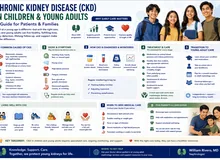
Missed sessions and high fluid gains in adolescence usually have reasons: school and social events, embarrassment, depression, family conflict, transport costs, or a sense that nothing will change. Lectures rarely help; partnership often does.
School is a child’s work, and missing it has lifelong costs. Children on hemodialysis may miss three half-days a week; children on peritoneal dialysis (PD) miss less but may tire easily. Protect schooling actively.
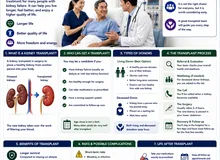
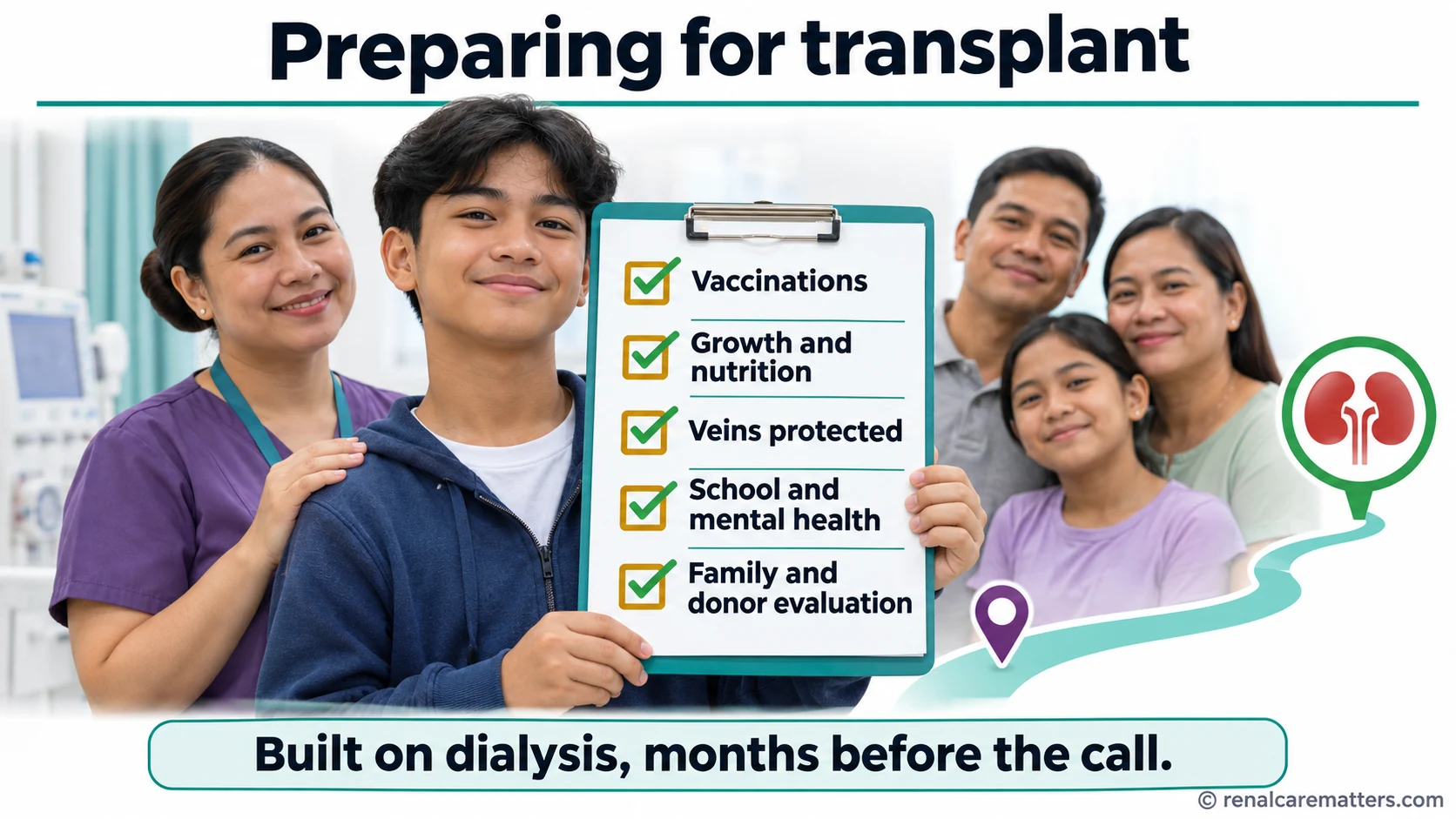
Most children on dialysis are working toward a transplant, and much of the preparation happens on dialysis, months before surgery.
The International Society of Nephrology and International Pediatric Nephrology Association (ISN/IPNA) consensus statement describes transfer to adult care as following a transition process involving both services, individualized for each young person, focusing on self-management skills and assessing support structures.2 It is a consensus statement, not a graded guideline, and it asks services to develop locally appropriate practice.
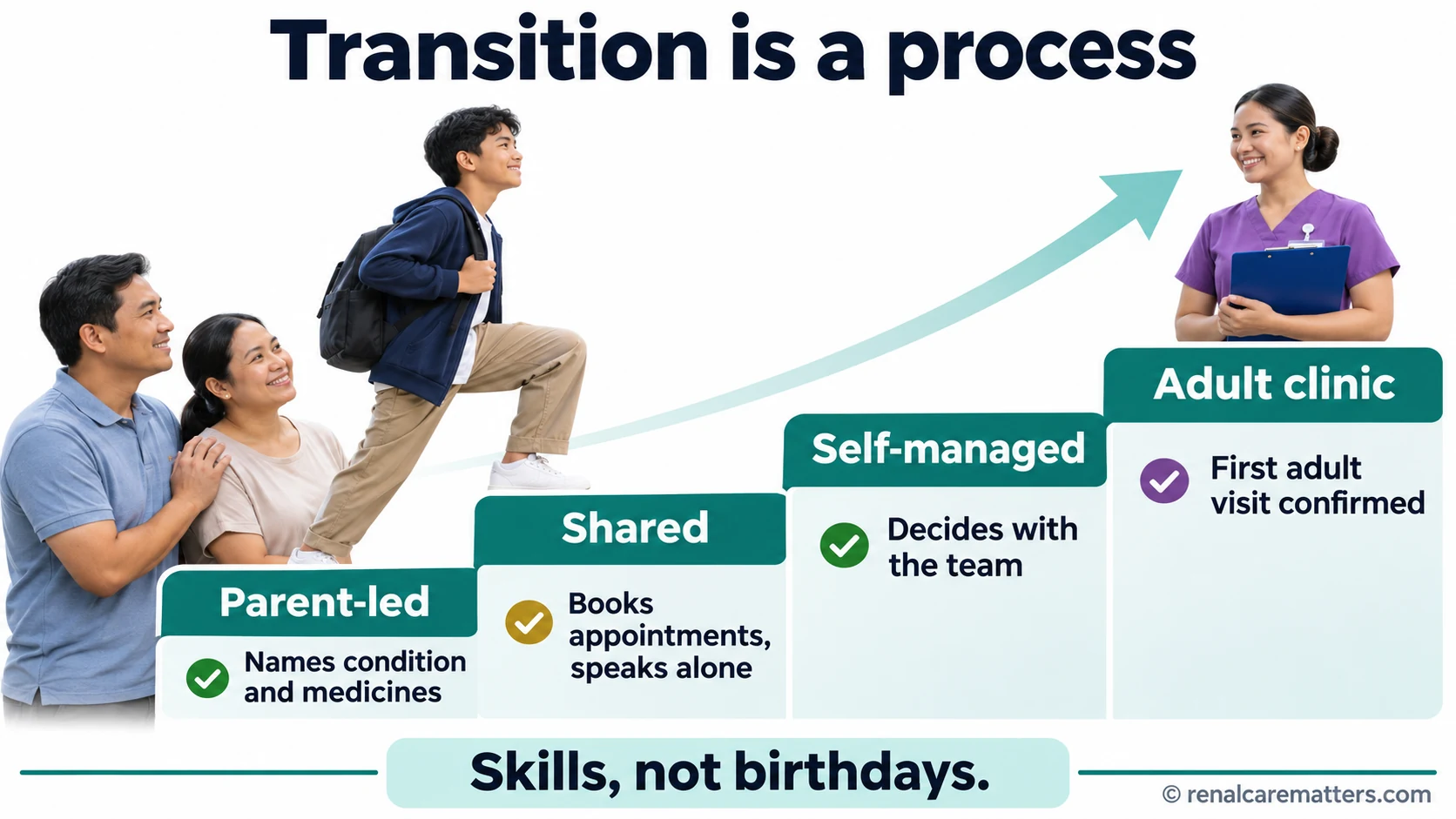
| Stage | The young person learns to |
|---|---|
| Early (often around 12 to 14 years) | Name their condition and medicines, describe symptoms, answer questions themselves |
| Middle | Manage medicines and refills, book appointments, speak alone with clinicians, understand fluid and diet choices |
| Late | Make decisions with the team, navigate benefits and adult services, plan for work or college |
| Transfer | Meet the adult team before the move, with a written summary and a named contact; follow-up confirmed after the first adult visit |
A safe handoff includes a written summary of diagnosis, history, access, prescription, medicines, allergies, transplant status, psychosocial needs and the young person’s own goals, and a confirmed first appointment in the adult service.
These are fictional but typical. For each one, cover the answer, decide what you would do, then compare. Where a step depends on local rules, your unit’s procedure and your supervisor’s direction come first.
Drivers. Possible reasons include school and social pressure, discouragement after a failed transplant, depression, family conflict and transport costs. Paul asks Kristine alone, after explaining confidentiality and its limits.
“I can’t keep living like this.” Paul asks calmly and directly what she means, including whether she has thought of harming herself, and involves the nephrologist and psychologist or social worker per protocol. He does not dismiss it as teenage drama.
Transition plan. Private time at every visit; self-management goals she chooses; school support; a meeting with the adult team before transfer; a written summary; a named adult contact; and confirmation of her first adult appointment. Transfer timing considers her stability, not only her age.
Role-play with an adolescent actor. Your preceptor rates each step as satisfactory, needs practice, or not observed. Steps marked Critical must all be satisfactory before sign-off. This checklist supports supervised learning; your unit’s own procedure and competency form are the authority. A printable version of every checklist is on the trainer page.
Each visit draws 5 questions at random from this module’s 15-question bank. Choose the single best answer for each, then select Check answers; an explanation appears under the best answer. Select New set of questions for a different mix. A good target is 4 of 5 on two different sets. Nothing you select is sent anywhere; scoring happens in your browser.
Module 19 of 201 module to go

Internal Medicine · Nephrology · Nutrition · Philippines · PRC 0105184
Educational material for registered nurses. Completing it is an Academy learning record only. It does not confer CPD units, PSN or National Kidney and Transplant Institute (NKTI) training recognition, PhilHealth staffing credit, or clinical privileges, and it does not replace your facility’s protocols, device instructions, or written orders.

Scan and save