Patients & Care Partners · Families and transitions · Module F01

Support children, teens and growing independence

Children are not small adults.

PublishedNailathalaGipatikPepalwal: ReferencesMga SanggunianMga TinubdanReng Reperensya: 2 Audience: People living with kidney disease and the people who support them Read timeOras ng pagbasaOras sa pagbasaOras ning pamamasa:
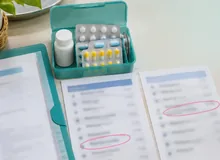
JM, a teenager with a kidney transplant, fills his own pill organizer while his mother and a nurse look on.
Renal Care Academy›Renal Patients and Care Partners›Module F01
🤝

For patients and care partners

This course helps you understand your care and prepare questions. It does not give individual fluid limits, food limits, blood pressure targets, medicine doses or machine settings: those come from your own care team. Practical home dialysis training happens with your treatment service. No website, quiz or chat is watched in real time; in an emergency, get help now. Every person in the stories is fictional.

When to get urgent helpSevere breathlessness, chest pain, fainting, heavy bleeding, new confusion: get emergency help now. No website or chat is watched in real time.

After this module you should be able to

Suggested earlier modules: C01, C03, C04, C07, C08, C12. You may read any module in any order; the suggestion only helps the lessons build on each other.

The everyday picture

In plain wordsChildren are not small adults. Their kidneys, bones and brains are still growing, their medicines are dosed by weight, and kidney disease can affect growth, schooling and friendships. Adolescence adds another layer: the move from parents managing care to the young person managing it, often just as they are testing independence in every other part of life.

Children need their own care plan

A child's kidney care, medicines, nutrition and development need pediatric kidney expertise. Never use an adult target, food limit or dose for a child. Ask the pediatric team to explain, in age-appropriate words, what the child can understand and safely do, and how to watch for growth and developmental concerns.

Include the young person

Use simple, honest explanations and invite questions. Agree with the family, the young person and the team what the school should know, such as medicine times, toilet access, activity limits and emergency contacts. Ask about play, sports, attendance and emotional support, including how siblings are coping.

Prepare for growing independence

Start gradually in early adolescence: letting the teen speak first in visits, learn their medicines, and book a refill. Ask who coordinates the move to adult services, what skills will be practiced, and when the first joint visit will be. This module is family orientation, not a complete pediatric curriculum.

A young person climbs four steps with a nurse beside him: learns the names of his medicines, speaks first in visits, books his own refill while a parent checks, and has a first joint visit with adult services. Children are not small adults.

Growing independence, step by step. A young person climbs four steps with a nurse beside him: learns the names of his medicines, speaks first in visits, books his own refill while a parent checks, and has a first joint visit with adult services. Children are not small adults.

JM turns seventeen

What happened

JM, 17, received a kidney transplant at 12. His mother has always managed his medicines. Now in senior high school, he wants freedom, stays out late, and sometimes skips evening doses.

Before reading on: what would you do, and whom would you call?

What happened next, and why it mattersThe pediatric team meets JM alone first, then with his mother. They set up phone alarms, a plan for him to fill his own pill box with his mother checking weekly, and a first visit to the adult transplant clinic with his pediatric nurse present. His blood levels stabilize. Handing over responsibility gradually, with a safety net, protected both his kidney and his independence.

How sure are we? Moderate evidence

Adolescents and young adults have the highest kidney transplant failure rates of any age group, with adherence and the transfer from pediatric to adult care as major contributors. Structured, developmentally appropriate transition programs are recommended, and evidence supports their benefits (reviews, 2022 and 2023).1,2

Questions to ask your team

Try it, then say it in your own words

Practice. On W22, prepare a school or transition conversation with no treatment targets; involve the pediatric service. Worksheet W22: My family school or transition discussion is ready to print. Use invented details when practicing; keep your real health information on paper, not online.

Teach backExplain why adult advice cannot simply be scaled down for a child. If a nurse educator is with you, they can record this on the teach-back record. Reading and quizzes never count as a hands-on skill check.

Three quick questions

Choose the best answer for each, then select Check answers. An explanation appears under the best answer. Try again as often as you like. Nothing you select is sent anywhere.

Question 1 of 3Which plan should determine a child's medicines and nutrition?
Question 2 of 3Which age group has the highest kidney transplant failure rates?
Question 3 of 3What is a good first step toward a teenager's independence in kidney care?

Read next on this site

Choose your own path on the course home. Last checked November 29, 2026.

Glossary & abbreviationsTalahulugan at mga daglatTalaan sa mga pulong ug daglatTalatinigan ampo reng daglat terms used on this page

Abbreviations

CKD
Chronic kidney disease.
ReferencesMga SanggunianMga TinubdanReng Reperensya 2 sources
  1. Philippine Health Insurance Corporation. (2025). PhilHealth Circular No. 2025-0011: Post-kidney transplant services for children. https://www.philhealth.gov.ph/circulars/2025/archives.php
  2. Matsuda-Abedini, M., Marks, S. D., & Foster, B. J. (2023). Transition of young adult kidney transplant recipients. Pediatric Nephrology, 38(2), 383–390. https://doi.org/10.1007/s00467-022-05582-6
Dr. William Gregory M. Rivero, MD

William Gregory Rivero, MD, FPCP, DPSN

Internal Medicine · Nephrology · Nutrition · Philippines · PRC 0105184

Patient and care-partner education from the Renal Care Academy. It supports, and never replaces, the advice of your own kidney team, your unit’s written instructions, and supervised treatment training. Completing it is a self-reported learning record, not a qualification of any kind.

QR code — scan to save Dr. Rivero's contact info

Scan and save