Patients & Care Partners · Care partners · Module A03

Prevent care partner burnout and arrange backup

Caring for someone with kidney failure is often a marathon run at sprint speed.

PublishedNailathalaGipatikPepalwal: ReferencesMga SanggunianMga TinubdanReng Reperensya: 4 Audience: People living with kidney disease and the people who support them Read timeOras ng pagbasaOras sa pagbasaOras ning pamamasa:
Ate Rowena, a care partner, shares a cup of coffee with a support-group member outside a parish hall.
Renal Care Academy›Renal Patients and Care Partners›Module A03
🤝

For patients and care partners

This course helps you understand your care and prepare questions. It does not give individual fluid limits, food limits, blood pressure targets, medicine doses or machine settings: those come from your own care team. Practical home dialysis training happens with your treatment service. No website, quiz or chat is watched in real time; in an emergency, get help now. Every person in the stories is fictional.

When to get urgent helpSevere breathlessness, chest pain, fainting, heavy bleeding, new confusion: get emergency help now. No website or chat is watched in real time.

After this module you should be able to

Suggested earlier modules: C01, C03, C04, C07, C08, C12. You may read any module in any order; the suggestion only helps the lessons build on each other.

The everyday picture

In plain wordsCaring for someone with kidney failure is often a marathon run at sprint speed. Many care partners, especially wives and daughters, keep going until their own health breaks. An empty cup cannot pour. Looking after yourself is not selfish; it keeps the care going.
A care partner's cup is refilled by four streams: sleep, shared tasks, a support group and time for herself. "Can you drive Tatay to dialysis every Wednesday this month?" works better than "Can someone help?" Backup helpers need training for clinical tasks.

An empty cup cannot pour. A care partner's cup is refilled by four streams: sleep, shared tasks, a support group and time for herself. "Can you drive Tatay to dialysis every Wednesday this month?" works better than "Can someone help?" Backup helpers need training for clinical tasks.

Notice your own limits

Warning signs include poor sleep, irritability, frequent illness, skipped medical checkups of your own, missed work and withdrawing from friends. Feeling guilt, resentment or sadness is common and human. Tell the care team when the current arrangement is no longer workable; they would rather adjust the plan than lose you.

Ask for a concrete task

"Can someone help?" rarely works. "Can you drive Tatay to dialysis every Wednesday this month?" usually does. List tasks others could take, and match them to people's real abilities. A social worker, parish group or patient organization may know of local support. Availability and cost of respite vary.

Make backup safe

A replacement helper needs the right information and, for clinical home treatment tasks, training and assessment by the home team. Tell the treatment team about a gap in support before a treatment is missed, not after.

Ate Rowena's breaking point

What happened

Ate Rowena, 46, has cared alone for her husband on peritoneal dialysis (PD) for two years while working part-time. She has stopped seeing friends, sleeps four hours a night, and one morning forgets a step during an exchange.

Before reading on: what would you do, and whom would you call?

What happened next, and why it mattersShe tells the PD nurse, who arranges retraining and suggests her brother-in-law also be trained as backup. A social worker connects her with a parish support group, and she schedules one free evening a week. Her husband had not realized how exhausted she was. Asking early protected both of them.

How sure are we? Moderate evidence

Caregiver quality of life is poorer than the general population's and comparable to caregivers for other chronic diseases (systematic review, 61 studies). Educational and psychosocial support for caregivers of people on hemodialysis improved caregiver quality of life, anxiety and depression in a 2026 review, although effects on burden were mixed.1,2,3,4

Questions to ask your team

Try it, then say it in your own words

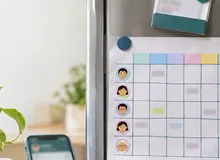
Practice. On W21, identify one task to delegate and one backup arrangement; ask the team what training a substitute would need. Worksheet W21: Our support roster and backup is ready to print. Use invented details when practicing; keep your real health information on paper, not online.

Teach backPractice requesting a specific period of help without promising untrained dialysis coverage. If a nurse educator is with you, they can record this on the teach-back record. Reading and quizzes never count as a hands-on skill check.

Three quick questions

Choose the best answer for each, then select Check answers. An explanation appears under the best answer. Try again as often as you like. Nothing you select is sent anywhere.

Question 1 of 3You cannot continue helping with a trained home dialysis task tomorrow. What should you do?
Question 2 of 3Which request is most likely to get real help?
Question 3 of 3Is taking regular rest as a care partner selfish?

Read next on this site

Choose your own path on the course home. Last checked November 29, 2026.

Glossary & abbreviationsTalahulugan at mga daglatTalaan sa mga pulong ug daglatTalatinigan ampo reng daglat terms used on this page

Abbreviations

CKD
Chronic kidney disease.
PD
Peritoneal dialysis.
ReferencesMga SanggunianMga TinubdanReng Reperensya 4 sources
  1. Kidney Health Australia. (n.d.). Caring for someone with kidney disease. https://kidney.org.au/your-kidneys/living-with-kidney-disease/families-and-carers/caring-for-someone-with-kidney-disease/
  2. Conditions for coverage for end-stage renal disease facilities: Care at home, 42 C.F.R. § 494.100 (2024). https://www.govinfo.gov/content/pkg/CFR-2024-title42-vol5/pdf/CFR-2024-title42-vol5-sec494-100.pdf
  3. Gilbertson, E. L., Krishnasamy, R., Foote, C., Kennard, A. L., Jardine, M. J., & Gray, N. A. (2019). Burden of care and quality of life among caregivers for adults receiving maintenance dialysis: A systematic review. American Journal of Kidney Diseases, 73(3), 332–343. https://doi.org/10.1053/j.ajkd.2018.09.006
  4. Araújo, H., Marques, E., Lourenço, I., Bonifácio, C., & Gomes, F. (2026). Nursing interventions to support family caregivers of patients on haemodialysis: A mixed-methods systematic review. Journal of Advanced Nursing, 82(6), 5813–5834. https://doi.org/10.1111/jan.70297
Dr. William Gregory M. Rivero, MD

William Gregory Rivero, MD, FPCP, DPSN

Internal Medicine · Nephrology · Nutrition · Philippines · PRC 0105184

Patient and care-partner education from the Renal Care Academy. It supports, and never replaces, the advice of your own kidney team, your unit’s written instructions, and supervised treatment training. Completing it is a self-reported learning record, not a qualification of any kind.

QR code — scan to save Dr. Rivero's contact info

Scan and save