After this module you should be able to
- Describe transplant evaluation as a process
- Prepare questions about living and deceased donation
- Check costs and coordination early
Suggested earlier modules: C01, C03, C04, C07, C08, C12. You may read any module in any order; the suggestion only helps the lessons build on each other.
The everyday picture

Where a new kidney goes. A front view of the abdomen: your own kidneys usually stay in place, and the new kidney sits in the right lower abdomen with its artery and vein joined to the leg vessels and its ureter to the bladder. Anti-rejection medicines keep the immune system calm for as long as the kidney works. A living donor has their own team and can say no at any time. Buying or selling organs is illegal.
Ask about referral and evaluation
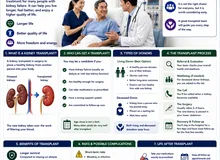
A transplant center evaluates your heart, blood vessels, infections, cancer screening, dental health, blood type and tissue matching, and also your support at home and your ability to take medicines every day. Some problems found during evaluation can be treated so you can proceed later. A referral or this course does not guarantee acceptance or a kidney. Ask what tests you need and how long the process usually takes at that center.
Donation needs independent safeguards
Kidneys can come from living donors, often relatives or spouses, or from deceased donors. A living donor receives their own separate evaluation and a team that looks after their interests, and can decline at any point without pressure. Buying or selling organs is illegal and harmful. If anyone offers a kidney for payment or pressures a relative to donate, tell the transplant team.
Coordinate the practical plan
Ask which appointments, laboratory tests and travel are needed, and who can accompany you. Ask a benefits coordinator to explain the applicable Philippine Health Insurance Corporation (PhilHealth) transplant package, what it covers, and separately, the costs of lifelong medicines and follow-up after transplant.
Ana and her brother
Ana, 31, on dialysis for a year, learns her brother Paolo wants to donate. Their mother pushes him hard, and Paolo privately feels unsure because he just got married.
Before reading on: what would you do, and whom would you call?
How sure are we? Strong evidence
In a landmark U.S. registry study of 228,552 people on dialysis, those who received a first deceased-donor transplant had a higher risk of death in the first weeks after surgery but a much lower long-term mortality, 48% to 82% lower than comparable people who stayed on the waiting list. Because selection matters, benefit is assessed individually by the transplant team.1,2,3
Questions to ask your team
- Am I a possible candidate for a transplant, and what tests do I need?
- How does living donation work, and how are donors protected?
- What will PhilHealth cover, and what will lifelong medicines cost?
Try it, then say it in your own words
Practice. On W17, draft an evaluation visit agenda covering clinical questions, donor safeguards and practical costs. Worksheet W17: My transplant evaluation questions is ready to print. Use invented details when practicing; keep your real health information on paper, not online.
Three quick questions
Choose the best answer for each, then select Check answers. An explanation appears under the best answer. Try again as often as you like. Nothing you select is sent anywhere.
Read next on this site
- Understanding Kidney TransplantKidney transplant, in depth.
- Getting Fit for a Kidney TransplantGetting fit for a transplant.
Choose your own path on the course home. Last checked November 29, 2026.
Module 23 of 4017 modules to go