After this module you should be able to
- Keep the records your home team requests
- Plan supplies, deliveries and backup help
- Request retraining after any major change
Suggested earlier modules: C01, C03, C04, C07, C08, C12. You may read any module in any order; the suggestion only helps the lessons build on each other.
The everyday picture
Records help the home team
Keep the records your team asks for, using their forms and units, such as daily weight, blood pressure, the appearance of drained fluid, and how much fluid comes out. Bring them to every clinic visit. Report unusual findings according to your written action plan. Recording information does not authorize you to change your prescription; the team decides changes.
Make supplies manageable
Store boxes off the floor in a clean, dry, cool place, use the oldest stock first, and check bags for damage and expiry before use. Plan deliveries around holidays and typhoon season, and tell the team early about travel. Follow the unit's waste disposal instructions. Ask how to report damaged or questionable supplies, and never use a bag that looks wrong.

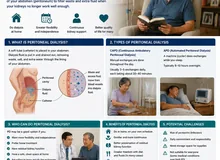
A safe home routine. A clean home exchange table with mask and hand rub, supply boxes off the floor with the oldest first, a bag checked for damage and expiry, and a record sheet for the home team. Ask for a skills review after an infection, after a hospital stay, with a new helper, with new equipment, when eyesight, hands or memory change, or whenever you feel unsure.
Ask for a skills review
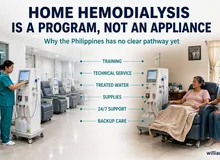
Request reassessment after a hospital stay, an infection, a change in helper, new equipment, or whenever you feel unsure. Needing a refresher is a reason to ask, not a failure to hide. Note: if you are exploring home hemodialysis, this module covers only general home organization; home hemodialysis needs its own device-specific training through an authorized program.
A new helper, an old habit
Tatay Nestor, 72, has done peritoneal dialysis (PD) for three years with his wife's help. She is hospitalized, and his grandson Kevin, 22, offers to help after watching a few exchanges.
Before reading on: what would you do, and whom would you call?
How sure are we? Moderate evidence
The International Society for Peritoneal Dialysis (ISPD) 2022 peritonitis guideline recommends PD retraining after peritonitis, catheter infection, hospitalization, change in dexterity, vision or cognition, change in equipment, or interruption of PD. United States home dialysis regulations also require facility-based training and reassessment, which this course adapts as good practice rather than as Philippine law.1,2,3
Questions to ask your team
- Which records do you want me to keep, and how?
- How should I plan deliveries for holidays and typhoon season?
- When should I come back for a technique check?
Try it, then say it in your own words
Practice. Use W16 to plan a fictional week of deliveries, records and backup support; no exchange steps are assessed online. Worksheet W16: My home treatment organization is ready to print. Use invented details when practicing; keep your real health information on paper, not online.
Three quick questions
Choose the best answer for each, then select Check answers. An explanation appears under the best answer. Try again as often as you like. Nothing you select is sent anywhere.
Read next on this site
- Peritoneal Dialysis: Your Complete GuideLiving with PD at home.
- Home Hemodialysis in the PhilippinesHome hemodialysis in the Philippines.
Choose your own path on the course home. Last checked November 29, 2026.
Module 22 of 4018 modules to go