Patients & Care Partners · Kidney transplant · Module T01

Prepare for a kidney transplant evaluation

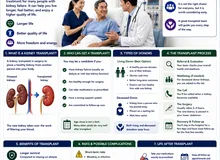
A kidney transplant places a healthy kidney from a donor into the lower abdomen, where it is connected to blood vessels and the bladder; the old kidneys usually stay in place.

PublishedNailathalaGipatikPepalwal: ReferencesMga SanggunianMga TinubdanReng Reperensya: 3 Audience: People living with kidney disease and the people who support them Read timeOras ng pagbasaOras sa pagbasaOras ning pamamasa:
Paolo, a possible kidney donor, talks privately with a transplant donor coordinator.
Renal Care Academy›Renal Patients and Care Partners›Module T01
🤝

For patients and care partners

This course helps you understand your care and prepare questions. It does not give individual fluid limits, food limits, blood pressure targets, medicine doses or machine settings: those come from your own care team. Practical home dialysis training happens with your treatment service. No website, quiz or chat is watched in real time; in an emergency, get help now. Every person in the stories is fictional.

When to get urgent helpSevere breathlessness, chest pain, fainting, heavy bleeding, new confusion: get emergency help now. No website or chat is watched in real time.

After this module you should be able to

Suggested earlier modules: C01, C03, C04, C07, C08, C12. You may read any module in any order; the suggestion only helps the lessons build on each other.

The everyday picture

In plain wordsA kidney transplant places a healthy kidney from a donor into the lower abdomen, where it is connected to blood vessels and the bladder; the old kidneys usually stay in place. The new kidney can do what dialysis cannot fully do: work all day, every day, including making hormones. But the body's immune system sees it as a stranger and will try to reject it unless medicines hold it back for as long as the kidney works. Evaluation is the process of checking whether the benefits outweigh those risks for you.
A front view of the abdomen: your own kidneys usually stay in place, and the new kidney sits in the right lower abdomen with its artery and vein joined to the leg vessels and its ureter to the bladder. Anti-rejection medicines keep the immune system calm for as long as the kidney works. A living donor has their own team and can say no at any time. Buying or selling organs is illegal.

Where a new kidney goes. A front view of the abdomen: your own kidneys usually stay in place, and the new kidney sits in the right lower abdomen with its artery and vein joined to the leg vessels and its ureter to the bladder. Anti-rejection medicines keep the immune system calm for as long as the kidney works. A living donor has their own team and can say no at any time. Buying or selling organs is illegal.

Ask about referral and evaluation

A transplant center evaluates your heart, blood vessels, infections, cancer screening, dental health, blood type and tissue matching, and also your support at home and your ability to take medicines every day. Some problems found during evaluation can be treated so you can proceed later. A referral or this course does not guarantee acceptance or a kidney. Ask what tests you need and how long the process usually takes at that center.

Donation needs independent safeguards

Kidneys can come from living donors, often relatives or spouses, or from deceased donors. A living donor receives their own separate evaluation and a team that looks after their interests, and can decline at any point without pressure. Buying or selling organs is illegal and harmful. If anyone offers a kidney for payment or pressures a relative to donate, tell the transplant team.

Coordinate the practical plan

Ask which appointments, laboratory tests and travel are needed, and who can accompany you. Ask a benefits coordinator to explain the applicable Philippine Health Insurance Corporation (PhilHealth) transplant package, what it covers, and separately, the costs of lifelong medicines and follow-up after transplant.

Ana and her brother

What happened

Ana, 31, on dialysis for a year, learns her brother Paolo wants to donate. Their mother pushes him hard, and Paolo privately feels unsure because he just got married.

Before reading on: what would you do, and whom would you call?

What happened next, and why it mattersAt the transplant center, Paolo meets his own donor team in a private appointment, where he can raise his doubts confidentially. He decides to proceed after counseling with his wife. Had he declined, the team would have told the family only that he was not a suitable donor, protecting his privacy. A good evaluation protects both the person receiving and the person giving.

How sure are we? Strong evidence

In a landmark U.S. registry study of 228,552 people on dialysis, those who received a first deceased-donor transplant had a higher risk of death in the first weeks after surgery but a much lower long-term mortality, 48% to 82% lower than comparable people who stayed on the waiting list. Because selection matters, benefit is assessed individually by the transplant team.1,2,3

Questions to ask your team

Try it, then say it in your own words

Practice. On W17, draft an evaluation visit agenda covering clinical questions, donor safeguards and practical costs. Worksheet W17: My transplant evaluation questions is ready to print. Use invented details when practicing; keep your real health information on paper, not online.

Teach backExplain why referral is different from approval for transplantation. If a nurse educator is with you, they can record this on the teach-back record. Reading and quizzes never count as a hands-on skill check.

Three quick questions

Choose the best answer for each, then select Check answers. An explanation appears under the best answer. Try again as often as you like. Nothing you select is sent anywhere.

Question 1 of 3What can this course establish about transplant eligibility?
Question 2 of 3Someone offers to sell you a kidney. What should you do?
Question 3 of 3Why do transplant recipients need medicines for as long as the kidney works?

Read next on this site

Choose your own path on the course home. Last checked November 29, 2026.

Glossary & abbreviationsTalahulugan at mga daglatTalaan sa mga pulong ug daglatTalatinigan ampo reng daglat terms used on this page

Abbreviations

PhilHealth
Philippine Health Insurance Corporation.
ReferencesMga SanggunianMga TinubdanReng Reperensya 3 sources
  1. National Institute of Diabetes and Digestive and Kidney Diseases. (n.d.). Kidney transplant. https://www.niddk.nih.gov/health-information/kidney-disease/kidney-failure/kidney-transplant
  2. Philippine Health Insurance Corporation. (2025). PhilHealth Advisory No. 2025-0014: Provider self-assessment tools. https://www.philhealth.gov.ph/advisories/2025/PA2025-0014.pdf
  3. Wolfe, R. A., Ashby, V. B., Milford, E. L., Ojo, A. O., Ettenger, R. E., Agodoa, L. Y., Held, P. J., & Port, F. K. (1999). Comparison of mortality in all patients on dialysis, patients on dialysis awaiting transplantation, and recipients of a first cadaveric transplant. New England Journal of Medicine, 341(23), 1725–1730. https://doi.org/10.1056/NEJM199912023412303
Dr. William Gregory M. Rivero, MD

William Gregory Rivero, MD, FPCP, DPSN

Internal Medicine · Nephrology · Nutrition · Philippines · PRC 0105184

Patient and care-partner education from the Renal Care Academy. It supports, and never replaces, the advice of your own kidney team, your unit’s written instructions, and supervised treatment training. Completing it is a self-reported learning record, not a qualification of any kind.

QR code — scan to save Dr. Rivero's contact info

Scan and save