After this module you should be able to
- Find your personal fluid plan, if you have one
- Record home measurements with date, time and units
- Know which symptoms need action even when numbers look fine
Suggested earlier modules: none. You may read any module in any order; the suggestion only helps the lessons build on each other.
The everyday picture

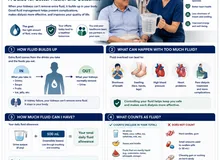
The closing drain. Three sinks above three seated people: with kidneys working the drain is open; with less urine it is half closed and the ankles swell; with very little urine on dialysis it is nearly closed and fluid can reach the lungs. Your fluid amount, if any, comes from your team. If you cannot breathe lying flat, get help now.
Your targets belong to your care plan
Ask your team whether you need a fluid limit at all. If you do, ask how much, and how they want you to count it: soup, sabaw, ice, coffee, juice and fruits like watermelon all contain water. Your limit depends largely on how much urine you still make and on your treatment, so it can change over time. This course will never give you a daily amount. A number borrowed from another patient may be too strict for you, causing dehydration, or too loose, causing fluid overload.
A useful record
If your team asks for home weights or blood pressure readings, learn to use the equipment with them. Weigh yourself at the same time each day, on the same scale, wearing similar clothes. Write the date, time, number and unit (kilograms, mmHg) and any symptom. Ask what range your team expects and what to do when a reading is outside it. Sudden weight gain over a day or two is usually water, not fat, and it is an early signal worth reporting.
Symptoms still matter
A reassuring number does not cancel a serious symptom. If you have new severe breathlessness, cannot lie flat, have chest pain, faint, or become confused, seek emergency help immediately, whatever the scale says. For smaller changes, such as more swelling or a steady rise in weight, use the contact plan agreed with your team. Recording a measurement is your job; changing treatment because of it is the team's decision.
Handle thirst and keep the habit
Most people find a fluid plan hardest on hot days and during celebrations. Salt is the main driver of thirst, so eating less salt is usually the most effective way to drink less.
- Use a small cup and sip slowly; measure your drinks for a few days so you know what your usual amount looks like.
- Suck a small ice chip, chew gum, or rinse your mouth and spit the water out.
- If you have diabetes, keep your blood sugar in the range your team set; high sugar increases thirst.
- Aim for most days, not perfect days. A record is for learning with your team, not for blame.
Module D06 gives more practical tips for everyday food and fluid, and the fluid counter in the toolkit can help you track a few days at a time.
Kuya Jun's birthday weekend
Kuya Jun, 41, has been on hemodialysis for two years and passes very little urine. Over a long weekend he attends two parties with plenty of soup, soft drinks and ice. On Monday morning his ankles are swollen, and he feels short of breath when he lies down.
Before reading on: what would you do, and whom would you call?
How sure are we? Moderate evidence
In the international Dialysis Outcomes and Practice Patterns Study (DOPPS), very large weight gains between sessions were associated with about 12% higher mortality. This is an observational association, and sicker patients may gain more weight, but it supports careful, individual fluid planning. Salt reduction lowers thirst, which makes any fluid plan easier to follow.1,2,3
Questions to ask your team
- Do I need a fluid limit, and if so, how should I count it?
- What weight or blood pressure range do you expect for me at home?
- At what point should I call you about weight gain or swelling?
Try it, then say it in your own words
Practice. On W06, enter a fictional weight and blood pressure reading with units, and write who provides your actual thresholds. Worksheet W06: My monitoring plan is ready to print. Use invented details when practicing; keep your real health information on paper, not online.
Three quick questions
Choose the best answer for each, then select Check answers. An explanation appears under the best answer. Try again as often as you like. Questions marked Safety question (2 here) must be answered correctly before the module counts as complete; the explanation shows you why. Nothing you select is sent anywhere.
Read next on this site
- Fluid Management on DialysisFluid on dialysis, explained.
- Finding Your True Dry WeightHow target (dry) weight is set.
Choose your own path on the course home. Last checked November 29, 2026.
Module 6 of 4034 modules to go