Recognizing trouble during dialysis, calling for help, working in an emergency team, and responding to water, power, and facility failures.
PublishedNailathalaGipatikPepalwal:ReferencesMga SanggunianMga TinubdanReng Reperensya:10Audience: Entry-level dialysis technicians and trainees · preceptors, head nurses, and training providersRead timeOras ng pagbasaOras sa pagbasaOras ning pamamasa:
This module is study material for dialysis technicians. It explains why safe practice works the way it does. It does not replace the physician’s orders, the supervising nurse’s direction, your unit’s approved procedures, or the manufacturer’s instructions for use. What a technician may do differs between countries and between facilities, so do only the tasks you are trained, assigned, and signed off to do. Every case is fictional.
Learning objectives
After this module you should be able to
Recognize the common complications of dialysis, and pick out the findings that need emergency escalation at once.
Call for help and give a short report of the patient’s condition, the timing, and what you see at the access and the equipment.
Carry out assigned support tasks during a simulation, then record and debrief the event.
Recognize a utility or facility disruption, and follow the pathway of hold, communication, and authorized release.
Classroom 6 hSkills lab 6 hSupervised placement 16 h
Pre-testBefore you read, answer the 5 self-assessment questions and note your score. After the module, select New set of questions and compare. The difference is what you learned; the questions you still miss are what to reread.
Start here
The big picture, in plain words
In plain wordsThink of a lifeguard at a public pool. Most days nothing happens. When a swimmer goes under, the lifeguard does not stop to work out why. The lifeguard shouts for help and starts the task the team has practiced. Most dialysis sessions are uneventful, but trouble on dialysis can develop within minutes. In an emergency a technician has three jobs: recognize that something is wrong, call for help immediately, and then do the task you are given.
The picture has a limit. A lifeguard often rescues alone, and you never do. You are not expected to diagnose the cause or to change the treatment. The nurse and the physician lead. What helps the patient most is how quickly you call and how exactly you carry out the task you are given.
Figure 1 · Your first thirty seconds
See itA patient who looks unwell, or says they suddenly feel unwell.
CallUse the unit’s emergency call. Say where you are and that you need help now.
Say what you sawThe symptoms, when they started, and whether the patient is connected.
Take a taskBring equipment, guide the responders, or assist as directed.
Close the loopRepeat the instruction, and report when it is done.
Figure 2 · Key terms for this module
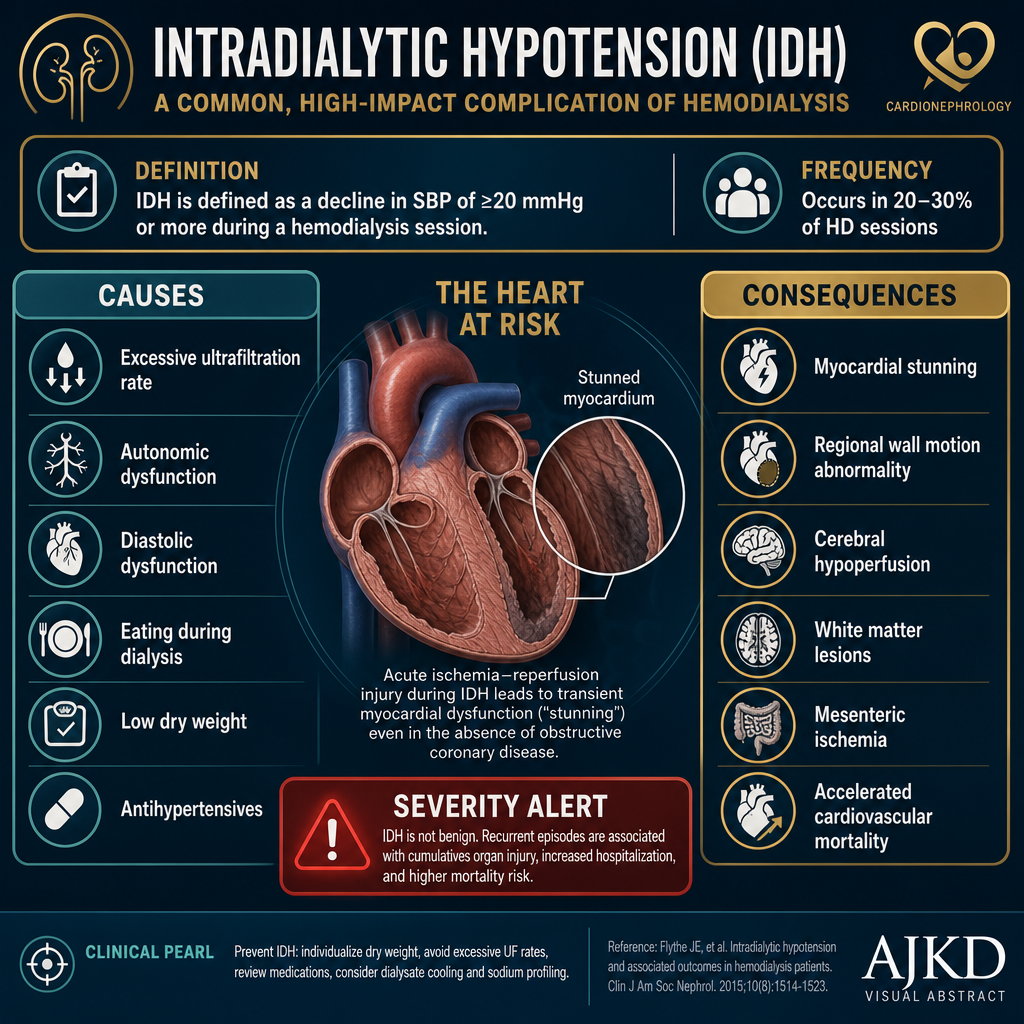
HypotensionLow blood pressure. It is the most common problem during dialysis.
Needle dislodgementA needle slipping out of the access. Blood loss can be fast and hidden under a blanket.
HemolysisRed blood cells breaking apart, for example from overheated or wrongly mixed dialysate, or from chloramine.
Air embolismAir entering the bloodstream. It is rare, and it is an emergency.
Closed-loop communicationRepeating each instruction, and confirming when it is completed.
Opening case · fictional
Case: Sudden chest pain at the station
It is a fictional Thursday morning. Mr. Danilo Cruz, 58, is in the second hour of his session at Station 4. He turns to you and says, “My chest hurts and I can’t catch my breath.” The symptoms began moments ago. He can still speak, but he looks distressed. No machine alarm has sounded. Two team members are in the treatment area.
Before reading on, decide:
What do you say and do in the first seconds?
What will you tell the nurse who responds?
Which tasks can you take on if assigned, and who leads the clinical response?
Keep your answers in mind. The lesson gives you what you need, and the case review near the end shows one sound response.
Lesson · part 1
Recognize changes that matter
Figure 3. A fall in blood pressure is the most common problem during treatment. Early signs include dizziness, nausea, yawning, sweating, and cramps.
A warning light on a jeepney’s dashboard can mean a loose wire or a failing engine. The light is the same, and the driver cannot tell which by looking at it. The driver’s job is to pull over and get the mechanic. A patient’s symptoms work in a similar way. The picture has a limit. A parked jeepney can wait for the mechanic. A patient sometimes cannot, so when an emergency is apparent, you call for help before you gather anything else.
Different complications can produce the same symptoms. Use the symptoms, the timing, any change you see in the circuit, and the measurements you have to make a factual report. The clinical team works out the cause and directs treatment. Follow the unit’s procedure for activating an emergency response. When an emergency is apparent, call for help before waiting for more readings or charting.1,2
Finding or suspected complication
What to notice and report
Falling blood pressure or possible intradialytic hypotension
Report promptly any new dizziness, nausea, sweating, weakness, or change in alertness, with any blood pressure trend you have. Escalate at once for severe symptoms, collapse, or a rapid decline.
Muscle cramps
Report when they began, where they are, how severe they are, any other symptoms, and the readings you have. The nurse reviews the treatment and decides the response.
Chest pain or breathlessness
Call for help at once. Give the time the symptoms began and how the patient is now. A silent machine and an earlier normal reading do not settle the concern.
Fever, chills or suspected infection
Tell the nurse promptly. Report the timing, any temperature reading, symptoms at the access, and whether other patients have the same complaints. Use the emergency pathway if the patient is very ill or getting worse.
Access hemorrhage, disconnected blood line or venous needle dislodgement
Treat visible dislodgement or heavy bleeding as an emergency, now. Say where it is and what you see. An alarm may miss some dislodgements.
Possible hemolysis or another circuit or dialysate emergency
Alert the team at once for a worrying combination, such as sudden chest or back pain, breathlessness, nausea, or a new and unusual look to the blood line. Report any shared water alert, or the same symptoms at more than one station.
Possible air embolism or other sudden cardiopulmonary event
Treat sudden severe breathlessness, chest pain, a change in consciousness, or a visible air or line concern as an emergency. Report exactly what you saw in the patient and in the circuit.
Possible severe allergic reaction
Sudden wheeze, trouble breathing, swelling of the face or throat, hives over much of the body, or collapse needs escalation at once. Report the timing and any recent exposure you know about.
What the machine does, and what is decided about the blood circuit, differ by event and by equipment. The authorized team follows the facility emergency procedure and the machine’s instructions for use. Carry out only the actions assigned to you and for which you are trained.3,4
Figure 4. Cramps are painful and can signal that fluid is being removed faster than the body can tolerate. Report them; the nurse decides the response.
Stop and reportChest pain, breathlessness, collapse, heavy bleeding, or a patient who cannot be woken: call for help first. Measurements and notes come after the call.
Figure 5. Signs that need help immediately. Six warning signs during dialysis that need immediate help.
Lesson · in practice
Fifteen events: what you see, what you do, what the nurse needs
In plain wordsThink of a tanod who sees trouble on the street. Whatever the trouble is, the first moves are the same: stay close, call for the people who can deal with it, note the time, and be ready to run for whatever they ask for. What changes from one event to the next is how loudly and how fast you call, and what you bring.
The picture has a limit. A tanod may act on his own judgment. At the chair, the nurse and the nephrologist decide the cause and the treatment. Your first actions are the same for almost every event: stay with the patient, call the nurse, note the time, and get ready to fetch. The table tells you how fast to call and what the nurse is likely to need from you.
Event
What you see or the patient says
What you do first, within scope
What the nurse will likely need from you
Low blood pressure
Yawning, sweating, nausea, dizziness, “I feel hot,” a pale face, going quiet
Call the nurse now. Stay. Recline the chair as trained or directed
A blood pressure reading and the earlier readings; fluid removed so far; saline ready at the station
Muscle cramps
Sudden hard pain in the calf, foot, or hand
Call the nurse. Stay. Support the limb the way the patient prefers
Blood pressure; the fluid removal goal and the amount removed; time left
Nausea and vomiting
Retching; it often comes with low blood pressure
Call the nurse. Give a basin. Turn the head to the side if the patient is drowsy
Blood pressure; suction within reach if the patient is drowsy
Headache
A new or worsening headache
Tell the nurse. Ask when it started
Blood pressure; time of onset
Chest pain
Pain, pressure, or tightness; short of breath; sweating
Call for help immediately. Stay. Keep the patient still
Emergency cart and oxygen brought to the chair; blood pressure and pulse; time of onset
Itching
Scratching. Alone, it is common. With a rash, wheeze, or swelling, see dialyzer reaction
Tell the nurse. Look for a rash or trouble breathing
When it started; whether anything was new this session
Fever and chills
Shaking, feeling cold, hot skin
Call the nurse. Ask whether other patients feel the same
Temperature; time since treatment started; access type; the number of patients affected
Dialyzer reaction
In the first minutes: itching, hives, cough, wheeze, chest or back pain, burning at the access
Call for help immediately. Stay
Emergency cart and oxygen; minutes since the start; dialyzer type and whether new or reprocessed; the dialyzer and its package kept
Clotting of the circuit
Very dark blood, dark streaks in the dialyzer, clots in a chamber, rising pressures
Call the nurse. Do not reset alarms to keep the pump going
The pressure trend; saline; a new circuit ready if asked
Bleeding
Blood at a needle site, a connection, or a catheter; nosebleed; blood in vomit
Call the nurse; shout if it is heavy. Uncover the access. Gloves on
Gauze and clamps; blood pressure; an estimate of the amount
Needle dislodgement
Needle out or partly out; blood on the sheet or floor; sometimes a venous pressure alarm, sometimes none
Shout for help. Follow the unit’s emergency procedure within your training
Gauze, clamps, the cart; the time found; an estimate of blood lost
Seizure
Stiffening, jerking, not responding
Call for help. Protect the head and the access arm from injury. Put nothing in the mouth. Note the start time
How long it lasted; oxygen and suction; the glucose meter if the unit uses one
Cardiac arrest
Not responding and not breathing normally
Shout for help and start the code response. Begin compressions if you hold current basic life support certification
Cart and defibrillator; a recorder; someone to meet the ambulance
Suspected air embolism
Air or foam seen in the venous line, with sudden cough, chest pain, breathlessness, or collapse
Call for help immediately. Position the patient on the left side with the head down, as trained and as the nurse directs
Oxygen and the cart; what you saw in the line, and where
Suspected hemolysis
Blood in the venous line looks a clear cherry red; chest, back, or abdominal pain; breathlessness
Call for help immediately. Check whether other patients have symptoms
Dialysate temperature and conductivity readings; today’s chlorine result; the circuit and concentrate containers kept, not discarded
RememberIn a dialyzer reaction, clotting, or suspected hemolysis, the used dialyzer, lines, and containers are evidence. Nothing goes in the bin until the nurse says so.
Stop and reportTwo or more patients with the same symptom at the same time points to something they share: water, dialysate, or supplies. Say “more than one patient” in your first sentence to the charge nurse.
Lesson · part 2
First response and team roles
Figure 6. Everyone has a position and a task. Know yours before your shift starts.Figure 7. Emergency role card. The sequence below provides a text equivalent. Learn your unit’s activation method and assigned role before each placement.
Call for help at once for serious signs. Say where you are, what you saw, and that help is needed now. Use the unit’s emergency call process, and follow your assignment for calling emergency medical services.
Give a short handoff. Give the patient’s location, symptoms, time of onset, whether the patient is connected, and any findings you already have. Mention any visible change at the access or circuit, and quote the machine or water messages if you know them. Collecting measurements must never delay the emergency call.
Stay available for your assigned task. The team lead directs assessment, changes to treatment, decisions about the circuit, use of emergency equipment, and coordination with outside responders. Within your current training and assignment, you may call for help, bring equipment, guide responders, pass on observations, or assist in resuscitation. If cardiac arrest is suspected, activate the response and follow your current Basic Life Support (BLS) training and the unit protocol.
Close the loop. Repeat back the task you were given, and report when it is done or why it cannot be done. This lets the team lead keep track of what has happened and what still needs action.5,6
What to tell the nurse. A short report is enough: “At Station 4, Mr. Cruz suddenly reports chest pain and difficulty breathing. The symptoms started just now. He is connected and speaking but looks distressed. I haven’t seen an alarm. Please come now.” Notice what it contains: where, who, what, when, connection status, and a clear request.
Who leads. The team lead directs the response. Follow the instructions you are given and pass on any change you see. The clinical team determines the cause and the treatment.
Figure 8. Emergency readiness is built before the emergency: a checked cart, known roles, and regular drills.Figure 9. Basic life support. Keep your certification current; this figure is a reminder, not a substitute for hands-on training.
Lesson · in practice
The emergency cart and oxygen: the daily check
A fire extinguisher that has never been checked is only a red cylinder on the wall. The emergency cart is the same: it is checked every day so that nobody has to search during an emergency. Medications on the cart are checked by the nurse or the pharmacist. The equipment check is often assigned to a technician. Use your unit’s own checklist; the table shows what such a list usually covers.7
Item
What you confirm
If it fails
Cart location and seal
In its marked place, with a clear path; seal or lock intact; seal number matches the log
Tell the charge nurse; a broken seal means a full recheck
Defibrillator
Plugged in and charging, ready indicator on or self-test passed, pads sealed and in date, spare pads present
Report at once; the unit arranges a replacement
Oxygen cylinder
Gauge reads above the minimum your unit sets; regulator and key attached; cylinder secured upright
Request a full cylinder now, not at the end of the shift
Oxygen delivery
Tubing, masks, and nasal cannulas present and sealed
Restock from stores
Bag-valve mask
Present with mask sizes; the bag reinflates when squeezed
Replace
Suction
Turns on; pulls at the tip when blocked with a gloved thumb; catheter and tubing attached
Report to biomedical staff
Supplies
Gloves, backboard, saline, and the items on the unit’s list, with nothing past its expiry date
Restock and record
Signature
Date, time, and your name on the check sheet
An unsigned check counts as not done
RememberKnow three places before every shift: the cart, the oxygen, and the emergency packs at the stations. If any of them has moved, find out where before the first patient arrives.
Lesson · in practice
A code at the chair: five jobs a technician may be given
A code is the unit’s response to a patient who has stopped breathing or has no pulse. Think of a pit crew at a car race: each person has one job, and the work is fast because nobody does two jobs or waits to be told twice. The nurse or the physician leads. Each helper has one job and stays in it until the leader changes it.
Figure 10 · Jobs a technician may be assigned
CallerActivates the unit’s emergency call, and telephones the ambulance or hospital team if the leader says so. States the unit, the station, and “adult cardiac arrest.”
Cart bringerBrings the cart, defibrillator, and oxygen to the chair, and moves furniture out of the way.
CompressorGives chest compressions only if trained and currently certified in basic life support. Swaps with another person about every 2 minutes when the leader calls it.
RunnerFetches what is asked for, meets the ambulance crew at the door, and guides them in.
RecorderWrites each event with its clock time, using one clock for the whole event.
Figure 11. The first five minutes of a cardiac arrest in the unit. Find the jobs a technician may be given.
A nurse handles the patient’s blood circuit. If you are standing at the machine, do not press anything unless the leader tells you to.
Time
Recorder’s entry (example)
09:42
Station 6. Patient found not responding, not breathing. Help called by technician
09:42
Compressions started by Nurse A
09:43
Cart and defibrillator at chair. Ambulance called by technician B
09:44
Pads on. Shock advised. Shock 1 given
09:46
Compressor changed to technician C. Rhythm check: no shock advised
09:47
Blood returned and lines disconnected by Nurse D
09:48
Medication given by Nurse D on physician’s order (name and dose as called out)
09:52
Pulse felt by leader. Patient breathing
09:58
Ambulance crew at chair. Handover by leader
Notice what the record contains: a clock time on every line, who did what, and words as they were said aloud. It contains no opinions and nothing tidied up afterward.
RememberThe recorder writes what is said aloud, with the time, and asks “What was that dose?” if it was not heard. The recorder does not tidy, guess, or fill in later from memory.
Lesson · part 3
Document and debrief
During the response, record only what you have been assigned to record. Immediate actions come first. Write down the symptoms you observed, the time they began or were found, the patient’s condition and connection status, any measurements with their times, machine messages, notifications, what you did within your role, and the next handoff. Keep equipment information, logs, or supplies as the unit directs. Follow the facility process for incident reporting and equipment review.2
Example record. “10:24 · At Station 4, patient said, ‘My chest hurts and I can’t catch my breath.’ Patient connected and speaking. No alarm was observed at that time. Called emergency response and notified charge nurse at 10:24. Remained available for assigned support. At 10:25, directed responders to Station 4.”
A debrief looks back at how the event was noticed, how quickly help was called, whether everyone understood their role, and what would make the next response better. Record one action, the team member who owns it, and how the team will check that it was done. Use approved de-identified data in training.
Lesson · part 4
Respond to utility or facility disruptions
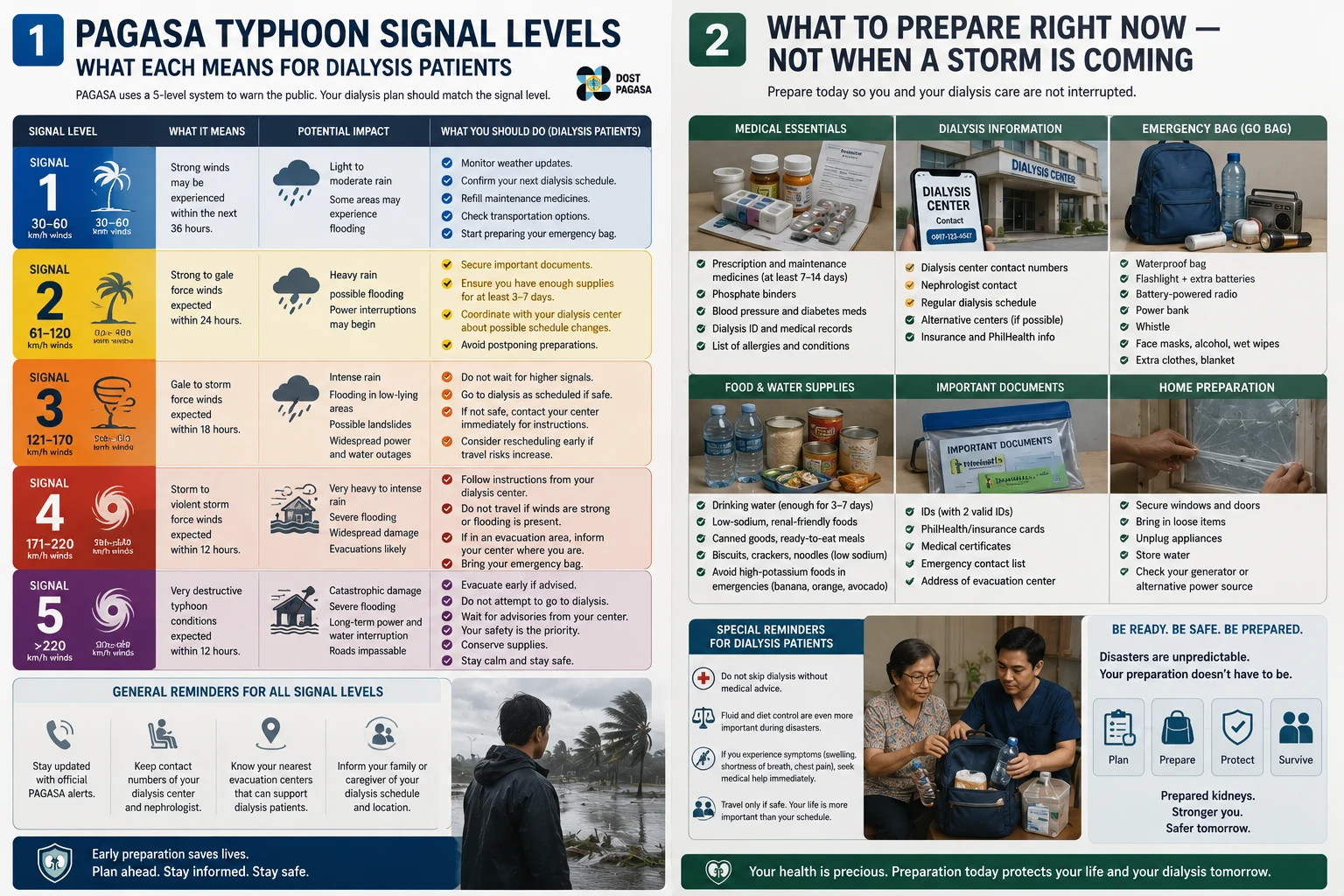
Figure 12. Typhoons, floods, and power cuts are regular events in the Philippines. Units plan for them in advance.
A patient emergency usually involves one station. A shared failure can involve many stations at the same moment, because they share the same water, power, and building. Report promptly when several machines alarm together, a water check fails, power is interrupted, or an evacuation instruction is given. Learn the incident lead, the contact numbers, the contingency plans, and who has release authority at your site.8,9
Disruption
What the technician should support
Water outage, water safety alert or suspected contamination
Hold the affected new starts, and alert the charge nurse and the water-system lead. Report whether any patients are already connected and which stations may be affected. Connected patients need immediate coordination through the unit’s clinical contingency process.
Power failure or unstable backup power
Report the areas affected and what you see on the machines. Hold the affected new starts, and follow the site emergency plan under the incident lead. Backup support and alarms differ by equipment and by facility.
Fire, earthquake, flood or evacuation
Use the facility alert and evacuation procedure, name the affected area, and guide responders as directed. The incident lead decides the order in which patients are moved, how they are relocated, and where they are transferred.
Proposed return to service
Confirm that the designated leads have cleared the equipment, utilities, and patient assignments under unit policy. A screen that is back on, or a utility that has returned, does not by itself mean the unit is ready. Record the authorized release and who gave it.
Tabletop variation. One patient is connected. Water alarms appear on the neighboring machines, and the next shift is getting ready to start. Give the charge nurse and the designated technical lead the location, the number of connected patients if you know it, the exact alert, and what is on hold. Then name who directs care for the connected patients and who records the clearance of the water and equipment.10
RememberWhen water or power comes back, a screen that lights up again is not a release. Equipment and utilities return to service only when the designated leads clear them.
Figure 13. When water or power fails. Flow for water or power failure: hold new starts, report, follow the incident lead, and wait for clearance.
Lesson · in practice
Emergency disconnection and evacuation
In a fire or a collapsing building there may be no time to return each patient’s blood in the usual way. Units plan for this with an emergency disconnection pack at every station and a procedure often called clamp and disconnect. The blood left in the circuit is lost. That loss is accepted, because the goal is to get the patient out quickly.
Figure 14 · The principle
DecisionThe charge nurse or the incident leader orders emergency disconnection. Nobody starts it alone unless unit policy says so.
ClampBoth blood lines and both access lines are clamped, so that neither the patient nor the circuit can bleed.
SeparateThe lines are disconnected, or cut between the clamps, as the unit’s policy states.
Needles stay inFistula needles are left in place, taped and capped, and removed later in a safe area.
GoThe patient leaves the machine behind.
Unit policy states who performs each step. In most units a nurse does it, and patients who are able are taught to do it for themselves. A technician does it only if the policy assigns it and a drill has confirmed the skill.
Your part
Detail
Before any emergency
At setup, check that the pack is at the station, sealed, and complete
When the order is given
Hand the pack to the nurse; move chairs, stools, and bins out of the exit path
Moving patients
Follow the order the leader calls. Commonly, patients who can walk go first, then wheelchairs, then those who must be carried
At the assembly point
Help with the head count against the day’s patient list; stay with the patients; watch the needle sites for bleeding
Never
Go back inside for equipment, records, or belongings
Lesson · in practice
Utility failures and disasters: the first five minutes
In every disaster one person leads, usually the charge nurse. Everyone else reports to that person, so the leader can see the whole floor at once. Your first report is short: what happened, where, and how many patients are connected.
Figure 15. The first five minutes. Five tiles with the first action for power failure, water failure, fire, earthquake, and flood.
Event
First five minutes, technician
Do not
Power failure
Stay at your stations and look at each patient. Tell the nurse which machines are on battery and which are dark. Bring flashlights and the hand cranks for the blood pumps. Note the time. Start no new treatments
Assume the generator will start, or switch machines off and on
Water failure
Count the machines alarming, and tell the charge nurse and the water technician. Read the water room gauges and alarms if this is assigned to you. Hold all new starts. Note the time
Reset machines again and again, or bypass a water alarm
Fire or smoke
Rescue anyone in immediate danger. Raise the alarm. Close doors to contain it. Use an extinguisher only if you are trained, the fire is small, and your exit is behind you. Prepare for emergency disconnection
Use the elevator, or open a hot door
Earthquake
During shaking: drop, cover, and hold on; tell patients to stay in their chairs and protect their heads. After shaking: look at every patient, access, and line; report injuries, leaks, and fallen equipment; expect aftershocks
Run for the exit during shaking, or try to disconnect anyone while the floor is moving
Typhoon or flood
Follow the unit’s plan, which may shorten or reschedule sessions. Move supplies and records off the floor. Report any water entering the unit or the water room. If water reaches electrical equipment, keep away and tell the leader
Touch plugged-in equipment while standing in water, or promise patients a new schedule yourself
Figure 16 · After any event
Write your own accountThe same day, in your own words: the times, what you saw, what you were told, and what you did.
Separate fact from opinion“Machine 4 screen dark at 14:06” is a fact. “The battery was faulty” is an opinion.
Hand over evidenceTagged equipment, kept circuits, and log sheets go to the person the leader names.
Attend the debriefA short meeting soon after: what went well, what was slow, what was missing.
Leave with one actionEach fix has a named owner and a date.
RememberA debrief looks for weak points in the system, such as an empty oxygen cylinder or an unclear role. It is not a search for someone to blame, and it works only if people say what really happened.
On the floor
Real situations: problems and solutions
These are fictional but typical. For each one, cover the answer, decide what you would do, then compare. Where a step depends on local rules, your unit’s procedure and your supervisor’s direction come first.
A cramp that makes him shout
What you see
In the last hour of treatment, a patient cries out and grabs his calf. The muscle is visibly knotted.
What is likely going on
Cramps often mean that fluid is being removed faster than the body can refill the bloodstream.
What to do
Call the nurse and stay with the patient. Report when the cramp started and whether he has any dizziness or nausea.
Why it matters
The nurse decides whether to change the treatment. A cramp can come just before a fall in blood pressure.
Blood under the blanket
What you see
On your round you notice a dark stain spreading across a patient’s blanket. The machine is not alarming.
What is likely going on
A needle may have slipped out. The machine can keep pumping blood onto the bed without an alarm.
What to do
Shout for help immediately and tell the nurse what you see. Follow the nurse’s instructions exactly.
Why it matters
A patient can lose a dangerous amount of blood in a few minutes.
Three patients with chills
What you see
Within twenty minutes, three patients on the same side of the unit complain of chills and ask for extra blankets.
What is likely going on
When several patients become unwell together, think of something they share: the water, the dialysate, or a batch of supplies.
What to do
Tell the charge nurse at once and say, “Three patients, same time.” Tell the water technician.
Why it matters
One patient with chills is a patient problem. Three patients with chills is a unit problem.
The lights go out
What you see
At 14:20, the power fails in the middle of the shift. The machines switch to battery and begin to alarm.
What is likely going on
Battery backup is short and may not run everything. The generator may or may not start.
What to do
Stay at your station, reassure the patients, and follow the charge nurse’s instructions. Do not start new treatments.
Why it matters
The unit has a plan for this. The plan works only if everyone follows one voice.
He will not wake up
What you see
A patient who was dozing does not respond when you say his name or touch his shoulder.
What is likely going on
This may be sleep, low blood pressure, low blood sugar, or cardiac arrest.
What to do
Call for help immediately. If you are trained, begin the basic life support steps you are certified for while help arrives.
Why it matters
Seconds matter. Calling first is never the wrong decision.
Field notes
Before each shift, know the emergency call method and where the cart and the defibrillator are.
Keep your basic life support certification current.
In an emergency, do the task you are given and say when it is done.
Afterward, write down the times while you still remember them.
Case review
Back to the case: Sudden chest pain at the station
Case debrief.The first seconds. Call for clinical help to the station at once, and activate the unit response as required. Do not wait for an alarm or a blood pressure reading first. A silent machine tells you nothing about Mr. Cruz’s heart or lungs.
Skills lab · with your preceptor
Skills checklist: Emergency drill and utility tabletop
Materials: Training station, mannequin or mock patient, local emergency role card, simulated machine message, emergency call script, and mock incident log. Rate each step satisfactory, needs practice, or not observed. Use only simulations for this assessment. Your preceptor rates each step as satisfactory, needs practice, or not observed. Steps marked Critical must all be satisfactory before sign-off. This checklist supports supervised learning; your unit’s own procedure and competency form are the authority. A printable version of every checklist is on the trainer page.
Identifies the unit’s emergency contact route and team lead.
CriticalImmediately summons help for sudden chest pain and breathlessness despite the absence of an alarm.
Gives an accurate location, observed symptoms, onset, patient status and connection status.
CriticalUses closed-loop communication and stays within assigned tasks without improvising settings or circuit actions.
Identifies an appropriate assigned support task and confirms completion to the lead.
Records timeline, observed findings, notifications and the handoff objectively.
CriticalIn the utility scenario, holds affected new starts, identifies existing patients and escalates to clinical and technical leads.
Identifies who determines return to service and explains how clearance is documented.
Gives one concrete improvement for the post-drill debrief.
CriticalCompletes the unit’s emergency cart and oxygen check on the real cart, identifies one planted fault, and reports and records it.
Acts as recorder in a simulated code and produces a time log with every called event, from one clock, with no entries added from memory.
CriticalLocates the emergency disconnection pack at an assigned station, names its contents, and states who orders and who performs emergency disconnection under unit policy.
Placement activity. With your preceptor, find the emergency call point, the supplies, the exit routes, and the current utility contingency procedure. Rehearse your assigned role during a tabletop exercise or an approved drill, and record the feedback using de-identified information.
Self-assessment
Check your understanding
Each visit draws 5 questions at random from this module’s 22-question bank. Choose the single best answer for each, then select Check answers; an explanation appears under the best answer. Select New set of questions for a different mix. A good target is 4 of 5 on two different sets. Nothing you select is sent anywhere; scoring happens in your browser.
Educational study material for dialysis technicians. It does not replace physician orders, the supervising nurse’s direction, approved unit procedures, manufacturer instructions, DOH licensing requirements, or supervised training.