After this module you should be able to
- Identify every patient with two approved identifiers before any measurement.
- Explain why the pre-dialysis weight drives the fluid goal, and obtain a weight with units, clothing and tare recorded.
- Calculate a net weight and the weight gain since the last session, and report them without proposing a treatment change.
- Name the main sources of blood pressure and oximetry error and how to avoid them.
- Report a symptom or an unexpected reading at once, even when other numbers look normal.
The scale is a witness
Think of each measurement as a witness statement. The registered nurse (RN) and the physician were not at the scale. They will make a decision based on what your witness says. If the witness is honest and careful, the decision can be right. If the witness guesses, or speaks about the wrong person, the decision will be wrong, however skilled the decision makers are.
The picture has a limit. A witness can explain what they saw. A number cannot. So you add the context: the units, the scale, what the patient was wearing, the wheelchair, and anything that made the reading hard. And you report what the patient said and looked like, because a symptom can matter more than any number.
Two identifiers, every time
Use the unit’s two approved identifiers, usually full name and date of birth, checked against the record or wristband, at every encounter where you measure or record. A chair number is not an identifier: patients move. A familiar face is not an identifier: two patients can share a surname, a barangay and a schedule. Ask the patient to state their name rather than asking “Are you Mr. Reyes?”, which invites a yes.
Before routine intake, ask how the patient feels. Chest pain, breathlessness, fainting, bleeding or a sudden change in alertness go to the RN before you continue. Routine forms never delay an urgent call.
Why the weight must be true
Between sessions, almost all the weight a patient gains is water, because a person cannot gain two kilograms of fat in two days. The difference between today’s weight before dialysis and the target weight after dialysis is the main input for the fluid the prescription will remove. An error of one kilogram on the scale can become a liter of fluid removed in error. Removing too much can drop the blood pressure (Module 2); removing too little leaves fluid in the lungs.
Weight gain between sessions is itself associated with outcomes. In 34,107 patients in the United States, after adjustment for nutrition and other factors, an average gain of 4.0 kilograms or more was associated with higher cardiovascular death than a gain of 1.5 to 2.0 kilograms (hazard ratio 1.25; 95% confidence interval 1.12 to 1.39). A gain under 1.0 kilogram was associated with lower risk (0.67).1 Excessive gain was also associated with higher mortality in Dialysis Outcomes and Practice Patterns Study (DOPPS).2 These are associations, not targets you set: the unit’s written threshold tells you when a gain must be reported at once.
Scale reading with chair: 78.6 kg. The empty chair, weighed on the same scale today: 15.2 kg. Clothing allowance the unit uses: 0 kg (he is wearing the usual light clothes).
Net weight = 78.6 − 15.2 − 0 = 63.4 kg.
Last post-dialysis weight: 58.0 kg. Gain = 63.4 − 58.0 = 5.4 kg, which is 5.4 ÷ 58.0 × 100 = 9.3% of his last post-dialysis weight.
Report: “Ma’am Jessa, Mang Rolando: 63.4 kilograms net on the wheelchair scale, chair weighed today at 15.2. Up 5.4 from his last post-weight. He is breathless when he talks.” You do not suggest a fluid goal.
| Error | What it does to the number | Prevention |
|---|---|---|
| Tare guessed, or taken from another chair | Off by several kilograms | Weigh the chair empty on the same scale, or use the unit’s labeled tare |
| Wrong units (pounds read as kilograms) | Off by more than double | Check the display unit; convert with the toolkit |
| Shoes, jacket, bag or blanket on | Heavier than true | Same clothing as usual, or record the item |
| Scale not zeroed, or on an uneven floor | Drift up or down | Zero before use; report a scale that will not zero |
| Copied last weight | A fabricated value | Never; record “not obtained” and the reason |
Use the Patient Care Assistant Toolkit to check the arithmetic, including pounds to kilograms. A negative gain, or a gain far above the patient’s usual, is a reason to re-check the tare and the units, and to tell the RN.

A wheelchair weight is only true when the chair is weighed: 78.6 minus 15.2 is 63.4 kg, up 5.4 kg; report the weight and any symptom, and let the RN decide.

Weight gained between sessions is almost all water, so a scale or tare error becomes a fluid-removal error that can drop blood pressure or leave fluid in the lungs.
Readings that lie, and how to stop them
Blood pressure readings are easy to get wrong. A systematic review of 328 studies found 29 sources of inaccuracy related to the patient, the device, the procedure and the person measuring. Single sources changed systolic readings by as much as 23.6 mm Hg too low or 33 mm Hg too high. The authors advised that one unexpected value should be repeated, not acted on alone.3
| Source | Effect | What you do |
|---|---|---|
| Cuff too small for the arm | Reads too high | Choose the cuff size by the arm, using the cuff’s markings |
| Talking, moving, legs crossed, arm unsupported | Usually reads higher | Seated quietly, back and arm supported, feet flat, no talking during the reading |
| Cuff over clothing | Unreliable | Cuff on bare skin |
| Wrong arm | Harm to the fistula or graft | Never on the access arm: use the arm the RN’s plan names |
Pulse oximeters are useful but imperfect. In paired readings from hospital patients, among those whose oximeter showed 92% to 96%, the true arterial saturation was below 88% in 11.7% of readings in Black patients and 3.6% in White patients.4 Cold fingers, poor circulation, movement and nail polish also cause errors. The lesson for you: a reassuring oxygen number never cancels a patient who looks breathless, blue or drowsy.

Accurate blood pressure needs the right cuff size, a supported seated patient, bare skin and no talking, and never the access arm.
- BP
- Blood pressure
Report the finding, not a prescription
Record what you measured, the units, the time, the device and any limitation (“patient moving,” “cuff size large adult”). If a reading surprises you and it is safe to do so, repeat it once as the RN directs, but never let repeating delay a call about a symptom.
Tell the RN about: a change from the patient’s usual pattern; a gain above the unit’s threshold; a fall since the last session; a missed session; fever symptoms; any concern about the access. Use a short structure:
Pre- and post-dialysis weights support the clinical team’s review. They do not authorize you to set a dry weight, a fluid goal or a treatment time.
Case: 63.4 kilograms and breathless
Monday, 6:20 a.m. Mang Rolando Aquino, 68, comes after the long weekend. Bea weighs him on the wheelchair scale: 78.6 kg with the chair. Nobody knows this borrowed wheelchair’s weight. His son says, “The other chair was 14 kilos, just use that.” Mang Rolando is sitting forward with his hands on his knees, breathing fast. He stops between words. His record shows a post-dialysis weight of 58.0 kg on Friday.
Before reading on, decide what you would notice, whom you would tell and what you would say, what you would do within your role, and what would make you call for help at once. Then compare with the debrief below.
Notice
Communicate
Do
Escalate
The RN arrived within a minute and assessed him; the physician was called. The borrowed chair weighed 15.2 kg, not 14. With the guessed tare, the net weight would have been recorded 1.2 kg too high. The unit now labels every wheelchair with its weighed tare and the date.
Submit: What you check first, and what you tell the RN.
Check your understanding
Each visit draws 5 questions at random from this module’s 10-question bank, in a shuffled order with shuffled options. Choose the single best answer for each, then select Check answers; a reason appears under every option. The target is 4 of 5 with every question marked safety-critical answered correctly (3 of the 10 are). Select New set of questions for a different mix. Nothing you select is sent anywhere; scoring happens in your browser and records self-study only. It never shows that you are competent at work.
What this module builds
| Code | The learner can | Course evidence |
|---|---|---|
| P5 | Identify with two identifiers, obtain trustworthy weights and assigned observations, and report the reading and the symptom. | Weight, tare and observation station |
Performance evidence for this module: Two identifiers; equipment check; weight with units and tare; assigned observations by the approved technique; escalation of a symptom with closed-loop confirmation.
With your preceptor
Practice on colleagues and simulated patients first; then measure patients only after sign-off and under supervision. These are prompts for supervised learning, not a procedure. Use your center’s own procedures, device instructions, contacts and forms; your preceptor observes and signs off each item on the facility’s competency record. Proposed evidence: at least three satisfactory observations across two shifts for each workplace skill that applies to you.
- Verify two identifiers by asking the patient to state them.
- Check scale readiness (zero, units, level floor) and the transfer plan.
- Measure and record a weight with units, clothing and tare, and calculate the net weight and gain.
- Obtain assigned observations with correct cuff size, position and arm.
- Escalate a symptom or an unexpected reading with closed-loop confirmation.
Read next on this site
Cross-track and patient-guide reading is background, not practical training for the assistant role.
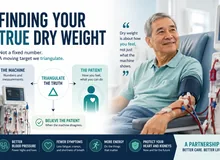
- Finding Your True Dry WeightHow the team decides a patient’s dry weight.
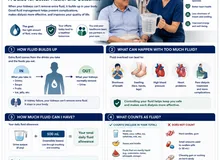
- Fluid Management on DialysisWeight gain between sessions and why it matters.
Back to the Nurse Assistant / Patient Care Assistant (PCA) course home · the Nephrology Nursing course, where nurses learn the clinical reasoning behind the care you support.