Nephrology Nursing Track · By Role · Module 9 of 18
Medicines, Heparin, and Blood on the Floor
Reconciliation at every return, high-alert medicines, the independent double-check, pump arithmetic, and transfusion during dialysis.
PublishedNailathalaGipatikPepalwal:ReferencesMga SanggunianMga TinubdanReng Reperensya:4Audience: Experienced hemodialysis nurses who take charge of a shift · nurses being prepared for charge duty · head nurses and educators who orient themRead timeOras ng pagbasaOras sa pagbasaOras ning pamamasa:
This module is study material for charge nurses in hemodialysis units. It explains the reasoning behind common decisions; it is not a protocol. On the floor, follow your unit’s protocol and always ask the attending nephrologist for guidance. Doses, limits, and cut-off values are set by your unit. Every case is fictional.
Learning objectives
After this module you should be able to
Reconcile medicines when a patient returns from a hospital stay or a new prescriber.
Run a true independent double-check for high-alert medicines.
Do the arithmetic for a heparin pump and recognize an implausible rate.
Coordinate a blood transfusion during dialysis safely.
Respond to a suspected drug or transfusion reaction, and report errors to learn from them.
Pre-testBefore you read, answer the 8 self-assessment questions and note your score. After the module, select New set of questions and compare. The difference is what you learned; the questions you still miss are what to reread.
Start here
The big picture, in plain words
In plain wordsA double-check is like two people reading a map. If the second person only watches the first one point and says “yes,” there is still only one reader.
An independent double-check means the second nurse works it out without being told the answer. She reads the order herself, picks the vial, checks the strength, and calculates the dose before comparing with the first nurse. Anything less is a single check with two signatures.
The same discipline covers the other high-alert items on a hemodialysis (HD) floor in chronic kidney disease (CKD): erythropoietin (EPO) and other anemia medicines, and red blood cell (RBC) transfusions given to raise the hemoglobin (Hgb).
Figure 1 · Key terms for this module
Medication reconciliationComparing every medicine list a patient has, and agreeing one current list with the prescriber.
High-alert medicineA medicine that causes serious harm when given wrongly: heparin, insulin, intravenous iron, potassium.
Independent double-checkA second nurse checks from the order without seeing the first nurse’s answer.
Erythropoiesis-stimulating agent (ESA)An injected medicine that stimulates red cell production.
Transfusion reactionA harmful response to transfused blood, from mild fever to life-threatening collapse.
Near missAn error caught before it reached the patient.
Opening case · fictional
Case: 1,000 or 10,000?
Mrs. Rosario Navarro, 63, came back yesterday from a hospital stay for pneumonia. On the unit chart, her heparin order reads “heparin 1,000 units/hour during dialysis.” The handwritten discharge summary says “heparin 10,000 u.” Her hemoglobin is 8.4 g/dL, and the attending ordered one unit of packed red cells during today’s session.
The staff nurse has prepared the heparin from the discharge note.
Before reading on, decide:
What should have happened before the heparin was prepared?
How would a real independent double-check catch this?
How is the transfusion done safely during dialysis?
Keep your answers in mind. The lesson gives you what you need, and the case review near the end shows one sound response.
Lesson · part 1
Reconciliation at every return
Patients on dialysis take many medicines and move between hospital, clinic, and home. In a small Canadian study of patients transferred between dialysis units, about four in five had at least one unintended medication discrepancy, most often a medicine the patient was taking that had been left off the new orders.1 A review in the American Journal of Kidney Diseases calls reconciliation the foundation of medication safety in dialysis.2 In a United States program, adding a dialysis pharmacist was associated with fewer medication discrepancies over time.3
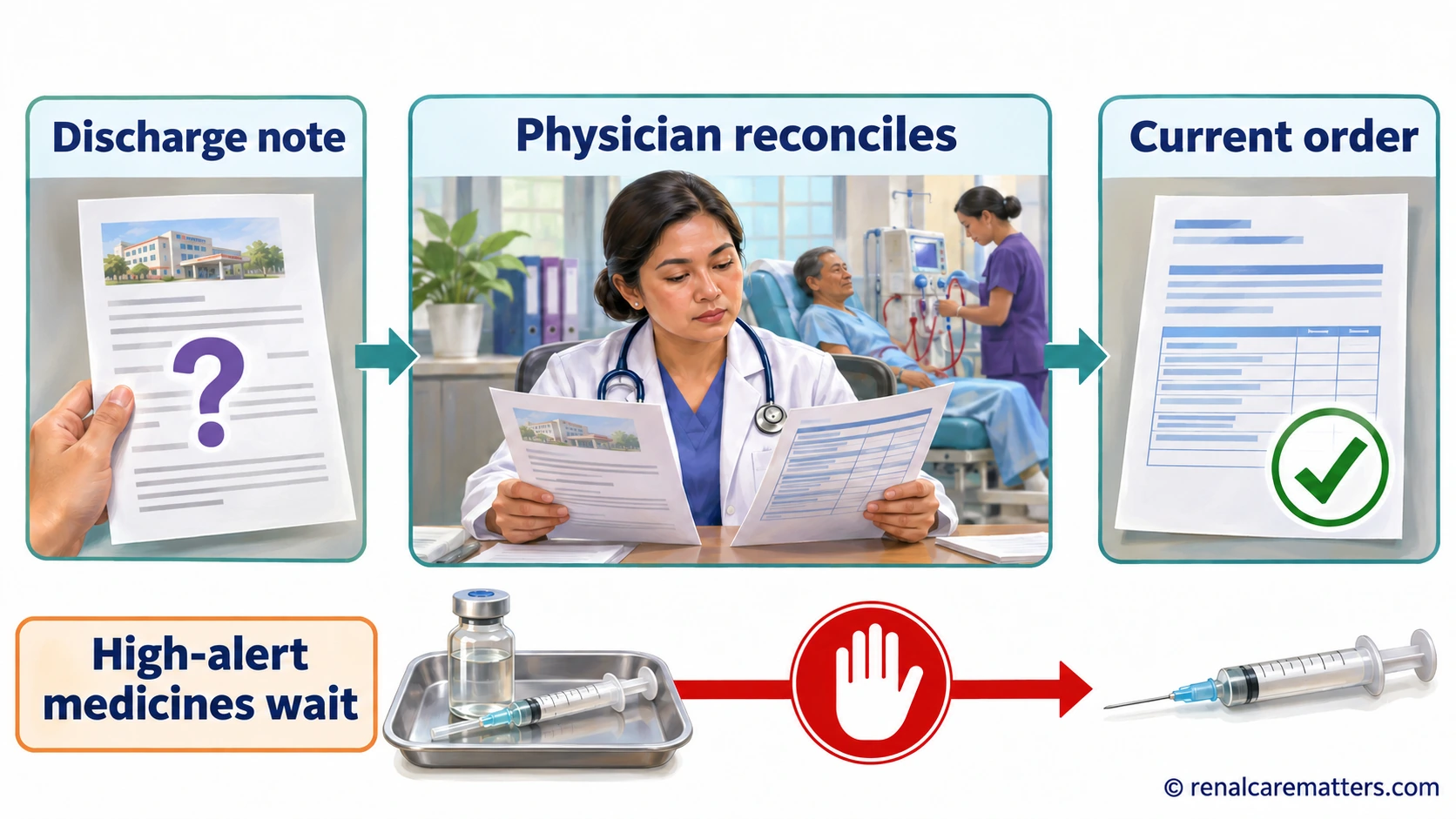
Figure 2. No note becomes an order by itself. A physician reconciles first, especially for high-alert medicines.
The charge nurse’s part is one rule: no high-alert medicine is given from a discharge note, a patient’s bag, or a relative’s memory until the attending or physician on duty has reconciled it into a current order.
Lesson · part 2
High-alert medicines on the floor
Heparin, intravenous iron, insulin, potassium, and anticoagulant catheter locks cause the most serious harm when wrong. Store look-alike strengths apart, label every syringe at the bedside, and protect preparation from interruptions (Module 4). If two strengths of heparin sit on one shelf, separate them today and report the storage risk.
Lesson · part 3
The independent double-check
The second nurse reads the order herself, selects the vial, checks the strength and expiry, and calculates. Only then do the two compare. Any disagreement stops the process until it is resolved with the order and, if needed, the prescriber.
On the floor · The watched check
Nurse Paula says, “Can you check this? It’s 2,000 units an hour, so 2 mL an hour.” Nurse Jonas looks, nods, and signs. That was not a double-check; Jonas heard the answer first. The next week Paula hands Jonas only the order and the vial. Jonas calculates 2 mL an hour. Paula calculates 2 mL an hour. Now two people have read the map.
Illustrative scenario. Names and details are invented.
Lesson · part 4
Heparin pump arithmetic
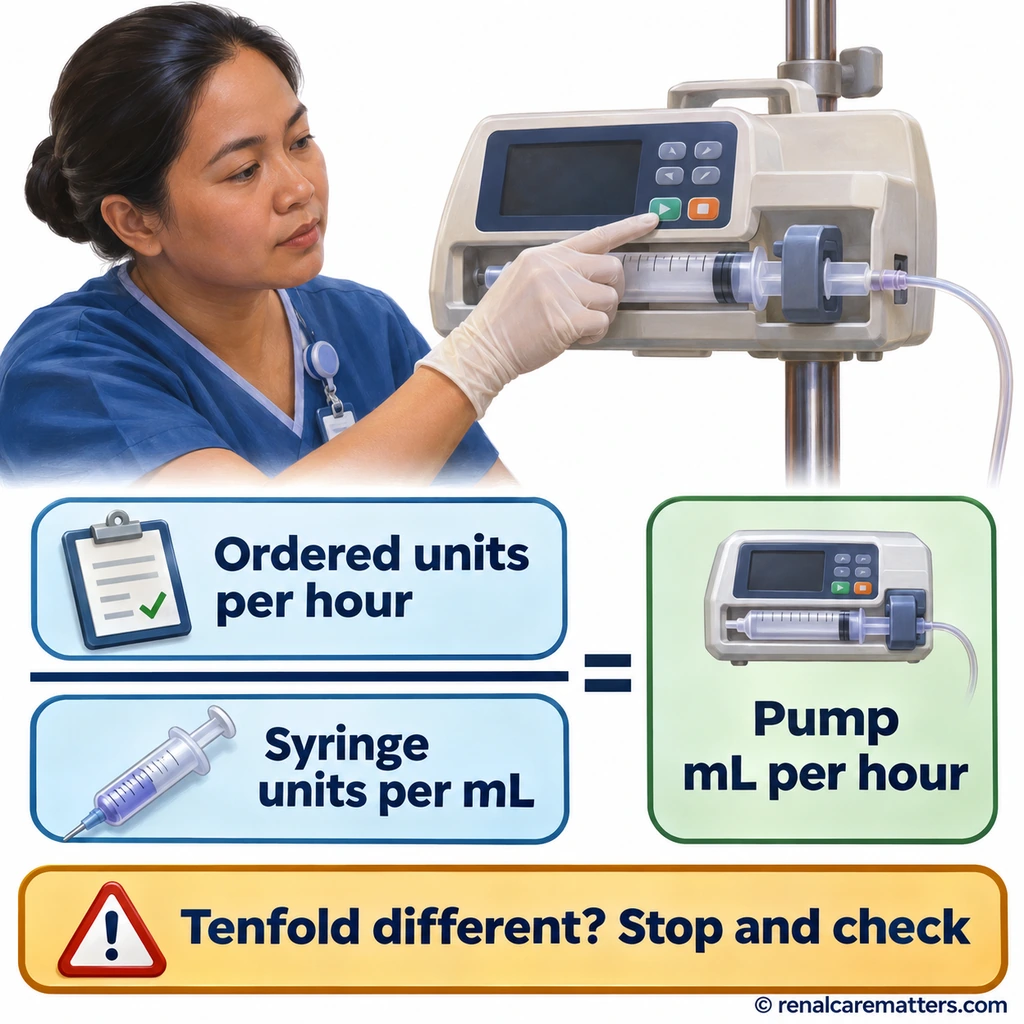
Figure 3. Pump arithmetic is a plausibility check, not a dose. A tenfold difference means stop and check.
Pump rate (mL/h) = ordered units per hour ÷ syringe units per mL. 1,000 units/h with a 1,000 units/mL syringe = 1.0 mL/h. Over four hours: 4,000 units in 4 mL.
The arithmetic is a plausibility check, not a dosing rule. The dose is the prescriber’s. A result ten times larger or smaller than usual for that patient, or a pump rate outside the range your unit considers plausible, means stop and check the order and the syringe (Toolkit #c5).
Lesson · part 5
Transfusion during dialysis
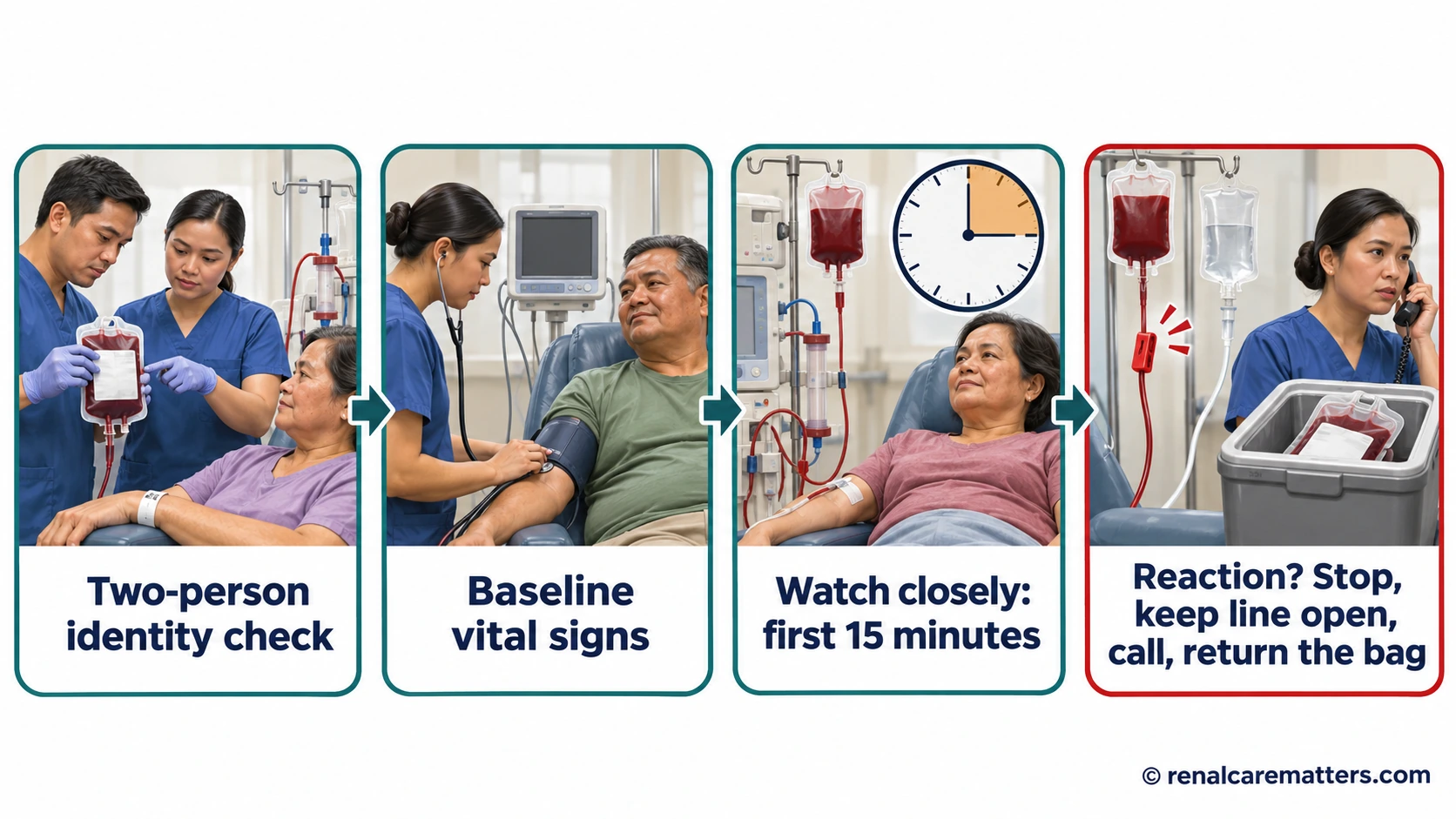
Two staff members check the patient’s identity against the blood bag label at the chair. Take baseline vital signs. Start slowly and watch closely for the first fifteen minutes, when serious reactions usually show, then take vital signs per protocol.
Figure 4. Transfusion during dialysis: identity at the chair, baseline signs, a close first 15 minutes, and a clear plan for a reaction.
Signs of a reaction include fever, chills, back pain, breathlessness, hives, and falling pressure. Stop the transfusion, keep the line open with saline per protocol, call the physician, and return the bag and tubing to the blood bank. Dialysis adds a trap: fever and chills can also come from a catheter infection or a reaction to the dialyzer.4 Tell the physician all three possibilities, so the right tests are done.
Stop and callStop the transfusion and call the physician at the first sign of fever, chills, back pain, breathlessness, hives, or falling pressure.
Lesson · part 6
Report errors to learn from them
Report errors and near misses through your unit’s system, focusing on how the system let the error happen rather than who made it (Module 17). A heparin error caught by a double-check is a success of the system and a lesson about the discharge note.
On the floor
Real situations: problems and solutions
These are fictional but typical. For each one, cover the answer, decide what you would do, then compare. Where a step depends on local rules, your unit’s procedure and your supervisor’s direction come first.
Two strengths, one shelf
What you see
Two heparin strengths are stored side by side.
What is likely going on
A look-alike error waiting to happen.
What to do
Separate them now, label clearly, and report the storage risk.
Why it matters
Shelf design prevents errors that vigilance misses.
New tablets from a private clinic
What you see
A patient brings a new bottle of tablets.
What is likely going on
A prescriber outside the unit changed something.
What to do
Record it, tell the attending, and reconcile before the next dose.
Why it matters
Unreconciled medicines are a common source of harm.
Chills thirty minutes into a transfusion
What you see
A catheter patient shivers during a transfusion.
What is likely going on
Transfusion reaction, catheter infection, or dialyzer reaction.
What to do
Stop the transfusion, keep the line open per protocol, call, and tell the physician all three possibilities.
Why it matters
The right tests depend on the right list.
Field notes
No note becomes an order by itself.
The second nurse calculates first.
Stop, keep the line, call.
Case review
Back to the case: 1,000 or 10,000?
Before preparation. The discharge note was never reconciled into a current order. No high-alert medicine should be prepared from it.
The double-check (Toolkit #c5). The current order is 1,000 units/h; the syringe is 1,000 units/mL; pump rate 1.0 mL/h, 4,000 units over four hours. The discharge note’s “10,000” at the same concentration would be 10 mL/h and 40,000 units, ten times the usual. A second nurse calculating from the current chart gets 1.0 mL/h; the first nurse, working from the note, gets 10 mL/h. The mismatch stops preparation. The physician clarifies: “10,000” was the hospital’s daily subcutaneous prevention dose, not a dialysis infusion. The order stays at 1,000 units/h. The charge nurse files a near-miss report about unreconciled discharge notes.
The transfusion. Identity checked at the chair by two staff, baseline vital signs, a slow start with close watching for the first fifteen minutes, and a clear plan: if fever or chills appear, stop, keep the line open, call, and consider transfusion reaction, catheter infection, and dialyzer reaction together.
Skills lab · with your preceptor
Skills checklist: Medicines and blood
Reconcile one returning patient’s list, perform three independent double-checks, and lead a simulated transfusion reaction. Your preceptor rates each step as satisfactory, needs practice, or not observed. Steps marked Critical must all be satisfactory before sign-off. This checklist supports supervised learning; your unit’s own procedure and competency form are the authority. A printable version of every checklist is on the trainer page.
CriticalRefuses to give a high-alert medicine from an unreconciled note.
CriticalPerforms an independent double-check without hearing the first answer.
CriticalCalculates a heparin pump rate and recognizes a tenfold error.
Separates look-alike strengths and labels syringes at the bedside.
CriticalRuns a two-person identity check at the chair before transfusion.
CriticalStops a transfusion at the first sign of reaction and calls.
Reports a near miss with a system fix.
Placement activity. For two weeks, list every returning patient and whether their medicines were reconciled before the first dose of a high-alert medicine.
Self-assessment
Check your understanding
Each visit draws 8 questions at random from this module’s 15-question bank. Choose the single best answer for each, then select Check answers; an explanation appears under the best answer. Select New set of questions for a different mix. A good target is 7 of 8 on two different sets. Nothing you select is sent anywhere; scoring happens in your browser.
Frament, J., Hall, R. K., & Manley, H. J. (2020). Medication reconciliation: The foundation of medication safety for patients requiring dialysis. American Journal of Kidney Diseases, 76(6), 868–876. https://doi.org/10.1053/j.ajkd.2020.07.021
Dyer, S. A., Nguyen, V., Rafie, S., & Awdishu, L. (2022). Impact of medication reconciliation by a dialysis pharmacist. Kidney360, 3(5), 922–925. https://doi.org/10.34067/KID.0007182021
Daugirdas, J. T., & Ing, T. S. (1988). First-use reactions during hemodialysis: A definition of subtypes. Kidney International Supplement, 24, S37–S43. https://pubmed.ncbi.nlm.nih.gov/2966256/
Educational study material for nurses. Does not replace the attending nephrologist’s orders, the unit’s protocols, required training and certification, or supervised practice.