Treat the first episode to KDIGO 2025, prevent the complications that kill, and teach the family to catch relapses early.
PublishedNailathalaGipatikPepalwal:ReferencesMga SanggunianMga TinubdanReng Reperensya:8Audience: Pediatric nephrologists · pediatric nephrology fellows · adult nephrologists, intensivists and neonatologists who share kidney care for children in the clinic, ward, NICU, PICU, dialysis unit and homeRead timeOras ng pagbasaOras sa pagbasaOras ning pamamasa:
Training track for attending pediatric nephrologists
This module is study material for attending pediatric nephrologists and fellows. It explains the reasoning behind common decisions; it is not a protocol and it gives no doses. Doses, fill volumes and thresholds must come from current pediatric guidelines, product labels, your institution’s approved pediatric protocols and a pediatric pharmacist. Benefit rules change: confirm them on the date of service. Every case is fictional.
Learning objectives
After this module you should be able to
Explain nephrotic edema from podocyte injury to sodium retention, and tell the underfilled child from the overfilled child at the bedside.
Treat the first episode of idiopathic nephrotic syndrome as Kidney Disease: Improving Global Outcomes (KDIGO) 2025 recommends, and classify the response and course with the IPNA 2022 definitions.
Prevent the complications that kill (hypovolemia with acute kidney injury, infection and thrombosis) and teach the family home monitoring.
Pre-testBefore you read, answer the 5 self-assessment questions and note your score. After the module, select New set of questions and compare. The difference is what you learned; the questions you still miss are what to reread.
Start here
The big picture, in plain words
Your role · the first episode sets the courseMost first episodes of nephrotic syndrome are treated by pediatricians in district and provincial hospitals, often before you hear of the child. You are called when the swelling is dramatic, when the child looks unwell, or when someone wants to give a diuretic. Your advice in that call, and the plan you write for the first 8 to 12 weeks, decides whether the family learns to catch relapses at home or arrives at an emergency room with a shocked, clotted or infected child.
In plain wordsThink of the glomerular filter as a coffee filter. A good filter lets water through and holds back the grounds. In nephrotic syndrome the filter has torn, and the protein that should stay in the blood pours into the urine.
The picture has a limit. A torn coffee filter is a passive hole. The glomerular barrier is living tissue, and in childhood idiopathic nephrotic syndrome (INS) the main defect sits in the podocyte, the cell whose interdigitating foot processes and slit diaphragm form the final barrier. Under light microscopy the glomeruli usually look normal. Under the electron microscope the foot processes are flattened. The injury is functional and often reversible, which is why most children respond completely to glucocorticoids, and why the disease can return.
Figure 1 · Key numbers
Incidence (IPNA 2022)1.15 to 16.9 per 100,000 children per year worldwide
Complete remission with glucocorticoidsAbout 85% within 4–6 weeks (IPNA 2022)
At least one relapseAbout 70–80%
Frequent relapses or steroid dependenceAbout 50%
Antinephrin antibodies (Hengel 2024)52% of children with INS; 90% of untreated children with active disease
PREDNOS, 16 vs 8 weeksNo difference in time to first relapse (hazard ratio 0.87)
Most children with a first episode go into remission and do well. A few are harmed in the first days, by a diuretic given to a child who is already volume depleted, by pneumococcal peritonitis, or by a clot. Your work is to treat the first episode by the guideline, recognize the underfilled child before the furosemide is pushed, prevent infection and thrombosis, and teach the family to read a dipstick.
Opening case · fictional
Case: Furosemide ordered
It is 4 p.m. on a Saturday. A pediatric resident at a district hospital in Bayombong, Nueva Vizcaya, five hours by road from your center, calls about Elijah Ramos, 4 years old. His usual weight is 15 kg; today he weighs 17.4 kg. Over five days his eyes, legs and scrotum have swollen, and his abdomen is tense. Since morning he complains of tummy pain, and he has passed urine twice.
Heart rate 138, blood pressure 88/60, capillary refill 4 seconds, cold hands and feet. Dipstick protein 4+, no blood. Serum albumin 1.4 g/dL, hematocrit 46%, creatinine 0.6 mg/dL. A spot urine sodium is below 10 mmol/L; the resident calculates a fractional excretion of sodium of 0.1%.
The consultant on call has ordered intravenous furosemide “for the edema,” and the nurse is drawing it up. The hospital has no concentrated albumin in stock this weekend. Elijah’s mother, who sells vegetables at the market, asks when the swelling will go down so that he can go home, and whether he can still have his school vaccinations.
Before reading on, decide:
Is Elijah underfilled or overfilled, and what do you tell the resident about the furosemide?
What initial treatment do you advise, and how will you know he has responded?
What must the family learn before discharge to keep him safe and catch relapses early?
Keep your answers in mind. The lesson gives you what you need, and the case review near the end shows one sound response.
Lesson · part 1
From podocyte to edema
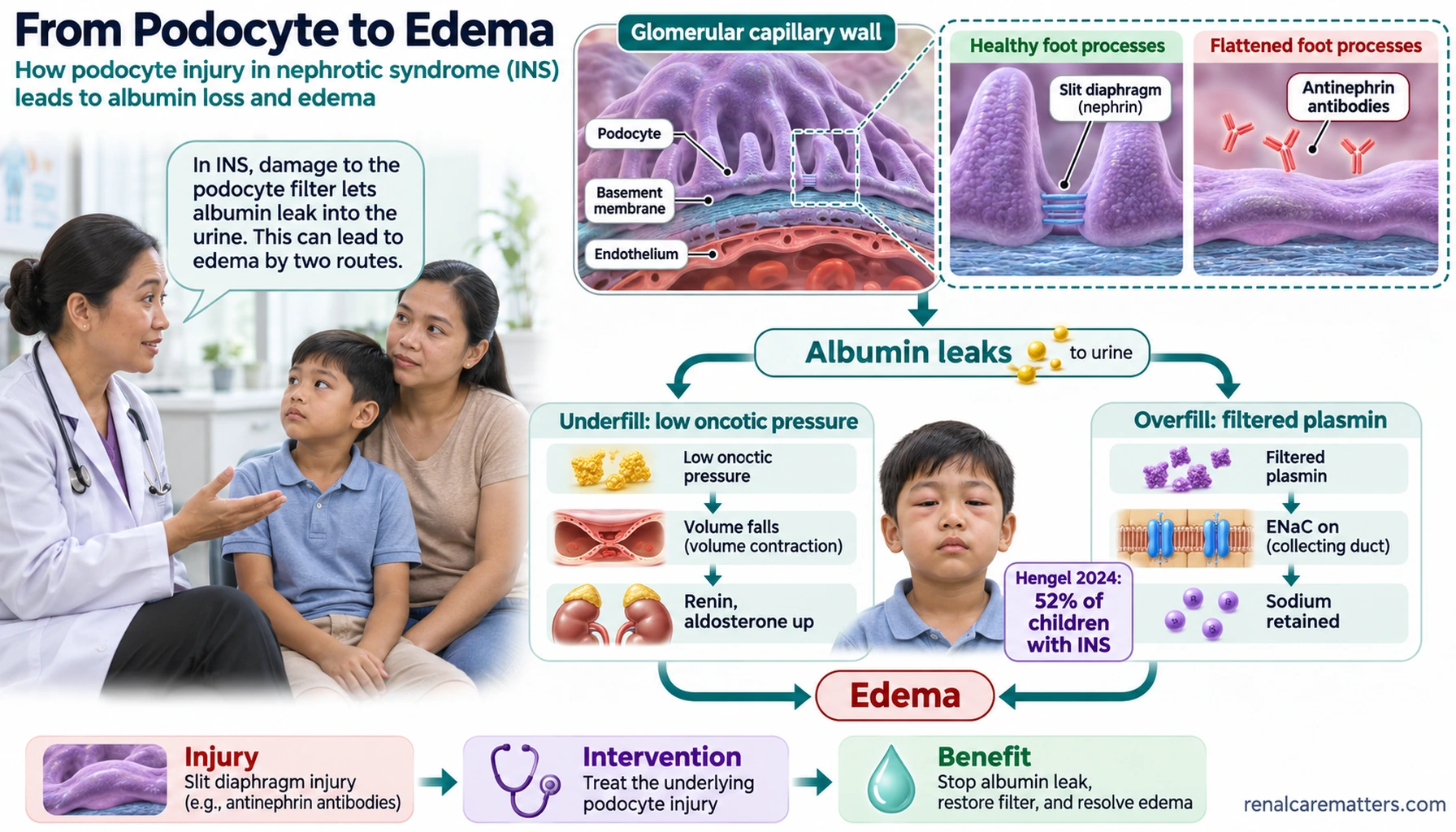
The glomerular barrier has three layers: fenestrated endothelium, the glomerular basement membrane and the podocyte. Podocyte foot processes from neighboring cells interlock, and the slit diaphragm between them, built around the protein nephrin, holds back albumin. When nephrin signaling or the podocyte’s actin skeleton is disturbed, the foot processes retract and flatten, and albumin leaks.
For decades the cause of childhood INS was described as an unidentified circulating factor. In 2024 Hengel and colleagues reported autoantibodies against nephrin in 94 of 182 children with INS (52%), and in 90% of children with active disease who were not receiving immunosuppression. Antibody levels tracked disease activity, and immunizing mice with nephrin produced a nephrotic syndrome with IgG at the slit diaphragm.1 This makes an autoimmune podocytopathy the leading explanation for many children, and it fits the response to glucocorticoids and B-cell therapy. It is a cross-sectional and experimental finding; antinephrin testing is not yet a routine clinical test, and it does not change first-line treatment.
Why albumin falls. The liver increases albumin synthesis, but not enough to match urinary loss and tubular catabolism of filtered protein. Lipids rise as the liver makes more lipoproteins and their clearance falls.
Why edema forms: two mechanisms, both real. In the underfill explanation, low plasma oncotic pressure lets fluid leave the capillaries, circulating volume falls, and renin, aldosterone and antidiuretic hormone rise, so the kidney holds salt and water that leak out again. In the overfill explanation, the nephrotic kidney retains sodium primarily, whatever the volume, partly because proteases filtered in the urine, such as plasmin, activate the epithelial sodium channel (ENaC) in the collecting duct. A review in Kidney International proposed that this protease-driven sodium retention is present regardless of volume status, and that other mechanisms add to it.2
Finding
Underfilled child (volume contracted)
Overfilled child (volume expanded)
Heart rate and blood pressure
Tachycardia; low or falling pressure
Normal heart rate; normal or high pressure
Peripheries
Cold hands, prolonged capillary refill
Warm
Abdomen
Pain, sometimes severe (gut ischemia or peritonitis must be excluded)
Distension without pain
Urine
Oliguria; very low urine sodium
Urine sodium less suppressed
Blood
High hematocrit; rising urea and creatinine
Hematocrit not concentrated
What a diuretic does
Deepens hypovolemia; risks shock, Acute kidney injury (AKI) and thrombosis
Removes salt and water
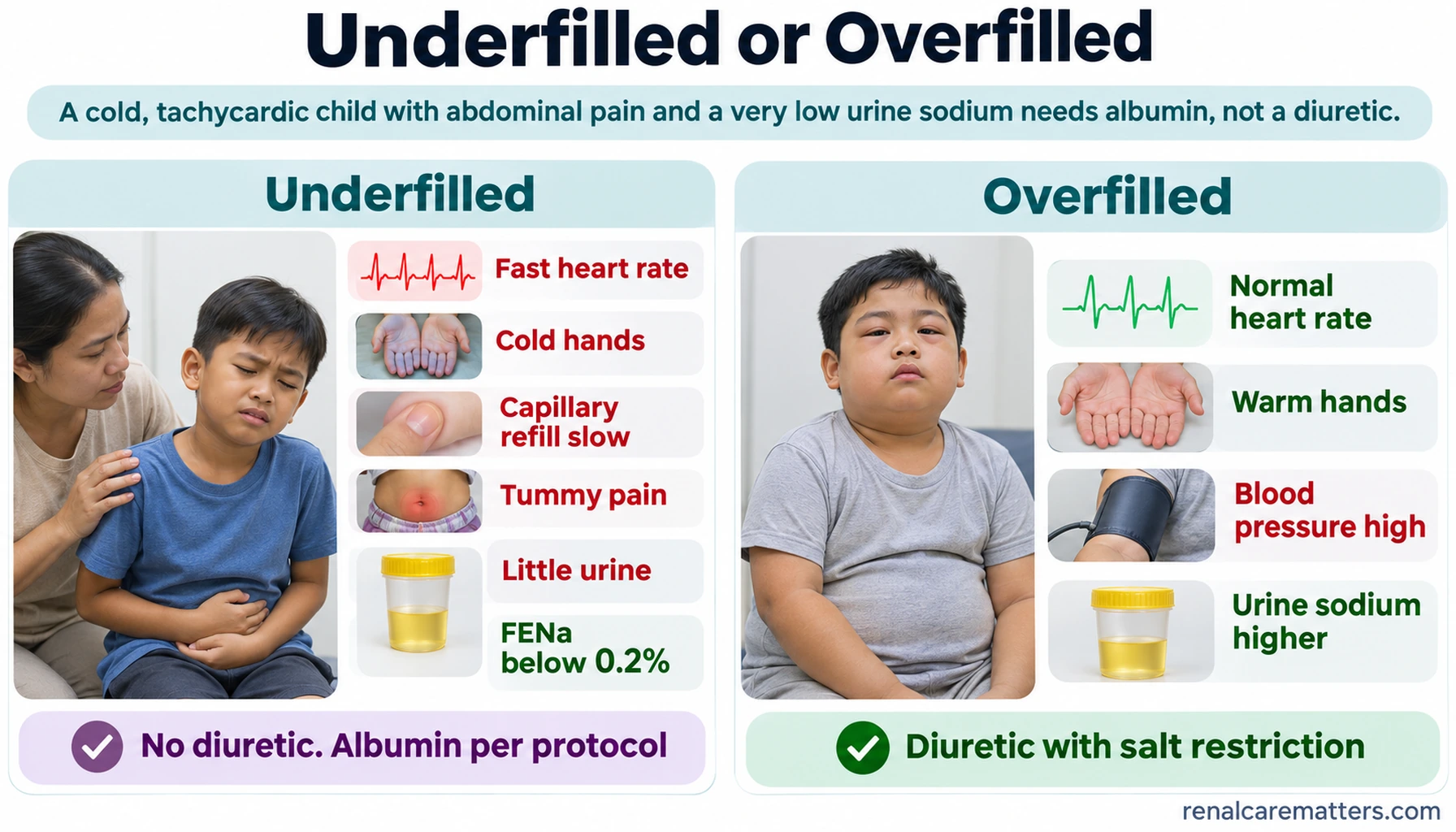
A small prospective study of 30 children with severe nephrotic edema used fractional excretion of sodium (FENa) to separate the two. A FENa below 0.2% identified volume contraction, and those children had higher urea, renin, aldosterone and antidiuretic hormone. Children with a higher FENa were treated with diuretics alone, safely, with similar weight loss and hospital stay.3 The study was small and single-center, so FENa supports the bedside assessment rather than replacing it.
RememberBefore any diuretic, look at the hands, the heart rate and the abdomen. A cold, tachycardic child with abdominal pain is underfilled until proven otherwise.
Figure 2. From podocyte to edema. Injury at the slit diaphragm lets albumin leak; edema follows by two real mechanisms, low oncotic pressure with volume contraction and protease-activated sodium retention in the collecting duct.
Lesson · part 2
The complications that kill
Before glucocorticoids, nephrotic syndrome in childhood carried a mortality of about 40% from acute kidney injury (AKI), infection and thrombosis, according to the IPNA 2022 recommendations.4 Those three still cause most serious harm, and the first days of an episode are the riskiest.
Hypovolemia and AKI. The IPNA recommends withholding diuretics in a child with signs of hypovolemia, because of the risks of thrombosis, hypovolemic shock and AKI, and stopping angiotensin-converting enzyme (ACE) inhibitors and angiotensin receptor blockers (grade X, strong recommendation). It recommends concentrated albumin for children with signs of hypovolemia, which it lists as oliguria, AKI, prolonged capillary refill, tachycardia and abdominal discomfort, with a loop diuretic considered during or after the infusion only once volume is restored and urine output remains insufficient (grade C, moderate recommendation).4 The product, volume and rate come from your unit’s pediatric formulary and protocol, and the child is watched closely for fluid overload during the infusion. In an overfilled, hypertensive child, the IPNA suggests diuretics with fluid and salt restriction (grade C, weak recommendation).4
Infection. Children lose immunoglobulin and complement factors in the urine, have tense ascites, and take immunosuppressive drugs. Spontaneous bacterial peritonitis, classically pneumococcal, cellulitis, sepsis and pneumonia follow. Fever with abdominal pain in a nephrotic child is peritonitis until proven otherwise. In the Philippines, also think of dengue in season, and screen for tuberculosis before a long course of glucocorticoids; the IPNA work-up lists tuberculosis and human immunodeficiency virus (HIV) for endemic regions.4
Thrombosis. Loss of antithrombin in the urine, high hepatic production of clotting factors, high hematocrit, immobility and central lines combine. Renal vein, cerebral venous sinus and pulmonary thromboses occur. The IPNA does not recommend routine prophylactic anticoagulation or antiplatelet therapy in the acute stage (grade C, weak recommendation), suggests considering it during relapses when risk is increased (grade C, weak recommendation), and recommends teaching families the risk factors and symptoms.4
Stop diuretics and renin-angiotensin-aldosterone system (RAAS) blockers; albumin per protocol; watch urine output
Peritonitis, sepsis
Urinary loss of immunoglobulin and complement; ascites; immunosuppression
Fever, abdominal pain, tenderness
Cultures, antibiotics per unit protocol, surgical review if needed
Thrombosis
Antithrombin loss, more clotting factors, hemoconcentration
Headache, seizure, flank pain, hematuria, breathlessness, a swollen limb
Urgent imaging; anticoagulation with pediatric hematology
Steroid toxicity
Cumulative exposure
Weight gain, behavior change, hypertension, slowed growth
Count exposure; plan steroid-sparing therapy if relapses mount (Module 10)
On the ward at night, the headache · fictional
A 7-year-old girl in her second week of a first episode complains of headache and vomits twice. Her edema is improving. The night resident gives an antiemetic.
You ask for her hematocrit, an urgent neurologic examination and venous imaging of the brain. She has a cerebral venous sinus thrombosis and starts anticoagulation with the hematologist.
What this shows. New headache in a nephrotic child is a clot until imaging says otherwise.
RememberFever with abdominal pain is peritonitis, and new headache is a clot, until proven otherwise.
Figure 3. Underfilled or overfilled. A cold, tachycardic child with abdominal pain and a very low urine sodium needs albumin, not a diuretic.
Lesson · part 3
Treating the first episode, and naming the response
Confirm before treating. The IPNA recommends confirming nephrotic-range proteinuria at least once by quantification, ideally a first-morning urine protein-to-creatinine ratio (UPCR), before treating a first episode.4 It does not recommend routine kidney biopsy or genetic testing in children older than 1 year with typical features (grade B, moderate recommendation). It recommends biopsy for atypical features: macroscopic hematuria, low C3, AKI not explained by hypovolemia, sustained hypertension, arthritis or rash (grade A, strong recommendation), and suggests genetic testing or biopsy in infantile onset, 3 to 12 months of age.4
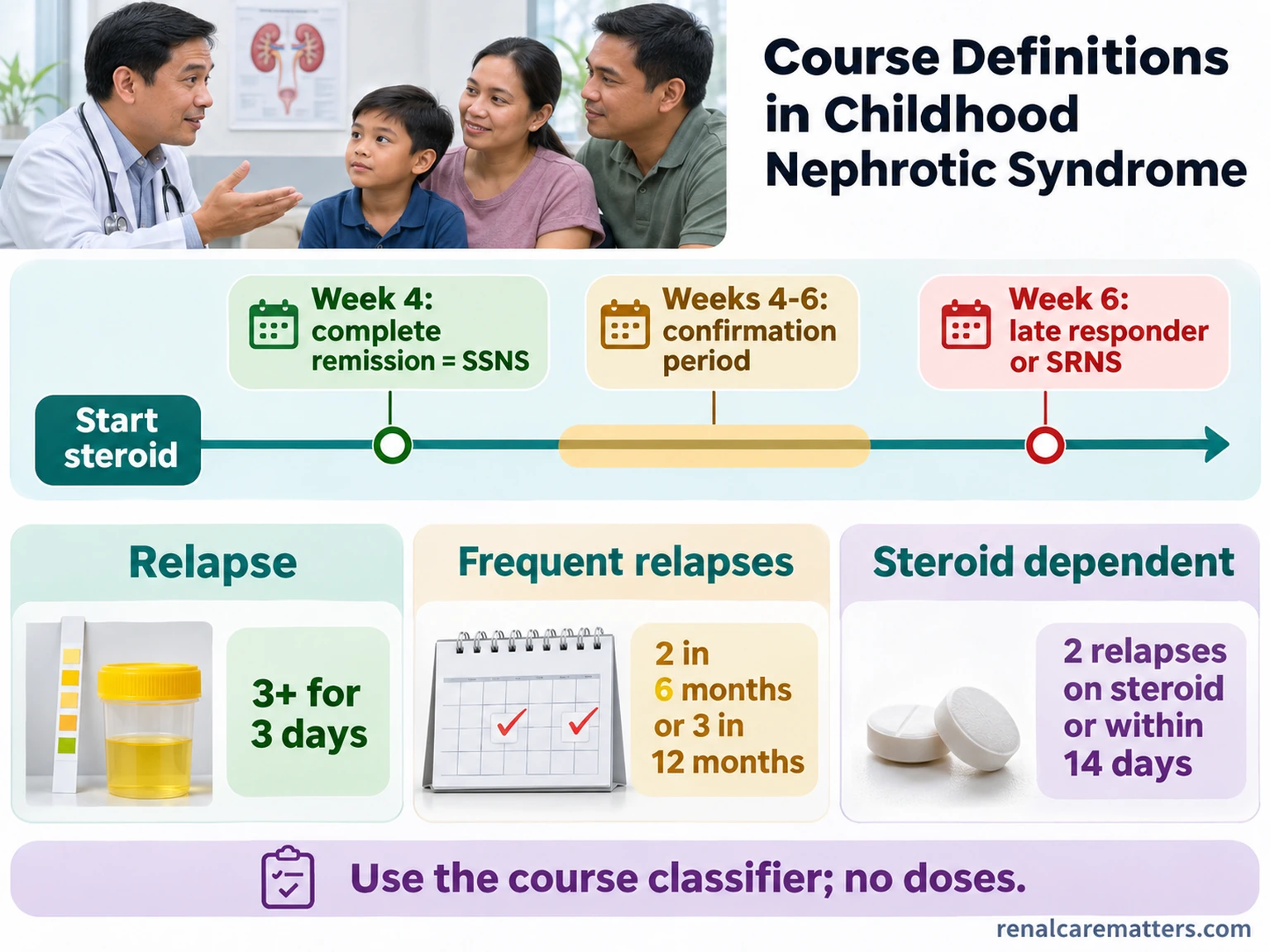
The definitions. KDIGO 2025 aligned its definitions of remission, relapse, steroid sensitivity and resistance with those of the IPNA, and introduced a confirmation period between 4 and 6 weeks.5,6 Use one vocabulary with families and in referral notes.
Term
IPNA 2022 definition
Nephrotic-range proteinuria
UPCR ≥200 mg/mmol (2 mg/mg) in a spot urine, or ≥1000 mg/m² per day in a 24-hour urine, corresponding to 3+ or 4+ on dipstick
Nephrotic syndrome
Nephrotic-range proteinuria and either serum albumin <30 g/L or edema when albumin is not available
Complete remission
UPCR ≤20 mg/mmol (0.2 mg/mg), or negative or trace dipstick, on three or more consecutive days
Partial remission
UPCR above 20 but below 200 mg/mmol, and serum albumin ≥30 g/L
Steroid-sensitive (SSNS)
Complete remission within 4 weeks of glucocorticoid at standard dose
Steroid-resistant (SRNS)
No complete remission within 4 weeks; partial responders enter a confirmation period from week 4 to week 6
Late responder
Complete remission during the confirmation period; managed as SSNS
Relapse
Dipstick ≥3+ or UPCR ≥200 mg/mmol on 3 consecutive days in a child who had been in complete remission
Frequently relapsing (FRNS)
≥2 relapses in the first 6 months after remission of the first episode, or ≥3 relapses in any 12 months
Steroid-dependent (SDNS)
2 consecutive relapses during glucocorticoid therapy or within 14 days of stopping it
These definitions come from the IPNA 2022 table.4 The IPNA notes that its definition of frequent relapses differs from earlier ones, including KDIGO’s, which counted four relapses in 12 months; KDIGO 2025 now defines infrequent relapses as fewer than two in the first 6 months or fewer than three in any subsequent 12 months.5 The Academy’s nephrotic course classifier, linked below, applies these definitions to the dates you enter and returns the category and the next question to ask; it gives no doses.
How long to treat. KDIGO 2025 recommends oral glucocorticoids for 8 weeks or 12 weeks, each as a daily phase followed by an alternate-day phase (Recommendation 1.3.1.1, graded 1B), unchanged from 2021.5 PREDNOS randomized 237 children in the United Kingdom with a first episode to a standard 8-week course or an extended 16-week course. Time to first relapse did not differ (hazard ratio 0.87, 95% confidence interval (CI) 0.65 to 1.17), and neither did frequent relapses (50% vs 53%), steroid dependence (44% vs 42%) or the need for other immunosuppression (56% vs 54%).7 Longer courses add steroid exposure without fewer relapses. The dose is weight- or surface-area-based, and the unit’s pediatric formulary sets it.
Question
What the evidence shows
What it does not show
8 vs 16 weeks (PREDNOS)
No difference in relapse, FRNS or SDNS
Results in very young children or in populations outside the United Kingdom with certainty; the trial suggested younger children merit further study
Daily glucocorticoid at URTI (PREDNOS 2)
No reduction in infection-related relapse
A benefit in South Asian children (a post hoc signal only)
Antinephrin antibodies (Hengel 2024)
Common in active childhood INS; track activity
That testing improves outcomes or should change first-line therapy
RememberConfirm the proteinuria, treat for 8 or 12 weeks as KDIGO 2025 recommends, and name the response with the IPNA definitions.
Figure 4. Naming the course. Steroid sensitivity at 4 weeks, late response by 6 weeks, and the IPNA 2022 definitions of relapse, frequent relapses and steroid dependence.
Lesson · part 4
Home monitoring, vaccines and the long run
Teach the dipstick. The IPNA recommends teaching families to monitor urine protein at home, so that response and relapse are detected early (grade X, moderate recommendation). Where dipsticks are not available, it suggests the heat coagulation or sulfosalicylic acid test as alternatives (grade C, weak recommendation).4 Give the family a diary card, show them how to read a first-morning sample, and tell them exactly when to call: three consecutive days at 3+ or more, or edema with any proteinuria.
Infections and relapses. Many relapses follow upper respiratory tract infections (URTIs). PREDNOS 2 randomized children with relapsing SSNS to 6 days of daily low-dose prednisolone or placebo at the start of each URTI; 365 were enrolled and 271 formed the modified intention-to-treat population. Infection-related relapse occurred in 42.7% with prednisolone and 44.3% with placebo, an adjusted risk difference of −0.02 (95% CI −0.14 to 0.10).8 KDIGO 2025 now recommends against routinely giving daily glucocorticoids during infections in children with frequent relapses or steroid dependence (Recommendation 1.3.2.1, graded 1C), with a practice point that allows a short low-dose course in selected children.6
Vaccines. Inactivated vaccines follow the national schedule, with particular attention to pneumococcal, meningococcal and H. influenzae type b (Hib) vaccines and annual influenza vaccine; the IPNA reports that the risk of vaccine-induced relapse is low. Live vaccines are avoided during high-dose immunosuppression and in the first 6 months after rituximab (grade X, strong recommendation), and the household should be vaccinated against influenza and with live vaccines when the child cannot be (grade A, strong recommendation).4 Elijah’s mother’s question deserves a precise answer from you, written in his discharge plan.
Watch the cost of steroids. IPNA describes steroid toxicity as new or worsening obesity, sustained hypertension, hyperglycemia, behavioral or psychiatric disorders, sleep disruption, impaired growth and Cushingoid features.4 Measure height, weight and blood pressure at every visit and plot them. A child with mounting toxicity is a child for Module 10.
Before discharge, the family can…
Why it matters
Read a first-morning dipstick and fill in the diary
Relapses caught at home are treated before edema and complications
Name the warning signs: fever with abdominal pain, cold hands with fast breathing or poor urine, severe headache, a swollen limb
Peritonitis, hypovolemia and thrombosis kill within hours
Give the glucocorticoid in the morning, as written, and never stop it suddenly
Adherence and adrenal safety
State which vaccines are allowed now and which must wait
Avoids both missed protection and unsafe live vaccines
Reach your clinic or the covering pediatrician by phone
A five-hour drive needs a plan before it is needed
No complete remission by 4 weeks of standard glucocorticoid
RememberDischarge is safe when the family can read a dipstick, name the warning signs and reach you by phone.
On the floor
Real situations: problems and solutions
These are fictional but typical. For each one, cover the answer, decide what you would do, then compare. Where a step depends on local rules, your unit’s procedure and your supervisor’s direction come first.
The diuretic for the puffy child
What you see
A resident calls to give furosemide to a nephrotic 3-year-old with heart rate 140, cold feet and abdominal pain.
What is likely going on
The child is underfilled; a diuretic will deepen hypovolemia.
What to do
Hold the diuretic, assess for peritonitis, and arrange albumin per protocol with close monitoring, transferring if it is not available.
Why it matters
The IPNA recommends withholding diuretics in hypovolemia (grade X, strong); shock, AKI and thrombosis follow when this is missed.
Fever and a tender abdomen
What you see
A nephrotic child in relapse has fever of 39°C, a tense, tender abdomen and vomiting.
What is likely going on
Spontaneous bacterial peritonitis, classically pneumococcal, until proven otherwise.
What to do
Cultures, including ascitic fluid if safe, and prompt antibiotics per unit protocol; surgical review if the picture is unclear.
Why it matters
Peritonitis is a leading cause of death in nephrotic children; hours matter.
Partial response at week 4
What you see
A 6-year-old on a first course has a dipstick of 2+ and albumin rising but still below 30 g/L at 4 weeks.
What is likely going on
Partial remission; he enters the confirmation period.
What to do
Continue as the guideline describes, quantify UPCR, consider renin-angiotensin blockade per protocol, and plan biopsy and genetic testing if there is no complete remission by 6 weeks.
Why it matters
Remission between weeks 4 and 6 makes him a late responder (managed as SSNS); none by 6 weeks is SRNS.
No dipsticks in the barangay
What you see
A family from a remote barangay cannot buy dipsticks regularly.
What is likely going on
Home monitoring is still possible.
What to do
Teach heat coagulation or the sulfosalicylic acid test as the IPNA suggests, with a diary card and a clear call rule.
Why it matters
Relapses caught early need shorter treatment and cause fewer complications.
Field notes
Write the date of complete remission in the chart; every later definition counts from it.
Plot height, weight and blood pressure at every nephrotic visit.
Give every family a dipstick diary card with your call rule printed on it.
Put the vaccine plan, allowed now and deferred, in the discharge summary.
Case review
Back to the case: Furosemide ordered
Underfilled or overfilled? Elijah is underfilled: tachycardia, cold peripheries, a capillary refill of 4 seconds, abdominal pain, oliguria, a hematocrit of 46%, a creatinine high for his age and a FENa of 0.1%. Ask the nurse to hold the furosemide now. A diuretic would deepen his hypovolemia and raise the risk of shock, AKI and thrombosis; the IPNA recommends withholding it (grade X, strong). Ask the resident to examine the abdomen for peritonitis and send blood cultures if he has fever or tenderness. He needs concentrated albumin per protocol, given with close monitoring; since the hospital has none, arrange transfer or emergency supply today, with a written endorsement and a direct call to the accepting doctor.
Initial treatment and response. Confirm nephrotic-range proteinuria with a first-morning UPCR, check C3 because he has AKI, and screen for tuberculosis exposure. With typical features at age 4, he needs no biopsy now. Start oral glucocorticoids for an 8- or 12-week course as KDIGO 2025 recommends (1B), with the dose from the unit’s pediatric formulary. Complete remission is a negative or trace dipstick, or UPCR ≤0.2 mg/mg, on three consecutive days; if it comes within 4 weeks, he has SSNS. If he is only in partial remission at 4 weeks, the confirmation period runs to 6 weeks; no remission by then is SRNS and a Module 10 problem.
Before discharge. His mother learns to read a first-morning dipstick and keep a diary, to call for three consecutive days at 3+ or more, and to bring him in at once for fever with abdominal pain, cold hands with poor urine, severe headache or a swollen limb. Write which vaccines he may have now (inactivated vaccines on schedule, influenza yearly) and which must wait (live vaccines while on high-dose glucocorticoids), and ask that the household be vaccinated. Give her your clinic number and the name of the covering pediatrician in Bayombong.
Complete with a preceptor, in simulation or at your own unit. Sign-off is local. Your preceptor rates each step as satisfactory, needs practice, or not observed. Steps marked Critical must all be satisfactory before sign-off. This checklist supports supervised learning; your unit’s own procedure and competency form are the authority. A printable version of every checklist is on the trainer page.
Assesses intravascular volume in an edematous nephrotic child and decides on diuretic versus albumin
Applies the IPNA 2022 definitions of remission, relapse, FRNS, SDNS and SRNS to a real course
Identifies atypical features that call for biopsy or genetic testing
Teaches a family dipstick monitoring, warning signs and vaccine rules
Placement activity. Pediatric ward, nephrology clinic or simulation
Self-assessment
Check your understanding
Each visit draws 5 questions at random from this module’s 5-question bank. Choose the single best answer for each, then select Check answers; an explanation appears under the best answer. Select New set of questions for a different mix. A good target is 4 of 5 on two different sets. Nothing you select is sent anywhere; scoring happens in your browser.
Hengel, F. E., Dehde, S., Lassé, M., Zahner, G., Seifert, L., Schnarre, A., Kretz, O., Demir, F., Pinnschmidt, H. O., Grahammer, F., Lucas, R., Mehner, L. M., Zimmermann, T., Billing, A. M., Oh, J., Mitrotti, A., Pontrelli, P., Debiec, H., Dossier, C., . . . International Society of Glomerular Disease. (2024). Autoantibodies targeting nephrin in podocytopathies. New England Journal of Medicine, 391(5), 422–433. https://doi.org/10.1056/NEJMoa2314471
Siddall, E. C., & Radhakrishnan, J. (2012). The pathophysiology of edema formation in the nephrotic syndrome. Kidney International, 82(6), 635–642. https://doi.org/10.1038/ki.2012.180
Kapur, G., Valentini, R. P., Imam, A. A., & Mattoo, T. K. (2009). Treatment of severe edema in children with nephrotic syndrome with diuretics alone: A prospective study. Clinical Journal of the American Society of Nephrology, 4(5), 907–913. https://doi.org/10.2215/CJN.04390808
Trautmann, A., Boyer, O., Hodson, E., Bagga, A., Gipson, D. S., Samuel, S., Wetzels, J., Alhasan, K., Banerjee, S., Bhimma, R., Bonilla-Felix, M., Cano, F., Christian, M., Hahn, D., Kang, H. G., Nakanishi, K., Safouh, H., Trachtman, H., Xu, H., . . . International Pediatric Nephrology Association. (2023). IPNA clinical practice recommendations for the diagnosis and management of children with steroid-sensitive nephrotic syndrome. Pediatric Nephrology, 38(3), 877–919. https://doi.org/10.1007/s00467-022-05739-3
Kidney Disease: Improving Global Outcomes (KDIGO) Nephrotic Syndrome in Children Work Group. (2025). KDIGO 2025 clinical practice guideline for the management of nephrotic syndrome in children. Kidney International, 107(5S), S241–S289. https://doi.org/10.1016/j.kint.2024.11.007
Floege, J., Gibson, K. L., Vivarelli, M., Liew, A., Radhakrishnan, J., Balk, E. M., Gordon, C. E., Adam, G., Tonelli, M., Earley, A., & Rovin, B. H. (2025). Executive summary of the KDIGO 2025 clinical practice guideline for the management of nephrotic syndrome in children. Kidney International, 107(5), 806–808. https://doi.org/10.1016/j.kint.2024.11.006
Webb, N. J., Woolley, R. L., Lambe, T., Frew, E., Brettell, E. A., Barsoum, E. N., Trompeter, R. S., Cummins, C., Wheatley, K., & Ives, N. J. (2019). Sixteen-week versus standard eight-week prednisolone therapy for childhood nephrotic syndrome: The PREDNOS RCT. Health Technology Assessment, 23(26), 1–108. https://doi.org/10.3310/hta23260
Christian, M. T., Webb, N. J. A., Mehta, S., Woolley, R. L., Afentou, N., Frew, E., Brettell, E. A., Khan, A. R., Milford, D. V., Bockenhauer, D., Saleem, M. A., Hall, A. S., Koziell, A., Maxwell, H., Hegde, S., Prajapati, H., Gilbert, R. D., Jones, C., McKeever, K., . . . Ives, N. (2022). Evaluation of daily low-dose prednisolone during upper respiratory tract infection to prevent relapse in children with relapsing steroid-sensitive nephrotic syndrome: The PREDNOS 2 randomized clinical trial. JAMA Pediatrics, 176(3), 236–243. https://doi.org/10.1001/jamapediatrics.2021.5189
Educational material for physicians. Completing it is an Academy learning record only. It does not confer CPD units, PNSP or board certification, privileges, or PhilHealth accreditation, and it does not replace current guidelines, regulations, your institution’s pediatric protocols and formulary, or clinical judgment.