Designed for GPs and IM residents managing common renal and metabolic problems in the outpatient setting. Each algorithm distills current KDIGO, ACC/AHA, and local DOH guidance into actionable decision steps.
9 rapid decision algorithms at a glance — edema workup through metabolic acidosis correction. Each pathway distills KDIGO 2024, ACC/AHA, and local DOH guidance into outpatient-ready clinical steps.
Bilateral pitting edema is among the most common outpatient presentations. Identify the mechanism before prescribing diuretics.
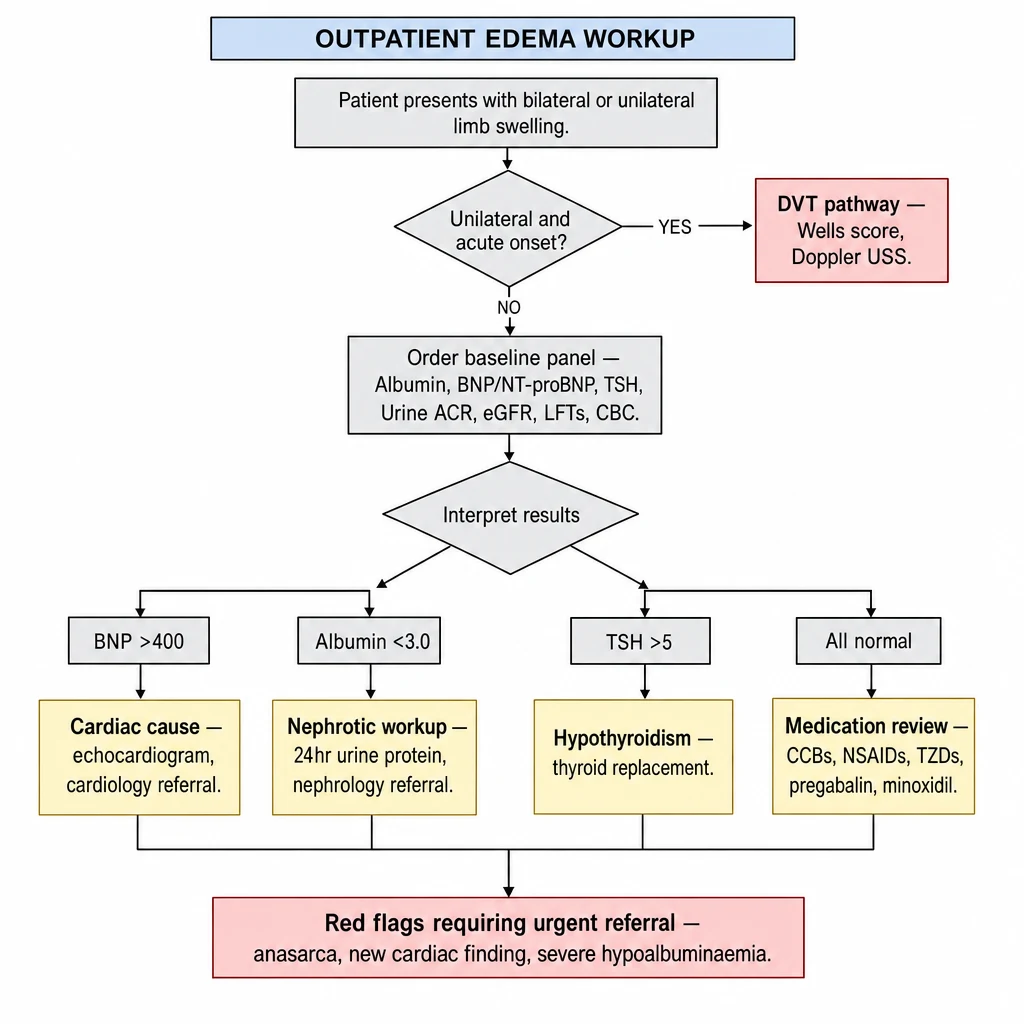
Algorithm 1 overview — Edema Workup. Begin with unilateral vs bilateral; order the targeted panel (BNP, albumin, TSH, ACR, eGFR); branch to cardiac, nephrotic, thyroid, or drug-induced cause. Anasarca or new cardiac finding = urgent referral.
Apply Wells DVT score. If ≥2 points or high clinical suspicion → bilateral compression Doppler USS same day. If negative and score low → consider cellulitis, Baker's cyst ruptured, compartment syndrome, lymphedema (non-pitting, rubbery).
Bilateral edema almost always has a systemic cause. Proceed with mechanism-based workup.
Cardiac cause likely. Request echo. Refer cardiology if new finding. Optimise loop diuretic (furosemide). Check electrolytes and renal function.
Hypoalbuminaemia. Check urine protein (nephrotic if >3.5 g/day). Check LFTs for cirrhosis. Check total protein + SPEP if myeloma suspected. → Refer nephrology if nephrotic range.
Hypothyroid edema. Classic non-pitting myxedema. Start levothyroxine; edema resolves with euthyroid state over weeks.
Withdraw or switch offending agent. CCB-induced edema: switch to ARB + thiazide combination. Monitor for resolution over 2–4 weeks.
Most common in chronic bilateral ankle edema without systemic cause. Confirm with venous duplex. Manage: compression stockings, leg elevation, sodium restriction.
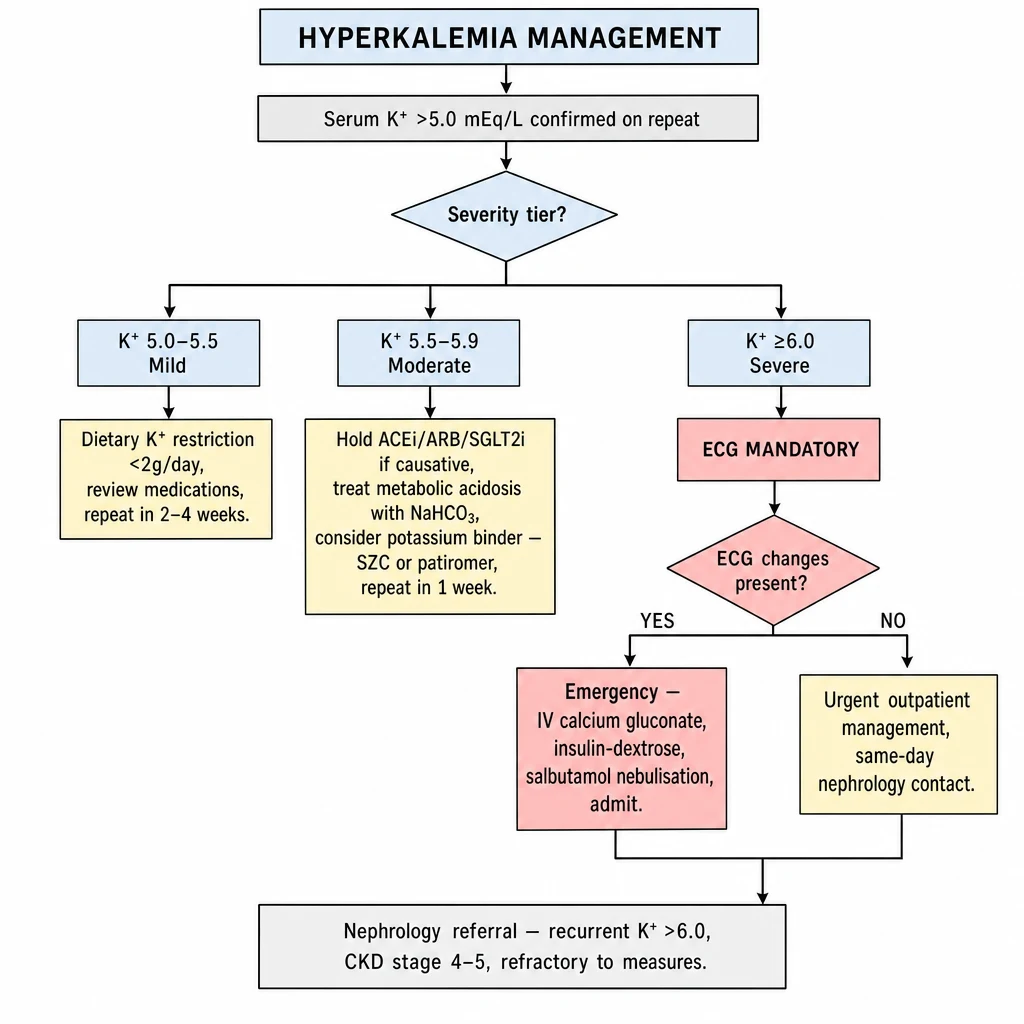
Outpatient-focused. Any K⁺ ≥ 6.0 mEq/L requires an ECG before a management decision. Type IV RTA (hyporeninaemic hypoaldosteronism) is the most common cause in CKD/DKD outpatients.
Algorithm 2 overview — Hyperkalemia Management. Classify by severity: Mild 5.0–5.5, Moderate 5.5–5.9, Severe ≥6.0 with mandatory ECG. Outpatient steps: dietary K⁺ restriction, hold offending agents, treat acidosis, consider patiromer or SZC. K⁺ ≥6.0 + ECG changes = emergency.
| Level | Severity | Immediate Step |
|---|---|---|
| 5.0–5.4 mEq/L | Mild | Dietary review + medication audit. Recheck in 2–4 weeks. |
| 5.5–6.0 mEq/L | Moderate | ECG. Dietary restriction. Consider potassium binder. Reduce/hold RAASi if appropriate. |
| > 6.0 mEq/L | Severe | ECG immediately. If any ECG changes → ADMIT. If ECG normal and patient asymptomatic → may manage outpatient with close follow-up. |
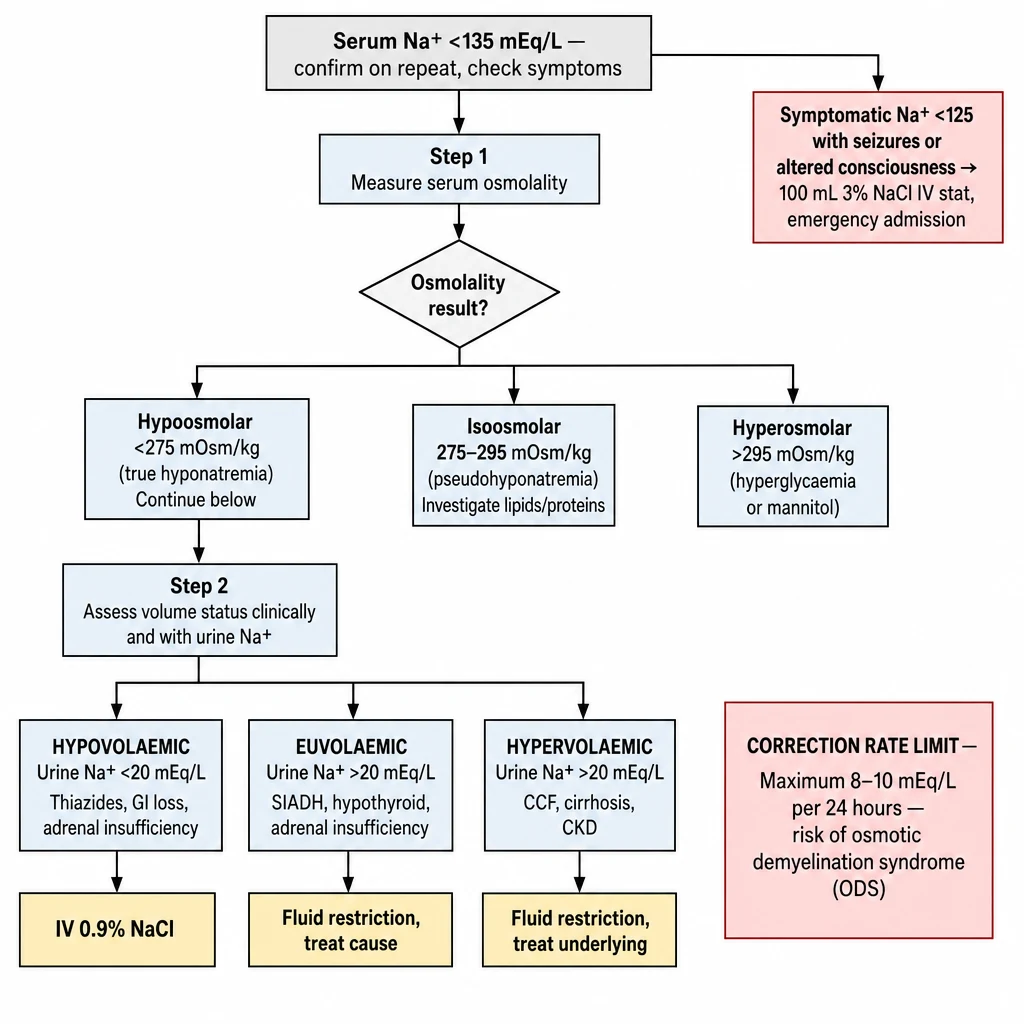
Serum Na⁺ <135 mEq/L. Classify by osmolality first, then volume status. The correction rate is as important as the target — overcorrection causes osmotic demyelination syndrome (ODS).
Algorithm 3 overview — Hyponatremia Management. Step 1: serum osmolality (hypoosmolar / isoosmolar / hyperosmolar). Step 2: volume status (hypovolaemic → SIADH → hypervolaemic). Step 3: correction rate — max 8–10 mEq/L per 24h to prevent ODS. Symptomatic Na⁺ <125 = 100 mL 3% NaCl bolus.
Translocational hyponatraemia. Hyperglycaemia most common. Correct Na⁺ by +1.6 mEq/L per 100 mg/dL glucose above 100. Treat glucose — Na⁺ normalises.
Pseudohyponatraemia. Extreme hyperlipidaemia or hyperproteinaemia. Measure Na⁺ on blood gas analyser (direct ISE). No treatment of Na⁺ needed.
True hyponatraemia. Proceed to Step 2: assess volume status.
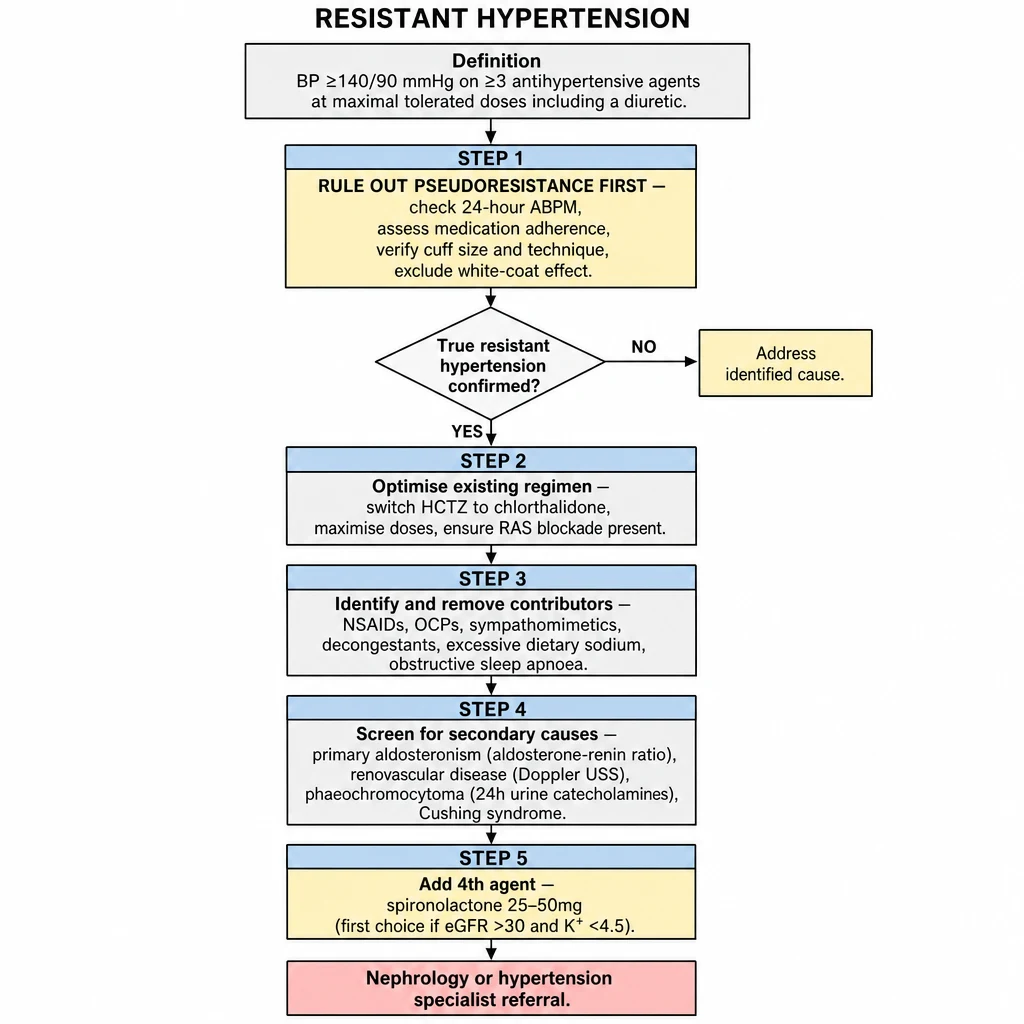
BP ≥ 140/90 mmHg on ≥ 3 maximally tolerated antihypertensive agents from different classes, including a diuretic. Pseudoresistance is far more common than true resistant hypertension — rule it out first.
Algorithm 4 overview — Resistant Hypertension. Step 1: rule out pseudoresistance (white-coat, adherence, cuff error — check 24h ABPM). Steps 2–4: optimise regimen, screen drug/lifestyle contributors, evaluate for secondary causes. Step 5: add spironolactone 25–50 mg as preferred 4th agent.
| Cause | Prevalence | Clue | Screen |
|---|---|---|---|
| Primary hyperaldosteronism | Most common (~20%) | K⁺ low or low-normal; adrenal incidentaloma; severe or early-onset HTN | Aldosterone-to-renin ratio (ARR) — off interfering drugs ×2 weeks. ARR >30 with Aldo >15 → positive. Refer endocrine. |
| Obstructive sleep apnoea | ~30–40% | Snoring, witnessed apnoeas, daytime sleepiness, obesity, thick neck | Epworth Sleepiness Scale; overnight oximetry; polysomnography. CPAP reduces SBP ~5–10 mmHg. |
| Renal artery stenosis | ~3–5% | Flash pulmonary edema; worsening creatinine with RAASi; abdominal bruit; atherosclerotic risk; FMD (young women) | Renal Doppler USS. CTA/MRA if Doppler inconclusive. Refer vascular/nephrology. |
| Phaeochromocytoma | 0.1–0.6% | Paroxysmal headache + sweating + palpitations triad; episodic hypertension; weight loss | 24-h urine metanephrines + catecholamines (preferred) or plasma metanephrines. CT abdomen if positive. |
| Cushing's syndrome | Rare | Truncal obesity, proximal myopathy, purple striae, moon face, buffalo hump, easy bruising | Overnight 1 mg dexamethasone suppression test. Cortisol >1.8 μg/dL → positive. Refer endocrine. |
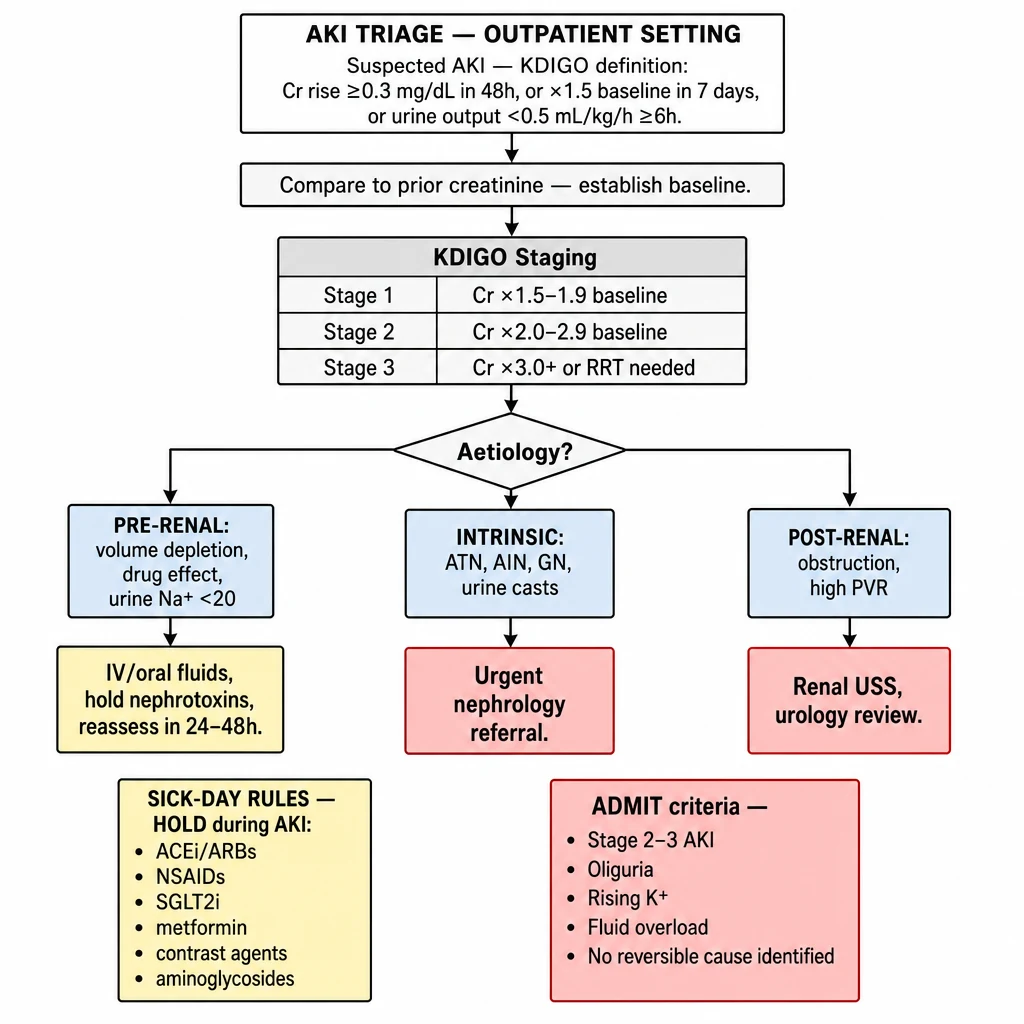
Acute Kidney Injury (KDIGO): rise in serum creatinine ≥0.3 mg/dL within 48 h, or ×1.5 baseline within 7 days, or urine output <0.5 mL/kg/h for ≥6 h. Always compare to a prior creatinine — do not assume baseline from a single elevated value.
Algorithm 5 overview — AKI Triage. KDIGO staging: Stage 1 (×1.5–1.9), Stage 2 (×2.0–2.9), Stage 3 (×3.0+). Aetiologies: pre-renal (urine Na⁺ <20), intrinsic (casts, AIN, GN), post-renal (USS). Sick-day rules: hold ACEi/ARBs, NSAIDs, SGLT2i. Admit: Stage 2–3, oliguria, rising K⁺, no reversible cause.
| Stage | Creatinine criterion | Urine output | Typical approach |
|---|---|---|---|
| Stage 1 | ×1.5–1.9 baseline or ↑ ≥0.3 mg/dL | <0.5 mL/kg/h × 6–12 h | Outpatient if pre-renal likely; remove offending agents; 48 h recheck |
| Stage 2 | ×2.0–2.9 baseline | <0.5 mL/kg/h × 12 h | Strong consideration for admission; close monitoring at minimum |
| Stage 3 | ×3.0 or Cr >4.0 mg/dL or initiation of KRT | <0.3 mL/kg/h × 24 h or anuria × 12 h | Admit — nephrology consult urgent |
On diuretics? Add BUN values to calculate FeUrea (more reliable):
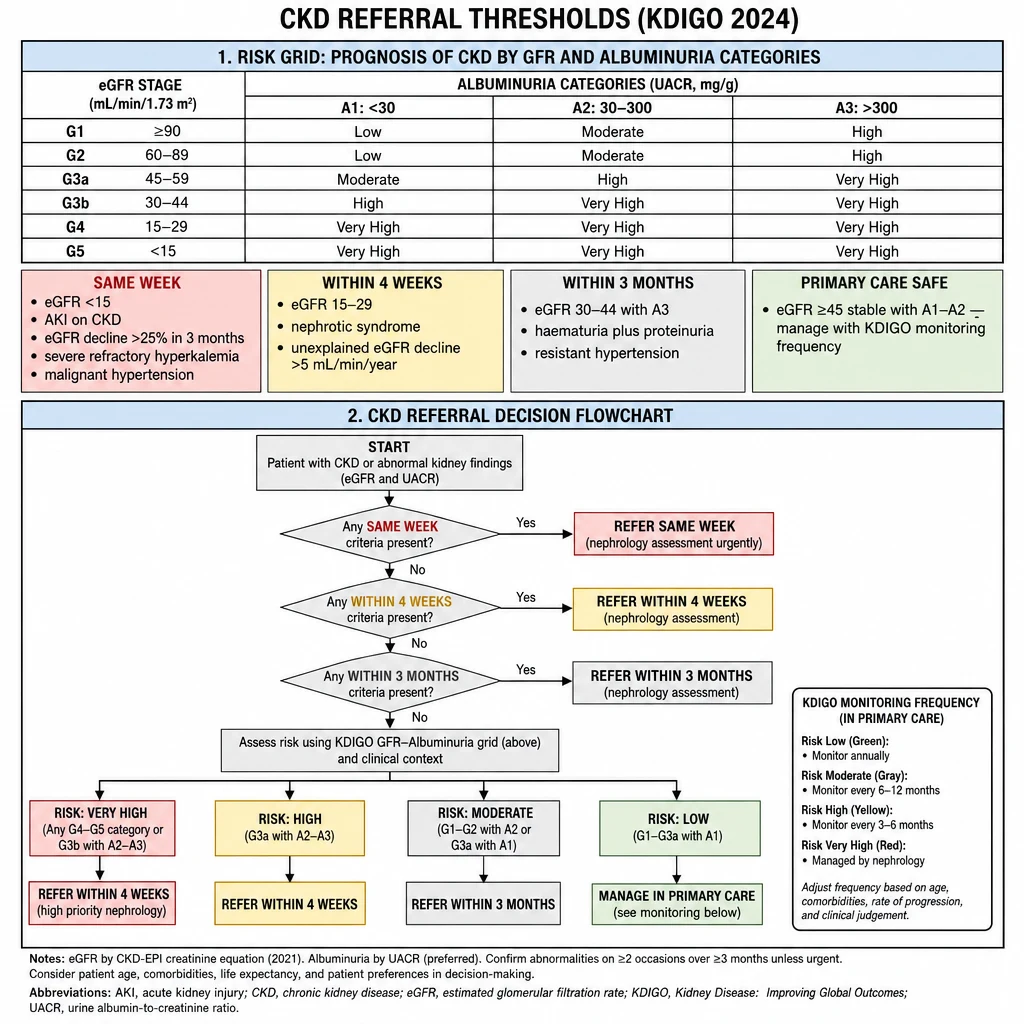
Based on KDIGO 2024 CKD guidelines. Referral is based on eGFR, albuminuria, rate of decline, and complications — not eGFR alone. Many patients with eGFR 45–60 can be safely managed in primary care with shared-care guidance.
Algorithm 6 overview — CKD Referral Thresholds (KDIGO 2024). The G×A heat-map assigns green / yellow / amber / red risk. Urgency tiers: Same week (eGFR <15, AKI-on-CKD, malignant HTN) → 4 weeks (eGFR 15–29, nephrotic) → 3 months (eGFR 30–44 + A3) → Primary care safe (eGFR ≥45 stable, A1–A2).
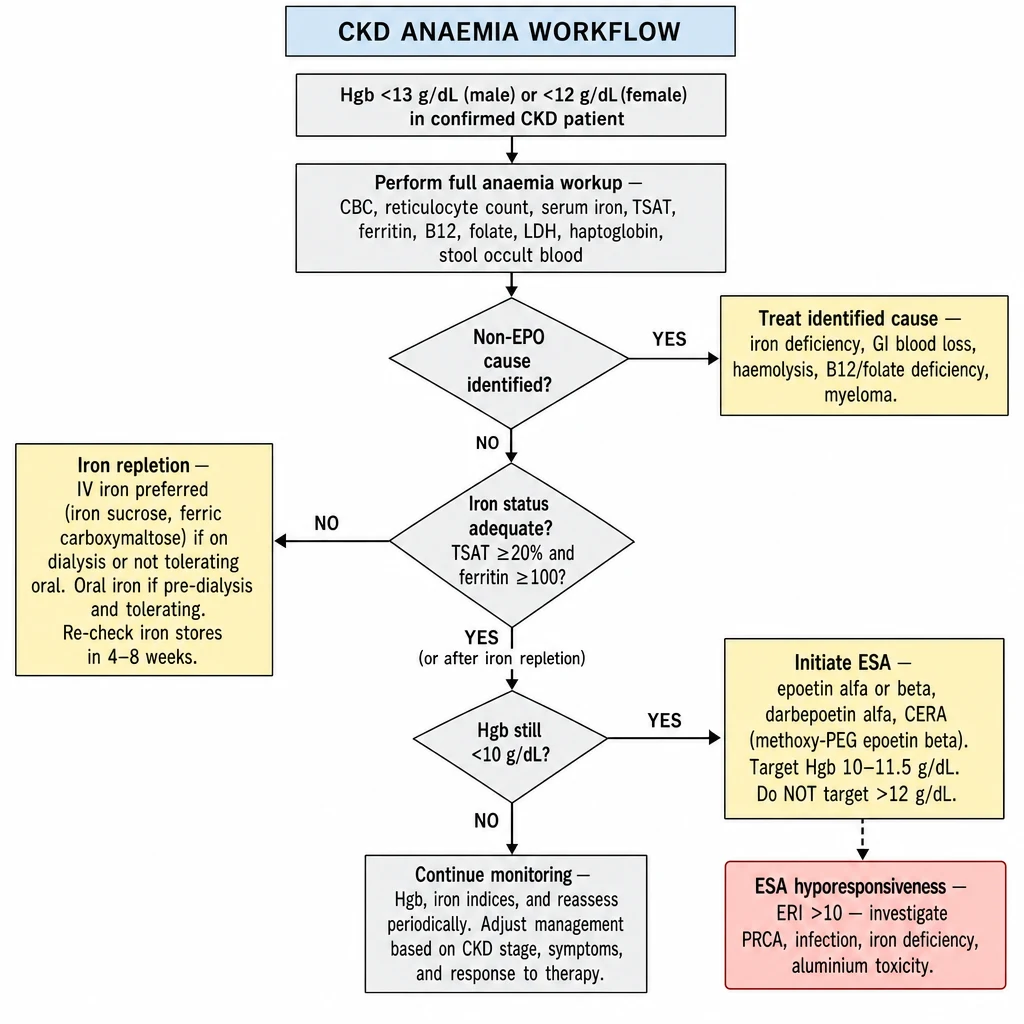
anemia of CKD is a diagnosis of exclusion — always rule out iron deficiency, hemolysis, B12/folate deficiency, and GI blood loss before attributing anemia to EPO deficiency. The sequence: replete iron → reassess → consider ESA.
Algorithm 7 overview — CKD anemia Workflow. Workup first: CBC, iron studies, reticulocytes, B12/folate, LDH, stool OB. Rule out non-EPO causes. Iron repletion (IV preferred): TSAT <20% or ferritin <100. If Hgb still <10 after iron → ESA (epoetin, darbepoetin, CERA). Target Hgb 10–11.5 g/dL. ERI >10 = investigate hyporesponsiveness.
| Population | Iron deficient if | Treatment |
|---|---|---|
| CKD non-dialysis | Ferritin <100 ng/mL or TSAT <20% | Oral iron first-line |
| CKD on HD | Ferritin <200 ng/mL or TSAT <20% | IV iron preferred (poor oral absorption, inflammation) |
| CKD on PD | Ferritin <100 ng/mL or TSAT <20% | Oral or IV iron |
Iron-responsive anemia corrected. Recheck Hgb every 3 months. Maintain TSAT >20% and ferritin >100. Continue oral iron maintenance if oral route tolerated.
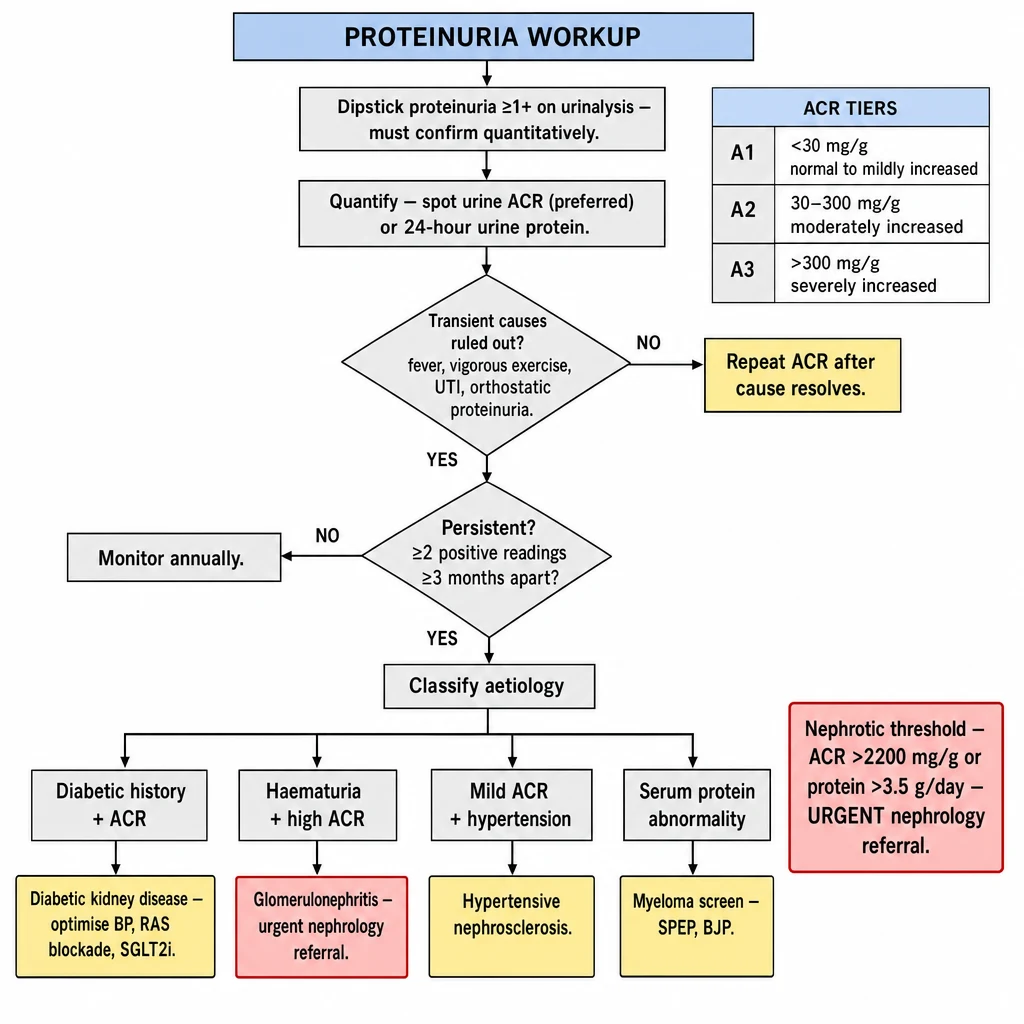
10.0–11.5 g/dL for most CKD patients on ESA≥20% + Ferritin >100 ng/mL (non-dialysis) or >200 (HD)Proteinuria on dipstick must be confirmed quantitatively and be persistent (≥2 readings ≥3 months apart) to diagnose CKD. The degree and pattern guide the diagnostic pathway.
Algorithm 8 overview — Proteinuria Workup. Quantify: spot urine ACR (A1 <30 / A2 30–300 / A3 >300 mg/g). Rule out transient causes (fever, exercise, UTI, orthostatic). Persistent = ≥2 readings over 3 months. Aetiology: DKD, hypertensive nephrosclerosis, GN, myeloma (BJP). Nephrotic threshold ACR >2200 mg/g = urgent nephrology referral.
| ACR mg/g (or mg/mmol) | Category | Clinical Significance |
|---|---|---|
| <30 mg/g | A1 — Normal / mildly increased | Monitor annually if CKD risk factors present |
| 30–300 mg/g | A2 — Moderately increased | Microalbuminuria — CKD marker; maximise ACEi/ARB + SGLT2i |
| >300 mg/g | A3 — Severely increased | Macroalbuminuria — refer nephrology; high progression and CVD risk |
| >2,200 mg/g | Nephrotic range | Evaluate for nephrotic syndrome — urgent nephrology referral |
Reassure. Repeat ACR in 6–12 months. No treatment needed. If ACR normalises and remains normal — not CKD.
Classify aetiology and determine CKD stage with eGFR. Proceed with workup below.
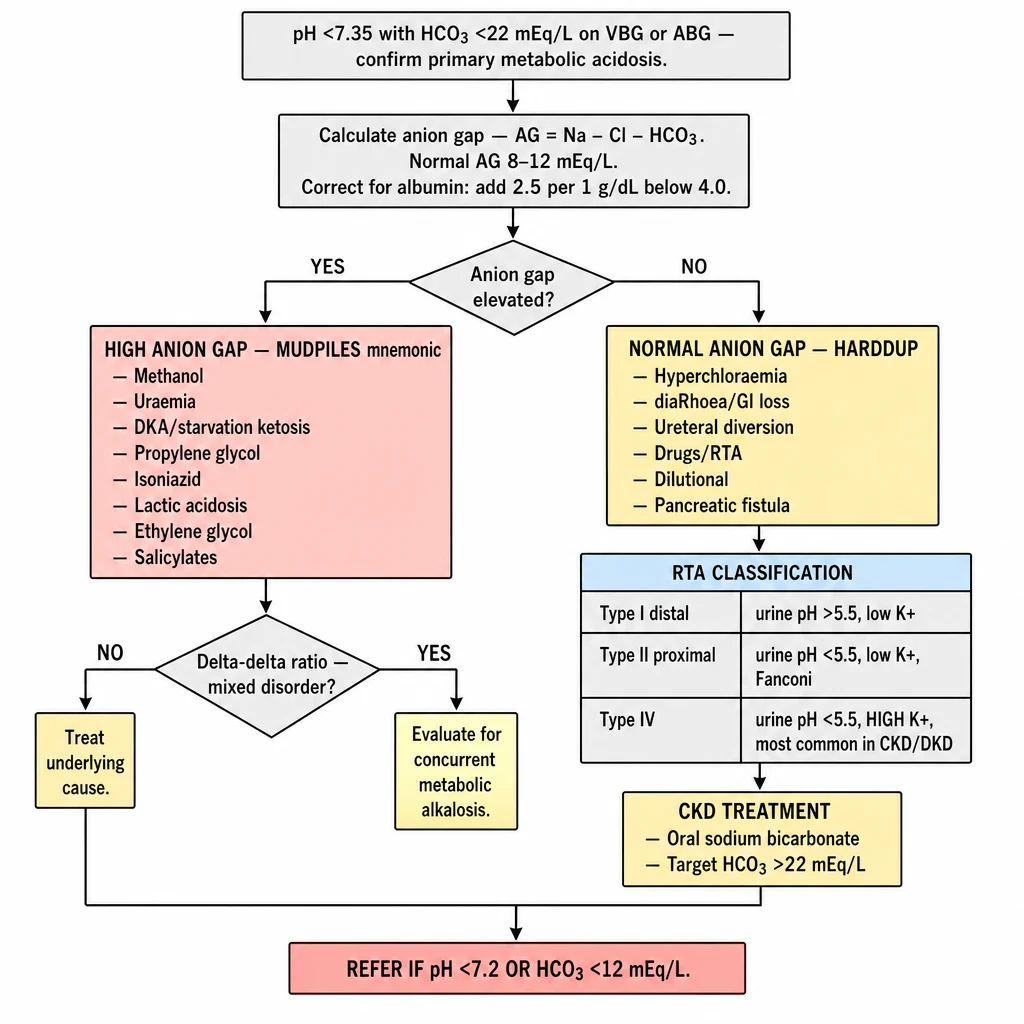
Step-wise approach: confirm the primary disorder, calculate the anion gap (with albumin correction), classify, then treat the cause. CKD metabolic acidosis (Type IV RTA and uraemic acidosis) are the most common outpatient presentations.
Algorithm 9 overview — Metabolic Acidosis. Confirm: pH <7.35, HCO₃ <22. Calculate AG (Na − Cl − HCO₃; correct for albumin). High AG (MUDPILES): uremia, DKA, lactic acidosis, toxins. Normal AG (HARDDUP): hyperchloraemic — RTA types I/II/IV, diarrhoea. CKD treatment: oral NaHCO₃, target HCO₃ >22. Refer if pH <7.2.
MUDPILES mnemonic:
Calculate osmolar gap if toxic alcohol suspected: OG = measured Osm − calculated Osm. OG >10 → toxic alcohol.
Calculate urine anion gap (UAG):
| Type | Urine pH | K⁺ | HCO₃ | Cause | Action |
|---|---|---|---|---|---|
| Type I (Distal) | >5.5 (can't acidify) | Low | Variable (often <15) | Sjögren's, autoimmune, amphotericin, nephrocalcinosis/stones | NaHCO₃ or K-citrate. Refer nephrology. |
| Type II (Proximal) | <5.5 (can acidify, but leaks HCO₃) | Low | <15 mEq/L | Fanconi syndrome, myeloma, tenofovir, heavy metals | High-dose NaHCO₃ (often 10+ mEq/kg/day). Refer nephrology. |
| Type IV (Hypoaldosteronism) | <5.5 | High | Mild reduction (18–22) | Most common in CKD/DKD, ACEi/ARB use — hyporeninaemic hypoaldosteronism | Treat hyperkalaemia (Algorithm 2). Fludrocortisone if confirmed Addison's. Often improves with NaHCO₃ + K⁺ management. |
Na − (Cl + HCO₃) · Normal 8–12 mEq/LAG + 2.5 × (4 − Alb)pCO₂ = (1.5 × HCO₃) + 8 ± 2(AG−12) / (24−HCO₃)UNa + UK − UCl · Negative = GI loss · Positive = RTA7.7 mEq HCO₃~48 mEq NaHCO₃ (practical for home use)Three clinician-facing calculators that complement the algorithms above: serum osmolality with osmolal gap (to flag toxic alcohols and other unmeasured osmoles), free water deficit for hypernatremia correction, and fractional excretion of urea (FEUrea) — the prerenal-vs-intrinsic discriminator of choice when the patient is on diuretics and FENa is unreliable. Tatlong calculator para sa mga clinician na dumadagdag sa mga algorithm sa itaas: serum osmolality na may osmolal gap (para matukoy ang toxic alcohols at iba pang hindi nasusukat na osmoles), free water deficit para sa pagtatama ng hypernatremia, at fractional excretion of urea (FEUrea) — ang piniling pamantayan ng prerenal-laban-intrinsic kapag ang pasyente ay gumagamit ng diuretics at hindi maaasahan ang FENa. Tulo ka calculator para sa mga clinician nga modugang sa mga algorithm sa ibabaw: serum osmolality nga adunay osmolal gap (aron mailhan ang toxic alcohols ug uban pang dili masukod nga osmoles), free water deficit para sa pagtul-id sa hypernatremia, ug fractional excretion of urea (FEUrea) — ang pinili nga timailhan sa prerenal-batok-intrinsic kon ang pasyente naggamit ug diuretics ug dili kasaligan ang FENa. Atlung calculator para king clinician a midagdag king algorithm a babo: serum osmolality a atin osmolal gap (para mikilala ya ing toxic alcohols at aliwa pang e masukat a osmoles), free water deficit para king pamanutul king hypernatremia, at fractional excretion of urea (FEUrea) — ing piling pamamaran ning prerenal-laban-intrinsic nung ing pasyente maki-diuretics ya at e mapagkatiwalaan ing FENa.
Nephrologist · Internal Medicine · Philippines Nephrologist · Internal Medicine · Pilipinas Nephrologist · Internal Medicine · Pilipinas Nephrologist · Internal Medicine · Pilipinas
Last reviewed: Huling sinuri: Katapusang gisusi: Huling sinuri: