The 2026 Outbreak — Why Hantavirus Is Front-Page News AgainAng 2026 Outbreak — Bakit Muling Nagiging Front-Page News ang HantavirusAng 2026 Outbreak — Ngano nga Nabalik sa Front-Page News ang HantavirusIng 2026 Outbreak — Bakit Mauling Ginawang Front-Page News ing Hantavirus
Why does this matter to patients in the Philippines? Two reasons. First, Filipino workers in international maritime, hospitality, and healthcare settings now face documented exposure pathways previously not associated with hantavirus. Second — and more quietly — Seoul hantavirus is already present in Philippine rats. The Department of Health confirmed zero human cases in 2026, but scientific surveys have detected Seoul virus in Rattus norvegicus (the common brown rat) across the country.Bakit ito mahalaga sa mga pasyente sa Pilipinas? Dalawang dahilan. Una, ang mga manggagawang Pilipino sa internasyonal na maritime, hospitality, at healthcare ay humaharap na ngayon sa mga naidokumentong daan ng pagkalantad na dati ay hindi iniuugnay sa hantavirus. Pangalawa — at mas tahimik — naroon na ang Seoul hantavirus sa mga daga sa Pilipinas. Kinumpirma ng Department of Health na walang kaso sa tao noong 2026, ngunit natuklasan ng mga siyentipikong survey ang Seoul virus sa Rattus norvegicus (ang karaniwang brown rat) sa buong bansa.Ngano nga importante kini sa mga pasyente sa Pilipinas? Duha ka rason. Una, ang mga trabahante nga Pilipino sa internasyonal nga maritime, hospitality, ug healthcare karon nag-atubang na sa nadokumento nga mga agianan sa pagkaladlad nga kaniadto wala ilambigit sa hantavirus. Ikaduha — ug mas hilom — anaa na ang Seoul hantavirus sa mga ilaga sa Pilipinas. Gikumpirma sa Department of Health nga walay kaso sa tawo niadtong 2026, apan nakit-an sa mga syentipikong survey ang Seoul virus sa Rattus norvegicus (ang komon nga brown rat) sa tibuok nasod.Bakit mahalaga ini karing pasyente king Pilipinas? Adwang rason. Mumuna, reng manggagawang Pilipino king internasyunal a maritime, hospitality, ampo healthcare mangaladwa la ngeni karing medokumentong dalan ning pamielad a dati eng nesumpung king hantavirus. Kaduwa — ampo mas tahimik — atyu na ing Seoul hantavirus karing dagis king Pilipinas. Kinumpirma ning Department of Health a alang kaso king tau kanitang 2026, dapot detektadu ning reng syentipikong survey ing Seoul virus king Rattus norvegicus (ing karaniwang brown rat) king mabilug a bansa.
What makes the 2026 outbreak unusualAno ang nagpapakaiba sa 2026 outbreakUnsa ang naghimo sa 2026 outbreak nga talagsaonNanu ing pengari king 2026 outbreak a e karaniwan
Most hantaviruses cannot spread from person to person — you can only catch them from infected rodents. Andes virus (ANDV) is the sole exception: it has documented, though rare, human-to-human transmission. This is why WHO issued a global alert for the MV Hondius event, and why countries across five continents were placed on watch.Karamihan ng hantavirus ay hindi kayang kumalat mula tao sa tao — nakukuha mo lang ito mula sa mga daga na may impeksyon. Ang Andes virus (ANDV) ang tanging eksepsiyon: may naidokumento, bagaman bihira, na human-to-human na transmisyon. Ito ang dahilan kung bakit naglabas ang WHO ng global alert para sa MV Hondius, at kung bakit inilagay sa pagbabantay ang mga bansa sa limang kontinente.Kadaghanan sa hantavirus dili makakatakod gikan sa tawo ngadto sa tawo — makuha ra nimo kini gikan sa mga ilaga nga adunay impeksyon. Ang Andes virus (ANDV) mao ra ang eksepsiyon: adunay nadokumento, bisan panagsa, nga human-to-human nga transmisyon. Mao kini ang hinungdan nga nagpagawas ang WHO og global alert alang sa MV Hondius, ug ngano nga gibutang sa pagbantay ang mga nasod sa lima ka kontinente.Kalakuan karing hantavirus ela malyaring kumalat manibat tau king tau — akakwa mu la mu deni ibat karing dagis a atin impeksyon. Ing Andes virus (ANDV) ing bukud a eksepsiyon: atin ne medokumento, agyaman malagwa, a human-to-human a transmisyon. Ini ing sangkan bakit meglual ing WHO king global alert para king MV Hondius, ampo bakit mebili king pamanyaliksik reng bansa king limang kontinente.

2026 MV Hondius outbreak: 11 cases, 3 deaths, 23 countries. Filipino crew predominantly affected. Seoul virus already detected in Philippine rats.2026 MV Hondius outbreak: 11 kaso, 3 namatay, 23 bansa. Pangunahing naapektuhan ang mga tripulanteng Pilipino. Natuklasan na ang Seoul virus sa mga daga sa Pilipinas.2026 MV Hondius outbreak: 11 kaso, 3 namatay, 23 nasod. Kadaghanan naapektuhan ang mga tripulanteng Pilipino. Nakit-an na ang Seoul virus sa mga ilaga sa Pilipinas.2026 MV Hondius outbreak: 11 kaso, 3 mete, 23 bansa. Kalakuan a meapektuan reng tripulanteng Pilipino. Detektadu na ing Seoul virus karing dagis king Pilipinas.
What Is Hantavirus — and How Do You Get It?Ano ang Hantavirus — at Paano Ito Nakukuha?Unsa ang Hantavirus — ug Giunsa Kini Makuha?Nanu ing Hantavirus — ampo Nu Karin Ya Akakwa?

Hantavirus is a family of viruses carried by rodents. Unlike dengue (mosquito-borne) or leptospirosis (floodwater-borne), hantavirus spreads almost exclusively through infected rodent droppings, urine, or saliva — usually when particles become airborne and are inhaled. You do not need to be bitten. Simply cleaning a room with dried rat droppings — without protection — is enough exposure.Ang hantavirus ay isang pamilya ng mga virus na dala ng mga daga. Hindi tulad ng dengue (dala ng lamok) o leptospirosis (dala ng baha), ang hantavirus ay kumakalat halos eksklusibo sa pamamagitan ng dumi, ihi, o laway ng dagang may impeksyon — kadalasan kapag ang mga particle ay nagiging airborne at nalalanghap. Hindi kailangang makagat ka. Ang paglilinis lang ng silid na may tuyong dumi ng daga — nang walang proteksyon — ay sapat nang pagkalantad.Ang hantavirus usa ka pamilya sa mga virus nga gidala sa mga ilaga. Dili sama sa dengue (dala sa lamok) o leptospirosis (dala sa baha), ang hantavirus mokaylap halos eksklusibo pinaagi sa hugaw, ihi, o laway sa ilaga nga adunay impeksyon — kasagaran kon ang mga partikulo mahimong airborne ug masuyop. Dili kinahanglan nga mapaakan ka. Ang paglimpyo ra sa usa ka kwarto nga adunay uga nga hugaw sa ilaga — nga walay panalipod — igo na nga pagkaladlad.Ing hantavirus metung yang pamilya ning virus a dala da reng dagis. Ali anti ing dengue (dala na ning lamuk) o leptospirosis (dala na ning albug), ing hantavirus mikakalat yang halos eksklusibo king pamiaus ning dumi, ihi, o laway ning dagis a atin impeksyon — karaniwan nung reng partikulo maging airborne la ampo maisnawa. Ali mu kailangang makagat. Ing pamaglinis mu ning kwartu a atin melangeng dumi ning dagis — alang kambilan — sapat ne yang pamielad.
HFRS — The Kidney Form HFRS — Ang Anyong Pang-Bato HFRS — Ang Porma sa Bato HFRS — Ing Anyu Para King Batu
Hemorrhagic Fever with Renal Syndrome is caused by Old World hantaviruses — primarily Hantaan and Seoul virus in Asia. The kidneys are the primary target. This is the form most relevant to the Philippines. Around 150,000 HFRS cases occur globally each year, mostly in China and Korea.Ang Hemorrhagic Fever with Renal Syndrome ay dulot ng mga Old World hantavirus — pangunahin ang Hantaan at Seoul virus sa Asia. Ang mga bato ang pangunahing target. Ito ang anyo na pinakaangkop sa Pilipinas. May humigit-kumulang 150,000 HFRS na kaso sa buong mundo bawat taon, kadalasan sa China at Korea.Ang Hemorrhagic Fever with Renal Syndrome gipahinabo sa mga Old World hantavirus — nag-una ang Hantaan ug Seoul virus sa Asia. Ang mga bato mao ang nag-unang target. Kini ang porma nga labing angay sa Pilipinas. Adunay mga 150,000 ka HFRS nga kaso sa tibuok kalibutan matag tuig, kasagaran sa China ug Korea.Ing Hemorrhagic Fever with Renal Syndrome mikawa ya karing Old World hantavirus — mumuna ing Hantaan ampo Seoul virus king Asia. Reng batu ing mumunang target. Ini ing anyu a pekamaangkup king Pilipinas. Atin manga 150,000 a HFRS a kaso king mabilug a yatu balang banua, kalakuan king China ampo Korea.
HPS — The Lung Form HPS — Ang Anyong Pang-Baga HPS — Ang Porma sa Baga HPS — Ing Anyu Para King Baga
Hantavirus Pulmonary Syndrome is caused by New World hantaviruses — primarily Sin Nombre (USA) and Andes virus (South America). The lungs are the primary target. This is the form behind the 2026 MV Hondius outbreak. Case fatality rate can reach 35–40%.Ang Hantavirus Pulmonary Syndrome ay dulot ng mga New World hantavirus — pangunahin ang Sin Nombre (USA) at Andes virus (South America). Ang mga baga ang pangunahing target. Ito ang anyo sa likod ng 2026 MV Hondius outbreak. Ang case fatality rate ay maaaring umabot sa 35–40%.Ang Hantavirus Pulmonary Syndrome gipahinabo sa mga New World hantavirus — nag-una ang Sin Nombre (USA) ug Andes virus (South America). Ang mga baga mao ang nag-unang target. Kini ang porma luyo sa 2026 MV Hondius outbreak. Ang case fatality rate mahimong moabot og 35–40%.Ing Hantavirus Pulmonary Syndrome mikawa ya karing New World hantavirus — mumuna ing Sin Nombre (USA) ampo Andes virus (South America). Reng baga ing mumunang target. Ini ing anyu king gulut ning 2026 MV Hondius outbreak. Ing case fatality rate malyaring datang king 35–40%.
Seoul Virus — The Philippine Risk Seoul Virus — Ang Panganib sa Pilipinas Seoul Virus — Ang Peligro sa Pilipinas Seoul Virus — Ing Panganib King Pilipinas
Seoul orthohantavirus (SEOV) is carried by the common brown rat (Rattus norvegicus) — the same city rat found across Metro Manila, Cebu, and Davao. SEOV is documented in Philippine rats. It causes a milder HFRS than Hantaan virus, but can still cause AKI (acute kidney injury) requiring dialysis.Ang Seoul orthohantavirus (SEOV) ay dala ng karaniwang brown rat (Rattus norvegicus) — ang parehong dagang panlungsod na matatagpuan sa Metro Manila, Cebu, at Davao. Naidokumento ang SEOV sa mga daga sa Pilipinas. Nagdudulot ito ng mas banayad na HFRS kaysa Hantaan virus, ngunit maaari pa ring magdulot ng AKI (acute kidney injury) na nangangailangan ng dialysis.Ang Seoul orthohantavirus (SEOV) gidala sa komon nga brown rat (Rattus norvegicus) — ang samang ilaga sa siyudad nga makita sa Metro Manila, Cebu, ug Davao. Ang SEOV nadokumento sa mga ilaga sa Pilipinas. Nagpahinabo kini og mas hinay nga HFRS kaysa Hantaan virus, apan mahimo gihapong hinungdan sa AKI (acute kidney injury) nga nagkinahanglan og dialysis.Ing Seoul orthohantavirus (SEOV) dala ne ning karaniwang brown rat (Rattus norvegicus) — ing parehong dagis king ciudad a masumpung king Metro Manila, Cebu, ampo Davao. Ing SEOV medokumento ya karing dagis king Pilipinas. Mikawa yang mas mayumung HFRS kesa Hantaan virus, dapot malyari ne pang mikawang AKI (acute kidney injury) a mangailangan king dialysis.
Who is at highest risk in the Philippines?Sino ang nasa pinakamataas na panganib sa Pilipinas?Kinsa ang naa sa labing taas nga peligro sa Pilipinas?Ninu ing atyu king pekamatas a panganib king Pilipinas?
Field workers (rice harvests, sugarcane), construction workers (clearing debris), slaughterhouse workers, sewage workers, people cleaning after flooding, and anyone living in areas with high rat density. Seoul virus spreads via urban rats — it is not only a rural disease. The post-flooding period (July–October typhoon season) is the highest-risk window.Mga manggagawa sa bukid (ani ng palay, tubo), mga construction worker (naglilinis ng debris), mga trabahador sa katayan, mga trabahador sa imburnal, mga taong naglilinis pagkatapos ng baha, at sinumang nakatira sa mga lugar na may mataas na dami ng daga. Ang Seoul virus ay kumakalat sa pamamagitan ng mga dagang urban — hindi ito sakit lamang sa kanayunan. Ang panahon pagkatapos ng baha (panahon ng bagyo mula Hulyo–Oktubre) ang pinakamataas na panganib.Mga trabahante sa uma (ani sa humay, tubo), mga construction worker (naglimpyo sa debris), mga trabahante sa ihawan, mga trabahante sa imburnal, mga tawo nga naglimpyo human sa baha, ug bisan kinsa nga nagpuyo sa mga dapit nga taas ang gidaghanon sa ilaga. Ang Seoul virus mokaylap pinaagi sa mga urban nga ilaga — dili kini sakit sa kabukiran lamang. Ang panahon human sa baha (panahon sa bagyo gikan Hulyo–Oktubre) mao ang labing taas nga peligro.Reng manggagawa king marangle (ani ning pale, atbu), reng construction worker (maglinis debris), reng manggagawa king katayan, reng manggagawa king imburnal, reng taung maglinis kaibat ning albug, ampo ninumang manuknangan king lugal a matas ing dami ning dagis. Ing Seoul virus mikakalat ya king pamiaus da reng urban a dagis — ali ya sakit king kabundukan mu. Ing panaun kaibat ning albug (panaun ning bagyu manibat Hulyu–Oktubre) ing pekamatas a panganib.
How Hantavirus Destroys the Kidneys — Step by StepPaano Sinisira ng Hantavirus ang mga Bato — Hakbang-HakbangGiunsa Pagguba sa Hantavirus ang mga Bato — Lakang-LakangNu Karin Sisiran ning Hantavirus Reng Batu — Baytang-Baytang
Hantavirus does not directly poison kidney cells. Instead, it hijacks the immune system into attacking the body's own blood vessel lining. The kidneys — with their dense network of tiny blood vessels — take the worst of this damage.Hindi direktang nilalason ng hantavirus ang mga selula ng bato. Sa halip, kinukuha nito ang immune system upang atakihin ang sariling lining ng mga daluyan ng dugo ng katawan. Ang mga bato — na may makapal na network ng maliliit na daluyan ng dugo — ang tumatanggap ng pinakamalalang pinsala.Wala direktang gihiloan sa hantavirus ang mga selula sa bato. Hinuon, gikuha niini ang immune system aron atakihon ang kaugalingong lining sa mga ugat sa dugo sa lawas. Ang mga bato — nga adunay baga nga network sa gagmayng mga ugat sa dugo — mao ang makadawat sa labing grabe nga kadaot.Ali derechang lasunan ning hantavirus reng selula ning batu. Imbis, kukwa ne ing immune system bang atakan ne ing sariling lining da reng ugat ning daya ning katawan. Reng batu — a atin makapal a network da reng maliit a ugat ning daya — ing makatanggap king pekamaragul a pinsala.

Hantavirus binds endothelial cells via β3-integrin, triggering a cytokine storm and capillary leak that leads to proteinuria, oliguria, and acute kidney injury.Kumakabit ang hantavirus sa mga endothelial cell sa pamamagitan ng β3-integrin, na nagbubunsod ng cytokine storm at capillary leak na humahantong sa proteinuria, oliguria, at acute kidney injury.Nagkabit ang hantavirus sa mga endothelial cell pinaagi sa β3-integrin, nga nagpahinabo og cytokine storm ug capillary leak nga mosangpot sa proteinuria, oliguria, ug acute kidney injury.Mikabit ya ing hantavirus karing endothelial cell king pamiaus ning β3-integrin, a mibunsud king cytokine storm ampo capillary leak a mikasangkan king proteinuria, oliguria, ampo acute kidney injury.
You inhale the virusNalalanghap mo ang virusMasuyop nimo ang virusMaisnawa mu ing virus
Dried particles from rodent droppings or urine are disturbed and become airborne. The virus enters through the respiratory tract and reaches the bloodstream within hours.Ang mga tuyong particle mula sa dumi o ihi ng daga ay nagagalaw at nagiging airborne. Pumapasok ang virus sa pamamagitan ng respiratory tract at umaabot sa daluyan ng dugo sa loob ng ilang oras.Ang mga uga nga partikulo gikan sa hugaw o ihi sa ilaga makuyaw ug mahimong airborne. Mosulod ang virus pinaagi sa respiratory tract ug moabot sa dugo sulod sa pipila ka oras.Reng melangeng partikulo ibat king dumi o ihi ning dagis magalo la ampo maging airborne. Lulub ya ing virus king pamiaus ning respiratory tract ampo datang ya king daya king lalam ning mapilang oras.
The virus infects blood vessel lining cellsIniimpeksyon ng virus ang mga selula ng lining ng daluyan ng dugoGi-impeksyon sa virus ang mga selula sa lining sa ugat sa dugoIimpeksyunan ning virus reng selula ning lining ning ugat ning daya
Hantavirus has a specific entry point — a receptor called β3-integrin on the surface of endothelial cells (the cells that line all blood vessels). It infects these cells throughout the body while remaining largely invisible to the immune system for several days.May tiyak na pasukan ang hantavirus — isang receptor na tinatawag na β3-integrin sa ibabaw ng mga endothelial cell (ang mga selula na bumubuo sa lining ng lahat ng daluyan ng dugo). Iniimpeksyon nito ang mga selulang ito sa buong katawan habang nananatiling halos hindi nakikita ng immune system sa loob ng ilang araw.Adunay piho nga agianan ang hantavirus — usa ka receptor nga gitawag og β3-integrin sa ibabaw sa mga endothelial cell (ang mga selula nga naglining sa tanang ugat sa dugo). Gi-impeksyon niini kining mga selula sa tibuok lawas samtang nagpabiling halos dili makita sa immune system sulod sa pipila ka adlaw.Atin yang tanging pasbulan ing hantavirus — metung a receptor a ausan dang β3-integrin king ibabo da reng endothelial cell (reng selula a mibubuu king lining da reng anggang ugat ning daya). Iimpeksyunan na la deni king mabilug a katawan kabang manatili yang halos e akakit ning immune system king lalam ning mapilang aldo.
The immune system launches a massive counterattackNaglulunsad ang immune system ng napakalaking kontra-atakeNagpagawas ang immune system og dako nga kontra-atakeMilunsad ing immune system king maragul a kontra-atake
When the immune system finally detects the infection, it releases a storm of inflammatory chemicals (cytokines). This response — not the virus itself — causes the damage. Blood vessels become "leaky," plasma floods out of the circulation, and blood pressure drops dangerously.Kapag sa wakas natukoy ng immune system ang impeksyon, naglalabas ito ng bagyo ng mga inflammatory chemical (cytokines). Ang tugong ito — hindi ang virus mismo — ang nagdudulot ng pinsala. Ang mga daluyan ng dugo ay nagiging "leaky," bumabaha ang plasma palabas ng sirkulasyon, at bumababa nang mapanganib ang blood pressure.Kon sa kataposan mamatikdan sa immune system ang impeksyon, mopagawas kini og bagyo sa mga inflammatory chemical (cytokines). Kining tubag — dili ang virus mismo — mao ang hinungdan sa kadaot. Ang mga ugat sa dugo mahimong "leaky," mobaha ang plasma pagawas sa sirkulasyon, ug mahulog nga peligroso ang blood pressure.Nung king wakas amatikdan ning immune system ing impeksyon, meglual yang bagyu da reng inflammatory chemical (cytokines). Ing tugun ini — ali ing virus mismu — ing mikawang pinsala. Reng ugat ning daya maging "leaky" la, bubaha ing plasma palual king sirkulasyon, ampo bababa yang mapanganib ing blood pressure.
The kidney's blood vessels hemorrhageNagdurugo ang mga daluyan ng dugo ng batoNagdugo ang mga ugat sa dugo sa batoMamdaya reng ugat ning daya ning batu
The kidney is packed with tiny blood vessels (glomeruli) that act as filters. When capillary leakage causes bleeding into the kidney's central zone (medullary hemorrhage), filtration collapses. Urine output drops, creatinine rises — this is acute kidney injury.Ang bato ay puno ng maliliit na daluyan ng dugo (glomeruli) na gumaganap bilang mga filter. Kapag ang capillary leakage ay nagdudulot ng pagdurugo sa gitnang zona ng bato (medullary hemorrhage), gumuguho ang filtration. Bumababa ang output ng ihi, tumataas ang creatinine — ito ang acute kidney injury.Ang bato puno sa gagmayng mga ugat sa dugo (glomeruli) nga naglihok isip mga filter. Kon ang capillary leakage magpahinabo og pagdugo ngadto sa sentral nga zona sa bato (medullary hemorrhage), matumba ang filtration. Mokunhod ang output sa ihi, mosaka ang creatinine — kini ang acute kidney injury.Ing batu mitmu ya karing maliit a ugat ning daya (glomeruli) a maglaru antimong mga filter. Nung ing capillary leakage mikawang pamamdaya king libutad a zona ning batu (medullary hemorrhage), mibagsak ing filtration. Bababa ing output ning ihi, tataas ing creatinine — ini ing acute kidney injury.
Platelets are consumedNauubos ang mga plateletNahurot ang mga plateletMaubus la reng platelet
The same immune response destroys platelets — the blood cells that control clotting. This causes the bleeding tendency (petechiae, gum bleeding, blood in urine) that accompanies kidney failure in HFRS.Ang parehong immune response ay sumisira sa mga platelet — ang mga selula ng dugo na kumokontrol sa pamumuo. Ito ang nagdudulot ng tendensiyang magdugo (petechiae, pagdurugo ng gilagid, dugo sa ihi) na kasabay ng pagpalya ng bato sa HFRS.Ang samang immune response magguba sa mga platelet — ang mga selula sa dugo nga nagkontrol sa pagkuyaw sa dugo. Kini ang hinungdan sa tendensiya nga modugo (petechiae, pagdugo sa lagus, dugo sa ihi) nga kauban sa pagpalya sa bato sa HFRS.Ing parehong immune response sisiran na la reng platelet — reng selula ning daya a magkontrol king pamumuu. Ini ing mikawang tendensiyang mamdaya (petechiae, pamamdaya ning gilagid, daya king ihi) a kayabe king pamalya ning batu king HFRS.
Recovery — or scarringPaggaling — o pagkakapeklatPag-ayo — o pagpeklatPamaglino — o pamipeklat
In most healthy people, the immune response subsides after 1–3 weeks, and the kidneys gradually recover. In patients with pre-existing CKD (chronic kidney disease), or in severe cases, the inflammatory damage can leave permanent scarring — accelerating kidney failure.Sa karamihan ng malulusog na tao, humuhupa ang immune response pagkatapos ng 1–3 linggo, at unti-unting gumagaling ang mga bato. Sa mga pasyenteng may dati nang CKD (chronic kidney disease), o sa mga malubhang kaso, maaaring mag-iwan ang inflammatory damage ng permanenteng peklat — na nagpapabilis ng pagpalya ng bato.Sa kadaghanan sa himsog nga mga tawo, mohupay ang immune response human sa 1–3 ka semana, ug hinay-hinay nga mo-ayo ang mga bato. Sa mga pasyente nga adunay naa nang CKD (chronic kidney disease), o sa grabe nga mga kaso, ang inflammatory damage makabilin og permanente nga peklat — nga magpaspas sa pagpalya sa bato.King kalakuan da reng malusug a tau, humupa ing immune response kaibat ning 1–3 dominggu, ampo utnut-utnut a lulino reng batu. Karing pasyenteng atin nang CKD (chronic kidney disease), o karing malubang kaso, malyaring mag-iwan ing inflammatory damage king permanenteng peklat — a magpasibayu king pamalya ning batu.
The 5 Phases of HFRS — What to ExpectAng 5 Yugto ng HFRS — Ano ang AasahanAng 5 ka Hugna sa HFRS — Unsa ang PaabutonReng 5 Dake ning HFRS — Nanu ing Asahan
HFRS follows a predictable sequence of five clinical phases. Knowing which phase you or your family member is in is critical — the management needs are completely different at each stage, and the dangers are different too.Sumusunod ang HFRS sa isang matatantiyang pagkakasunod-sunod ng limang klinikal na yugto. Napakahalaga na malaman kung nasa aling yugto ka o ang miyembro ng iyong pamilya — magkaiba ang pangangailangan sa pamamahala sa bawat yugto, at magkaiba rin ang mga panganib.Ang HFRS mosunod sa usa ka matag-an nga han-ay sa lima ka klinikal nga hugna. Hinungdanon kaayo nga mahibaloan kon asa nga hugna ikaw o ang membro sa imong pamilya — lahi kaayo ang mga panginahanglan sa pagdumala sa matag yugto, ug lahi usab ang mga peligro.Susundan ning HFRS ing metung a matatantyang pamiaus-yaus da reng limang klinikal a dake. Mataimtiman a abalu nu karin dake ka o ing kayabe ning pamilya mu — mikaiba la reng pangailangan king pamanaptan king balang dake, ampo mikaiba la mu rin reng panganib.

HFRS follows five predictable phases. The oliguric phase is the most dangerous — kidney failure and dialysis risk peak here. Most patients recover with proper hospital care.Sumusunod ang HFRS sa limang matatantiyang yugto. Ang oliguric phase ang pinakamapanganib — dito tumataas ang panganib ng pagpalya ng bato at dialysis. Karamihan ng pasyente ay gumagaling sa tamang pangangalaga sa ospital.Ang HFRS mosunod sa lima ka matag-an nga hugna. Ang oliguric phase mao ang labing peligroso — dinhi mosaka ang peligro sa pagpalya sa bato ug dialysis. Kadaghanan sa mga pasyente mo-ayo sa saktong pag-atiman sa ospital.Susundan ning HFRS reng limang matatantyang dake. Ing oliguric phase ing pekamapanganib — keni tataas ing panganib ning pamalya ning batu ampo dialysis. Kalakuan da reng pasyente lulino la king tamang pamanintini king ospital.
The dangerous paradox of the diuretic phaseAng mapanganib na kabalintunaan ng diuretic phaseAng peligroso nga paradox sa diuretic phaseIng mapanganib a paradox ning diuretic phase
Many patients and families feel relieved when urine output surges in Phase 4 — "the kidneys are working again!" But this phase kills through dehydration and dangerous drops in sodium and potassium. You must be under medical care during the diuretic phase, even though you appear to be improving. Aggressive electrolyte replacement is essential.Maraming pasyente at pamilya ang naginhawahan kapag bumuhos ang ihi sa Phase 4 — "gumagana na ulit ang mga bato!" Ngunit ang yugtong ito ay pumapatay sa pamamagitan ng dehydration at mapanganib na pagbaba ng sodium at potassium. Dapat ka nasa ilalim ng medikal na pangangalaga sa diuretic phase, kahit na para kang gumagaling. Mahalaga ang masinsinang pagpapalit ng electrolyte.Daghang pasyente ug pamilya ang mahupayan kon mobuhagay ang ihi sa Phase 4 — "molihok na usab ang mga bato!" Apan kining hugna makamatay pinaagi sa dehydration ug peligrosong pagkunhod sa sodium ug potassium. Kinahanglan naa ka sa ilawom sa medikal nga pag-atiman panahon sa diuretic phase, bisan pa nga daw nag-ayo ka. Hinungdanon ang agresibong pag-ilis sa electrolyte.Dakal a pasyente ampo pamilya ing malino nung bubuhus ing ihi king Phase 4 — "maglaru la pasibayu reng batu!" Dapot ing dakeng ini makamate ya king pamiaus ning dehydration ampo mapanganib a pamibaba ning sodium ampo potassium. Dapat atyu ka king lalam ning medikal a pamanintini kabang diuretic phase, agyaman anti kang lulino. Mataimtiman ing agresibong pamanyaliwang electrolyte.
Warning Signs — Go to the ER ImmediatelyMga Palatandaan ng Panganib — Pumunta Agad sa ERMga Timailhan sa Peligro — Adto Dayon sa ERReng Tanda ning Panganib — Ume Kang Agad King ER
If you have had any possible rodent exposure in the past 2–6 weeks and develop any of the following, do not wait for a doctor's appointment. Go directly to the emergency room.Kung nagkaroon ka ng anumang posibleng pagkalantad sa daga sa nakaraang 2–6 linggo at nagkaroon ng alinman sa mga sumusunod, huwag maghintay ng appointment sa doktor. Dumiretso sa emergency room.Kon adunay ka posibleng pagkaladlad sa ilaga sa milabay nga 2–6 ka semana ug adunay bisan unsa sa mosunod, ayaw paghulat sa appointment sa doktor. Diretso sa emergency room.Nung mika ka nanumang posibleng pamielad king dagis king milabas a 2–6 dominggu ampo mika ka nanumang karing tumuki, e ka maintaya king appointment ning doktor. Ume kang direchu king emergency room.

Go to the emergency room immediately if you have any of these signs after possible rodent exposure. Do not wait.Pumunta agad sa emergency room kung mayroon ka ng alinman sa mga palatandaang ito pagkatapos ng posibleng pagkalantad sa daga. Huwag maghintay.Adto dayon sa emergency room kon adunay ka bisan unsa niining mga timailhan human sa posibleng pagkaladlad sa ilaga. Ayaw paghulat.Ume kang agad king emergency room nung atin kang nanumang karing tandang ini kaibat ning posibleng pamielad king dagis. E ka maintaya.
Diagnosis — What Tests Will Be DoneDiyagnosis — Anong mga Pagsusuri ang IsasagawaDiyagnosis — Unsang mga Test ang BuhatonDiyagnosis — Nanung Test ing Gagawan
HFRS is frequently misdiagnosed as dengue or leptospirosis in Philippine hospitals because all three present with fever, thrombocytopenia, and kidney involvement. The combination of low platelets + rising creatinine + recent rodent exposure should always raise the possibility of HFRS.Madalas na namamaling-diyagnos ang HFRS bilang dengue o leptospirosis sa mga ospital sa Pilipinas dahil pareho silang tatlo na may lagnat, thrombocytopenia, at pagkakaapekto ng bato. Ang kombinasyon ng mababang platelet + tumataas na creatinine + kamakailang pagkalantad sa daga ay dapat palaging magbunsod ng posibilidad ng HFRS.Kanunay masayop og diyagnos ang HFRS isip dengue o leptospirosis sa mga ospital sa Pilipinas kay silang tulo adunay hilanat, thrombocytopenia, ug apekto sa bato. Ang kombinasyon sa ubos nga platelet + mosaka nga creatinine + bag-o nga pagkaladlad sa ilaga kinahanglan kanunay magpataas sa posibilidad sa HFRS.Pilan-pilang mesabing dengue o leptospirosis ing HFRS karing ospital king Pilipinas uli reng atlu atin lang lagnat, thrombocytopenia, ampo apektu king batu. Ing kombinasyun ning mababang platelet + tataas a creatinine + bayung pamielad king dagis dapat palaguang magpataas king posibilidad ning HFRS.
| TestPagsusuriTestTest | What It Shows in HFRSAng Ipinapakita Nito sa HFRSAng Gipakita Niini sa HFRSIng Pakit Na King HFRS | TimingPanahonPanahonPanaun |
|---|---|---|
| CBC (complete blood count) with platelet countCBC (complete blood count) na may platelet countCBC (complete blood count) nga adunay platelet countCBC (complete blood count) a atin platelet count | Thrombocytopenia (platelets <100,000); leukocytosis with left shift; hematocrit may rise earlyThrombocytopenia (platelet <100,000); leukocytosis na may left shift; maaaring tumaas nang maaga ang hematocritThrombocytopenia (platelet <100,000); leukocytosis nga adunay left shift; mahimong mosaka og sayo ang hematocritThrombocytopenia (platelet <100,000); leukocytosis a atin left shift; malyaring tumaas yang maranu ing hematocrit | From Day 1–2Mula Araw 1–2Gikan Adlaw 1–2Manibat Aldo 1–2 |
| Creatinine & BUN (blood urea nitrogen)Creatinine & BUN (blood urea nitrogen)Creatinine & BUN (blood urea nitrogen)Creatinine & BUN (blood urea nitrogen) | Rapidly rising; may reach 10–15 mg/dL in severe cases during oliguric phaseMabilis na tumataas; maaaring umabot sa 10–15 mg/dL sa mga malubhang kaso sa oliguric phasePaspas nga mosaka; mahimong moabot og 10–15 mg/dL sa grabe nga mga kaso panahon sa oliguric phaseMaganggang tataas; malyaring datang king 10–15 mg/dL karing malubang kaso kabang oliguric phase | From Day 3–4Mula Araw 3–4Gikan Adlaw 3–4Manibat Aldo 3–4 |
| UrinalysisUrinalysisUrinalysisUrinalysis | Hematuria (blood), proteinuria, granular casts — this combination is highly suggestiveHematuria (dugo), proteinuria, granular casts — mataas na nagmumungkahi ang kombinasyong itoHematuria (dugo), proteinuria, granular casts — taas kaayo nga nagsugyot kining kombinasyonHematuria (daya), proteinuria, granular casts — matas yang magpakit ing kombinasyung ini | From Day 2Mula Araw 2Gikan Adlaw 2Manibat Aldo 2 |
| ElectrolytesElectrolytesElectrolytesElectrolytes | Hyponatremia; hyperkalemia (oliguria phase); hypokalemia (diuretic phase)Hyponatremia; hyperkalemia (oliguria phase); hypokalemia (diuretic phase)Hyponatremia; hyperkalemia (oliguria phase); hypokalemia (diuretic phase)Hyponatremia; hyperkalemia (oliguria phase); hypokalemia (diuretic phase) | Monitor dailySubaybayan araw-arawBantayi adlaw-adlawBantayan aldo-aldo |
| Serology — IgMSerology — IgMSerology — IgMSerology — IgM | Positive from Day 3–4; confirms active infection; preferred test in PH if availablePositibo mula Araw 3–4; kinukumpirma ang aktibong impeksyon; ninanais na test sa PH kung availablePositibo gikan Adlaw 3–4; nagkumpirma sa aktibong impeksyon; gipili nga test sa PH kon availablePositibu manibat Aldo 3–4; kukumpirma na ing aktibong impeksyon; pipiling test king PH nung available | Day 3 onwardAraw 3 pataasAdlaw 3 padayonAldo 3 patas |
| Serology — IgGSerology — IgGSerology — IgGSerology — IgG | Positive from Week 1; useful for confirmation and seroprevalence studiesPositibo mula Linggo 1; kapaki-pakinabang para sa kumpirmasyon at seroprevalence studiesPositibo gikan Semana 1; mapuslanon alang sa kumpirmasyon ug seroprevalence studiesPositibu manibat Dominggu 1; makagamit para king kumpirmasyon ampo seroprevalence studies | Week 1 onwardLinggo 1 pataasSemana 1 padayonDominggu 1 patas |
| RT-PCRRT-PCRRT-PCRRT-PCR | Positive only during the short viremic window (first 4–6 days); negative laterPositibo lamang sa maikling viremic window (unang 4–6 araw); negatibo sa bandang huliPositibo lamang sa mubo nga viremic window (unang 4–6 ka adlaw); negatibo unyaPositibu mu king makuyad a viremic window (mumunang 4–6 aldo); negatibu kaibat | Days 1–6 onlyAraw 1–6 lamangAdlaw 1–6 lamangAldo 1–6 mu |
| Liver enzymesLiver enzymesLiver enzymesLiver enzymes | Mildly elevated (unlike dengue or leptospirosis where hepatitis is more prominent)Bahagyang tumaas (hindi tulad ng dengue o leptospirosis kung saan mas prominente ang hepatitis)Gamay nga mitaas (dili sama sa dengue o leptospirosis diin mas prominente ang hepatitis)Kaunti a tinaas (ali anti king dengue o leptospirosis nu karin mas prominente ing hepatitis) | VariableNagbabagoNagkalainlainMikakaiba |
Why HFRS is often missed in the PhilippinesBakit madalas hindi natutukoy ang HFRS sa PilipinasNgano nga kanunay dili matultolan ang HFRS sa PilipinasBakit pilan-pilan e amamatikdan ing HFRS king Pilipinas
Hantavirus serology is not routinely available in most Philippine government hospitals — it is available at Research Institute for Tropical Medicine (RITM) and a limited number of reference laboratories. Most HFRS patients are managed clinically under a dengue or leptospirosis label. If you have a febrile illness with AKI and clear rodent exposure — ask your doctor specifically about hantavirus serology at RITM.Ang hantavirus serology ay hindi rutinaryong available sa karamihan ng pampublikong ospital sa Pilipinas — available ito sa Research Institute for Tropical Medicine (RITM) at sa limitadong bilang ng mga reference laboratory. Karamihan ng pasyenteng HFRS ay pinamamahalaan nang klinikal sa ilalim ng dengue o leptospirosis na label. Kung may febrile illness ka na may AKI at malinaw na pagkalantad sa daga — tanungin nang tiyak ang iyong doktor tungkol sa hantavirus serology sa RITM.Ang hantavirus serology dili rutinaryong available sa kadaghanan sa gobyerno nga ospital sa Pilipinas — available kini sa Research Institute for Tropical Medicine (RITM) ug sa limitado nga gidaghanon sa mga reference laboratory. Kadaghanan sa mga pasyente sa HFRS gidumala nga klinikal ubos sa dengue o leptospirosis nga label. Kon adunay ka febrile illness nga adunay AKI ug klaro nga pagkaladlad sa ilaga — pangutan-a nga piho ang imong doktor bahin sa hantavirus serology sa RITM.Ing hantavirus serology ali ya rutinaryong available king kalakuan da reng gobyernung ospital king Pilipinas — available ya king Research Institute for Tropical Medicine (RITM) ampo king limitadong bilang da reng reference laboratory. Kalakuan da reng pasyenteng HFRS papanaptan la nang klinikal king lalam ning dengue o leptospirosis a label. Nung atin kang febrile illness a atin AKI ampo malinong pamielad king dagis — kutnan me nang tanging ing doktor mu tungkul king hantavirus serology king RITM.
Treatment and RecoveryPaggamot at PaggalingPagtambal ug Pag-ayoPanaman ampo Pamaglino
There is no cure for hantavirus. Treatment is entirely supportive — keeping the body stable while the immune system resolves the infection. This sounds simple but is extremely demanding: the fluid management alone requires hospitalization.Walang lunas ang hantavirus. Ang paggamot ay ganap na suportibo — pinananatiling matatag ang katawan habang nireresolba ng immune system ang impeksyon. Mukhang simple ito ngunit napakahirap: ang fluid management lamang ay nangangailangan ng pagpapaospital.Walay tambal ang hantavirus. Ang pagtambal hingpit nga suportibo — gihuptan nga lig-on ang lawas samtang gisulbad sa immune system ang impeksyon. Morag simple kini apan lisod kaayo: ang fluid management lamang nagkinahanglan og hospitalisasyon.Alang lunas ing hantavirus. Ing panaman ganap yang suportibu — pananatili yang matatag ing katawan kabang riresolba ning immune system ing impeksyon. Anti yang simple ini dapot mayirap ya pin: ing fluid management mu mangailangan king pamagospital.
The Fluid TightropeAng Delikadong Balanse ng LikidoAng Delikadong Balanse sa LikidoIng Delikadung Balanse ning Danum
Fluid management in HFRS is one of the most delicate balancing acts in clinical medicine. During the oliguric phase, too much fluid causes pulmonary edema and fluid overload. During the diuretic phase, too little fluid causes hypovolemic shock. The dangers are opposite — and the phase can change within hours.Ang fluid management sa HFRS ay isa sa pinakamaseselang pagbabalanse sa klinikal na medisina. Sa oliguric phase, ang sobrang likido ay nagdudulot ng pulmonary edema at fluid overload. Sa diuretic phase, ang kulang na likido ay nagdudulot ng hypovolemic shock. Magkasalungat ang mga panganib — at maaaring magbago ang yugto sa loob ng ilang oras.Ang fluid management sa HFRS usa sa labing delikado nga pagbalanse sa klinikal nga medisina. Panahon sa oliguric phase, ang sobra nga likido magpahinabo og pulmonary edema ug fluid overload. Panahon sa diuretic phase, ang kulang nga likido magpahinabo og hypovolemic shock. Magkasumpaki ang mga peligro — ug ang hugna mahimong mausab sulod sa pipila ka oras.Ing fluid management king HFRS metung ya karing pekadelikadung pamibalanse king klinikal a medisina. Kabang oliguric phase, ing sobrang danum mikawang pulmonary edema ampo fluid overload. Kabang diuretic phase, ing kulang a danum mikawang hypovolemic shock. Mikasumpa la reng panganib — ampo malyaring magbayu ing dake king lalam ning mapilang oras.
🔴 Oliguric Phase — Restrict Fluids🔴 Oliguric Phase — Limitahan ang Likido🔴 Oliguric Phase — Limitahi ang Likido🔴 Oliguric Phase — Limitan ing Danum
- Give only: insensible losses (~500 mL/day) + yesterday's urine outputIbigay lamang: insensible losses (~500 mL/araw) + output ng ihi kahaponIhatag lamang: insensible losses (~500 mL/adlaw) + output sa ihi kagahaponIbiye mu: insensible losses (~500 mL/aldo) + output ning ihi napun
- Avoid IV boluses — they flood the lungsIwasan ang IV boluses — binabaha nila ang mga bagaLikayi ang IV boluses — gibaha nila ang mga bagaIlagwan me reng IV boluses — bubahan da reng baga
- Daily weight monitoring mandatorySapilitan ang pang-araw-araw na pagsubaybay ng timbangKinahanglanon ang adlaw-adlaw nga pagbantay sa timbangKailangan ing aldo-aldong pamanyubay king timbang
- Restrict sodium intakeLimitahan ang inikonsumong sodiumLimitahi ang gikaon nga sodiumLimitan ing pamangan a sodium
- Dialysis if you cannot maintain balanceDialysis kung hindi mo mapanatili ang balanseDialysis kon dili nimo mahuptan ang balanseDialysis nung ali mu mapanatili ing balanse
🟣 Diuretic Phase — Replace Aggressively🟣 Diuretic Phase — Palitan nang Masinsinan🟣 Diuretic Phase — Ilisan nga Agresibo🟣 Diuretic Phase — Saliwan nang Agresibu
- Match urine output (3–6 L/day is common)Itugma sa output ng ihi (karaniwan ang 3–6 L/araw)Itakdo sa output sa ihi (komon ang 3–6 L/adlaw)Itugma king output ning ihi (karaniwan ing 3–6 L/aldo)
- Oral replacement preferred if toleratedMas ninanais ang oral na pagpapalit kung natitiisGipili ang oral nga pag-ilis kon matugotMas pipili ing oral a pamanyaliwan nung matiis
- Monitor sodium and potassium every 12 hoursSubaybayan ang sodium at potassium tuwing 12 orasBantayi ang sodium ug potassium matag 12 ka orasBantayan ing sodium ampo potassium balang 12 oras
- Hypokalemia is common and dangerousKaraniwan at mapanganib ang hypokalemiaKomon ug peligroso ang hypokalemiaKaraniwan ampo mapanganib ing hypokalemia
- Risk: dehydration and electrolyte collapsePanganib: dehydration at pagbagsak ng electrolytePeligro: dehydration ug pagkahagsa sa electrolytePanganib: dehydration ampo pamibagsak ning electrolyte
DialysisDialysisDialysisDialysis
Approximately 5–15% of HFRS patients require temporary dialysis support. This is almost always temporary — the vast majority of patients who are dialyzed for HFRS are off dialysis within 2–4 weeks as the kidneys recover. HFRS dialysis is not permanent dialysis. This is important for families to hear clearly during the acute phase.Humigit-kumulang 5–15% ng mga pasyenteng HFRS ang nangangailangan ng pansamantalang suporta ng dialysis. Halos palaging pansamantala ito — karamihan ng mga pasyenteng na-dialyze dahil sa HFRS ay wala nang dialysis sa loob ng 2–4 linggo habang gumagaling ang mga bato. Ang HFRS dialysis ay hindi permanenteng dialysis. Mahalagang marinig ito nang malinaw ng mga pamilya sa acute phase.Mga 5–15% sa mga pasyente sa HFRS ang nagkinahanglan og temporaryong suporta sa dialysis. Halos kanunay temporaryo kini — kadaghanan sa mga pasyente nga gi-dialyze tungod sa HFRS wala nay dialysis sulod sa 2–4 ka semana samtang mo-ayo ang mga bato. Ang HFRS dialysis dili permanente nga dialysis. Hinungdanon nga madungog kini nga klaro sa mga pamilya panahon sa acute phase.Manga 5–15% da reng pasyenteng HFRS ing mangailangan king pansamantalang suporta ning dialysis. Halos palaguang pansamantala ya ini — kalakuan da reng pasyenteng me-dialyze uli ning HFRS alang na lang dialysis king lalam ning 2–4 dominggu kabang lulino reng batu. Ing HFRS dialysis ali yang permanenteng dialysis. Mataimtiman a adamdaman ini nang malino da reng pamilya kabang acute phase.
RibavirinRibavirinRibavirinRibavirin
Ribavirin (an antiviral medication) has evidence for reducing severity in HFRS caused by Hantaan virus, particularly when started within the first 5 days of illness. Evidence is weaker for Seoul virus. It requires dose reduction in kidney failure and is contraindicated in pregnancy. Your doctor will decide if it is appropriate based on severity and timing.Ang Ribavirin (isang antiviral na gamot) ay may ebidensiya sa pagbawas ng severity sa HFRS na dulot ng Hantaan virus, lalo na kapag sinimulan sa loob ng unang 5 araw ng sakit. Mas mahina ang ebidensiya para sa Seoul virus. Nangangailangan ito ng dose reduction sa pagpalya ng bato at kontraindikado sa pagbubuntis. Magpapasya ang iyong doktor kung angkop ito batay sa severity at timing.Ang Ribavirin (usa ka antiviral nga tambal) adunay ebidensya sa pagpakunhod sa severity sa HFRS nga gipahinabo sa Hantaan virus, ilabina kon sugdan sulod sa unang 5 ka adlaw sa sakit. Mas huyang ang ebidensya alang sa Seoul virus. Nagkinahanglan kini og dose reduction sa pagpalya sa bato ug kontraindikado sa pagmabdos. Modesisyon ang imong doktor kon angay kini base sa severity ug timing.Ing Ribavirin (metung a antiviral a gamut) atin yang ebidensya king pamibawas ning severity king HFRS a mikawa ning Hantaan virus, lalu na nung uumpisan king lalam ning mumunang 5 aldo ning sakit. Mas maluya ing ebidensya para king Seoul virus. Mangailangan ya king dose reduction king pamalya ning batu ampo kontraindikado ya king pamagligtas. Magdesisyun ing doktor mu nung angkup ya base king severity ampo timing.
Do NOT take these during HFRSHUWAG inumin ang mga ito sa panahon ng HFRSAYAW inuma kini panahon sa HFRSE ka minum karing ini kabang HFRS
NSAIDs (mefenamic acid, ibuprofen, diclofenac, naproxen) — these are nephrotoxic and will worsen kidney failure. Aspirin — worsens bleeding risk with already-low platelets. Use paracetamol (acetaminophen) for fever control only, and only at appropriate doses. Tell your doctor every medication you are taking, including herbal remedies.NSAIDs (mefenamic acid, ibuprofen, diclofenac, naproxen) — nephrotoxic ang mga ito at lalala ang pagpalya ng bato. Aspirin — pinalalala ang panganib ng pagdurugo dahil mababa na ang platelet. Gumamit ng paracetamol (acetaminophen) para sa lagnat lamang, at sa tamang dose lamang. Sabihin sa iyong doktor ang bawat gamot na iniinom mo, kasama ang mga herbal na remedyo.NSAIDs (mefenamic acid, ibuprofen, diclofenac, naproxen) — nephrotoxic kini ug mograbe ang pagpalya sa bato. Aspirin — mograbe ang peligro sa pagdugo tungod kay ubos na ang platelet. Gamita ang paracetamol (acetaminophen) alang sa hilanat lamang, ug sa saktong dose lamang. Sultihi ang imong doktor sa matag tambal nga imong giinom, apil ang mga herbal nga remedyo.NSAIDs (mefenamic acid, ibuprofen, diclofenac, naproxen) — nephrotoxic la deni ampo lalalu ing pamalya ning batu. Aspirin — palalalu na ing panganib ning pamamdaya uli mababa na ing platelet. Gamitan me ing paracetamol (acetaminophen) para king lagnat mu, ampo king tamang dose mu. Sabyan me king doktor mu ing balang gamut a inuman mu, kayabe reng herbal a remedyu.
HFRS Severity & Dialysis Risk ToolHFRS Severity & Dialysis Risk ToolHFRS Severity & Dialysis Risk ToolHFRS Severity & Dialysis Risk Tool
This tool uses clinical parameters to estimate HFRS severity and dialysis risk. It is a decision-support aid — not a substitute for physician judgment. Designed for use with laboratory results in hand.Gumagamit ang tool na ito ng mga klinikal na parameter upang tantiyahin ang severity ng HFRS at panganib ng dialysis. Isa itong tulong sa paggawa ng desisyon — hindi kapalit ng pagpapasya ng doktor. Idinisenyo para gamitin habang hawak ang mga resulta ng laboratoryo.Naggamit kining tool og mga klinikal nga parameter aron pagbanabana sa severity sa HFRS ug peligro sa dialysis. Kini usa ka tabang sa paghimo og desisyon — dili puli sa paghukom sa doktor. Gidisenyo aron gamiton samtang gunit ang mga resulta sa laboratoryo.Gagamit ing tool a ini karing klinikal a parameter bang tantiyan ing severity ning HFRS ampo panganib ning dialysis. Metung yang saup king pamaggawa king desisyun — ali ya kapalit ning paghusga ning doktor. Dinisenyu ya bang gamitan kabang gagamitan reng resulta ning laboratoryo.
If You Already Have CKD — HFRS Is a Higher-Stakes EmergencyKung May CKD Ka Na — Mas Mataas ang Panganib ng HFRSKon Aduna Ka Nay CKD — Mas Taas ang Peligro sa HFRSNung Atin Ka Nang CKD — Mas Matas ing Panganib ning HFRS
Chronic kidney disease dramatically changes the outcome of hantavirus infection. The kidneys are already working below capacity — the same immune-mediated injury that causes temporary AKI in a healthy person can cause permanent kidney failure in a CKD patient.Malaki ang pagbabago ng chronic kidney disease sa resulta ng impeksyon ng hantavirus. Kumakayod na sa ilalim ng kapasidad ang mga bato — ang parehong immune-mediated na pinsala na nagdudulot ng pansamantalang AKI sa malusog na tao ay maaaring magdulot ng permanenteng pagpalya ng bato sa pasyenteng may CKD.Ang chronic kidney disease dako og pagbag-o sa resulta sa impeksyon sa hantavirus. Naglihok na ubos sa kapasidad ang mga bato — ang samang immune-mediated nga kadaot nga nagpahinabo og temporaryong AKI sa himsog nga tawo mahimong hinungdan sa permanente nga pagpalya sa bato sa pasyente nga adunay CKD.Maragul ing pamibayu ning chronic kidney disease king resulta ning impeksyon ning hantavirus. Maglaru na king lalam ning kapasidad reng batu — ing parehong immune-mediated a pinsala a mikawang pansamantalang AKI king malusug a tau malyaring mikawang permanenteng pamalya ning batu king pasyenteng atin CKD.
Why CKD Makes HFRS Worse Bakit Pinalalala ng CKD ang HFRS Ngano nga Gigrabe sa CKD ang HFRS Bakit Palalalan ning CKD ing HFRS
A healthy kidney has enormous reserve — it can lose more than 50% of function before creatinine even rises. A Stage 3 CKD kidney is already at 50% or less. The same HFRS injury that sends a healthy patient to the oliguric phase briefly can send a CKD patient straight to dialysis — and they may not come off it.May napakalaking reserba ang malusog na bato — maaari nitong mawala ang higit sa 50% ng function bago pa man tumaas ang creatinine. Ang Stage 3 CKD na bato ay nasa 50% na o mas mababa. Ang parehong pinsala ng HFRS na nagpapadala sa malusog na pasyente sa oliguric phase nang panandalian ay maaaring magpadala sa pasyenteng CKD diretso sa dialysis — at maaaring hindi na sila makaalis dito.Ang himsog nga bato adunay dako kaayo nga reserba — mahimo kining mawad-an og labaw sa 50% sa function una pa mosaka ang creatinine. Ang Stage 3 CKD nga bato anaa na sa 50% o ubos pa. Ang samang kadaot sa HFRS nga nagpadala sa himsog nga pasyente sa oliguric phase sa mubo nga panahon mahimong magpadala sa pasyente nga CKD diretso sa dialysis — ug basin dili na sila makagawas niini.Atin yang maragul a reserba ing malusug a batu — malyaring mawala ne ing labi king 50% ning function bayu pa tumaas ing creatinine. Ing Stage 3 CKD a batu atyu na king 50% o mas mababa. Ing parehong pinsala ning HFRS a magpalub king malusug a pasyente king oliguric phase king makuyad malyaring magpalub king pasyenteng CKD direchu king dialysis — ampo malyaring ela na makalual keni.
Risk of Non-Recovery Panganib ng Hindi Paggaling Peligro sa Dili Pag-ayo Panganib ning E Pamaglino
In healthy patients, the risk of permanent dialysis from HFRS is very low (<5%). In patients with CKD Stage 3–4, the risk of "non-recovery" — where dialysis becomes permanent — rises to 15–30%. This is because HFRS injury may tip the patient past the point of no return for their baseline kidney function.Sa malulusog na pasyente, napakababa ng panganib ng permanenteng dialysis mula sa HFRS (<5%). Sa mga pasyenteng may CKD Stage 3–4, ang panganib ng "non-recovery" — kung saan nagiging permanente ang dialysis — ay umaakyat sa 15–30%. Ito ay dahil maaaring itulak ng pinsala ng HFRS ang pasyente lampas sa point of no return para sa baseline function ng kanilang bato.Sa himsog nga mga pasyente, ubos kaayo ang peligro sa permanente nga dialysis gikan sa HFRS (<5%). Sa mga pasyente nga adunay CKD Stage 3–4, ang peligro sa "non-recovery" — diin mahimong permanente ang dialysis — mosaka ngadto sa 15–30%. Kini tungod kay ang kadaot sa HFRS mahimong motukmod sa pasyente lapas sa point of no return alang sa ilang baseline nga function sa bato.Karing malusug a pasyente, mababa ya pin ing panganib ning permanenteng dialysis ibat king HFRS (<5%). Karing pasyenteng atin CKD Stage 3–4, ing panganib ning "non-recovery" — nu karin maging permanente ing dialysis — tataas ya king 15–30%. Ini uli malyaring itulak ning pinsala ning HFRS ing pasyente lampas king point of no return para king baseline function da reng batu.
What Changes in CKD PatientsAno ang Nagbabago sa mga Pasyenteng CKDUnsa ang Mabag-o sa mga Pasyenteng CKDNanu ing Mibabayu Karing Pasyenteng CKD
- Lower threshold for hospital admission — do not manage at homeMas mababang threshold para sa pag-admit sa ospital — huwag pamahalaan sa bahayMas ubos nga threshold alang sa pag-admit sa ospital — ayaw dumalaha sa balayMas mababang threshold para king pag-admit king ospital — e me papanaptan king bale
- Earlier dialysis initiation — do not wait for "standard" indicationsMas maagang pagsisimula ng dialysis — huwag maghintay ng "standard" na indikasyonMas sayo nga pagsugod sa dialysis — ayaw paghulat sa "standard" nga indikasyonMas maranung pamagumpisa ning dialysis — e ka maintaya king "standard" a indikasyon
- Hold ACE inhibitors and ARBs (angiotensin receptor blockers) during the oliguric phase (risk of hyperkalemia)Ihinto ang ACE inhibitors at ARBs (angiotensin receptor blockers) sa oliguric phase (panganib ng hyperkalemia)Hunonga ang ACE inhibitors ug ARBs (angiotensin receptor blockers) panahon sa oliguric phase (peligro sa hyperkalemia)Itigil ing ACE inhibitors ampo ARBs (angiotensin receptor blockers) kabang oliguric phase (panganib ning hyperkalemia)
- Hold metformin immediately (lactic acidosis risk with AKI)Ihinto ang metformin kaagad (panganib ng lactic acidosis sa AKI)Hunonga ang metformin dayon (peligro sa lactic acidosis sa AKI)Itigil ing metformin agad (panganib ning lactic acidosis king AKI)
- Ribavirin dose reduction required if eGFR <60; avoid if <30 without guidanceKailangan ang Ribavirin dose reduction kung eGFR <60; iwasan kung <30 nang walang gabayGikinahanglan ang Ribavirin dose reduction kon eGFR <60; likayi kon <30 nga walay giyaKailangan ing Ribavirin dose reduction nung eGFR <60; ilagwan nung <30 alang giya
- More aggressive potassium monitoring — hyperkalemia is faster and more severeMas masinsinang pagsubaybay ng potassium — mas mabilis at mas malubha ang hyperkalemiaMas agresibong pagbantay sa potassium — mas paspas ug mas grabe ang hyperkalemiaMas agresibong pamanyubay king potassium — mas magangga ampo mas maluba ing hyperkalemia
- Post-discharge follow-up at 1, 3, 6, and 12 months — creatinine, UACR (urine albumin-to-creatinine ratio), and BPFollow-up pagkalabas sa ospital sa 1, 3, 6, at 12 buwan — creatinine, UACR (urine albumin-to-creatinine ratio), at BPFollow-up human sa discharge sa 1, 3, 6, ug 12 ka bulan — creatinine, UACR (urine albumin-to-creatinine ratio), ug BPFollow-up kaibat ning discharge king 1, 3, 6, ampo 12 bulan — creatinine, UACR (urine albumin-to-creatinine ratio), ampo BP
After you recover — your kidneys need watchingPagkatapos mong gumaling — kailangang bantayan ang iyong mga batoHuman ka mo-ayo — kinahanglang bantayan ang imong mga batoKaibat mung meglino — kailangang bantayan reng batu mu
Even patients who recover fully from HFRS may have accelerated CKD progression afterward. A subset develop new proteinuria that persists for months. If you have pre-existing CKD and survived HFRS, your nephrologist should check your labs more frequently in the year following your illness — do not skip these follow-up visits.Kahit ang mga pasyenteng ganap na gumaling mula sa HFRS ay maaaring magkaroon ng bumilis na CKD progression pagkatapos. May ilang nagkakaroon ng bagong proteinuria na nananatili nang ilang buwan. Kung may dati ka nang CKD at nakaligtas sa HFRS, dapat mas madalas suriin ng iyong nephrologist ang iyong mga lab sa taon pagkatapos ng iyong sakit — huwag laktawan ang mga follow-up visit na ito.Bisan ang mga pasyente nga hingpit nga na-ayo gikan sa HFRS mahimong adunay napaspas nga CKD progression human niini. Adunay pipila nga makaugmad og bag-ong proteinuria nga magpabilin sa daghang bulan. Kon aduna ka nay CKD ug naluwas sa HFRS, kinahanglang mas kanunay susihon sa imong nephrologist ang imong mga lab sa tuig human sa imong sakit — ayaw laktawi kining mga follow-up visit.Agyaman reng pasyenteng ganap a meglino ibat king HFRS malyaring magkaroan king mengganggang CKD progression kaibat. Atin mapilan a magkaroan king bayung proteinuria a manatili king dakal a bulan. Nung atin ka nang CKD ampo meligtas king HFRS, dapat mas pilan-pilan suriin ning nephrologist mu reng lab mu king banua kaibat ning sakit mu — e me lalaktawan reng follow-up visit a ini.
Prevention — The Philippines ContextPag-iwas — Ang Konteksto ng PilipinasPaglikay — Ang Konteksto sa PilipinasPamikaila — Ing Konteksto ning Pilipinas
There is no hantavirus vaccine approved or available in the Philippines. China and South Korea have bivalent vaccines for Hantaan and Seoul virus — but these are not accessible here. Prevention is entirely behavioral.Walang hantavirus vaccine na aprubado o available sa Pilipinas. May bivalent vaccines ang China at South Korea para sa Hantaan at Seoul virus — ngunit hindi ito naa-access dito. Ganap na behavioral ang pag-iwas.Walay hantavirus vaccine nga aprobado o available sa Pilipinas. Adunay bivalent vaccines ang China ug South Korea alang sa Hantaan ug Seoul virus — apan dili kini ma-access dinhi. Hingpit nga behavioral ang paglikay.Alang hantavirus vaccine a aprubadu o available king Pilipinas. Atin bivalent vaccines ing China ampo South Korea para king Hantaan ampo Seoul virus — dapot ali la deni ma-access keni. Ganap yang behavioral ing pamikaila.

No hantavirus vaccine is available in the Philippines. Prevention through rodent exposure avoidance is the only protection.Walang hantavirus vaccine na available sa Pilipinas. Ang pag-iwas sa pagkalantad sa daga lamang ang tanging proteksyon.Walay hantavirus vaccine nga available sa Pilipinas. Ang paglikay sa pagkaladlad sa ilaga lamang ang bugtong panalipod.Alang hantavirus vaccine a available king Pilipinas. Ing pamikaila king pamielad king dagis mu ing bukud a kambilan.
Highest-Risk Situations in the PhilippinesMga Sitwasyong Pinakamataas ang Panganib sa PilipinasMga Sitwasyon nga Labing Taas ang Peligro sa PilipinasReng Sitwasyong Pekamatas ing Panganib King Pilipinas
What to DoAno ang Dapat GawinUnsa ang BuhatonNanu ing Dapat Gawan
- Wet the area before cleaning — never sweep or vacuum dry rat droppings; spray with bleach solution firstBasain ang lugar bago maglinis — huwag kailanman walisin o i-vacuum ang tuyong dumi ng daga; i-spray muna ng bleach solutionBasaa ang dapit una maglimpyo — ayaw gyud silhiga o i-vacuum ang uga nga hugaw sa ilaga; i-spray una og bleach solutionBasan me ing lugal bayu maglinis — e me pisan magpalis o mag-vacuum king melangeng dumi ning dagis; i-spray me mumuna king bleach solution
- Wear gloves and an N95 mask when cleaning any area with possible rodent activityMagsuot ng gloves at N95 mask kapag naglilinis ng anumang lugar na may posibleng aktibidad ng dagaPagsul-ob og gloves ug N95 mask kon maglimpyo og bisan unsang dapit nga adunay posibleng kalihokan sa ilagaMagsulud king gloves ampo N95 mask nung maglinis nanumang lugal a atin posibleng aktibidad ning dagis
- Store food in rodent-proof containers — not open sacks or cardboard boxesItago ang pagkain sa mga rodent-proof na lalagyan — hindi sa bukas na sako o cardboard boxTipigi ang pagkaon sa mga rodent-proof nga sudlanan — dili sa abli nga sako o cardboard boxIsukud ing pamangan karing rodent-proof a lalanan — ali king abyerto a sako o cardboard box
- Seal all entry points — holes in walls, pipes, floors; rats can enter through gaps as small as 2 cmSelyuhan ang lahat ng pasukan — mga butas sa dingding, tubo, sahig; nakakapasok ang daga sa mga puwang na kasinliit ng 2 cmSelyohi ang tanang agianan — mga lungag sa bongbong, tubo, salog; makasulod ang ilaga sa mga gilay-on nga sama kagamay sa 2 cmSelyuan me ing anggang pasbulan — reng butas king dinding, tubo, gabun; makalub ya ing dagis karing puwang a kasindet ning 2 cm
- Do not touch dead rodents with bare hands; use gloves and dispose in sealed bagsHuwag hawakan ang mga patay na daga nang walang gloves; gumamit ng gloves at itapon sa mga selyadong bagAyaw hikapa ang mga patay nga ilaga nga walay gloves; gamita ang gloves ug ilabay sa mga selyado nga bagE me tagkan reng mete a dagis king alang gloves; gamitan me ing gloves ampo itapun king selyadung bag
- Keep surroundings clean especially garbage, compost, and standing water after rainPanatilihing malinis ang paligid lalo na ang basura, compost, at nakatambak na tubig pagkatapos ng ulanHuptan nga limpyo ang palibot ilabina ang basura, compost, ug nagtambak nga tubig human sa ulanPanatilian mung malinis ing paligid lalu na ing basura, compost, ampo natambak a danum kaibat ning uran
- After flooding: assume all surfaces that contacted floodwater may be contaminated; clean with bleachPagkatapos ng baha: ipalagay na maaaring kontaminado ang lahat ng ibabaw na nadikitan ng tubig-baha; linisin gamit ang bleachHuman sa baha: hunahunaa nga mahimong kontaminado ang tanang ibabaw nga nadikit sa tubig-baha; limpyohi gamit ang bleachKaibat ning albug: isipan mung malyaring kontaminadu ing anggang ibabo a medikit king danum ning albug; linisan me king bleach
- Ventilate closed, long-unused spaces for 30 minutes before cleaningBentilahan ang mga saradong, matagal nang hindi ginagamit na espasyo sa loob ng 30 minuto bago maglinisBentilahi ang mga sirado, dugay nang wala magamit nga espasyo sulod sa 30 ka minuto una maglimpyoBentilan me reng saradu, matagal nang e gagamitan a espasyo king lalam ning 30 minutu bayu maglinis
For seamen and OFWsPara sa mga marino at OFWAlang sa mga marinero ug OFWPara karing marino ampo OFW
Following the MV Hondius outbreak, ship crew — especially those working in cargo holds, engine rooms, and storage areas — should be aware of rodent control protocols. Report any rat sightings onboard to the ship's safety officer. Andes virus (the strain on MV Hondius) is also capable of limited person-to-person spread through very close respiratory contact with infected individuals.Kasunod ng MV Hondius outbreak, ang tripulante ng barko — lalo na ang mga nagtatrabaho sa cargo hold, engine room, at storage area — ay dapat may kaalaman sa mga rodent control protocol. Iulat ang anumang pagkakita ng daga sa barko sa safety officer ng barko. Ang Andes virus (ang strain sa MV Hondius) ay may kakayahan din ng limitadong pagkalat mula tao sa tao sa pamamagitan ng napakalapit na respiratory contact sa mga taong may impeksyon.Human sa MV Hondius outbreak, ang tripulante sa barko — ilabina kadtong nagtrabaho sa cargo hold, engine room, ug storage area — kinahanglang adunay kahibalo sa mga rodent control protocol. Ireport ang bisan unsang pagkakita og ilaga sa barko ngadto sa safety officer sa barko. Ang Andes virus (ang strain sa MV Hondius) adunay katakos usab sa limitadong pagkaylap gikan sa tawo ngadto sa tawo pinaagi sa suod kaayo nga respiratory contact sa mga tawo nga adunay impeksyon.Kaibat ning MV Hondius outbreak, reng tripulante ning barku — lalu na reng magobra king cargo hold, engine room, ampo storage area — dapat atin lang kaalaman karing rodent control protocol. Ireport me ing nanumang pamakit king dagis king barku king safety officer ning barku. Ing Andes virus (ing strain king MV Hondius) atin ne mu rin kakayan king limitadong pamikalat manibat tau king tau king pamiaus ning malapit a respiratory contact karing taung atin impeksyon.
Hantavirus HFRS — Evidence-Based Management & Global Epidemiology
Staging, differential diagnosis, fluid and RRT (renal replacement therapy) management, CKD-on-HFRS considerations, and 2026 outbreak data

2026 Outbreak Summary & Global Epidemiology
Global HFRS Burden (2024–2025 Data)
| Region / Country | Annual Cases | Virus | Trend |
|---|---|---|---|
| China | 10,000–15,000 HFRS/year | Hantaan, Seoul | ↓ Declining (0.99→0.31/100k, 2010–2024); bivalent vaccine in use |
| South Korea | 400–600/year | Hantaan, Seoul | ↓ Declining; bivalent vaccine available |
| Europe | 1,885 in 2023 (0.4/100k) | Puumala, Dobrava, Seoul | ↑ Range expanding northward; lowest rate 2019–2023 |
| Americas (8 countries) | 229 cases, 59 deaths in 2025 | Andes, Sin Nombre, others | ↑ Argentina doubled year-over-year (101 cases Jun 2025–May 2026) |
| Philippines | 0 confirmed in 2026 (DOH) | Seoul (in rats) | ⚠ Surveillance gap; Seoul virus seroprevalence documented in Rattus norvegicus |
| Southeast Asia | Limited surveillance data | Seoul, Hantaan | Pooled seroprevalence in small mammals: 6.07%; Indonesia 17.49%, Singapore 10.53% |
Sources: WHO DON-600/601 (May 2026); CDC (Centers for Disease Control and Prevention) HAN-00528/529; PLOS NTDs meta-analysis (2024); China NHC Q1 2026; ECDC Surveillance Report 2023; GMA News / DOH (May 2026).
Global Risk Heatmap — Endemic Zones & Emerging Spread

HFRS causes 150,000 cases/year globally, predominantly Asia. HPS CFR (case fatality rate) reaches 35–40% in the Americas. Seoul virus is cosmopolitan via Rattus norvegicus.
The following table summarizes burden, virus strains, and risk trajectory by region — the data layer underlying the heatmap image above.
| Region | Risk Level | Dominant Strains | Rodent Host | Key Notes |
|---|---|---|---|---|
| Eastern China Heilongjiang, Shaanxi, Shandong |
Critical | Hantaan (HTNV), Seoul (SEOV) | Apodemus agrarius, Rattus norvegicus | 10,000–15,000 cases/yr; declining with vaccination; winter/spring spike |
| Korean Peninsula | High | Hantaan (HTNV), Seoul (SEOV) | Apodemus agrarius | 400–600/yr; bivalent vaccine available; declining trend |
| South America Argentina, Chile, Brazil |
High | Andes (ANDV), Sin Nombre (SNV) | Oligoryzomys longicaudatus | 229 cases, 59 deaths in 2025; Argentina doubled YoY; El Niño-driven spikes; ANDV = person-to-person capable |
| Europe Finland, Sweden, Germany, France |
Moderate | Puumala (PUUV), Dobrava (DOBV), Seoul (SEOV) | Myodes glareolus (bank vole) | 1,885 cases in 2023; northward range expansion with warming winters; mast event cycles |
| United States Four Corners, Western states |
Moderate | Sin Nombre (SNV), New York (NYV) | Peromyscus maniculatus | ~35 cases/yr; western/arid regions highest risk; 2025 study maps drier, socially vulnerable zones |
| Southeast Asia Indonesia, Singapore, Thailand |
Low–Mod | Seoul (SEOV), Hantaan (HTNV) | Rattus norvegicus, Rattus rattus | 6.07% pooled seroprevalence in rodents; Indonesia 17.49%; limited human surveillance data |
| Philippines | Low* | Seoul (SEOV) probable | Rattus norvegicus | 0 confirmed human cases 2026 (DOH); Seoul virus in rats documented; surveillance gap; MV Hondius Filipino crew exposure |
| Africa Sub-Saharan port cities |
Emerging | Seoul (SEOV) | Rattus norvegicus (via seaports) | SEOV spread via maritime traffic; host-switching to Rattus rattus possible; expanding risk |
*Low designation reflects absence of confirmed human cases, not confirmed absence of transmission risk. Surveillance capacity is the primary limiting factor.
Pathophysiology of HFRS

Hantavirus impairs vascular permeability via β3-integrin/CD55 binding → cytokine storm → capillary leak → parallel renal (HFRS), vascular (hemorrhage/DIC), and pulmonary (HPS/ARDS) injury tracks.
Viral Entry & Immune Evasion
Hantavirus enters via β3-integrin on endothelial cells, platelets, and macrophages. Early innate immune evasion — via IFN-β antagonism — allows viral replication to proceed for 4–7 days before adaptive immunity is triggered. This creates the characteristic prodrome-to-shock lag.
Cytokine Storm & Endothelial Permeability
CD8+ T-cell activation triggers massive cytokine release (TNF-α, IFN-γ, IL-6). This drives endothelial permeability via VEGF dysregulation — plasma leaks from vessels into interstitium, causing hypovolemia, third-spacing, and thrombocytopenia from peripheral consumption and immune destruction.
Renal Medullary Hemorrhage
The renal medulla has particularly rich vascular supply and is exquisitely sensitive to capillary leakage. Peritubular capillary hemorrhage → tubulo-interstitial nephritis → loss of tubular concentrating ability → polyuria/proteinuria → oliguric ATN. Glomerular changes: mesangial proliferation, endothelial swelling.
Coagulopathy
Thrombocytopenia is multifactorial: β3-integrin-mediated platelet dysfunction, immune-mediated destruction, and bone marrow suppression. DIC is unusual in pure HFRS but may supervene in severe/critical disease. Coagulopathy correlates more closely with severity of immune activation than with direct viral replication.
Why HFRS is immune-mediated, not directly cytopathic
Paradoxically, patients with more vigorous immune responses have worse acute illness but may clear virus faster. Immunocompromised patients may have attenuated acute disease but prolonged viremia. This has implications for steroid use: corticosteroids are not standard therapy for HFRS and may be counterproductive except in specific complications (e.g., HFRS-associated pulmonary infiltrates).
HFRS Severity Staging & Differential Diagnosis

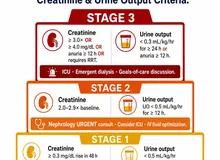
Severity determines dialysis timing. CRRT (continuous renal replacement therapy) is preferred in hemodynamically unstable patients. Critical HFRS requires urgent RRT initiation.
WHO / Korean Severity Classification
Differential Diagnosis — HFRS vs. Dengue vs. Leptospirosis
In the Philippines, all three cause fever + thrombocytopenia + AKI, and serology for all three is often unavailable simultaneously. The following features aid discrimination:
| Feature | HFRS (Hantavirus) | Dengue | Leptospirosis |
|---|---|---|---|
| Vector / Exposure | Rodent droppings/urine (inhalation) | Aedes mosquito bite | Floodwater contact (skin/mucosa) |
| Fever Pattern | High, sudden; flushing; conjunctival injection | High, biphasic; retro-orbital pain | High; myalgia; calf tenderness |
| Rash | Rare (flushing, petechiae possible) | Petechiae, maculopapular (Days 3–5) | Rare; occasionally truncal |
| Back/Loin Pain | Prominent, early — cardinal sign | Myalgia generalized | Calf pain prominent; back less so |
| Thrombocytopenia | +++ (defining) | +++ (defining) | + (variable) |
| Renal Involvement | Defining; AKI in all HFRS | 1–10% of cases | Common; Weil's disease (jaundice + AKI) |
| Jaundice | Absent | Rare (<1%) | Present in Weil's disease |
| Liver enzymes | Mildly elevated (1.5–3× ULN) | Moderately elevated (3–10× ULN) | Prominently elevated; conjugated bilirubin ↑ |
| Proteinuria/Hematuria | Early and prominent; granular casts | Mild if AKI present | Moderate; tubular pattern |
| Serology Timing | IgM: Day 3–4; IgG: Week 1; RT-PCR: Days 1–6 | NS1: Days 1–5; IgM: Day 5+ | MAT: Week 1–2; IgM: Week 1 |
| Where to send serology (PH) | RITM (limited availability) | Most DOH-accredited labs | RITM, St. Luke's, Asian Hospital |
The leptospirosis–HFRS diagnostic trap
In a Filipino patient presenting post-flood with fever + AKI + thrombocytopenia, the near-automatic diagnosis is leptospirosis. However, hantavirus (Seoul virus) should be on the differential in patients who describe rodent contact specifically, especially without direct water immersion, or who work on ships, in grain storage, or in post-demolition cleanup. Empiric doxycycline covers leptospirosis; it does not cover HFRS. If the patient is deteriorating despite standard leptospirosis management, HFRS serology via RITM is warranted.
Fluid Management & Renal Replacement Therapy

Fluid strategy reverses between phases. Oliguric phase: restrict and monitor for overload. Diuretic phase: replace losses 1:1. Taper RRT when creatinine stabilises.
Oliguric Phase — Fluid Restriction Protocol
- Daily fluid allowance = insensible losses (~500 mL) + previous 24h urine output
- Avoid all prophylactic volume expansion — capillary leak makes this dangerous
- Daily weight is the most reliable fluid balance marker; target zero or minimal gain
- Hypertonic saline (3%) for symptomatic hyponatremia with Na⁺ <125 mEq/L — correct at ≤8–10 mEq/L per 24h to avoid osmotic demyelination
- Furosemide may be trialed for oliguria with adequate MAP (>65), but response is often minimal; do not escalate dose if no diuretic response
- Strict 12-hourly electrolyte monitoring (Na⁺, K⁺, HCO₃⁻)
Diuretic Phase — Replacement Protocol
- Match urine output volume — polyuria of 3–6 L/day is common and expected
- Oral replacement (ORS or light diet + fluids) is preferred if hemodynamically stable
- IV potassium replacement for K⁺ <3.0 mEq/L — can be severe (GI-loss equivalent)
- Monitor for hyponatremia due to hypotonic loss; use isotonic replacement
- Risk of hypovolemic shock during diuretic phase is real — do not restrict fluids here
Dialysis Indications in HFRS
Use lower thresholds than standard AKI — the metabolic derangements in HFRS escalate faster, and the underlying recovery potential justifies proactive intervention:
| Indication | Threshold |
|---|---|
| Hyperkalemia | K⁺ >6.5 mEq/L or rising despite medical management |
| Pulmonary edema | Refractory to fluid restriction; SpO₂ <90% despite oxygen |
| Severe azotemia | BUN >100 mg/dL, Cr >10 mg/dL, or uremic symptoms (encephalopathy, pericarditis) |
| Prolonged oliguria | >5 days with no diuretic response — lower threshold in CKD patients |
| Metabolic acidosis | pH <7.15 or bicarbonate <10 mEq/L refractory to bicarbonate therapy |
| Hemodynamic instability | Vasopressor-dependent — favors CRRT over IHD |
CRRT — Preferred in Shock
HFRS often presents with hemodynamic instability from capillary leak syndrome. CRRT maintains fluid balance without the MAP demands of IHD (requires MAP ≥65 mmHg for vascular access toleration). Use CRRT for vasopressor-dependent patients or MAP <65. CRRT also allows continuous potassium control during the diuretic-to-oliguric transition.
IHD — For Stable Patients
Standard intermittent hemodialysis is appropriate for hemodynamically stable HFRS-AKI meeting dialysis criteria. Sessions 4–6 hours daily or every 48 hours. Expected dialysis duration: 1–3 weeks in most cases. The majority of dialysis-dependent HFRS patients recover renal function — communicate this to families early.
Ribavirin — Evidence & Dosing
Evidence base: RCTs (randomized controlled trials) support ribavirin for HTNV-HFRS (China, Korea); evidence for SEOV is extrapolated. Benefit requires initiation within 5 days of symptom onset. No proven benefit after Day 7.
Dosing (IV): Loading 33 mg/kg → 16 mg/kg q6h × 4 days → 8 mg/kg q8h × 3 days.
Dose adjustment: Reduce by 50% if eGFR 30–60. Avoid (or use under specialist guidance) if eGFR <30 or on dialysis. Contraindicated in pregnancy (teratogenic).
Monitoring: CBC for hemolytic anemia (ribavirin's primary toxicity); bilirubin; reticulocyte count.
CKD-on-HFRS — Management Considerations

Pre-existing CKD dramatically increases AKI non-recovery risk. Stage 3b carries ~40% risk of permanent progression. Post-HFRS monitoring must continue for 12 months.
| CKD Stage (Baseline) | Non-Recovery Risk | Dialysis Threshold | Key Adjustments |
|---|---|---|---|
| None (eGFR ≥90) | <3% | Standard indications | None required |
| Stage 1–2 (eGFR 60–89) | 3–8% | Standard indications | Closer monitoring; early nephrology consult |
| Stage 3 (eGFR 30–59) | 10–20% | Lower — initiate earlier | Hold ACEi (angiotensin-converting enzyme inhibitor)/ARB in oliguria; ribavirin 50% dose; aggressive K⁺ monitoring |
| Stage 4–5 (eGFR <30) | 25–40% | Very low — proactive | Avoid ribavirin without specialist guidance; hold nephrotoxins; early CRRT consideration; family counseling re: permanent RRT risk |
Medications to Hold on Admission
Hold Immediately
- NSAIDs (all)
- Metformin (lactic acidosis risk)
- ACE inhibitors / ARBs (hyperkalemia + hypotension risk during oliguria)
- Herbal remedies (unknown nephrotoxic potential)
Adjust Dose
- Ribavirin (50% if eGFR 30–60)
- Paracetamol (limit to ≤2g/day in severe AKI)
- Renally-cleared antibiotics (dose by eGFR)
- Digoxin (if applicable)
Can Continue
- Calcium channel blockers
- Statins (with caution)
- Insulin (dose carefully with K⁺ monitoring)
Post-HFRS Follow-Up Protocol (CKD Patients)
| Timepoint | Tests | Action |
|---|---|---|
| 1 Month | Creatinine, eGFR, electrolytes, UACR, BP | Resume ACEi/ARB if stable; adjust antihypertensives |
| 3 Months | Creatinine trend, UACR, HbA1c (if diabetic), CBC | Assess for non-recovery; adjust CKD stage; ensure proteinuria is treated |
| 6 Months | Full CKD panel + creatinine slope | If eGFR declining faster than pre-HFRS baseline, intensify nephroprotection |
| 12 Months | Full metabolic panel, UACR, imaging if indicated | Reassess CKD staging; update treatment targets |
Climate Projections — Expanding Hantavirus Risk Zones

Climate-driven rodent range expansion increases Seoul virus spillover risk across SE Asia. Philippine typhoon corridor creates additional rodent displacement hazard.
A 2025 review (cited in Live Science / UNMC) confirmed that virus-carrying rodent populations are expanding their geographic range as winters warm. This is not a distant projection — it is measurable in current surveillance data.
Milder Winters
Reduced winter die-offs in rodent populations allow year-round persistence in new latitudes. Puumala virus (Europe) is moving northward into Scandinavia. Sin Nombre virus range is expanding in the western US.
Mast Events & Food Booms
El Niño years drive vegetation and seed surges that cause rodent population explosions 6–12 months later. Argentina's 2025–2026 surge (doubled case rate) is directly correlated with a prior El Niño rainfall event increasing food availability.
Maritime Spread of Seoul Virus
Seoul virus is already cosmopolitan via Rattus norvegicus in global shipping. The Philippine archipelago, as a major maritime hub (Manila, Cebu, Davao ports), is exposed to continuous SEOV introduction via cargo vessels. Host-switching to Rattus rattus could accelerate spread inland.
Philippines: Flooding as Amplifier
Typhoon-driven flooding (June–October) displaces rat colonies into urban homes and public spaces. This is the highest-risk window for Seoul virus exposure in the Philippines — analogous to leptospirosis seasonality but via aerosol rather than direct water contact.
Surveillance Gap
With no routine hantavirus serology in Philippine DOH surveillance, confirmed human case counts are almost certainly an underestimate. The PLOS NTDs meta-analysis detected 6.07% rodent seroprevalence across SEA — but only one Philippine study was includable due to data scarcity.
Vaccine Gap
China and South Korea have bivalent vaccines (Hantaan + Seoul). These vaccines are not available in the Philippines. No ANDV vaccine exists. No WHO-recommended vaccine for LMICs. Until surveillance confirms the true burden, vaccine prioritization arguments are difficult to make.

W Rivero, MD, FPCP, DPSN
Specialist in Internal Medicine, Nephrology, and Clinical Nutrition. Practicing integrative and evidence-based nephrology across Quezon City, Pampanga, and Bulacan.Espesyalista sa Panloob na Medisina, Nefrolohiya, at Klinikal na Nutrisyon. Nagpapraktis ng integratibo at ebidensya-batay na nefrolohiya sa Quezon City, Pampanga, at Bulacan.Espesyalista sa Internal nga Medisina, Nefrolohiya, ug Klinikal nga Nutrisyon. Nagpraktis og integratibo ug ebidensya-base nga nefrolohiya sa Quezon City, Pampanga, ug Bulacan.Espesyalista king Panloob na Medisina, Nefrolohiya, at Klinikal na Nutrisyon. Nagpapraktis ning integratibo at ebidensya-base na nefrolohiya sa Quezon City, Pampanga, at Bulacan.

Scan and saveI-scan at i-saveI-scan ug i-saveI-scan at i-save