What Are the Skin Changes in Kidney Disease?Ano ang mga Pagbabago sa Balat sa Sakit sa Bato?Unsa ang mga Kausaban sa Panit sa Sakit sa Kidney?Nanu la reng Pagbayu king Balat king Sakit king Bat?
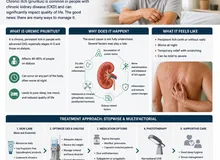
Kidney disease can change the way your skin looks in several ways. Some changes affect the whole body; others are worse in the legs. All of these changes are real, well-documented, and not just in your head. In fact, studies show that 50–100% of dialysis patients develop at least one skin change.Ang sakit sa bato ay maaaring magbago ng hitsura ng iyong balat sa iba't ibang paraan. May mga pagbabagong nakakaapekto sa buong katawan; ang iba ay mas malala sa mga binti. Lahat ng mga pagbabagong ito ay totoo, mahusay na dokumentado, at hindi lamang nasa iyong isip. Sa katunayan, ipinapakita ng mga pag-aaral na 50–100% ng mga pasyente sa dialysis ay nagkakaroon ng kahit isang pagbabago sa balat.Ang sakit sa kidney makausab sa hitsura sa imong panit sa lain-laing paagi. Adunay mga kausaban nga makaapekto sa tibuok lawas; ang uban mas grabe sa mga bitiis. Tanan niining mga kausaban tinuod, maayong dokumentado, ug dili lang anaa sa imong hunahuna. Sa pagkatinuod, gipakita sa mga pagtuon nga 50–100% sa mga pasyente sa dialysis makabaton og labing menos usa ka kausaban sa panit.Ing sakit king bat ne malyaring magbayu king itsura ning balat mu king kaiba-ibang paralan. Atin lang pagbayu a makaapektu king mabilug a katawan; ing aliwa mas grabe la king deng bitis. Anggang reng pagbayung deni tutu la, mayap a dokumentadu, at ali la mu king isip mu. King katutuan, pakit da reng pag-aral a 50–100% da reng pasyente king dialysis mika-atin lang kahit metung a pagbayu king balat.

Brown or Dark PatchesKayumanggi o Maiitim na MantsaBrown o Itom nga mga MantsaKayumangging o Matuling a Mantsa
Most common on face, arms, and sun-exposed areas. A dark-brown or "muddy" tone that worsens over time on dialysis.Pinakakaraniwan sa mukha, mga braso, at mga bahaging naaarawan. Isang madilim na kayumanggi o "maputik" na kulay na lumalala sa paglipas ng panahon sa dialysis.Kasagaran sa nawong, mga bukton, ug mga dapit nga naigo sa adlaw. Usa ka lawom nga brown o "lapokon" nga tono nga mograbe sa paglabay sa panahon sa dialysis.Pekamaraparan king lupa, deng gamat, at deng dake a naaraw. Metung a matuling a kayumanggi o "malusak" a kule a lumalala kabang lumalampas ing panaun king dialysis.
Yellowish or Sallow ColorMamula-mula-dilaw o Kupas na KulayMag-dalag o Kupas nga KolorMadilaw-dilaw o Kupas a Kule
A dull yellowish tinge all over the skin — not jaundice. Caused by waste pigments (urochromes) that the kidneys no longer filter out.Isang malabo na madilaw na kulay sa buong balat — hindi jaundice. Sanhi ng mga basurang pigment (urochromes) na hindi na nasasala ng mga bato.Usa ka hanap nga dalag nga tono sa tibuok panit — dili jaundice. Tungod sa mga basura nga pigment (urochromes) nga dili na masala sa mga kidney.Metung a malabu a madilaw a kule king mabilug a balat — ali ya jaundice. Mibubunga da reng basurang pigment (urochromes) a ali na sasala da reng bat.
Darker Lower LegsMas Maiitim na Ibabang BintiMas Itom nga Ubos nga BitiisMas Matuling a Lalam a Bitis
Brown or grayish discoloration, worst at the inner ankle and lower leg — often with a clear "sock line." More common in Filipino patients due to darker baseline skin tone.Kayumanggi o kulay-abo na pangungulay, pinakamalala sa loob ng bukung-bukong at ibabang binti — kadalasang may malinaw na "linya ng medyas." Mas karaniwan sa mga pasyenteng Pilipino dahil sa mas madilim na likas na kulay ng balat.Brown o abohon nga pagkausab sa kolor, labing grabe sa sulod nga tikod ug ubos nga bitiis — kasagaran adunay tin-aw nga "linya sa medyas." Mas kasagaran sa mga Pilipinong pasyente tungod sa mas itom nga natural nga tono sa panit.Kayumanggi o kule-abu a pangungule, pekagrabe king kilub a bukung-bukung at lalam a bitis — masalese atin a malinaw a "linya ning medyas." Mas maraparan da reng pasyenteng Pilipinu uli ning mas matuling a likas a kule ning balat.
Pale or Ashen SkinMaputla o Kulay-Abo na BalatLuspad o Abohon nga PanitMaputla o Kule-Abu a Balat
Washed-out, dull complexion from low hemoglobin (anemia). Improves with anemia treatment.Kupas at malabong kutis dahil sa mababang hemoglobin (anemia). Bumubuti sa paggamot ng anemia.Kupas ug hanap nga panagway tungod sa ubos nga hemoglobin (anemia). Mouswag sa pagtambal sa anemia.Kupas at malabu a kutis uli ning mababang hemoglobin (anemia). Bubuti ya king pamanagum king anemia.
Nail Changes (Lindsay's Nails)Mga Pagbabago sa Kuko (Lindsay's Nails)Mga Kausaban sa Kuko (Lindsay's Nails)Deng Pagbayu king Kuku (Lindsay's Nails)
White near the cuticle, reddish-brown at the tip — the classic "half-and-half nail" of kidney disease. Caused by melanin deposits in the nail.Puti malapit sa cuticle, mapula-pulang kayumanggi sa dulo — ang klasikong "kalahati-kalahati na kuko" ng sakit sa bato. Sanhi ng mga tambak ng melanin sa kuko.Puti duol sa cuticle, mapula-pula nga brown sa tumoy — ang klasikong "tunga-tunga nga kuko" sa sakit sa kidney. Tungod sa mga deposito sa melanin sa kuko.Maputi malapit king cuticle, mamula-mulang kayumanggi king sepu — ing klasikung "kapitna-kapitna a kuku" ning sakit king bat. Mibubunga da reng deposito ning melanin king kuku.
Gray-Brown Metallic ToneKulay-Abo-Kayumanggi na Metaliko na KulayAbo-Brown nga Metaliko nga TonoKule-Abu-Kayumanggi a Metalikung Tono
A grayish, almost metallic cast to the skin — caused by iron pigment (hemosiderin) deposited in the skin.Isang kulay-abo, halos metaliko na anyo ng balat — sanhi ng iron pigment (hemosiderin) na naipon sa balat.Usa ka abohon, halos metaliko nga dagway sa panit — tungod sa iron pigment (hemosiderin) nga natipon sa panit.Metung a kule-abu, halos metalikung anyu ning balat — mibubunga ning iron pigment (hemosiderin) a mitipun king balat.
Note for Filipino patientsPaalala para sa mga pasyenteng PilipinoPahinumdom para sa mga Pilipinong pasyentePaalala para king deng pasyenteng Pilipinu
Filipinos have a naturally richer melanin baseline (Fitzpatrick type IV–V). This means any skin darkening from kidney disease appears more intensely and persists longer than in lighter-skinned patients. You are not imagining it — and it is harder to reverse. This is a well-documented phenomenon in darker skin types.Ang mga Pilipino ay natural na mas mayaman sa melanin (Fitzpatrick type IV–V). Ibig sabihin, anumang pag-iitim ng balat dahil sa sakit sa bato ay lumalabas nang mas matindi at tumatagal nang mas matagal kaysa sa mga pasyenteng mas maputi ang balat. Hindi mo ito iniisip lamang — at mas mahirap ibalik. Ito ay isang mahusay na dokumentadong penomeno sa mas madidilim na uri ng balat.Ang mga Pilipino natural nga mas dato sa melanin (Fitzpatrick type IV–V). Kini nagpasabot nga bisan unsang pag-itom sa panit tungod sa sakit sa kidney mogawas nga mas grabe ug molungtad nga mas dugay kaysa sa mga pasyente nga mas maputi og panit. Wala ka lang naghanduraw niini — ug mas lisod ibalik. Kini usa ka maayong dokumentadong panghitabo sa mas itom nga mga matang sa panit.Deng Pilipinu natural lang mas mayaman king melanin (Fitzpatrick type IV–V). Ibat na niti, nanumang pag-itim ning balat uli ning sakit king bat lumual yang mas matindi at tumagal yang mas matagal kaysa king deng pasyenteng mas maputi ing balat. Ali mu ya iniisip mu mu — at mas mahirap ibalik. Iti metung a mayap a dokumentadung penomenu king mas matuling a uri ning balat.
Why Does Skin Darken in Kidney Disease?Bakit Umiitim ang Balat sa Sakit sa Bato?Nganong Mag-itom ang Panit sa Sakit sa Kidney?Baket Umi-itim ing Balat king Sakit king Bat?
There are three root sources of skin darkening in chronic kidney disease (CKD) and dialysis. Understanding which root source applies to you helps your doctor target the right treatment.May tatlong pinagmumulan ng pag-iitim ng balat sa chronic kidney disease (CKD) at dialysis. Ang pag-unawa kung aling pinagmumulan ang tumutukoy sa iyo ay tumutulong sa iyong doktor na tamaan ang tamang paggamot.Adunay tulo ka gamut nga tinubdan sa pag-itom sa panit sa chronic kidney disease (CKD) ug dialysis. Ang pagsabot kon asa nga tinubdan ang mopatuman kanimo makatabang sa imong doktor nga mapunting ang saktong tambal.Atin atlung pekamula ning pag-itim ning balat king chronic kidney disease (CKD) at dialysis. Ing pamakiabe nung nanung pekamula ing makatugma keka makatulung ya king doktor mu bang matama ne ing tamung pamanagum.
Your kidneys can no longer clear pigment-stimulating substances from your bloodHindi na kayang alisin ng iyong mga bato ang mga sangkap na nagpapasigla ng pigment mula sa iyong dugoDili na makahawa ang imong mga kidney sa mga substansiya nga nagpasiga sa pigment gikan sa imong dugoAli na ayaus da reng bat mu deng sangkap a nagpasigla king pigment ibat king daya mu
Uremic pigment accumulation — affects the whole body.Pagtitipon ng uremic pigment — nakakaapekto sa buong katawan.Pagtipon sa uremic pigment — makaapekto sa tibuok lawas.Pamitipun ning uremic pigment — makaapektu king mabilug a katawan.

Healthy kidneys filter and remove many substances from the blood — including hormones and waste pigments that, if they build up, stimulate your skin cells to produce more color. When the kidneys fail, these substances accumulate.Ang malulusog na bato ay sumasala at nag-aalis ng maraming sangkap mula sa dugo — kabilang ang mga hormone at basurang pigment na, kung maiipon, ay nagpapasigla sa iyong mga selula sa balat na gumawa ng mas maraming kulay. Kapag nabigo ang mga bato, naiipon ang mga sangkap na ito.Ang himsog nga mga kidney nagsala ug nagkuha sa daghang substansiya gikan sa dugo — lakip ang mga hormon ug basura nga pigment nga, kon matipon, mopukaw sa imong mga selula sa panit nga mohimo og mas daghang kolor. Kon mapakyas ang mga kidney, matipon kining mga substansiya.Deng masalese a bat sasala at aayaus la king dakal a sangkap ibat king daya — kayabe la reng hormon at basurang pigment a, nung mitipun, nagpapasigla la king deng selula ning balat mu bang gawa lang mas dakal a kule. Nung mibagsak la reng bat, mitipun la reng sangkap a deni.
- Beta-melanocyte stimulating hormone (β-MSH) — normally removed by the kidneys. When it builds up in the blood, it signals your melanocytes (color-producing skin cells) to make more melanin. The longer you are on dialysis, the higher the β-MSH level, and the darker the skin becomes.Beta-melanocyte stimulating hormone (β-MSH) — karaniwang inaalis ng mga bato. Kapag naiipon ito sa dugo, hinuhudyat nito ang iyong mga melanocyte (mga selula sa balat na gumagawa ng kulay) na gumawa ng mas maraming melanin. Habang mas matagal ka sa dialysis, mas mataas ang antas ng β-MSH, at mas umiitim ang balat.Beta-melanocyte stimulating hormone (β-MSH) — kasagaran gikuha sa mga kidney. Kon matipon kini sa dugo, mosenyas kini sa imong mga melanocyte (mga selula sa panit nga naghimo og kolor) nga mohimo og mas daghang melanin. Kon mas dugay ka sa dialysis, mas taas ang lebel sa β-MSH, ug mas mag-itom ang panit.Beta-melanocyte stimulating hormone (β-MSH) — masalese ayaus da reng bat. Nung mitipun ya king daya, sisenyas na la reng melanocyte mu (deng selula ning balat a gagawa king kule) bang gawa lang mas dakal a melanin. Kabang mas matagal ka king dialysis, mas matas ing lebel ning β-MSH, at mas umi-itim ing balat.
- Urochromes and carotenoids — yellow-orange waste pigments that deposit in the dermis (deep layer of skin), giving the skin its yellowish or sallow tone.Urochromes at carotenoids — dilaw-kahel na basurang pigment na naiipon sa dermis (malalim na layer ng balat), na nagbibigay sa balat ng madilaw o kupas na kulay.Urochromes ug carotenoids — dalag-orange nga basura nga pigment nga matipon sa dermis (lawom nga layer sa panit), nga naghatag sa panit sa dalag o kupas nga tono.Urochromes at carotenoids — madilaw-orange a basurang pigment a mitipun king dermis (malalam a layer ning balat), a magbie king balat king madilaw o kupas a kule.
- Middle-molecular-weight uremic toxins — a broad group of waste substances that standard dialysis does not remove well, causing a gray-brown discoloration.Middle-molecular-weight uremic toxins — isang malawak na grupo ng basurang sangkap na hindi maayos na naaalis ng karaniwang dialysis, na nagdudulot ng kulay-abo-kayumanggi na pangungulay.Middle-molecular-weight uremic toxins — usa ka lapad nga grupo sa basura nga substansiya nga dili maayong makuha sa standard nga dialysis, nga hinungdan sa abo-brown nga pagkausab sa kolor.Middle-molecular-weight uremic toxins — metung a malapad a grupu ning basurang sangkap a ali mayap ayaus na ning karaniwan a dialysis, a magbunga king kule-abu-kayumanggi a pangungule.
This explains: generalized darkening all over the body, worsening over years on dialysis.Ipinapaliwanag nito: pangkalahatang pag-iitim sa buong katawan, lumalala sa paglipas ng mga taon sa dialysis.Kini nagpasabot: kinatibuk-ang pag-itom sa tibuok lawas, nagkagrabe sa paglabay sa mga tuig sa dialysis.Iti ing paliwanag: pangkalahatang pag-itim king mabilug a katawan, lumalala kabang lumalampas ing dakal a banua king dialysis.
Poor blood flow in the legs, made worse by dialysisMahinang daloy ng dugo sa mga binti, pinalala ng dialysisHuyang nga dagayday sa dugo sa mga bitiis, gigrabe sa dialysisMahinang agus ning daya king deng bitis, pigrabe ning dialysis
Venous stasis and hemosiderin staining — affects the lower extremities more.Venous stasis at hemosiderin staining — mas nakakaapekto sa mga ibabang paa't binti.Venous stasis ug hemosiderin staining — mas makaapekto sa ubos nga mga tiil ug bitiis.Venous stasis at hemosiderin staining — mas makaapektu la king deng lalam a bitis.

The legs sit lowest in the body. Blood naturally pools there against gravity — and dialysis patients have several reasons why this pooling is much worse:Ang mga binti ang pinakamababa sa katawan. Natural na naiipon ang dugo doon laban sa grabidad — at may ilang dahilan ang mga pasyente sa dialysis kung bakit mas malala ang pag-iipong ito:Ang mga bitiis mao ang labing ubos sa lawas. Natural nga matipon ang dugo didto batok sa grabidad — ug ang mga pasyente sa dialysis adunay pipila ka rason nganong mas grabe kining pagtipon:Deng bitis la ing pekamababa king katawan. Natural a mitipun ing daya karin laban king grabidad — at atin mangayupayang dahilan deng pasyente king dialysis nung baket mas grabe ing pamitipung ini:
- Chronic venous insufficiency — weak vein valves let blood pool in the lower legs. Pressure builds in the veins, red blood cells leak out into the surrounding skin tissue, and as they break down, they release iron pigment (hemosiderin) that stains the skin brown-gray. This is called hemosiderin staining, and it is most visible at the inner ankle and lower leg.Chronic venous insufficiency — ang mahihinang balbula ng ugat ay nagpapaipon ng dugo sa ibabang binti. Tumataas ang presyon sa mga ugat, tumatagas ang mga pulang selula ng dugo sa nakapaligid na tisyu ng balat, at habang nasisira ang mga ito, naglalabas sila ng iron pigment (hemosiderin) na nagmamantsa sa balat ng kayumanggi-abo. Ito ay tinatawag na hemosiderin staining, at pinakakita sa loob ng bukung-bukong at ibabang binti.Chronic venous insufficiency — ang huyang nga mga balbula sa ugat motugot nga matipon ang dugo sa ubos nga bitiis. Motaas ang presyon sa mga ugat, motulo ang mga pula nga selula sa dugo ngadto sa naglibot nga tisyu sa panit, ug samtang naguba kini, moluwas sila og iron pigment (hemosiderin) nga momantsa sa panit og brown-abo. Kini gitawag og hemosiderin staining, ug labing makita sa sulod nga tikod ug ubos nga bitiis.Chronic venous insufficiency — deng mahinang balbula ning ugat magpapatipun king daya king lalam a bitis. Tutas ing presyon king deng ugat, tutagas la reng malutung selula ning daya king makapaligid a tisyu ning balat, at kabang mesira la deni, lulual lang iron pigment (hemosiderin) a magmantsa king balat king kayumanggi-abu. Iti aus da hemosiderin staining, at pekakit king kilub a bukung-bukung at lalam a bitis.
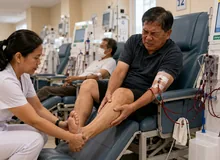
- Sitting still during hemodialysis — four hours of immobility, three times a week, directly shuts down the calf muscle pump that normally pushes blood back toward the heart. This massively worsens venous pooling.Nakaupong hindi kumikilos habang hemodialysis — apat na oras ng hindi paggalaw, tatlong beses sa isang linggo, ay direktang pinapatay ang calf muscle pump na karaniwang nagtutulak ng dugo pabalik patungo sa puso. Malaki ang ipinapalala nito sa venous pooling.Naglingkod nga walay lihok panahon sa hemodialysis — upat ka oras nga walay lihok, tulo ka beses sa usa ka semana, direktang mopatay sa calf muscle pump nga kasagaran motukmod sa dugo balik ngadto sa kasingkasing. Grabe ang pagpagrabe niini sa venous pooling.Makalukluk a ali gagalo kabang hemodialysis — apat a oras ning ali pamanggalo, atlung beses king metung a dominggu, direktang papate ne ing calf muscle pump a masalese magtulak king daya pabalik king pusu. Maragul ing pipagrabe na niti king venous pooling.
- Diabetes and vascular damage — most Filipino ESRD (end-stage renal disease) patients have diabetic nephropathy as the root cause. Diabetes damages the tiny blood vessels in the leg skin, making hemosiderin leakage worse and healing slower.Diabetes at pinsala sa ugat — karamihan sa mga pasyenteng Pilipino na may ESRD (end-stage renal disease) ay may diabetic nephropathy bilang pangunahing sanhi. Sinisira ng diabetes ang maliliit na daluyan ng dugo sa balat ng binti, na nagpapalala ng pagtagas ng hemosiderin at nagpapabagal ng paggaling.Diabetes ug kadaot sa ugat — kadaghanan sa mga Pilipinong pasyente nga adunay ESRD (end-stage renal disease) adunay diabetic nephropathy isip gamut nga hinungdan. Ang diabetes moguba sa gagmay nga mga ugat sa panit sa bitiis, nga mopagrabe sa pagtulo sa hemosiderin ug mopahinay sa pag-ayo.Diabetes at pinsala king ugat — kalakasan da reng pasyenteng Pilipinung atin ESRD (end-stage renal disease) atin lang diabetic nephropathy bilang pekamula. Sisira ne ning diabetes deng malating daluyan ning daya king balat ning bitis, a magpalala king pamanagas ning hemosiderin at magpabagal king pamagaling.
- AV fistula-related changes — in some patients, the AV fistula (dialysis access) created in the arm raises venous pressure in the nearby veins. This can cause purple-brown patches on the lower legs and feet, a condition called acroangiodermatitis (or pseudo-Kaposi sarcoma). It looks alarming but is not cancer.Mga pagbabagong kaugnay ng AV fistula — sa ilang pasyente, ang AV fistula (dialysis access) na ginawa sa braso ay nagpapataas ng venous pressure sa mga kalapit na ugat. Maaari nitong idulot ang lila-kayumanggi na mantsa sa ibabang binti at paa, isang kondisyong tinatawag na acroangiodermatitis (o pseudo-Kaposi sarcoma). Nakakatakot ang hitsura ngunit hindi ito kanser.Mga kausaban nga may kalabotan sa AV fistula — sa pipila ka pasyente, ang AV fistula (dialysis access) nga gihimo sa bukton mopataas sa venous pressure sa duol nga mga ugat. Kini makahatag og purple-brown nga mga mantsa sa ubos nga bitiis ug tiil, usa ka kondisyon nga gitawag og acroangiodermatitis (o pseudo-Kaposi sarcoma). Makahadlok kini og dagway apan dili kini kanser.Deng pagbayung makaugne king AV fistula — king mangayupayang pasyente, ing AV fistula (dialysis access) a megawa king takde magpatas ne king venous pressure king deng malapit a ugat. Ayaus na ne ing lila-kayumanggi a mantsa king lalam a bitis at bitis, metung a kondisyong aus da acroangiodermatitis (o pseudo-Kaposi sarcoma). Makatakut ya ing itsura oneng ali ya kanser.
This explains: why the legs darken more than the rest of the body.Ipinapaliwanag nito: kung bakit mas umiitim ang mga binti kaysa sa ibang bahagi ng katawan.Kini nagpasabot: nganong mas mag-itom ang mga bitiis kaysa sa ubang bahin sa lawas.Iti ing paliwanag: baket mas umi-itim la reng bitis kaysa king aliwang dake ning katawan.
Repeated skin inflammation from the edema-dialysis cyclePaulit-ulit na pamamaga ng balat mula sa edema-dialysis cycleBalik-balik nga hubag sa panit gikan sa edema-dialysis cyclePaulit-ulit a pamanlati ning balat ibat king edema-dialysis cycle
The dialysis-specific amplifier — unique to HD patients.Ang dialysis-specific na amplifier — natatangi sa mga pasyente ng HD.Ang dialysis-specific nga amplifier — talagsaon sa mga pasyente sa HD.Ing dialysis-specific a amplifier — bukud-tangi king deng pasyente king HD.
This mechanism is specific to hemodialysis patients and helps explain why strict fluid control matters for your skin, not just your heart.Ang mekanismong ito ay natatangi sa mga pasyente ng hemodialysis at tumutulong na ipaliwanag kung bakit mahalaga ang mahigpit na kontrol sa likido para sa iyong balat, hindi lamang sa iyong puso.Kining mekanismo talagsaon sa mga pasyente sa hemodialysis ug makatabang sa pagpasabot nganong importante ang higpit nga pagpugong sa likido para sa imong panit, dili lang sa imong kasingkasing.Ing mekanismung ini bukud-tangi ya king deng pasyente king hemodialysis at makatulung yang magpaliwanag baket mahalaga ing masikan a pamaggamang king likido para king balat mu, ali mu king pusu mu.

- Pre-dialysis fluid buildup — fluid accumulates in the legs between sessions, stretching the skin significantly.Pag-ipon ng likido bago ang dialysis — naiipon ang likido sa mga binti sa pagitan ng mga session, na malaki ang pag-unat sa balat.Pagtipon sa likido sa wala pa ang dialysis — matipon ang likido sa mga bitiis tali sa mga session, nga grabe ang pag-inat sa panit.Pamitipun ning likido bayu ing dialysis — mitipun ing likido king deng bitis king pilatan da reng session, a maragul ing pamag-inat king balat.
- Mechanical stretch triggers pigment production — research shows that when skin cells (keratinocytes) are repeatedly stretched, they release a signaling molecule called endothelin-1 (ET-1). ET-1 directly activates melanocytes to produce more melanin. The more stretch, the more ET-1, the more pigmentation.Ang mekanikal na pag-unat ay nagpapasimula ng paggawa ng pigment — ipinapakita ng pananaliksik na kapag paulit-ulit na inuunat ang mga selula sa balat (keratinocytes), naglalabas sila ng signaling molecule na tinatawag na endothelin-1 (ET-1). Direktang ino-activate ng ET-1 ang mga melanocyte na gumawa ng mas maraming melanin. Habang mas maraming pag-unat, mas maraming ET-1, mas maraming pigmentation.Ang mekanikal nga pag-inat mopukaw sa paghimo og pigment — gipakita sa panukiduki nga kon balik-balik nga inaton ang mga selula sa panit (keratinocytes), moluwas sila og signaling molecule nga gitawag og endothelin-1 (ET-1). Direktang mo-activate ang ET-1 sa mga melanocyte nga mohimo og mas daghang melanin. Kon mas daghang pag-inat, mas daghang ET-1, mas daghang pigmentation.Ing mekanikal a pamag-inat magpasimula king pamaggawa king pigment — pakit da reng pananaliksik a nung paulit-ulit ya inaanat deng selula ning balat (keratinocytes), lulual lang signaling molecule a aus da endothelin-1 (ET-1). Direktang aa-activate ne ning ET-1 deng melanocyte bang gawa lang mas dakal a melanin. Kabang mas dakal a pamag-inat, mas dakal a ET-1, mas dakal a pigmentation.
- Inflammation from fluid stress — stretched, fluid-laden skin is inflamed skin. Inflammatory cells release histamine, which is an additional direct trigger for melanin production. This is called post-inflammatory hyperpigmentation (PIH) — the same process that darkens skin after a pimple or a wound.Pamamaga mula sa fluid stress — ang nakaunat, puno-ng-likidong balat ay namamagang balat. Ang mga inflammatory cell ay naglalabas ng histamine, na isang karagdagang direktang trigger para sa paggawa ng melanin. Ito ay tinatawag na post-inflammatory hyperpigmentation (PIH) — ang parehong proseso na nagpapaitim ng balat pagkatapos ng tigyawat o sugat.Hubag gikan sa fluid stress — ang inat, puno-sa-likido nga panit maoy namula nga panit. Ang mga inflammatory cell moluwas og histamine, nga usa ka dugang direktang trigger sa paghimo og melanin. Kini gitawag og post-inflammatory hyperpigmentation (PIH) — ang samang proseso nga mag-itom sa panit human sa bugas o samad.Pamanlati ibat king fluid stress — ing meanat, mitmung-likidu a balat metung yang balat a milati. Deng inflammatory cell lulual lang histamine, a metung a karagdagang direktang trigger para king pamaggawa king melanin. Iti aus da post-inflammatory hyperpigmentation (PIH) — ing parehung prosesu a magpaitim king balat kaibat ning taghiyawat o sugat.
- Post-HD skin recoil — after dialysis removes the fluid, the skin "retracts." This repeated stretch-and-recoil cycle, three times a week for years, is like a slow, silent inflammation machine for the lower leg skin.Post-HD skin recoil — pagkatapos alisin ng dialysis ang likido, "umuurong" ang balat. Ang paulit-ulit na stretch-and-recoil cycle na ito, tatlong beses sa isang linggo sa loob ng maraming taon, ay parang mabagal at tahimik na makina ng pamamaga para sa balat ng ibabang binti.Post-HD skin recoil — human makuha sa dialysis ang likido, "mo-urong" ang panit. Kining balik-balik nga stretch-and-recoil cycle, tulo ka beses sa usa ka semana sulod sa mga tuig, sama sa hinay, hilom nga makina sa hubag para sa panit sa ubos nga bitiis.Post-HD skin recoil — kaibat ayaus ning dialysis ing likido, "uurung" ya ing balat. Ing paulit-ulit a stretch-and-recoil cycle a ini, atlung beses king metung a dominggu king kilub ning dakal a banua, kalupa ne ning mabagal at tahimik a makina ning pamanlati para king balat ning lalam a bitis.
This explains: why bigger fluid swings = darker legs; why strict fluid control helps.Ipinapaliwanag nito: kung bakit mas malaking pagbabago sa likido = mas maiitim na binti; kung bakit nakakatulong ang mahigpit na kontrol sa likido.Kini nagpasabot: nganong mas dagko nga pagbag-o sa likido = mas itom nga bitiis; nganong makatabang ang higpit nga pagpugong sa likido.Iti ing paliwanag: baket mas maragul a pamibayu king likido = mas matuling a bitis; baket makatulung ing masikan a pamaggamang king likido.
The Key InsightAng Pangunahing KaalamanAng Panguna nga PanabotIng Pekamasanting a Kaalaman
Patients with large fluid gains between sessions (more than 1.5–2 kg per day, or more than 4% of body weight per session) are most likely to develop severe lower leg darkening through this pathway. Controlling your fluid intake protects not just your heart — it also protects your skin.Ang mga pasyenteng may malaking pagdagdag ng likido sa pagitan ng mga session (higit sa 1.5–2 kg bawat araw, o higit sa 4% ng timbang ng katawan bawat session) ang pinakamalamang na magkaroon ng malubhang pag-iitim ng ibabang binti sa pamamagitan ng landas na ito. Ang pagkontrol sa iyong pag-inom ng likido ay hindi lamang nagpoprotekta sa iyong puso — pinoprotektahan din nito ang iyong balat.Ang mga pasyente nga adunay dako nga pagdugang sa likido tali sa mga session (kapin sa 1.5–2 kg matag adlaw, o kapin sa 4% sa gibug-aton sa lawas matag session) mao ang labing lagmit nga makabaton og grabe nga pag-itom sa ubos nga bitiis pinaagi niini nga agianan. Ang pagpugong sa imong pag-inom sa likido dili lang nanalipod sa imong kasingkasing — nanalipod usab kini sa imong panit.Deng pasyenteng atin maragul a pamagdagdag king likido king pilatan da reng session (mas king 1.5–2 kg kada aldo, o mas king 4% ning timbang ning katawan kada session) ila ing pekamalyari a mika-atin king grabeng pag-itim ning lalam a bitis kapamilatan ning dalang ini. Ing pamaggamang king pamiynum mu king likido ali mu na pipuprutektan ing pusu mu — pipuprutektan na mu naman ing balat mu.
Questions Patients Often AskMga Tanong na Madalas Itanong ng mga PasyenteMga Pangutana nga Kanunay Ipangutana sa mga PasyenteDeng Kutang a Masalese Kutang da reng Pasyente
Will my skin ever go back to normal?Babalik pa ba sa normal ang aking balat?Mobalik pa ba sa normal ang akong panit?Mibalik pa kaya king normal ing balat ku?
Partially, for some patients. Anemia-related pallor often improves significantly with good iron and ESA (erythropoiesis-stimulating agent) treatment. The yellowish urochrome tint may lighten with better dialysis. However, hemosiderin staining in the legs and deep melanin deposits from long-standing uremia tend to be permanent or very slowly reversible. After a successful kidney transplant, some patients see significant improvement over 6–18 months — but it is not guaranteed. The realistic goal is to stop further worsening and improve skin health.Bahagya, para sa ilang pasyente. Ang pamumutla na kaugnay ng anemia ay madalas na gumagaling nang malaki sa mabuting iron at ESA (erythropoiesis-stimulating agent) na paggamot. Maaaring lumiwanag ang madilaw na urochrome na kulay sa mas mahusay na dialysis. Gayunpaman, ang hemosiderin staining sa mga binti at malalim na melanin deposit mula sa matagal na uremia ay kadalasang permanente o napakabagal na maibabalik. Pagkatapos ng matagumpay na kidney transplant, may ilang pasyenteng nakakakita ng malaking pagbuti sa loob ng 6–18 buwan — ngunit hindi ito garantisado. Ang makatotohanang layunin ay pigilan ang lalong paglala at pagbutihin ang kalusugan ng balat.Partido, para sa pipila ka pasyente. Ang kaluspad nga may kalabotan sa anemia kasagaran mouswag og maayo pinaagi sa maayong iron ug ESA (erythropoiesis-stimulating agent) nga tambal. Ang dalag nga urochrome nga tono mahimong molubag pinaagi sa mas maayong dialysis. Apan, ang hemosiderin staining sa mga bitiis ug lawom nga melanin deposits gikan sa dugay nga uremia kasagaran permanente o hinay kaayo nga mabalik. Human sa malampuson nga kidney transplant, ang pipila ka pasyente makakita og dako nga pag-uswag sulod sa 6–18 ka bulan — apan dili kini garantisado. Ang realistikong tumong mao ang pagpugong sa dugang nga paggrabe ug pagpauswag sa panglawas sa panit.Kapisang mu, para king mangayupayang pasyente. Ing pamamutla a makaugne king anemia masalese yang bubuti nang maragul king mayap a iron at ESA (erythropoiesis-stimulating agent) a pamanagum. Malyaring lumiwanag ing madilaw a urochrome a kule king mas mayap a dialysis. Oneng, ing hemosiderin staining king deng bitis at malalam a melanin deposits ibat king matagal a uremia masalese lang permanente o mababal a maibalik. Kaibat ning matagumpay a kidney transplant, atin mangayupayang pasyente a akakit king maragul a pamagbuti king kilub ning 6–18 bulan — oneng ali ya garantisadu. Ing makatutuung tudlung nia ing pamipun king lalong paglala at pamagbuti king kalusugan ning balat.
Is it safe to use glutathione soaps or whitening products?Ligtas bang gumamit ng glutathione soaps o whitening products?Luwas ba nga mogamit og glutathione soaps o whitening products?Ligtas ya kaya ing gumamit king glutathione soaps o whitening products?
This is one of the most important questions for Filipino patients. Here is the honest answer:Ito ay isa sa pinakamahalagang tanong para sa mga pasyenteng Pilipino. Narito ang tapat na sagot:Kini usa sa labing importanteng pangutana para sa mga Pilipinong pasyente. Ania ang matinud-anon nga tubag:Iti metung ya king pekamasanting a kutang para king deng pasyenteng Pilipinu. Oini ing tapat a pakibat:
- Topical glutathione soaps — limited evidence that they meaningfully reverse uremic hyperpigmentation. Safe for skin surface use if used gently and without harsh scrubbing. Do not expect dramatic results.Topical glutathione soaps — limitadong katibayan na makabuluhang ibinabalik nila ang uremic hyperpigmentation. Ligtas para sa paggamit sa ibabaw ng balat kung ginagamit nang banayad at walang matinding pagkuskos. Huwag umasa ng dramatikong resulta.Topical glutathione soaps — limitado nga ebidensya nga makahuluganon nilang mabalik ang uremic hyperpigmentation. Luwas para sa paggamit sa ibabaw sa panit kon gamiton nga hinay ug walay kusog nga pagkuskos. Ayaw pagdahom og dramatikong resulta.Topical glutathione soaps — limitadung ebidensya a makabuluhan dang ibalik ing uremic hyperpigmentation. Ligtas para king pamangamit king babo ning balat nung gamitan yang banayad at alang masikan a pamangusku. E ka manaya king dramatikung resulta.
- Oral/IV glutathione — not recommended without physician guidance. Safety data in CKD/dialysis patients is insufficient. IV products in particular have unknown effects on hemodynamics in dialysis patients.Oral/IV glutathione — hindi inirerekomenda nang walang gabay ng doktor. Kulang ang datos sa kaligtasan sa mga pasyente ng CKD/dialysis. Ang mga IV product lalo na ay may hindi kilalang epekto sa hemodynamics sa mga pasyente ng dialysis.Oral/IV glutathione — dili girekomendar nga walay giya sa doktor. Kulang ang datos sa kaluwasan sa mga pasyente sa CKD/dialysis. Ang mga IV product ilabina adunay wala mailhi nga epekto sa hemodynamics sa mga pasyente sa dialysis.Oral/IV glutathione — ali ya rerekomendan nung alang giya ning doktor. Kulang ing datos king kaligtasan king deng pasyente ning CKD/dialysis. Deng IV product lalu na atin lang ali mikilalang epektu king hemodynamics king deng pasyente ning dialysis.
- Mercury-containing whitening products — absolutely avoid. Mercury is nephrotoxic and can accelerate kidney damage. Many cheap imported whitening soaps contain mercury — always check the label.Whitening products na may mercury — iwasan nang lubusan. Ang mercury ay nephrotoxic at maaaring pabilisin ang pinsala sa bato. Maraming murang inangkat na whitening soap ang naglalaman ng mercury — palaging tingnan ang label.Whitening products nga adunay mercury — likayi gyud sa hingpit. Ang mercury nephrotoxic ug makapadali sa kadaot sa kidney. Daghang barato nga gi-import nga whitening soap ang adunay mercury — kanunay susiha ang label.Whitening products a atin mercury — iwasan yang lubus. Ing mercury nephrotoxic ya at ayaus na ne mapabilis ing pinsala king bat. Dakal a murang inangkat a whitening soap ing atin mercury — pengibut lawan ing label.
- Hydroquinone-containing creams — cytotoxic to melanocytes at higher concentrations; not recommended for long-term use. May cause paradoxical darkening (ochronosis) with prolonged use.Mga cream na may hydroquinone — cytotoxic sa mga melanocyte sa mas mataas na konsentrasyon; hindi inirerekomenda para sa matagalang paggamit. Maaaring magdulot ng paradoxical na pag-iitim (ochronosis) sa matagal na paggamit.Mga cream nga adunay hydroquinone — cytotoxic sa mga melanocyte sa mas taas nga konsentrasyon; dili girekomendar para sa dugay nga paggamit. Mahimong makahatag og paradoxical nga pag-itom (ochronosis) sa dugay nga paggamit.Deng cream a atin hydroquinone — cytotoxic king deng melanocyte king mas matas a konsentrasyon; ali ya rerekomendan para king matagal a pamangamit. Ayaus na ne magbunga king paradoxical a pag-itim (ochronosis) king matagal a pamangamit.
- Kojic acid and niacinamide topicals — generally safe for skin surface use; mild tyrosinase inhibition; CKD-specific evidence is limited but no known nephrotoxicity.Kojic acid at niacinamide topicals — sa pangkalahatan ay ligtas para sa paggamit sa ibabaw ng balat; banayad na tyrosinase inhibition; limitado ang katibayan na tukoy sa CKD ngunit walang kilalang nephrotoxicity.Kojic acid ug niacinamide topicals — sa kinatibuk-an luwas para sa paggamit sa ibabaw sa panit; hinay nga tyrosinase inhibition; limitado ang ebidensya nga espesipiko sa CKD apan walay nailhing nephrotoxicity.Kojic acid at niacinamide topicals — king pangkalahatan ligtas ya para king pamangamit king babo ning balat; banayad a tyrosinase inhibition; limitadu ing ebidensya a tukuy king CKD oneng alang mikilalang nephrotoxicity.
The most effective "whitening" strategy for dialysis patients is optimizing dialysis adequacy, anemia correction, fluid control, and sun protection — not a product from a beauty store.Ang pinakaepektibong estratehiya sa "pagpaputi" para sa mga pasyente ng dialysis ay ang pag-optimize ng dialysis adequacy, pagwawasto ng anemia, kontrol sa likido, at proteksyon sa araw — hindi isang produkto mula sa beauty store.Ang labing epektibong estratehiya sa "pagpaputi" para sa mga pasyente sa dialysis mao ang pag-optimize sa dialysis adequacy, pagtul-id sa anemia, pagpugong sa likido, ug panalipod batok sa adlaw — dili usa ka produkto gikan sa beauty store.Ing pekaepektibung estratehiya king "pamagpaputi" para king deng pasyente king dialysis ing pag-optimize king dialysis adequacy, pamagwasto king anemia, pamaggamang king likido, at proteksyon king aldo — ali ya metung a produktu ibat king beauty store.
Why are my legs darker than the rest of my body?Bakit mas maitim ang aking mga binti kaysa sa iba kong katawan?Nganong mas itom ang akong mga bitiis kaysa sa uban kong lawas?Baket mas matuling la reng bitis ku kaysa king aliwang dake ning katawan ku?
Because the legs are the site where all three root sources converge and amplify each other: gravity-dependent fluid pooling + venous insufficiency + the stretch-release edema cycle + (in most Filipinos) diabetic vascular damage. The combination of these four factors focused on one area of the body produces disproportionately severe and persistent darkening compared to the face or arms.Dahil ang mga binti ang lugar kung saan nagsasama at nagpapalakas sa isa't isa ang lahat ng tatlong pinagmumulan: pag-iipon ng likido dahil sa grabidad + venous insufficiency + ang stretch-release edema cycle + (sa karamihan ng Pilipino) diabetic vascular damage. Ang kombinasyon ng apat na salik na ito na nakatuon sa isang bahagi ng katawan ay gumagawa ng hindi proporsyonal na malubha at matagal na pag-iitim kumpara sa mukha o braso.Tungod kay ang mga bitiis mao ang dapit kon asa magtagbo ug magpalig-on sa usag-usa ang tanang tulo ka gamut nga tinubdan: pagtipon sa likido tungod sa grabidad + venous insufficiency + ang stretch-release edema cycle + (sa kadaghanang Pilipino) diabetic vascular damage. Ang kombinasyon niining upat ka salik nga nakatutok sa usa ka dapit sa lawas mohimo og dili proporsyonal nga grabe ug molungtad nga pag-itom kumpara sa nawong o bukton.Uli deng bitis la ing lugal nung nu la mitipun at mipapalakas la king metung at metung ing anggang atlung pekamula: pamitipun king likido uli ning grabidad + venous insufficiency + ing stretch-release edema cycle + (king kalakasan da reng Pilipinu) diabetic vascular damage. Ing kombinasyon da reng apat a salik a deni a nakatuki king metung a dake ning katawan gagawa yang ali proporsyonal a grabe at matagal a pag-itim kumpara king lupa o takde.
What are compression stockings and should I use them?Ano ang compression stockings at dapat ko bang gamitin ang mga ito?Unsa ang compression stockings ug angay ba nako kining gamiton?Nanu la reng compression stockings at dapat ku la kaya gamitan?
Compression stockings are elastic socks that apply gentle pressure to the lower leg, helping veins push blood back toward the heart. They are one of the most effective tools for reducing lower leg hemosiderin staining and preventing its progression.Ang compression stockings ay mga nababanat na medyas na naglalagay ng banayad na presyon sa ibabang binti, na tumutulong sa mga ugat na itulak ang dugo pabalik patungo sa puso. Ang mga ito ay isa sa pinakaepektibong kasangkapan sa pagbawas ng hemosiderin staining sa ibabang binti at pagpigil sa paglala nito.Ang compression stockings mga elastikong medyas nga mobutang og hinay nga presyon sa ubos nga bitiis, nga motabang sa mga ugat nga motukmod sa dugo balik ngadto sa kasingkasing. Sila usa sa labing epektibong himan sa pagpakunhod sa hemosiderin staining sa ubos nga bitiis ug pagpugong sa pag-uswag niini.Deng compression stockings deng nababanat a medyas a maglagay king banayad a presyon king lalam a bitis, a makatulung king deng ugat a itulak ing daya pabalik king pusu. Ila metung ya king pekaepektibung kasangkapan king pamibawas king hemosiderin staining king lalam a bitis at pamipun king paglala na.
Important rules for dialysis patients:Mahahalagang patakaran para sa mga pasyente ng dialysis:Importanteng mga lagda para sa mga pasyente sa dialysis:Mahahalagang patakaran para king deng pasyente king dialysis:
- Wear them after dialysis and during the day between sessions — not during the HD session itselfIsuot ang mga ito pagkatapos ng dialysis at sa araw sa pagitan ng mga session — hindi habang nasa HD session mismoIsul-ob kini human sa dialysis ug sa adlaw tali sa mga session — dili panahon sa HD session mismoIsulud la deni kaibat ning dialysis at king aldo king pilatan da reng session — ali kabang atyu ka king HD session mismo
- Put them on in the morning before getting out of bed, when swelling is at its lowestIsuot ang mga ito sa umaga bago bumaba ng kama, kapag pinakamababa ang pamamagaIsul-ob kini sa buntag sa dili pa mokanaog sa higdaanan, kon labing ubos ang paghubagIsulud la deni king abak bayu ka lumual king pengari, nung pekamababa ing pamanlati
- Graduated compression 15–20 mmHg is appropriate for most patientsAng graduated compression na 15–20 mmHg ay angkop para sa karamihan ng pasyenteAng graduated compression nga 15–20 mmHg angay para sa kadaghanang pasyenteIng graduated compression a 15–20 mmHg angkop ya para king kalakasan da reng pasyente
- Do not use if you have peripheral artery disease (PAD) — ask your doctor firstHuwag gamitin kung mayroon kang peripheral artery disease (PAD) — tanungin muna ang iyong doktorAyaw gamita kon aduna kay peripheral artery disease (PAD) — pangutan-a una ang imong doktorE la gagamitan nung atin kang peripheral artery disease (PAD) — kutang mu pa ing doktor mu
- Available at most pharmacies in the Philippines; look for "medicated compression socks" or "varicose vein stockings"Makukuha sa karamihan ng botika sa Pilipinas; hanapin ang "medicated compression socks" o "varicose vein stockings"Makuha sa kadaghanang botika sa Pilipinas; pangitaa ang "medicated compression socks" o "varicose vein stockings"Akua king kalakasan da reng botika king Pilipinas; painam ing "medicated compression socks" o "varicose vein stockings"
What nail changes should I expect?Anong mga pagbabago sa kuko ang dapat kong asahan?Unsang mga kausaban sa kuko ang akong dahomon?Nanung pagbayu king kuku ing dapat kung asahan?
Lindsay's nails (half-and-half nails) are the classic finding — the nail is white or pale near the cuticle and reddish-brown at the outer tip. This is caused by melanin deposits and reduced blood flow to the nail. It appears in about 7–40% of dialysis patients and typically does not cause pain or physical problems. After a successful kidney transplant, it often resolves over months. No specific treatment is needed, but it can help your doctor confirm the diagnosis of CKD-related skin changes.Lindsay's nails (kalahati-kalahati na kuko) ang klasikong natuklasan — ang kuko ay puti o maputla malapit sa cuticle at mapula-pulang kayumanggi sa panlabas na dulo. Sanhi ito ng melanin deposits at nabawasang daloy ng dugo sa kuko. Lumalabas ito sa humigit-kumulang 7–40% ng mga pasyente ng dialysis at karaniwang hindi nagdudulot ng sakit o pisikal na problema. Pagkatapos ng matagumpay na kidney transplant, madalas itong nawawala sa loob ng ilang buwan. Walang partikular na paggamot ang kailangan, ngunit makakatulong ito sa iyong doktor na kumpirmahin ang diyagnosis ng mga pagbabago sa balat na kaugnay ng CKD.Lindsay's nails (tunga-tunga nga kuko) mao ang klasikong nakit-an — ang kuko puti o luspad duol sa cuticle ug mapula-pula nga brown sa gawas nga tumoy. Kini tungod sa melanin deposits ug nakunhod nga dagayday sa dugo sa kuko. Mogawas kini sa mga 7–40% sa mga pasyente sa dialysis ug kasagaran wala maghatag og sakit o pisikal nga problema. Human sa malampuson nga kidney transplant, kasagaran mawala kini sulod sa mga bulan. Walay espesipikong tambal nga gikinahanglan, apan makatabang kini sa imong doktor sa pagkumpirma sa diyagnosis sa mga kausaban sa panit nga may kalabotan sa CKD.Lindsay's nails (kapitna-kapitna a kuku) ing klasikung matukyan — ing kuku maputi o maputla ya malapit king cuticle at mamula-mulang kayumanggi king palual a sepu. Mibubunga ne ning melanin deposits at mibawas a agus ning daya king kuku. Lulual ya king manibalu 7–40% da reng pasyente king dialysis at masalese ali yang magbunga king sakit o pisikal a problema. Kaibat ning matagumpay a kidney transplant, masalese yang mawala king kilub ning mangayupayang bulan. Alang partikular a pamanagum a kailangan, oneng makatulung ya king doktor mu bang kumpirman ing diyagnosis da reng pagbayu king balat a makaugne king CKD.
I feel ashamed of how I look. Is that normal?Nahihiya ako sa aking hitsura. Normal ba iyon?Naulaw ko sa akong hitsura. Normal ba kana?Mayayaya ku king itsura ku. Normal ya kaya iyan?
Completely normal, and extremely common. Body image distress is documented in the medical literature as one of the leading psychosocial burdens of dialysis — equal in impact to fatigue and pain for many patients. Dialysis support groups consistently report skin changes as a significant source of embarrassment, especially in Filipino culture where appearance is closely tied to self-identity and social perception.Ganap na normal, at napakakaraniwan. Ang pagkabahala sa hitsura ng katawan ay dokumentado sa medikal na literatura bilang isa sa mga nangungunang psychosocial na pasanin ng dialysis — kapantay sa epekto ng pagkapagod at sakit para sa maraming pasyente. Ang mga dialysis support group ay patuloy na nag-uulat ng mga pagbabago sa balat bilang isang malaking sanhi ng kahihiyan, lalo na sa kulturang Pilipino kung saan ang hitsura ay malapit na nakatali sa self-identity at social perception.Bug-os nga normal, ug kaayo kasagaran. Ang kabalaka sa hitsura sa lawas gidokumento sa medikal nga literatura isip usa sa nag-unang psychosocial nga palas-anon sa dialysis — parehas og epekto sa kakapoy ug kasakit para sa daghang pasyente. Ang mga dialysis support group kanunayng mo-report sa mga kausaban sa panit isip usa ka dako nga tinubdan sa kaulaw, ilabina sa Pilipinong kultura diin ang hitsura suod nga nalambigit sa self-identity ug social perception.Ganap yang normal, at pekamaraparan. Ing kabalisa king itsura ning katawan dokumentadu ya king medikal a literatura bilang metung king deng nangunang psychosocial a pasan ning dialysis — kapareu ing epektu ning pamangapagal at sakit para king dakal a pasyente. Deng dialysis support group patuloy lang mag-ulat da reng pagbayu king balat bilang metung a maragul a pekamula ning kayayan, lalu na king kulturang Pilipinu nung nu ing itsura malapit yang makatali king self-identity at social perception.
Please know: these changes are caused by your disease, not by anything you did wrong. Your doctors and nurses understand this. If skin changes are affecting your confidence or mental health, please speak to your nephrologist — referral to a dermatologist and to a mental health professional can both help.Pakitandaan: ang mga pagbabagong ito ay dulot ng iyong sakit, hindi ng anumang mali na ginawa mo. Nauunawaan ito ng iyong mga doktor at nars. Kung ang mga pagbabago sa balat ay nakakaapekto sa iyong tiwala sa sarili o kalusugang pangkaisipan, mangyaring makipag-usap sa iyong nephrologist — ang referral sa isang dermatologist at sa isang mental health professional ay parehong makakatulong.Palihug hibaloi: kining mga kausaban tungod sa imong sakit, dili tungod sa bisan unsang sayop nga imong gibuhat. Nasabtan kini sa imong mga doktor ug nars. Kon ang mga kausaban sa panit makaapekto sa imong pagsalig sa kaugalingon o panglawas sa pangisip, palihug pakigsulti sa imong nephrologist — ang referral sa usa ka dermatologist ug sa usa ka mental health professional pareho nga makatabang.Pakitandan: deng pagbayung deni mibubunga la king sakit mu, ali king nanumang mali a gewa mu. Aabaluan da deti reng doktor at nars mu. Nung deng pagbayu king balat makaapektu la king tiwala mu king sarili o kalusugan king isip, pakisabi king nephrologist mu — ing referral king metung a dermatologist at king metung a mental health professional pareu lang makatulung.
→ See also: Mental Health and Sleep in CKD→ Tingnan din: Mental Health and Sleep in CKD→ Tan-awa usab: Mental Health and Sleep in CKD→ Lawan mu naman: Mental Health and Sleep in CKD
What Can Be Done About It?Ano ang Magagawa Tungkol Dito?Unsa ang Mahimo Bahin Niini?Nanu ing Agyung Gawan Tungkul Kaniti?
Management targets each root source. No single cream or product fixes uremic skin darkening — the most effective approach is treating the underlying kidney disease and dialysis factors, then supporting the skin from the outside.Tinutukoy ng pamamahala ang bawat pinagmumulan. Walang iisang cream o produkto ang nag-aayos ng uremic na pag-iitim ng balat — ang pinakaepektibong paraan ay ang paggamot sa saligang sakit sa bato at mga salik ng dialysis, pagkatapos ay pagsuporta sa balat mula sa labas.Ang pagdumala mopunting sa matag gamut nga tinubdan. Walay usa ka cream o produkto nga makaayo sa uremic nga pag-itom sa panit — ang labing epektibong paagi mao ang pagtambal sa nag-unang sakit sa kidney ug mga salik sa dialysis, dayon pagsuporta sa panit gikan sa gawas.Ing pamamahala tutuki ya king kada pekamula. Alang metung a cream o produktu ing mag-ayus king uremic a pag-itim ning balat — ing pekaepektibung paralan ing pamanagum king saligang sakit king bat at deng salik ning dialysis, kaibat pamagsuportang king balat ibat king palual.

Tier 1 — Optimize dialysis and correct anemia (the foundation)Tier 1 — I-optimize ang dialysis at itama ang anemia (ang pundasyon)Tier 1 — I-optimize ang dialysis ug ayohon ang anemia (ang pundasyon)Tier 1 — I-optimize ing dialysis at ituid ing anemia (ing pundasyon)
| TargetTargetTargetTarget | What to ask your doctorAno ang itatanong sa iyong doktorUnsa ang ipangutana sa imong doktorNanu ing ikutang king doktor mu | GoalLayuninTumongTudlung |
|---|---|---|
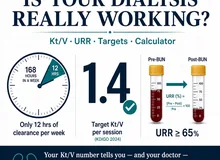
| Dialysis clearance (Kt/V)Dialysis clearance (Kt/V)Dialysis clearance (Kt/V)Dialysis clearance (Kt/V) | "Is my Kt/V at goal?""Nasa layunin ba ang aking Kt/V?""Naa ba sa tumong ang akong Kt/V?""Atyu ya kaya king tudlung ing Kt/V ku?" | Kt/V ≥1.4 — better clearance removes more β-MSH and uremic pigmentKt/V ≥1.4 — ang mas mahusay na clearance ay nag-aalis ng mas maraming β-MSH at uremic pigmentKt/V ≥1.4 — ang mas maayong clearance mokuha og mas daghang β-MSH ug uremic pigmentKt/V ≥1.4 — ing mas mayap a clearance mag-alis yang mas dakal a β-MSH at uremic pigment |
| Dialysis membrane typeUri ng dialysis membraneMatang sa dialysis membraneUri ning dialysis membrane | "Am I using a high-flux membrane?""Gumagamit ba ako ng high-flux membrane?""Naggamit ba ko og high-flux membrane?""Gagamit ku kaya king high-flux membrane?" | High-flux HD or HDF removes middle-molecular-weight pigment substances more effectively — proven to reduce skin hyperpigmentationAng high-flux HD o HDF ay mas epektibong nag-aalis ng middle-molecular-weight na pigment substances — napatunayang nakakabawas ng skin hyperpigmentationAng high-flux HD o HDF mas epektibong mokuha sa middle-molecular-weight nga pigment substances — napamatud-an nga makakunhod sa skin hyperpigmentationIng high-flux HD o HDF mas epektibu yang mag-alis king middle-molecular-weight a pigment substances — mepatunayan a makabawas king skin hyperpigmentation |
| Hemoglobin (anemia)Hemoglobin (anemia)Hemoglobin (anemia)Hemoglobin (anemia) | "Is my hemoglobin at goal?""Nasa layunin ba ang aking hemoglobin?""Naa ba sa tumong ang akong hemoglobin?""Atyu ya kaya king tudlung ing hemoglobin ku?" | Hgb (hemoglobin) 100–115 g/L with ESA + IV iron — corrects pallor; improves skin oxygenation and repair capacityHgb (hemoglobin) 100–115 g/L na may ESA + IV iron — itinatama ang pamumutla; pinapabuti ang oksiheno sa balat at kakayahang mag-ayosHgb (hemoglobin) 100–115 g/L uban sa ESA + IV iron — ayohon ang kaluspad; mopauswag sa oksiheno sa panit ug abilidad sa pag-ayoHgb (hemoglobin) 100–115 g/L a atin ESA + IV iron — ituid ing pamamutla; papabuti ing oksiheno king balat at kakayanang mag-ayus |
| Iron storesIron storesIron storesIron stores | "Are my iron levels adequate?""Sapat ba ang aking iron levels?""Igo ba ang akong iron levels?""Sapat la kaya reng iron levels ku?" | Ferritin >200 µg/L, TSAT (transferrin saturation) >30% — iron deficiency worsens hemosiderin patterning and skin integrityFerritin >200 µg/L, TSAT (transferrin saturation) >30% — pinapalala ng kakulangan sa iron ang hemosiderin patterning at integridad ng balatFerritin >200 µg/L, TSAT (transferrin saturation) >30% — ang kakulangan sa iron mopagrabe sa hemosiderin patterning ug integridad sa panitFerritin >200 µg/L, TSAT (transferrin saturation) >30% — ing kakulangan king iron magpalala king hemosiderin patterning at integridad ning balat |
Tier 2 — Control the edema-stretch cycle (protect your legs)Tier 2 — Kontrolin ang edema-stretch cycle (protektahan ang iyong mga binti)Tier 2 — Pugngi ang edema-stretch cycle (panalipdi ang imong mga bitiis)Tier 2 — Gamangan ing edema-stretch cycle (prutektan la reng bitis mu)
| What to doAno ang gagawinUnsa ang buhatonNanu ing gawan | HowPaanoUnsaonMakananu | Why it matters for skinBakit ito mahalaga sa balatNganong importante kini sa panitBaket mahalaga ya king balat |
|---|---|---|
| Strict fluid restrictionMahigpit na pagbabawas ng likidoHigpit nga pagpugong sa likidoMasikan a pamibawas king likido | Limit interdialytic weight gain to <4% of dry body weight (ideally <1–1.5 kg/day). Weigh yourself daily.Limitahan ang interdialytic weight gain sa <4% ng dry body weight (mainam na <1–1.5 kg/araw). Timbangin ang sarili araw-araw.Limitahi ang interdialytic weight gain ngadto sa <4% sa dry body weight (mas maayo <1–1.5 kg/adlaw). Timbanga ang imong kaugalingon adlaw-adlaw.Limitan ing interdialytic weight gain king <4% ning dry body weight (pekamayap a <1–1.5 kg/aldo). Timbangan me ing sarili mu aldo-aldo. | Less fluid accumulation = less skin stretch = less ET-1 release = less melanin stimulation. Your skin will darken slower.Mas kaunting pag-ipon ng likido = mas kaunting pag-unat ng balat = mas kaunting ET-1 release = mas kaunting melanin stimulation. Mas mabagal na iitim ang iyong balat.Mas gamay nga pagtipon sa likido = mas gamay nga pag-inat sa panit = mas gamay nga ET-1 release = mas gamay nga melanin stimulation. Mas hinay nga mag-itom ang imong panit.Mas diting pamitipun king likido = mas diting pamag-inat king balat = mas diting ET-1 release = mas diting melanin stimulation. Mas mabagal yang umitim ing balat mu. |
| Low-salt dietDiyeta na mababa sa asinDiyeta nga ubos sa asinDiyeta a mababa king asin | Target <2 g sodium/day — salt drives thirst which drives fluid intakeTarget na <2 g sodium/araw — ang asin ay nagpapauhaw na nagtutulak ng pag-inom ng likidoTarget <2 g sodium/adlaw — ang asin mopauhaw nga motukmod sa pag-inom sa likidoTarget a <2 g sodium/aldo — ing asin magpauhaw yang magtulak king pamiynum king likido | Sodium restriction is the most effective single intervention for reducing fluid gainAng pagbabawas ng sodium ang pinakaepektibong solong hakbang para sa pagbawas ng fluid gainAng pagpugong sa sodium mao ang labing epektibong bugtong nga lakang para sa pagpakunhod sa fluid gainIng pamibawas king sodium ing pekaepektibung metung a hakbang para king pamibawas king fluid gain |
| Leg elevationPagtaas ng bintiPagpataas sa bitiisPamagtas king bitis | Elevate legs above heart level during HD session; elevate 30 min after each session at homeItaas ang mga binti nang mas mataas sa antas ng puso habang HD session; itaas ng 30 min pagkatapos ng bawat session sa bahayIpataas ang mga bitiis labaw sa lebel sa kasingkasing panahon sa HD session; ipataas og 30 min human sa matag session sa balayItas la reng bitis a mas matas king lebel ning pusu kabang HD session; itas la king 30 min kaibat ning kada session king bale | Reduces venous pooling; improves hemosiderin resorption; free and immediately effectiveBinabawasan ang venous pooling; pinapabuti ang hemosiderin resorption; libre at agad na epektiboMokunhod sa venous pooling; mopauswag sa hemosiderin resorption; libre ug diha-diha epektiboBabawasan ne ing venous pooling; papabuti ing hemosiderin resorption; libre at agad a epektibu |
| Compression stockingsCompression stockingsCompression stockingsCompression stockings | 15–20 mmHg graduated knee-high; wear after HD and during day; NOT during HD session15–20 mmHg graduated knee-high; isuot pagkatapos ng HD at sa araw; HINDI habang HD session15–20 mmHg graduated knee-high; isul-ob human sa HD ug sa adlaw; DILI panahon sa HD session15–20 mmHg graduated knee-high; isulud kaibat ning HD at king aldo; ALI kabang HD session | Reduces venous hypertension; slows hemosiderin deposition; prevents progression of stainingBinabawasan ang venous hypertension; pinapabagal ang hemosiderin deposition; pinipigilan ang paglala ng stainingMokunhod sa venous hypertension; mopahinay sa hemosiderin deposition; mopugong sa pag-uswag sa stainingBabawasan ne ing venous hypertension; papabagal ing hemosiderin deposition; papipun ing paglala ning staining |
| Walking and calf exercisePaglalakad at calf exercisePaglakaw ug calf exercisePamaglakad at calf exercise | Even slow walking activates the calf muscle pump; 10–15 min/day if toleratedKahit mabagal na paglalakad ay ino-activate ang calf muscle pump; 10–15 min/araw kung kayaBisan hinay nga paglakaw mo-activate sa calf muscle pump; 10–15 min/adlaw kon makayaKahit mabagal a pamaglakad aa-activate ne ing calf muscle pump; 10–15 min/aldo nung agyu | The calf muscle pump is the primary mechanism for pushing venous blood back up — activating it reduces poolingAng calf muscle pump ang pangunahing mekanismo para sa pagtulak ng venous na dugo pabalik pataas — ang pag-activate nito ay nagpapabawas ng poolingAng calf muscle pump mao ang panguna nga mekanismo sa pagtukmod sa venous nga dugo balik pataas — ang pag-activate niini mokunhod sa poolingIng calf muscle pump ing pekamula a mekanismu para king pamagtulak king venous a daya pabalik pataas — ing pag-activate na magpabawas king pooling |
Tier 3 — Protect the skin surface dailyTier 3 — Protektahan ang ibabaw ng balat araw-arawTier 3 — Panalipdi ang ibabaw sa panit adlaw-adlawTier 3 — Prutektan ing babo ning balat aldo-aldo
| Product / ActionProdukto / AksyonProdukto / AksyonProduktu / Aksyon | How to usePaano gamitinUnsaon paggamitMakananu gamitan | Evidence noteTala ng katibayanNota sa ebidensyaTala ning ebidensya |
|---|---|---|
| Sunscreen SPF 30+Sunscreen SPF 30+Sunscreen SPF 30+Sunscreen SPF 30+ | Apply to face and arms every morning, even on dialysis days. UV light adds on top of β-MSH-driven darkening — preventing UV exposure is the single most evidence-backed topical strategy for uremic hyperpigmentation.Ipahid sa mukha at mga braso tuwing umaga, kahit sa mga araw ng dialysis. Ang UV light ay nagdaragdag sa ibabaw ng β-MSH-driven na pag-iitim — ang pag-iwas sa UV exposure ang pinaka-may-katibayang topical na estratehiya para sa uremic hyperpigmentation.Ipahid sa nawong ug mga bukton matag buntag, bisan sa mga adlaw sa dialysis. Ang UV light modugang sa ibabaw sa β-MSH-driven nga pag-itom — ang paglikay sa UV exposure mao ang labing may-ebidensya nga topical nga estratehiya para sa uremic hyperpigmentation.Ipahid king lupa at deng takde kada abak, kahit king deng aldo ning dialysis. Ing UV light magdagdag ya king babo ning β-MSH-driven a pag-itim — ing pamag-iwas king UV exposure ing pekamay-ebidensya a topical a estratehiya para king uremic hyperpigmentation. | Standard of care (ScienceDirect 2015 skin-CKD review)Standard of care (ScienceDirect 2015 skin-CKD review)Standard of care (ScienceDirect 2015 skin-CKD review)Standard of care (ScienceDirect 2015 skin-CKD review) |
| Urea-based moisturizerUrea-based moisturizerUrea-based moisturizerUrea-based moisturizer | Apply to legs and arms twice daily, especially after bathing. Urea penetrates the thickened CKD skin better than plain lotion. Look for 10–20% urea creams.Ipahid sa mga binti at braso dalawang beses araw-araw, lalo na pagkatapos maligo. Ang urea ay mas nakakapasok sa makapal na CKD na balat kaysa sa ordinaryong lotion. Hanapin ang 10–20% urea creams.Ipahid sa mga bitiis ug bukton kaduha matag adlaw, ilabina human maligo. Ang urea mas makasulod sa gibag-on nga CKD nga panit kaysa sa ordinaryong lotion. Pangitaa ang 10–20% urea creams.Ipahid king deng bitis at takde adwang beses aldo-aldo, lalu na kaibat mandilu. Ing urea mas makalub ya king makapal a CKD a balat kaysa king ordinaryong lotion. Painam ing 10–20% urea creams. | Repairs xerosis; reduces inflammation-triggered PIH; widely available in PHInaayos ang xerosis; binabawasan ang inflammation-triggered PIH; malawak na makukuha sa PHMo-ayo sa xerosis; mokunhod sa inflammation-triggered PIH; kaylap nga makuha sa PHAayus ne ing xerosis; babawasan ing inflammation-triggered PIH; malapad a akua king PH |
| Gentle neutral soapBanayad na neutral na sabonHinay nga neutral nga sabonBanayad a neutral a sabun | Avoid deodorant soaps, scrubs, and hot water on affected skin. Lukewarm water, gentle bar or liquid soap.Iwasan ang deodorant soaps, scrubs, at mainit na tubig sa apektadong balat. Maligamgam na tubig, banayad na bar o liquid soap.Likayi ang deodorant soaps, scrubs, ug init nga tubig sa apektadong panit. Maligamgam nga tubig, hinay nga bar o liquid soap.Iwasan la reng deodorant soaps, scrubs, at mapali a danum king apektadung balat. Maligamgam a danum, banayad a bar o liquid soap. | Prevents barrier disruption which worsens PIH in darker skinPinipigilan ang pagkasira ng barrier na nagpapalala ng PIH sa mas madilim na balatMopugong sa pagkaguba sa barrier nga mopagrabe sa PIH sa mas itom nga panitPapipun ing pamanira ning barrier a magpalala king PIH king mas matuling a balat |
| Protective clothingDamit na pananggalangSinina nga panalipodImalan a pananggalang | Long sleeves on sunny commutes to the dialysis center; use an umbrella. UV-protective fabric (UPF 40+) is available.Mahabang manggas kapag maaraw na biyahe patungong dialysis center; gumamit ng payong. May UV-protective fabric (UPF 40+) na makukuha.Taas nga manggas kon adlaw ang biyahe padulong sa dialysis center; gamit og payong. Adunay UV-protective fabric (UPF 40+) nga makuha.Makabang manggas nung maaldo ing biyahe papunta king dialysis center; gamit kang payung. Atin UV-protective fabric (UPF 40+) a akua. | Additive benefit with sunscreenKaragdagang benepisyo kasama ng sunscreenDugang nga benepisyo uban sa sunscreenKaragdagang benepisyu kayabe ning sunscreen |
Tier 4 — Body image and mental health supportTier 4 — Suporta sa hitsura ng katawan at kalusugang pangkaisipanTier 4 — Suporta sa hitsura sa lawas ug panglawas sa pangisipTier 4 — Suportang king itsura ning katawan at kalusugan king isip
Skin changes significantly impact self-confidence, social participation, and mental health. This is a medical issue, not vanity. Ask your nephrologist about:Ang mga pagbabago sa balat ay malaki ang epekto sa tiwala sa sarili, pakikilahok sa lipunan, at kalusugang pangkaisipan. Ito ay isang medikal na isyu, hindi kayabangan. Tanungin ang iyong nephrologist tungkol sa:Ang mga kausaban sa panit dako og epekto sa pagsalig sa kaugalingon, pag-apil sa katilingban, ug panglawas sa pangisip. Kini usa ka medikal nga isyu, dili pagkamapahitas-on. Pangutan-a ang imong nephrologist bahin sa:Deng pagbayu king balat maragul ing epektu king tiwala king sarili, pamikiabe king lipunan, at kalusugan king isip. Iti metung a medikal a isyu, ali ya kayabangan. Kutang mu ing nephrologist mu tungkul king:
- Referral to a dermatologist for formal skin assessment and topical prescription treatments (tretinoin, azelaic acid — selected carefully for CKD patients)Referral sa isang dermatologist para sa pormal na pagsusuri ng balat at mga topical na reseta na paggamot (tretinoin, azelaic acid — maingat na pinili para sa mga pasyente ng CKD)Referral ngadto sa usa ka dermatologist para sa pormal nga pagsusi sa panit ug topical nga reseta nga tambal (tretinoin, azelaic acid — maampingong gipili para sa mga pasyente sa CKD)Referral king metung a dermatologist para king pormal a pamanuri king balat at deng topical a resetang pamanagum (tretinoin, azelaic acid — maingat a pepili para king deng pasyente king CKD)
- Referral to a social worker or psychologist if skin changes are affecting your mood, relationships, or daily functionReferral sa isang social worker o psychologist kung ang mga pagbabago sa balat ay nakakaapekto sa iyong kalooban, relasyon, o pang-araw-araw na pagganaReferral ngadto sa usa ka social worker o psychologist kon ang mga kausaban sa panit makaapekto sa imong buot, relasyon, o adlaw-adlaw nga paglihokReferral king metung a social worker o psychologist nung deng pagbayu king balat makaapektu la king kalub mu, relasyon, o aldo-aldong pamaggana
- Peer support groups — connecting with other dialysis patients who share the same experienceMga peer support group — pakikipag-ugnayan sa ibang pasyente ng dialysis na may parehong karanasanMga peer support group — pagkonektar sa ubang pasyente sa dialysis nga adunay parehong kasinatianDeng peer support group — pamikiugne king aliwang pasyente king dialysis a atin parehung karanasan
→ See also: Mental Health and Sleep in CKD→ Tingnan din: Mental Health and Sleep in CKD→ Tan-awa usab: Mental Health and Sleep in CKD→ Lawan mu naman: Mental Health and Sleep in CKD
When to Seek Urgent Medical AttentionKailan Humingi ng Agarang Atensyong MedikalKanus-a Mangayo og Dinaliang Atensyong MedikalKapilan Manyad king Agad a Atensyong Medikal
Most skin darkening in dialysis patients is a chronic cosmetic and quality-of-life issue. But some skin changes are medical emergencies. Know the difference.Karamihan sa pag-iitim ng balat sa mga pasyente ng dialysis ay isang malaunang cosmetic at quality-of-life na isyu. Ngunit ang ilang pagbabago sa balat ay mga medical emergency. Alamin ang pagkakaiba.Kadaghanan sa pag-itom sa panit sa mga pasyente sa dialysis usa ka malungtarong cosmetic ug quality-of-life nga isyu. Apan ang uban nga kausaban sa panit mga medical emergency. Hibaloi ang kalainan.Kalakasan king pag-itim ning balat king deng pasyente king dialysis metung yang malaon a cosmetic at quality-of-life a isyu. Oneng ing mangayupayang pagbayu king balat medical emergency la. Abaluan ing pamiyaliwa.

EMERGENCY — CalciphylaxisEMERHENSYA — CalciphylaxisEMERHENSYA — CalciphylaxisEMERHENSYA — Calciphylaxis
Hard, marble-like, extremely painful skin patches or plaques — often on the legs, abdomen, or buttocks. Skin may feel indurated (stiff), warm, or turn black with necrosis. One of the most dangerous complications of dialysis.Matigas, parang marmol, napakasakit na mga mantsa o plaque sa balat — kadalasang nasa binti, tiyan, o puwit. Maaaring maramdamang matigas (indurated), mainit, o magiging itim dahil sa necrosis. Isa sa pinakadelikadong komplikasyon ng dialysis.Gahi, sama sa marmol, hilabihan kasakit nga mga mantsa o plaque sa panit — kasagaran sa mga bitiis, tiyan, o lubot. Ang panit mahimong bati-on nga gahi (indurated), init, o mo-itom tungod sa necrosis. Usa sa labing peligrosong komplikasyon sa dialysis.Matigas, kalupa ning marmol, pekamasakit a mantsa o plaque king balat — masalese king deng bitis, atian, o puwit. Ing balat malyaring daramdaman a matigas (indurated), mapali, o magiging matuling uli ning necrosis. Metung ya king pekadelikadung komplikasyon ning dialysis.
→ Go to the emergency room immediately. Call your nephrologist today.→ Pumunta agad sa emergency room. Tawagan ang iyong nephrologist ngayon.→ Adto dayon sa emergency room. Tawgi ang imong nephrologist karon.→ Ume ka agad king emergency room. Ausan me ing nephrologist mu ngeni.
URGENT — Non-healing skin ulcerAGARAN — Hindi gumagaling na ulcer sa balatDINALIAN — Dili-mo-ayo nga ulcer sa panitAGAD — Ali gagaling a ulcer king balat
Any open wound, sore, or ulcer on the lower leg or foot that does not improve after 2 weeks. Especially if around the inner ankle (medial malleolus area). High risk of infection and amputation in dialysis patients.Anumang bukas na sugat, galos, o ulcer sa ibabang binti o paa na hindi gumagaling pagkatapos ng 2 linggo. Lalo na kung nasa paligid ng loob ng bukung-bukong (medial malleolus area). Mataas na panganib ng impeksyon at amputation sa mga pasyente ng dialysis.Bisan unsang abli nga samad, galos, o ulcer sa ubos nga bitiis o tiil nga dili mo-ayo human sa 2 ka semana. Ilabina kon sa palibot sa sulod nga tikod (medial malleolus area). Taas nga risgo sa impeksyon ug amputation sa mga pasyente sa dialysis.Nanumang mabuklat a sugat, galos, o ulcer king lalam a bitis o bitis a ali gagaling kaibat ning 2 dominggu. Lalu na nung king paligid ning kilub a bukung-bukung (medial malleolus area). Matas a panganib ning impeksyon at amputation king deng pasyente king dialysis.
→ See your nephrologist or go to a wound care clinic within 2–3 days.→ Magpatingin sa iyong nephrologist o pumunta sa wound care clinic sa loob ng 2–3 araw.→ Pakigkita sa imong nephrologist o adto sa wound care clinic sulod sa 2–3 ka adlaw.→ Magpalawe king nephrologist mu o ume ka king wound care clinic king kilub ning 2–3 aldo.
SEE DOCTOR — Purple-brown plaques on the feet or near the fistulaMAGPATINGIN — Lila-kayumanggi na plaque sa paa o malapit sa fistulaPAKIGKITA SA DOKTOR — Purple-brown nga plaque sa tiil o duol sa fistulaMAGPALAWE — Lila-kayumanggi a plaque king bitis o malapit king fistula
Multiple purple or dark-brown raised patches on the dorsum of the feet, toes, or lower legs — especially near the AV fistula arm-side. Called acroangiodermatitis or pseudo-Kaposi sarcoma. Not cancer, but needs dermatology evaluation to confirm.Maraming lila o madilim na kayumanggi na nakausling mantsa sa ibabaw ng mga paa, daliri sa paa, o ibabang binti — lalo na malapit sa gilid ng braso na may AV fistula. Tinatawag na acroangiodermatitis o pseudo-Kaposi sarcoma. Hindi kanser, ngunit kailangan ng dermatology evaluation para kumpirmahin.Daghang purple o itom nga brown nga nagbukol nga mantsa sa ibabaw sa mga tiil, tudlo sa tiil, o ubos nga bitiis — ilabina duol sa kilid sa bukton nga adunay AV fistula. Gitawag og acroangiodermatitis o pseudo-Kaposi sarcoma. Dili kanser, apan nagkinahanglan og dermatology evaluation aron makumpirma.Dakal a lila o matuling a kayumanggi a mikbul a mantsa king babo ning deng bitis, taliri king bitis, o lalam a bitis — lalu na malapit king gilid ning takde a atin AV fistula. Aus da acroangiodermatitis o pseudo-Kaposi sarcoma. Ali ya kanser, oneng kailangan neng dermatology evaluation bang kumpirman.
→ See your nephrologist within 1–2 weeks for dermatology referral.→ Magpatingin sa iyong nephrologist sa loob ng 1–2 linggo para sa dermatology referral.→ Pakigkita sa imong nephrologist sulod sa 1–2 ka semana para sa dermatology referral.→ Magpalawe king nephrologist mu king kilub ning 1–2 dominggu para king dermatology referral.
SEE DOCTOR — Blistering on sun-exposed skinMAGPATINGIN — Paltos sa naaarawang balatPAKIGKITA SA DOKTOR — Paltos sa panit nga naigo sa adlawMAGPALAWE — Paltus king naaraw a balat
Fluid-filled blisters on the backs of hands, forearms, or face after sun exposure. Skin may become fragile and tear easily. This is called pseudoporphyria — associated with certain medications used in dialysis patients (furosemide, tetracyclines, amiodarone).Mga paltos na puno ng likido sa likod ng mga kamay, braso, o mukha pagkatapos ng pagkababad sa araw. Maaaring maging marupok ang balat at madaling mapunit. Ito ay tinatawag na pseudoporphyria — kaugnay ng ilang gamot na ginagamit sa mga pasyente ng dialysis (furosemide, tetracyclines, amiodarone).Mga paltos nga puno sa likido sa likod sa mga kamot, bukton, o nawong human sa pagkaladlad sa adlaw. Ang panit mahimong dali maguba ug dali magisi. Kini gitawag og pseudoporphyria — may kalabotan sa pipila ka tambal nga gigamit sa mga pasyente sa dialysis (furosemide, tetracyclines, amiodarone).Deng paltus a mitmung likidu king gulut da reng gamat, takde, o lupa kaibat ning pamibad king aldo. Malyaring maging marupuk ing balat at malagwang magisi. Iti aus da pseudoporphyria — makaugne king mangayupayang gamut a gagamitan king deng pasyente king dialysis (furosemide, tetracyclines, amiodarone).
→ See your nephrologist; check medication list; dermatology referral within 2 weeks.→ Magpatingin sa iyong nephrologist; tingnan ang listahan ng gamot; dermatology referral sa loob ng 2 linggo.→ Pakigkita sa imong nephrologist; susiha ang listahan sa tambal; dermatology referral sulod sa 2 ka semana.→ Magpalawe king nephrologist mu; lawan ing listahan ning gamut; dermatology referral king kilub ning 2 dominggu.
SEE DOCTOR — Crater-like skin nodules with dark plugsMAGPATINGIN — Parang-krater na mga bukol sa balat na may maiitim na plugPAKIGKITA SA DOKTOR — Sama-sa-krater nga mga bukol sa panit nga adunay itom nga plugMAGPALAWE — Kalupang-krater a bukul king balat a atin matuling a plug
Small, itchy nodules with a keratotic (hard) center or dark "plug" — often on the trunk, arms, and legs. This is Acquired Perforating Dermatosis (Kyrle's disease), common in diabetic HD patients. Not dangerous but very itchy and requires treatment.Maliliit, makating bukol na may keratotic (matigas) na gitna o madilim na "plug" — kadalasang nasa katawan, braso, at binti. Ito ay Acquired Perforating Dermatosis (Kyrle's disease), karaniwan sa mga diabetic HD na pasyente. Hindi delikado ngunit napakakati at nangangailangan ng paggamot.Gagmay, kagang nga bukol nga adunay keratotic (gahi) nga sentro o itom nga "plug" — kasagaran sa lawas, bukton, ug bitiis. Kini Acquired Perforating Dermatosis (Kyrle's disease), kasagaran sa mga diabetic HD nga pasyente. Dili peligroso apan kagang kaayo ug nagkinahanglan og tambal.Malati, makating bukul a atin keratotic (matigas) a tengnga o matuling a "plug" — masalese king katawan, takde, at bitis. Iti Acquired Perforating Dermatosis (Kyrle's disease), maraparan king deng diabetic HD a pasyente. Ali ya delikadu oneng pekamakati at kailangan neng pamanagum.
→ See your nephrologist; dermatology referral within 4 weeks.→ Magpatingin sa iyong nephrologist; dermatology referral sa loob ng 4 na linggo.→ Pakigkita sa imong nephrologist; dermatology referral sulod sa 4 ka semana.→ Magpalawe king nephrologist mu; dermatology referral king kilub ning 4 dominggu.
SEE DOCTOR — Progressive skin hardening and tightening of limbsMAGPATINGIN — Umuusbong na pagtigas at paghigpit ng balat sa mga paa't kamayPAKIGKITA SA DOKTOR — Nagkagrabe nga paggahi ug paghugot sa panit sa mga bukton ug bitiisMAGPALAWE — Lumalalang pamagtigas at pamaghigpit ning balat king deng gamat at bitis
Thickening, hardening, and tightening of the skin on arms and legs — may restrict joint movement. Rare but serious: consider Nephrogenic Systemic Fibrosis (NSF), associated with gadolinium-based contrast agents (used in some MRI scans) in kidney failure.Pagkakapal, pagtigas, at paghigpit ng balat sa mga braso at binti — maaaring hadlangan ang paggalaw ng kasukasuan. Bihira ngunit malubha: isaalang-alang ang Nephrogenic Systemic Fibrosis (NSF), kaugnay ng gadolinium-based contrast agents (ginagamit sa ilang MRI scan) sa kidney failure.Pagbag-o, paggahi, ug paghugot sa panit sa mga bukton ug bitiis — mahimong makapugong sa lihok sa lutahan. Talagsaon apan grabe: hunahunaa ang Nephrogenic Systemic Fibrosis (NSF), may kalabotan sa gadolinium-based contrast agents (gigamit sa pipila ka MRI scan) sa kidney failure.Pamagkapal, pamagtigas, at pamaghigpit ning balat king deng takde at bitis — malyaring apugnan ing pamanggalo ning kasukasuan. Bihira oneng grabe: isipan me ing Nephrogenic Systemic Fibrosis (NSF), makaugne king gadolinium-based contrast agents (gagamitan king mangayupayang MRI scan) king kidney failure.
→ See your nephrologist urgently within 1 week.→ Magpatingin agad sa iyong nephrologist sa loob ng 1 linggo.→ Pakigkita dayon sa imong nephrologist sulod sa 1 ka semana.→ Magpalawe kang agad king nephrologist mu king kilub ning 1 dominggu.
Follow-up and MonitoringFollow-up at PagmamanmanFollow-up ug PagbantayFollow-up at Pamanmatid
| TimeframePanahonPanahonPanaun | ActionAksyonAksyonAksyon | Skin relevanceKaugnayan sa balatKalabotan sa panitKaugnayan king balat |
|---|---|---|
| Every HD sessionTuwing HD sessionMatag HD sessionKada HD session | Weigh yourself pre and post-HD; log fluid gainsTimbangin ang sarili bago at pagkatapos ng HD; itala ang fluid gainsTimbanga ang imong kaugalingon sa wala pa ug human sa HD; irekord ang fluid gainsTimbangan me ing sarili mu bayu at kaibat ning HD; itala la reng fluid gains | IDWG (interdialytic weight gain) <4% body weight protects skin from edema-stretch cycleAng IDWG (interdialytic weight gain) na <4% ng timbang ng katawan ay nagpoprotekta sa balat mula sa edema-stretch cycleAng IDWG (interdialytic weight gain) nga <4% sa gibug-aton sa lawas nanalipod sa panit gikan sa edema-stretch cycleIng IDWG (interdialytic weight gain) a <4% ning timbang ning katawan pipuprutektan na ing balat king edema-stretch cycle |
| Every HD sessionTuwing HD sessionMatag HD sessionKada HD session | Elevate legs during session; apply moisturizer to legs afterwardItaas ang mga binti habang session; ipahid ang moisturizer sa mga binti pagkataposIpataas ang mga bitiis panahon sa session; ipahid ang moisturizer sa mga bitiis humanItas la reng bitis kabang session; ipahid ing moisturizer king deng bitis kaibat | Reduces venous pooling; maintains skin barrierBinabawasan ang venous pooling; pinananatili ang skin barrierMokunhod sa venous pooling; motipig sa skin barrierBabawasan ne ing venous pooling; papanatilian ing skin barrier |
| MonthlyBuwan-buwanBulan-bulanBulan-bulan | Hgb, Ferritin/TSAT — discuss with nephrologistHgb, Ferritin/TSAT — talakayin sa nephrologistHgb, Ferritin/TSAT — hisguti sa nephrologistHgb, Ferritin/TSAT — pisabian king nephrologist | Anemia correction improves pallor and skin oxygenationAng pagwawasto ng anemia ay nagpapabuti ng pamumutla at oksiheno sa balatAng pag-ayo sa anemia mopauswag sa kaluspad ug oksiheno sa panitIng pamagwasto king anemia papabuti ing pamamutla at oksiheno king balat |
| MonthlyBuwan-buwanBulan-bulanBulan-bulan | Report any new skin changes, blisters, ulcers, or painful areas to your nephrologistIulat ang anumang bagong pagbabago sa balat, paltos, ulcer, o masasakit na bahagi sa iyong nephrologistIreport ang bisan unsang bag-ong kausaban sa panit, paltos, ulcer, o sakit nga mga dapit sa imong nephrologistIulat la reng nanumang bayung pagbayu king balat, paltus, ulcer, o masakit a dake king nephrologist mu | Early detection of calciphylaxis, pseudoporphyria, or Kyrle's diseaseMaagang pagtukoy ng calciphylaxis, pseudoporphyria, o Kyrle's diseaseSayo nga pag-ila sa calciphylaxis, pseudoporphyria, o Kyrle's diseaseMaagang pamanukyan king calciphylaxis, pseudoporphyria, o Kyrle's disease |
| Every 3 monthsTuwing 3 buwanMatag 3 ka bulanKada 3 bulan | Kt/V, albumin, iPTH reviewPagsusuri ng Kt/V, albumin, iPTHPagsusi sa Kt/V, albumin, iPTHPamanuri king Kt/V, albumin, iPTH | Kt/V ≥1.4 = better uremic pigment clearance; albumin ≥4.0 = skin repair capacityKt/V ≥1.4 = mas mahusay na uremic pigment clearance; albumin ≥4.0 = kakayahang mag-ayos ng balatKt/V ≥1.4 = mas maayong uremic pigment clearance; albumin ≥4.0 = abilidad sa pag-ayo sa panitKt/V ≥1.4 = mas mayap a uremic pigment clearance; albumin ≥4.0 = kakayanang mag-ayus king balat |
| Every 3 monthsTuwing 3 buwanMatag 3 ka bulanKada 3 bulan | Skin self-examination: check lower legs for new or worsening staining, ulcers, or hard patchesPagsusuri sa sarili ng balat: suriin ang ibabang binti para sa bago o lumalalang staining, ulcer, o matitigas na mantsaPagsusi sa kaugalingon nga panit: susiha ang ubos nga bitiis para sa bag-o o naggrabe nga staining, ulcer, o gahi nga mga mantsaPamanuri king sarili king balat: suriin la reng lalam a bitis para king bayu o lumalalang staining, ulcer, o matigas a mantsa | Patient-reported changes guide escalation decisionsAng mga pagbabagong iniulat ng pasyente ay gumagabay sa mga desisyon sa pag-escalateAng mga kausaban nga gireport sa pasyente moggiya sa mga desisyon sa pag-escalateDeng pagbayung iniulat ning pasyente giginabayan da reng desisyon king pag-escalate |
| Every 6–12 monthsTuwing 6–12 buwanMatag 6–12 ka bulanKada 6–12 bulan | Consider dermatology review if skin changes are progressive or significantly affecting quality of lifeIsaalang-alang ang dermatology review kung ang mga pagbabago sa balat ay lumalala o malaki ang epekto sa kalidad ng buhayHunahunaa ang dermatology review kon ang mga kausaban sa panit naggrabe o dako ang epekto sa kalidad sa kinabuhiIsipan me ing dermatology review nung deng pagbayu king balat lumalala la o maragul ing epektu king kalidad ning bie | Formal assessment; access to prescription topicalsPormal na pagsusuri; access sa prescription topicalsPormal nga pagsusi; access sa prescription topicalsPormal a pamanuri; access king prescription topicals |
| OngoingPatuloyPadayonPatuloy | Daily: sunscreen on face/arms every morning; moisturizer BID on legsAraw-araw: sunscreen sa mukha/braso tuwing umaga; moisturizer BID sa mga bintiAdlaw-adlaw: sunscreen sa nawong/bukton matag buntag; moisturizer BID sa mga bitiisAldo-aldo: sunscreen king lupa/takde kada abak; moisturizer BID king deng bitis | Sun protection is the most evidence-backed topical intervention for uremic hyperpigmentationAng proteksyon sa araw ang pinaka-may-katibayang topical na hakbang para sa uremic hyperpigmentationAng panalipod batok sa adlaw mao ang labing may-ebidensya nga topical nga lakang para sa uremic hyperpigmentationIng proteksyon king aldo ing pekamay-ebidensya a topical a hakbang para king uremic hyperpigmentation |
Mechanistic Framework

Epidemiology snapshot
Diffuse hyperpigmentation: 40–53% of HD patients (multiple studies). More than 50% of long-term HD patients develop unusual hyperpigmentation forms. Lower extremity hyperpigmentation independently associated with increased 24-month mortality (HR significant; Medicine 2016, n=508). Prevalence amplified in Fitzpatrick IV–VI skin types — the predominant phenotype in the Philippine HD population.
Three distinct but synergistic root mechanisms drive cutaneous hyperpigmentation in CKD/ESRD. All three are active simultaneously in most dialysis patients; the lower extremities are the anatomical site where all three converge and amplify one another.
Root Source 1 — Uremic pigment retention (systemic)
- β-MSH accumulation: β-melanocyte-stimulating hormone is a middle-molecular-weight peptide (≈1.6 kDa) poorly cleared by standard low-flux dialysis. Accumulation drives dose-dependent melanogenesis via MC1R activation → tyrosinase upregulation → melanin synthesis in the basal layer and superficial dermis. MSH concentrations increase proportionally with dialysis duration.
- Urochrome/carotene deposition: Lipid-soluble urochrome pigments and carotenoids deposit in dermis and subcutaneous tissue → sallow/yellowish tone.
- Middle-molecular-weight substances: Poorly dialyzable via diffusion-only (low-flux) membranes; partially removed by high-flux HD and significantly by haemodiafiltration (HDF). NDT 2009 (n=82): forehead melanin index significantly decreased after 12 months of HDF vs LF-HD.
Root Source 2 — Venous hypertension & hemosiderin staining (lower extremity)
- Mechanism: Chronic venous insufficiency → venous HTN → RBC (red blood cell) extravasation into dermis → hemoglobin catabolism → hemosiderin deposition → brown staining. Classic distribution: medial lower third of leg / gaiter area. Amplified by: dialysis immobility (calf pump shutdown), diabetic microangiopathy, AV fistula-related venous hypertension.
- Hemosiderin → secondary melanogenesis: Dermal hemosiderin directly stimulates melanogenesis (Consultant360 stasis dermatitis review) — creating dual pigment sources (iron + melanin) that compound the darkening and persist even when edema improves.
- Acroangiodermatitis (pseudo-Kaposi): Reactive cutaneous angiodysplasia; Stewart-Bluefarb type seen with iatrogenic AV fistulae; presents as purple-brown papules/plaques on dorsal feet and lower legs ipsilateral or bilateral to fistula. Histology: capillary proliferation, hemosiderin deposits, no spindle cells (differentiates from true KS). Biopsy indicated when diagnosis uncertain.
Root Source 3 — Cyclic edema-stretch / post-inflammatory hyperpigmentation (lower extremity amplifier)
- Molecular mechanism (Kurita et al., Biochem Biophys Res Commun 2011): Cyclic mechanical stretch of keratinocytes upregulates endothelin-1 (ET-1) expression in a dose-dependent manner. ET-1 → ET-B receptor on melanocytes → tyrosinase activation → cAMP elevation → melanin synthesis and melanosome transfer to keratinocytes.
- Inflammatory amplification: Chronically edematous skin → mast cell degranulation → histamine release → H2 receptor → ORAI1-STIM1 calcium signaling remodeling → chronic melanogenesis (up to 2.8-fold melanin increase with sustained histamine exposure; IJMS 2026).
- PIH in Fitzpatrick IV–VI: Inflammation disrupts basal layer → melanin leaks into papillary dermis → engulfed by macrophages → dermal PIH (blue-gray hue, very slow resolution, months to years). More severe and persistent in Filipino patients due to higher baseline melanocyte activity.
- Clinical implication: IDWG >4% BW is not only a cardiovascular risk parameter — it is a quantifiable driver of lower extremity skin darkening through the ET-1 pathway.
Differential Diagnosis of Skin Darkening in HD Patients

| Condition | Distribution | Color / Texture | Key distinguishing feature | Urgency |
|---|---|---|---|---|
| Uremic hyperpigmentation | Diffuse; sun-exposed areas, face, arms | Brown to muddy-gray; smooth | Insidious onset; correlates with dialysis duration; improves with HDF | Routine |
| Hemosiderin staining (stasis) | Lower medial leg / gaiter area; sock-line demarcation | Brown to gray-brown; non-blanching | Associated with pitting edema, varicosities, sock-line boundary; Prussian blue stain positive on biopsy | Routine |
| Acroangiodermatitis (pseudo-Kaposi) | Dorsal feet, toes, lower leg; near fistula | Purple-brown macules/papules/plaques | Vascular proliferation on histology; NO spindle cells (vs true KS); associated with AV fistula or CVI | Refer Derma ≤2wk |
| Calciphylaxis | Proximal lower extremities, abdomen, buttocks | Violaceous livedo → black eschar; necrosis | Excruciating pain; non-blanching; warm; rapidly progressive; high mortality; Ca×P often elevated; PTH (parathyroid hormone) often elevated | Emergency |
| Nephrogenic Systemic Fibrosis (NSF) | Bilateral symmetric; legs, arms, trunk | Brown, indurated, peau d'orange texture | History of gadolinium-based contrast; progressive fibrosis limiting joint mobility; biopsy: CD34+ fibrocytes | Urgent ≤1wk |
| Pseudoporphyria | Sun-exposed: dorsal hands, forearms, face | Vesicles/bullae → scarring/milia; fragile skin | Normal serum/urine porphyrins (unlike true PCT); drug-associated (furosemide, tetracyclines, amiodarone, naproxen, nalidixic acid) | Refer Derma ≤2wk |
| Acquired Perforating Dermatosis (Kyrle's disease / APD) | Trunk, extensor surfaces; common in DM-ESRD | Crater-shaped papules/nodules with central hyperkeratotic plug; pruritic | Diabetic + HD patient; intensely pruritic; transepidermal elimination of keratin/collagen on histology | Refer Derma ≤4wk |
| Drug-induced hyperpigmentation | Variable; often photo-distributed | Blue-gray to brown; depends on drug | Medication history: levofloxacin (accumulates in CKD — gray-black LE), amiodarone, iron infusion extravasation, minocycline | Review meds |
Levofloxacin note for Philippine practice
Levofloxacin is renally excreted and dramatically accumulates in CKD/ESRD. Standard doses produce 20–31× the intended exposure. Dose-accumulation causes a distinctive bluish-gray hyperpigmentation of the lower extremities — frequently misattributed to venous stasis in underdosed patients. Always apply renal dosing adjustments: 500 mg loading dose, then 250 mg q48h for 5 days in Stage 5 CKD.
Referral Thresholds and Decision Pathways

Start node: Dialysis patient presenting with skin darkening or new skin lesion.
Hard, painful, non-blanching plaques or livedo with necrosis?
Especially on proximal legs, abdomen, or buttocks. Check: Ca×P product, PTH, albumin, warfarin use.
YES → Calciphylaxis protocol NOW. Admit/ER. Nephrology + Dermatology + Wound Care same day.
Progressive bilateral skin hardening + joint restriction + gadolinium history?
Review contrast MRI history. Check renal function at time of exposure.
YES → Urgent Dermatology ≤1 week. Skin biopsy (CD34+ fibrocytes). Gadolinium source investigation. Report to pharmacovigilance.
Non-healing ulcer >2 weeks at lower extremity, especially medial malleolus?
Check: ABI (ankle–brachial index), vascular Doppler, wound swab C&S, HbA1c (glycated hemoglobin), albumin.
YES → Urgent Wound Care + Vascular Surgery referral ≤1 week. Optimize glycemia, nutrition, and dialysis adequacy concurrently.
Purple-brown papules/plaques on dorsal feet, toes, or lower legs — especially near AV fistula?
Consider acroangiodermatitis. Biopsy if diagnosis uncertain (must exclude true Kaposi sarcoma in immunocompromised patients).
YES → Dermatology referral ≤2 weeks. Compression therapy. Consider fistula evaluation by vascular surgery if severe.
Vesicles/bullae on sun-exposed skin with skin fragility?
Review medication list: furosemide, tetracyclines, amiodarone, NSAIDs (non-steroidal anti-inflammatory drugs), nalidixic acid. Check: serum/urine porphyrins (to exclude true PCT).
YES → Dermatology ≤2 weeks. Withdraw causative drug if possible. Strict photoprotection. N-acetylcysteine if drug cannot be stopped. High-flux dialysis to clear plasma porphyrins.
Crater-like pruritic nodules with hyperkeratotic plugs (APD/Kyrle's)?
Common in DM + HD. Rule out scabies and fungal infection clinically or with KOH prep.
YES → Dermatology ≤4 weeks. Optimize HD adequacy (Kt/V) and glycemia. Topical/intralesional steroids, retinoids, or phototherapy per dermatology.
Default pathway — Uremic / stasis / PIH hyperpigmentation
Optimize Kt/V ≥1.4 · Upgrade to high-flux HD or HDF if available · Correct anemia (Hgb 100–115) · Fluid counseling (IDWG <4% BW) · Compression stockings 15–20 mmHg post-HD · Daily SPF 30+ sunscreen · Urea-based moisturizer BID · Consider dermatology referral if significantly affecting QoL (quality of life). Reassess at 3 months.
Laboratory Targets with Skin-Specific Rationale

Counseling Filipino Dialysis Patients About Skin Changes

The glutathione conversation — address it proactively
The majority of Filipino dialysis patients are using or considering OTC glutathione products (soaps, capsules, IV). If not addressed by the physician, patients will self-medicate. The evidence-based counseling framework:
- Topical glutathione soaps: Likely safe; evidence for uremic hyperpigmentation is absent. Frame as "won't hurt but won't fix the underlying cause."
- Oral glutathione capsules: No nephrotoxicity concern; no meaningful evidence for systemic uremic pigmentation. Safe to continue if patient wishes.
- IV glutathione: Discourage. Unknown hemodynamic effects in HD patients; unregulated Philippine market; cost diverts resources from evidence-based care.
- Mercury-containing products: Absolute contraindication in CKD. Name specific brands if known to be circulating in your patient community. Mercury is nephrotoxic and neurotoxic.
Skin improvement as a dialysis adherence motivator
Anecdotally powerful: many Filipino patients respond strongly to linking dialysis adherence, fluid restriction, and anemia correction to tangible improvements in skin appearance. "Better dialysis = less darkening" is a concrete, visible motivator that supplements the abstract cardiovascular arguments. Consider framing this explicitly in counseling — it connects the patient's cosmetic concern to the medical goals directly.
Body image distress is a documented QoL burden — not vanity
Medical literature documents skin changes as a significant source of depression, social withdrawal, and reduced treatment adherence in dialysis patients. Validating this explicitly in the clinical encounter — "these changes are caused by your disease and are well-documented; you are not imagining this" — has measurable impact on patient trust and engagement. Consider formal QoL screening (KDQOL-SF skin domain) in patients reporting distress.
Key References
- AJKD Core Curriculum 2026: Skin Disorders in Kidney Disease. Am J Kidney Dis. 2025. Link
- Becker S et al. Edema, Hyperpigmentation, Induration: 3 Skin Signs Heralding Danger in Patients on Maintenance Hemodialysis. Medicine. 2016;95(12):e3121. PubMed
- Kurita M et al. Cyclic stretch induces upregulation of endothelin-1 with keratinocytes in vitro: possible role in mechanical stress-induced hyperpigmentation. Biochem Biophys Res Commun. 2011;409(1):151–154. PubMed
- Vanholder R et al. Impact of dialysis modality on skin hyperpigmentation in haemodialysis patients. Nephrol Dial Transplant. 2009;24(9):2803–2806. PubMed
- Dyachenko P et al. Cutaneous Manifestations in Patients with Chronic Kidney Disease on Maintenance Hemodialysis. ISRN Dermatol. 2012. PubMed
- Imokawa G et al. Cooperation of endothelin-1 signaling with melanosomes plays a role in developing and/or maintaining human skin hyperpigmentation. Biol Open. 2015;4(10):1213–1229. PubMed
- Statpearls: Postinflammatory Hyperpigmentation. 2024. Link
- Acroangiodermatitis (pseudo-Kaposi sarcoma) — Medscape overview. Link
- Favero et al. Dermatosis in dialytic chronic kidney failure. J Bras Nefrol. 2022. PubMed
- Dwiyana RF et al. Characteristics of Xerosis, Pruritus, and Pallor in Stage 5 CKD patients on HD. Clin Cosmet Investig Dermatol. 2023;16:2613–2621.

W Rivero, MD, FPCP, DPSN
Specialist in Internal Medicine, Nephrology, and Clinical Nutrition. Skin darkening is the most underdiscussed body-image concern in Filipino dialysis. Patients try whitening soaps, glutathione drips, and even mercury-containing imports — often in silence. I bring it up at every dialysis review because better Kt/V, lower IDWG, sunscreen, and compression stockings do more for skin than any whitening product on the market. If you've noticed your skin getting darker, please mention it at your next visit.
· seriousmd.com/doc/williamrivero ·